Who clothes there?

LEARNING ABOUT ANCIENT FASHION FROM NATURAL HISTORY COLLECTIONS


By Ella McKelvey, Web Content and Communications Officer


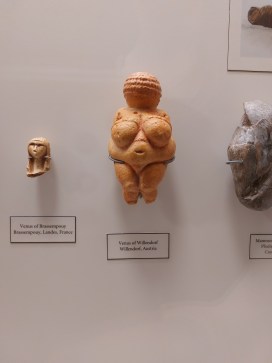
Tucked in a display case in the southwest corner of the Museum is a sculpture of an unidentified female figure, small enough to fit in your coat pocket. It is a replica of one of the most important examples of Palaeolithic artwork ever discovered; a 25,000-year-old carving known as the Venus of Willendorf. The Venus of Willendorf is one of several Palaeolithic statues found in Europe or Asia believed to depict female deities or fertility icons. Known collectively as the Venus Figurines, the carvings are similar in size and subject matter, but each has her own peculiarities. Many are naked, but some of the later examples are wearing distinctive garments, clothes we might describe today as ‘snoods’ or ‘bandeaux’. The Venus of Willendorf is easily distinguished by her statement headpiece; perhaps a spiralling hair-braid or ceremonial wig. But there is another, more exciting interpretation — this strange, thimble-like adornment might actually represent a woven fibre cap, making it the oldest ever depiction of human clothing.
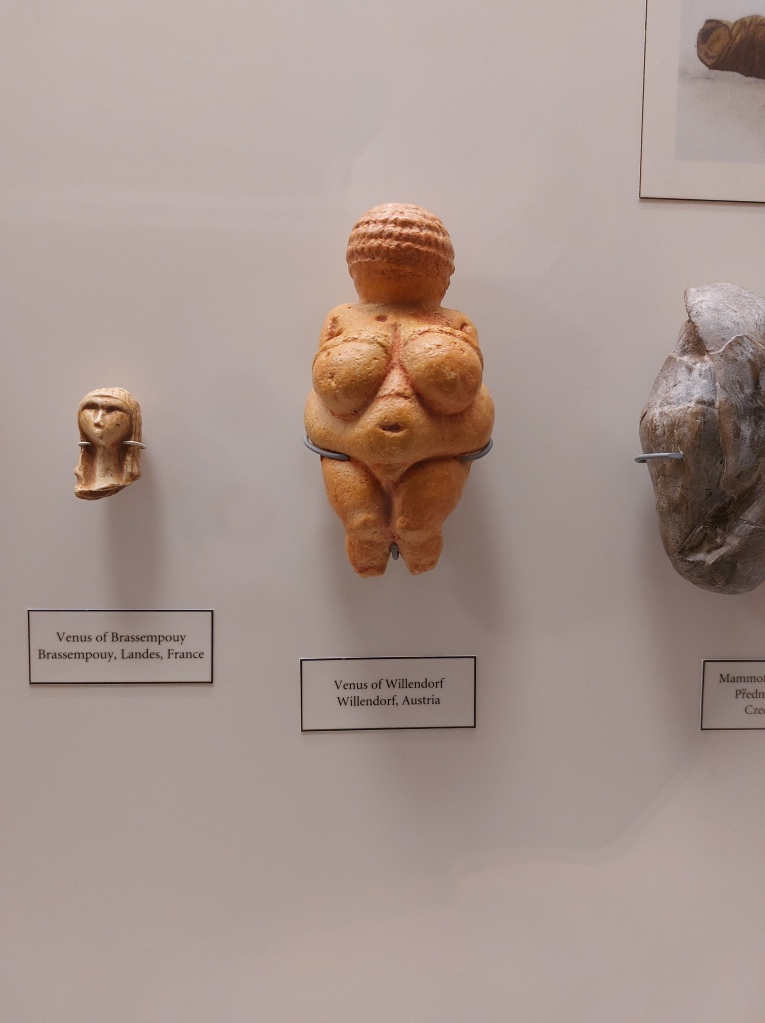
The Venus Figurines are incredibly important to the study of human fashion because they significantly predate any direct archaeological evidence of ancient clothing. The oldest surviving garment dates back an astonishing 5,000 years; an exceptionally-preserved linen shirt discovered in an Egyptian tomb. But our species, Homo sapiens, has a much longer history, perhaps up to a quarter of a million years. How much of this time have we spent wearing clothing? And why did we even begin to dress ourselves in the first place?

By comparing human genes to those of our furrier primate relatives, researchers have been able to estimate that modern humans lost their body hair around 240,000 years ago. A mutation in a gene called KRTHAP1 likely led to a decrease in our production of the protein keratin, the building block of hair. The exact reason why this mutation spread through the population is still up for speculation. One commonly held theory is that, with less body hair, our ancestors could sweat and tolerate higher temperatures, allowing them to expand their habitats from sheltered forests into sun-drenched savannahs. But at some stage, our ancestors started covering their skin again — leaving us to wonder when nakedness became a nuisance.

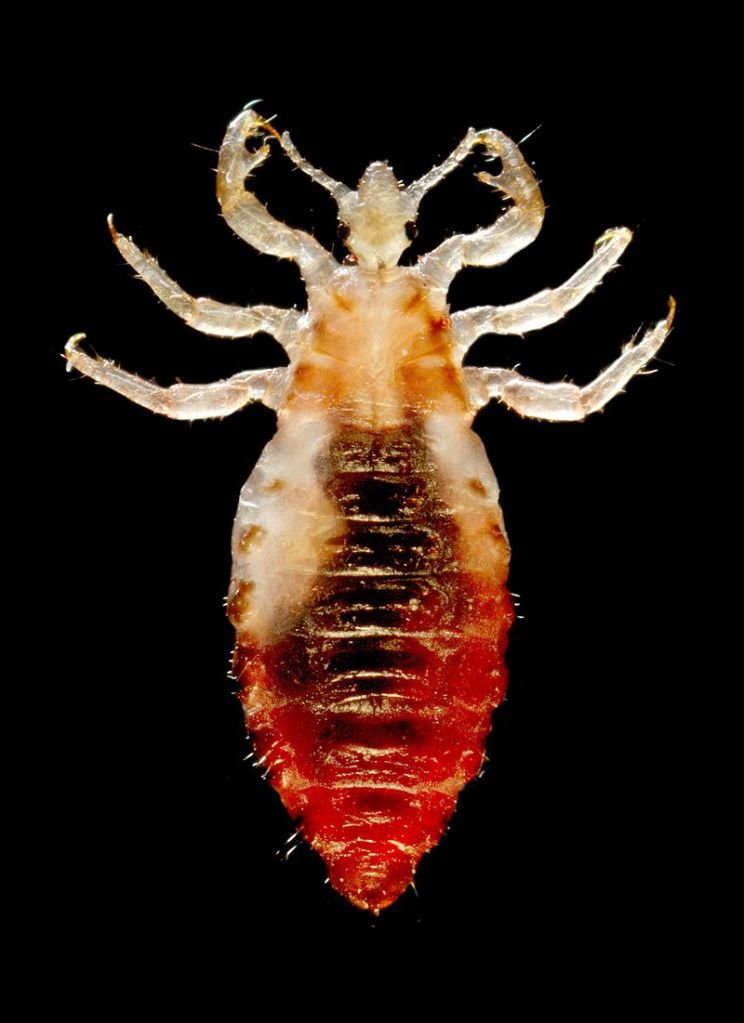
An intriguing clue about the circumstances that led to the adoption of clothing has come from studying the DNA of our parasites — namely, clothing lice. In 2010, researchers used genetic sequencing to determine that clothing lice split from their ancestral group, head lice, between 170,000 and 83,000 years ago. When compared with genetic data from our own species, we can begin to weave a story about the origins of clothing that ties in with human migration. Gene sequencing has helped us work out that Homo sapiens originated in Africa but must have begun migrating towards Europe between 100,000 and 50,000 years ago, a window which overlaps neatly with the evolution of clothing lice. Is it possible that clothing lice are a consequence of the widespread adoption of clothing; a result of humans migrating into more northerly latitudes with cooler temperatures?

Curiously, there are indications in the archaeological record that human clothing could date to an even earlier stage in our species’ history than the expansion of humans into Europe. In 2021, researchers uncovered 120,000-year-old bones from a cave in Morocco believed to be used to process animal hides. There is a strong possibility that humans would have used these tools to make wearable items out of hunted animals, including blankets, cloaks, or perhaps more structured garments.

It seems likely that the first clothes humans made from hides were loose-fitting capes or shawls, which may have been more important for protection or camouflage than keeping warm. There are numerous reasons why other animals cover themselves with foreign objects besides thermoregulation. ‘Decorating’ behaviours occur in animals as diverse as crabs, birds, and insects, allowing them to disguise themselves from predators, or protect themselves from UV radiation. While early humans might have only needed simple clothing items to aid with disguise, as the climate began cooling 110,000 years ago, cloaks probably wouldn’t have cut it; our species must have learned how to make multi-layered and closer-fitting garments to maintain high enough body temperatures. Archaeology provides a similar estimate for the adoption of constructed garments, based on the discovery of 75,000-year-old stone awls — tools used for puncturing holes in hides to prepare them to be sewn together.

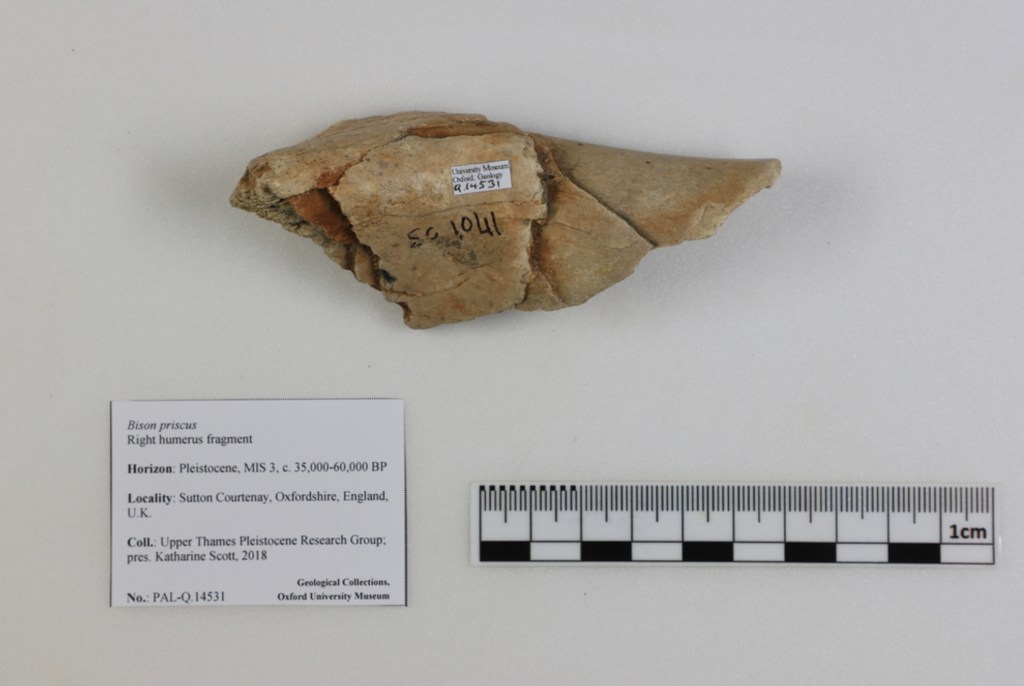
Homo sapiens‘ ability to make complex clothing items may have helped give our ancestors a competitive edge over the Neanderthals in Europe. Researchers have studied sub-fossil material in museum collections to learn about the changing distributions of European mammals throughout human history, allowing them to deduce that Neanderthals only had access to large animals like bison to make cape-like clothing from. But, in addition to bison, Homo sapiens lived alongside other, fluffier animals like wolverines during the last Ice Age, which could have been hunted to make warm trims for our clothing. Studies like these are highly speculative, but with such a threadbare archaeological record, they contribute valuable insight into the landscapes of ancient Europe.
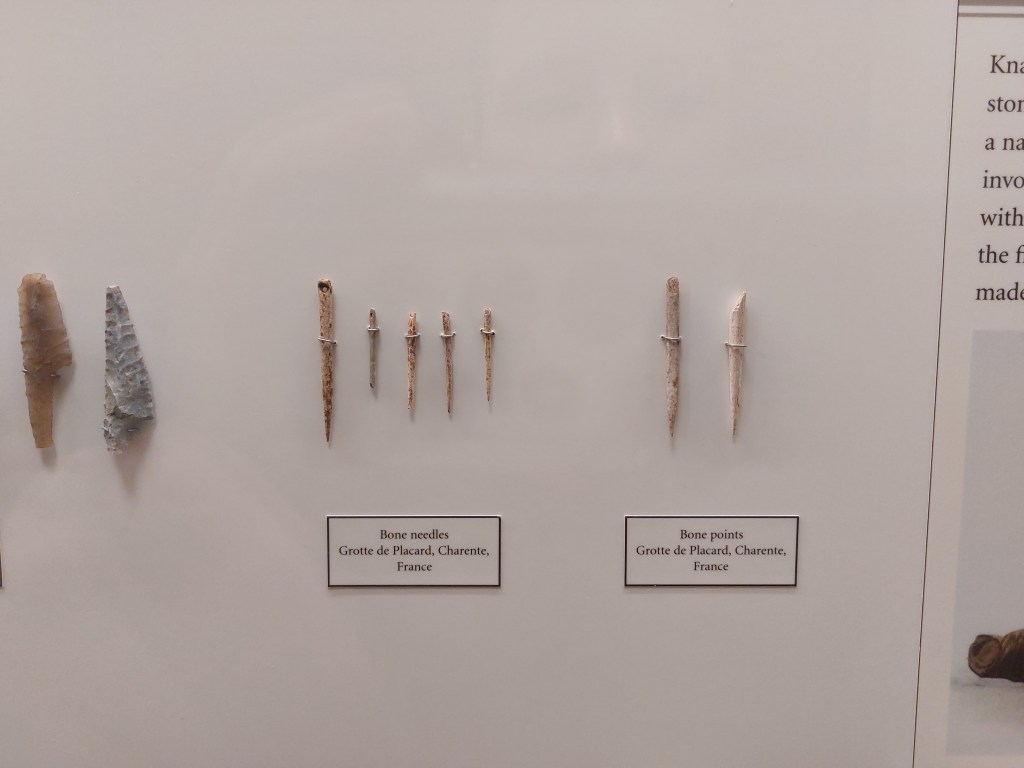
The Neanderthals might have been less well-dressed than our Homo sapiens ancestors, but we can’t be certain that humans of our own species were the only prehistoric fashionistas. The oldest sewing needle to have ever been discovered dates to 50,000 years before present and was actually found in a cave associated with Denisovans — a group of extinct hominins we know little about. The Denisovans may be an extinct subspecies of Homo sapiens, but they might also have formed an entirely separate species altogether, perhaps learning how to sew independently of modern humans.

Following the invention of sewing was another crucial innovation in the history of human clothing — the ability to make textiles. In 2009, a group of researchers discovered 36,000-year-old evidence of textile-based clothing in the form of microscopic flax plant fibres that had been dyed and twisted together. There are many potential uses of twisted fibres such as these, but scientists have been able to study the organisms associated with the fibres, finding the remains of skin beetles, moth larvae, and fungal spores that are all commonly associated with modern clothing. Humans do not simply fashion clothes, we also fashion microhabitats, capable of supporting organisms as diverse as insects, fungi, and bacteria.

The discovery that humans have been making textiles into clothing for 36,000 years lends credence to the theory that the Venus of Willendorf is wearing a woven cap — but we might never be able to draw any certain conclusions about such an ancient artefact. Until just ninety years ago, humans could only make textiles from biodegradable materials, meaning that we have very little evidence about the clothing that our ancient ancestors wore. Thankfully, however, the story of human fashion is closely interwoven with the natural histories of hundreds of other species, allowing us to stitch together a patchwork history, utilising evidence from all corners of the kingdom of life.
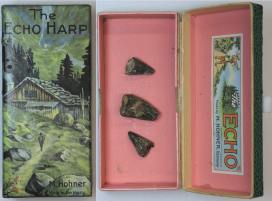
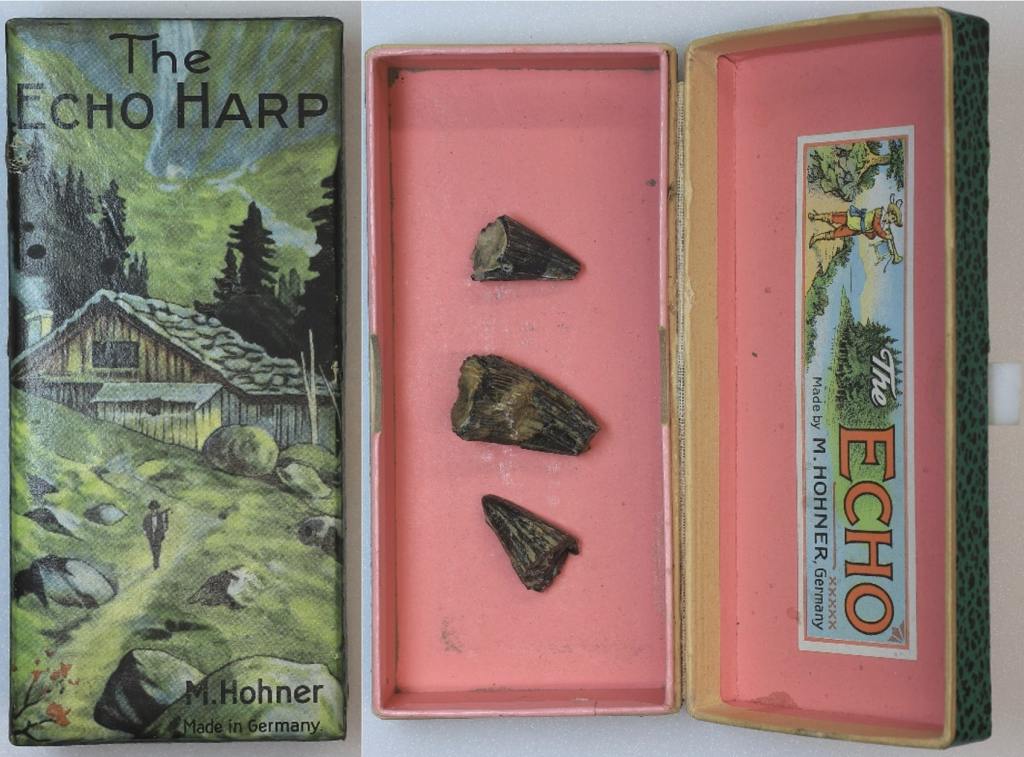
The outside and inside of a box, showing its contents

Boxes, Bags, and Bones

NO, THERE WEREN’T HARMONICAS IN THE JURASSIC!


Looking through the collections at OUMNH never gets boring, but sometimes a drawer will open up to reveal something even more eye-catching than the fossils usually found inside. Whilst working on the Museum’s Jurassic marine reptiles a few weeks ago, I came across something particularly surprising: a jewel-green box with a fantastic piece of art on the front. I was instantly intrigued and reminded of all the other times I had encountered a holder as fascinating as the specimen inside it.

Storage in museum collections is an ongoing pursuit of balance between ideal environmental conditions, specimen accessibility, and efficient use of space. This balance applies to all levels of storage: from building to room, cabinet to specimen tray. OUMNH’s Earth Collections are stored in conservation-grade, acid-free boxes or trays made of plastic or cardboard. These boxes are sometimes layered with low-density foam or ‘plastazote’ which can be carved to fit the specimen and keep it from being jostled or damaged. Holders with lids can also provide a micro-environment for specimens to help minimise their exposure to changes in humidity and temperature. The use of these standard materials not only helps protect specimens from degradation but can also deter pests from harbouring in collections spaces.

However, historical collections like those at OUMNH may retain holders that are not standard use. Sometimes, a clean and empty plastic Ferrero Rocher box is the perfect size for that small mammal skeleton that needs storing! Other times, an unusual holder might have been the only thing a field collector had on hand to transport a specimen to the Museum.

A harmonica box containing pliosaur teeth, a marine reptile that lived during the Jurassic (145.5 million – 201.6 million years ago).

One example of an unusual specimen holder is this ‘Echo Harp’ box by pre-eminent German harmonica manufacturer Hohner, likely from the 1960s. The box no longer holds a harmonica, but instead accompanies pieces of Jurassic pliosaur teeth from Weymouth, Dorset. Pliosaurs were a kind of carnivorous marine reptile related to plesiosaurs, with four flippers, and long tails and necks. If they hadn’t gone extinct in the Cretaceous-Paleogene extinction event 66 million years ago, perhaps they would have come to appreciate the harmonica and its artistic packaging!

Aside from their artistic value, museums may sometimes retain unusual holders because they contain primary source information on the specimen. One such example is a ‘Bryant and May’s Patent Safety Matches’ box in our Earth collections, bearing a packaging design from the early 1900s. The box actually houses a chicken tarsometatarsus bone excavated from “High St. New Schools” in Oxfordshire and is accompanied by a label which describes the particular layer of gravel the specimen was found in — important information for any archaeological or palaeontological find. Although the specimen is stored alongside Pleistocene fossils (10,000 – 2.6 million years ago), chickens did not originate in the UK, so the bone is likely from much more recent times. Someone still must have thought it was important enough to keep in its own special holder!

A Tate and Lyle sugar bag containing a Jurassic specimen, with handwriting on the outside describing the stratigraphy the fossil was found in.

Similarly, this ‘Tate and Lyle Granulated Sugar’ paper bag features a handwritten original notation in blue pen on the outside. The bag originally contained a specimen found in a collection of Jurassic gastropods and bivalves from Somerset, with the handwriting describing the fossil’s stratigraphic information. The bag also features a recipe for cinnamon apples on the reverse, which we have yet to try!

A wooden box and the Quarternary fossils (up to 2.6 million years ago) it originally housed. An accompanying letter describes the delivery of the fossils to William Buckland, Oxford University’s First Reader in Geology.

In addition to primary source information, original holders may also provide specimens with provenance. This ovular wooden box filled with organic stuffing material originally contained Quarternary fossil specimens found in Peak’s Hole, Derbyshire. The Museum archive also holds a handwritten letter describing the specimens inside the package and how they were found. The letter dates to 1841 and is addressed to Oxford University’s first Reader in Geology, William Buckland.  The specimen holder forms part of a group of objects with such a strong interconnection, and such strong documentation, that retaining the box is a matter of course.

All in all, it’s great that we’ve come so far in the advancement of safe and stable housing for specimens. At the same time, it’s always fascinating to see what else has made its way into collections, just by nature of being able to hold things, either for a short time or a long one. Despite living in the Earth Collections – among fossils, rocks, and the geological past – these objects offer us a little bit of human history too.


By Brigit Tronrud, Earth Collections Assistant

A GUT FULL OF SAND

UNEARTHING THE PECULIAR EATING HABITS OF A TRIASSIC MAYFLY SPECIES


During the summer months, the beaches of Mallorca offer an irresistible draw for tourists and palaeontologists alike. Visitors to the small Spanish island find themselves lured by its glittering seas, captivating coastline, and tasty white sands…

…well, tasty for some, at least!

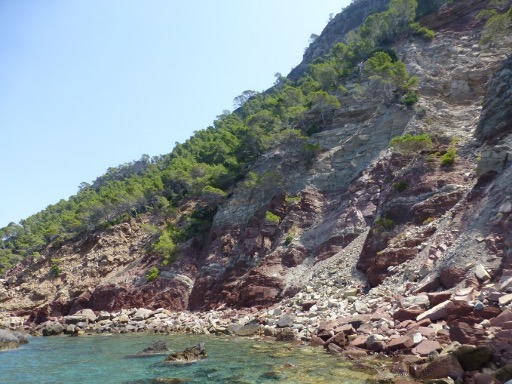
Coastal cliffs near Estellencs (Mallorca, Spain). Palaeontologists working here discovered fossils of Triassic mayfly nymphs with unusual gut contents. (photo: Balearic Museum of Natural Sciences)

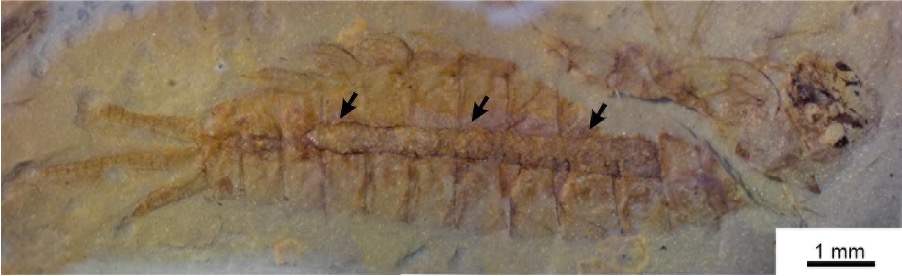
Following recent fossil excavations near the the coastal town of Estellencs in southwest Mallorca, palaeontologists have discovered evidence of a species of mayfly with a pretty peculiar diet. The mayflies in question lived 240 million years ago in bodies of water associated with ancient floodplains. Some of the juvenile mayflies (nymphs) were so well-fossilised that it has been possible to study the contents of their guts. A research team, led by Dr Enrique Peñalver, and featuring OUMNH’s own Dr Ricardo Pérez-de la Fuente, discovered that the mayflies’ digestive tracts contained a mixture of detritus (the decomposed remains of other organisms) and particles of a type of rock known as claystone. The most likely explanation for this strange food-pairing? It seems that the nymphs actually survived by eating muddy sediments that had settled to the bottom of the swampy-waters they lived in – yum!

If you’ve ever tried eating a sandwich on the beach, you’ll be familiar with the feeling of sand in your teeth. The sharp crunch of mineral sediment is worth the sacrifice for the delicious, digestible portion of your sandwich – the bread and fillings. Animal digestive systems are unable to extract energy from inorganic mineral matter, like sand. Instead, we rely on organic material for nutrition, i.e. matter derived from plants and other animals. It seems that the Triassic mayfly nymphs found in Mallorca would have munched through large quantities of sediment; digesting the organic detritus it contained, and excreting the inorganic remainder.

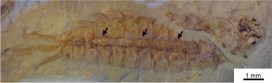
One of the numerous Early Triassic mayfly nymphs from Mallorca preserved with gut contents. These inclusions result from the original sediment the nymphs fed on (cololite, labelled here with arrows). Image adapted from Peñalver et al. (2023).

Sediment-based diets are extremely rare among living insect species. A handful of modern mayfly species have been observed to munch on the muddy sediment that surrounds the openings of their tunnels, but this is a very rare occurrence. Sediment is a pretty challenging food source, and it’s hard to say why insects may have relied more heavily on it in the ancient past. It is possible that the mayflies found in Mallorca adopted their diet as a result of the Permian mass extinction, which killed off more than 80% of all the species on Earth, ‘just’ five million years prior. With fewer choices of organic material available to eat, perhaps the mayflies were left without a better choice? Or maybe they were simply exploiting new environmental niches that opened up in the aftermath of this catastrophic event?

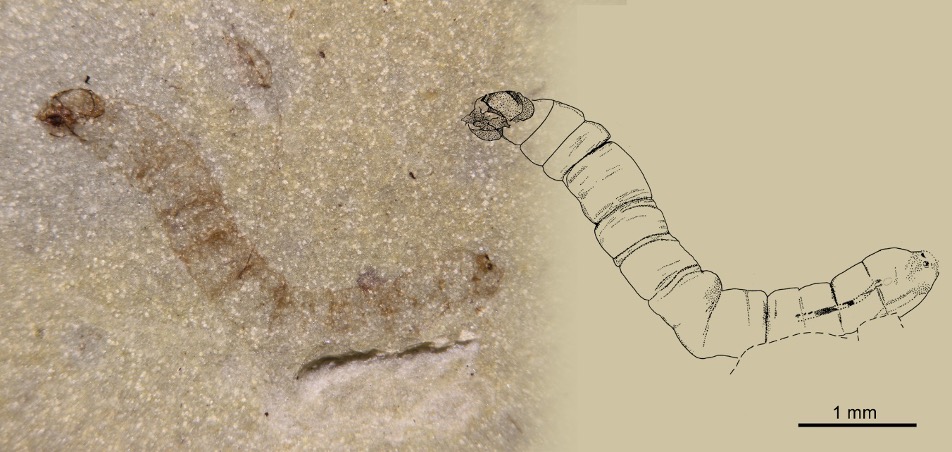
One of the reasons why it is so difficult to theorise about the evolution of species following the Permian mass extinction is the dearth of fossil evidence dating from the period. Luckily, the coastal cliffs of Mallorca can offer us a rare, exciting glimpse into some of the ecosystems that existed ~247 million years ago. The research team behind the Mallorcan mayfly discovery have also used fossils from the same site to describe the world’s oldest-known dipteran (a group of insects including flies, mosquitoes, gnats, and midges), naming the species Protoanisolarva juarezi. These flies would have lived on land, in back swamp areas, rather than in the water. However, much like the Triassic mayfly nymphs, they would have fed on detritus, and played a key role as recyclers of organic matter in these ancient ecosystems.

The larva of the oldest-known gnat, 247 million years old, was found near Estellencs in Mallorca. (Image: CN-IGME CSIC).

It is by paying attention to tiny insect fossils like these that we might hope to find answers to one of the biggest questions in palaeontology: how did life rebuild in the aftermath of our planet’s worst mass extinction? And what might this teach us about ecosystem responses to future mass extinction events?


By Ella McKelvey, Web Content and Communications Officer

One door closes, another opens…

By Anna Jones, HOPE Project Manager

At the start of National Insect Week, Anna Jones reflects on an entomological escapade that has involved the relocation of over one million insects, and that will allow us to transform the Westwood Room into a ‘Museum within a Museum’ for the first time this autumn…


When we set out on our HOPE adventure in the winter of 2019, what was being called an ‘ambitious’ task seemed almost impossible. Could Museum staff, volunteers, and interns restore, rehouse, and relabel over one million British insects in just over one year?

HOPE for the Future is the Museum’s three-year project to protect and share our amazing British Insect Collection. HOPE is a natty acronym that spells out the project’s aims (Heritage, Outreach and Preservation of Entomology), and is also a nod to Frederick William Hope, a founding collector of the Oxford University Museum of Natural History. Supported by the National Lottery Heritage Fund and thanks to National Lottery Players, the project focuses on the intertwined heritage of our British Insect Collection and the Westwood room.

The Museum’s British Insect Collection represents all insect groups from butterflies to beetles and bees, flies, and fleas. It is ‘Designated’ by Arts Council England as being of national and international importance.

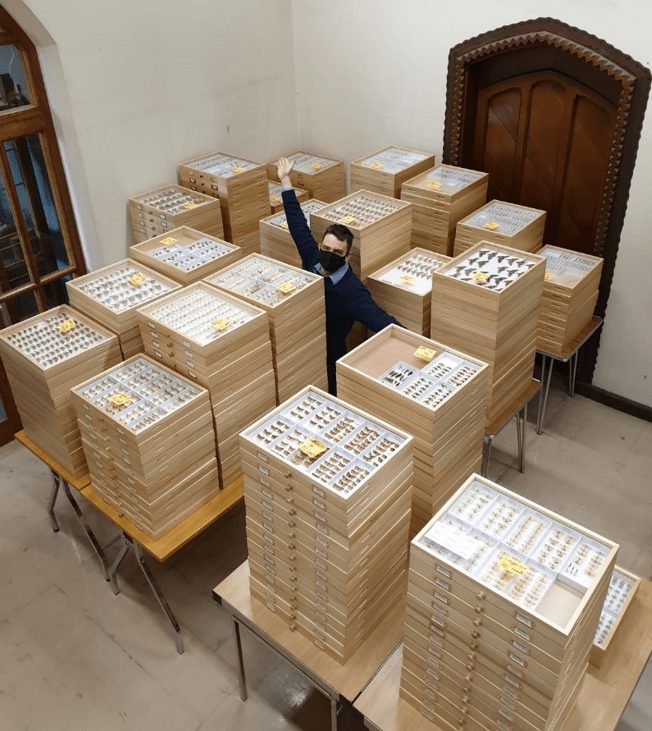
The Collection spans almost the entire history of British entomology, providing extensive information on biodiversity during and after the Industrial Revolution. It offers an extraordinary window into the natural world, and includes dozens of iconic species now considered extinct in the UK, like the large copper butterfly and blue stag beetle. In order to protect these valuable specimens, we had to transfer them by hand from their old cork-lined drawers, preventing reactions between the cork and the insects’ pins from degrading the specimens and making them friable. These drawers were then transferred out of their original home, in the Westwood room, to new cabinets elsewhere in the Museum.

Finally, the meticulous moving of specimens is miraculously complete; an achievement described by our Director as “beyond the Museum’s wildest dreams”. Now the last of the cabinet doors is snugly closed, we rest assured that our collections are secure and will be preserved for the public for years to come. At the same time, we prepare ourselves to take the trailblazing step of opening the doors to the Westwood room to the public for the first time.

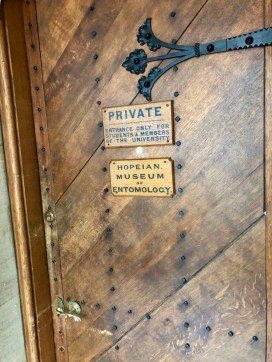
Originally called “Mr Hope’s Musuem”, the Westwood room became a favourite meeting place for naturalists in the nineteenth century. Now empty, the Westwood room can be restored to its former Pre-Raphaelite glory. We will also transform the room to create a new multi-purpose public space with displays on biodiversity, habitat loss, and how we can use museum collections to study our environment.

HOPE for the Future will allow the public to access the Westwood room for the first time: a beautiful, historic, and artistically-important part of the Pre-Raphaelite history of the Museum. From Autumn 2022, we will use the space to host insect-focused public engagement programmes and other popular Museum events — all connected to our learning and community programmes. Here. we hope to inspire the next generation of scientists and encourage people to care more for the wildlife on their doorsteps.


Want to learn more about insects?

  • Events: HOPE has many outreach activities coming up over the next few months, including Summer Schools, Discovery Days, and Entomologist Clubs with children and young people. We also run an outreach programme with families, grandparents, and community elders, encouraging thousands of people to appreciate insects, and their relationships to humans and other wildlife.
  • Crunchy on the Outside: read our blog for young entomologists
  • Donate to the HOPE appeal: help us to continue to inspire the public to learn about insects

The Prince and the Plinths

By Hayleigh Jutson, HOPE Community Engagement Officer & GLAM Community Engagement Assistant and Danielle Czerkaszyn, Librarian and Archivist


With the Queen’s Platinum Jubilee in the air, Hayleigh and Danielle reveal the royal connections that are integrated into the very fabric of the Museum, and reveal the surprising story behind our empty plinths.


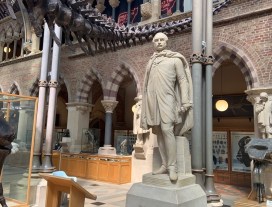
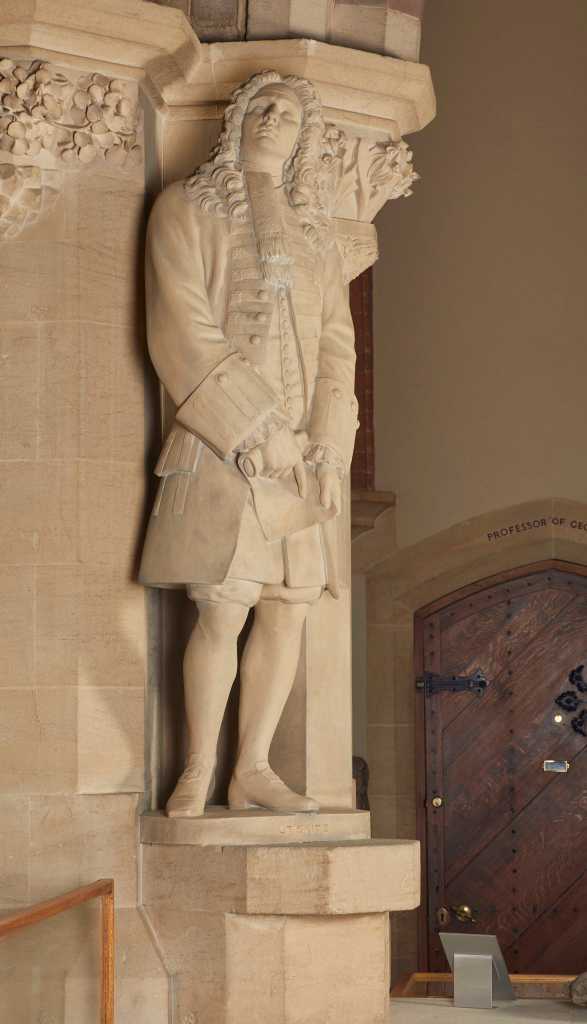
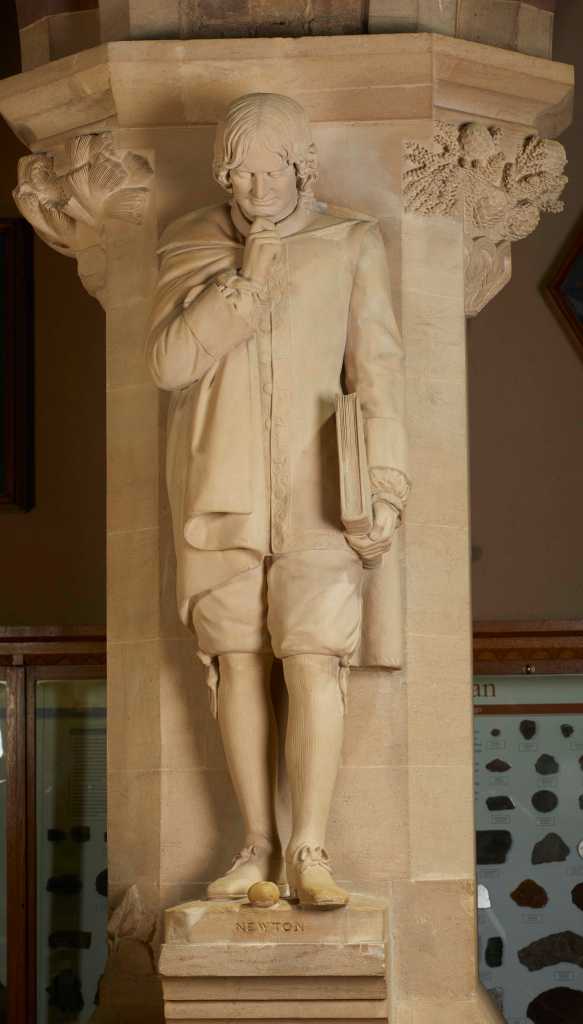
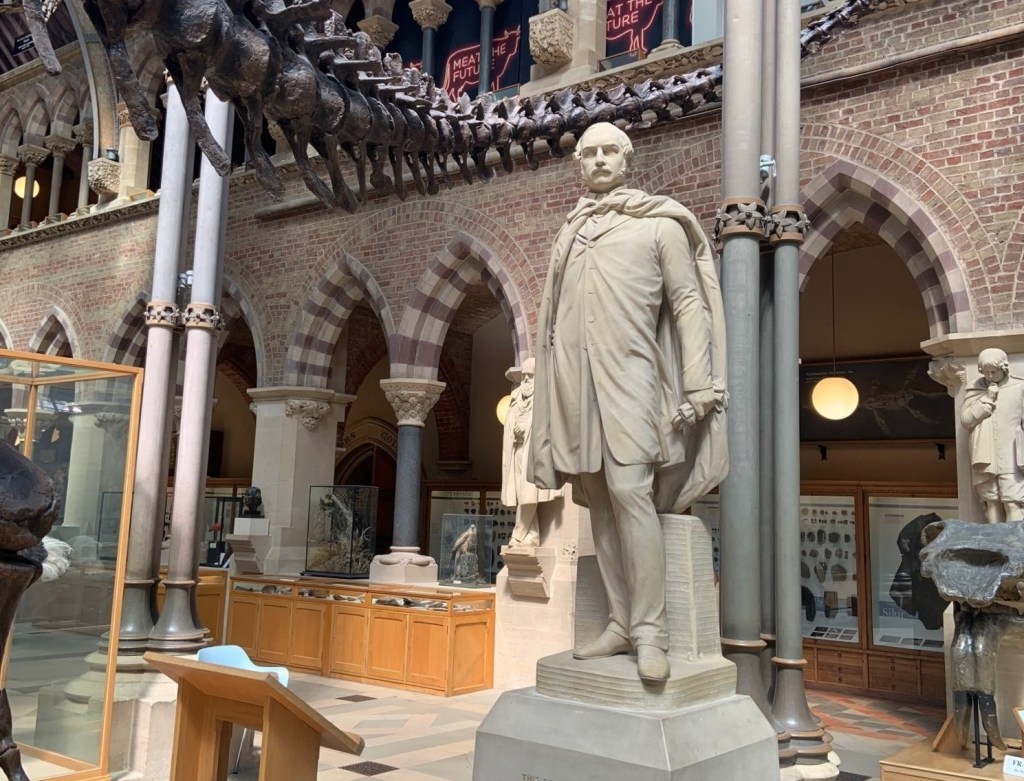
Visitors walking around the Main Court of Oxford University Museum of Natural History will find themselves circled by the stony gazes of 19 life-sized stone statues. These sculptures of eminent scientists, philosophers, and engineers include likenesses of Aristotle, Charles Darwin, Galileo, Linnaeus, and Isaac Newton. Alongside these men of science stands a statue of Prince Albert, husband and consort of Queen Victoria. Although now slightly hidden behind the T-rex, Prince Albert’s statue was given pride of place in the main court, a lasting reminder of the Royal family’s contribution to the establishment of the Museum.

Constructed between 1855-1860, the main structure of the Museum of Natural History was built using funds from Oxford University. However, the University only provided enough money to construct the shell of the building. All additional decorations – the stone carvings, pillars, and statues both outside and in – were to be funded by public donations and private subscriptions. To decorate the new building, Oxford’s scientists, along with the architects Deane and Woodward, invited Pre-Raphaelite artists to come up with designs that would represent nature in the fabric of the building.

A key element of the Museum’s decoration involved the commissioning of a series of portrait statues of ‘the great Founders and Improvers of Natural Knowledge.’ These effigies were meant to represent a range of scientific fields of study, and act as inspiration to researchers, students, and other visitors to the Museum. The University came up with a list of six ancient Greek mathematicians and natural philosophers and eleven modern scientists to be included in the Gallery. Funded by private subscription, donors could provide a statue of one of these ‘Founders and Improvers’ for £70 (equivalent to ~£8000 in today’s money).

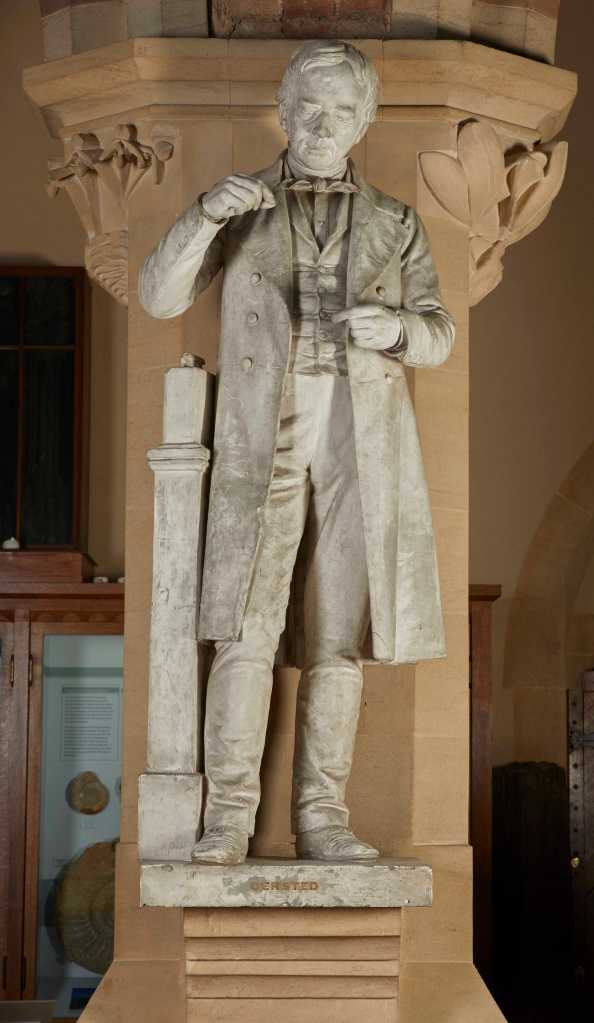
Prince Albert, a great supporter of the arts and sciences, convinced Queen Victoria to fund the first five statues of modern scientists, costing £350 in total. The first statue that Queen Victoria commissioned and paid for was of the philosopher Sir Francis Bacon — remembered as one of the fathers of the ‘scientific method’. His statue was carved by Pre-Raphaelite sculptor Thomas Woolner. The remaining four statues that Queen Victoria paid for – of Galileo, Isaac Newton, Gottfried Liebnitz, and Hans Christian Ørsted – were to be sculpted by Alexander Munro. However, Munro was only able to complete three of these. After the University of Oxford repeatedly failed to fulfil Munro’s request for a likeness of Ørsted, the statue of the Danish physicist went unfinished. Not wanting to waste the money that had been gifted by Queen Victoria, the Museum decided to arrange for a plaster cast to be made of a pre-existing statue of Ørsted, which was sent over from Denmark in 1855.

It was hoped that Queen Victoria’s generous donation would encourage other wealthy individuals to fund the remaining statues. Initially, the plan worked. However, as time went on, donors began to favour British men of science rather than the University’s original list of international candidates. As a result, funding for many of the statues on the University’s list never materialised, and those plinths remain vacant to this day.

Even if the commissioning of the Museum’s sculptures didn’t go entirely to plan, there is no doubt that Prince Albert made an important contribution to the construction of the Museum. Fittingly, he is also commemorated amongst the Museum’s sculptures. Carved by Thomas Woolner, Albert’s statue sits behind the tail of the T-rex skeleton in the Main Court. It was presented to the Museum by the citizens of Oxford in April 1864, and remains a tribute to a champion of the arts and sciences, and one of the Museum’s earliest and most influential supporters.

Statue of Prince Albert in the Main Court of the Museum

Community science: what’s the value?

ONE SCIENTIST OFFERS HER PERSPECTIVE


By Sotiria Boutsi, Intern

I am PhD student at Harper Adams University with MSc in Conservation Biology, currently doing a professional internship at the Museum of Natural History in the Public Engagement office. My PhD uses genomic data to study speciation in figs and fig wasps.


For most of our history, humans have been observational creatures. Studying the natural world has been an essential tool for survival, a form of entertainment, and has provided the backbone for various legends and myths. Yet modern humans are rapidly losing practice when it comes to environmental observation. As more and more of us relocate to busy urban environments, we find ourselves with little to no time to spend outdoors. Knowledge of the natural world is rapidly becoming the purview of professionals — but it doesn’t have to be this way…

Community science is a term that describes scientific research activities conducted by amateurs, often involving observation or simple computational tasks. Many citizen science projects target schools or families, but everyone is a welcome participant. The purpose of such projects, which run all around the world, is to encourage non-professionals to get involved in science in a fun, voluntary manner, while also collecting data that are valuable for scientific research.

One of the most common forms of community science is biodiversity monitoring. Biodiversity monitoring projects invite people with various levels of expertise to record observations of different species in their local area, and upload evidence like photographs and sound recordings to a user-friendly database. In doing so, they also provide important monitoring data to scientists, like information about the date and location of wildlife sightings.

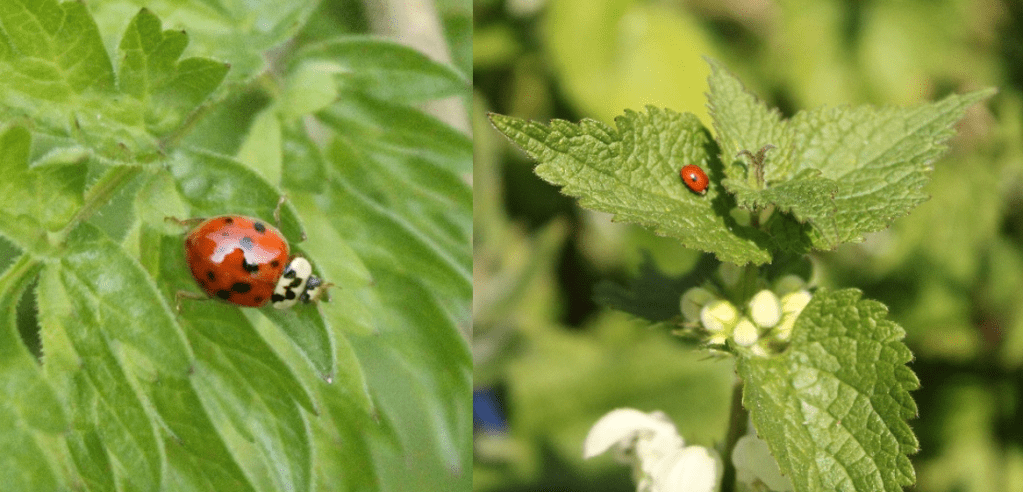
The Asian Ladybeetle (Harmonia axyridis) was first spotted in the UK in 2004 and since then it has become very common. It is considered one of the most widespread invasive species in the world, with introductions throughout Europe, North and South America, as well as South Africa. Reported observations through the UK Ladybird Survey (Enter ladybird records | iRecord) can help us monitor the spread of this insect and see how other, native species respond to its presence.

There are a variety of mobile apps and online platforms for reporting observations, with some specialising in particular groups of organisms like plants or birds. From the raw data that is uploaded to these platforms, species can be identified through a range of different methods:

  1. Automatic identification from uploaded evidence – often using techniques like image/sound analysis or machine learning
  2. Community feedback – multiple users can view uploaded evidence and make suggestions about which species have been recorded
  3. Direct use of users’ own suggestions – for users who are more experienced with species identification

But are these data actually used by scientists? Although individual contributions to community science projects may seem to be of minor importance, when considered collectively they act as extremely valuable records. Having distribution data for species can help us understand their habitat preferences, and also enable us to monitor invasive organisms. Moreover, long-term data can inform us about species’ responses to changes in their environments, whether that is habitat alteration or climate change. Science is driven by the accumulation of data, and citizen science projects can provide just that.

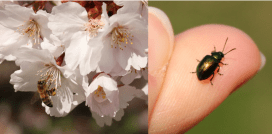
Biodiversity monitoring through citizen science projects encourage us to notice the tiny beings around us, like this beautifully coloured shiny Green Dock Beetle (Gastrophysa viridula). Moreover, recording common species like the European Honeybee (Apis mellifera) over different years can reveal temporal patterns, like early arrival of spring.

In addition to the benefits to the scientific field, community science projects can also be of huge value to their participants. Firstly, engaging in such activities can help us re-establish our relationship with the wildlife in our immediate environment — we might finally learn to identify common species in our local area, or discover new species that we never realised were so close by. It is surprising how many species we can even find in our own gardens! Moreover, community science events, like biodiversity-monitoring “BioBlitzes”, encourage people from different backgrounds to work together, strengthening local communities and encouraging environmental protection.

Oxford University is currently running the community science project “Oxford Plan Bee“, focusing on solitary bees. The project is creating a network of bee hotels: small boxes with branches and wooden cavities where harmless, solitary bees can rest. The hotels are spread throughout the city, and locals are invited to observe the bee hotels, take photos, and send in their findings.

Overall, community science is as much about being an active participant in the community as it is about doing science. These projects are a celebration of both collective contributions and individual growth. More than anything, they are a chance to pause and notice the little things that keep our planet running.


Want to get involved? Here is a selection of my favourite citizen science projects…

Recording species observations – global:

Recording species observations – UK-based:

Bioblitz events:

Read more:

How a Citizen Science project helped solve a mystery of UK butterflies: Painted Lady migration secrets unveiled – News and events, University of York

Citizen Science Hub – British Ecological Society

Citizen Science Platforms | SpringerLink

Citizen Science in the Natural Sciences | SpringerLink