Gené dor left open


Carlo Giuseppe Gené (1800-1847) was an Italian naturalist, who became the Professor of Zoology and director of the Royal Zoological Museum at Turin (1830). Between 1833 and 1838 Gené made four trips to Sardinia to collect insects. These trips resulted in two primary publications, in which he described many new species to science:
Gené, C. G. 1836: De quibusdam Insectis Sardiniae novis aut minus cognitis. [Fasciculus I.]. Memorie della Reale Accademia delle Scienze di Torino, Torino 39: 161-199, [1] Taf. (Fig.1-29).
Gené, C. G. 1839: De quibusdam Insectis Sardiniae novis aut minus cognitis. [Fasciculus II.]. Memorie della Reale Accademia delle Scienze di Torino, Classe die Scienze Fisiche, Matematiche e Naturali, 2. Ser., Torino 1: 43-84, Taf. I-II.
Most of Gené’s insect collection is in Museo Regionale di Scienze Naturali di Torino, with duplicates being deposited in the Museo Civico di Storia Naturale de Milan and in Museo storia naturale di Pisa.  However, some of his insect specimens are believed to be lost or destroyed.
For example, in the recent revisions of the genus Chelotrupes (a dor beetle) by Dellacasa and Dellacasa (2008) the authors were unable to find the original specimen(s) Gené used to describe Chelotrupes hiostius and so designated a neotype (a new type to replace one that is lost or destroyed). Hillert et. al. (2012) followed this in their review of the genus Chelotrupes.
The department provided the type specimen of Chelotrupes momus (Fabricius, 1792) for the Hillert et. al. (2012) work on the genus, and when the paper was recently sent to us along with the returned loan of our specimen, we noted the ‘lost’ Gené specimen cited. We knew we had some of Gené’s specimens in Oxford, but the value and extent of this collection had not been realised. 
Gené corresponded with our founder Frederick W. Hope (1797-1862) and in our archive collection there are letters to Hope dated 7th March 1835, 25th February and 24th October 1837 and June 1844. The most interesting archive (dated 1837) was a list of ninety-six Insects from Sardinia that Gené sent to Hope. In which, several of the new species, identified in the list by having ‘nob’ after their scientific name, which is shorthand Latin for nobis– which translates as ‘belonging to me’, and was used by authors to designate their new species. In this list was Geotrupes hiostius (as Gené called it).
archive, letter, species list, coleoptera, OUMNH, library
List of specimens that Gené sent to Hope
After the discovery of this archive we searched the collections and found the ‘lost’ type of Chelotrupes hiostius (Gené) in our dor beetle collection.
Coleoptera, type, Chelotrupes hiostius, OUMNH, Gené, Sardinia
The type specimen of Chelotrupes hiostius
An amazing discovery for us, as this specimen’s scientific importance had not been recognised for over 170 years! We have looked for a further two specimens from this list, and have found both, one Oil Beetle and a Stag Beetle. We hope to spend some time over the summer to see how many more from this list we can find!
References:

Dellacasa M. & Dellacasa G. (2008). Revision of the genus Chelotrupes Jekel, 1866 n. stat. (Insecta,    Coleoptera, Geotrupidae). Zoosystema 30 (3): 629-640.
 Hillert, O., Kràl D. & J. Schneider. (2011). Revision of the European genus Chelotrupes (Jekel, 1866) (Coleoptera: Geotrupidae: Chromogeotrupidae). Acta Societatis Zoologicae Bohemicae 76: 1-44.
For more information about Gené please use the following links.

Combe Mill in the snow

Combe Mill in the snow

The unexpected March snow has done nothing to deter the Museum team getting out on the road. Early on Sunday morning, as the snow started to swirl, Education and Geology staff packed up the van and set off to Combe Mill.

Van in the snow

The Mill is the original sawmill and workshop of the old Blenheim Palace Estate and features an enormous water wheel and several steam engines. Their monthly Combe Mill in Steam is an exciting day out where visitors can see a working blacksmith’s forge and lots of traditional machines and crafts.

When we arrived, it was far too cold to pitch up our tent, so the mill staff took pity on us and let us set up in their lovely Pattern Room. The workshop was filled with welcoming aromas of sawdust, oil and smoke from the smithy. The perfect place to spend a snowy day. Here’s Janet making herself at home.Setting up at Combe

Volunteers at CombeBecause Oxfordshire is a brilliant place to look for fossils, we took along some fascinating local fossils for visitors to see and touch. Here’s Carolyn from Geology showing these volunteers some gems from the collection, including a pterosaur wing bone, an enormous cetiosaurus vertebra and an ancient shark’s tooth. Visitors were amazed that these discoveries were made right on their doorstep!
Alongside that, families made their own museum-quality casts of similar fossils. The footprint of Oxfordshire’s famous Megalosaurus, a dinosaur first found just up the road in Stonesfield, was as popular as ever.

Sam making poker

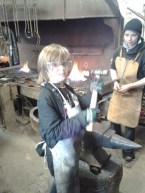
Though the impressive Combe Mill team seemed completely undaunted by the freezing temperatures and heavy snow, sadly the event didn’t receive its usual crowds of visitors. However, those who battled the ‘spring’ weather were rewarded with warmth, a hearty welcome and some fascinating experiences. Here’s Sammy, from Woodstock, in the blacksmith’s forge with volunteer Amy. He made his own poker to take home.

We all really enjoyed the opportunity to meet such enthusiastic, interesting and interested visitors and volunteers.To finish off, here’s our view from the Pattern Room window. Can you believe this is March?!

Can you spot the van in the snow?

Rachel Parle, Education Officer

What’s on the van?

What's on the van banner 2

A while back, you may have seen this post about our gorgeous new museum van. During our closure year, it’s proving to be invaluable as we get out on the road with schools’ outreach and community events.

As you can see, it’s decorated with beautiful images of some of our most iconic specimens – from the dodo to dragonflies and dinosaurs. As we’ve been out and about, the van and its decorations have received a lot of attention and questions, so we thought you may like to find out a little bit more about the featured creatures.

Fox

Each week, we will be revealing an interesting fact or story about one of the van’s specimens, written by our knowledgeable collections staff. So, to start us off, we’ve picked this lovely little item from our Mineralogy collection…

_MTPopalsnail4[1]

Opal Fossil Sea Shell by Monica Price, Mineralogical Collections

I look after more than 30,000 mineral specimens, many of them exquisitely beautiful. This little sea shell is one of my favourites. It is Ampullospiro sp., a fossil gastropod, just 2.5cm across, and it is composed of precious opal which flashes beautiful colours as it is turned in the light. It comes from the opal mining fields of Queensland, Australia, and was purchased by the Museum sometime before 1896.

This little gastropod lived in the sea or a river estuary in early Cretaceous times, around 110 million years ago. After it died, it was buried by sediments which turned into rock. Heavy weathering left voids in the rock where fossil shells, wood, and reptile bones had been, and these filled up with opal. If you look at opal using a scanning electron microscope, you can see it is made up of tiny spherules of silica stacked up like a heap of ping-pong balls. Most opal looks very dull, but in rare precious opal, the spherules are just the right size to diffract the light, breaking it into its spectral colours.

This delicate little shell has both age and beauty.

Happy Birthday William Smith!

William Smith

Today marks the 244th birthday of William ‘Strata’ Smith, a very important figure in the history of English geology and to the Museum, so we thought it only appropriate that we mark this day.

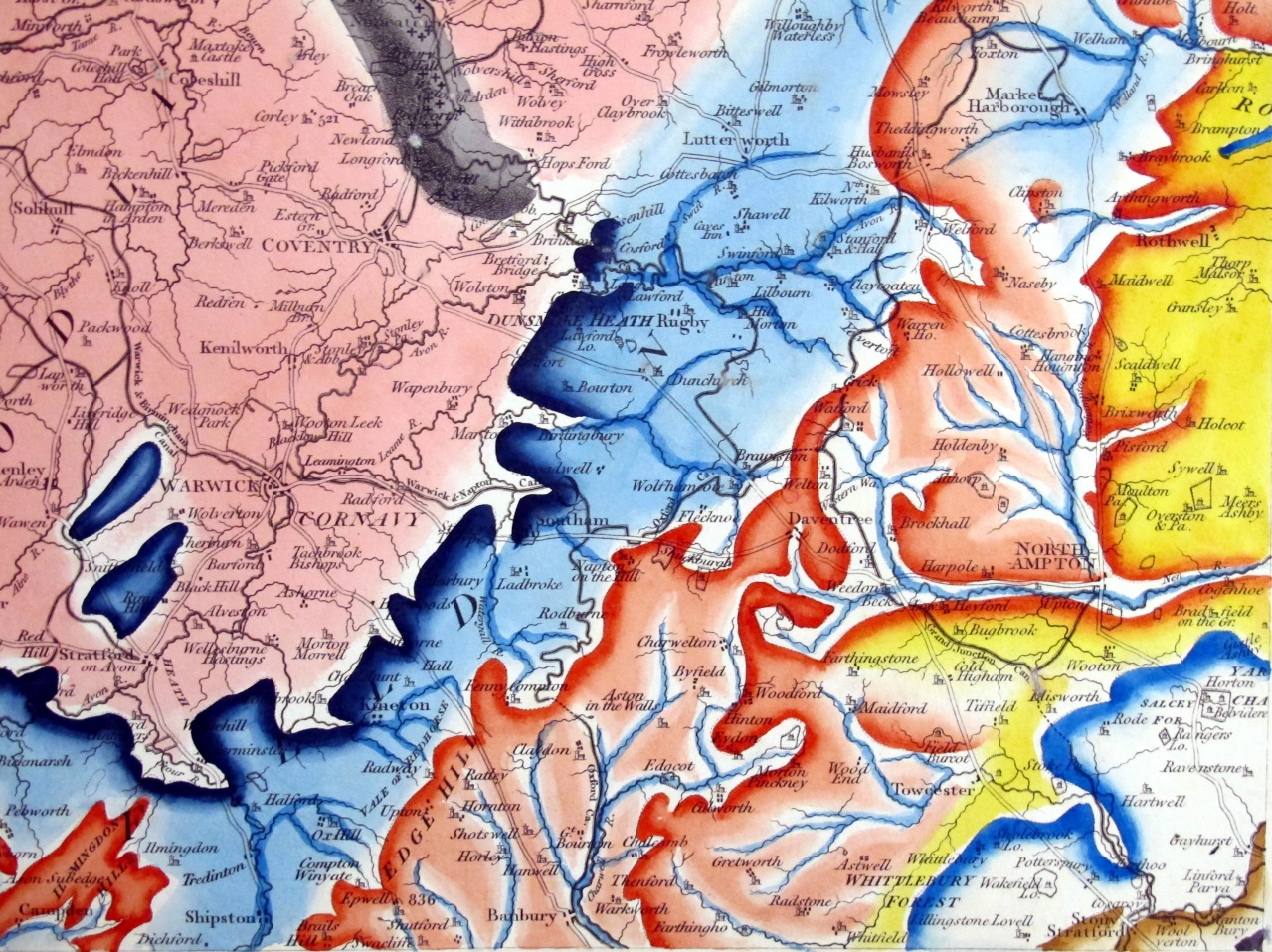
Despite being born to humble beginnings in Churchill, Oxfordshire in the late 18th Century, Smith single-handedly mapped the geology of Great Britain and created the first geological map of England and Wales, which was published in 1815. He managed this amazing feat through his observation of the layers, or strata, beneath the earth and the fossils found within them. His work as a Land Surveyor and Engineer for both Mining and Canal companies proved to be the perfect opportunity to complete his work, allowing him to travel the country to complete contracts and still make his observations.

While this accomplishment was undoubtedly remarkable, Smith unfortunately didn’t receive the recognition for his work he so deserved until late in life. His lack of formal education and his family’s working class background made him an outcast to most of higher society at the time. It wasn’t until just a few years before he passed away, in 1839, that he received any recognition for his ingenious contribution to the science of geology, receiving a number of awards, including the prestigious Wollaston Medal and an honorary degree.

William Smith map

We are very fortune to have a large number of Smith’s papers here at the Museum, and to have recently received generous funding from Arts Council England to catalogue and digitise his collection. As uncle, guardian and teacher to the Museum’s first keeper John Phillips, Smith’s papers have long been housed within our archive and are an important resource into the history of geology and geological mapping in Britain. This funding will give us the opportunity to make them available online to the public for the first time.

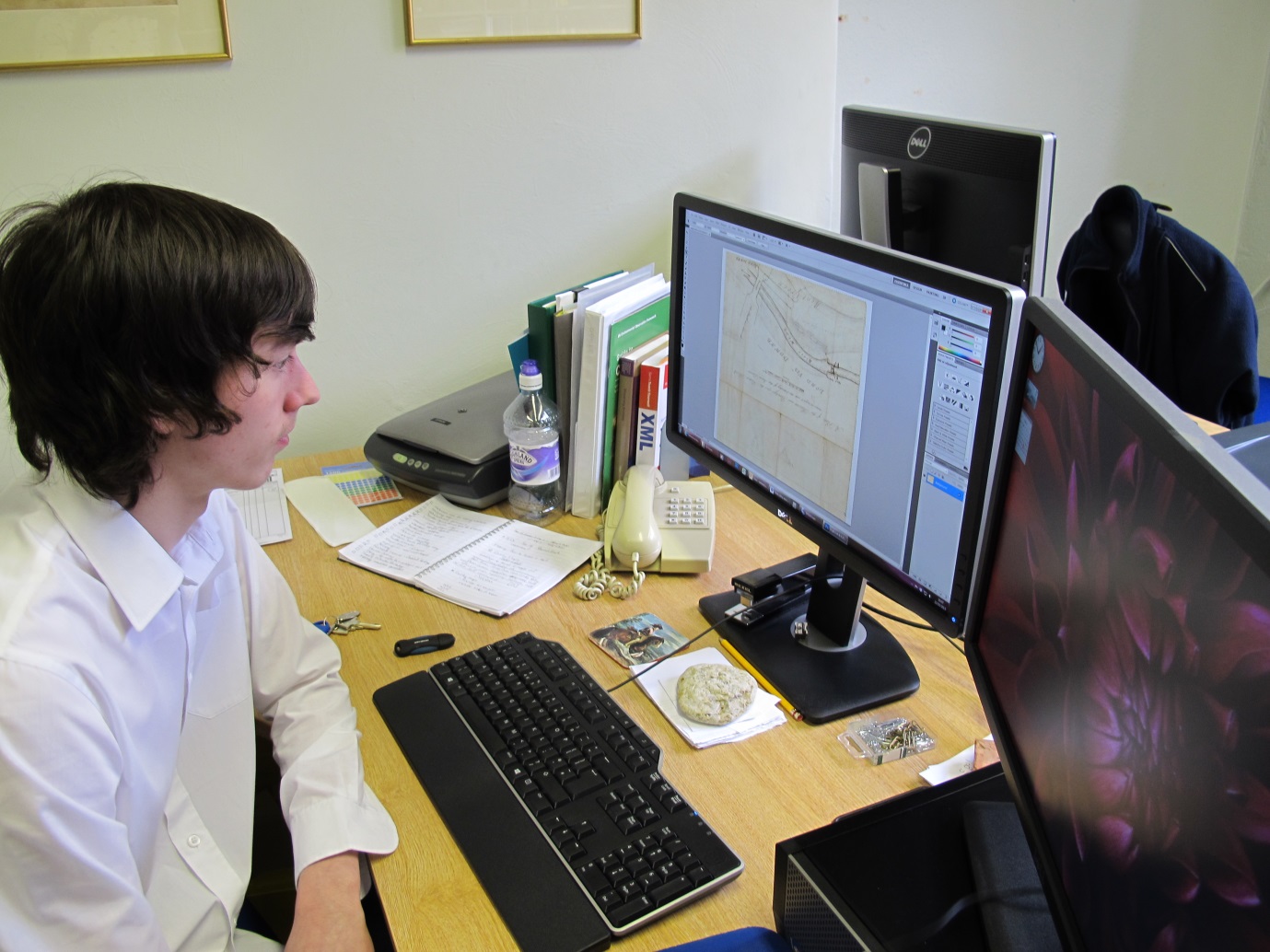
William Smith project
A work experience student helps to process scans of original documents in the Smith archive

William Smith Online will be available early next year, but work is well underway behind the scenes. The website will launch a number of events over 2014 through to 2015, to celebrate the bicentenary of Smith’s geological map of England and Wales, both here in the museum and around the country. Watch this space, or follow us on twitter to keep updated on this exciting project!

Kate Santry, Head of Archival Collections

Incredible fossil find

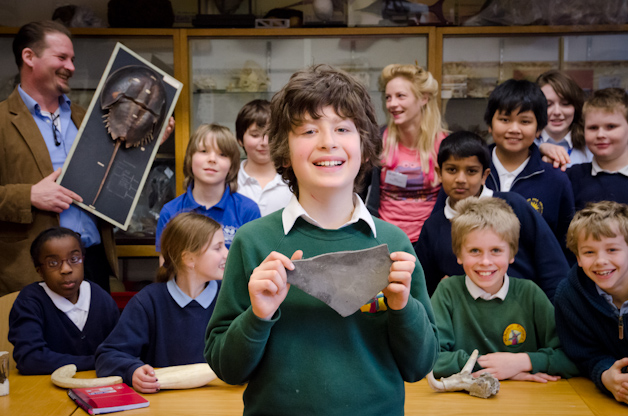
At the Natural History After-School ClubWe’ve been looking forward to sharing this story with everyone for a while and following a big splash in the national media here this morning we can now post it on the blog too. The picture above is of our Education team’s Natural History After-School Club and in the front is Bruno Debattista, a 10-year-old pupil from Windmill Primary School in Oxford.

Bruno with horseshoe crabs

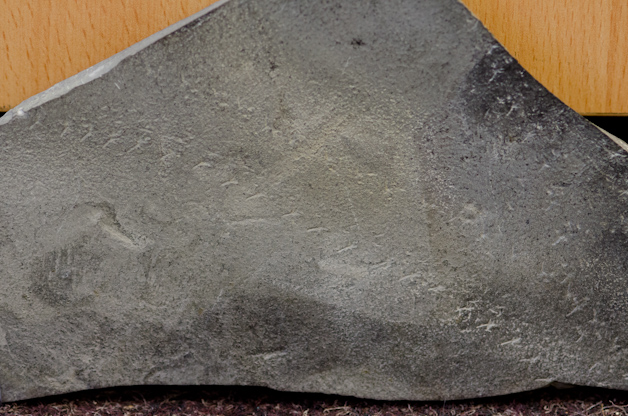
What’s exciting is what Bruno is holding in his hand: a piece of shale that he collected while on holiday in Cornwall and correctly identified as containing a faint fossilised imprint. Members of the After-School Club are encouraged to collect specimens and bring them in each week to identify and talk about them. When Bruno brought his rock along we were somewhat stunned by what appeared to be a very rare trace fossil – a fossilised mark or imprint, rather than the more common fossilised body parts.

There was some discussion and microscope-peering amongst our expert geologists before the fossil find was finally confirmed by the Museum as being the foot and tail prints left by a pair of mating horseshoe crabs, crawling up a muddy shore around 320 million years ago. You can see in the picture here what a fully grown horseshoe crab looks like; a specimen of the size that made the trackways is perched on top of Bruno’s fossil.

The footprints left by the horseshoe crab can be seen in a trail running from the top left to the bottom right of the shale slab.

It takes a very keen eye to spot such faint tracks and plenty of enthusiasm to go hunting for them. It’s exactly this kind of enthusiasm that the Natural History Club is trying to nurture, so we’re delighted to be able to report Bruno’s incredible find and we are especially pleased that Bruno and his family have decided to donate the fossil specimen to the Museum’s collection.

Scott Billings, Communications coordinator

More than a dodo

The Museum of Natural History has made it onto Twitter! We are now live and ‘squawking’ with the handle @morethanadodo.

We’re delighted that we’ve gathered almost 300 followers in just one week and several people have already spotted the jingle hidden in our name… can you sing the next line?! If you’re a tweeter, please do follow us to discover more snippets of what’s going on behind the scenes at the Museum.

Tweet of the WeekWe’ve had some great tweets so far, which has inspired us to set up a ‘Tweet of the Week’ board in the Museum entrance. This week’s winner is…

My favorite place in the WHOLE world is now on twitter. Everybody rush and follow @morethanadodo

Why not become a dodo disciple, then get your tweet up here for all to see?

Rachel Parle, Education Officer