Etymology of Entomology

Darren and George
Image: Folded Wing

As a massive BBC Radio 4 fan, I’m always amazed at the variety and quality of documentaries that I come across, and I’m excited to say that tomorrow the Museum will be part of this!

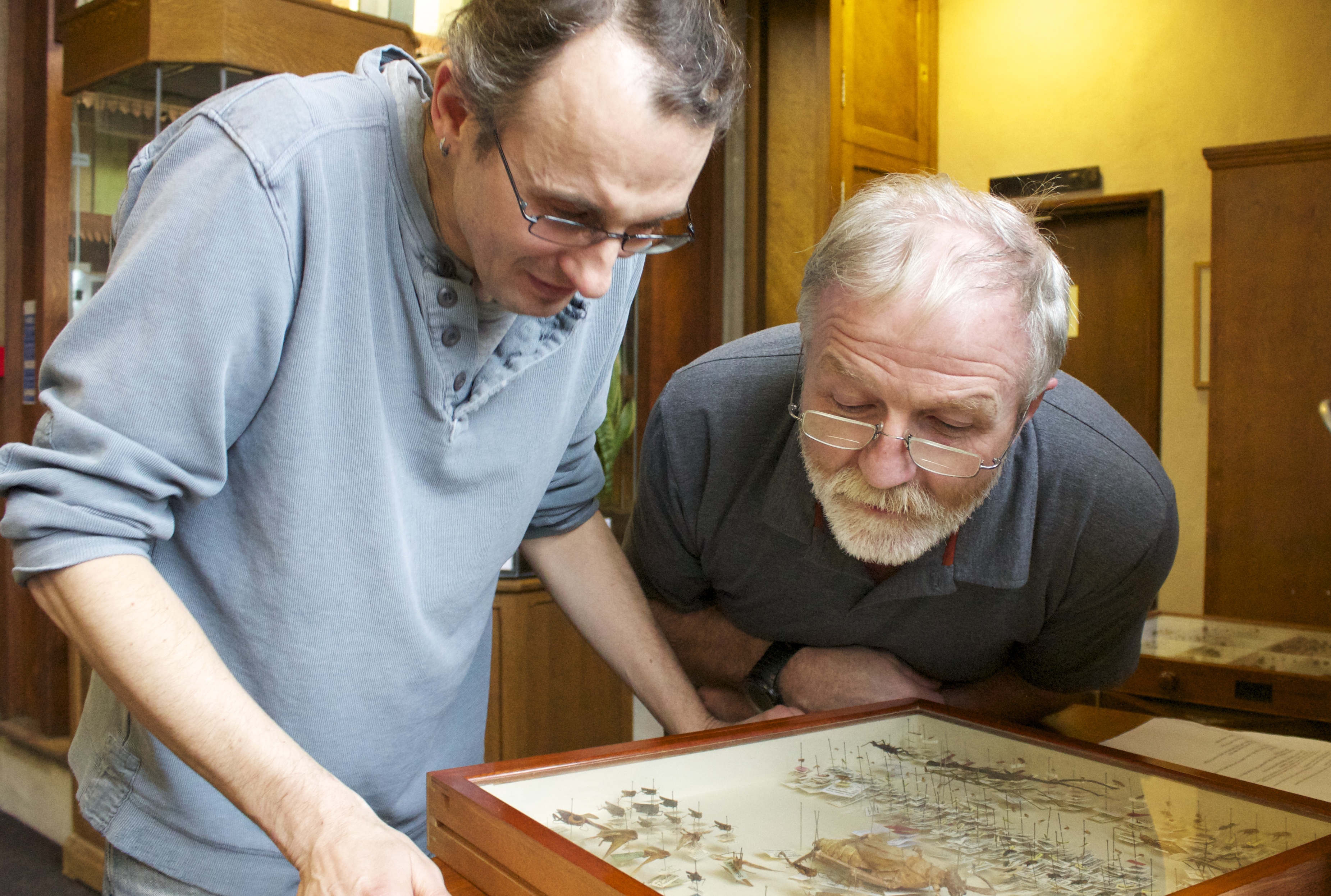
Dr George McGavin, our Honorary Research Associate in Entomology (above right), is presenting a programme called the Etymology of Entomology, which explores the fascinating names given to the planet’s 10 million plus insects. For example, did you know there’s a fly named after Beyonce?!

Featuring on the programme will be Darren Mann, our Assistant Curator of Entomology (above left) who discusses some of his favourite insect names and even some named after himself and George.

I’m proud to say that I will actually be making a fleeting appearance too, to talk about how we use scientific language with children. I was pretty nervous during recording so please excuse me if I say something completely odd!

So, on Saturday 9th March at 10.30am, tune your radios to BBC Radio 4 for The Etymology of Entomology. It’s even been chosen as Radio 4’s Documentary of the Week so it will be available to download for a week from Friday 15th March. In the meantime, you can listen to a quick clip here and find out some of the Entomology department’s favourite insect names on their excellent blog.

Rachel Parle, Education Officer

Moving on up

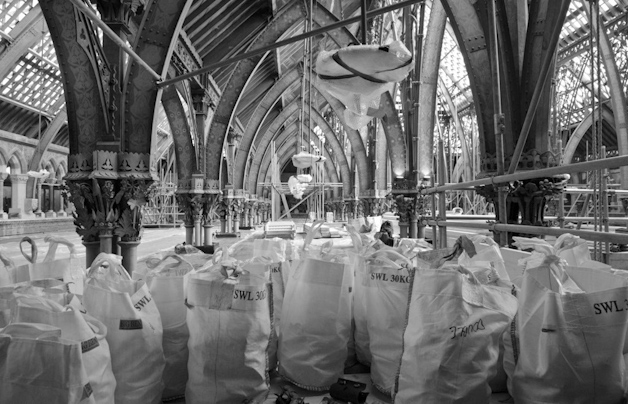
Moving on upAs the scaffold is noisily constructed around us, the roof work is about to move even higher into the heavens. To support the workers at the highest levels of the roof, a ‘winged’ platform must be extended through spaces made in the glass tiling and out to the external rooftop for anchorage.

There are 8,500 glass tiles on the roof, although around 2,200, in the south aisle, have already been stripped and cleaned during the first phase of the repair work last year. In the current phase a further 360 tiles have been removed so far.

The majority of the tiles are from the original Victorian construction, but there have been some later replacements, installed after high winds caused slates in the swift tower to fly off and smash the glass. These later tiles will be removed and replaced with new ones containing a UV filter sandwich layer.

On Thursday and Friday this week, the Ashmolean Museum in Oxford is hosting this year’s University Museums Group Annual General Meeting. Delegates from the meeting were treated to a view of the higher reaches of the roof thanks to a special tour by the project architects Purcell.

Moving on up

Moving on up

Moving on up

Scott Billings, Communications coordinator

Archiving the Aardvark

DMC-LX3 - 0026
Image: Mike Peckett

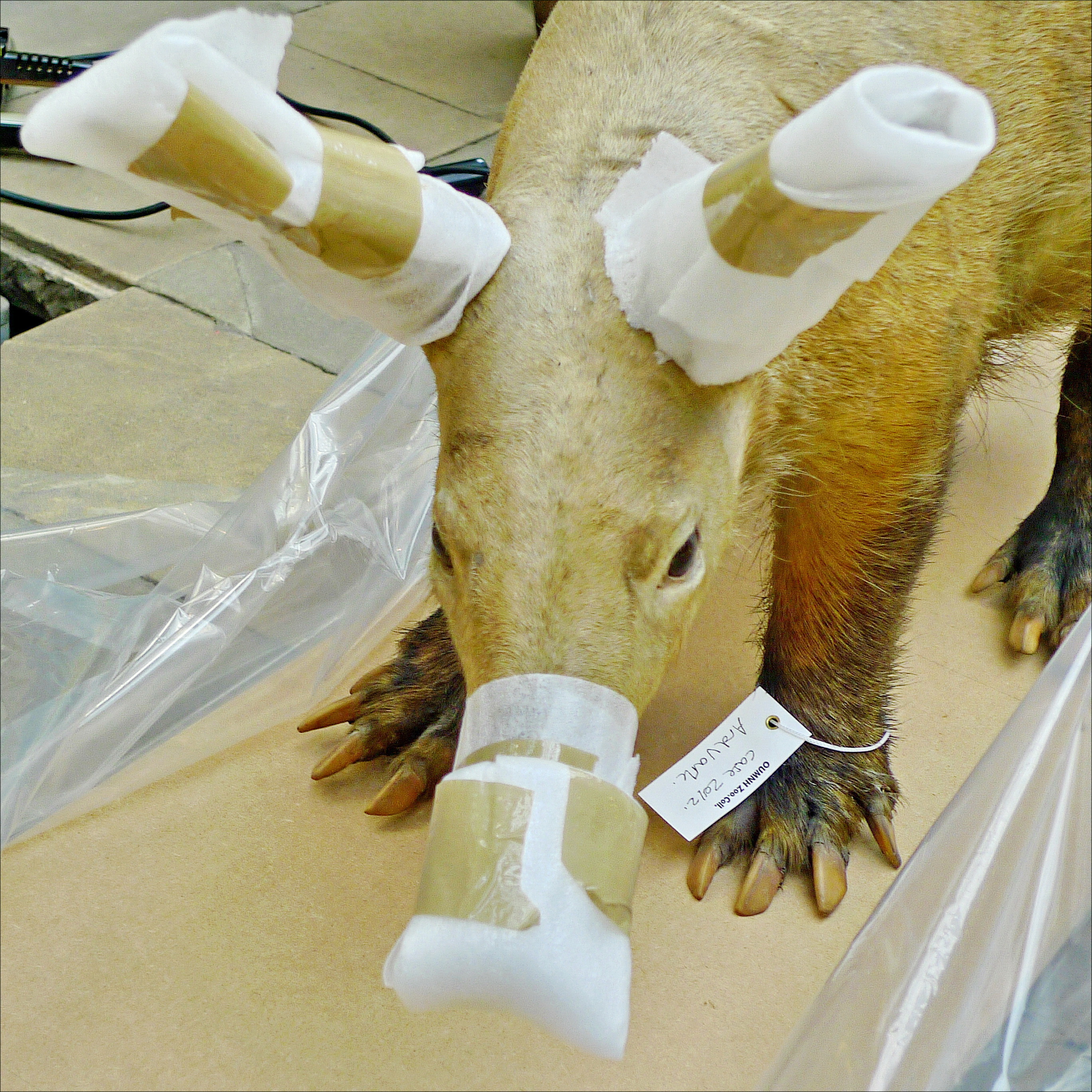
This aardvark is looking decidedly grumpy but this undignified treatment is for his own good!

With scaffolding rapidly filling the Museum, almost all of our specimens have been moved, boxed or wrapped to protect them during our closure year. For many, this is simply to make sure they don’t get a bump or a scratch while all the roof repairs are going on, but for our furry and feathered friends, we have other concerns.

Bethany Palumbo, Conservator of Life Sciences explains:

“As the display cabinets were boxed up for the duration of the renovation, we felt it was important to remove taxidermy specimens that were vulnerable to insect pest attack. Specimens such as birds and mammals have fur and feathers which are very appetising to a variety of small insects, including Webbing Clothes Moth (Tineola bissilliella). These moths can destroy entire specimens in a relatively short time, eating both the fur or feathers and the skin.  If an infestation occurred within a display case, we wouldn’t know about it until it was too late. So, we spent a week removing and safely packing up many display specimens. They now are stored on the upper gallery and are accessible to staff who might want to use them. The conservation department will be documenting the condition of the specimens and will clean them up before they return to display”.

DMC-LX3 - 0032
Image: Mike Peckett

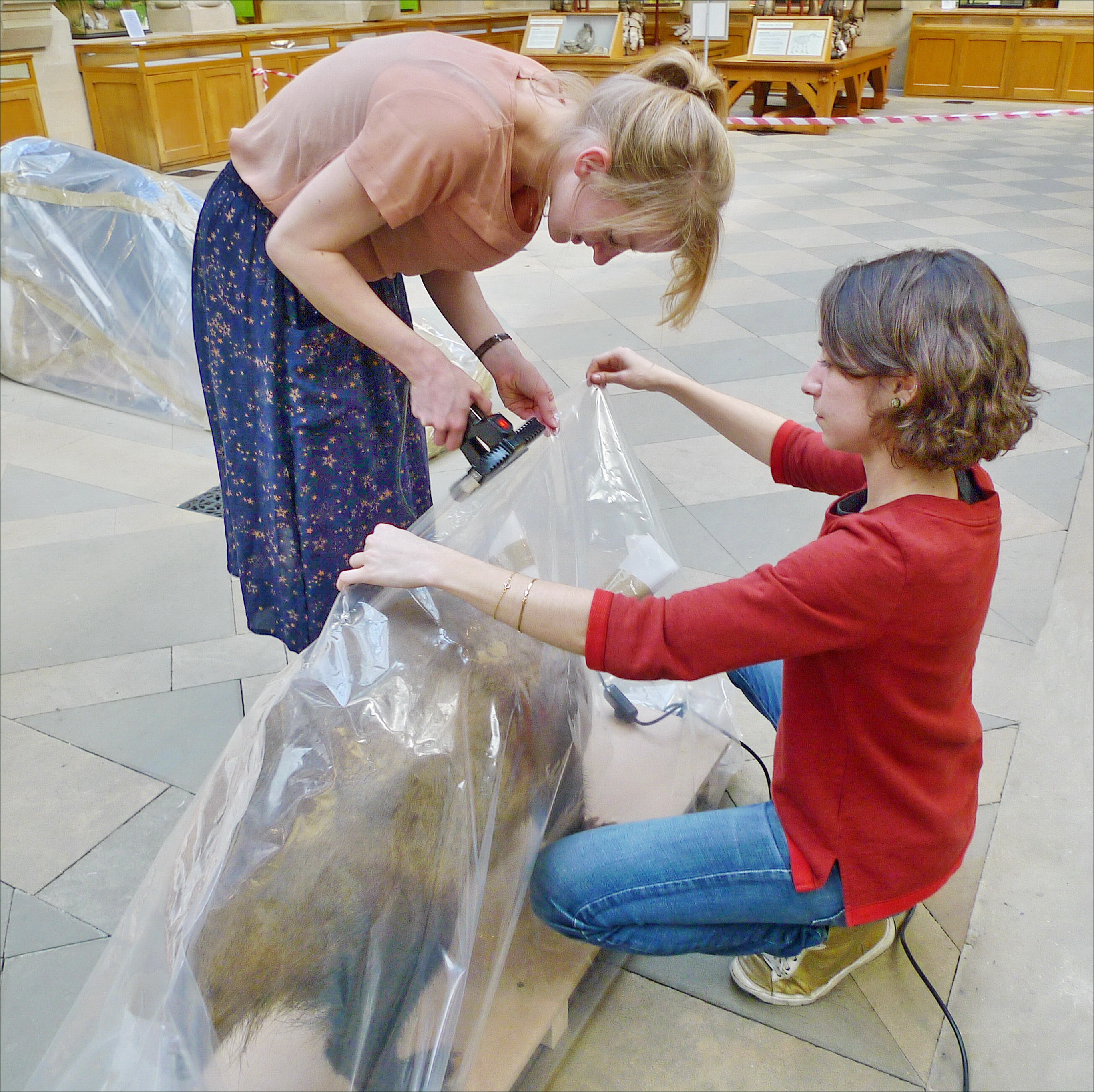
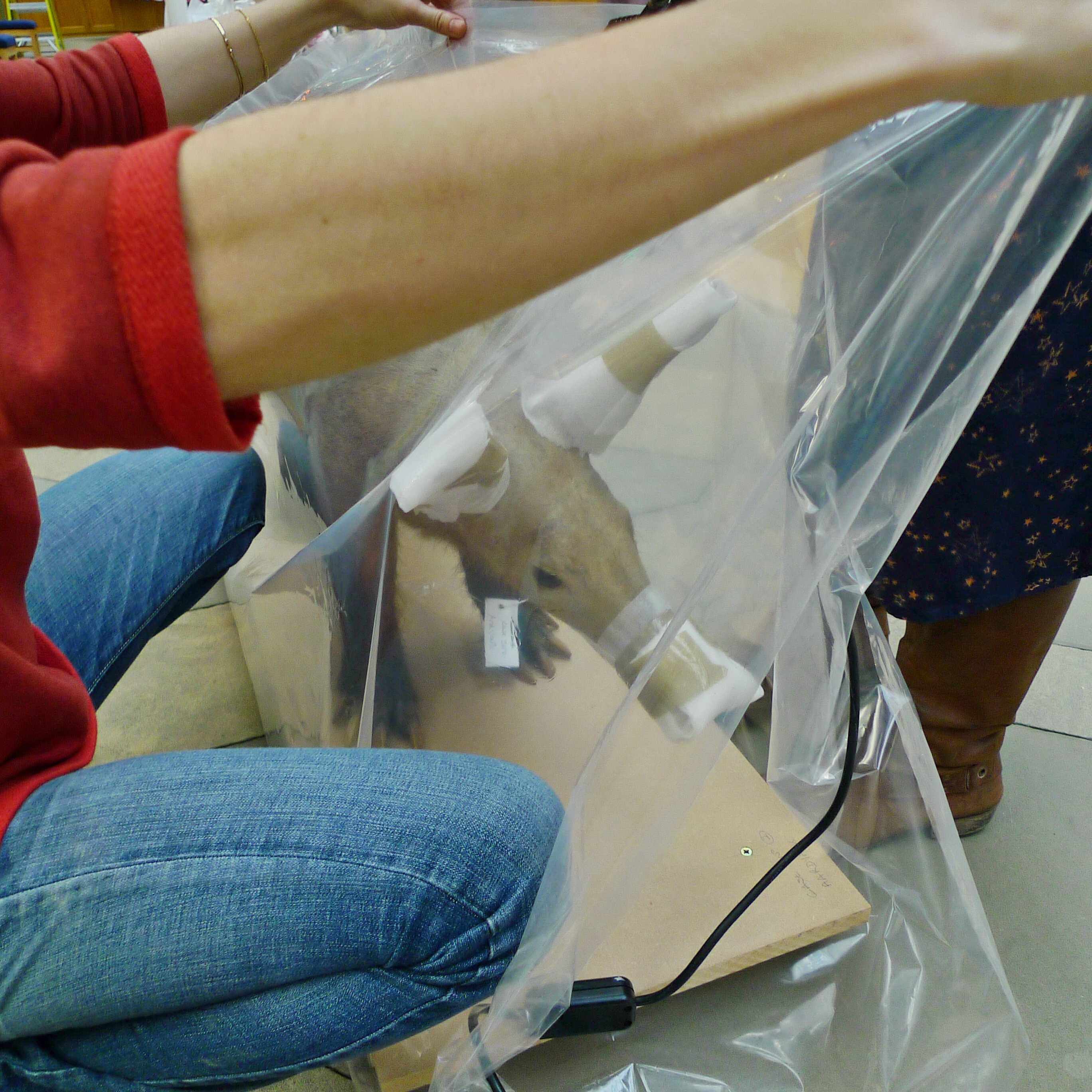
Here, Education Assistant Simone Dogherty (left) is helping Bethany (right), to carry out final preparations before the aardvark joins his companions in the Museum’s storage space. So the aardvark’s neatly wrapped snout and ears will ensure he doesn’t get damaged and the well-sealed bag will guarantee he remains pest-free for the year ahead.

DMC-LX3 - 0033
Image: Mike Peckett

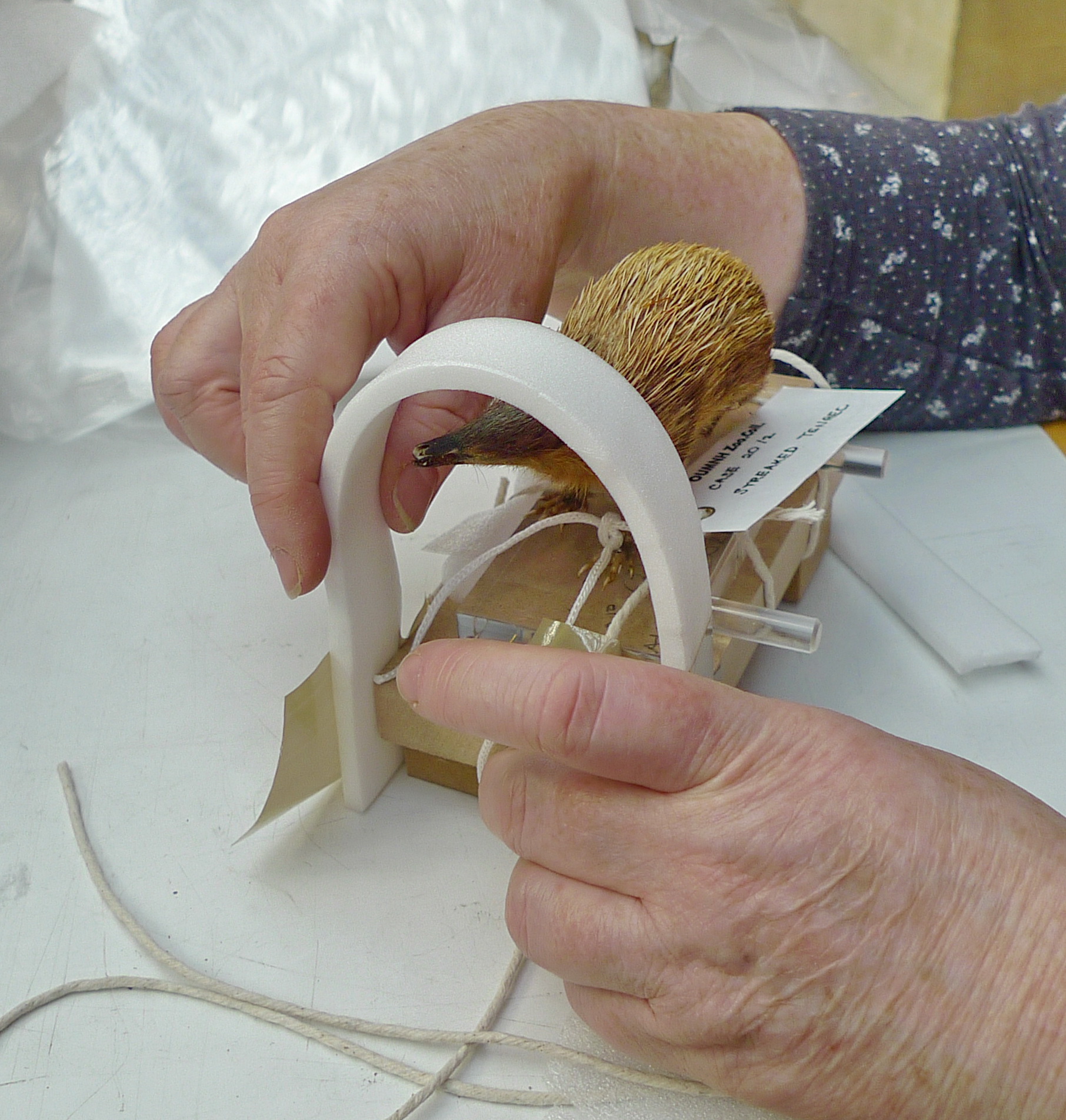
I must also include this lovely photo of a little tenerec getting the VIP treatment for his year in storage.

DMC-LX3 - 0034 - Copy
Image: Mike Peckett

I look forward to seeing the aardvark and all our other animals back on display and looking their very best (with no nibble marks!) next year.

Rachel Parle, Education Officer

The Etymology of Entomology
Honorary Associate Dr George McGavin and Assistant Curator Darren Mann of the HEC will both be putting in an appearance on the BBC Radio 4 program ‘The Etymology of Entomology‘ which is being broadcast this Saturday, the 9th of March at 10:30 (BBC Radio 4 FM: 92.5–96.1).

“Zoologist Dr. George McGavin delves into the strange and often bizarre names given to the planet’s insects.

There are an estimated 10 million living insect species, with new specimens being discovered almost daily. Entomologists are turning to ever more imaginative names, referencing everything from literary figures, celebrities and politicians to playground puns.

George takes us into the complex and intriguing world of the taxonomist. From the 18th century father of modern taxonomy Carl Linnaeus to the present day, he explains why naming the things that surround us is the foundation of all science.
There are flies named Pieza kake and S. beyonceae (after the singer); beetles with political connections – A. hitleri, A. bushi, A. cheneyi and A. rumsfeldi; and some entomologists have even named discoveries after romantic conquests. Unsurprisingly, names can prove controversial but, once set, are difficult to change.”

We hope that this will be a fun introduction for anyone who has questions about how and why we name species in the way that we do. We will be writing blog posts in the future that tackle the subjects of taxonomy and classification in both the broader sense and the minutiae so for the moment, let us leave you with a selection of our favourite fun names of insects and animals:


EDIT: An article about the radio show has now appeared on the BBC News website in the Science and Environment section.