Into the Wilderness

Wildnerness python

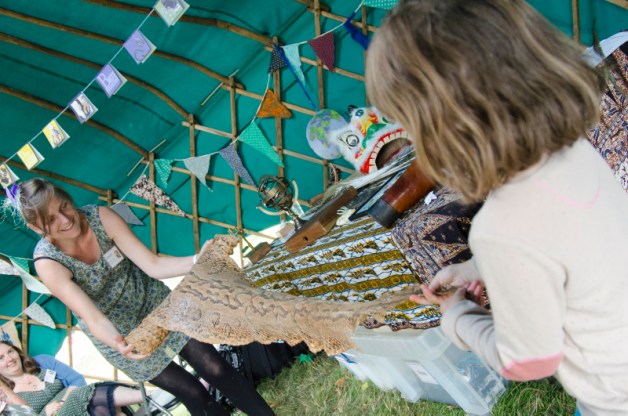
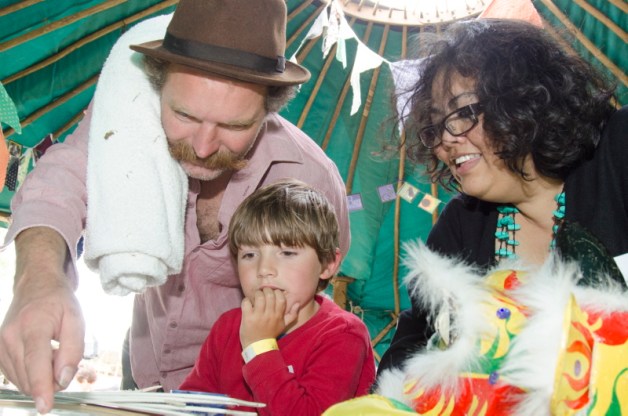
Ah, the rough-smooth joy of snakeskin. Who could resist a little stroke? Well, a few people definitely can it seems (ophidiophobics), but certainly not this young chap. Along with hundreds of other visitors, this family stopped by at the Oxford University Museums yurt at this year’s Wilderness Festival where we spent four great days showing off objects from the collections and indulging in a bit of festival craft.

Wilderness signThe weather was kind, and armed with a brilliant team of volunteers and festival-hardy staff we welcomed costumed, painted and be-masked revelers to our tent to learn about the museums and get up close to some great objects. Outside in the sunshine, people whiled away the day making Pitt Rivers Museum-inspired hats, Museum of the History of Science planispheres and our own peacock headdresses.

Peacock headdress
Peacock headdress

We had a really positive response to everyone who came along and joined in with the activities, and although I shouldn’t brag, this is a nice comment from one parent which I will share:

We had a really fantastic time at the Oxford University Museum area. They love making Napoelon style hats which kept them occupied for ages. They also really enjoyed looking at the bugs and inspecting the snake skin. The staff couldn’t have been more helpful – they had a great rapport with the kids and were a friendly team. Please come again next year!” – Mother and two daughters, aged 8 and 6.

As for Wilderness itself, things took a rather stranger and more adult turn after nightfall as the Bacchanalian Masked Ball got into full swing in a hitherto hidden vale amongst the lantern-lit trees. No record exists of that portion of the evening but suffice to say that visions were beheld and morning heads were a little sore.

Yurt
The camp
Family
Investigating the collections
Insect drawer
The pinned insect drawer
Rock python
The ever-popular rock python skin (so long it didn’t fit in the tent!)

Thanks to everyone who came to help out, and to everyone who visited on the day. And thanks to the Wilderness Festival team for setting us up with a lovely green yurt as our base-camp.

More next year, perhaps…

Scott Billings, Communications coordinator

Thanks to Chris Wood for the photos.
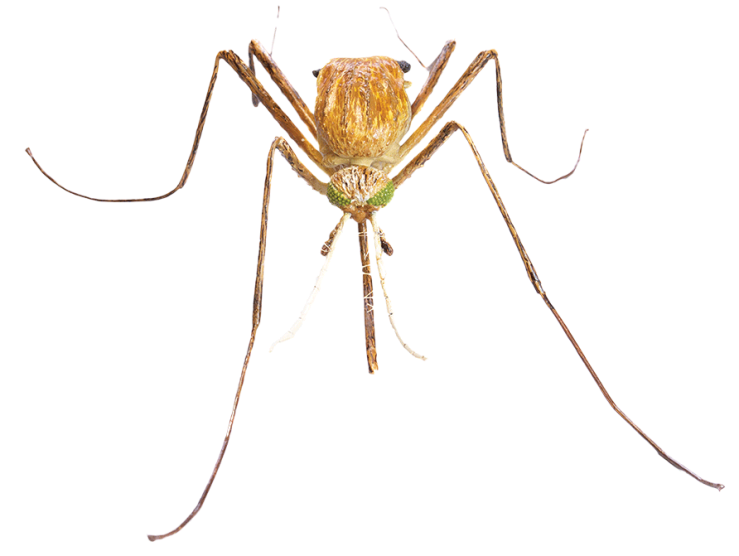
What’s on the van? – Mosquito

_mosquito_head_on

This week’s What’s on the van? comes from Zoë Simmons, of the Museum’s Hope Entomological Collections.

The word mosquito (formed by mosca and diminutive ito) is from the Spanish or Portuguese for “little fly”. Approximately 3500 species of mosquito have been described to date. The females of a few species require a blood meal in order to lay fertile eggs but many more do not and of those that do, only a handful are disease vectors (a carrier of disease).

These few species however, are of global importance to the human race as they can transmit diseases such as Yellow Fever and Malaria. As a consequence, the mosquito has been dubbed ‘the most dangerous animal in the world’. A large amount of scientific research has been put into combating mosquitoes and the diseases that they carry, but some of the most important information has come from entomologists who have studied mosquito behaviour and lifecycles in detail. From this, scientists have been able to get a better and more complete understanding of the species and thus develop more effective methods of eradication and disease management.

What's on the van?

Hidden Treasures

ammoAs you know, the Museum of Natural History is closed to the public throughout 2013 for restoration work on its leaky vaulted roof. Although our central galleries are thrown into shadow, there’s still plenty going on behind closed doors.

But if you’re missing your visits to the Museum, or have always wanted a peek behind the closed doors of our collections, now is your chance! On Saturday 24th August you can join one of our FREE behind-the-scenes tours as part of the national Hidden Treasures campaign

Hidden treasures logo_small

Expert staff from the museum’s collections will be your guides; see where fossils get fixed, explore the high-tech kit used to see inside minerals and even meet the oldest pinned insect in the world! I’ll be there on the day and would love to meet some “Darkened” followers. Don’t forget to book your places through our What’s On page.

Rachel Parle, Education Officer


What’s on the van? – Aragonite

_DSCN8449

This week’s What’s on the van? comes from Monica Price, Head of Earth Collections.

Can you believe your eyes?
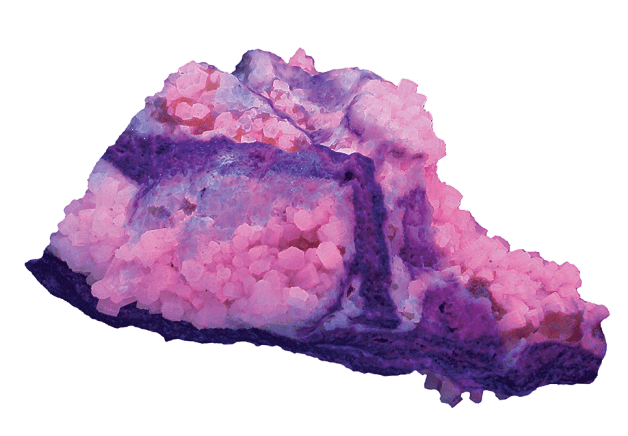
If I were to tell you that these crystals of aragonite (composed of calcium carbonate) from Sicily are a dull grey colour, you might not believe me. Look at them in daylight or under ordinary room lights, and you will see that they really are! The picture on the van shows how they look when they are fluorescing – glowing pale salmon pink under an ultraviolet light.

Ultraviolet (UV) light is part of the electromagnetic spectrum, like visible light, microwaves, radio waves and X-rays. Humans cannot see UV light, which is why we sometimes refer to it as ‘black light’. It has just a little bit more energy than the visible light which we can see.

Some minerals contain a chemical activator which allows them to fluoresce. When UV light shines on a fluorescent mineral, the energy bounces some of the mineral’s electrons out of their orbitals. A tiny bit of the energy is converted to heat, so that when the electrons fall back, the rest of the energy is emitted again, but now it is visible light. The mineral literally glows in the dark.

As long as ultraviolet light shines on the mineral, it will continue to glow. You will be able to see lots of fluorescent minerals when the Museum reopens next year!

What's on the van?

Roof with a view

Roof top at sunset
Credit: Mike Peckett

Earlier this week, sunshine and storm clouds created the perfect conditions for this dramatic shot. Mike Peckett, who is a member of the Front of House team and an excellent photographer, was up on the Museum’s roof capturing the latest developments in our restoration project. More to come on that soon, but I couldn’t resist sharing this beautiful image to end the week.

Rachel Parle, Education Officer