

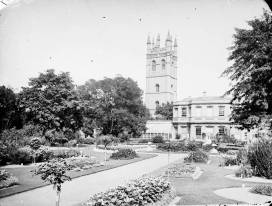
Celebrating 400 years of botany at Oxford University
By Danielle Czerkaszyn, Librarian and Archivist
As a natural history museum, we are perhaps slightly unusual: aside from some fossilised plants, there are no botanic specimens in our collections. The reason for this is that when the Museum opened its doors in June 1860, Oxford Botanic Garden had already been around for a considerable 239 years, and it was considered unnecessary to move it.
Today, the Botanic Garden celebrates 400 years since its founding as the Oxford Physic Garden on 25 July 1621. To mark this anniversary we’ve explored our archive to highlight some connections between the Museum and Botanic Garden, in a relationship that continues to this day.
With its Pre-Raphaelite influence, the design of the Museum was conceived as an object lesson in art; both beautiful and instructive, it should teach students and visitors alike about the natural world. One of the most noticeable decorative teaching tools are the columns, capitals and corbels that surround the main court of the museum. Following Pre-Raphaelite principles, these were designed by Professor of Geology and the first Keeper of the Museum, John Phillips, who sketched most of the designs and outlined the order they would go in.
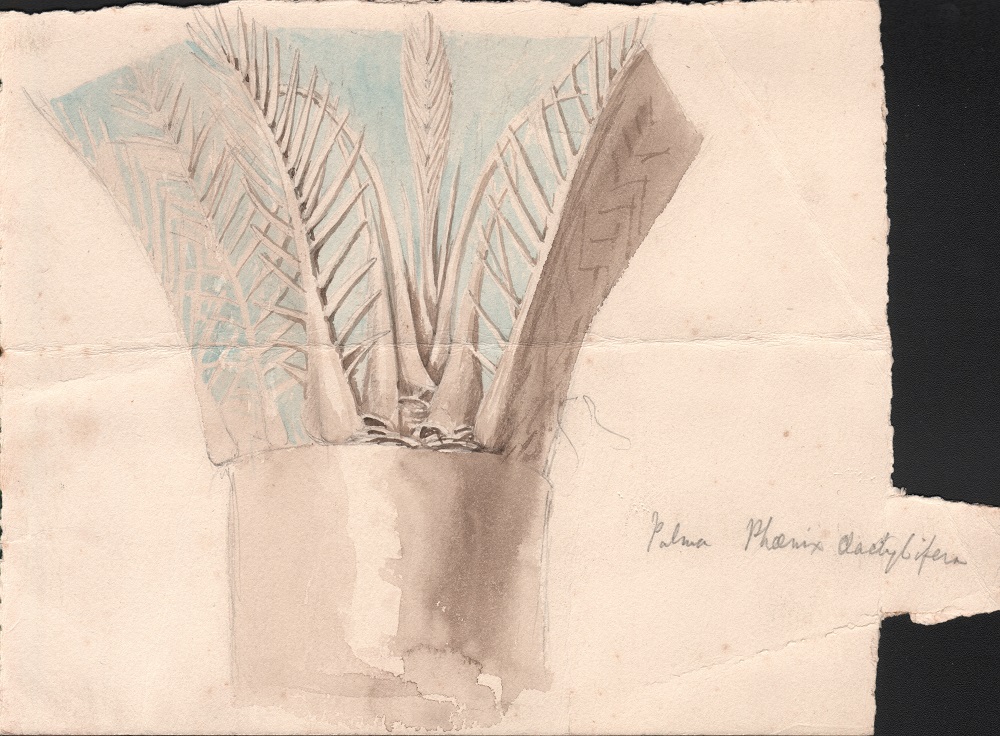
Watercolour by John Phillips illustrating a design for a capital 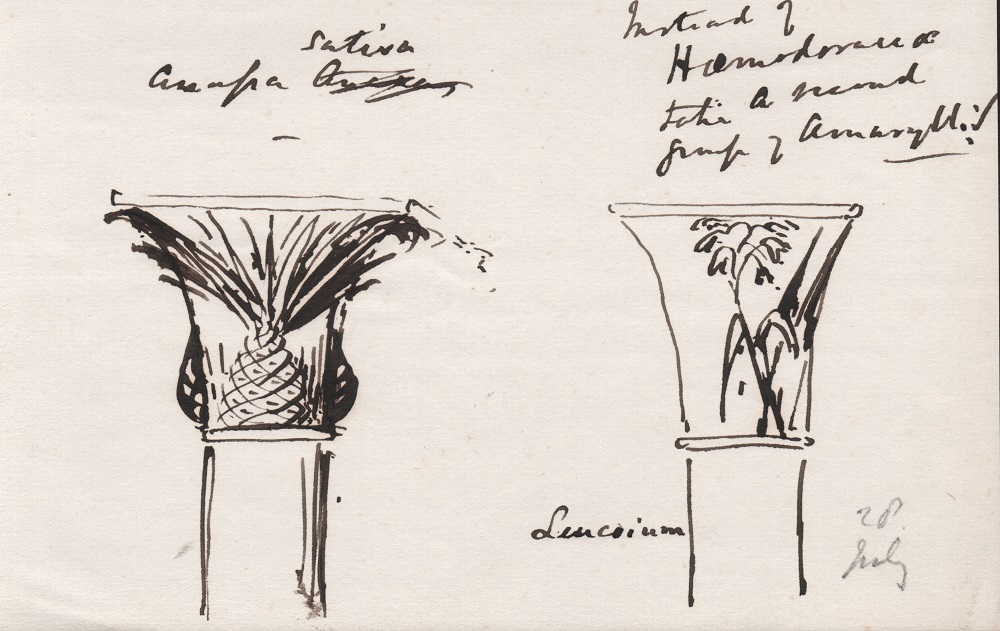
Ink sketch by John Phillips of capital designs 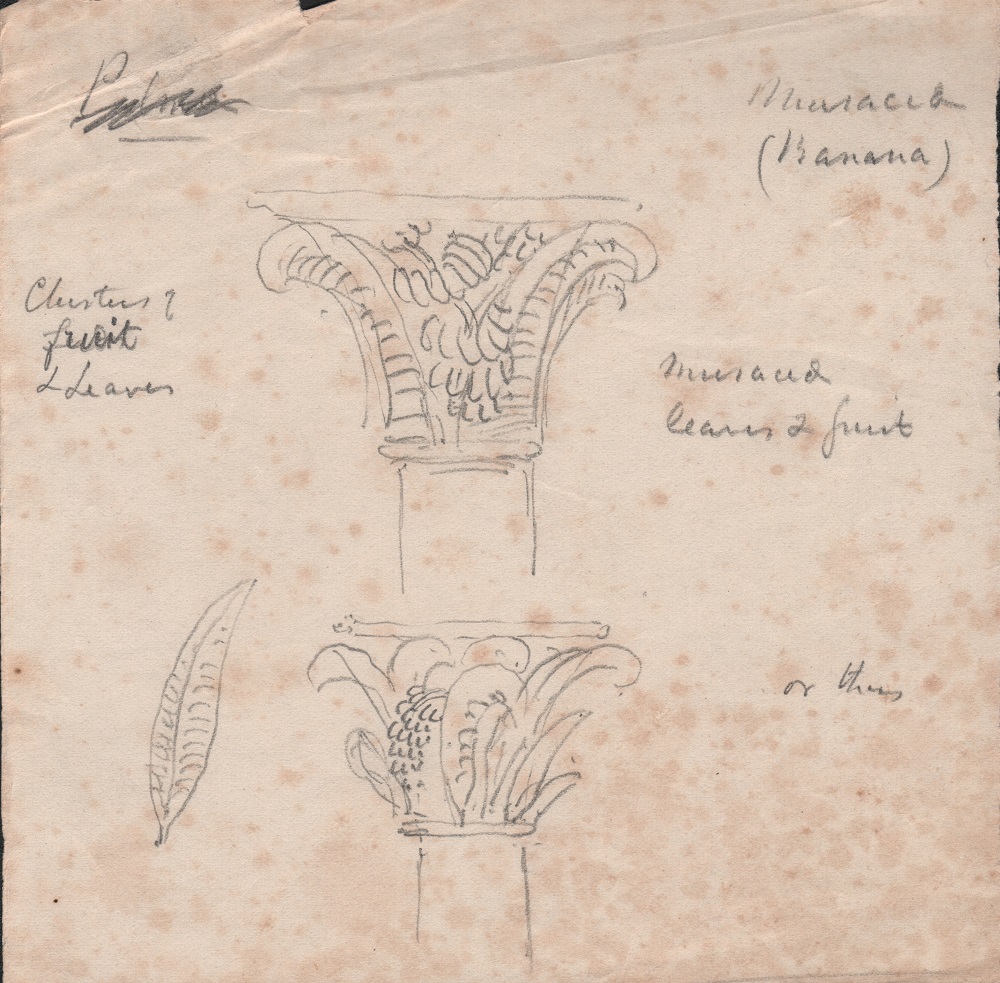
Pencil sketch by John Phillips of capital designs 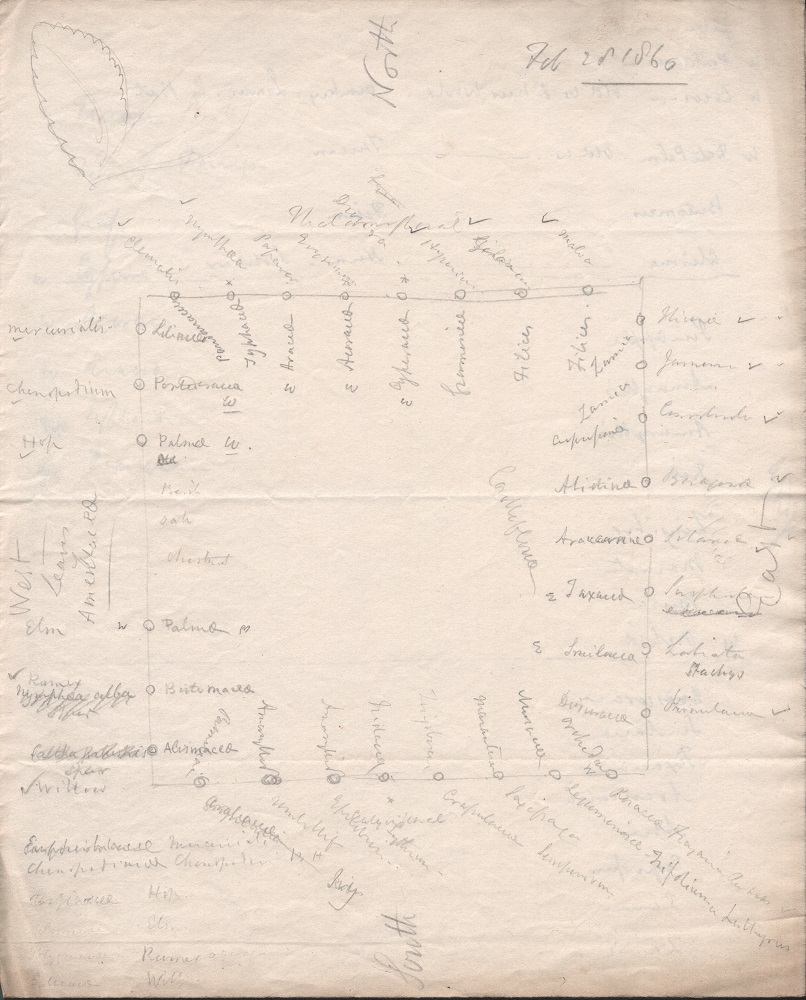
John Phillips’ plans for the arrangement of the capitals 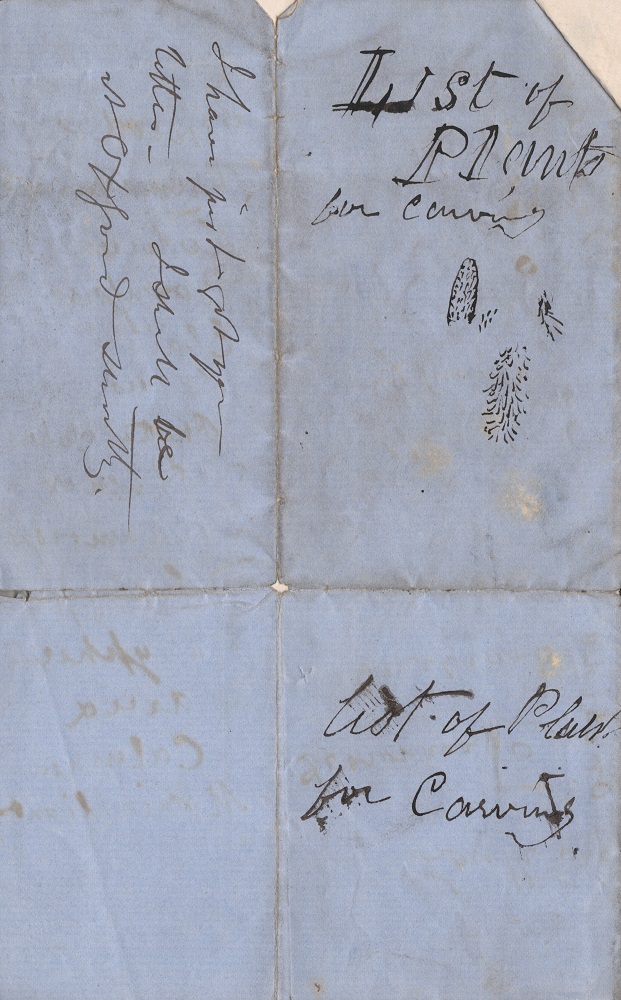
John Phillips’ list of plants to use for the carving of the capitals 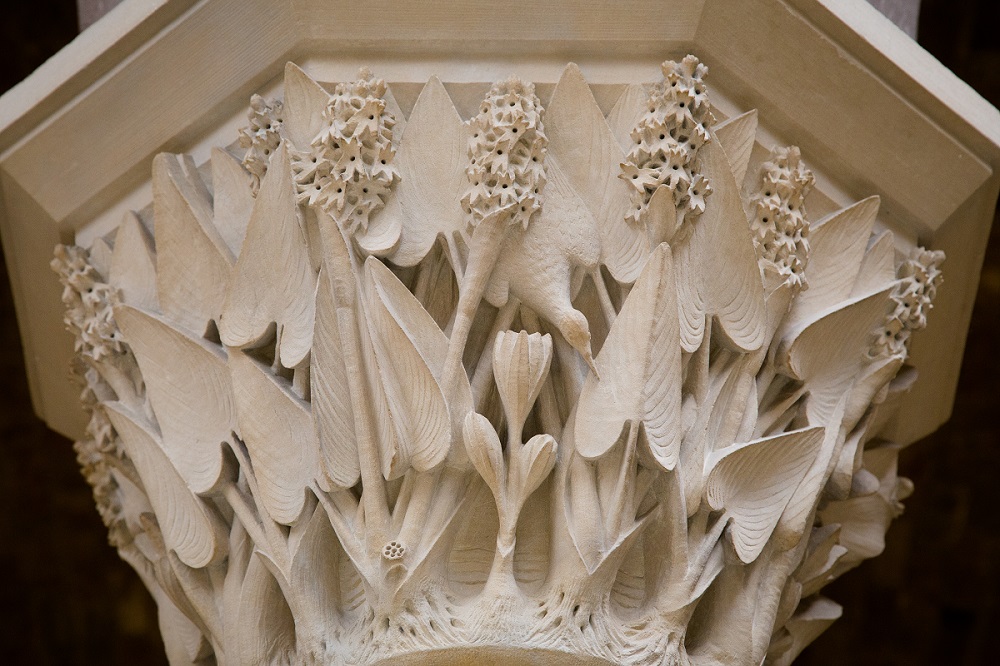
A finished carved capital in the Museum today, showing plants and animals
The plans called for 126 columns, 64 piers and 192 capitals and corbels. Each column was made from a different decorative stone from around Britain and Ireland, topped with a carved capital and flanked by a pair of corbels carved into plants representing the different botanical orders. As it was decided early in the design process for the Museum that the Oxford Botanic Garden would not move from the High Street, these carved plants were meant to ‘satisfy the botanist.’ Each column was supposed to be labelled with the name of the stone, its source, and the botanical name of the plant, but unfortunately only the geological inscriptions were completed.
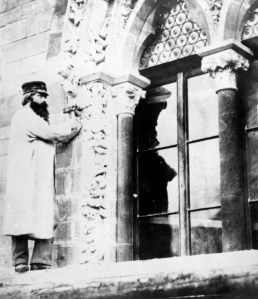
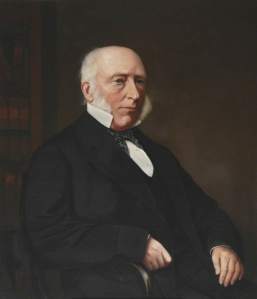
The carvings were created by ‘Nature’s own Pre-Raphaelites’ the O’Shea brothers, James and John, and their nephew, Edward Whelan. Working in collaboration with Charles Daubeny, Professor of Botany and head of the Oxford Botanic Garden, Phillips supplied the O’Sheas with specimens of the plants he had chosen, and so the carvings were made from life. Each capital is different and unique based on the plants they were representing. Some are simple and elegant while others are more intricate and hide small birds, animals and insects.
Phillips also worked with another curator at the Botanic Garden, William H. Baxter, who advised on suitable trees and shrubs to adorn the grounds surrounding the Museum. Over the years, as landscaping has changed and additional science buildings have been added around the Museum, only one of the trees chosen by Phillips and Baxter has survived. It is the imposing Giant Sequoia on the front lawn, which was planted in the early 1860s and is believed to be one of the oldest specimens in the United Kingdom.
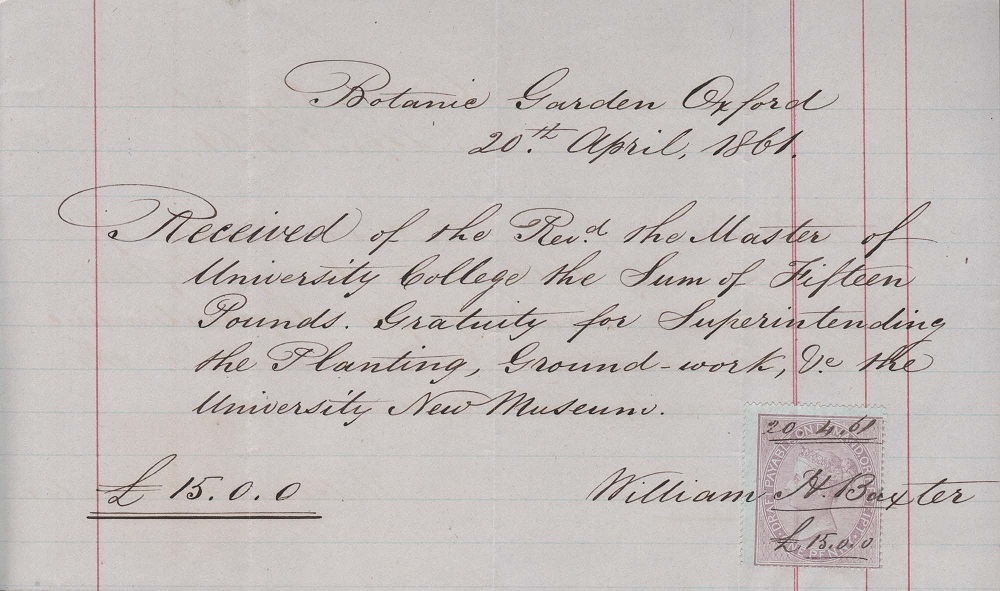
Bill to Oxford Botanic Garden for planting trees and shrubs for the new Museum 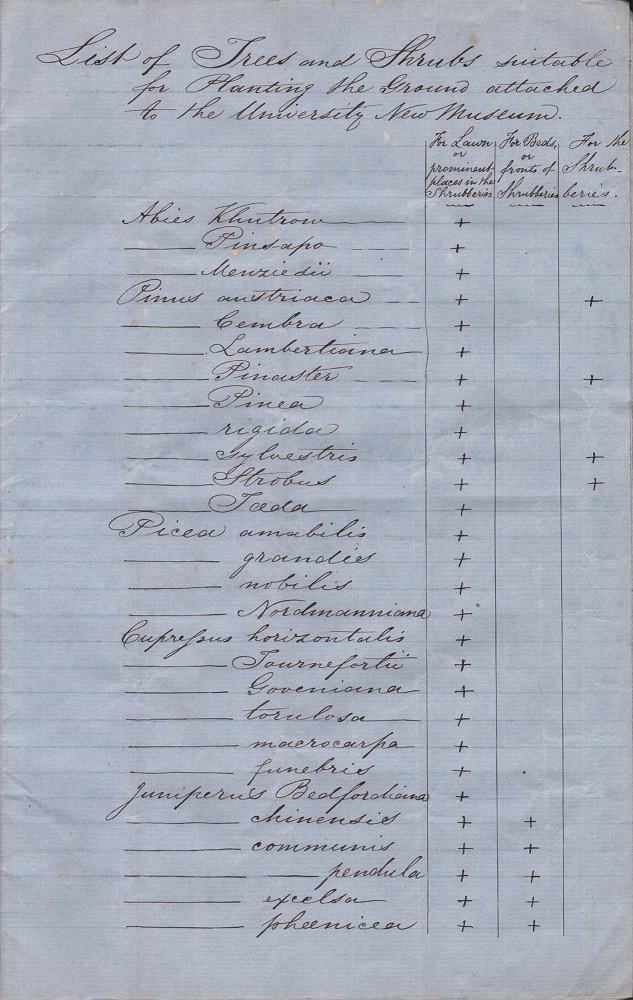
List of trees and shrubs suitable for grounds of ‘University New Museum’ 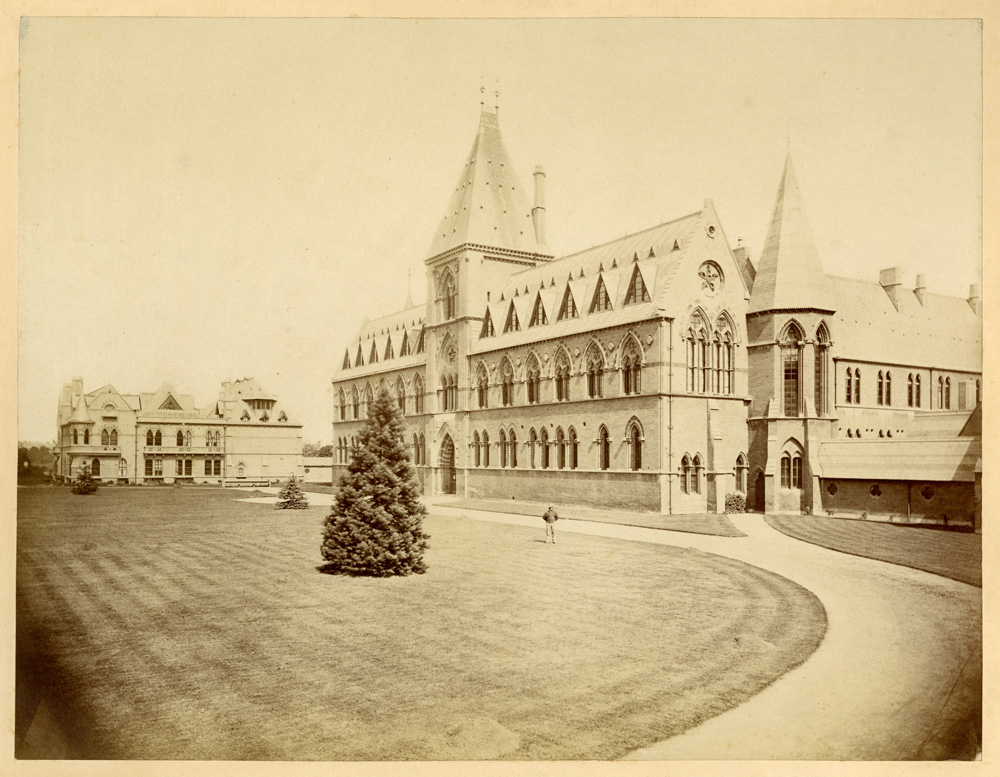
The Museum c.1900 showing the then-tiny Giant Sequoia on the far left of the image
Our connection to Oxford Botanic Garden continues to the present day. As the Museum embarks on the first major redisplay of its permanent exhibits in almost 20 years, staff are collaborating with the Garden to reference plants for displays showing the immense, interconnected variety of the natural world.
We are very pleased to be strengthening the Museum’s long relationship with the Botanic Garden, and would like to take this opportunity to wish everyone there a very happy 400th birthday!


 More Than A Dodo