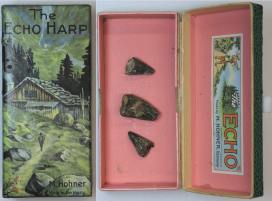
The outside and inside of a box, showing its contents

Boxes, Bags, and Bones

NO, THERE WEREN’T HARMONICAS IN THE JURASSIC!


Looking through the collections at OUMNH never gets boring, but sometimes a drawer will open up to reveal something even more eye-catching than the fossils usually found inside. Whilst working on the Museum’s Jurassic marine reptiles a few weeks ago, I came across something particularly surprising: a jewel-green box with a fantastic piece of art on the front. I was instantly intrigued and reminded of all the other times I had encountered a holder as fascinating as the specimen inside it.

Storage in museum collections is an ongoing pursuit of balance between ideal environmental conditions, specimen accessibility, and efficient use of space. This balance applies to all levels of storage: from building to room, cabinet to specimen tray. OUMNH’s Earth Collections are stored in conservation-grade, acid-free boxes or trays made of plastic or cardboard. These boxes are sometimes layered with low-density foam or ‘plastazote’ which can be carved to fit the specimen and keep it from being jostled or damaged. Holders with lids can also provide a micro-environment for specimens to help minimise their exposure to changes in humidity and temperature. The use of these standard materials not only helps protect specimens from degradation but can also deter pests from harbouring in collections spaces.

However, historical collections like those at OUMNH may retain holders that are not standard use. Sometimes, a clean and empty plastic Ferrero Rocher box is the perfect size for that small mammal skeleton that needs storing! Other times, an unusual holder might have been the only thing a field collector had on hand to transport a specimen to the Museum.
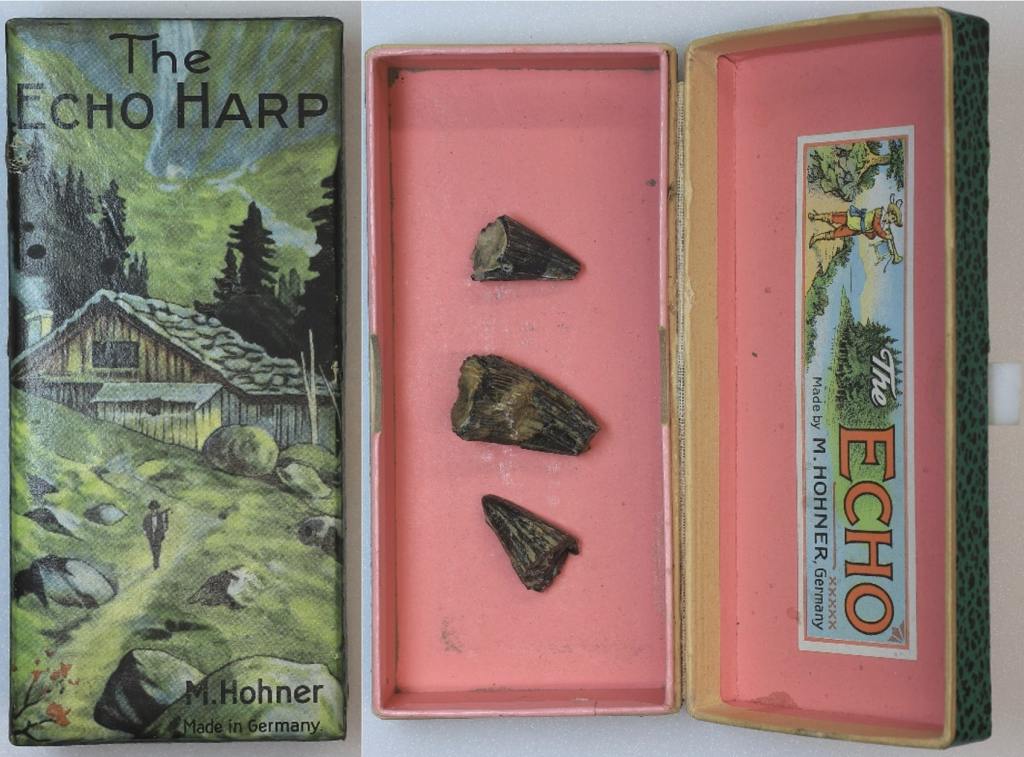
A harmonica box containing pliosaur teeth, a marine reptile that lived during the Jurassic (145.5 million – 201.6 million years ago).

One example of an unusual specimen holder is this ‘Echo Harp’ box by pre-eminent German harmonica manufacturer Hohner, likely from the 1960s. The box no longer holds a harmonica, but instead accompanies pieces of Jurassic pliosaur teeth from Weymouth, Dorset. Pliosaurs were a kind of carnivorous marine reptile related to plesiosaurs, with four flippers, and long tails and necks. If they hadn’t gone extinct in the Cretaceous-Paleogene extinction event 66 million years ago, perhaps they would have come to appreciate the harmonica and its artistic packaging!

Aside from their artistic value, museums may sometimes retain unusual holders because they contain primary source information on the specimen. One such example is a ‘Bryant and May’s Patent Safety Matches’ box in our Earth collections, bearing a packaging design from the early 1900s. The box actually houses a chicken tarsometatarsus bone excavated from “High St. New Schools” in Oxfordshire and is accompanied by a label which describes the particular layer of gravel the specimen was found in — important information for any archaeological or palaeontological find. Although the specimen is stored alongside Pleistocene fossils (10,000 – 2.6 million years ago), chickens did not originate in the UK, so the bone is likely from much more recent times. Someone still must have thought it was important enough to keep in its own special holder!

A Tate and Lyle sugar bag containing a Jurassic specimen, with handwriting on the outside describing the stratigraphy the fossil was found in.

Similarly, this ‘Tate and Lyle Granulated Sugar’ paper bag features a handwritten original notation in blue pen on the outside. The bag originally contained a specimen found in a collection of Jurassic gastropods and bivalves from Somerset, with the handwriting describing the fossil’s stratigraphic information. The bag also features a recipe for cinnamon apples on the reverse, which we have yet to try!

A wooden box and the Quarternary fossils (up to 2.6 million years ago) it originally housed. An accompanying letter describes the delivery of the fossils to William Buckland, Oxford University’s First Reader in Geology.

In addition to primary source information, original holders may also provide specimens with provenance. This ovular wooden box filled with organic stuffing material originally contained Quarternary fossil specimens found in Peak’s Hole, Derbyshire. The Museum archive also holds a handwritten letter describing the specimens inside the package and how they were found. The letter dates to 1841 and is addressed to Oxford University’s first Reader in Geology, William Buckland.  The specimen holder forms part of a group of objects with such a strong interconnection, and such strong documentation, that retaining the box is a matter of course.

All in all, it’s great that we’ve come so far in the advancement of safe and stable housing for specimens. At the same time, it’s always fascinating to see what else has made its way into collections, just by nature of being able to hold things, either for a short time or a long one. Despite living in the Earth Collections – among fossils, rocks, and the geological past – these objects offer us a little bit of human history too.


By Brigit Tronrud, Earth Collections Assistant
A GUT FULL OF SAND

UNEARTHING THE PECULIAR EATING HABITS OF A TRIASSIC MAYFLY SPECIES


During the summer months, the beaches of Mallorca offer an irresistible draw for tourists and palaeontologists alike. Visitors to the small Spanish island find themselves lured by its glittering seas, captivating coastline, and tasty white sands…

…well, tasty for some, at least!

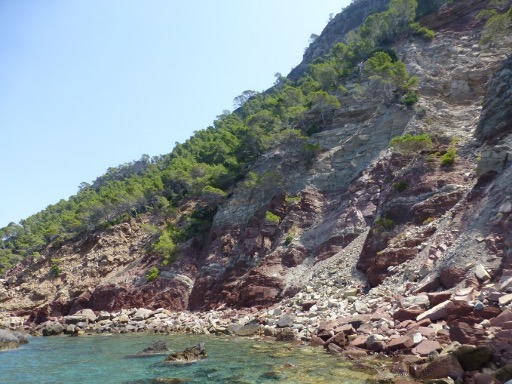
Coastal cliffs near Estellencs (Mallorca, Spain). Palaeontologists working here discovered fossils of Triassic mayfly nymphs with unusual gut contents. (photo: Balearic Museum of Natural Sciences)

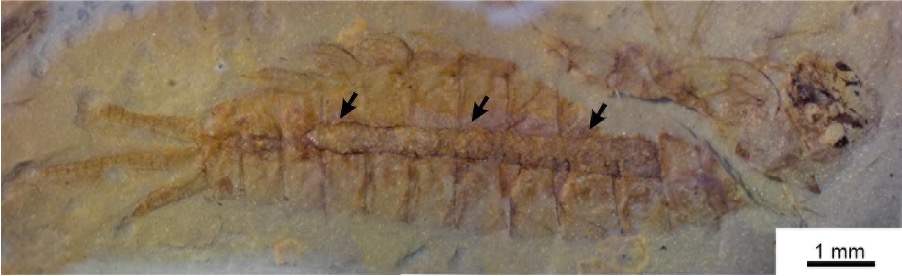
Following recent fossil excavations near the the coastal town of Estellencs in southwest Mallorca, palaeontologists have discovered evidence of a species of mayfly with a pretty peculiar diet. The mayflies in question lived 240 million years ago in bodies of water associated with ancient floodplains. Some of the juvenile mayflies (nymphs) were so well-fossilised that it has been possible to study the contents of their guts. A research team, led by Dr Enrique Peñalver, and featuring OUMNH’s own Dr Ricardo Pérez-de la Fuente, discovered that the mayflies’ digestive tracts contained a mixture of detritus (the decomposed remains of other organisms) and particles of a type of rock known as claystone. The most likely explanation for this strange food-pairing? It seems that the nymphs actually survived by eating muddy sediments that had settled to the bottom of the swampy-waters they lived in – yum!

If you’ve ever tried eating a sandwich on the beach, you’ll be familiar with the feeling of sand in your teeth. The sharp crunch of mineral sediment is worth the sacrifice for the delicious, digestible portion of your sandwich – the bread and fillings. Animal digestive systems are unable to extract energy from inorganic mineral matter, like sand. Instead, we rely on organic material for nutrition, i.e. matter derived from plants and other animals. It seems that the Triassic mayfly nymphs found in Mallorca would have munched through large quantities of sediment; digesting the organic detritus it contained, and excreting the inorganic remainder.

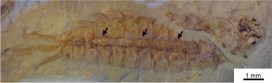
One of the numerous Early Triassic mayfly nymphs from Mallorca preserved with gut contents. These inclusions result from the original sediment the nymphs fed on (cololite, labelled here with arrows). Image adapted from Peñalver et al. (2023).

Sediment-based diets are extremely rare among living insect species. A handful of modern mayfly species have been observed to munch on the muddy sediment that surrounds the openings of their tunnels, but this is a very rare occurrence. Sediment is a pretty challenging food source, and it’s hard to say why insects may have relied more heavily on it in the ancient past. It is possible that the mayflies found in Mallorca adopted their diet as a result of the Permian mass extinction, which killed off more than 80% of all the species on Earth, ‘just’ five million years prior. With fewer choices of organic material available to eat, perhaps the mayflies were left without a better choice? Or maybe they were simply exploiting new environmental niches that opened up in the aftermath of this catastrophic event?

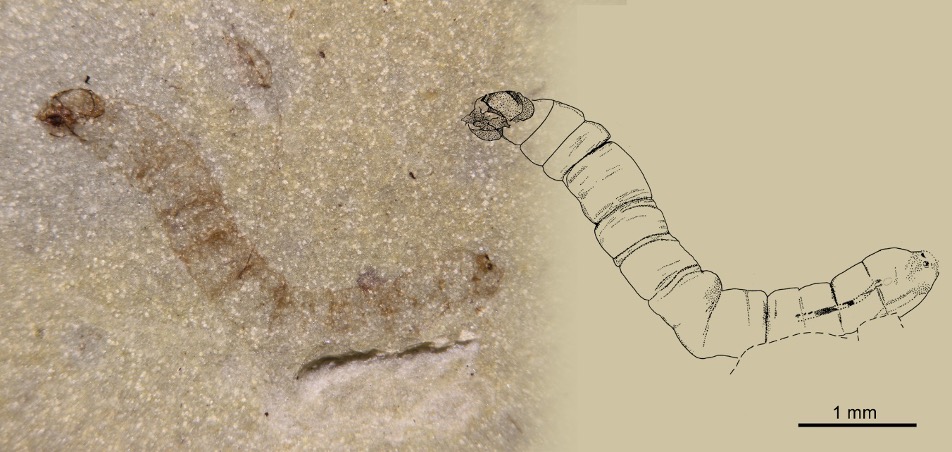
One of the reasons why it is so difficult to theorise about the evolution of species following the Permian mass extinction is the dearth of fossil evidence dating from the period. Luckily, the coastal cliffs of Mallorca can offer us a rare, exciting glimpse into some of the ecosystems that existed ~247 million years ago. The research team behind the Mallorcan mayfly discovery have also used fossils from the same site to describe the world’s oldest-known dipteran (a group of insects including flies, mosquitoes, gnats, and midges), naming the species Protoanisolarva juarezi. These flies would have lived on land, in back swamp areas, rather than in the water. However, much like the Triassic mayfly nymphs, they would have fed on detritus, and played a key role as recyclers of organic matter in these ancient ecosystems.

The larva of the oldest-known gnat, 247 million years old, was found near Estellencs in Mallorca. (Image: CN-IGME CSIC).

It is by paying attention to tiny insect fossils like these that we might hope to find answers to one of the biggest questions in palaeontology: how did life rebuild in the aftermath of our planet’s worst mass extinction? And what might this teach us about ecosystem responses to future mass extinction events?


By Ella McKelvey, Web Content and Communications Officer

A.R. WALLACE’S ARCHIVE NOW AVAILABLE ONLINE


“In all works on Natural History, we constantly find details of the marvellous adaptation of animals to their food, their habits, and the localities in which they are found.”

– A.R. Wallace

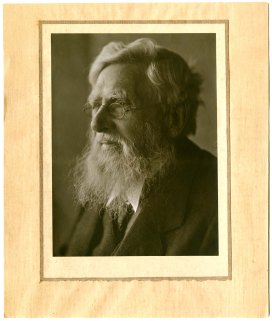
2023 marks a number of important anniversaries in the UK: it has been 75 years since the founding of the NHS and the arrival of the Empire Windrush in London, and 100 years since the first outside broadcast by the British Broadcasting Company. Importantly for the Museum, it is also the 200th anniversary of the birth of Alfred Russel Wallace (1823-1913), the trailblazing biologist, geographer, explorer, and naturalist.

Wallace was one of the leading evolutionary thinkers of the nineteenth century and is most well-known for independently developing the theory of natural selection simultaneously with Charles Darwin. The publication of Wallace’s paper “On the Tendency of Varieties of Depart Indefinitely from the Original Type” in 1858 prompted Darwin to quickly publish On the Origin of Species the following year. He was a pioneer in the field of zoogeography and was considered the leading expert of his time on the geographical distribution of animal species. He was also one of the first scientists to write a serious exploration of the possibility of life on other planets.

Wallace undertook extensive fieldwork in the Amazon River basin and the Malay Archipelago. He spent four years in the Amazon from 1848-52 but unfortunately lost much of his collection when the ship he returned to Britain on caught fire. Afterwards, he spent eight years in the Malay Archipelago (1854-62), building up a collection of 125,660 specimens including 109,700 insects, many of which are currently housed at Oxford University Museum of Natural History. In fact, we now hold one of the largest collections of Wallace specimens in the country.

In addition to entomological specimens, OUMNH holds a large and varied archival collection relating to Wallace. The archive includes original insect illustrations sent to Wallace by contemporary entomologists, photographs, and even obituaries. By far the largest portion of the collection is 295 letters of correspondence, of which 285 were penned by Wallace himself. The bulk of Wallace’s letters were written to fellow scientists, including the chemist and naturalist Raphael Meldola and the evolutionary biologist Edward Bagnall Poulton.

We are happy to announce that, in celebration of Wallace’s 200th year, we are making the entire Wallace correspondence available to browse online!

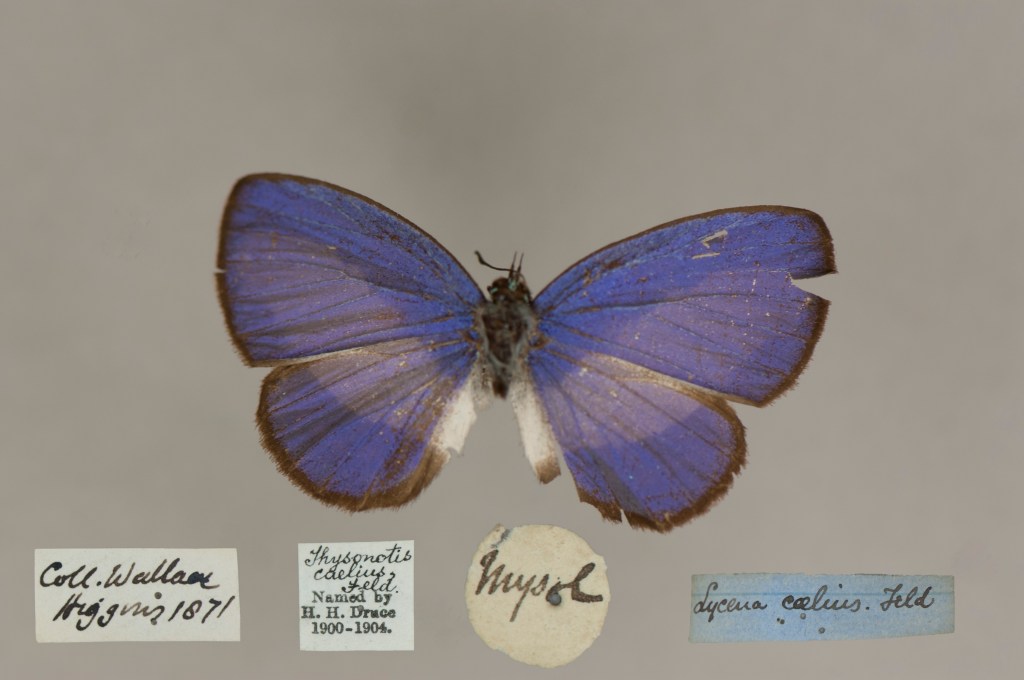
Several of the letters in the collection can be connected to the Wallace entomological collections held at OUMNH, providing us with invaluable insights into the history of these specimens. For example, you can read this 1896 letter from Wallace to Poulton in which Wallace discusses the changing of hands of his entomological collections, from Samuel Stevens to Edmond Higgins following Stevens’ retirement in 1867. The Museum subsequently acquired some of Wallace’s entomological specimens through Edmond Higgins, including the two beautiful examples shown above.

These letters are a potential treasure trove of information about Wallace and his collections, and we hope they will be of great interest to researchers in the field, as well as to the public. Interested? Learn more about Alfred Russel Wallace or explore his archive online.


Article by Matthew Barton, Digital Archivist at OUMNH