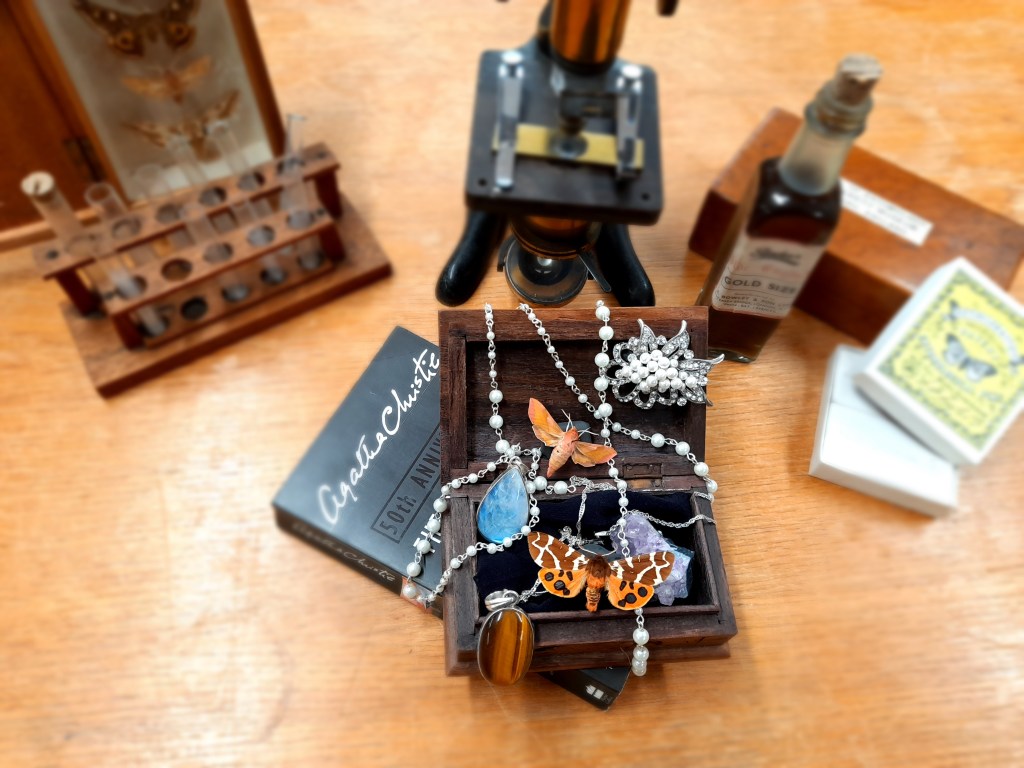
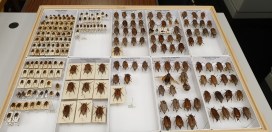
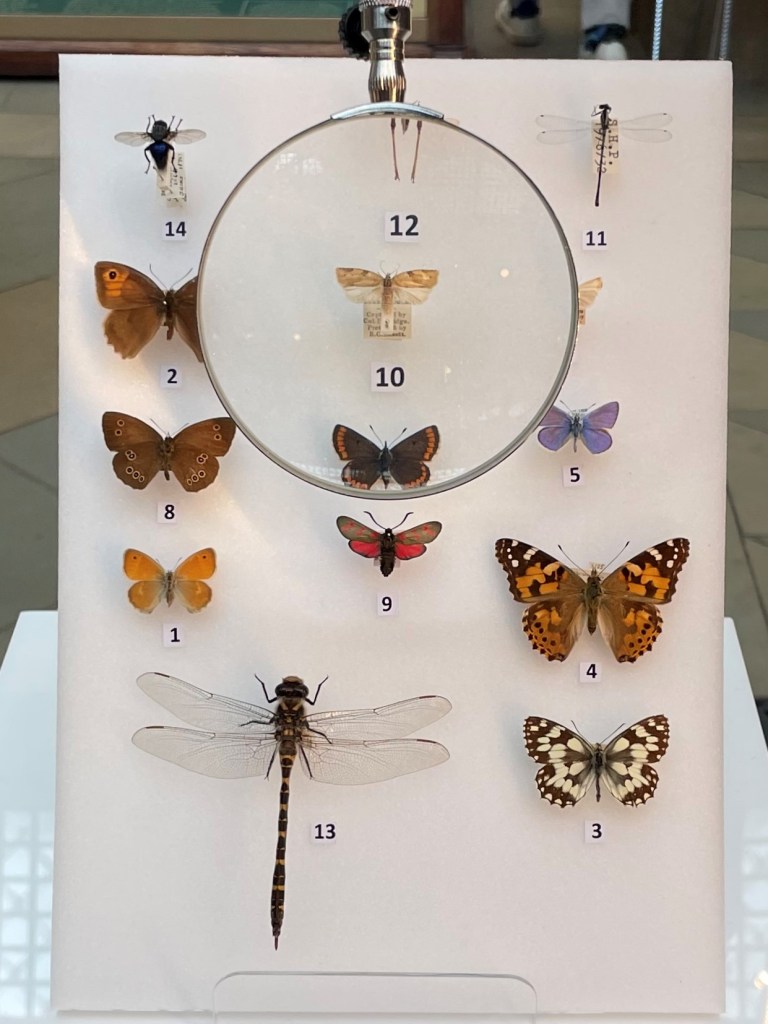
Irreplaceable insect specimens have been stolen from the Museum! Help us solve some insect-based clues to unmask the thief. Explore behind-the-scenes at the Museum to learn about the importance of the entomology collection, and why it must be protected.
Here are all the details you need:
WHAT: FREE workshop – The Case of the Stolen Specimen
WHEN: Tuesday 31st May 2022 , 1pm to 3pm
WHERE: Museum of Natural History, Parks Road, Oxford, OX1 3PW
Celebrate National Insect Week by taking a closer look at the wonderful world of insects on our doorstep.
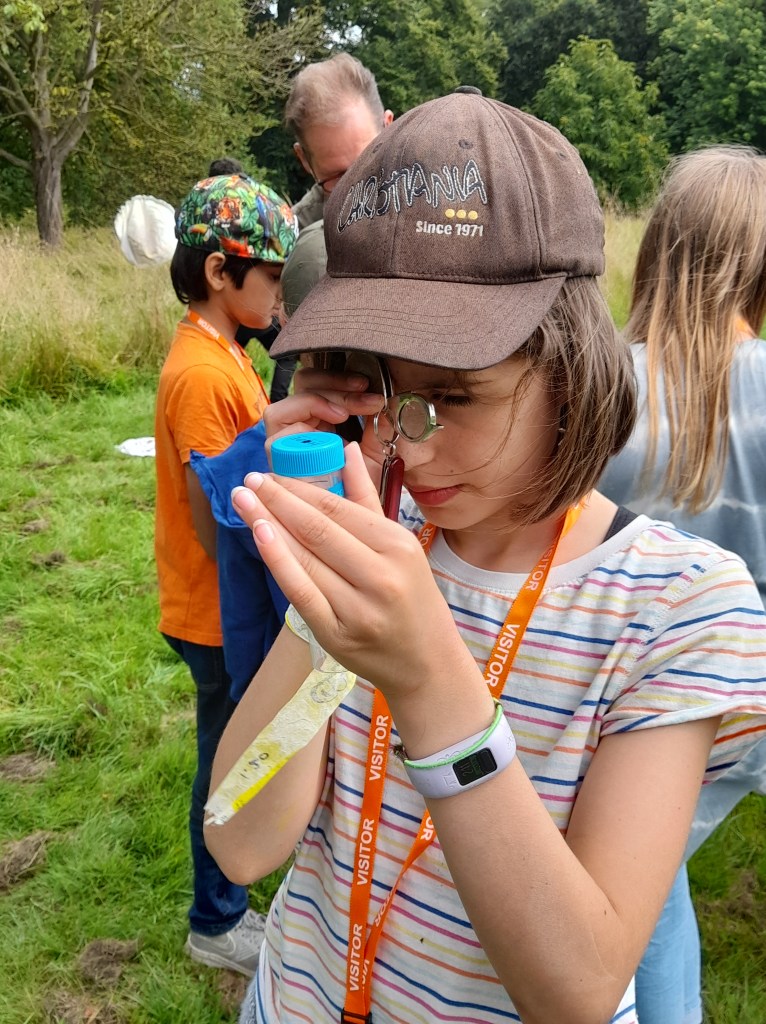
Come out and about with us to learn how to find insects outside. You’ll even get a chance to make and use an insect pooter. We will start by making our pooters in the Museum and then – weather permitting – will test them out in University Parks. There will also be a chance to try out other entomological collection methods.
Here are all the details you need:
WHAT: FREE workshop – Insect Field Craft
WHEN: Saturday 25th June 2022 , 10am to 12pm
WHERE: Museum of Natural History, Parks Road, Oxford, OX1 3PW
Many insects are important pollinators helping plants to make seeds from which new plants can grow. One of these is the fabulous fig wasp. In this video fig wasp researcher Sotiria Boutsi explains the amazing life cycle of the fig wasp, and why without it we wouldn’t have any figs!
Sotiria Boutsi shares her fascination with fig wasps
Sotiria shared her interest in fig wasps with Crunchy on the outside while she was a Professional Intern in Public Engagement at the Museum of Natural History. She has a Master’s degree in Conservation Biology and is currently researching for a PHD at Harper Adams University on using genetic information to study how different species of fig wasp are related to each other.
You can find out about other amazing insects in the Insects section of the blog.
Update: So, are there wasps in figs we eat?
Sotiria’s video sparked some debate on social media about whether there are wasps in the figs we eat. This is a complicated subject, but the short answer is ‘no’. Many figs that are produced for sale in supermarkets and greengrocer’s shops are ripened without the need for them to be pollinated by insects. Some figs produced for sale are pollinated by fig wasps, but the fig produces a chemical that dissolves the wasps.
So, any crunchy bits inside a fig are seeds, not wasps!
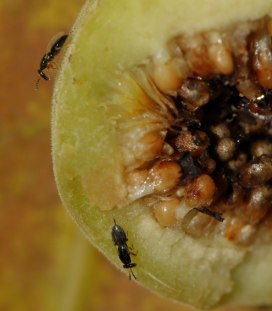
Header image: Fig wasps, Philocaenus rotundus, on a fig. Alan Manson CC BY 4.0
As the month of April fades into May a certain beetle can be found flying noisily about its business. Cockchafers, often called Maybugs, are relatively large members of the Scarab beetle family. There are three different species of Cockchafer found in Europe;
The common cockchafer, Melolontha melolontha
The forest cockchafer, Melolontha hippocastani
The large cockchafer, Melolontha pectoralis
Cockchafers spend most of their lives, 3 to 4 years, as larva, living underground, munching away at the roots of plants. In large numbers they can become pests, doing significant damage to crops.
It is as adults that they emerge above ground, flying around for roughly 5 to 6 week looking for a mate and feeding on the leaves of trees. They can usually be spotted making their noisy flight at dusk on warm evenings. You may even find them flying into and around your outside lights.
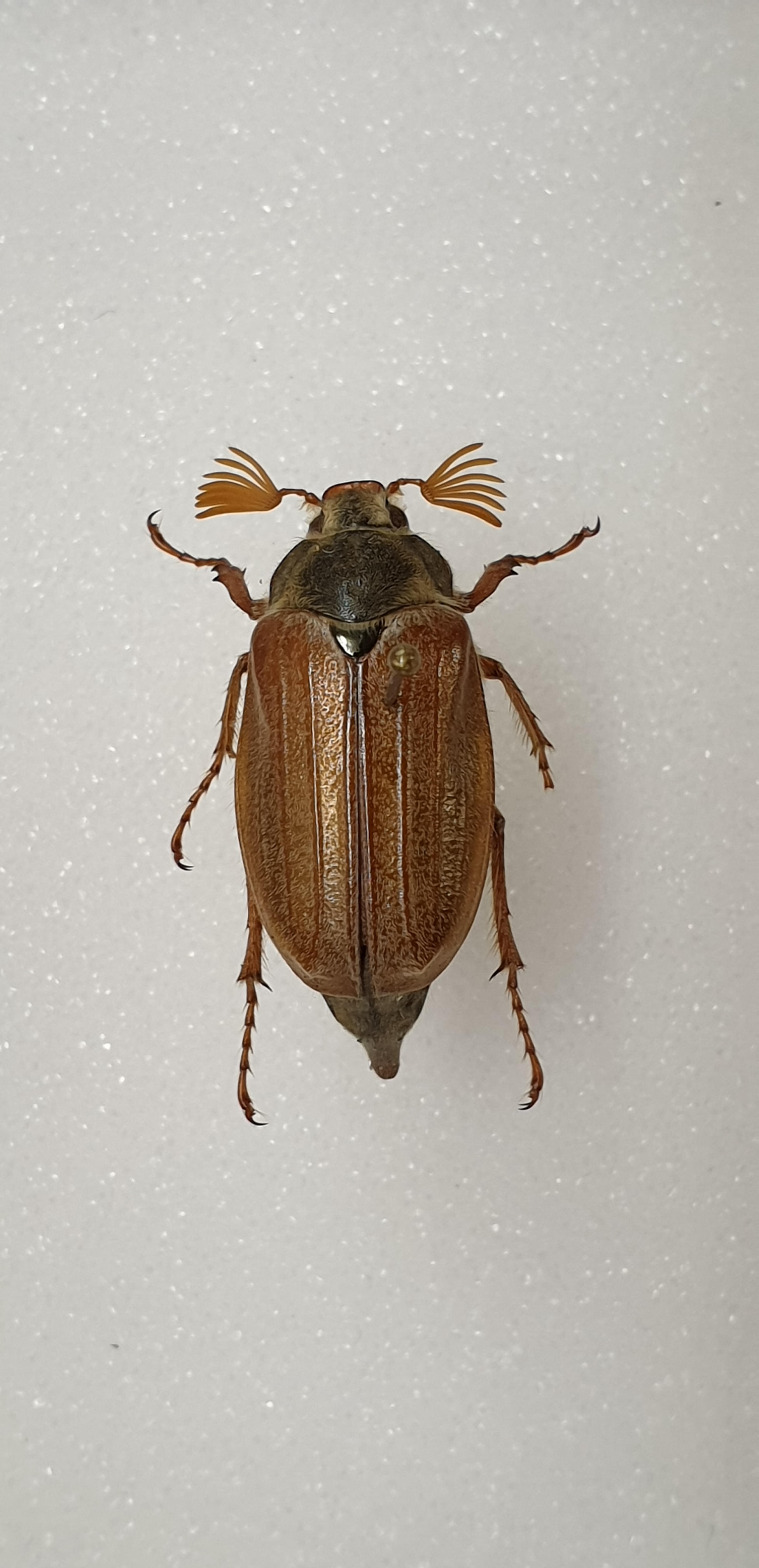
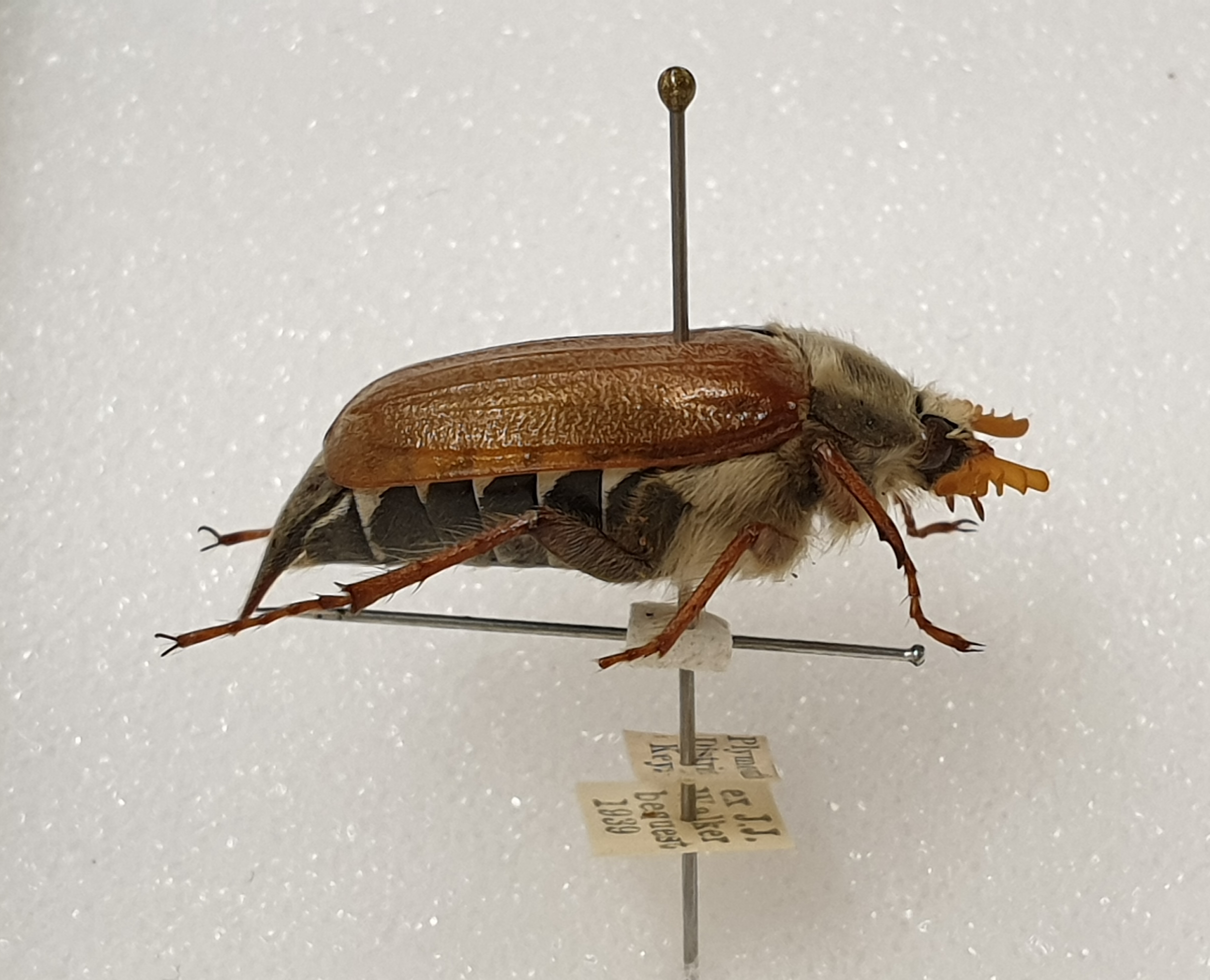
They are around 3cm long, with reddish brown wing cases and distinctive fan shaped antennae. Despite their intimidating size and noisy flight, they are actually harmless to humans. I once had one fly in the house and land on my big toe, waking me up from a nap!
Pesticides used farming in the mid-1900s brought them to the brink of extinction in the UK. However, changes in farming practises and pesticide use has allowed them to make a comeback. They can now be found across England, are particularly common in the south of England and the Midlands. They are much rarer in Scotland.
Do you know of any other insects that are considered pests by farmers? Let us know in the comments below or via the contact us section of the blog.
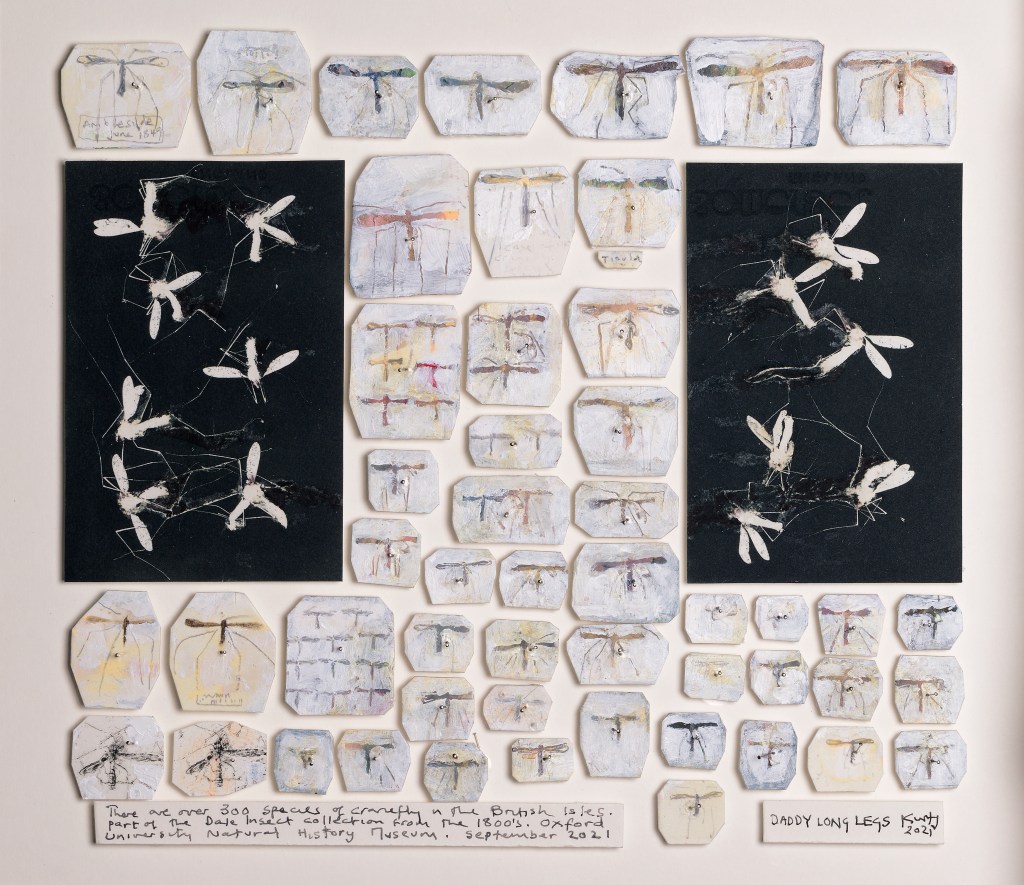
Biodiversity is an exhibition at the Museum of Natural History that explores biodiversity through the celebrated art of Kurt Jackson and reflections from reserchers at Oxford University.
What is biodiversity?
The word Biodiversity describes the variety of life. In any one place, the range of living things, including plants, animals, and bacteria, is called its biodiversity. It is used as a measure of how well or poorly natural life is coping with stresses like loss of habitat, pollution or climate change. The higher the number of different species, the greater the biodiversity. Biodiverse habitats are healthier because they can cope with change. When there are many different plants and animals, a change is unlikely to affect them all so many will survive.
Daddy Long Legs by Kurt Jackson
Because human activity has an impact on biodiversity we have a responsibility to look after the health of ecosystems. Each habitat has its own distinctive biodiversity, from the fields and forests, seas and streams, to the increasingly buit up places where we humans tend to live. Under the water, on a mountain, in your garden; what lives there?
What’s in the exhibition?
This exhibition shows artworks made by artist and environmentalist Kurt Jackson. The art was made in a number of different locations across the UK. Alongside it, there are displays of specimens from the Museum’s collection. These highlight the range of species found in landscapes across the UK. The artwork and museum specimens have been combined with responses from biodiversity researchers at the University of Oxford. How can we understand it? How can we protect it? What does it mean to us all?
“Daily, during my time spent making art outdoors, I notice the life around me – the plants and animals that share these places with me.”
Kurt Jackson
Insects and biodiversity
Scientists measure biodiversity by looking at the abundance and distribution of species.
Abundance describes how numerous species are. Because they are interested in changes over time, scientists often measure relative abundance: how numerous species are compared to a point of time in the past.
Distribution describes how wide the area is over which species are found. Relative distribution compares this to a point in the past.
Both these measures are important. For example, having large numbers of many different species (high abundance) is good, but if they are restricted to a small area (low distribution) then they are vulnerable.
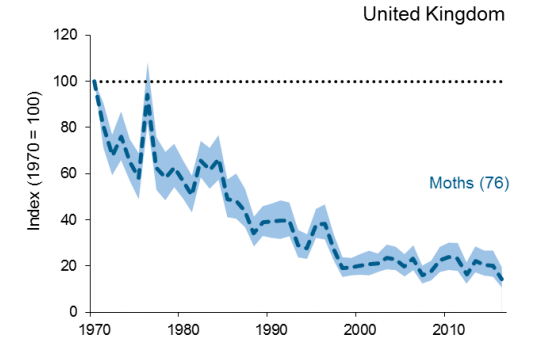
Change in relative abundance of 76 moth species. Defra 2019.
Rather than trying to measure the numbers of all the plants and animals in a habitat, scientists often monitor indicator species. These are particular plants and animals that tell us about the health of whole ecosystems. Insects can be indicator species. For example,in the UK, the Department for Environment, food and Rural Affairs (Defra) monitors 76 species of moth (as well as many other plant and animal species).
Visiting the exhibition
You can visit the Biodiversity exhibition in the Main Court of the Museum until 15 May. Entrance is free and there is no need to book
If you would like to investigate biodiversity where you live, take a look at some of our suggestions and resources for Finding and Identifying Insects.
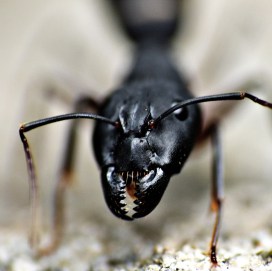
Noah contacted us recently with an intriguing question: ‘What is the most successful species of ant?’. It really got us thinking! Insects are a very successful group of animals, and ants are very successful insects, but how could we decide which is the most successful?
There might be different ways we might measure success. It is the most numerous ant? Or the group with the most species? It might be the species that’s most widely spread across the globe? Perhaps it’s the longest-lived, or the largest?
Successful ants
Ants are a very successful group of insects. The biologist E.O. Wilson (who died recently) estimated that there may be a million ants for every human being, but the truth is that we don’t really know. Although they are small, there are so many of them that they may make up a quarter of the mass of all land animals!
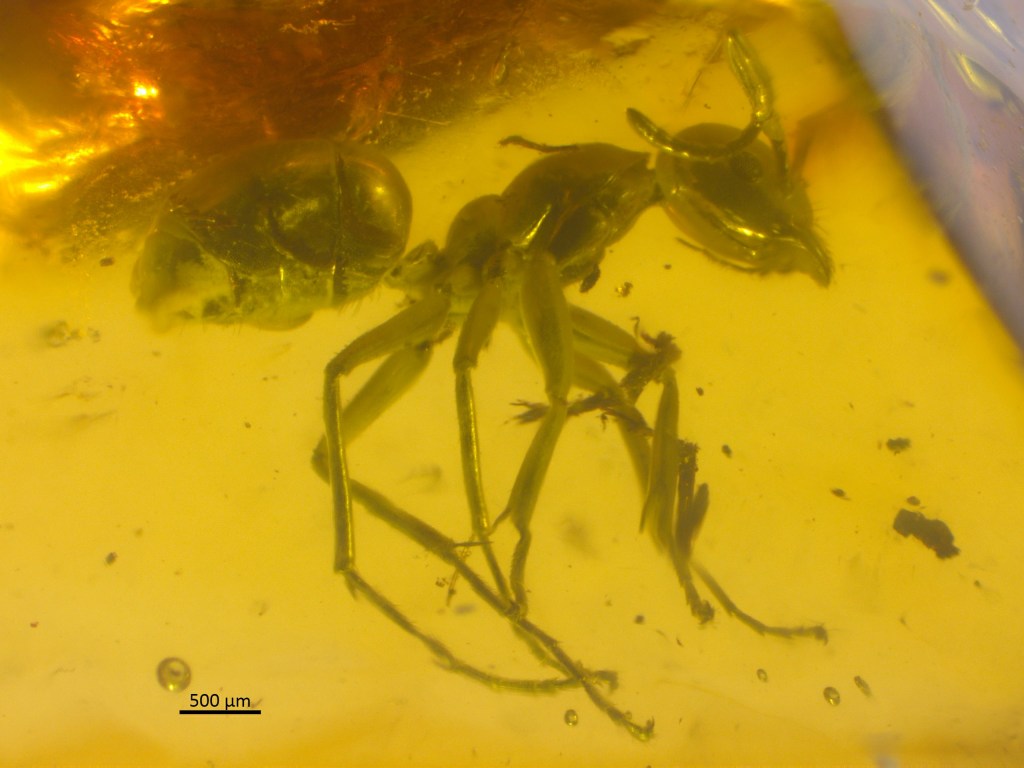
Scientists think that ants probably evolved from a type of wasp 168 million years ago. They became really successful after flowering plants evolved about 100 million years ago. We know this because ants appear much more often in the fossil record, and we start to find many more species . One of the oldest fossil ants is Sphecomyrma, found trapped in 99 million year old amber from Myanmar.
Fossil Ant trapped in Amber. Image Credit: OUMNH
Features that have helped ants to become so successful include:
Their social nature – ants in a nest are good at cooperating.
They modify habitats – most animals can only survive in certain conditions but ant colonies can change their surroundings to suit them.
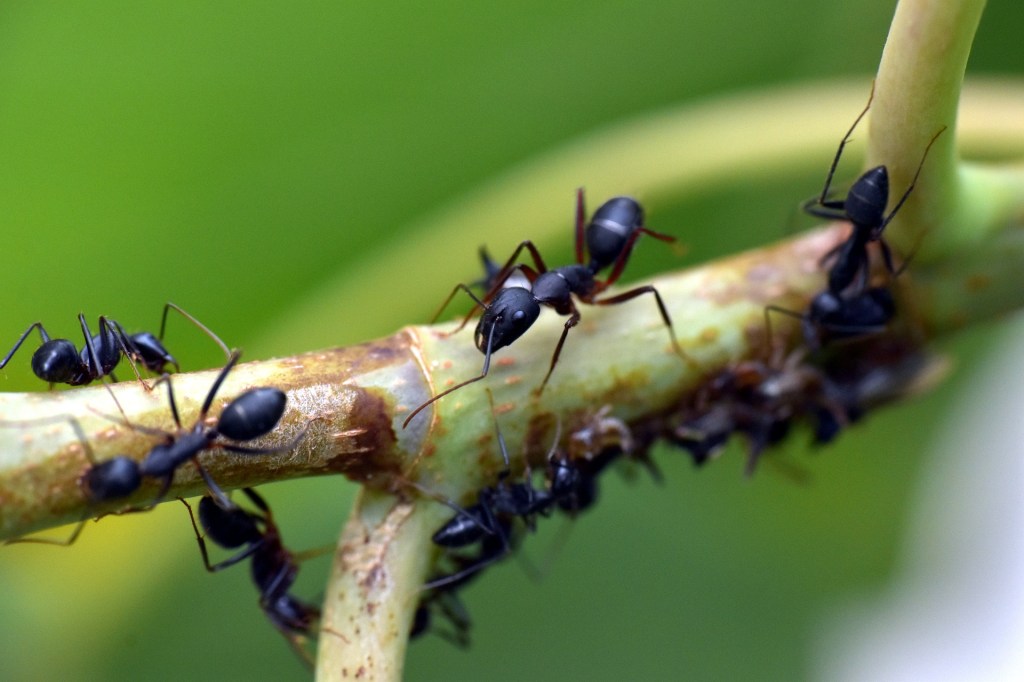
Ants can use a wide range of food sources. Some species even farm – growing fungi or ‘milking’ aphids for food.
Defence – ants are really good at defending themselves and each other. They are strong, have biting mouthparts and produce acid. The origin of the word ‘ant’ means ‘biter’.
Some species form supercolonies – huge nests containing several queen ants. This level of cooperation and organisation help some ant species to be mega-successful.
The ability of ants to cooperate helps make them successful.
Which ants are most successful?
So, ants are very successful as a group of insects. Here are some examples of ant species that might be the most successful:
Most numerous: Difficult to say, but perhaps the Argentine ant Linepithema humile.
Widest distribution: Several contenders for this, but perhaps the fire ant Solenopsis invicta.
Most different species: The genus Pheidole with over 1,000 described species.
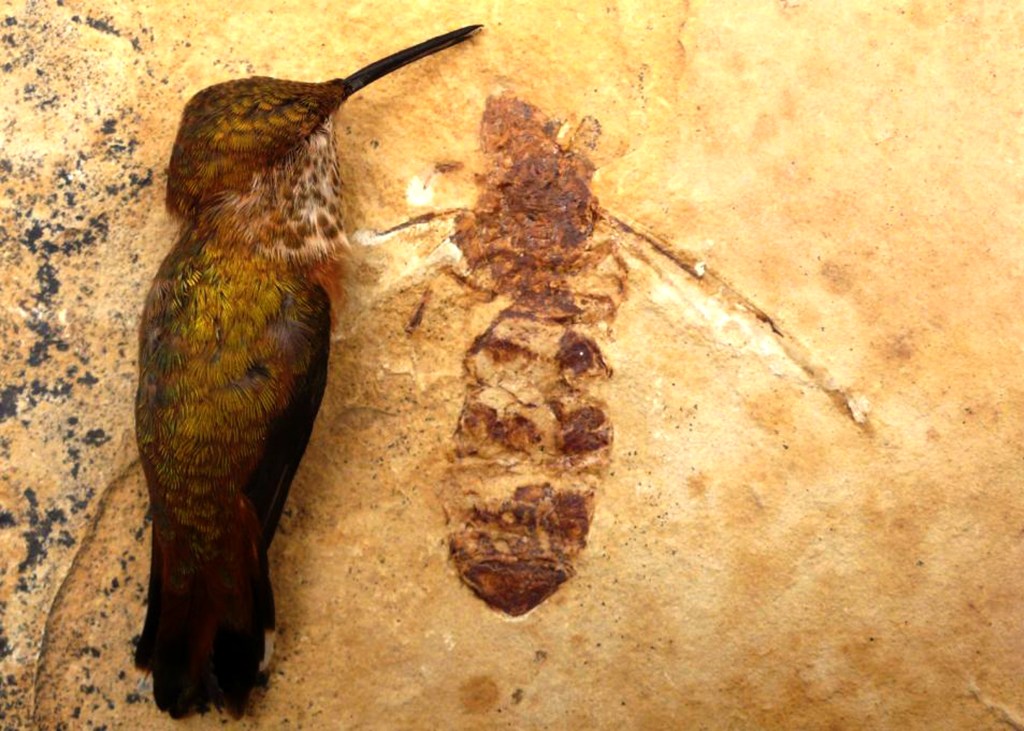
Largest: The fossil giant ant Titanomyrma gigantuem was the largest ant to have lived. The queens were 6cm long with a wingspan of 15cm.That’s about the same size as a hummingbird!
Longest lived: We think oldest individual ant on record in a laboratory was a queen of the species Pogonomyrmex owyheei which lived to be 30 years old. Colonies of ants can survive for centuries in nature, continuing through many generations of ants.
The fossil giant ant Titanomyrma lubei, with a hummingbird for comparison. Image Credit: Simon Fraser University CC BY 2.0
The fact is, however, that every species has most of the characteristics that make all ants successful, so perhaps the most common British ant, the Common Black Ant, Lasius niger, is as good a candidate for most successful as any? It’s also worth remembering that entomologists think we have only described about two thirds of all ant species – so there are many more left to discover!
We hope that answers Noah’s question. If you have a question about insects or the museum you’d like to ask us, just write it in the comments or send us a message using the Contact Us page.
I often hear people say that it is important to make green spaces “Insect Friendly”, but what is meant by this?
It is providing and encouraging a variety of different habitats that provide food and shelter for a range of different insects, and avoiding things that would do harm to insects, like using pesticides.
The focus is often on bees and butterflies, and their importance as pollinators. However, not only are other insects important pollinators, but insects have other vital roles in nature, including as food sources for many other animals and as recyclers of natural materials (dead plants, dead animals and poo).
Here are some ideas of positive things you can do to make a garden insect friendly:
Plant a range of trees, shrubs and plants that flower at different times of year
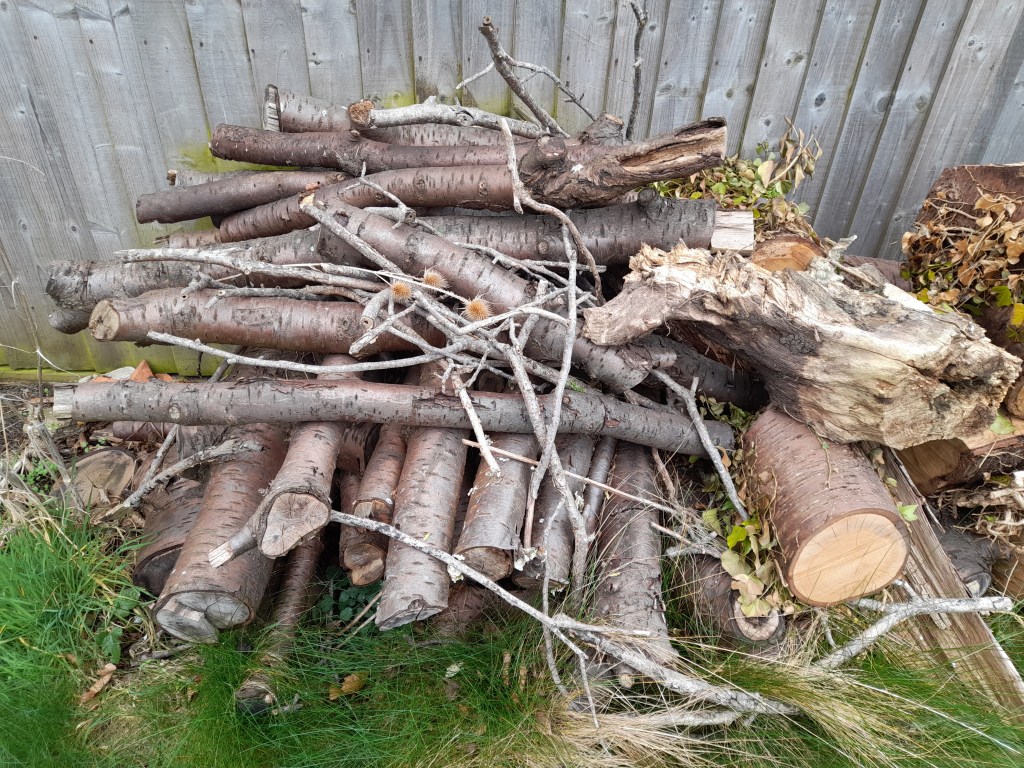
Many insects, including a number of beetle species, like the cold damp conditions in a dead wood habitat and even eat the dead and decaying wood. Three ways to create one is set out by Gardener’s World.
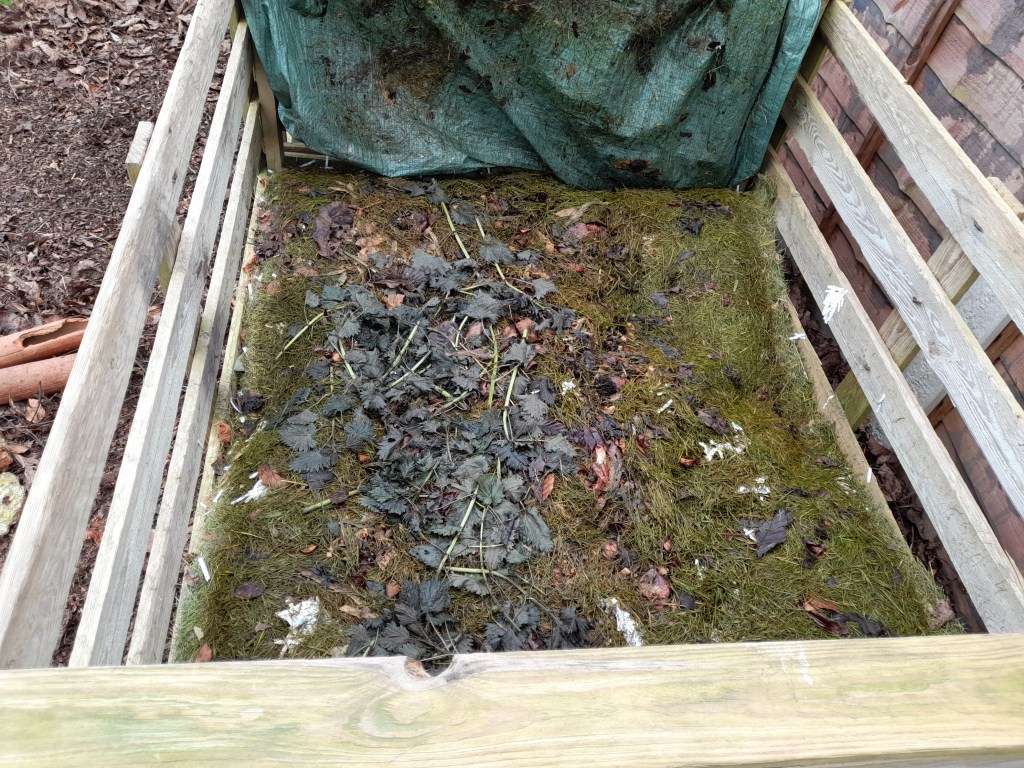
Have a compost heap
As well being a means of recycling vegetable and garden waste, compost heaps also provide food and shelter for decomposers, many of which are insects. If you would like more information and advice about composting the RHS has an online guide.
Leave an area to grow wild
Areas of long grass are good for certain insects, e.g. for skipper butterflies to lay their eggs. Not mowing as often allows wildflowers, like daisy and buttercups to bloom. These, along with other plants often considered weeds, such as nettles, provide important food sources for insects.
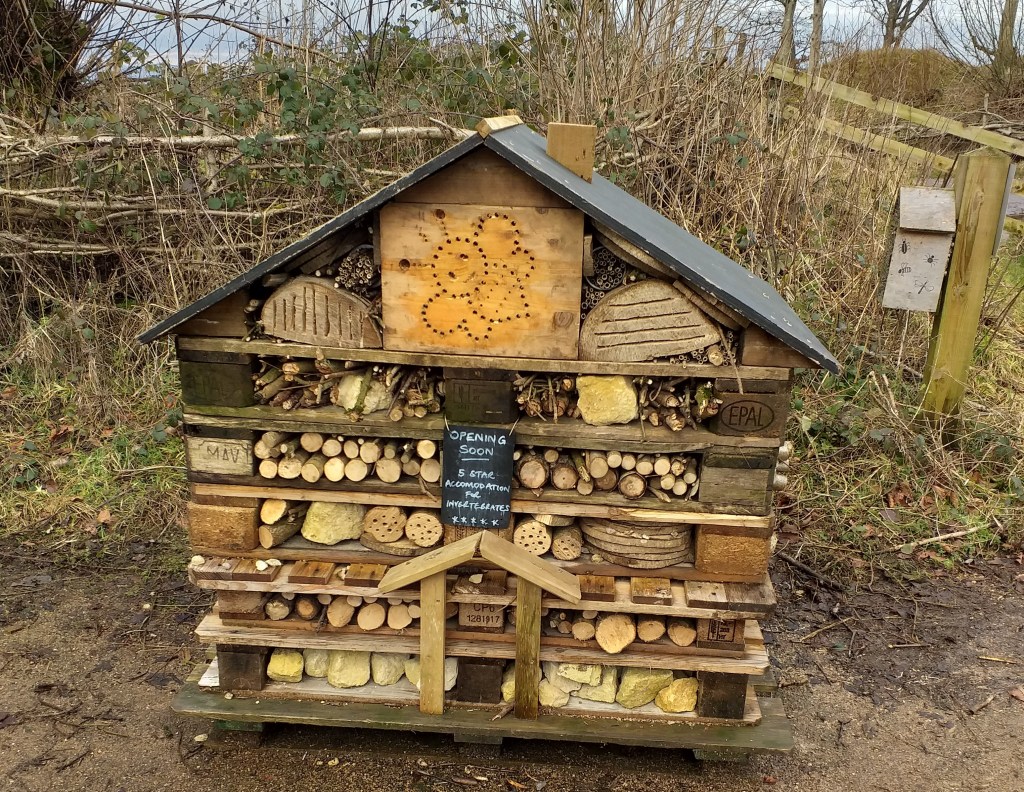
Make an insect hotel
Insect hotels provide hiding places for insects to shelter. We have instructions for making a simple insect hotel on the museum website. If you want to find out more about making a more involved hotel, the RSPB have a guide on their website.
Have you made your garden more insect friendly using these, or any other methods? Tell us about what you have done in the comments below, or via the contact us page.