“The True Nature of Nature Itself”

MAKING ART WITH SWIFTS FROM THE MUSEUM’S COLLECTIONS


Between 14th May and 21st July, the mixed media artwork Fly Over My City was on display at the Museum of Natural History, delighting visitors with a visual and auditory exploration of swifts and the threats they face in urban environments. In this blog post, artist Becca Jeffree discusses working with Museum collections to create the piece, and the value of museums as venues for combining art and sciences.


While studying at London’s Natural History Museum years ago, another student had become upset with a group of artists who were drawing from the floor of the birds gallery, blocking his way. Studying birds in a cabinet was not as worthwhile, he felt, as studying in the field. Moreover, drawing seemed to him out of place within a science museum. Yet sketching specimens has historically played an important role in learning about biodiversity, and is particularly important for those whose access to wildlife is restricted.

Perhaps it is unsurprising that this discord arose in a natural history museum. Art is often separated from science in society and culture, with science tending to dominate debates about understanding nature. Museums, however, are rare places where art and science are welcomed equally and beautifully combined. Few places embody this better than Oxford University Museum of Natural History — a work of Victorian art shaped by the idea that art and science can take one another to higher levels. As historian John Holmes puts it in The PreRaphaelites and Science, the building expresses the “true nature of nature itself” through its architecture. It is a place where the study and interpretation of the natural world are cross-disciplinary.
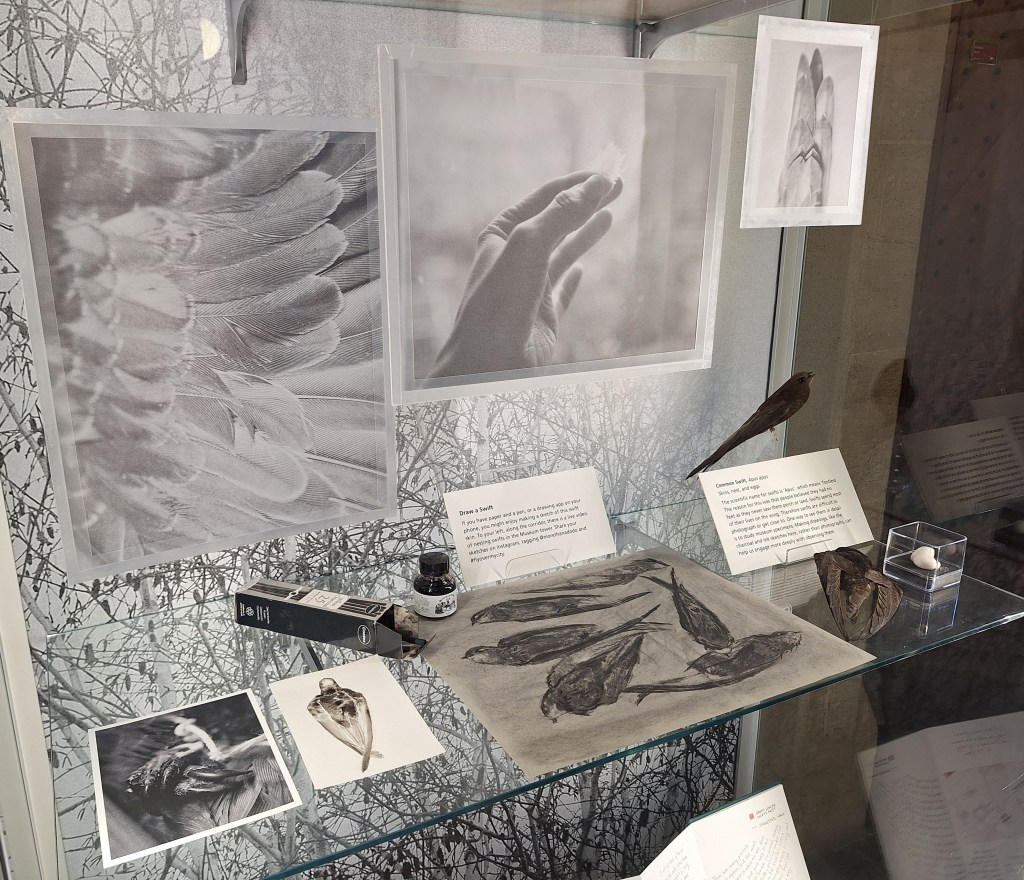
Fly Over My City (2023) by Becca Jeffree, on display at the Museum of Natural History

I recently collaborated with the Museum when making my artwork about the built environment and the common swift (Apus apus). Swifts are transient animals and as they rarely land they are difficult to see up close. They are found in the UK for only a short time each summer, fly fast, and are in decline. Through access to the Museum’s avian collections, I had a unique opportunity to see swift bodies up close and observe them in detail through drawing. Most of the specimens are bird skins; the skin, plumage, wing bones, skull and feet are preserved but not the internal organs, and they are not mounted like the ones we often see in cabinets. When I handled the swifts, I was asked to wear gloves to protect the specimens and avoid exposure to any harmful chemicals that may have been used to preserve them. Even though I couldn’t touch the swifts directly, I could still get to know their weight, size, colour, and notice interesting details like the shape of their chest feathers which are similar to their hummingbird relatives’.
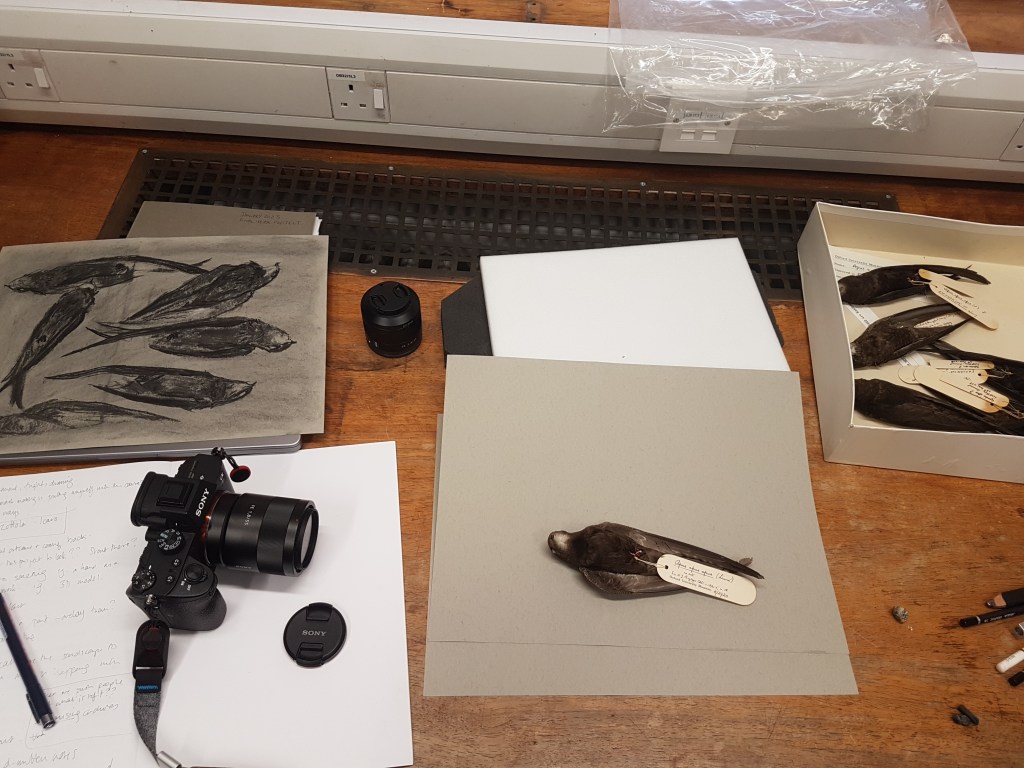
Photographing, sketching and studying swifts from the Museum’s collections

Having physical access to museum specimens allowed me to root my artwork more in science, but also to draw out further layers of meaning, by responding to my own feelings and senses. The materials I included in the work – charcoal and tracing paper – were inspired by the swifts’ weightlessness, their texture, colour and the urban environment they often inhabit. The PreRaphaelites, whose worldview infuses the Museum building, regarded art as a valid investigative method. As John Holmes puts it, “if observation yields a true knowledge of nature, then making art that records and synthesises these observations is at once a disciplined method for conducting research and the best means to convey that knowledge.” I am grateful that the Museum continues to embrace this idea today, and for the value placed on artists as researchers and communicators of its collections.
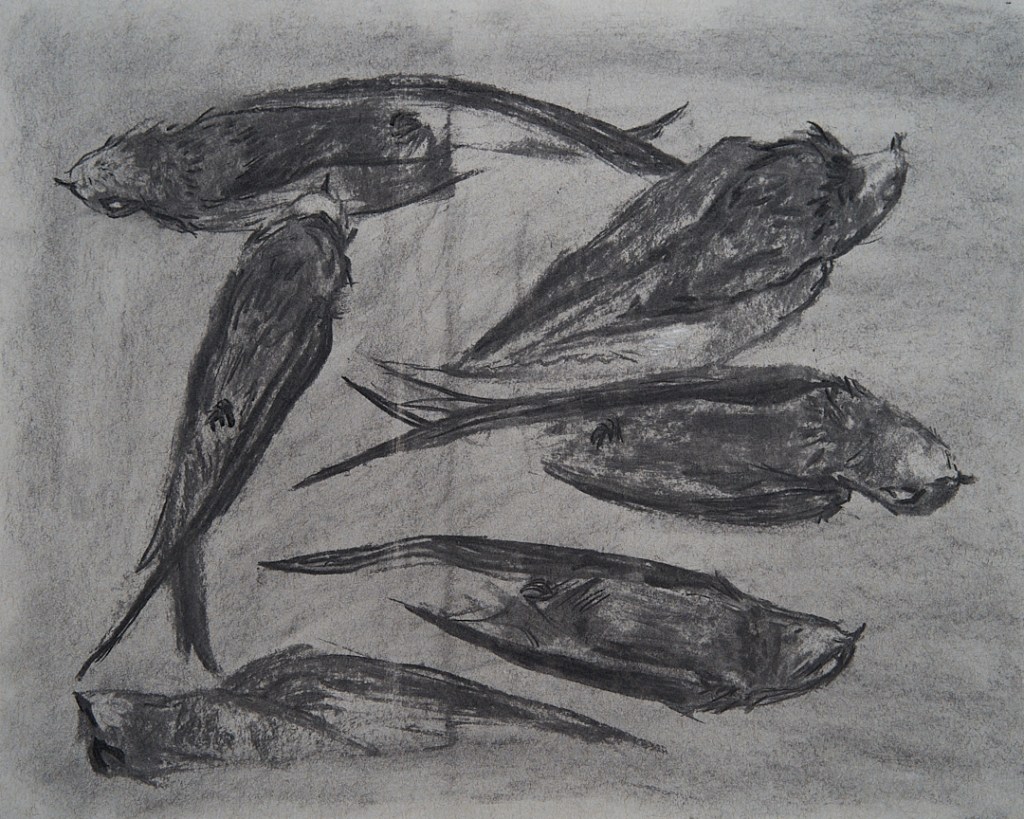
Charcoal sketch of swifts, made using Museum specimens. From Fly Over My City (2023)

Visit Becca Jeffree’s website to find out more about the piece, and her other artwork
Museum’s Mary Anning Fossil Gets Stamp of Approval


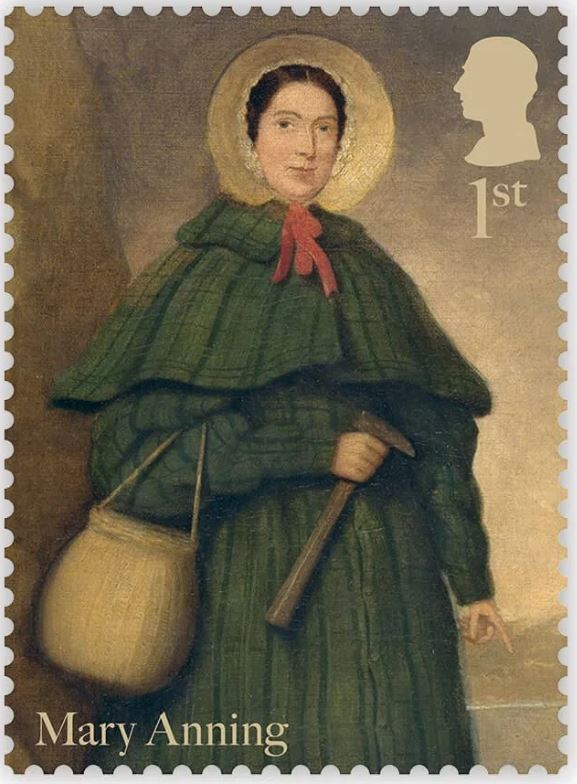
200 years since OUMNH’s very own Megalosaurus fossils were used in the first scientific description of a dinosaur, the Royal Mail has launched The Age of Dinosaurs, a two-part series of commemorative stamps. The stamps include one series of palaeo-art reconstructions of Mesozoic dinosaurs and reptiles and another series celebrating Mary Anning (1799-1847), a self-taught anatomist and fossil preparator, and one of the most important figures in early geology.

Dr Emma Nicholls and colleagues discuss some of the fascinating stories behind the species and specimens featured on these stamps.


Megalosaurus stamps

Two of the stamps in the Age of Dinosaurs stamp set include artistic reconstructions of Megalosaurus by the palaeo-artist Joshua Dunlop. The animal that nineteenth-century naturalists once understood to be a lumbering long-legged lizard is now depicted as a fearsome Jurassic predator that ran on its hind legs and tore into prey with its large serrated teeth. Dunlop shows Megalosaurus wading through shallow coastal waters, preparing to pounce on Cryptoclidus¸ a plesiosaur that lived alongside Megalosaurus in Jurassic Britain. The artwork also shows Megalosaurus covered in feathers. Although we don’t have any direct evidence that Megalosaurus was a feathered dinosaur, feather-like filaments have been found among the fossils of other dinosaurs such as Sciurumimus, meaning it is highly possible that Megalosaurus had feathers too.

Dapedium stamps

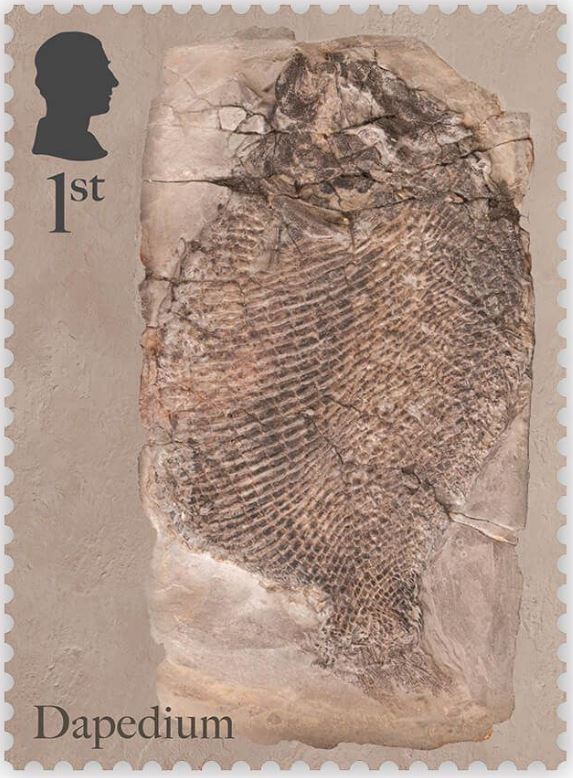
OUMNH collaborated directly with Royal Mail to help produce the Age of Dinosaurs miniature sheet, which showcases fossils collected by Mary Anning. One of the stamps in this collection features a photograph of the fossil of an extinct Jurassic fish, Dapedium, which is housed at OUMNH.

Despite Anning’s illustrious reputation, it wasn’t always known that this Dapedium specimen was connected to her — all that was known about it was that it had probably once belonged to William Buckland and had been collected from Lyme Regis.

Although Anning is one of the most prolific fossil collectors to have worked in Lyme Regis, naturalists like Buckland often visited Anning to go “fossicking” together, or purchase fossils from her. There are very few archival records of transactions between Anning and other fossil collectors from this time, making it difficult to decipher exactly who extracted fossils such as this, found in nineteenth-century Dorset.

Fortuitously, while Dr Sue Newell was conducting research for her PhD on the Buckland Collection in 2021, she found an exciting letter in OUMNH Archive, dated 3rd September 1829. It was from a former student of Buckland’s, Beriah Botfield, and contained details of two fossils that Buckland had bought from Anning to present to the University of Oxford. Using evidence in the letter, Sue was able to work out that Botfield was referring to a Dapedium fossil which she later recognised tucked away in OUMNH’s fossil store.

Botfield had had the fossil mounted in an expensive (and very heavy!) stone frame, with “Presented by Beriah Botfield Esq. Dapedium politum. Lyme, Dorset” beautifully inscribed on the front surface. At the time, the identity of Anning as the fossil’s original finder, identifier, preparator and vendor, was probably common knowledge and, typically, Botfield did not consider these facts important enough to record on his presentation frame.

The Dapedium fossil is a near-complete example of this Jurassic fish, in which scale patterns and delicate fin structures are preserved in breathtaking detail. Dapedium is the first OUMNH object to grace a Royal Mail stamp – an ideal choice given its scientific and historic importance.


Visit the Museum to see the Dapedium fossil as well as temporary displays about the new stamp collection.

Find out more about our special programme of events, exhibitions, and activities honouring Megalosaurus in 2024: The Oxford Dinosaur That Started It All.


Of Jumping Mice and Megalosaurus

CELEBRATING THE RECENT ACQUISITION OF AN IMPORTANT ARCHIVE


By Danielle Czerkaszyn, Librarian and Archivist and Grace Exley, AHRC Doctoral Student


200 years since the first scientific description of a dinosaur, the Museum has welcomed a significant archival collection relating to the man who introduced us to Megalosaurus, William Buckland (1784-1856). The archive contains over 1,000 items including letters, notebooks, family papers, prints, and artworks. It joins the Museum’s existing Buckland archive, as well as more than 4,000 geological specimens, and helps fill in the knowledge gaps surrounding the life and work of Oxford’s first Reader in Geology and Mineralogy. Not only is there the potential to learn more about Buckland’s early life as a student at Christ Church, there is also material relating to the wider Buckland family, including his son, the zoologist Francis Trevelyan Buckland, and wife, the naturalist Mary Buckland (née Morland, 1797-1857).

Among the 70 letters in the archive that are addressed to Mary, there is correspondence from chemist William Wollaston, Scottish polymath Mary Somerville, and a lively letter from John Ruskin, explaining to Mary his disgust at all things marine:

“I dont [sic] doubt that those double natured or no-natured salt water things are very pretty alive, but they disgust me by their perpetual gobbling and turning themselves inside out and on the whole I think for purple and rose colour & pretty shape, I may do well enough with convolvulus’s [sic] & such things which dont [sic] eat each other up, backwards & forwards all day long.”

Ruskin was clearly teasing his friend, as molluscs happened to be Mary’s specialist subject!

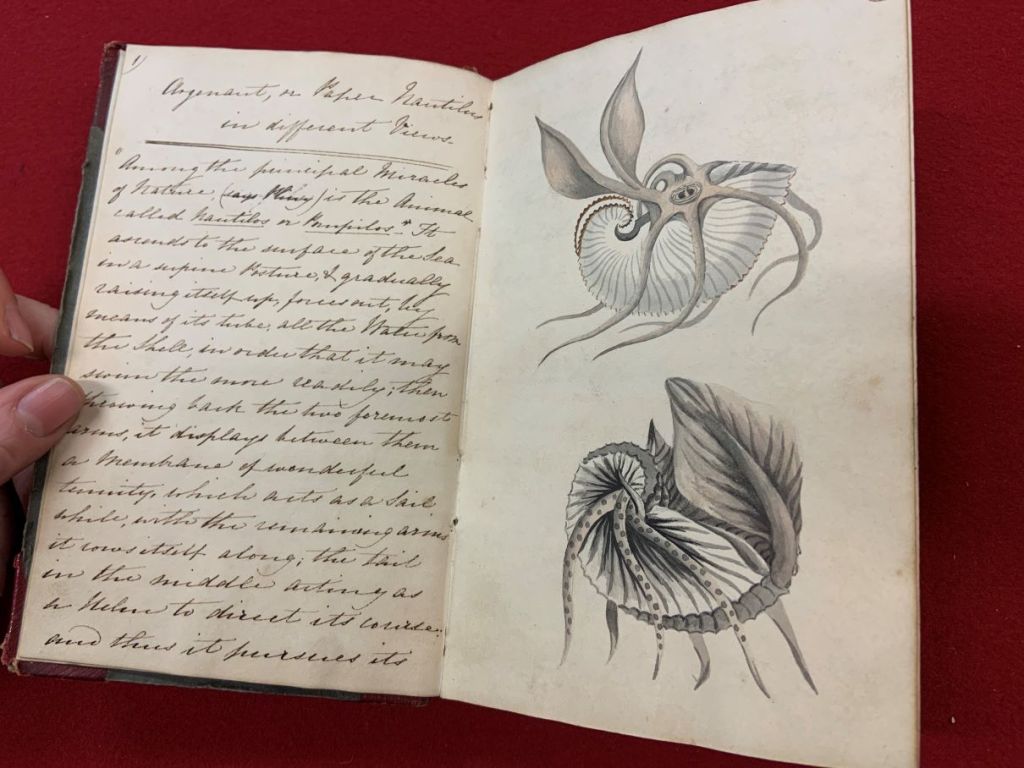
The collection also contains two sketchbooks belonging to Mary, one of which dates from June 1817, seven years before her marriage to William and contains exquisite ink and watercolour illustrations of natural history specimens. 

The sketchbook gives us a rare glimpse into how a nineteenth-century woman learned about natural history.  The book contains copied passages from natural history texts, enabling us to trace what Mary was reading. Her interests spanned geology and mineralogy, and she also included pieces on zoological curiosities and even polar exploration. She read and copied extracts from a variety of sources, some of which – George Shaw’s Zoological Lectures, for example – were intended to suit a lay-audience (as Shaw put it, intended as a “familiar discourse with Lady-Auditors”). However, other elements of her reading were probably never intended for a woman like Mary — she also copied passages from the Transactions of the Geological Society even though women could not join as Fellows until 1919. As archival materials relating to women are often sparse, this is a truly rare and incredibly valuable insight into how Mary used her connections to access resources and the techniques she used to teach herself about natural history.

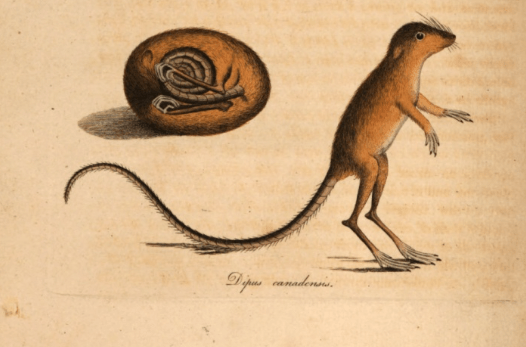
Perhaps the most striking feature of the notebook is its intricate, exquisite illustrations. These, done in watercolour, ink, and pencil, are reproductions of the figures from the works Mary copied out. A favourite in the sketchbook is the “Canadian Jumping Mouse”, a long-tailed rodent described in a piece in the Transactions of the Linnaean Society by Major General Thomas Davies in 1797. There are also many representations of molluscs (detailed enough to repulse Ruskin), mineral specimens, and occasional fold-out geological sections. As we flick through the book, we can see Mary experimenting with media and techniques — not only developing as an artist but also honing her skills as a scientific illustrator.

The skills and knowledge Mary developed in her natural history notebook were crucial to her later collaboration with William, as well as her own independent work as a draughtswoman before her marriage. In 1824, when Buckland presented the jaw of Megalosaurus to the Geological Society, it was “M. Morland” who provided the painstakingly detailed plates. Research has begun to uncover the extent of Mary’s work as a naturalist and illustrator, and now, with the help of the materials in the newly acquired archive, we can explore the origins of her skills. The archive is currently in the hands of a Paper Conservator, Anna Español Costa, to ensure the material is kept in the best condition for many years to come. Items from the archive will feature in the Breaking Ground exhibition, opening in October 2024.


Our fundraising campaign saw us receive generous support from the National Heritage Memorial Fund, Arts Council England/V&A Purchase Grant Fund, Friends of the National Libraries, Headley Trust, and other private donors. Additionally, in late 2022, we launched the Buckland Papers Appeal, asking members of the public to help us meet our target to purchase the archive. Thank you to all our funders and members of the public who responded to our call. We could not have raised the money so quickly without your support and we are now thrilled to share the archive with you all.

Wasp Faces: Power Struggles and Royal Drama


By Kristian Suszczenia, Intern


The second you step into the Museum of Natural History you will notice a remarkable thing about nature: its diversity. Instantly, you see huge whale bones, a distant elephant skull, birds, fish, dinosaurs, and a mounted kaleidoscope of colourful insects. This variation is what many of us love most about biology.

But diversity occurs at a much finer scale than the magnitudes of difference that exist between species. Often there is ‘Individual Variation’ — differences that occur within species. Person to person, specimen to specimen, each organism is unique, just like us humans!

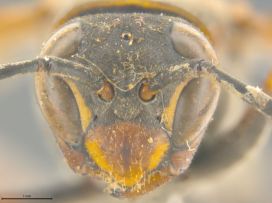
Buried under the 5 million other insects of the HOPE collection is a drawer that houses a species of the genus Polistes, a social paper wasp collected from Brazil. A close look at their faces reveals staggering individual variation. Before getting confirmation from specialists, the Museum staff found it hard to believe that these four faces could even belong to the same species. The question is, why are they so different? Is there an evolutionary benefit to all these wasps having their own style of eyeliner?

Variation in the faces of paper wasps

It is well-known that individual variation can give certain members of a species an edge over others, especially when it comes to dating! From guppies to fruit flies, females often prefer mates that stand out with unique colours and patterns, perhaps because they are simply more noticeable.

Yet dating is not a sufficient explanation for our fashionable paper wasps. They get a very different benefit from their unique looks — not so much standing out, but being memorable. For them, a memorable identity is a way to remember who goes where in a critical pecking order.

Thanks to a lot of elegant work by Polistes specialists, we understand that bespoke face markings tend to evolve in species that have multiple queens in a linear hierarchy. A Polistes queen can start a hive alone but often benefits from forming a group of queens that can all cooperate together in a single hive. In order to cooperate, the queens must decide on a dominance hierarchy amongst themselves. To do this they take part in brutal one-on-one battles as they assess each other’s prowess.

After they establish an initial order, each wasp will constantly test the adjacent ranks (their closest match) with darts and lunges as they try to climb the ladder for extra reward and simultaneously defend their place. Four punishes Three for transgressions and plots against Five’s downfall. It’s a royal reality show.

This part-insect, part-spartan society is certainly fascinating, but what does it have to do with the wasps’ faces?

In order for queens to defend their rank from their adjacent competitors, they need to know exactly who’s who. Unique faces are more recognisable and more memorable. Being able to recognise and recall every individual wasp allows queens to track their rivals based on their faces and avoid a lot of violent misidentification. Imagine if a queen were to look forgettable; every other queen in the hive would see her as a potential challenge to their power. She wouldn’t last long. But having a memorable face allows individuals to avoid unnecessary scraps and make for a more efficient hive overall.

After learning the story of the wasps, it seems plausible that humans may have evolved our fantastically recognisable faces for societal advantages too — perhaps to avoid getting mistaken for an enemy, perhaps so we can trade favours, or maybe just to avoid general confusion. It would certainly make life difficult if all your co-workers had the exact same face. Remembering names is hard enough already!

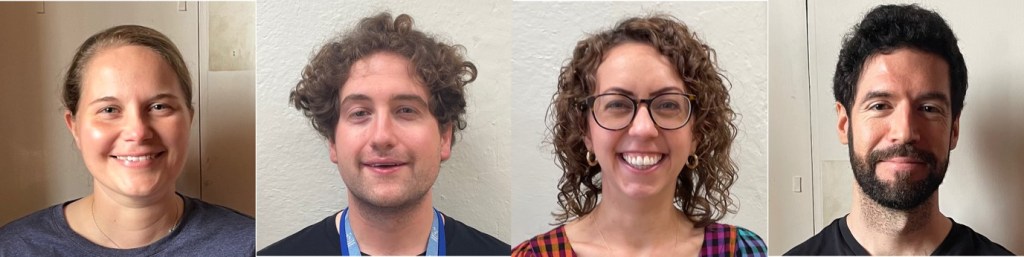
Four Museum staff willing to volunteer their faces!

A.R. WALLACE’S ARCHIVE NOW AVAILABLE ONLINE


“In all works on Natural History, we constantly find details of the marvellous adaptation of animals to their food, their habits, and the localities in which they are found.”

– A.R. Wallace

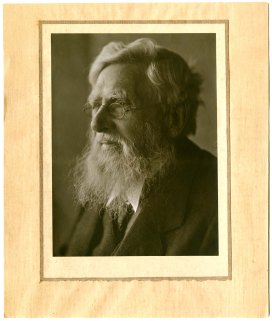
2023 marks a number of important anniversaries in the UK: it has been 75 years since the founding of the NHS and the arrival of the Empire Windrush in London, and 100 years since the first outside broadcast by the British Broadcasting Company. Importantly for the Museum, it is also the 200th anniversary of the birth of Alfred Russel Wallace (1823-1913), the trailblazing biologist, geographer, explorer, and naturalist.

Wallace was one of the leading evolutionary thinkers of the nineteenth century and is most well-known for independently developing the theory of natural selection simultaneously with Charles Darwin. The publication of Wallace’s paper “On the Tendency of Varieties of Depart Indefinitely from the Original Type” in 1858 prompted Darwin to quickly publish On the Origin of Species the following year. He was a pioneer in the field of zoogeography and was considered the leading expert of his time on the geographical distribution of animal species. He was also one of the first scientists to write a serious exploration of the possibility of life on other planets.

Wallace undertook extensive fieldwork in the Amazon River basin and the Malay Archipelago. He spent four years in the Amazon from 1848-52 but unfortunately lost much of his collection when the ship he returned to Britain on caught fire. Afterwards, he spent eight years in the Malay Archipelago (1854-62), building up a collection of 125,660 specimens including 109,700 insects, many of which are currently housed at Oxford University Museum of Natural History. In fact, we now hold one of the largest collections of Wallace specimens in the country.

In addition to entomological specimens, OUMNH holds a large and varied archival collection relating to Wallace. The archive includes original insect illustrations sent to Wallace by contemporary entomologists, photographs, and even obituaries. By far the largest portion of the collection is 295 letters of correspondence, of which 285 were penned by Wallace himself. The bulk of Wallace’s letters were written to fellow scientists, including the chemist and naturalist Raphael Meldola and the evolutionary biologist Edward Bagnall Poulton.

We are happy to announce that, in celebration of Wallace’s 200th year, we are making the entire Wallace correspondence available to browse online!

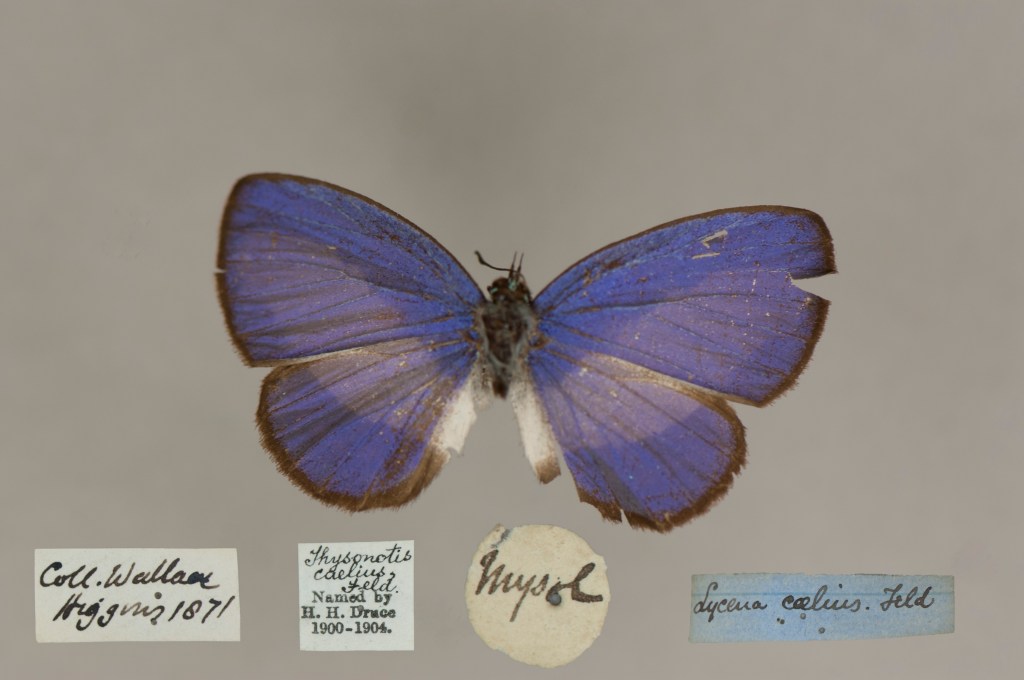
Several of the letters in the collection can be connected to the Wallace entomological collections held at OUMNH, providing us with invaluable insights into the history of these specimens. For example, you can read this 1896 letter from Wallace to Poulton in which Wallace discusses the changing of hands of his entomological collections, from Samuel Stevens to Edmond Higgins following Stevens’ retirement in 1867. The Museum subsequently acquired some of Wallace’s entomological specimens through Edmond Higgins, including the two beautiful examples shown above.

These letters are a potential treasure trove of information about Wallace and his collections, and we hope they will be of great interest to researchers in the field, as well as to the public. Interested? Learn more about Alfred Russel Wallace or explore his archive online.


Article by Matthew Barton, Digital Archivist at OUMNH

Buckland Papers Appeal


By Danielle Czerkaszyn, Librarian and Archivist


The Museum is currently leading a major fundraising campaign to purchase, catalogue, conserve, and digitise an important collection of archive material related to the geologist William Buckland (1784-1856).

Buckland was an English theologian and one of the greatest geologists of his day, becoming Oxford University’s first Reader in Geology in 1818. When he died in 1856, papers related to his teaching and research, as well as around 4000 specimens, were given to the University. These were later transferred to the Museum when it opened in 1860, and the Buckland collection remains one of the greatest research resources in our collections.

Left: A bust of William Buckland in the Museum of Natural History. Right: A portrait of the young Buckland.

The Museum has recently been offered a unique opportunity to acquire another extremely important collection of archive material related to Buckland. Passed by descent to the current owners, this archive consists of just over 1000 items of correspondence, geological notes, works of art, and other family papers — including a substantial number of items relating to his wife Mary (née Morland) and their eldest son, the naturalist and author Francis (Frank) Buckland.

This ‘new’ material fits beautifully with the existing Buckland archive here, providing missing pieces of the jigsaw and helping to paint a more comprehensive picture of this extraordinary geological pioneer, and the work he did together with Mary. It also offers greater insight into the scientific thinking and institutions of early 19th-century England, and the scientific contributions made by other ‘invisible technicians’ such as quarrymen, collectors, preparators, and replicators, giving us a more accurate, balanced, and inclusive picture of natural history at the time.

The campaign is aiming to raise £557,000 to acquire, conserve, rehouse, and digitise the Buckland archive. We have been fortunate to secure funding from a range of funders towards our goal, and we are now within £75,000 of this target.

The Museum is the obvious home for the ‘new’ archive, given Buckland’s close connection to Oxford University, and our holdings of his specimens and archive. With your help, we will reunite these two archive collections in one place and ensure researchers and the public can utilise these scientifically, historically, and culturally important resources for years to come.

Learn more about the Buckland Papers Appeal

Donate to the Buckland Papers Appeal

Header image: Silhouette of William Buckland and Mary Buckland