What’s on the van? – Stan’s on the van!
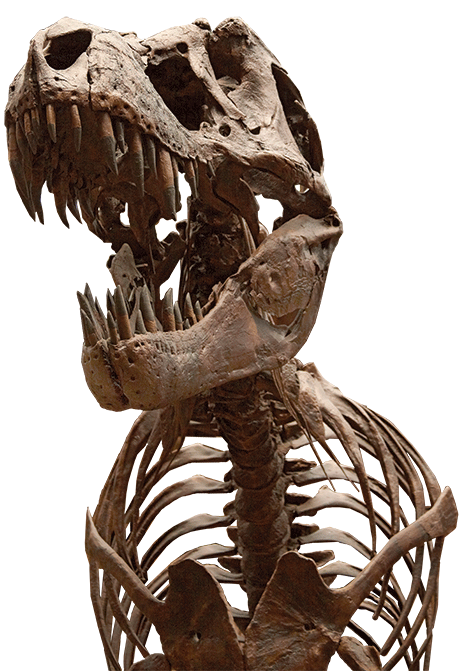
L-OUMNH-13_CUT-OUT

This week’s What’s on the van? is co-written by Andre Ashington, of the Museum’s geological collections, and year 10 work experience student Helen Tyzack.

Stan is a male Tyrannosaurus rex , from the late Cretaceous of South Dakota, U.S.A. He measures 12 metres in length, and is approximately 4 metres high at the hips. He is estimated to have weighed approximately 7 tonnes.

Tyrannosaurus rex is famous, or should that be infamous, for its relatively short arms, which are often viewed as being of no use, but recent research suggests that this was not the case. Two popular theories are that the arms may have aided male tyrannosaurs during mating. Alternatively, they could have been used to lever the dinosaur into an upright position after sleep. Sadly, neither of these suggestions has been proven, but we can be sure that he could definitely have beaten you in an arm wrestle!
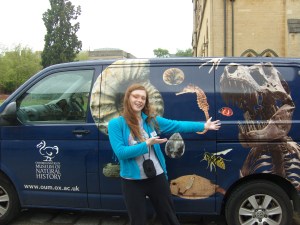
Helen with Stan… on the van

Stan would originally have hatched out of an egg and been cared for by his parents, in a similar way to some modern carnivores, until old enough to fend for himself. He would have hunted many herbivorous dinosaurs such as Pachycephalosaurus, Triceratops and Edmontosaurus, who shared his environment. He would also have preyed upon the smaller carnivorous dinosaur, Struthiomimus. Stan still enjoys the company of the fossil remains of these dinosaurs, which are also on display in the Museum.

During his life Stan acquired many injuries. These included several broken ribs, a broken neck, injuries to his cheeks and a bite wound on the back of his skull. Many of these were probably inflicted by other tyrannosaurs. However, Stan was obviously a tough customer and all of these injuries appear to have healed.

Stan clearly lived a very colourful life, which came to an end on a sandbank, near a stream and not far from the sea. He may well have died of old age.

What's on the van?

Spot the difference!

We are having rather a busy time of it in the department at the moment with lots of visitors, volunteers and outside activities including the ‘Creatures of the Night!’ late night event that was held at the Museum of the History of Science last Friday evening.
After all the hard work we decided that it was time for something fun so here is a five minute distraction for you whilst you have a cup of tea and a biscuit.

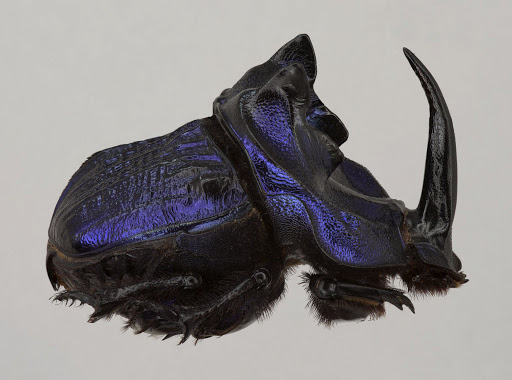
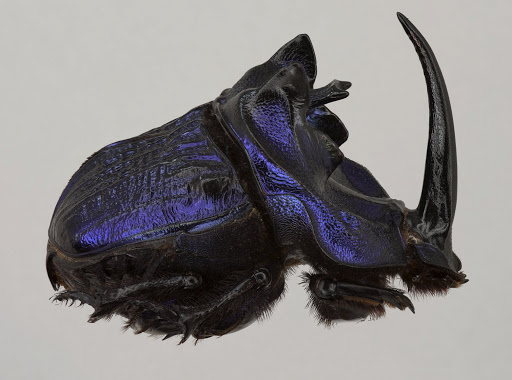
The rather stunningly handsome beetle below is a member of the genus Megaphanaeus. He is complete in the first picture but FIVE things have changed by the time we get to the second photo. See if you can spot them all!

Complete beetle

What’s missing here? Can you spot the five differences?

A little piece of Mars

Meteorite tutorial
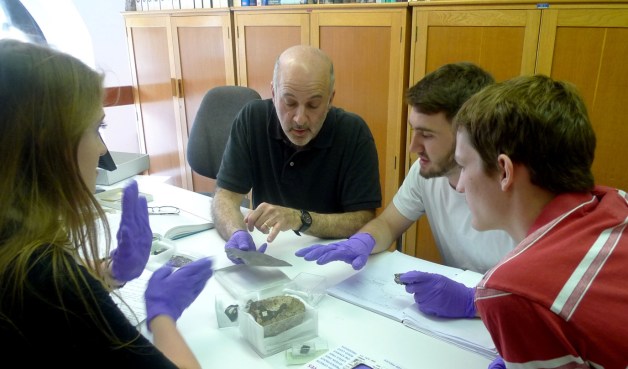
Dr Don Porcelli and his students examining some of our meteorites

Over the last couple of weeks, our meteorites had been having a busy time. On Friday 11th May, groups of Oxford University geology students came across to the Museum to have tutorials with Dr Don Porcelli from the Department of Earth Sciences. It’s a great opportunity for them to handle and study ten of our most interesting meteorites, and is always very popular. As one of them, Freya, wrote in the Oxford Undergraduate Prospectus last year, ‘There can’t be many subjects where you are able to hold an actual piece of Mars in a meteorite tutorial!’.

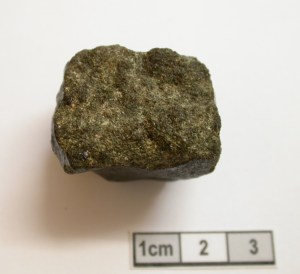
The Nakhla meteorite

Most meteorites come from the asteroid belt, a band of rocky debris between Mars and Jupiter. The lumps of rock keep colliding, and now and again that sends pieces spinning in the direction of Earth. Tiny fragments burn up as they enter the Earth’s atmosphere, and we see them as meteors – shooting stars. Larger pieces reach the surface of the Earth, and they are known as meteorites. Even bigger pieces hit the Earth with such explosive force, they all but vaporise… but that is another story!

The interesting thing about the asteroid belt meteorites is that they are made of the same planetary debris that the Earth itself was formed from, some 4.5 billion years ago. However as Freya pointed out, one of our meteorites has more exotic origins. The Nakhla meteorite fell at Nakhla, in Alexandria, Egypt on 28th June 1911. Isotope and trace element analyses have shown that it is almost certainly from Mars. The fall allegedly killed a dog; as one of my students once put it, the only Earthling to be killed by a Martian. Meteorites from Mars are exceptionally rare, and give a very special insight into the rocks that make up another planet.

Last Tuesday, members of the public had a peek behind the scenes on one of our regular Tuesday afternoon tours. The theme was ‘Rocks from Earth and Space’, and leader, Dr Dave Waters, showed them some historic rocks from Greenland and Everest, as well as those meteorites. Just think of all those people saying this week that they’ve just held a little piece of real Mars rock!

Monica Price, Assistant Curator, Mineral Collections

What’s on the van – Golden-ringed Dragonfly

L-dragonfly_CLONED

This week’s What’s on the van? comes from Zoë Simmons, from the Museum’s Hope Entomological Collections.

The Golden-ringed dragonfly (Cordulegaster boltonii) is one of the largest UK species of an order of carnivorous insects called Odonata. It is easily identified by its striking black and yellow stripes.

This dragonfly lays its eggs in shallow, running water; acid bogs and seepages are a particularly good habitat for this species. The larvae then take between two and five years to mature. The adults are strong fliers and can take down fairly large prey on the wing such as bumblebees or butterflies.

This is the only species of the Cordulegaster genus to be found in the UK. The family to which they belong have the common name of ‘Spiketails’ because of the large ovipositors, or egg-laying organ, possessed by the females.

As with all British species of Odonata, the Golden-ringed dragonfly is under threat from habitat loss and degradation. The shallow runs and seepages of bog areas which are one of the favoured habitats of this species are threatened by a number of things including peat cutting practices, drainage programs that create pasture for grazing animals, invasive tree species, rut making vehicles such as mountain bikes, and excessive levels of trampling by cattle, horses and people.

Many of these ecological problems – and more – occur in other kinds of habitats too and as such there is little refuge for our native Odonata species. However, there have been initiatives in recent years to protect dragon and damselfly habitat areas. More information can be found on the British Dragonfly Society website.

What's on the van?

It’s all relative

_DSC2241

A while back we featured a great little story about some graffiti, which was discovered high up on the Museum roof. You may remember that it was painted by two of the craftsmen responsible for creating our beautiful Victorian building. The graffiti reads “This roof was painted by G. Thicke and J Randall, April 1864″

Roof graffiti
The graffiti in the rafters of the roof

The story picked up quite a lot of press attention, featuring in the Oxford Mail and BBC Oxford, and that blog post is our most-read so far. But one reader’s attention was particularly attracted by the names of the painters. Oxford resident Debbie Moorwood has been tracing her family history for some time, so when she spotted the familiar name G. Thicke, she decided to do some extra digging.

After consulting the Victorian censuses and tracing back through her family tree, Debbie revealed that painter George Thicke was actually directly related to her husband, Steve Moorwood. Steve is George’s great great great grandson!

_DSC2266
Staff from Beard and Purcell join Steve and Debbie in the roof rafters.

Excited by her discovery, Debbie contacted us directly through this blog and we thought this was a fantastic opportunity for the graffiti artist’s relatives to see his work up close.

So, last week I had the pleasure of meeting Debbie and Steve Moorwood and we joined staff working on the roof project to climb high up into the roof. It was also a good opportunity for Debbie to share her discoveries about her distant relative, George Thicke. He was born in Glastonbury in around 1809, so would have been roughly 55 when he painted the graffiti on our roof. He is first spotted living in Oxford in the 1841 census, when he was a resident of the Cowley Road and, most importantly, listed as a painter! Later he moved around the area, living in St Clements, Headington and finally Shotover, before his death in 1887.

_DSC2231

Debbie said of the experience: “We had an amazing time visiting the Museum roof. We never expected to get a full guided tour of the whole building and Steve loved it, especially the building works. We can’t wait for the roof to be finished and for the Museum to open again, when we’ll be dragging our kids & family in to have a look. I think the museum has become quite a special place for us now.”

We now have a good picture of one of our infamous roof painters, but J Randall remains a bit of a mystery to us. So far, we think he was John James Randall of St Ebbes, Oxford, but we know very little else. Wouldn’t it be wonderful if we could track down one of his relatives next?

Rachel Parle, Education Officer