What’s on the van?

What's on the van banner 2

A while back, you may have seen this post about our gorgeous new museum van. During our closure year, it’s proving to be invaluable as we get out on the road with schools’ outreach and community events.

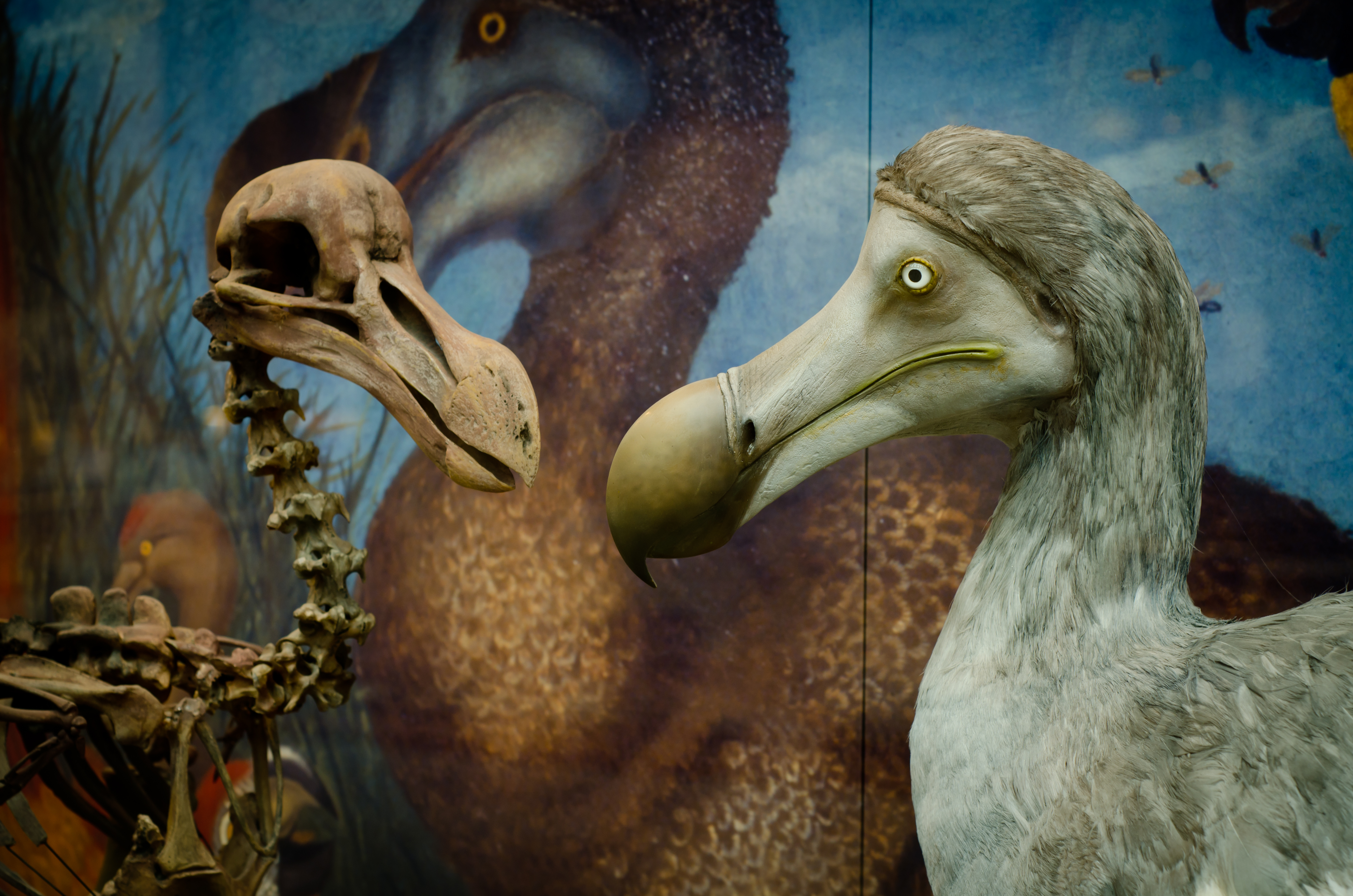
As you can see, it’s decorated with beautiful images of some of our most iconic specimens – from the dodo to dragonflies and dinosaurs. As we’ve been out and about, the van and its decorations have received a lot of attention and questions, so we thought you may like to find out a little bit more about the featured creatures.

Fox

Each week, we will be revealing an interesting fact or story about one of the van’s specimens, written by our knowledgeable collections staff. So, to start us off, we’ve picked this lovely little item from our Mineralogy collection…

_MTPopalsnail4[1]

Opal Fossil Sea Shell by Monica Price, Mineralogical Collections

I look after more than 30,000 mineral specimens, many of them exquisitely beautiful. This little sea shell is one of my favourites. It is Ampullospiro sp., a fossil gastropod, just 2.5cm across, and it is composed of precious opal which flashes beautiful colours as it is turned in the light. It comes from the opal mining fields of Queensland, Australia, and was purchased by the Museum sometime before 1896.

This little gastropod lived in the sea or a river estuary in early Cretaceous times, around 110 million years ago. After it died, it was buried by sediments which turned into rock. Heavy weathering left voids in the rock where fossil shells, wood, and reptile bones had been, and these filled up with opal. If you look at opal using a scanning electron microscope, you can see it is made up of tiny spherules of silica stacked up like a heap of ping-pong balls. Most opal looks very dull, but in rare precious opal, the spherules are just the right size to diffract the light, breaking it into its spectral colours.

This delicate little shell has both age and beauty.

Happy Birthday William Smith!

William Smith

Today marks the 244th birthday of William ‘Strata’ Smith, a very important figure in the history of English geology and to the Museum, so we thought it only appropriate that we mark this day.

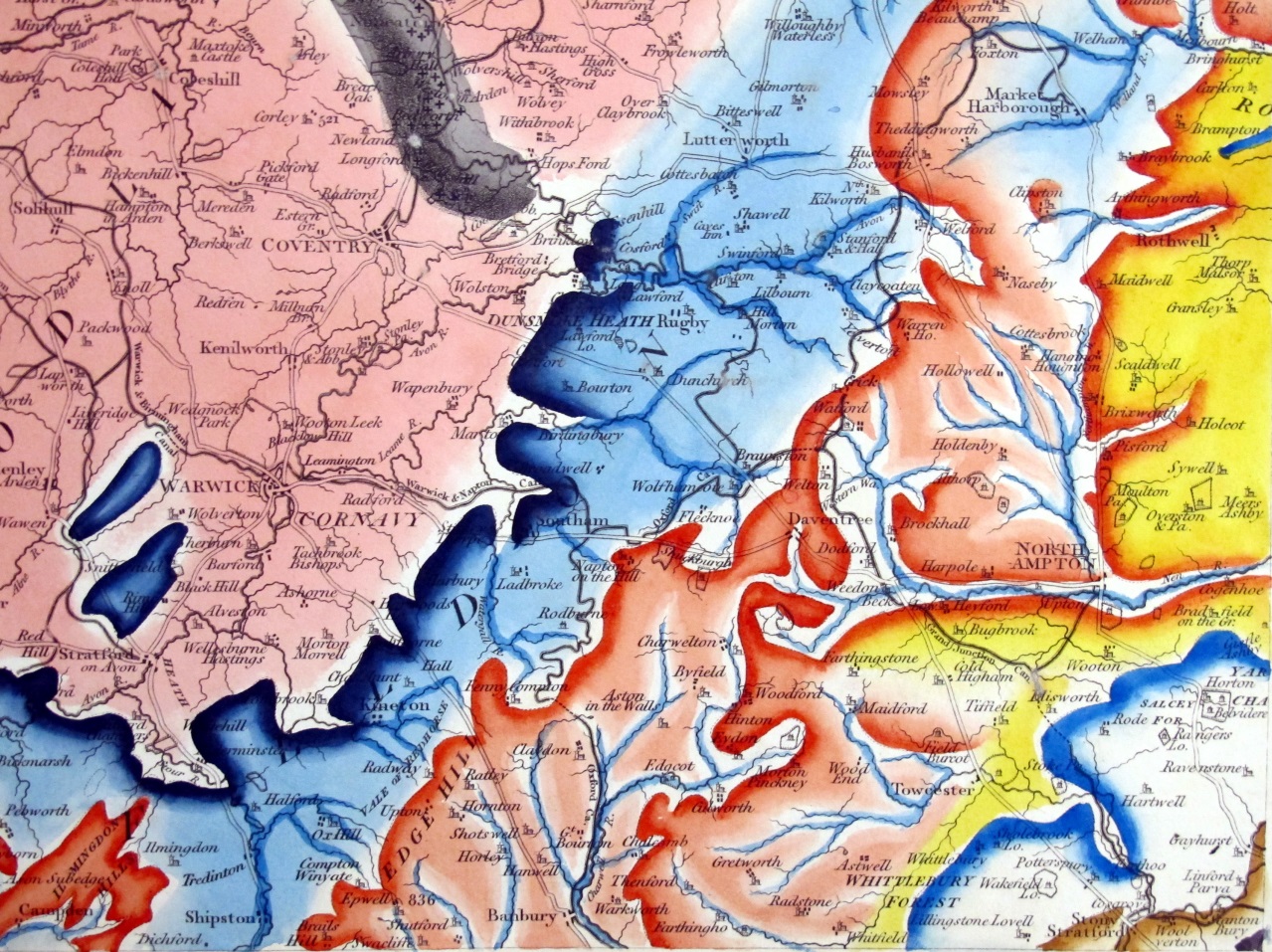
Despite being born to humble beginnings in Churchill, Oxfordshire in the late 18th Century, Smith single-handedly mapped the geology of Great Britain and created the first geological map of England and Wales, which was published in 1815. He managed this amazing feat through his observation of the layers, or strata, beneath the earth and the fossils found within them. His work as a Land Surveyor and Engineer for both Mining and Canal companies proved to be the perfect opportunity to complete his work, allowing him to travel the country to complete contracts and still make his observations.

While this accomplishment was undoubtedly remarkable, Smith unfortunately didn’t receive the recognition for his work he so deserved until late in life. His lack of formal education and his family’s working class background made him an outcast to most of higher society at the time. It wasn’t until just a few years before he passed away, in 1839, that he received any recognition for his ingenious contribution to the science of geology, receiving a number of awards, including the prestigious Wollaston Medal and an honorary degree.

William Smith map

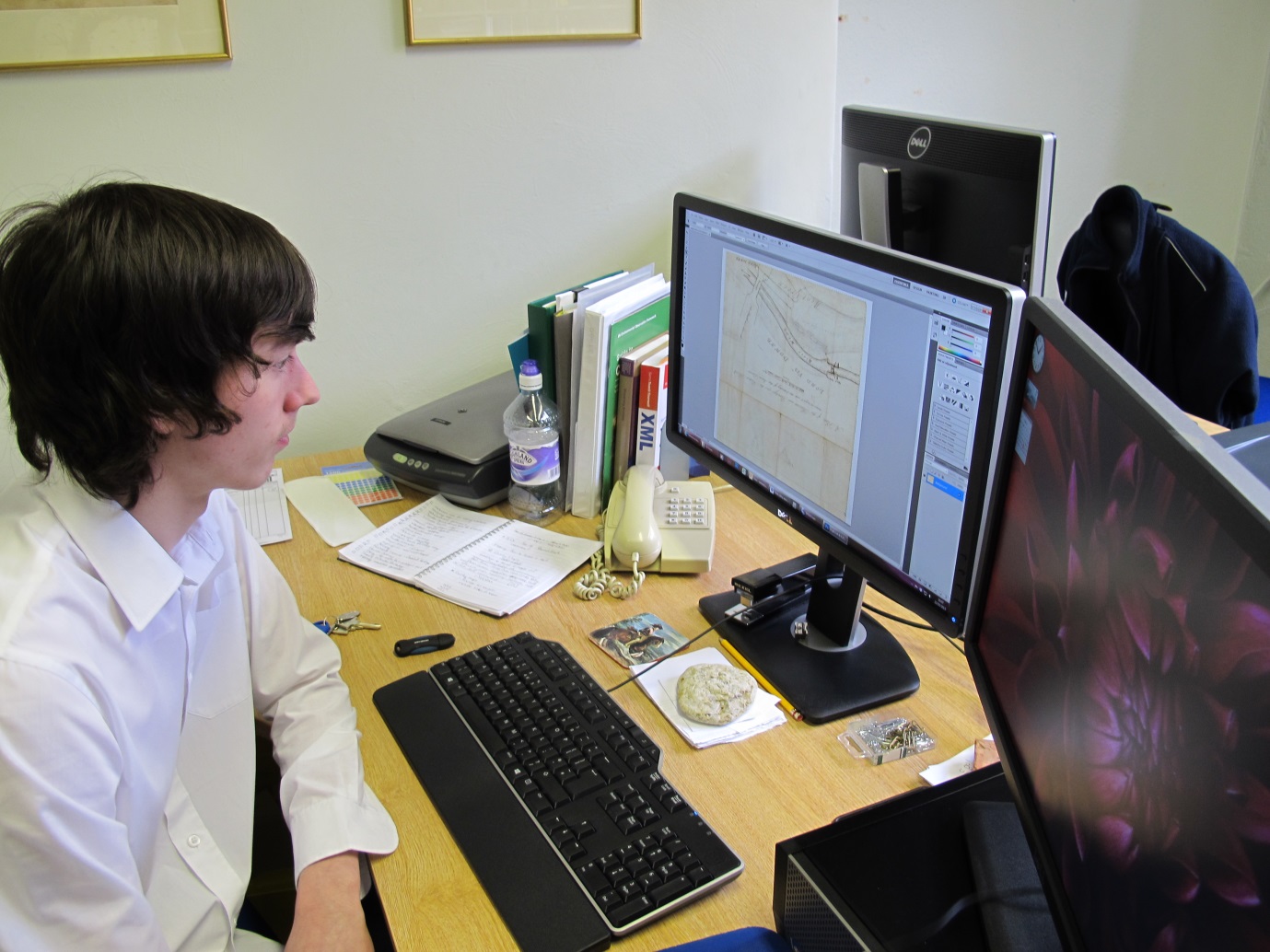
We are very fortune to have a large number of Smith’s papers here at the Museum, and to have recently received generous funding from Arts Council England to catalogue and digitise his collection. As uncle, guardian and teacher to the Museum’s first keeper John Phillips, Smith’s papers have long been housed within our archive and are an important resource into the history of geology and geological mapping in Britain. This funding will give us the opportunity to make them available online to the public for the first time.

William Smith project
A work experience student helps to process scans of original documents in the Smith archive

William Smith Online will be available early next year, but work is well underway behind the scenes. The website will launch a number of events over 2014 through to 2015, to celebrate the bicentenary of Smith’s geological map of England and Wales, both here in the museum and around the country. Watch this space, or follow us on twitter to keep updated on this exciting project!

Kate Santry, Head of Archival Collections

Incredible fossil find

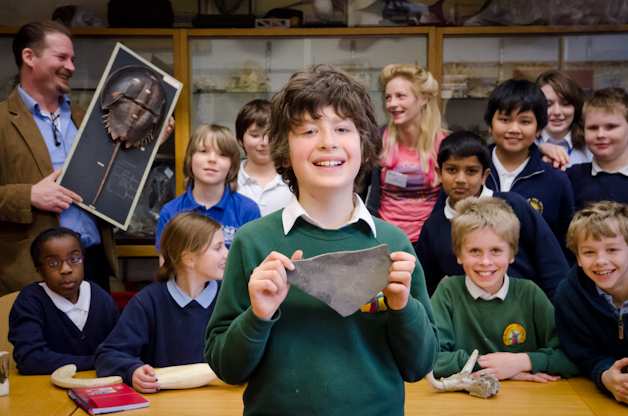
At the Natural History After-School ClubWe’ve been looking forward to sharing this story with everyone for a while and following a big splash in the national media here this morning we can now post it on the blog too. The picture above is of our Education team’s Natural History After-School Club and in the front is Bruno Debattista, a 10-year-old pupil from Windmill Primary School in Oxford.

Bruno with horseshoe crabs

What’s exciting is what Bruno is holding in his hand: a piece of shale that he collected while on holiday in Cornwall and correctly identified as containing a faint fossilised imprint. Members of the After-School Club are encouraged to collect specimens and bring them in each week to identify and talk about them. When Bruno brought his rock along we were somewhat stunned by what appeared to be a very rare trace fossil – a fossilised mark or imprint, rather than the more common fossilised body parts.

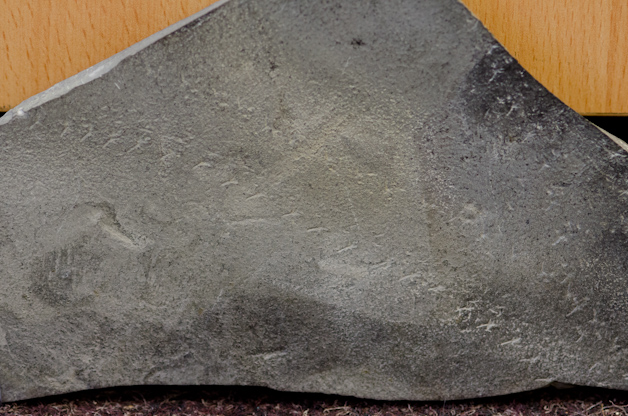
There was some discussion and microscope-peering amongst our expert geologists before the fossil find was finally confirmed by the Museum as being the foot and tail prints left by a pair of mating horseshoe crabs, crawling up a muddy shore around 320 million years ago. You can see in the picture here what a fully grown horseshoe crab looks like; a specimen of the size that made the trackways is perched on top of Bruno’s fossil.

The footprints left by the horseshoe crab can be seen in a trail running from the top left to the bottom right of the shale slab.

It takes a very keen eye to spot such faint tracks and plenty of enthusiasm to go hunting for them. It’s exactly this kind of enthusiasm that the Natural History Club is trying to nurture, so we’re delighted to be able to report Bruno’s incredible find and we are especially pleased that Bruno and his family have decided to donate the fossil specimen to the Museum’s collection.

Scott Billings, Communications coordinator

More than a dodo

The Museum of Natural History has made it onto Twitter! We are now live and ‘squawking’ with the handle @morethanadodo.

We’re delighted that we’ve gathered almost 300 followers in just one week and several people have already spotted the jingle hidden in our name… can you sing the next line?! If you’re a tweeter, please do follow us to discover more snippets of what’s going on behind the scenes at the Museum.

Tweet of the WeekWe’ve had some great tweets so far, which has inspired us to set up a ‘Tweet of the Week’ board in the Museum entrance. This week’s winner is…

My favorite place in the WHOLE world is now on twitter. Everybody rush and follow @morethanadodo

Why not become a dodo disciple, then get your tweet up here for all to see?

Rachel Parle, Education Officer

Taxonomy 101: 2 common questions

Taxonomy, or rather how and why we name things the way that we do, is one of those tricky things that we get asked about all the time.

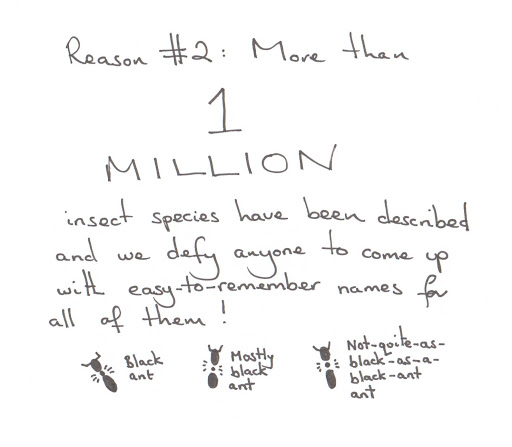
It’s a tricky thing because really there is so much that we could talk about so we often don’t know where to start. Of course, asking us is a bit like asking a 5 year old polar bear enthusiast to tell you why they like polar bears – soon you will know everything there is to know about polar bears and probably a bit more on top. It’s the same with us and insect related questions, we just can’t help but get over-excited and try to tell you absolutely everything there is to know. Considering that there are over million described insect species and hundreds of years of history to taxonomy, collections, museums and science it’s not surprising that staff can still be talking days after you ask your original question.

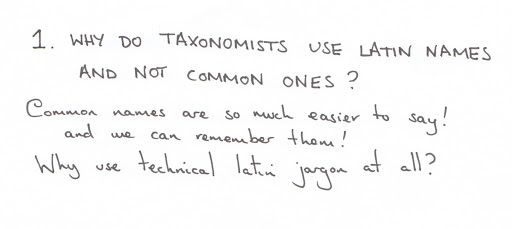
So here, in jaunty cartoon format are the pithy answers to the two most commonly asked taxonomy related questions:


taxonomy, classification, systematics, cartoon, latin, binomial

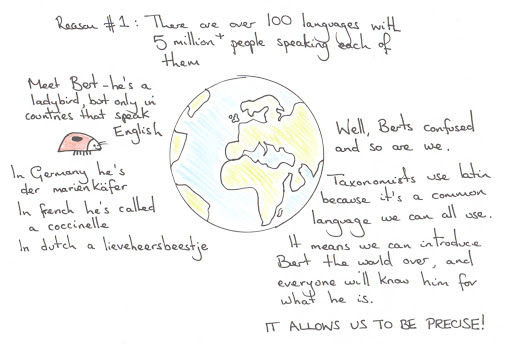
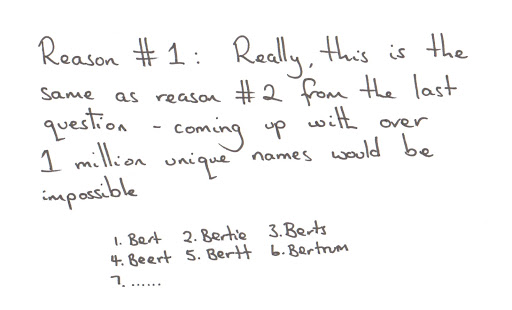
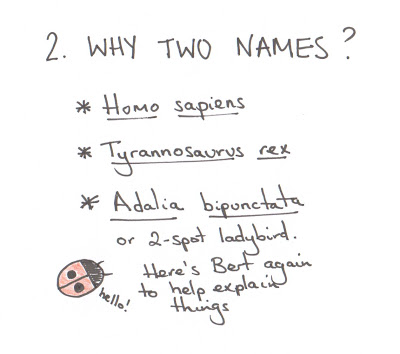
Latin is a universal language. It doesn’t matter which country you are from or what language(s) you speak, using a latin name for a species allows you to be precise about the species you are talking about, so if a researcher in Spain communicates about a species with a researcher in Malaysia they know that they are both talking about exactly the same thing.

taxonomy, classification, systematics, cartoon, latin, binomial

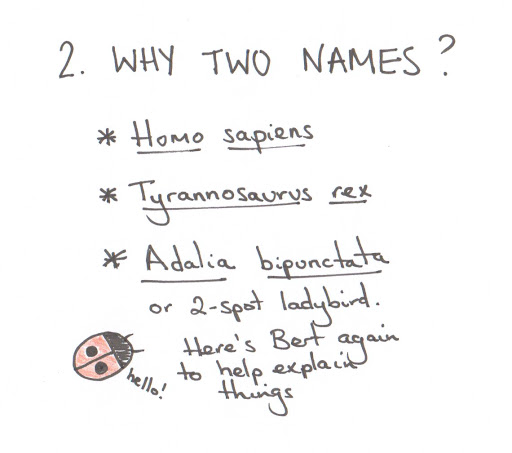
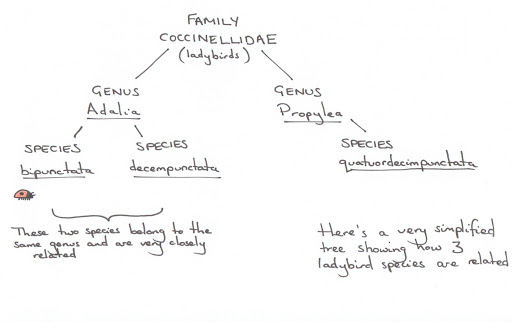
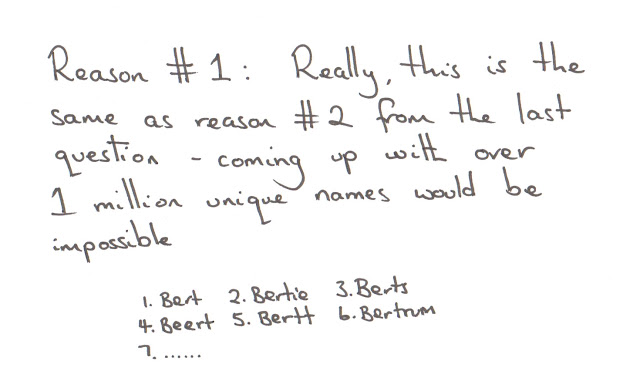
Sometimes, species end up with multiple common names. There is no code or list of rules for giving a species a common name (which there is when it comes to latin names) and so some species end up with lots of different names. Ladybirds are variously known as: lady bugs, lady beetles, god’s cow, ladyclock, lady cow and lady fly among others.
taxonomy, classification, systematics, cartoon, latin, binomial


taxonomy, classification, systematics, cartoon, latin, binomial

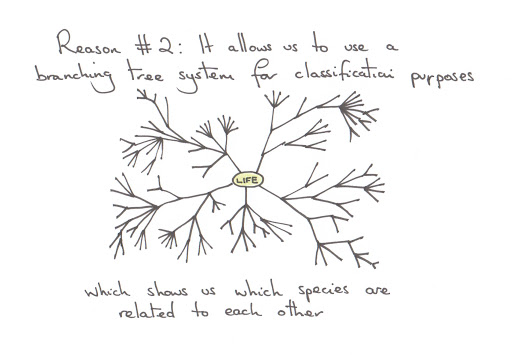
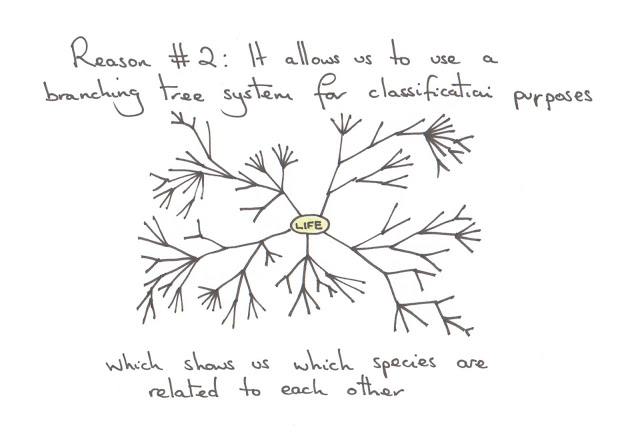
Various taxonomical systems have been employed in the past. The binomial system (2 names) as refined and perfect by Carl Linneaus is the one that is now used by taxonomists. A trinomial name system (3 names for a species) was in existence for a while but it was found to be too cumbersome, as were a few other systems that we will touch on in future posts.
The other advantage to using a binomial system is that it lets you reuse specific names for multiple species across different genera. The rules do not allow for generic names to be used more than once so you can never completely duplicate a name. For example all the following species have a specific name of punctata but belong to different genera, hence you can differentiate between them: Platythyrea punctata (an ant), Phyllorhiza punctata (a jellyfish), Drepane punctata (a sicklefish) and Tangara punctata (a bird).
taxonomy, classification, systematics, cartoon, latin, binomial

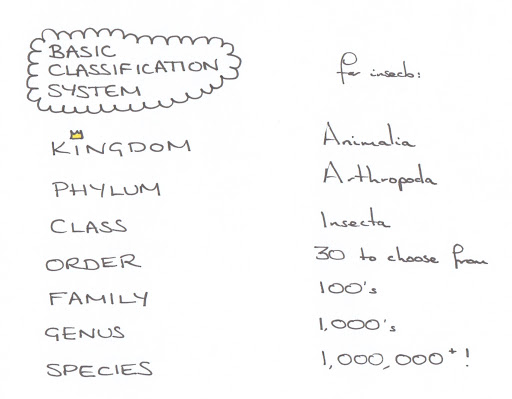
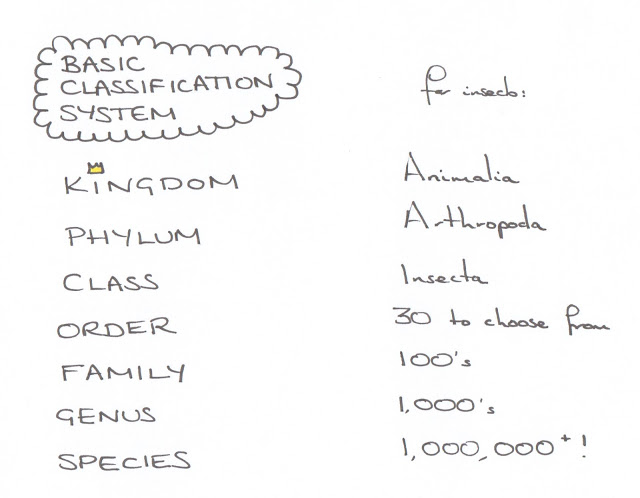
Taxonomical systems are all based on the above format. Levels within a system vary depending on the subject, for example, a zoological structure dealing with mammals has a higher level structure, plant structures are complicated by hybridisation and insect based trees have an extraordinarily high number of branches due to the sheer volume of species involved.
taxonomy, classification, systematics, cartoon, latin, binomial

Further levels are available to a taxonomist than those above. There are both super- and sub- levels for each category (super-family or sub-order for example) as well as extra levels such as tribe which is inserted between family and genus. In fact, there are multiple variations around a theme and all of these structures are flexible. A classification scheme is merely something that is imposed on nature by humans as a way of grouping similar species together. Each levels creates a group of a greater or lesser size. Those at the top of tree (kingdom, phylum) create the biggest groups with each group becoming smaller as you move down the list until you reach species level which classifies to a single unit: one species.
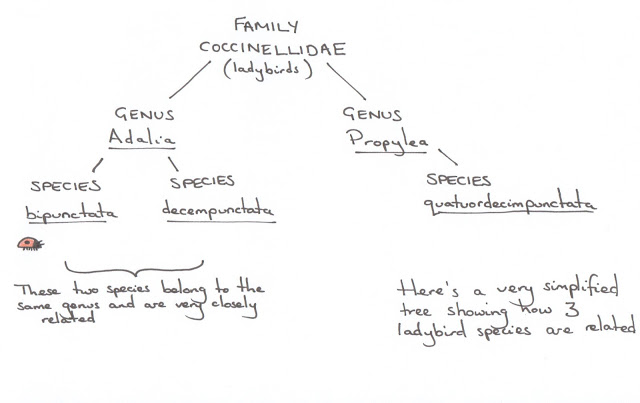
taxonomy, classification, systematics, cartoon, latin, binomial

The information in this post has been boiled down to the basics. We will cover things individually and in more depth in later posts, when we can take a look at separate issues and discover more about how taxonomists set about sorting out and identifying species, describing new insects and establishing type specimens.
For now though, we hope that you have enjoyed meeting Bert the ladybird. If you have any more questions for us then please post them in the comments box below or e-mail us using entomology@oum.ox.ac.uk.

What’s that mess outside?

Museum mess

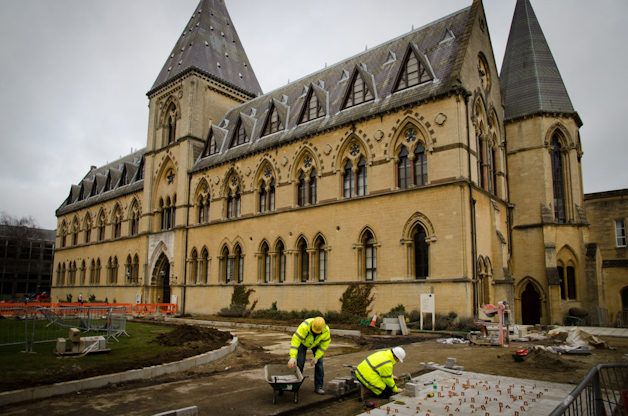
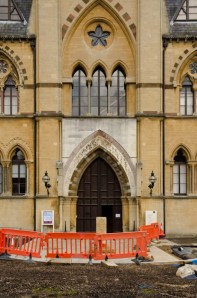
If you’ve been past the Museum of Natural History, or visited the Pitt Rivers Museum lately, you may have noticed the approach to our beautiful building is looking a bit messy.

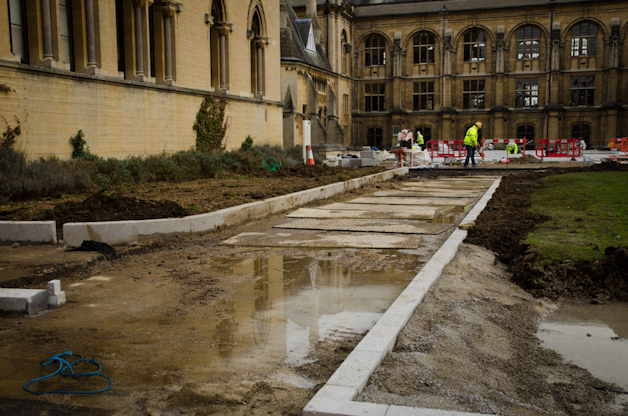
Our lawn and surrounding area is undergoing a large landscaping project over the coming months and should be looking lovely and welcoming in time for our re-opening next year. The driveways alongside the Museum are being freshly tarmacked and the paths are being laid with granite blocks, which will have it looking very smart.

Museum mess

Designs have taken inspiration from the original Victorian layout, with the lawn now cut back into an elegant curved shape, creating a dramatic approach to the building. The Victorian railings that ran along the front wall were removed during World War 2 and

believed to have been melted down to help the war effort, but some smart new replicas have now been installed in their place.Museum mess

A more high tech approach has been taken to address the problem that we face each year with the lawn. Because part of the Radcliffe Science Library sits just inches below the grass, the soil is very thin, which means that drought and sun quickly cause the lawn to go very brown. If you’ve visited in summer, you will have seen a strange pattern; half of the lawn remains green while the half with the library hidden below is a crispy brown. A modern irrigation system is due to be put in place, keeping the grass green and lush ready for picnics all summer long. But you will also be pleased to know that there will be benches installed too, in case the ground is a bit soggy!

Museum mess

Museum messThe outside environment will be much more pleasant and green, with trees planted in the paved area and enlarged flower beds next to the Museum. These additional plants will provide sustenance for our colony of bees and other pollinators. We also hope it will make the space an ideal relaxation spot after a long day exploring the Museum!

So we apologise for our currently scruffy exterior and any mud that you may find on your shoes, but hopefully when we reopen in 2014, it won’t just be the inside that’s looking its best, but the outside will be worthy of admiration, too.

Rachel Parle,  Education Officer