Mandy on a mission

Mandy featured

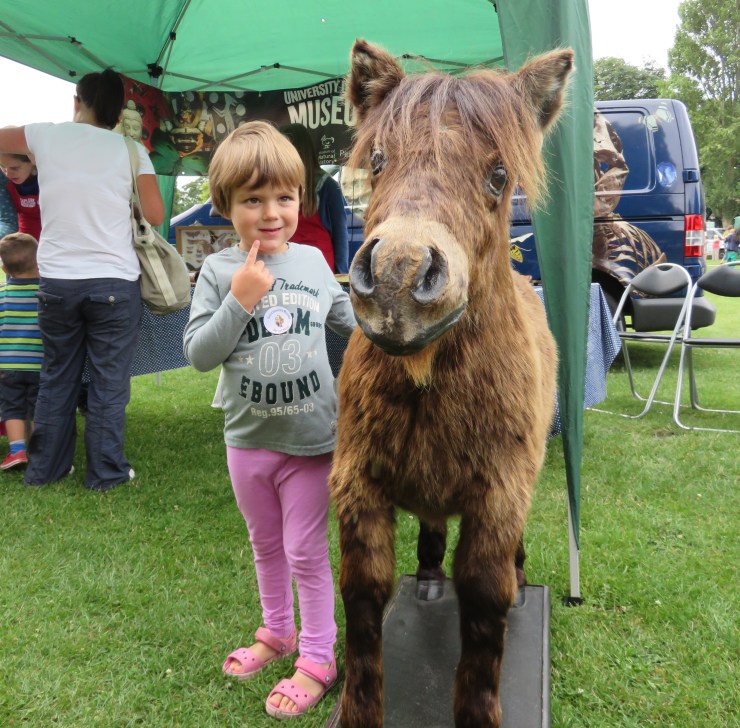
Regular visitors to the Museum will have noticed a certain Shetland Pony hasn’t been seen for a while. After living in Knaresborough Zoo during the 1980s, Mandy went on to spend over 10 years on display as touchable taxidermy – admired, adored and stroked until she could take no more. With the arrival of our new Sensing Evolution displays, it was time for a revamp and Mandy has gone into retirement. But, as our Community Outreach Officers explain, she’s now embarked on a brand new adventure…

**

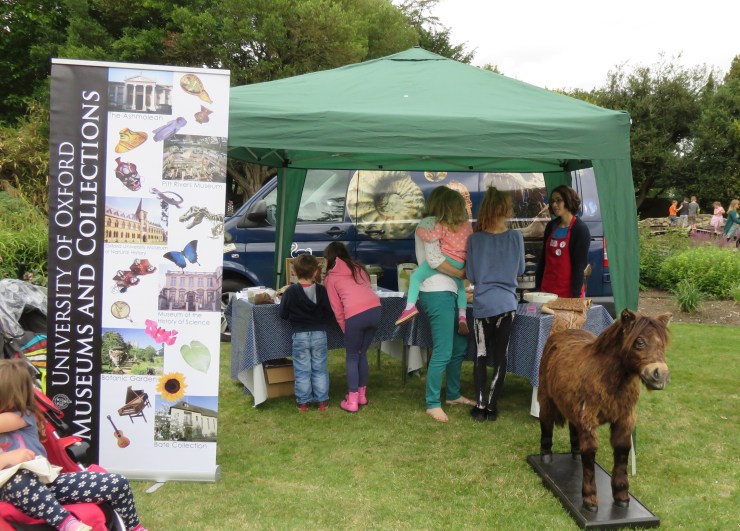
Mandy hasn’t disappeared! Instead of being in the Museum of Natural History, she now comes out to community family events with Oxford University Museums’ outreach team. This summer she has been all around Oxfordshire at Playdays, organised with Oxfordshire Play Association, and also with us at community festivals such as the Cowley Road Carnival and the Leys Festival. These brilliant indoor and outdoor activities are completely free for everyone to attend.
IMG_1189
Mandy takes pride of place at an Oxfordshire Playday

Oxfordshire Playdays offer children the support, space and resources to develop play and explore other activities available in Oxfordshire. The carnivals celebrate the places, spaces and communities in which we live, offering people an opportunity to be part of their local community.
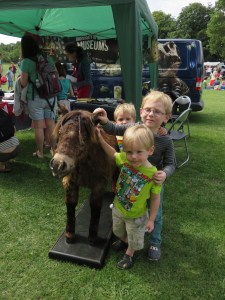
Some of Mandy's admirers come to say hello
Some of Mandy’s admirers come to say hello

At these events Mandy has pride of place in front of the museums’ outreach gazebo, so everyone can see her. The outreach team represent all the Oxford University Museums and Collections, giving people a flavour of what they can find. So, along with an elephant’s tooth, Megalosaurus footprint and Madagascan Hissing Cockroaches, Mandy comes with us to represent the Museum of Natural History. Once people give Mandy a stroke, they often come and hold a Cockroach or talk to the Outreach Officers about the other objects.
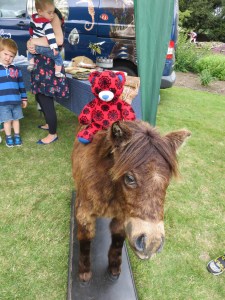
Teddy takes a ride
Teddy takes a ride

When parents, children (and dogs!) see Mandy, they are delighted. A lot recognise her from the Museum of Natural History, but others are just drawn to her soft, cuddly fur. Lots of children stroke her, pretend to feed her and put their teddies on her to give them a ride. Often we hear:

It’s the horse from the museum! Is she alive? How did she die? Where did she live?

So Mandy has not been forgotten. Instead she’s roaming Oxfordshire, bringing smiles to lots of children’s faces and has become a very valued member of Oxford University Museums’ outreach team!

Nicola Bird and Susan Griffiths, Community Outreach Officers
5 fantastic earwig facts

P1110897

Nigel Cook is one the last of our summer interns to fly the nest. He’s just come to the end of an eight-week placement as part of his MA in Museum Studies at Leicester University, and has been based in our Life Collections. Over this time with us, he’s developed an affection for an unlikely insect.

**

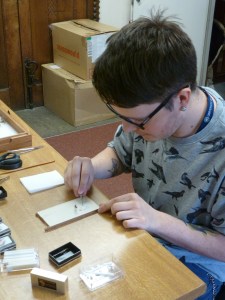
Nigel working on an earwig specimen

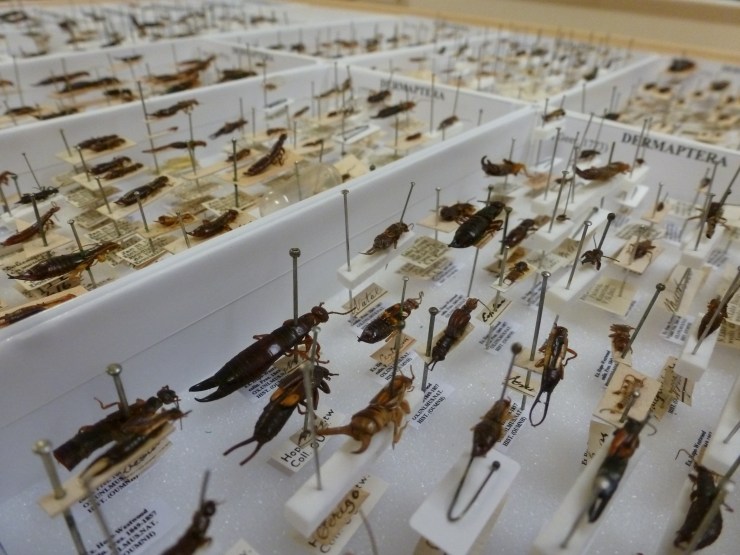
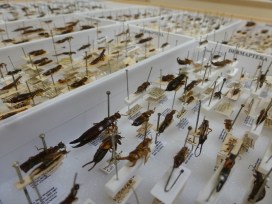
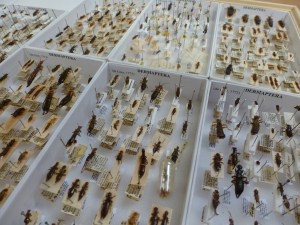
I have been working with a historic collection of earwig specimens (some over 100 years old!), ensuring that they are safely moved into new storage and given some care and attention on the way. There was a time when the word ‘earwig’ would send a shiver down my spine, as I recalled childhood tales of eggs being laid in my ear as I slept. But now I know better; earwigs don’t make their homes in ear canals, you are much more likely to discover them under stones, or the bark of a tree.

Like me before the start of my project, few people know anything about this fascinating order of insects, so here are 5 amazing facts I have learned during my internship that might change the way you think about them.

  1. Mum’s the word

Unusually for non-social insects, earwigs make great mums! In several species, earwig mothers will stay and care for their eggs in a makeshift nest. They provide the eggs with warmth, fend off predators, and even clean the eggs regularly in order to prevent fungus growth.

  1. “Skin wings”
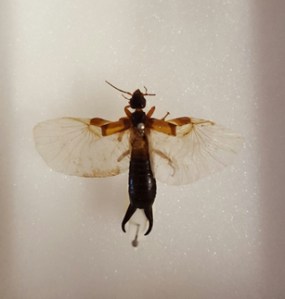
An earwig with wings unfolded

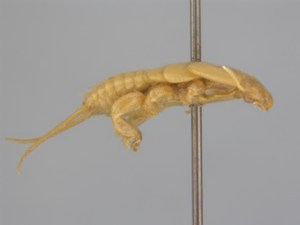
Earwigs belong to the order ‘Dermaptera’, a Greek name which is derived from the roots “derma”, meaning skin, and “ptera”, meaning wings. This is because most species have a pair of thin hind wings which fold neatly under a shorter pair of forewings, called tegmina, which act like a protective casing.

Yes, earwigs can fly! Although they rarely use this ability, it has helped them to spread worldwide.

  1. A strong grip

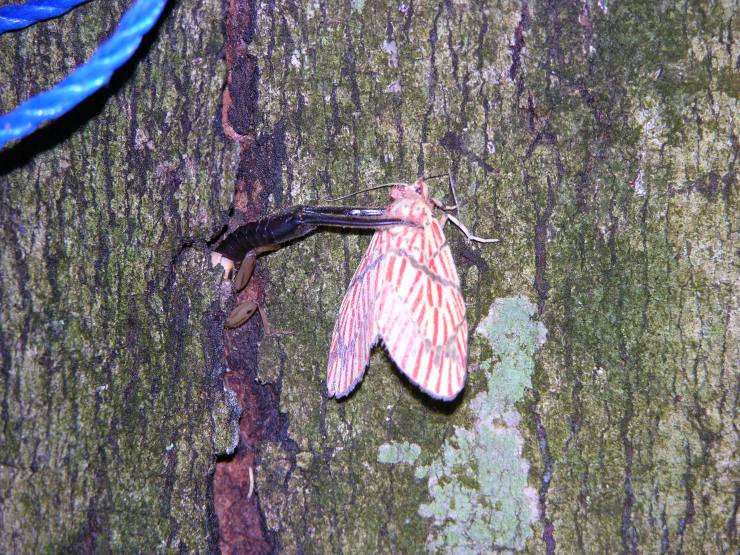
Moth earwig large

Many earwig species feed on decaying plant and animal matter, some eat living plants and others are predators. These carnivores usually prey on smaller insects, but with the use of the pincers (or ‘cerci’) on their abdomens, some earwigs are capable of snaring much larger insects. These pincers can vary in shape and size from species to species, and even between males and females.

  1. That itching feeling…

Earwig pinIn the jungles of Africa, there are giant pouched rats far larger than the rats we might see scurrying around our cities. Within the fur of some of these rats lives a very odd earwig; those of the family ‘Hemimeridae’.
These tiny insects are ‘ectoparasites’, spending their entire lives on the rats. Wingless and blind, they barely resemble earwigs at all.

  1. Darwin’s collection

During his great expeditions around the globe, Charles Darwin personally collected many specimens to support his theories. Amongst these specimens were earwigs, some of which survive in museum collections to this day, including several here at the Museum of Natural History.

P1110899Although earwigs have carried a bad reputation for many years, it’s important to realise that they pose no risk to humans.
They are a diverse, widespread and very successful order of insects that have been wrongly labelled as ear-invaders. So the next time you find an earwig, see it the way I do now: as a fascinating insect that’s just a little misunderstood.

Nigel Cook, Entomology Intern

Adam and the Edmontosaurus

Edmontosaurus re-instate 011
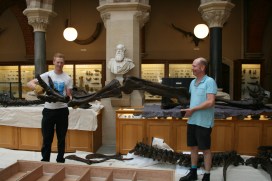
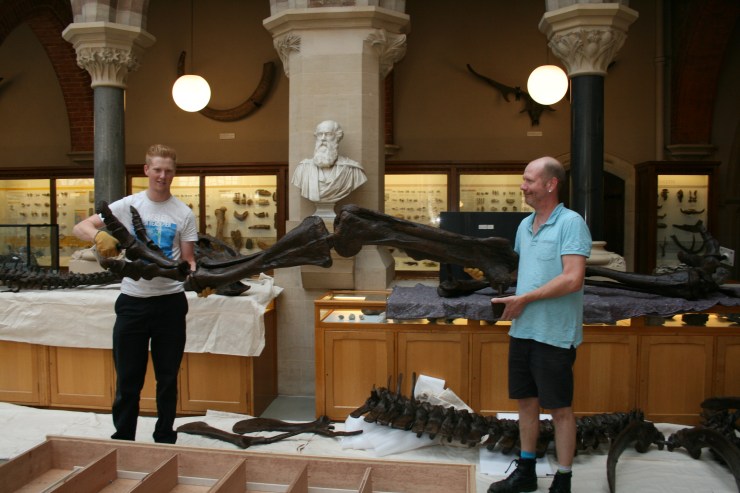
Adam (left) and Pete carrying a hind leg, presided over by the statue of Henry John Stephen Smith, Keeper of the Museum 1874 -1883

Fossil Fridays don’t get much bigger than this. This morning a team from the Museum have started the process of reinstating our large Edmontosaurus cast. The 49 pieces that make up the skeleton were brought back into the Museum after going out on the road, and now sit ready and waiting in the middle of the Museum.

For many of the team, lugging dinosaurs around is an everyday challenge, but one member of staff is very new to this sort of thing. Meet Adam Fisk, our new apprentice who joined the Museum only 2 weeks ago. Working alongside his supervisor Pete Johnson, he’s already helped with all sorts of tasks around the building, such as removing old display panels and fixing lights, but this one has to be a new experience.

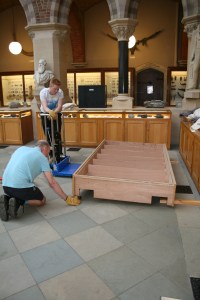
Returning the Edmontosaurus base to the museum court with supervisor Pete Johnson
Returning the Edmontosaurus base to the Museum court with supervisor Pete Johnson

Adam is fresh into the Museum following his GCSEs this summer and he says it all feels like a dramatic change of scene;

Only 8 weeks ago I was sitting in a classroom – now look at me stride!

The Edmontosaurus was dismantled back in June and went to the Cheltenham Science Festival with Professor Phil Manning of Manchester University. It was displayed in the ‘Dinozone’ exhibition, which received 14,000 visitors over 6 days.

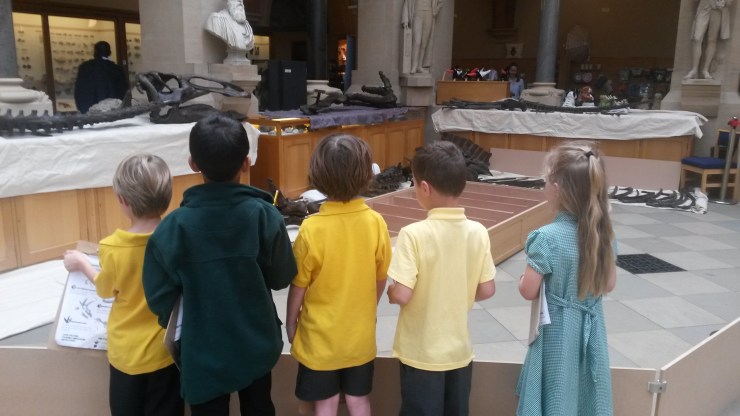
The Edmontosaurus bones attract attention from a visiting primary school.

The cast is made up of 15 sections (plus 34 ribs) which bolt together. First to go on are the back legs and pelvis, then the spine and the skull, followed by the upper limbs. Lastly, the 34 ribs can be carefully slotted into place. The giant puzzle of fitting it altogether will begin on Monday.

Here’s how Pete describes Adam’s Edmontosaurus experience:

One small step for A-dam, one giant leap for apprentice-kind!

Rachel Parle, Interpretation and Education Officer

Delving into dung

25

Each summer we host a variety of interns, working both in the collections and with the public. Oxford University student Maria Dance has now come to the end of her placement and reflects on the delights of dung beetles and what they can teach us about ecosystems.

**

Over the past six weeks I have been working in the Hope Entomological collections, home to an estimated 5 million insect specimens. Coming fresh from my second year studying biology at Oxford University, I have been working on a project to sample-sort and identify dung beetles from the SAFE project in Sabah, Malaysian Borneo.

A very short introduction to dung beetles
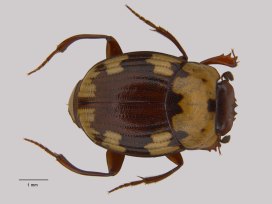
From the order Coleoptera, sub-family Scarabaeinae, most true dung beetles feed exclusively on dung. Some roll dung away from the main pile and bury it for food or as a brood site, some tunnel below the dung  and bury it that way, and others are “dwellers” and simply live in it. All are essential groups for ecosystem functioning and provide indispensable services from which humans benefit; dung beetles recycle nutrients, rework soils, and act as secondary seed dispersers.

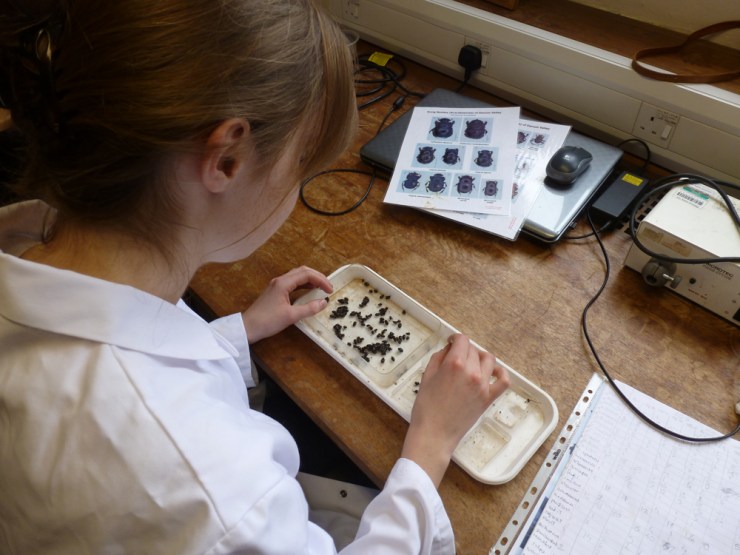
Maria sorting through a dung beetle sample

Dung beetle research at Oxford

Researchers at Oxford are studying the link between dung beetle biodiversity and ecosystem functioning to predict the true environmental consequences of human-driven habitat loss and fragmentation in the tropics. So I have been identifying beetles to calculate diversity, which is then compared across sites with very different human disturbance levels. Dung beetle diversity and community composition are good proxies for ecosystem functions as we know the roles that different groups of dung beetles play.

More than an intern

P1110406
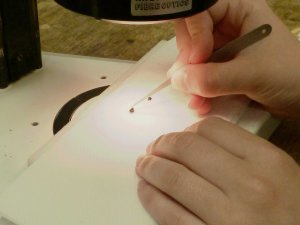
Working on tiny dung beetle specimens

The starting point is for me is material collected from (human) dung-baited pitfall traps, which I search through and extract all dung beetles from; it’s a smelly, tricky job that needs a sharp eye as some beetles can be as small as 2mm in length!

Next comes the hard part: identification. Darren Mann, Head of Life Collections at the Museum and dung beetle taxonomist extraordinaire has guided me through the process. It was particularly difficult to identify the Bornean species due to the lack of good primary literature. A microscope is essential, as many characters used to identify species are not visible with the naked eye.

P1040924
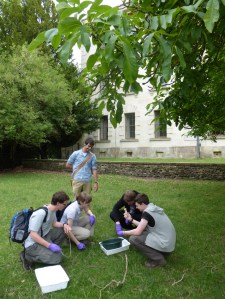
Students sampling for dung beetles at Magdalen College deer park

As my internship draws to a close, I have identified 6851beetle specimens to 56 species. I have also carried out some initial analyses: comparing diversity between habitats, and between data from 2015 and 2011.  I want to find out whether differences over time are more significant than differences between habitats.

In my last week I was fortunate enough help run a “Spotlight Specimens” session about silk worms and their fascinating, human-dependent existence. In the sessions, experts from the Museum collections show intriguing objects and specimens that are not usually on display. Visitors were able to interact with live silk worms and see them cocoon-building, while we answered questions.

In September I travel to Borneo for a field course, where I hope to put my newly-learnt identification skills to practice. Over the past six weeks I have become more enthused by taxonomy, tropical rainforest ecology but, most importantly of all, dung beetles!

Maria Dance, Intern in Life Collections

Bringing dinosaurs to life

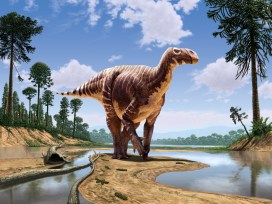
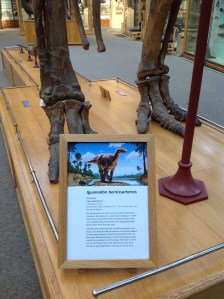
Iguanodon bernissartensis

By Rachel Parle, Education and Interpretation Officer

Dinosaurs were living, breathing, moving animals, but that’s sometimes hard to visualise when standing in front of a skeleton. We may not be able to reincarnate dinosaurs in the style of Jurassic World, but an excellent illustration of the animals in their environment can go a long way to bringing them back to life.

Triceratops horridus

When Earth Collections Manager Hilary Ketchum and I set out to update the labels for our free-standing dinosaur skeletons, we wanted to present current science alongside scientifically accurate illustrations. They should be beautiful and show the dinosaurs as dynamic animals. We found just the person for the job. Julius Csotonyi is a paleoartist, wildlife artist and scientific illustrator who specialises in life-like restorations of prehistoric animals and habitats. He understood exactly what we wanted and set to work researching featured specimens.

Pachycephalosaurus wyomingensis

After several rounds of checks and suggestions from scientists in the Museum and the University, the illustrations are all complete and the new labels are on display in the Museum. So I asked Julius a few questions about his work and how he felt having completed the project.

**

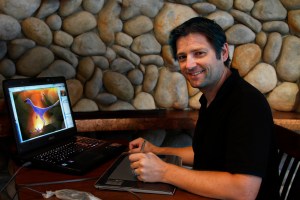
Julius working on a dinosaur reconstruction.
Julius working on a dinosaur reconstruction. Credit: Alexandra Lefort

How do you ensure your representations of dinosaurs are accurate?

Ultimately, all of my reference material comes from palaeontologists’ research. For all reconstructions, I rely heavily on published scientific literature. For reconstructions of newly discovered taxa, of which I am commissioned to do quite a few for press releases and scientific papers, I also have discussions with the palaeontologists who have made the discoveries, since the material is not yet published. This latter process is some of the most exciting, because I am able to participate in the process of scientific discovery, keeping a foot in both camps of science and art.

Struthiomimus sedens

How important do you think the dinosaur’s environment is in the representation?

The environmental context provides the opportunity to tell a more detailed story of the animal’s role in the biological community, its position in the food web, or interesting aspects of its behaviour. Depicting the animal’s environment provides me the opportunity to employ creative and interesting lighting conditions and composition to generate an image that is as aesthetically appealing as possible – this is art, after all, and I feel it’s important to make it as beautiful as I can.

How did you become a paleoartist and what do you enjoy about it?

The new Iguanodon on display at the dinosaur's feet
The new Iguanodon label on display at the dinosaur’s feet

I absolutely love my job. It’s wonderful to play a part in piecing together and visualizing worlds that are millions of times older than I am. It was during the completion of my PhD in the microbiology of extreme environments that my work in scientific illustration and paleoart really took off, when I was first contacted to help illustrate a book about dinosaurs by author Dougal Dixon. Ultimately I realized that scientific illustration provided me with a more consistent enjoyment, so I made scientific artwork my full time work as soon as I completed my degree. I know that I am in the right field of work because even when I am juggling projects under the extreme pressure of impending deadlines, I still find great enjoyment in the act of painting.

This up-to-the-minute T. rex has feathers!


How do you feel about your work being on permanent display here?

I feel greatly honoured to have my illustrations incorporated into a permanent display in this renowned and respected institution. It is my hope that my work will help in a small way to interest the public in the intriguing field of palaeontology, and this excites me, for I feel strongly about contributing to scientific outreach. Many thanks to the museum team for allowing me to participate!

**

Next time you call by the Museum, stand in front of a dinosaur, have a good look at its new label and see if it comes to life before your eyes.

Rachel Parle, Interpretation and Education Officer

All images are copyright Oxford University Museum of Natural History and Julius Csotonyi.

One million and one

Daisy and George_crop

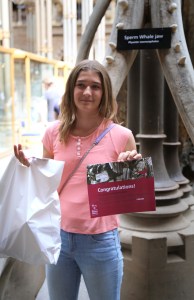
Meet Daisy. She’s a very special visitor. We enjoy welcoming each and every one of the people who come through the doors; from just round the corner or right across the globe. But Daisy stands out because she’s the millionth person to step inside since we re-opened in February 2014. Yes, 1,000,000 visitors in just 18 months! Ready and waiting with certificate and goodie bag, we ambushed the 13 year old and her family as they arrived this afternoon.

Daisy with goodie bag and certificate

Daisy and her brother George have travelled a long way for their first visit to the Museum. They live on the outskirts of San Francisco, California, and are spending summer with their grandparents in Cassington, just outside Oxford. Daisy says she loves exploring the variety of museums in her home town, so was excited to start looking around what she called the “impressive” museum. George (visitor 1,000,001) likes “museums with exciting things”, so we hope he finds enough to excite him here!

Since February 2014, many of our 1 million visitors have joined in with our plentiful programme of public engagement projects. We aim to entice the widest possible range of ages and interests.

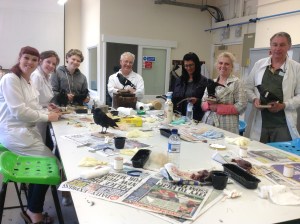
Taxidermy Creations workshop

Hundreds of family friendly events have educated and entertained the little ones, with new programmes for the under 5s and the ever-popular half term extravaganzas.

But the last 18 months has seen much more on offer for our adult audiences. Who says grown-ups don’t like getting messy and making something to take home? The popularity of the taxidermy workshops in June 2014 proved that they love nothing more.

School children have poured in for secondary and primary sessions alike. With evolution now featuring on the primary curriculum, we’ve been working with teachers to support them in this new area and developing a brand new primary workshop called ‘Evolve, Adapt, Survive’.

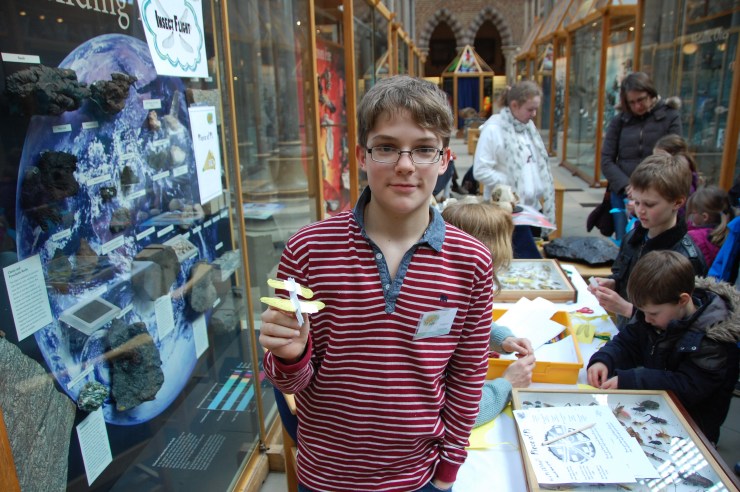
We know that curiosity doesn’t end when the school bell rings. Natural History Investigators, a new science club for 14-16 year olds, has given young people special access to museum collections and staff expertise on Saturday mornings. Achieving a national Crest Award in recognition of their achievements was the icing on the cake.

Natural History Investigators doing a spot of their own public engagement

Fashion shows, contemporary science lectures and late night pub quizzes were some of the eclectic public events on offer.

So Daisy is number 1 million and we were delighted to meet her today, but she represents all of our visitors. It’s the quality that really matters to us, not just the quantity!

Rachel Parle, Interpretation and Education Officer