The legend of the Layardi Whale

After - seperate proper right

The Museum gains a new buzz over the summer as we’re joined by a host of interns. Many are students who require a placement as part of their university degree. Ruth Murgatroyd, who is in her first year of the MSc Conservation Practice programme at Cardiff University, is spending her summer putting a variety of conservation skills into practice in our Life Collections.

During our 2013 year of closure, five large whale skeletons received extensive conservation treatment, which was described and documented on the Once in a Whale blog. Here, Ruth explains that there is more to be done conserving other whale specimens in our collection, and describes the careful work that it takes to bring them back to their best.

**

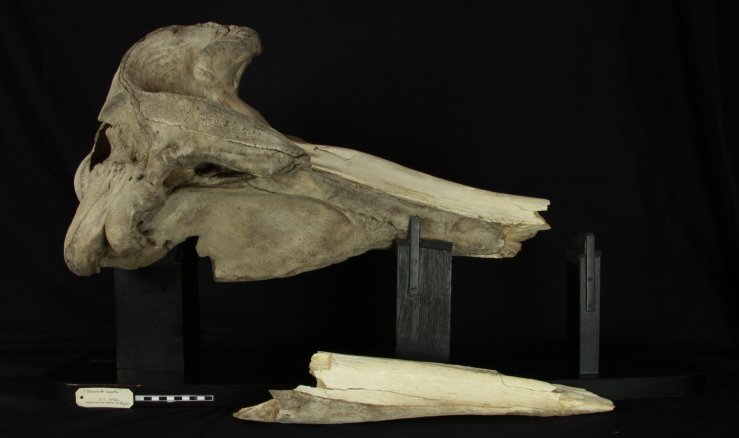
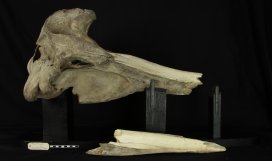
One of the specimens I’ve been working on in the lab is the skull of a Layard’s Beaked Whale (Mesoplodon layardi). As with many historic specimens, past repairs had become damaged or discoloured. The porous bone that allows whales to be buoyant under water had darkened and acquired staining and tide marks. It needed some attention.
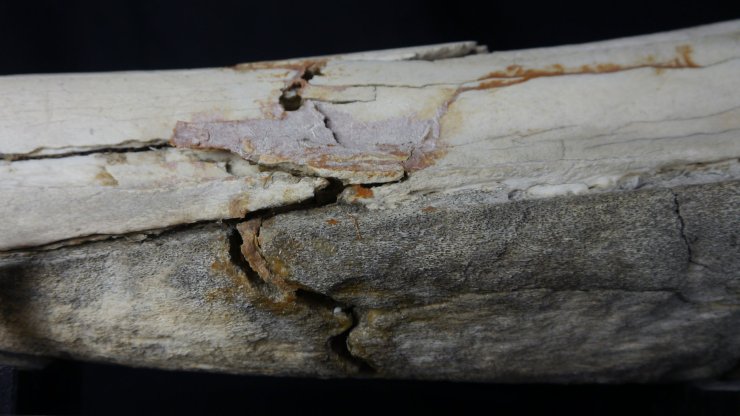
Before PL Break
The brown material is animal glue, used in a previous conservation

It’s important to research specimens, to gain a full picture of the animal and its origin. This one turned out to have a particularly interesting story. I knew that the whale’s skull entered the collection in 1874, coming from Cape Point, South Africa, and attributed to J. Mackellar. Over tea time conversations with a colleague in the Museum it came to light that it might be the same whale mentioned by Henry Moseley (1844-1891), a naturalist on board the HMS Challenger voyage. In Moseley’s Notes by a Naturalist he mentions finding a Layardi cranium on a beach “near Mr Mckellar’s” in Cape Point in 1874. He described how it had its beak pushed into the sand and was being used as a target for rifle practice.
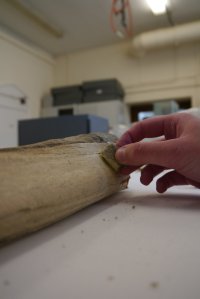
Cleaning with the rubber smoke sponge

After assessing the condition and taking pre-treatment photographs, I decided that the main objectives of the conservation were to remove past unsympathetic repairs; consolidate the bone around a break; clean the staining; and provide padding to the wooden support.

Cleaning needed different techniques depending on the location and the problem. Brush dusting with a vacuum cleaner and dry cleaning with a rubber smoke sponge was the first stage, followed by more specific treatments for ingrained stains. They were treated with poultices, which slowly release water into the pores of the bone and draw out soluble impurities as they evaporate.

I removed the brown adhesive using water on a swab. A pungent smell was given off that tells me the last conservator had used animal glue. I replaced this with an easily reversible acrylic resin.

The beak had been severely damaged (perhaps from the rifle practice!?), but its weight poses a conservation problem. An adhesive strong enough to support the weight of the repair is likely to be stronger than the bone and any stresses on the repair may result in further damage to the bone rather than to the adhesive. As the whale is going back into store for now, we decided that the two fragments will be left separate. The two fragments can be seen here in the wooden support.

After PR
Both fragments together in a wooden support

Although we can’t be sure that this is the Challenger whale specimen, the possibility certainly added an extra level of intrigue to this fascinating project.
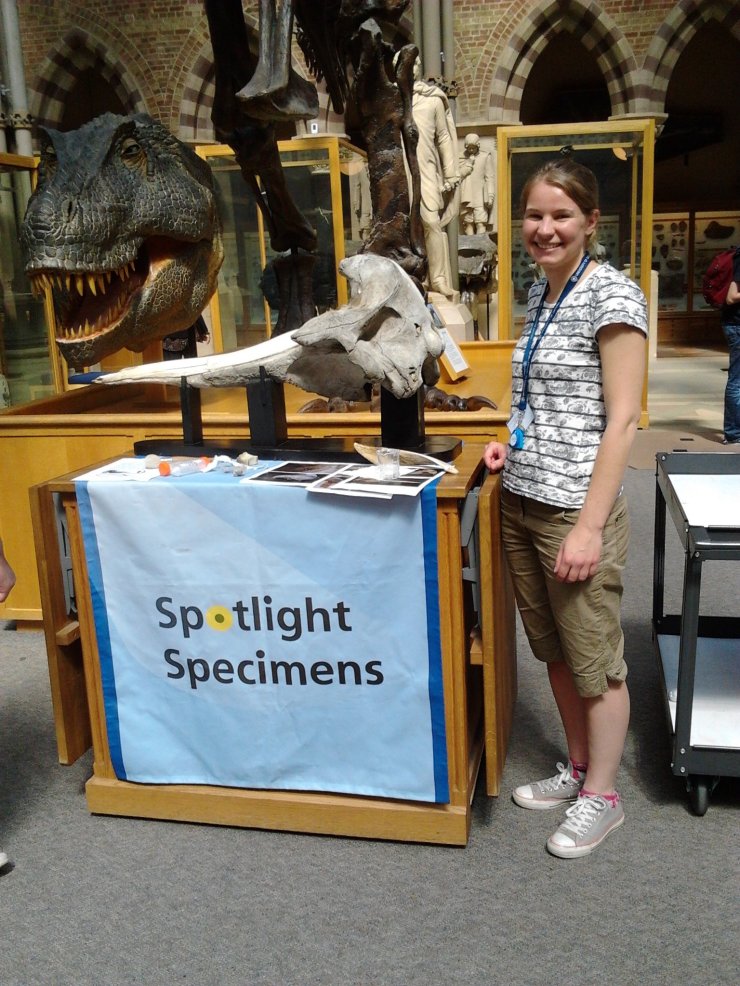
Ruth presenting the whale to visitors as part of our Spotlight Specimens strand
Ruth presents the whale conservation work to visitors as part of our Spotlight Specimens strand

Ruth Murgatroyd, Intern, Life Collections
Friday night is museum night!

IMG_0580

‘Museums and music’ has a nice ring to it, and that’s just what BBC Radio 2 will be offering this evening. This special broadcast of Friday Night is Music Night will feature a concert celebrating the six nominees for this year’s Museum of the Year.

Recorded last week at the Mermaid Theatre in London, the finalists each presented two objects they had chosen from their collection. The short talks were then brilliantly accompanied by The BBC Concert Orchestra, playing pieces inspired by these unique objects.

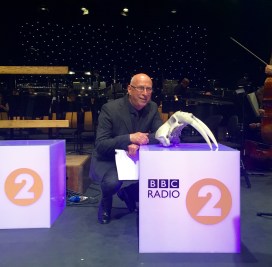
Radio 2 presenter Ken Bruce with the Tradescant Walrus

Walking on stage to the theme from Jurassic Park, our director, Professor Paul Smith, presented two real treasures: a Tsetse Fly sent back from the Zambesi by Dr Livingstone and an impressively-tusked walrus skull. The skull belonged to the Tradescants, so is part of the oldest collections in the Museum. It’s also believed to have inspired Lewis Carroll to write ‘The Walrus and the Carpenter’.

The Friday Night event was a great opportunity to present to the broad Radio 2 listenership two of our most iconic specimens, which tell extraordinary stories.
The Walrus specimen links the foundation of the collection in the late 1590s to the Beatles in 1967, via Lewis Carroll and Walt Disney, whereas the Tsetse Fly collected by David Livingstone tells stories of the European exploration of Africa, but also of disease control in humans and farm livestock.

– Professor Paul Smith, Museum director

Other objects presented to the audience included one of the clay poppies from the Tower of Londons ‘Blood Swept Lands and Seas of Red’ and a tambourine signed by soldiers of the First World War who convalesced at the Georgian country house, Dunham Massey.

So get your radio tuned in this evening at 8 o’clock. Hear the stories behind these surprising objects and the music that will bring them to life.

Rachel Parle, Interpretation and Education Officer

Dodo Roadshow: Ullapool Museum

Ullapool Museum 1 x

To mark our selection as a Finalist in the Art Fund Prize for Museum of the Year 2015 we’re embarking on a unique and ambitious tour of the country – the Dodo Roadshow.

Beginning at Land’s End on 8 June and concluding in John O’Groats one week later, the famous Oxford Dodo will visit more than 20 museums and galleries along the way. At each stop the Dodo will ‘interview’ one of the venue’s star objects.

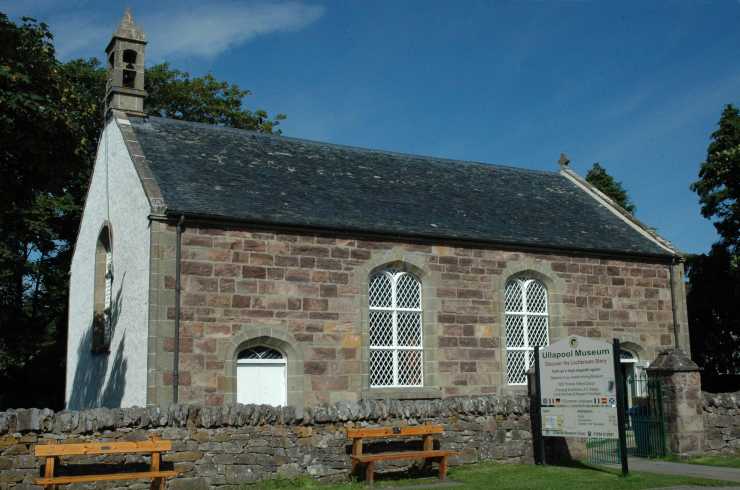
Ullapool Museum: Telford Parliamentary Church

UllapoolSo, tell me about yourself – who are you and where do you come from?
I am a very special building. I was built as a church here in Ullapool in 1829 and Thomas Telford, one of Britain’s most celebrated engineers, designed me. I was built as a Parliamentary Church, after the government of the day decided that more places of worship were needed in the thinly populated and scattered parishes of the highlands of Scotland.

What is it that makes you so special?
I am unique; although thirty-two Parliamentary Churches were built, I’m the only one still standing that remains true to Telford’s original design. I still have the original décor and fittings, and the only gallery still surviving. I have a very special role, as I am the building that also houses the museum’s collection and I provide a place for visitors to come and learn about the history of Lochbroom.

Who looks after you in this place?
I am looked after by a wonderful group of volunteers. Some of the team help to conserve me, and work to maintain my walls and all the special features inside. Other volunteers are involved in helping to fundraise to help keep my doors open to the public. Some of the team also work on interpreting my history and give tours to visitors.

Do you remember life before the museum?
My life before being a museum building was very different. As a church, I was used to being full of people congregating every Sunday and I was a busy hub for village life. The last service that was held here was a wedding in 1935. After that, my walls fell silent until 1995, when I became the Ullapool Museum. My doors are now open to visitors and my walls tell the stories and the histories of the people of Lochbroom.

What does the future hold for you?
Because I am a Grade A1 listed building, it costs a great deal to conserve me and to keep my doors open to visitors. My volunteer team spend a lot of time helping to raise money to care for me. Everyone hopes that I can continue to be here to help tell the stories of the people of Lochbroom for many years!

Stickers small - Dodo Roadshow_crop

Dodo Roadshow: Kelvingrove

KG013_P01_01(small)

To mark our selection as a Finalist in the Art Fund Prize for Museum of the Year 2015 we’re embarking on a unique and ambitious tour of the country – the Dodo Roadshow.

Beginning at Land’s End on 8 June and concluding in John O’Groats one week later, the famous Oxford Dodo will visit more than 20 museums and galleries along the way. At each stop the Dodo will ‘interview’ one of the venue’s star objects.

Kelvingrove Museum & Art Gallery: Sir Roger the Elephant

SirRoger3So, tell me about yourself – who are you and where do you come from?
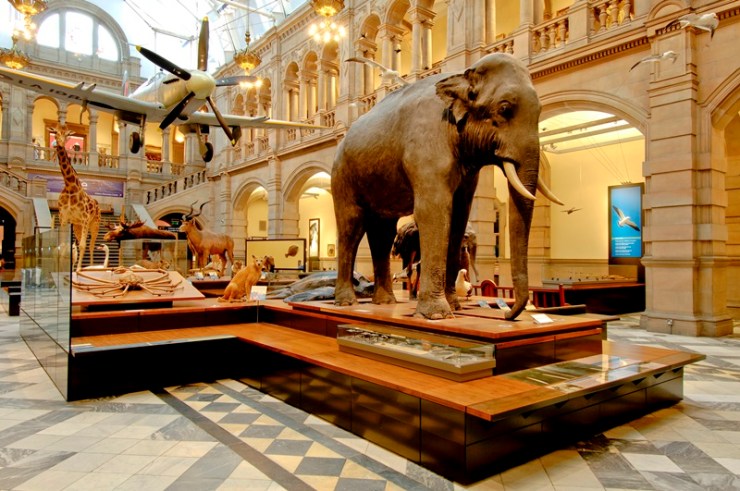
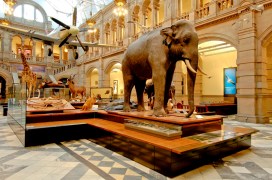
My name is Sir Roger and I’m a male Asian elephant. I may have come from India, but I’m not sure. I used to travel with Bostock and Wombwell’s Menagerie, pulling a wagon as we travelled all round Britain during the 1880s and early 1890s. I came to Glasgow in 1897, when my owner, Edward Henry Bostock decided to set up the Scottish Zoo and Variety Circus in Glasgow.

What is it that makes you so special?
I’m one of the museum’s largest and most iconic animals. Everybody loves me.

Who looks after you in this place?
I’m looked after by the museum’s natural history conservator, Laurence Simmen. He gives me a clean from time to time, and makes sure I look my best. When the museum was closed for three years for refurbishment, I spent the whole time in a big crate (I was one of only a few objects to remain in the building). During this time, Laurence would check the crate to make sure I was alright.

Do you remember life before the museum?
When I was in the Scottish Zoo, I used to be taken out for walks in the countryside for exercise. The zoo wasn’t like modern ones. The cages were very small, and there was very little room to move around. I enjoyed my time there – young boys used to feed me buns! Unfortunately in December 1900, I developed musth – a condition of male elephants during the breeding cycle. This was very painful and I was so uncomfortable, that I wouldn’t let anyone near me. Mr Bostock was worried that I might injure somebody, and unfortunately by accident I did hurt my keeper. Eventually Mr Bostock very reluctantly decided I must be shot – which is how I ended up here in Kelvingrove Museum.

What does the future hold for you?
The gallery I’m in hasn’t been changed since Kelvingrove re-opened in 2006 after its refurbishment. The museum is hoping to change all the displays around about me next year. I might move to a different position, but I’ve been assured that I’ll still be here for everyone to visit – and maybe someone will offer me a bun again!

Stickers small - Dodo Roadshow_crop

Dodo Roadshow: Robert Burns Museum

Auld Lang Syne fragment 850px

To mark our selection as a Finalist in the Art Fund Prize for Museum of the Year 2015 we’re embarking on a unique and ambitious tour of the country – the Dodo Roadshow.

Beginning at Land’s End on 8 June and concluding in John O’Groats one week later, the famous Oxford Dodo will visit more than 20 museums and galleries along the way. At each stop the Dodo will ‘interview’ one of the venue’s star objects.

Robert Burns Birthplace Museum: Auld Lang Syne fragment

Burns2So, tell me about yourself – who are you and where do you come from?
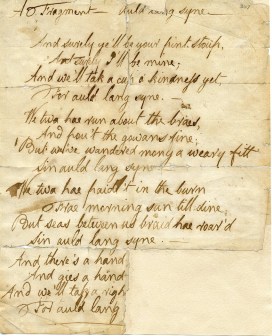
I am a fragment of the world famous song Auld Lang Syne written by the hand of Scotland’s most famous poet Robert Burns.

What is it that makes you so special?
I am sung all over the world to reminisce and think of “old long ago”. I am an international anthem and one of Scotland’s gifts to the world.

Who looks after you in this place?
The RBBM Director, Curator, Conservator, Facilities Manager and Learning Manager all help  ensure my safety.

Do you remember life before the museum?
I was purchased by the Trustees of the Robert Burns Museum from Sotheby’s auction house in 1952.

What does the future hold for you?
I will be enjoyed for many future generations who look back on times (including today) gone by with ardour.

Stickers small - Dodo Roadshow_crop

Dodo Roadshow: Dunham Massey

Dunham Massey 850px

To mark our selection as a Finalist in the Art Fund Prize for Museum of the Year 2015 we’re embarking on a unique and ambitious tour of the country – the Dodo Roadshow.

Beginning at Land’s End on 8 June and concluding in John O’Groats one week later, the famous Oxford Dodo will visit more than 20 museums and galleries along the way. 

Dunham Massey: The Stamford Hospital

As fellow finalists in the Art Fund Museum of the Year 2015, it was great to meet the Oxford Dodo when it called by on Thursday.

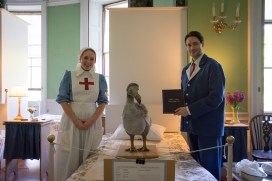
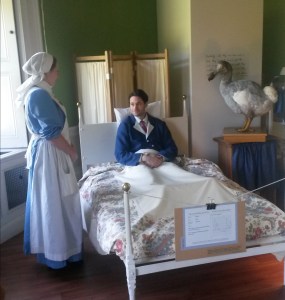
Dunham Massey1Here the Dodo is in the ward of the Stamford Hospital at Dunham Massey Hall, Altrincham. The hall became an auxiliary hospital during the First World War and 282 soldiers were treated here. To mark the centenary of the First World War the clock has been turned back and hospital rooms recreated. Actors playing soldiers, nurses and a variety of other characters perform scenes in the hospital rooms whilst visitors walk through the ward, recreation room, nurses’ station and operating theatre. You can look at letters, photographs and medical notes, listen to recordings that recount a brain operation and experience the house as the hospital that it became for two years.

Dunham Massey has a large archive and collection and the recreation is based on photographs, letters, scrapbooks, oral history recordings, original artefacts such as beds, bedside tables, screens and bedding, and a remarkable log that records of all of the soldiers treated in the hospital. A great deal of research into the archive and the people connected with the hospital was done by Dunham’s volunteer team.

Dunham Massey was given to the National Trust in 1976 after the death of Roger Grey, 10th Earl of Stamford. He was away from Dunham for most of the First World War and served as Aide-de-Camp to General Lloyd. His mother, Penelope, Countess of Stamford, was the hospital’s commandant and his younger sister Lady Jane was a VAD (Voluntary Aid Detachment) nurse. Letters to the family from nurses and soldiers, and correspondence between the family members reveals an insight into life in the house during the war.

The whole Dunham team is delighted to have been shortlisted for the Art Fund Prize for Museum of the Year 2015. The Stamford Hospital will be open until 11 November this year (open Saturday – Wednesday) then the team will be changing the house to tell a new story based on another fascinating chapter in Dunham’s history.

Good luck on your travels, Dodo!

Stickers small - Dodo Roadshow_crop