

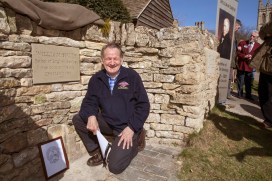
Celebrating Smith
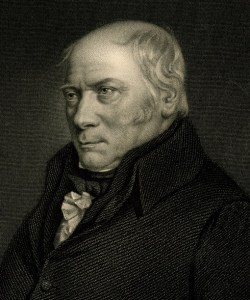
Today marks the 246th birthday of William Smith, the ‘father of English geology’. While the Museum has been marking this important day for a number of years, 2015 also happens to be a particularly special year for this remarkable man.
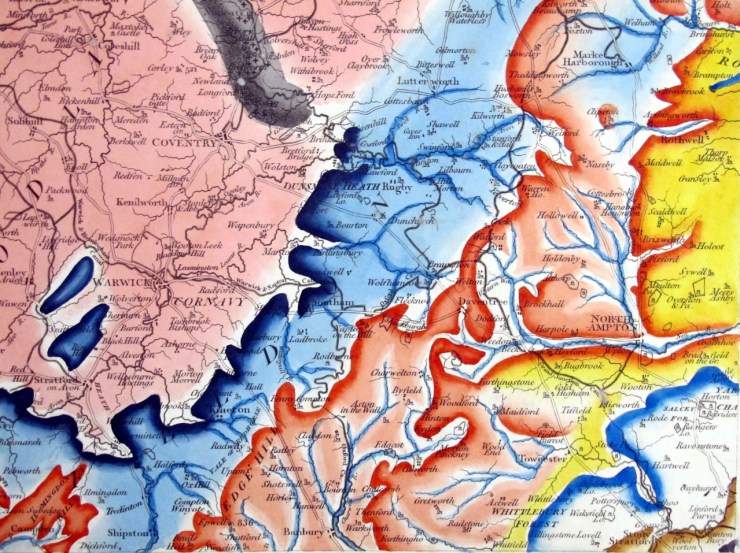
 William Smith is perhaps most famous for publishing the first geological map of England and Wales in 1815, making this the bicentenary of the incredible feat.
Though Smith single-handledly mapped the geology of the country, and created a map that would change the way we understood the world beneath our feet, too few people know his name and what he achieved.
To celebrate the bicentenary, and also in the hope that Smith will become a wider-known figure in the history of science, a number of organisations across the world, including us here at the Museum of Natural History, will be holding events during the year.
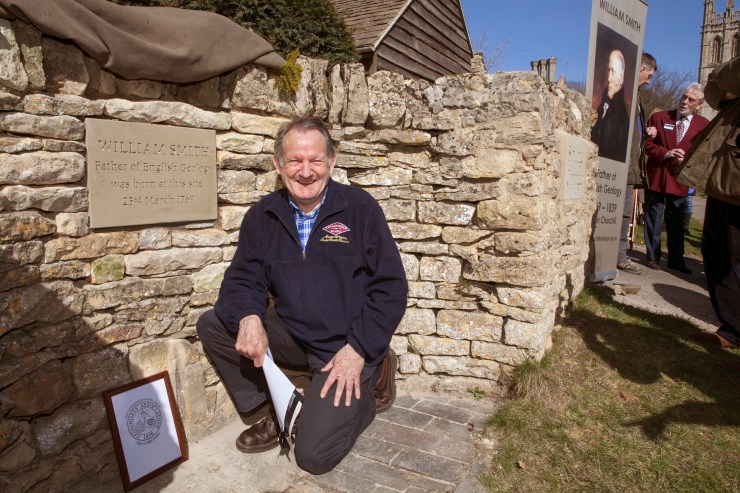
 This weekend marked the official kick-off of events with the opening of the Churchill Heritage Centre special exhibition, curated by the Museum and displayed in the heart of Smith’s home town. A plaque to mark the place where he was born in 1769 was also unveiled, which you can see in the photo at the top of this post.
The plaque, sponsored by the Curry Fund was unveiled by Professor Hugh Torrens, the leading expert on William Smith. A large crowd gathered for the event, with a mix of local people proud of their connection to one of their most famous residents, as well as a familiar group of Smith academics, experts and enthusiasts.
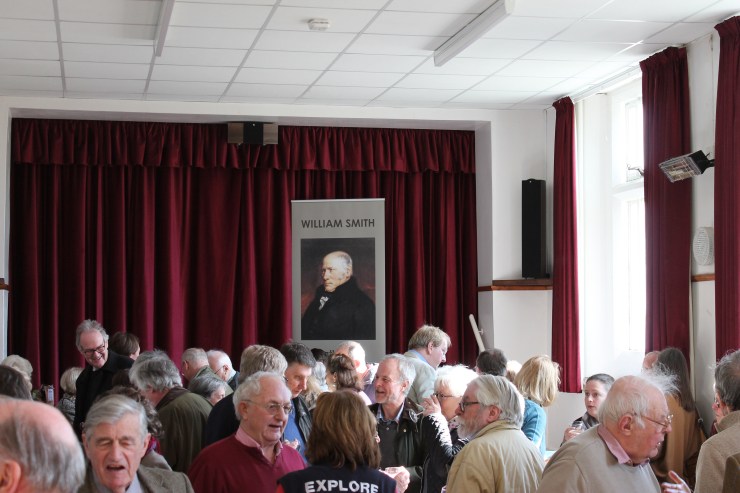
The exhibition, which is open weekends and bank holidays, will run until the end of September.
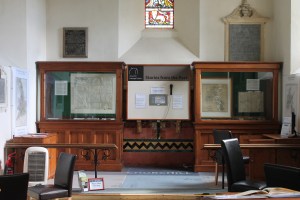 It includes well known publications from the William Smith archive here at the Museum of Natural History such as his geological map of Oxfordshire. Rarely seen items such as letters between himself and his niece, an excerpt from his diaries and the marriage deed of his grandparents will also be on display.
The William Smith archive can be found at www.williamsmithonline.com.
Kate Santry, Head of Archives and Library

 Beautiful gemstones are always popular with the public when they’re brought out for Spotlight Specimens. Monica Price talks about some she’s been showing off recently at our daily drop-in sessions.
 Now here’s a mineral that most people recognise straight away when I bring it out for Spotlight specimens. It is amethyst, and it is the most popular of all purple gem minerals. By a happy coincidence it is very common too, so jewellery made with amethyst need not be very expensive.
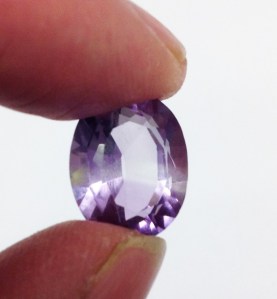 So how did amethyst suddenly become so common? During the 18th century, huge flows of volcanic lava were found by explorers in Brazil and Uruguay. Some had air bubbles which were lined with superb purple crystals of amethyst. Soon, these crystal-filled cavities were being sent to Europe, and today, they are sold all over the world. The biggest bubbles were a metre or more in size – huge! Nowadays, nearly all the amethyst you see for sale comes from those 135 million year-old South American lava flows.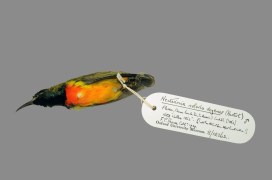
 Working on the Lepidoptera Project in the Entomology department keeps me very busy during the day, but I rarely get to see other parts of the Life Collections. So it was a real treat when my boss Darren said I could look at the specimens in the bird skin store. While carefully going through the drawers, I found this spectacular little bird from the family Nectariniidae. The species is Cinnyris solaris, which is also has the evocative name of Flame-Breasted Sun Bird. This particular specimen was an amazing surprise, because of the label data. It states: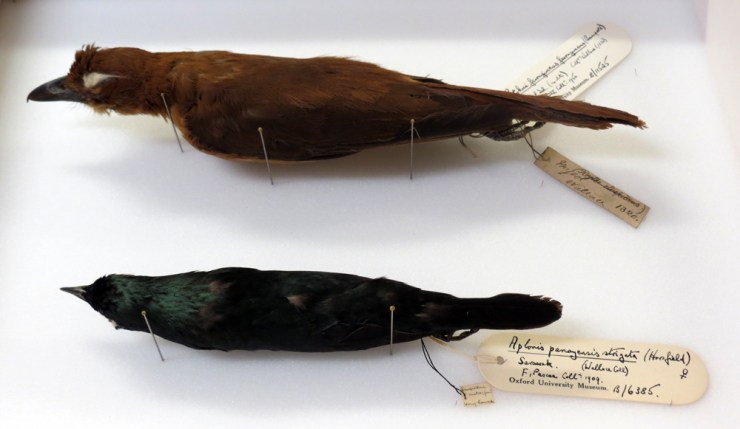

 In 1893, the major portion of the collection was donated to the British Museum in London via a relative, Miss Pascoe, but she donated the remainder to the Hope Department here at the Museum in 1909. Alfred Russel Wallace himself was said to have suggested this. These items were mostly insects, but also included this beautiful Flame-Breasted Sun Bird. Today the Flame-Breasted Sun Bird is a scarce species due to its limited island range, but is not considered threatened. I feel privileged to have chanced across such an amazing specimen in the bird stores. Gina Allnatt, Curatorial assistant (Lepidoptera) ** Letter used by Gina for research can be seen at





 More Than A Dodo