What’s in a name?

By Duncan Murdock, research fellow

Whether it’s the Physeter macrocephalus (Sperm Whale) whose jaw greets our visitors, the Apus apus (European Swift) which spend the summer nesting in the tower, or the Raphus cucullatus (Dodo) on our Museum’s logo, all animals, plants, fungi and microbes, living and extinct, have scientific names – or at least once they have been properly described in a scientific paper they do. Usually found tucked away on specimen labels, scientific names carry much more significance than just a convenient means of reference.

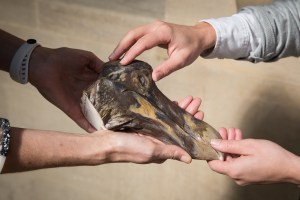
The jaw of the Sperm Whale (Physeter macrocephalus)

The scientific name, also known as a binominal or Latin name, consists of two basic parts, and should be written in italics. The first part is the genus (the plural is genera), which refers to anything from one to thousands of kinds of creature that are more closely related to each other than anything else. Genera are always capitalised, such as Panthera (big cats).

The second part is the specific name, written in lower case. Together these define one species; for example a tiger is Panthera tigris. Sometimes, subspecies or varieties are written after the species name, such Panthera tigris tigris, which is the Bengal Tiger. They can also be abbreviated by replacing the genus with just an initial followed by a full stop, hence the ever-popular T. rex, or Tyrannosaurus rex.

T. rex in the Museum’s centre court

Some binomials are pretty easy to decipher: no prizes for working out Gorilla gorilla*. Others can seem pretty cryptic or even positively confusing – Puffinus puffinus anyone? Yep, that’s right, the Manx Shearwater**. Nevertheless, once translated they are often enlightening as to the appearance, distribution, behaviour, or history of the critter in question.

Here are a few examples. Ailuropoda melanoleuca, meaning ‘black and white cat-foot’, describes the appearance of the Giant Panda pretty well; Megaptera novaeangliae, or ‘giant-wing of New England’, alludes to both the anatomy and chequered history of the humpback whale; and while Pteropus vampyrus, or ‘wing-footed vampire’, is a bit of a misnomer for the flying fox, which is a large fruit-eating bat, it does reflects our changing understanding of the animal.

Gorilla gorilla, the Western Gorilla
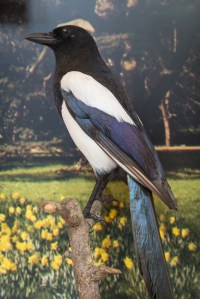
Magpie (Pica pica)

Some names are elegantly concise: Pica pica, the magpie. Some are tongue-twisters: Phalacrocorax carbo, the Great Cormorant. And some, such as Synalpheus pinkfloydiare entertaining. But they are all more than just names; they are the most visible aspect of the science of taxonomy.

Carl Linnaeus (1707-1778) first formalised the system we use today, which has allowed us to divide all the many species into not just genera, but a nested hierarchy of ever-more inclusive groups.

With this system we can not only be sure we are using a common language to precisely refer to the right species, but we can also then ask questions about how the staggering diversity of life that we see evolved. And from this we start to build ‘a tree of life’. But this will be the subject of a future article…

* Bonus points for knowing it’s the Western Gorilla, as opposed to Gorilla beringei, which is the Eastern Gorilla.

** Common Puffins, by the way, go by the delightful name Fratercula arctica, the ‘little friar of the north’.

Seasonal sights

The Museum’s collections are on the move. For decades, a deconsecrated church has been used to house material from our Earth collections, but we now have a new and improved off-site space, and between now and the end of 2018 a huge project is underway to sort and shift these objects. You can find out more about all this in our Stories from the Stores article. 

Chantelle Dollimore, Move Project Assistant, recently emigrated from Australia and has been experiencing her first British autumn. Here she shares a glimpse of the natural encounters the collections move has offered so far.

**

As the project team for the collections move settles into the daily hustle and bustle of work there are extraordinary things happening outside. Winter is coming; we have already wound our clocks back for that extra hour of sleep. Leading up to that time, creatures great and small have been preparing themselves for seasonal changes.

Autumn leaves litter the footpath to the store

Something truly blissful in an English autumn is the deciduous trees shedding their leaves as the days grow shorter and chillier. The crunching underfoot of hues of browns, reds, yellows and oranges adds charm as we make the rounds of our 19th-century church workspace.

A Red Kite soars above the Museum’s offsite collections store

Driving from the Museum to the off-site store, we’re likely to see at least one Red Kite. Less than 30 years ago Red Kites were nearly extinct, but through conservation efforts they have flourished in the Oxfordshire countryside. Their distinct calls and unique silhouette, with long narrow wings and forked tail, are a haunting yet beautiful addition to the skyline.

A Red Kite (Milvus milvus) on display in the Museum

The move project team have also been visited by a different ‘bird’ altogether; the ladybird! At this time of year, when you find one you will most likely see many more close by. When a ladybird finds the perfect place to hibernate for spring it excretes a pheromone to attract more to the area. For some, the perfect place seems to be inside the church itself!

(Lady)birds of a feather flock together

Grey Squirrels and deer are also making appearances throughout the day while we’re working. One cannot help but watch as the bushy tail of the squirrel peeks through the hedges as it forages for food and admire the deer as they stroll through the fields happily unaware of our activities some 50 metres away.

Although it’s great to admire the specimens on display in the Museum, I love that my job allows me to get out and about to appreciate the wildlife of the Oxfordshire countryside. There’s always something unexpected… like a butterfly choosing its resting place on some disassembled storage shelves.

A butterfly (Nymphalidae sp.) in torpor finds shelter from the impending cold

To keep up with all the move project action, follow the museum hashtag #storiesfromthestore on Twitter @morethanadodo.

High time for a check up

by Bethany Palumbo, life collections conservator

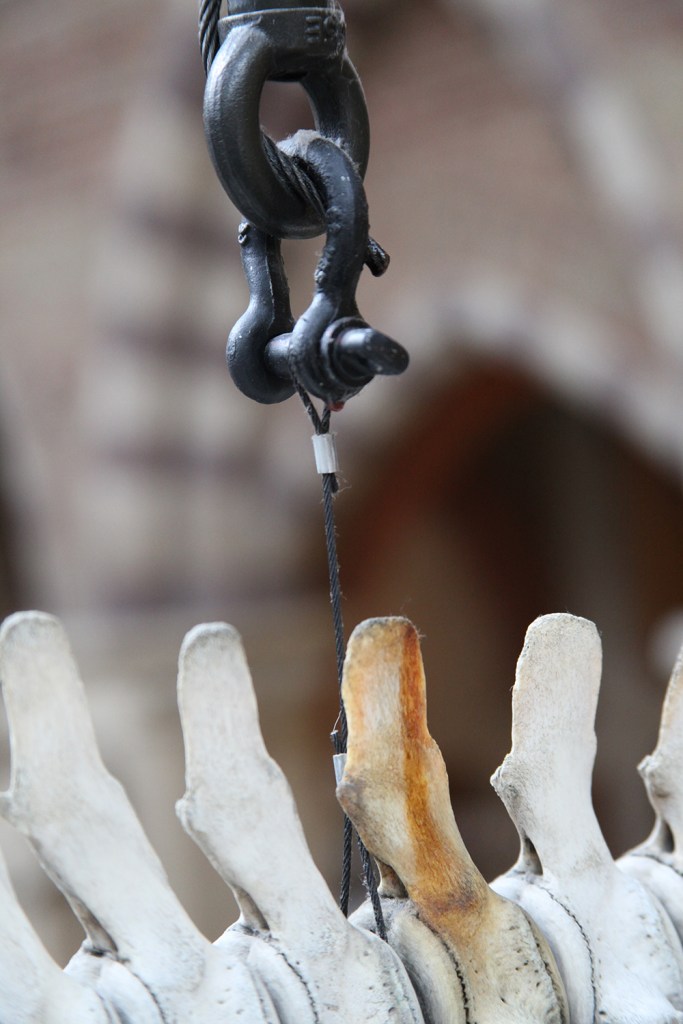
This month marks three years since the completion of our ‘Once in a Whale’ project. The initial conservation undertaken in 2013 focused on the cleaning and stabilisation of five whale skeletons, which had hung from the roof of the Museum for over 100 years.

The skeletons were lowered into a special conservation space, where the team were able to work up close with the specimens. As well as the cleaning, they improved incorrect skeletal anatomy, replacing old corroded wiring with new stainless steel. For final display, the specimens were put into size order and rigged using new steel wiring, with the larger specimens being lifted higher into the roof space to make them a more prominent display than previously. You can read all about the project on our blog, Once in a Whale.

Three years on, our conservation team felt it was a good time to check on the specimens to see how they’re coping, post-treatment, in the fluctuating museum environment.

Conservation intern Stefani Cavazos works on high to clean the Beaked Whale

It’s been wonderful to see the whales on display and their new position looks very impressive. However, when the time came for making this recent conservation assessment, the new height was greater than any of our ladders could reach. Specialist scaffolding was brought in to allow the conservators to access the specimens. Starting at the highest level, with our Beaked Whale, cleaning was completed using a vacuum and soft brush for delicate areas. This removed a thick layer of dust and particulate debris: especially satisfying work!

Dust gathered on the Beaked Whale fin

With cleaning complete, visual assessments could then be undertaken. These showed that while the specimens were still very stable, a few areas of bone have continued to deteriorate, visible in cracking and flaking of the surface. In other areas, the fatty secretions which we previously removed using ammonia had once again started to emerge. We had expected to see this though, because, in life these whales’ bodies contained a lot of fat, deep within the bones and this is notoriously impossible to completely remove.

Lubricant stain seen on a vertebra

It was also observed that the lubrication used on the new rigging bolts had melted and dripped down the wires. You can see in the photo above how this has become drawn into the vertebrae of the Orca and Common Dolphin, staining them yellow. While no conservation treatment was undertaken due to time restrictions, thorough photography was performed to document these changes and once time permits this can be carried out.

This shows how conservation work, especially with natural history specimens, is a gradual, ongoing process. With frequent check-ups and specialist attention, these whales will be able to continue their life as our beautiful display specimens.

Is it real? – models, casts and replicas

One of the most common questions asked about our specimens, from visitors of all ages, is ‘Is it real?’. This seemingly simple question is actually many questions in one and hides a complexity of answers. 

In this FAQ mini-series we’ll unpack the ‘Is it real?’ conundrum by looking at different types of natural history specimens in turn. We’ll ask ‘Is it a real animal?’, ‘Is it real biological remains?’, ‘Is it a model?’ and many more reality-check questions. Here’s your final installment…

There’s nothing like standing under a huge T.rex skeleton, staring up at its ferocious jaws, to get the blood pumping. Visitors often ask “Is it real?” and look rather deflated when they find out it’s a cast. So why do we include casts, models or replicas in our displays, if they don’t have the same impact as the real deal? The truth is that they’re valuable additions to museum displays, allowing the public to engage with specimens that would otherwise be hidden behind the scenes.

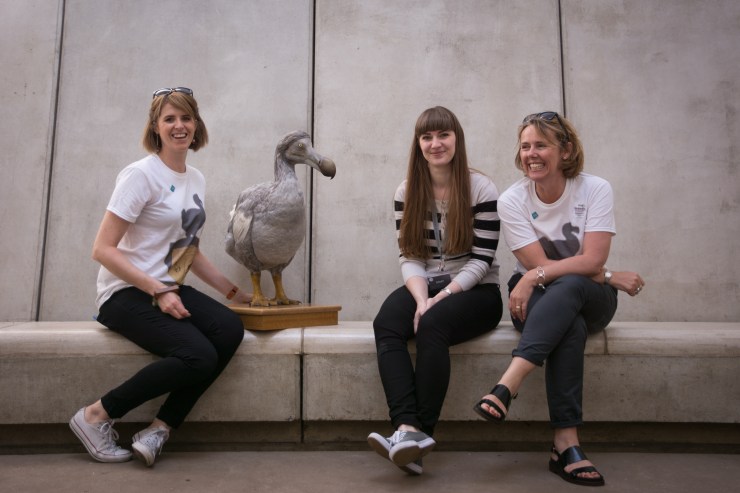
Please touch! A cast of the famous Oxford Dodo helps visitors explore this fragile specimen.

On any visit to the Museum, you’ll come across labels that tell you the object you’re looking at is a cast. It could be a dinosaur skeleton, a brightly coloured fish, an amphibian specimen or even the head of the Oxford Dodo. But what is a cast? Casts are made by taking a mould of bones, or sometimes whole animals, then filling that mould with resin, plaster or fibre glass to make a copy. They can be incredibly accurate or lifelike.

It’s extremely rare to find whole dinosaur skeletons, and very difficult to mount heavy fossils (weighing tonnes) onto large armatures. Our Tyrannosaurus rex is a cast of the famous Stan, found in South Dakota, USA, and one of the best preserved skeletons of its kind in the world. But the “real” Stan is kept at the Black Hills Institute of Geological Research, so the only way we can offer the breath-taking experience of standing beneath a T. rex here in Oxford is by using a cast.

The Dodo Roadshow in 2015 would have been a lot less fun without our life-size dodo model

Even Stan has some bones missing, so sometimes casts are made up of several individual skeletons. Copies can also be made to give the impression of a more complete skeleton. For example, if a left bone is missing, a mirror of the right hand bone can be created. We call these specimens “composites”.

Animals such as fish and frogs aren’t easy to taxidermy; their skins shrivel, dry out, lose their colour and crack. Painted casts are a good way to show what these animals look like.

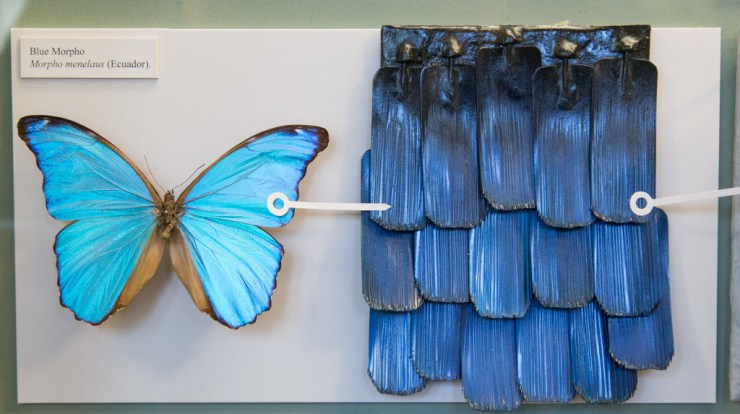
A model allows us to show the intricate scales of this Blue Morpho butterfly up close.

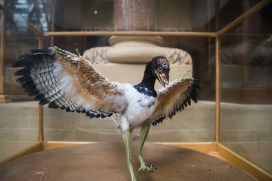
Models, such as the giant insects on the upper gallery and the Archaeopteryx in the Evolution of Flight display (at the top of this post), are very clearly not real. These are made by model makers to show something that can’t be seen or shown with real specimens. The giant insects are a way of showing the detail of very small creatures. The palaeontological models show what we think extinct animals might have looked like in life. They’re hypothetical models based on the latest scientific research, which can change very quickly, and always have an element of artistic assumption or speculation in the details.

In this series we’ve talked about taxidermy, skeletons, fossils and more, but these are just a few of the kinds of specimens we have on display. There are also nests, plastinated models, microscope slides and dioramas, which all have a mix of real and non-real elements. When you are looking around the Museum try to think about which specimens are real and which aren’t… and how does that make you think about the specimen?

Read the other posts in the Is it real? series here.

Stories from the Stores

by Hannah Allum, Move Project Manager

Museums are space-hungry places. There’s rarely enough room to properly house the collections we currently hold, never mind finding space for new material. Roughly 90% of museum collections are not on public display, so many museums use storage beyond their main building, in offsite stores.

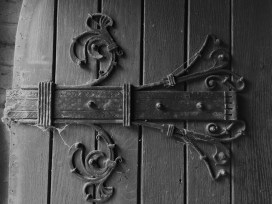
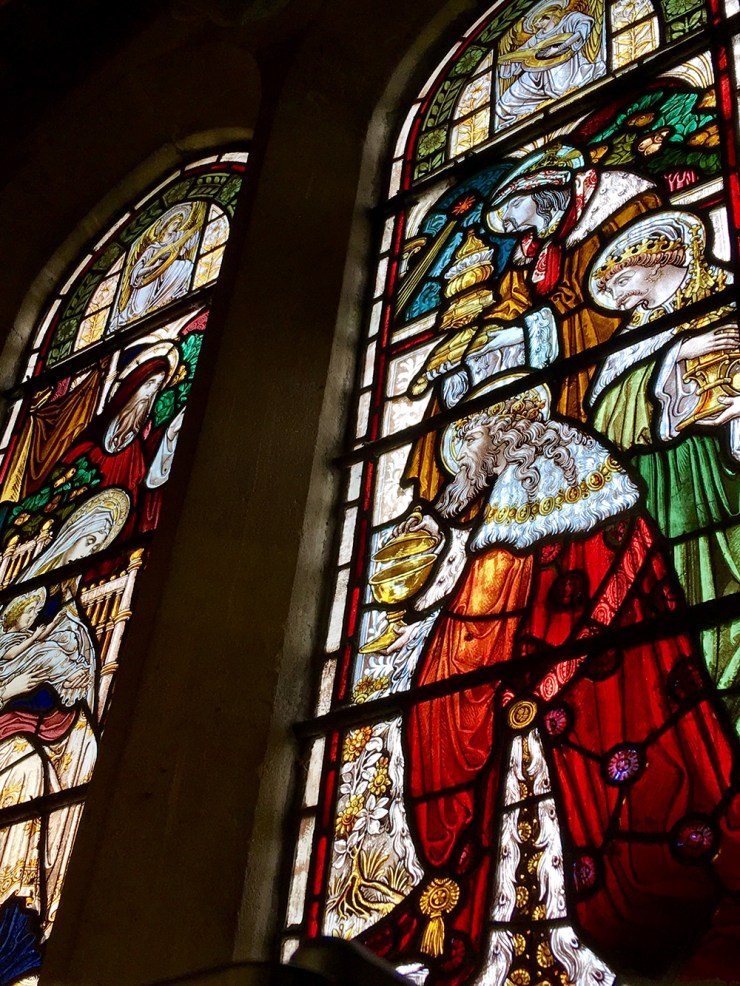
The Museum of Natural History has faced the same challenges and, for the past few decades, has found a solution in a somewhat surprising building. Where might you least expect to find a vast collection of rocks and fossils dating back millions of years? How about a nineteenth century church, complete with beautiful stained glass windows?!

Stained glass windows in the former church

As atmospheric as it is, this deconsecrated church is no place for good quality museum storage. To do the collections justice they need a monitored and controlled environment, suitable containers and pest prevention measures. Plus, it’s always a bonus to be able to access specimens without playing a very nerve-wracking game of Jenga or Tetris!

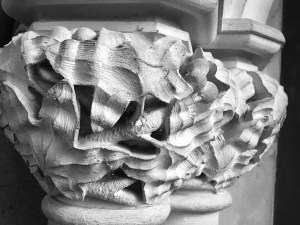
Carving detail in the former church

So, once again we are faced with the most terrifying and exciting of museum tasks; a collections move project! In 2016 we successfully relocated approximately 17,000 specimens from some of our old offsite stores and showed you some behind the scenes secrets along the way with the hashtag #storiesfromthestores. This time we have a team of eager beavers (also known as project assistants) who can’t wait to share glimpses of the project as we go, so make sure to keep an eye on @morethanadodo on Twitter.

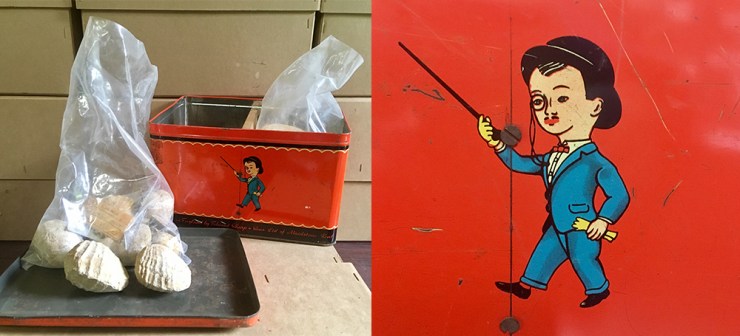
An oats box made an unusual storage solution for Earth materials

After a much needed clean of the church, we’re starting to prepare the material to be moved. Alongside the specimens, we’re already coming across some interesting historical packaging. It seems that the mass consumption of Oxo cubes was a pre-requisite for collectors of old, as many specimens are stored in these retro tins. A few other repurposed boxes include; Quaker oats, Sharp’s toffee, Fry’s chocolates, marmalade, mustard oil and even wine crates. Quite the picnic!

A toffee tin for storing fossils – just one of the interesting choices for collections tins over the years.

Once removed from the church, the project team will be working on processing these collections in a dedicated space, as well as giving them some TLC and new homes (boxes). This will take place at a specialist heritage storage site until the end of 2018. Keep your eyes peeled for more on the treasures from this trove.

Paint it green

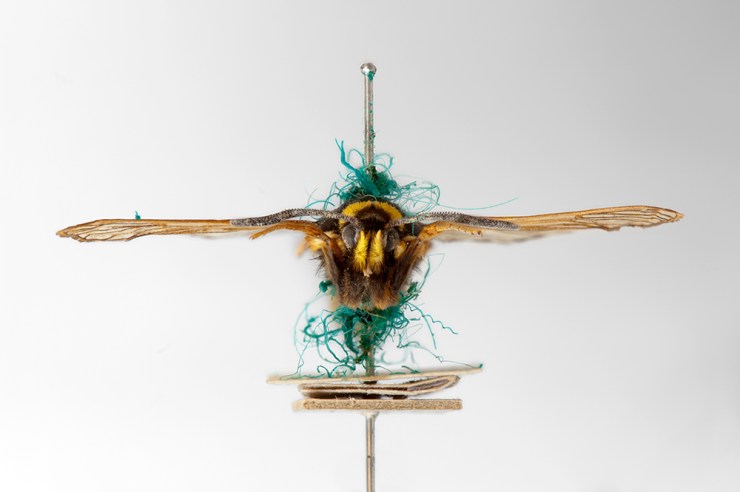
In the process of researching or conserving old pinned insects, it’s common to find a green deposit clustered around the pin. This is known as verdigris and is a natural patina created when the metal oxidizes over time. Katherine Child is Image Technician in the Museum’s Life collections and takes photos of insects for researchers, students, artists and publications. She is also an artist in her own right, so when she witnessed verdigris being removed during a conservation project, she came up with an inspired idea.

A clearwing moth before conservation, showing verdigris spreading where the metal and the insect fats, or lipids, react.

A few years ago I read a book called Colour: Travels Through the Paintbox, by Victoria Finlay, and was interested to learn that verdigris was once used as a pigment. Verdigris, which I now know translates from French as ‘Green of Greece’, is a word that’s been in my vocabulary since I was small.  I loved its rich bright blue-green colour, which is often seen on old copper piping or copper statues.

Verdigris forms when copper or a copper alloy reacts with water, oxygen, carbon dioxide or sulphur.

L: Three years’ worth of verdigris, ground and ready to make into paint.
R: A second attempt at mixing the paint, this time using linseed oil.

As early as 5thcentury AD, it was used in paint-making, and until the late 19th century it was the most vibrant green pigment available. But it was unstable – Leonardo da Vinci warned that it ‘vanishes into thin air if not varnished quickly.’ These days synthetic pigments provide a more constant alternative.

Despite its past uses, verdigris is a big problem in pinned insect collections. Nowadays stainless steel pins are used, but pins containing copper still remain in old collections and these react with air and insect fats. The more fatty the insect, the more verdigris tends to form and, if left, it can damage a specimen irreparably.

Comprising around five million or so insects, the Hope Entomological Collections here in the Museum take quite a bit of looking after. A few years ago a project to catalogue and conserve many of its butterfly and moth specimens was undertaken and the removal of verdigris and repining of insects was part of this.

With paint-making in mind, I asked that the beautiful, but problematic, substance be saved.  About three years on I finally got around to using the pigment, which I had also been adding to while photographing the collections.

I chose a variety of differently shaped moths to paint (most of the verdigris came from moths, so moths seemed the most apt subject). To narrow my options further I went for green moths. Some of the specimens I chose had verdigris on their pin, so I was able to take pigment and use it to paint the very specimens from which it came!

Katherine tested out the newly made verdigris paint in her sketchbook.

After a first failed attempt to make watercolour paint (during which pigment and water remained stubbornly separate due to the greasy insect fats still present), I tried again, this time using linseed oil to make oil paint – and it worked! Traditionally a flat bottomed tool called a muller was used to press pigment into the water or oil. Not having one of these, I used the flat end of a pestle and a mortar which did the trick.

A Miscellany of Moths, the finished verdigris painting.

The paint went surprisingly far and, following on from the 14 green moths, I plan to use up the remainder to paint beetles.

Katherine’s Miscellany of Moths painting can be seen on display in the Museum’s Community Case until 18th October.