Ferocious, tree-like and beautiful…

Draws in Shelford room

Katherine Child has spent a lot of time photographing the Hope Entomological collections at the Museum; you may remember her beautiful work from the Light Touch exhibition in 2014. But with somewhere between 5 and 6 million insects in the collection, there is still plenty to explore.

Since September she’s been working on a project to photograph African moths and their labels for www.africanmoths.com, which aims to provide as much information as possible for the identification and recording of moths throughout the African continent. The site already displays thousands of images of stunning specimens, some taken in their natural environment and others from collections such as the one here in Oxford.

Katherine reveals some of the challenges and delights of her work:

**

Trying to track down moth specimens is a great excuse to browse some of the beautiful moths in the Lepidoptera collections.

One of the best things about this project for me is probably the fact that it involves exploring the collections to find all the moths that I need to document. The cabinets in the Shelford room, where some of the Lepidoptera are kept, contain drawer after drawer of beautiful and fascinating specimens, and trying to track down a particular moth is a good excuse to browse through the hundreds that are up there.

The photos below show some of my favourite specimens from those I’ve photographed so far.  Some I like just for aesthetic reasons, others have interesting historic labels, are cleverly camouflaged or have appealing names.

Paralacydes arborifera, for instance, is named because of the pattern on its wings; arbori is Latin for tree and fera refers to a beast or creature.  It is easy to see why this moth was named “tree-beast”.

Paralacydes arborifera and its labels: one of several thousand moths which will eventually go on to the African Moths website. Arborifera translates from Latin as tree-beast or tree-creature.
Paralacydes arborifera and its labels: one of several thousand moths which will appear on the African Moths website.

Amphicallia bellatrix was presumably given the name Bellatrix (meaning warrioress, war-like or ferocious) because of its striking warning colours.  As with the stripes on a bee or wasp, yellow and black tends to mean danger in the natural world.
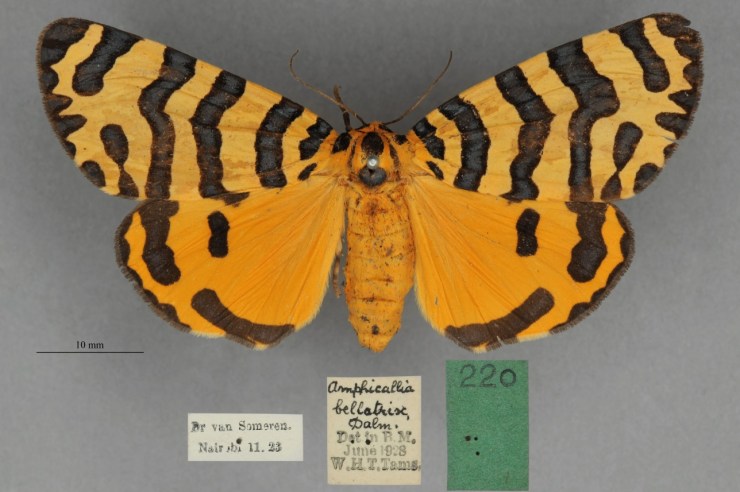
Amphicallia bellatrix displaying the striking warning colours which give it the name bellatrix meaning warlike, ferocious or warrioress.
Eutomis minceus, found in South Africa, displaying beautiful iridescence.

It is always interesting to see a little more information about how the specimens were found or caught. The description on the label below records how the moth was initially mistaken for a froghopper when caught by ‘boy’, and was only later identified to be a moth.
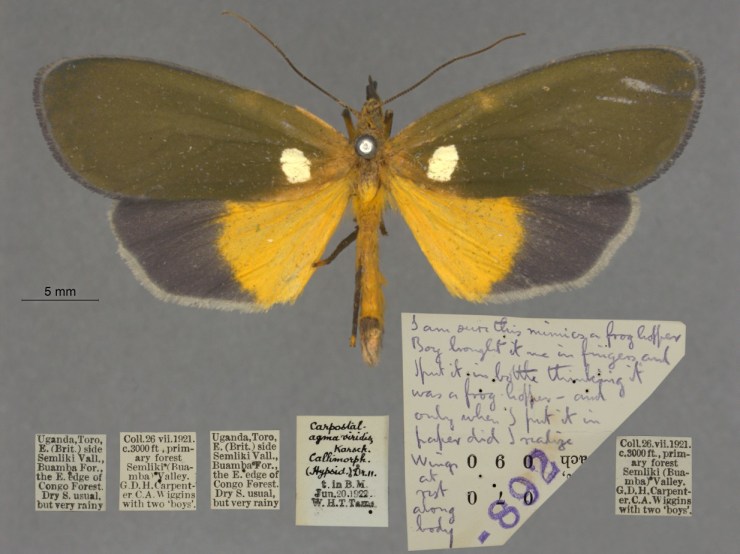
Photo of Carpostalagma viridis and its labels. The large label second from right reads: ‘I am sure this mimics a frog hopper. Boy brought it me in fingers and I put it in bottle thinking it was a frog hopper – and only when I put it in paper did I realise. Wings at rest along body.’

I look forward to photographing many more moths over the months to come!

Katherine Child, Image Technician, Life Collections
Visions of 2016

Bee 1

This year promises to be a little bit different. We’re looking at the Museum and its collections from a new point of view – through the eyes of artists, photographers and writers. We’re presenting different ‘visions’ of the natural world in a series we’ve called Visions of Nature. With a title borrowed from John Ruskin, there’s a definite nod to our Pre-Raphaelite roots, but there will be plenty of opportunities for an up-to the minute look at natural history, too. Here’s a few more details about what we’re planning…
Bee 2_crop

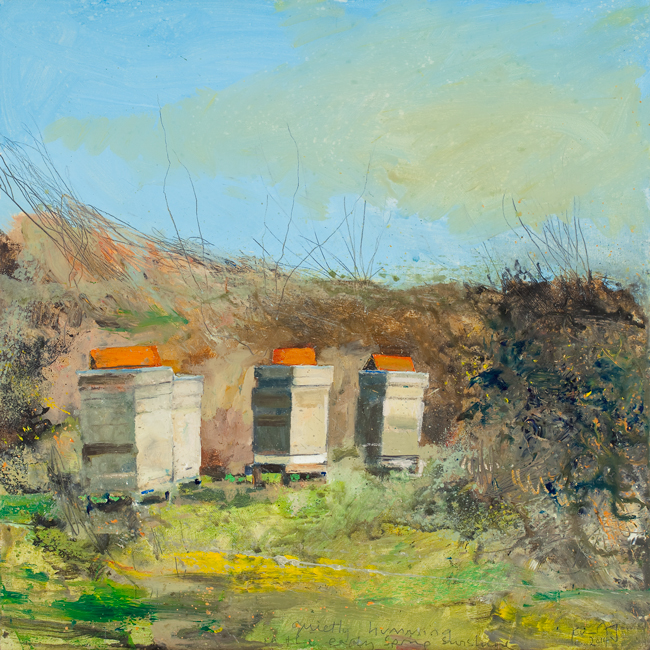
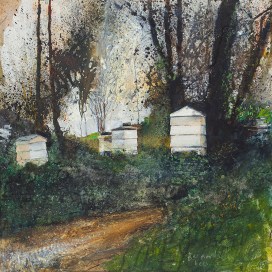
Kicking off this year’s exhibition programme will be a brand new show from artist Kurt Jackson. You may know his dramatic landscapes or even his work as artist in residence at Glastonbury, but this time, insects are the focus for his brush, pencil and chisel.

In Bees (and the odd wasp) in my bonnetwe’re bringing together Jackson’s beautiful paintings, sculptures and sketches with specimens from the Museum’s enormous bee collection and the latest contemporary research into bee population decline.

Bee 7

At the moment we’re choosing which specimens to include and are eagerly looking forward to a trip down to Kurt Jackson’s home in Cornwall to collect the artworks. With each bee pinned in place and every last painting hung perfectly, we’ll be opening the exhibition on Friday 18th March. There are lots of exciting events focussed around bees, too – including a special tour and talk by Jackson himself and a workshop run by a local beekeeper that describes how a bee colony changes over the course of a year. You can book a place on these and more here.

Exaerete Frontalis_Side View_v20

Next up will be Microsculpture; The insect photography of Levon BissThis really will make you see insects in a different light, with 10mm specimens blown up to 3m prints, all on display in the Museum court. Over the last couple of years, Levon, who is famous for dramatic photographic portraits of sports, music and film stars, has been working with James in our Life Collections team to select bizarre and beautiful insects. The result is a collection of beautifully-lit, high magnification portraiture that celebrates the amazing diversity of the insects and their morphology.

Visions of Nature logo_Single logoThe final third of the year will be centred around a literary vision of nature. We’ll be collaborating with some of our favourite natural history writers from the worlds of fact and fiction to offer an exciting programme of talks, debates and workshops. Key to this part of the year will be our poets in residence. Throughout 2016, three poets, John Barnie, Steven Matthews, and Kelley Swain, will be working alongside staff in our collections and out in the Museum itself to gain inspiration for their writing.
In the autumn, they will take part in a number of events and activities to present their work, and will be publishing a small anthology at the end of the year.

With plenty of other ideas in the mix, including exhibitions by Oxfordshire artists and photographers exploring the natural world and even a possible comedic vision of nature, there’s far too much to include here. So, there’s a dedicated Visions of Nature site, where you can find out about the poets’ latest inspiration, which exhibitions are opening soon, and what events you can sign up for. An exciting year ahead!

Secretarial work

After Treatment 2

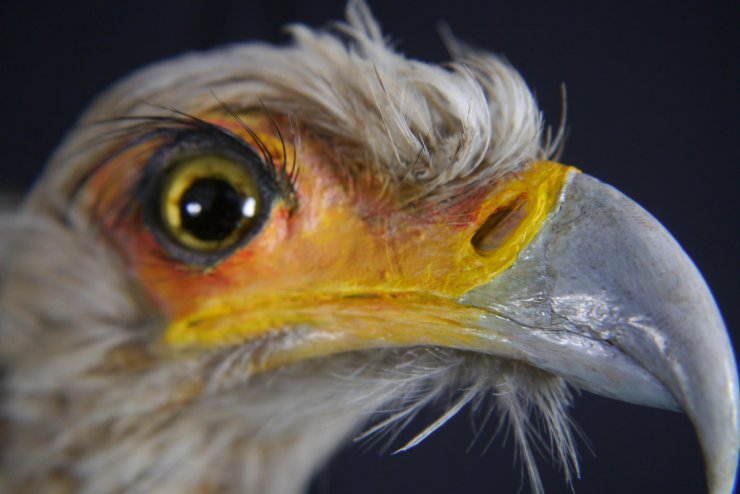
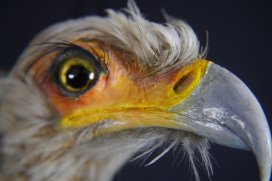
Our striking Secretary Bird stands at over 1 metre tall and should be one of the most impressive specimens in the Museum, but it hasn’t been looking its best for a while. This African bird of prey was looking rather sorry for itself, with scruffy feathers and moth damage. Conservation intern Ruth Murgatroyd stepped in to bring it back to its former glory.

**

Wrapped and ready for the freezer

The first step for any specimen undergoing conservation treatment is a 72 hour spell in the freezer at -30⁰C. This kills off any inhabiting webbing clothes moths, which can be very destructive to taxidermy specimens. Getting ready for the freezer required some creative packaging to protect the characteristic quill shaped plumage and tail feathers, before wrapping in plastic.

The feathers would need a good groom, which is a lot easier once they’re clean. I used dry methods first, including a brush dust with a vacuum cleaner and the very effective use of cosmetic sponges. The feathers were further cleaned with a gentle non ionic detergent in water and rinsed with a water/ethanol mix. I used a paint brush to dab the solution onto each feather individually.

Ruth cleaning tail feathers

When the feathers were clean and dry they were groomed to realign the filaments of the feathers, known as barbules. Parts of the bird’s tail and right wing were missing, so as this is a display specimen, we decided it was appropriate to recreate these areas to more accurately represent what the bird looks like in the wild. Any additions had to be easily identifiable and reversible. Goose feathers were sourced and colour-matched with Orasol dyes. They are now held in place by adjacent feathers and give a much more natural appearance.

Before treatment, with missing wing and tail feathers

The face of the Secretary Bird had been previously painted but this was quite faded in colour compared to the buoyant oranges and yellows of the animal in the wild. We decided to reflect this with a touch up. The new layer was painted in with acrylics, but a base layer of water soluble adhesive now protects the original paint, so layers of paint could be taken back at any time.

The finishing touch to the conservation of a taxidermy specimen is often to make sure the eyes are clean and gleaming. Saliva on a swab is really effective for this.

The Secretary Bird was then ready to go back in its newly-polished case. This had also been lined with UV film to protect the specimen from light damage. Just before it went back on display, the bird made an appearance at the Museum’s daily ‘Spotlight Specimens’ session where it met visitors keen to hear about its recent conservation.

Secretary Bird  back on display
Secretary Bird back on display

Pop in to the Museum to see the finished Secretary Bird on display and standing tall .

Ruth Murgatroyd, Conservation Intern

More than mimicry

figure_3
Hunting for Bates specimens. The labels with pink strips tell us they were part of Bates’ collection.

A small exhibition has popped up on the upper gallery of the Museum, showcasing natural historian Henry Walter Bates. He’s famous for his theory on mimicry, but, as exhibition curator Gina Allnatt explains, there’s a lot more to discover about Bates.

**

Charles Darwin and Alfred Russel Wallace are now widely recognised as the co-discoverers of the theory of evolution. They are both established figures in the natural history world, but it was a lesser known contemporary who gave them a missing piece of the puzzle.

A panel from the display is put together behind the scenes

Henry Walter Bates was born in Leicester on 8th February 1825. He was originally apprenticed to a hosiery manufacturer, but his passion for insects sent him on a completely different path in life. In 1844, Bates encountered Wallace in a library, and the two men found they shared a mutual love of nature. Bates introduced Wallace to the field of entomology (the study of insects) and it wasn’t long before the two were planning a joint expedition to the Amazon. They funded the expedition almost entirely through the sale of specimens they collected. Wallace returned to England after four years, but Bates remained in the Amazon for a further seven years. When he finally returned to England he had amassed a collection of over 14,000 insects. 8,000 of these were new to science.

LEPI4132b_heraldica_Bates_dorsal
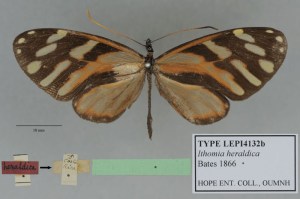
Bates Type specimen from the Godman-Salvin collection

Bates is most famous for the work which bears his name: Batesian mimicry. Batesian mimicry is when a harmless species mimics the warning colours or behaviour of a harmful species.

The mimic  then benefits from the protection of the model. For example, the Hornet Moth (Sesia apiformis) is completely harmless, but looks like a wasp and benefits from the protection of the wasp’s warning colours. The moth is the mimic and the wasp is the model.

figure_2
Net cocoon (Urodidae) from the moth collections

This Museum’s historical butterfly collection contains over 200 specimens collected by Bates, and thousands of other insects collected by him in the overall Entomology collections.

The specimens came to the collections via different routes. Some were purchased directly from Bates by Professor J.O. Westwood, the Museum’s first Hope Professor of Zoology. Bates material also arrived through acquired collections, such as those purchased from natural history specimen dealer Samuel Stevens. Other specimens of interest in the Lepidoptera collections purchased from Bates include an unusual net cocoon from a rare moth in the family Urodidae. The Urodidae are an unusual form of moth that build cocoons resembled a mesh bag with an opening at the bottom. One theory for this unusual structure is  to allow rainwater to flush through it easily, without drowning the pupa inside. In the Amazon rainforest, which is prone to heavy rainfall and flooding, this is a huge advantage.

The exhibition, which can be seen until 26th February 2016, will reveal much more about Bates and his contribution to modern-day science.

Gina Allnatt, Curatorial assistant (Lepidoptera)

It’s offishal!

Tuna 1

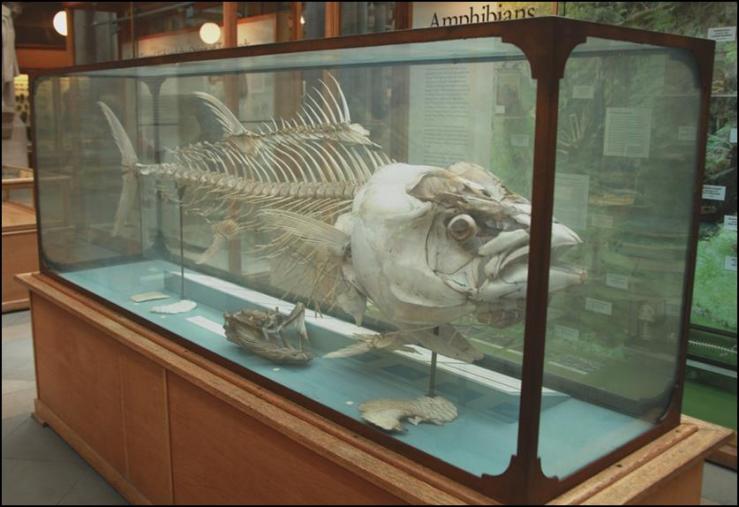
This skeleton has been on Bethany Palumbo’s conservation hit list for some time. As the Conservator for our Life Collections, she keeps a close eye on specimens that need a bit of TLC, or indeed a full make-over. Bethany and team have now been given the go-ahead to dedicate their attention to the Atlantic Bluefin tuna (Thunnus thynnus), located in the Museum court. The project will kick off on November 9th and should take around 4 weeks to complete.

This specimen has a long and interesting history. It’s been on display in the Museum since it opened in 1860, but records show that it was previously displayed in the Anatomy Museum at Christ Church College, Oxford. The fish was collected by Dr. Henry Acland, a leading figure in the establishment of the Museum. He obtained it through the Consul of Maderia in 1847 and its remarkable story was recorded in a historical review of the Museum Zoological collections (1976).

‘…the fish had been packed in salt and placed in an eight foot-long box addressed to ‘Dr Acland, Oxford’. During the voyage, the crew and passengers had become convinced that the box contained the corpse of a patient which in their superstitious minds was sufficient to account for the storm in the Bay of Biscay. The crew and passengers could not be convinced otherwise and Acland submitted to the opening of the ‘coffin’ by the ship’s carpenter, who unscrewed the lid before the assembled company, to reveal the tunny for all to see. It was eventually delivered to the Museum at Christ Church in perfect condition, the skeleton being later carefully articulated by Charles Robertson’.

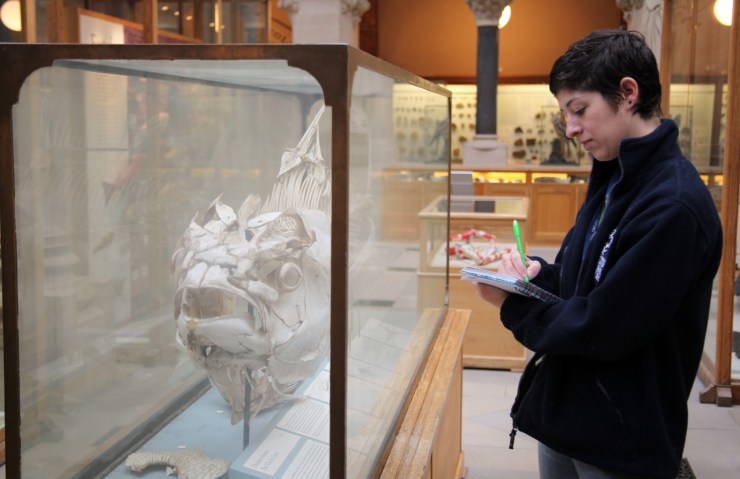
Conservation intern Abby assesses the condition of the Bluefin Tuna in order to develop a plan for treatment.

Now classified as an endangered species, this Bluefin Tuna also has significant scientific, as well as historical importance. Our conservators will take this into account, ensuring that any treatment is carried out sensitively. To allow Museum visitors to watch conservation in action, the work will be carried out right in the Museum court. Bethany is looking forward to lots of conversations with the public about all things fishy!

Rachel Parle, Interpretation and Education Officer

Starry night

rotunda
Image: Philip Hadland

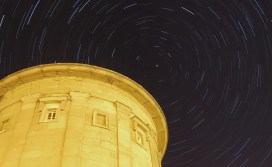
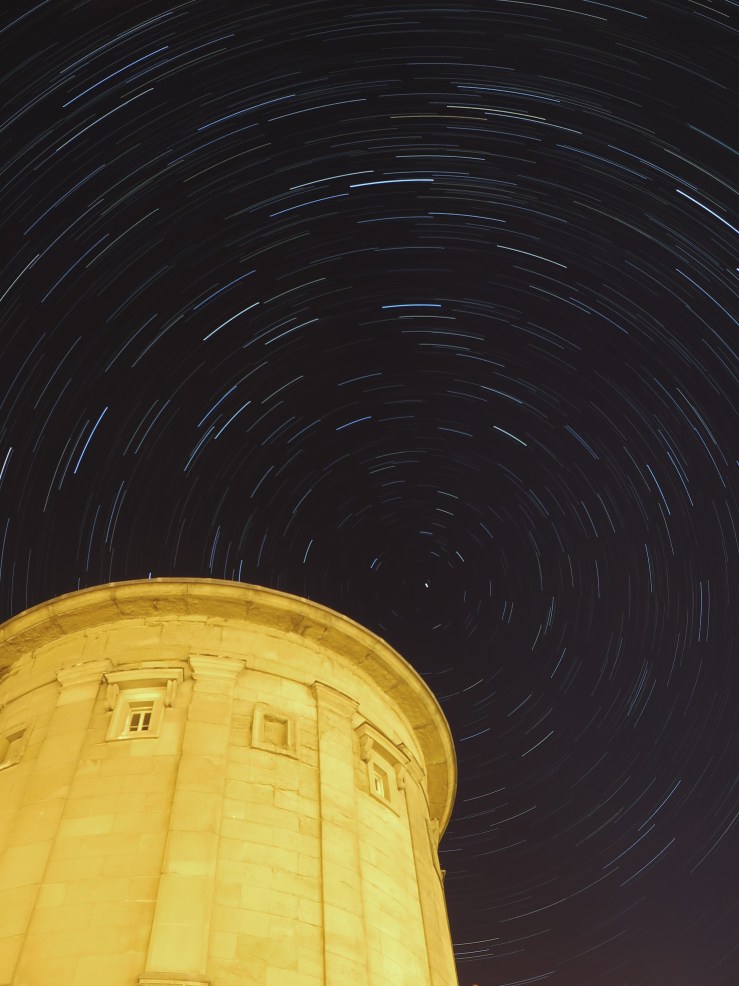
This dazzling photograph has just been awarded third prize in the Geological Society’s 100 Great Geosites Photo Competition and will feature as the December image in their 2016 calendar. It shows a building close to our hearts, the Rotunda Museum in Scarborough. In fact, the photo was taken by a member of our Earth Collections team, Phil Hadland at the Yorkshire Fossil Festival back in September.

On day 2, after a busy day sharing collections and knowledge with the festival-goers, the cloudless skies revealed a dark starry night. So Phil ventured out to do bit of photography, envisaging a beautiful trail of stars apparently rotating above the Rotunda. Conditions could not have been much better.

Using the Google Sky Map app he found Polaris (also known as the North Star), the star which sailors once used to navigate at night. He carefully positioned his camera and tripod for a 45 minute exposure to capture both the Rotunda and the stars. The image that resulted is spectacular. Phil explains;

Of course it is the rotation of our planet that causes the effect of star trails, but it shows that we are constantly on the move on a tiny speck within the universe, which we call Earth.

The timing of the success is ideal. This year marks the 200th anniversary of the publication of William Smith’s Geological Map, which we are celebrating with our current exhibition Handwritten in Stone. Smith also went on to conceive and design the The Rotunda Museum as the ideal place to display fossils and interpret geology.

Credit: Philip Hadland

Phil is understandably proud of the attention that his photograph has received:

I’m thrilled to be among the winners and it is a great feeling when the effort (which is usually required to take great photos) pays off. It’s also nice to know that so many people will get to see and appreciate the photo over Christmas 2016.

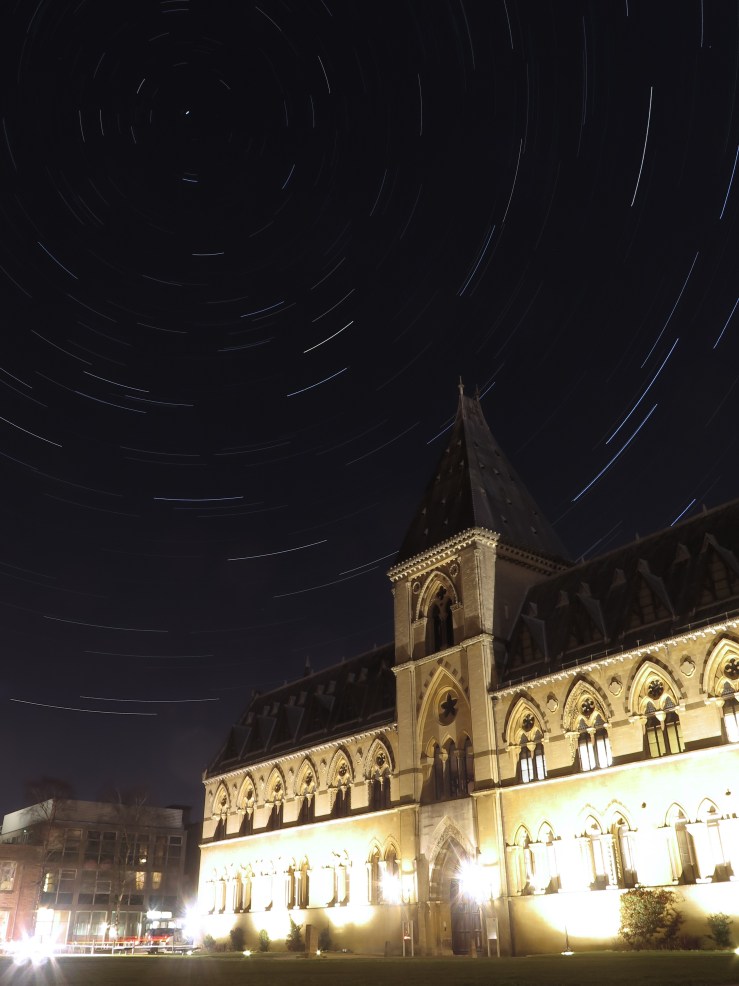
This isn’t the only long exposure image that Phil has created; here you can see a photo of this very museum treated in a similar way. Perhaps a testament to the long-lasting importance of natural history.

Rachel Parle, Interpretation and Education Officer