A shark’s tale
Following the completion of our Life, As We Know It redisplay project earlier this year, we are taking a look at some of the exceptionally skilled people who helped to bring it all together. In this article, model maker Jeremy Hunt and our Vertebrate Palaeontology Collections Manager Emma Nicholls take a deep dive into what we believe is the world’s first 3D reconstruction of the extinct shark Ptychodus as an open water predator…
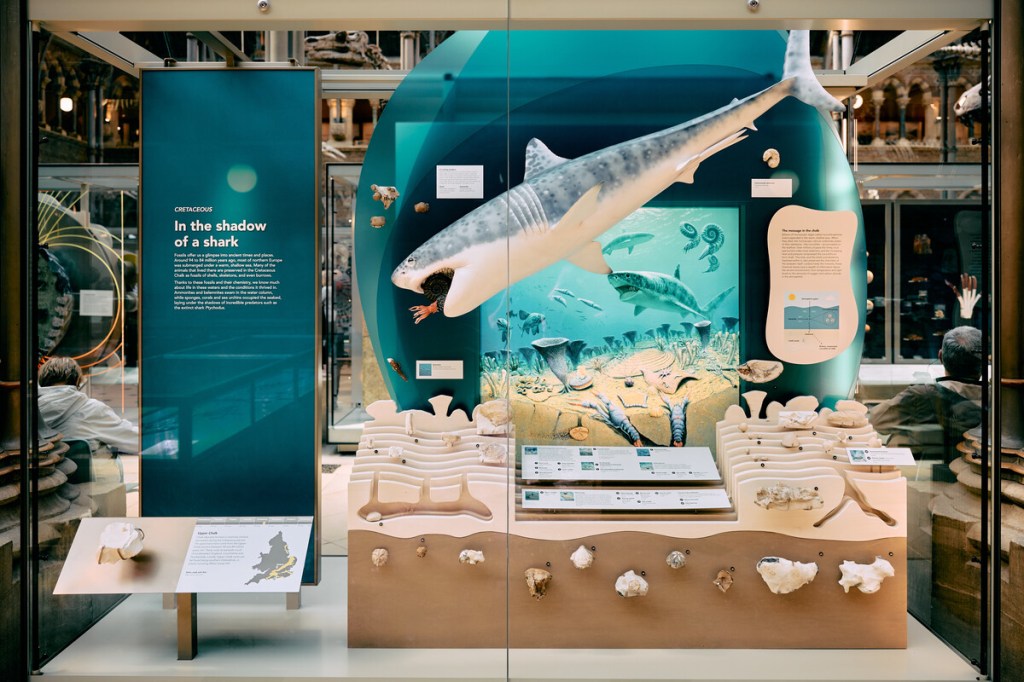
In six of our newest displays, fossil material found in and around Oxfordshire is used to reconstruct ecosystems from slices of geological time. One of these recreates a marine environment of the Cretaceous Period, between 94 and 84 million years ago, when most of northern Europe was submerged under a warm shallow sea. In these seas swam a formidable 8-metre long shark called Ptychodus.
Until recently, Ptychodus remained something of a mystery: teeth and vertebrae were the only remains scientists could use to work out what it looked like. Its robust, low-domed teeth are covered in deep ridges of enamel that created a mosaic in each jaw. They were capable of crushing shelled prey like a giant nutcracker. Similar teeth in modern sharks are found only in slow-moving species that prowl the seabed, so it was presumed that Ptychodus behaved in the same way.
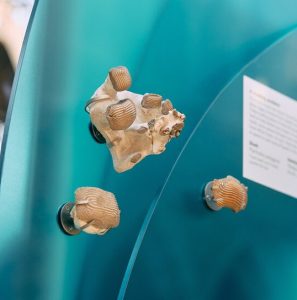
But then in 2024 an incredible fossil with much of the animal’s soft tissue preserved was published by Dr Romain Vullo and co-authors. This new fossil revealed clues to the shapes of the fins and their position on the body. The study concluded that Ptychodus was in fact not a bottom-dwelling animal at all, but much more likely to be a fast, agile predator living higher in the water column, and perhaps related to the Great White Shark.
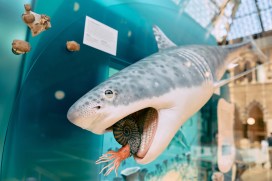
Armed with this recent discovery, we decided to create a three-dimensional model of the reimagined Ptychodus for our Cretaceous display. It had to be a quarter of life-size to fit it in the showcase, but would still be a huge two metres long.
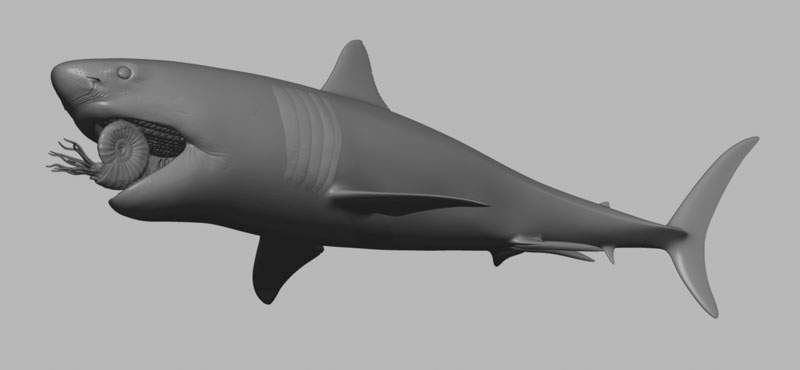
“In discussion with Dr Vullo and others we began to decipher the shark’s possible appearance,” says Emma. “Aspects to sink our teeth into included the skull shape, how it would have fed on hard-shelled free-swimming prey such as ammonites, how the mosaic of teeth sat in the mouth, as well as where and what shape the fins would have been.”
The next stage was to turn these ideas into a realistic model, and for this we turned to specialist model maker Jeremy Hunt. “When I was asked to make the reconstruction of Ptychodus I thought it was a great opportunity to incorporate modern digital techniques and processes that would give great accuracy, but also and flexibility so that adjustments could be made at later stages. This would be really difficult using a traditional clay sculpting approach,” he explains.
Together, Emma and Jeremy began to translate the shark fossil research into draft models on the computer, digitally sculpting versions on-screen. As well as being scaled down to quarter size, the position and pose of the model also needed to work inside the showcase structure and the designs of the rest of the display. Combining computer models helped us to make sure that Ptychodus would fit perfectly and that its method of support could be worked out well ahead of installation.
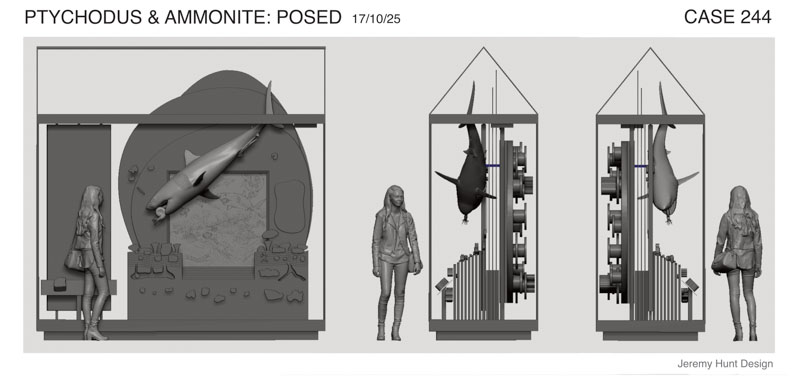
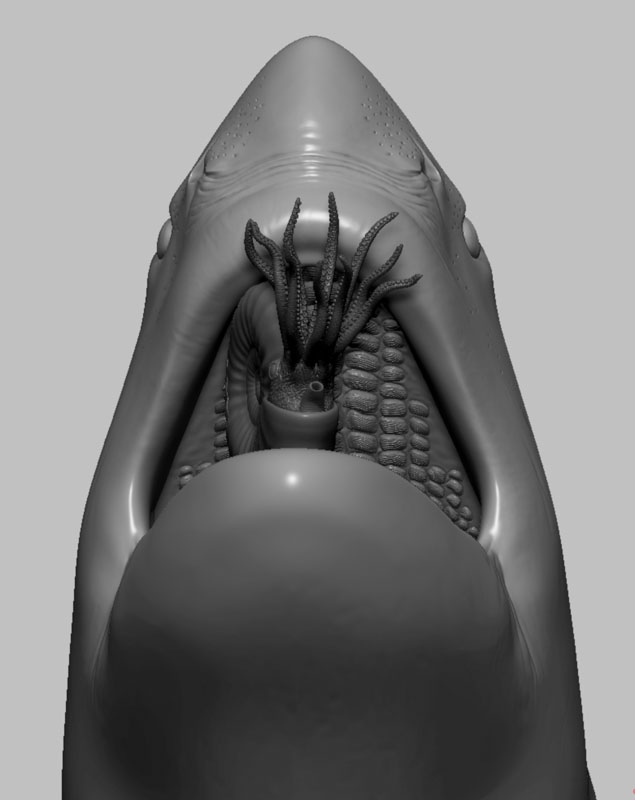
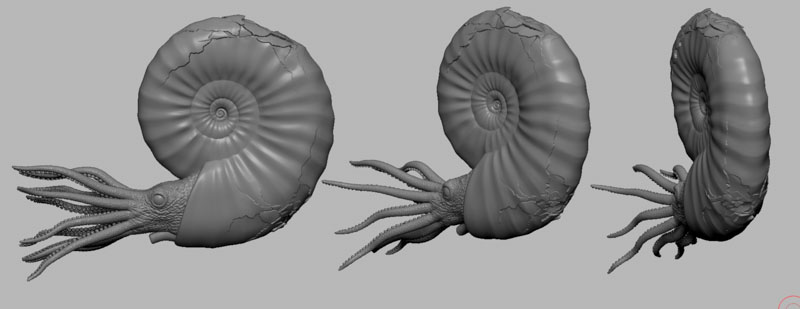
To give us a sense of how the final model would actually look, Jeremy 3D-printed little maquettes just a few centimetres long. On these we could check that the anatomy and pose were just what we needed. The maquettes also showed how the shark would be suspended in a diving angle, chomping down on an ammonite which Jeremy was modelling separately, in collaboration with Ricardo Pérez-de la Fuente, a researcher here at the Museum.
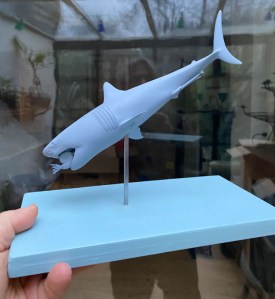
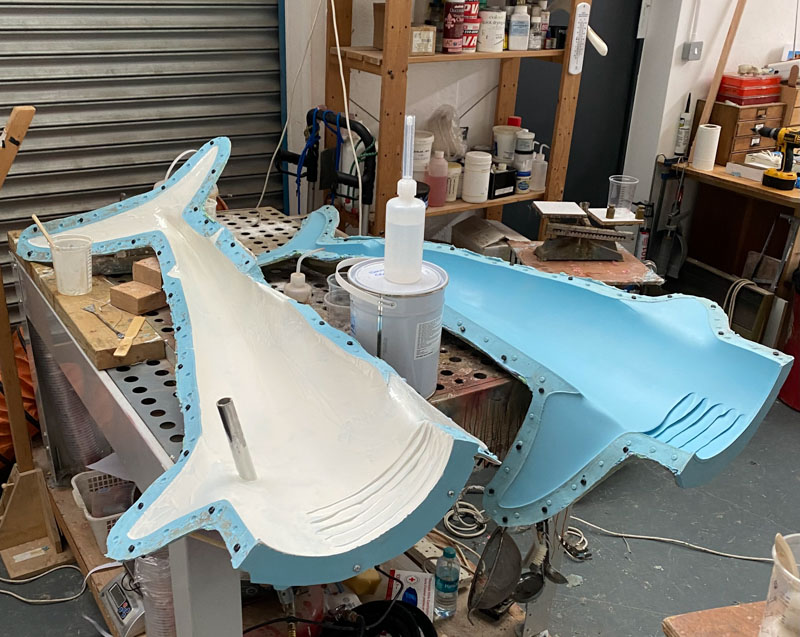
Once ready, the model was 3D-printed at its display size of two metres long, allowing Jeremy to create a silicone rubber mould to produce a fibreglass cast of the final structure. Fibreglass is both strong and light, perfect for the display. But the model really came to life when Jeremy hand-painted and airbrushed its colourings and markings based on a research by Emma and a concept drawing by palaeo-artist Julius Csotonyi.
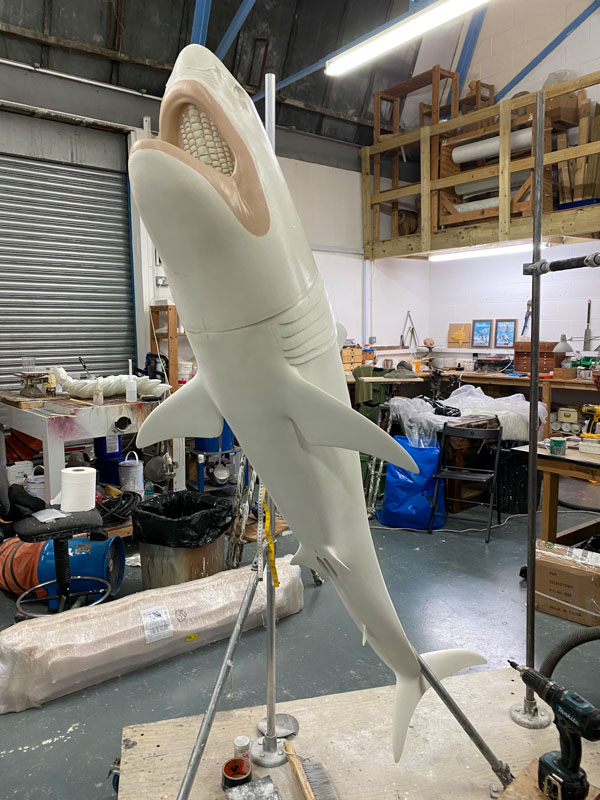
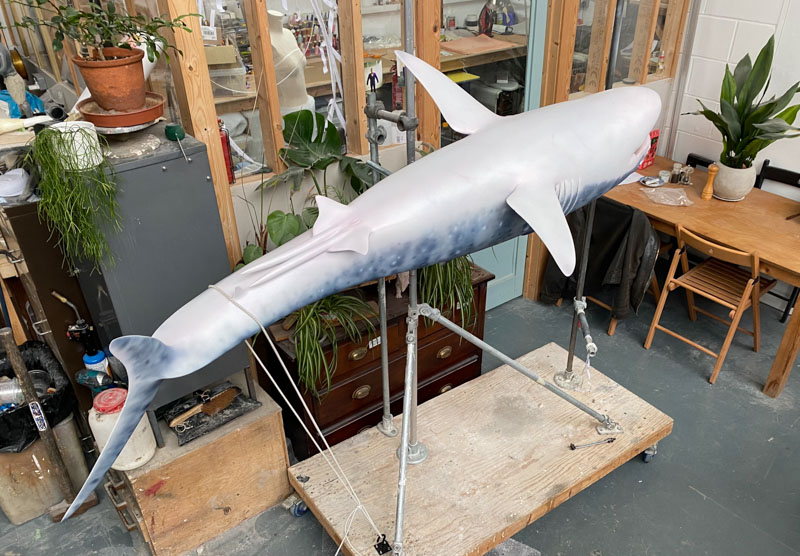
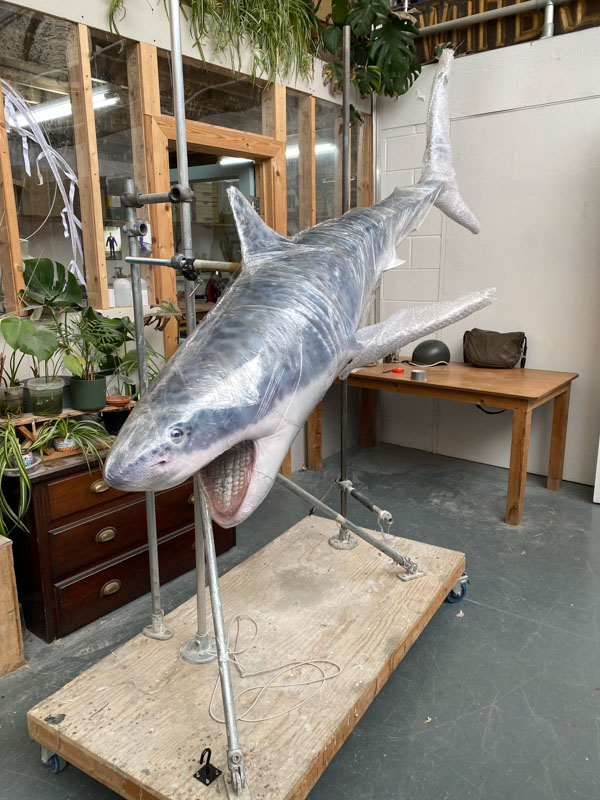
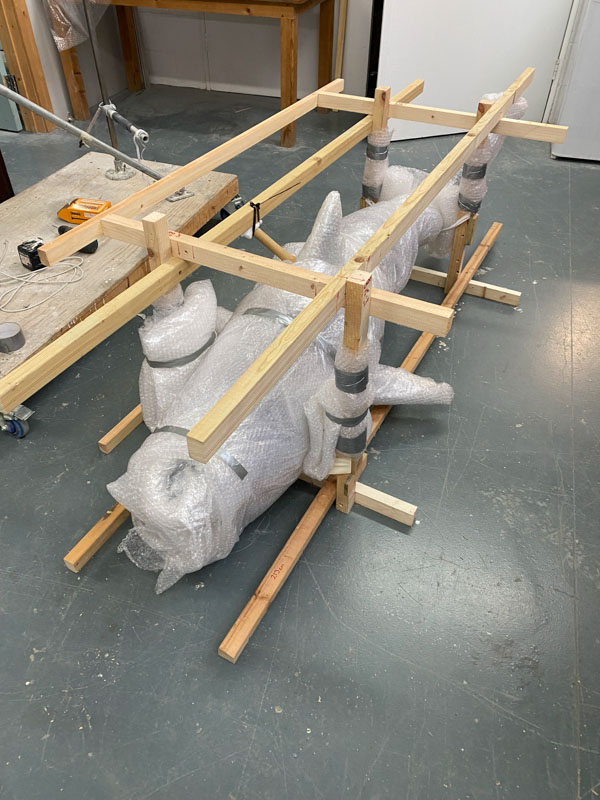
Once Ptychodus and the rest of the display were installed, the ammonite was placed in the mouth. It is held safely there by hidden strong magnets, caught permanently between those crushing plates, about to become shark food.
“This was a great project to be involved with, and I hope the new displays will be enjoyed by all who visit the Museum,” says Jeremy.
Jeremy Hunt, model-maker
*
See more of Jeremy’s work at: www.instagram.com/memsculpt