Walk this way

DMC-LX3 - 0013
Credit: Mike Peckett

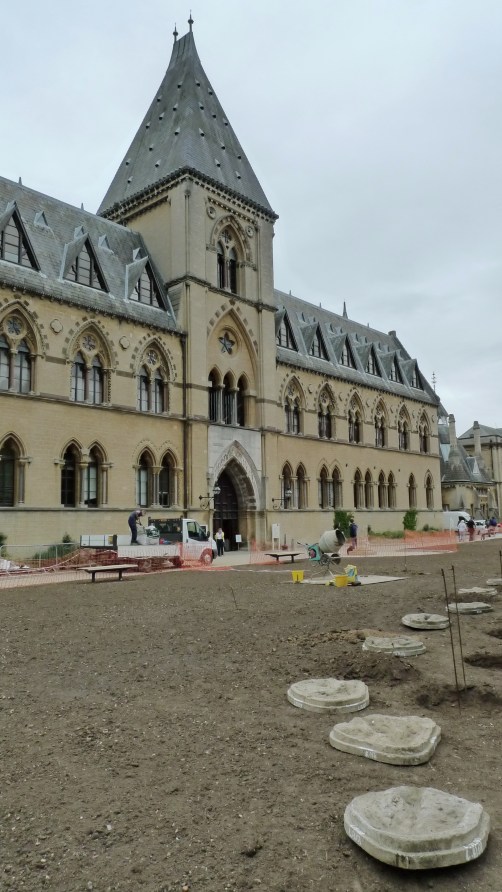
During our closure year, we’ve been having a little landscaping done to our outside space. One of the things I missed while the lawn was being dug up is seeing children hopping, skipping and jumping along the dinosaur footprint casts which cross the grass.

The dinosaur prints provide a lovely introduction to geology, even before you step through the door, so I was delighted to hear that they were included in the new landscaping plan. Even better news was that they were due to be put back in a new formation, which more closely represents the way the dinosaur moved.
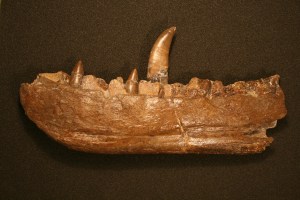
The lower jaw of Megalosaurus Bucklandii
The lower jaw of Megalosaurus bucklandii

The prints are casts taken from a fossilised trackway discovered at Ardley Quarry near Bicester in 1997. It is believed they may have been made by the large three-toed carnivore Megalosaurus bucklandii, which roamed the lagoons of Jurassic Oxfordshire some 166-168 million years ago.

The world-famous lower jaw found by William Buckland in the village of Stonesfield, and pictured here, is one of the treasures of the Museum’s Earth Collections. You can see the Megalosaurus jaw for yourself in our Natural Histories exhibition which is running at the Museum of the History of Science until 29 September.
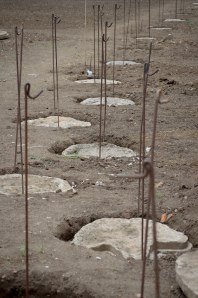
_DSC4457


For the past few weeks, Juliet Hay, Preparator and Conservator in the Earth Collections, has been seen diligently measuring and arranging the prints in front of the Museum. Juliet began by plotting out a ‘walking phase’, with a short stride length, and then used research based on an article published in the journal Nature to add in a ‘running phase’. Although the walking and running phases are actually separated at the quarry, GPS data has revealed that they are very likely to have been a continuous trackway, made by the same dinosaur.

Juliet needed to take into consideration the number of casts she had to play with, as well as the lawn’s new sprinkler system, so she emphasises that our trackway is an illustration of the dinosaur’s movements, rather than an exact replica. So now, our lawn footprints show the theropod dinosaur walking at around 4.23mph, breaking into a run reaching 18.14mph, then slowing back down to a walk at the end of its journey.
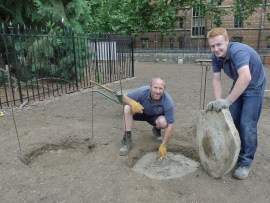
DMC-LX3 - 0022
Carl and Richard lower the prints into place. Credit: Mike Peckett

Juliet asked me to thank the University Parks team who helped her to shift the heavy casts into position with good grace. So, thanks go to Walter Sawyer and his intrepid team Carl, Richard, Nolan and Michael. She says “The casts are an important feature as they represent evidence of the first known theropod trackway to show dual speed and an associated change in gait. A pair of Mallard ducks that often visit in the summer seem to enjoy paddling in them too!”

Once our lawn is looking lovely again, do pop along, put your feet in the prints and see if you can keep up with a sprinting, three-toed, meat-eating dinosaur.

Rachel Parle, Education Officer
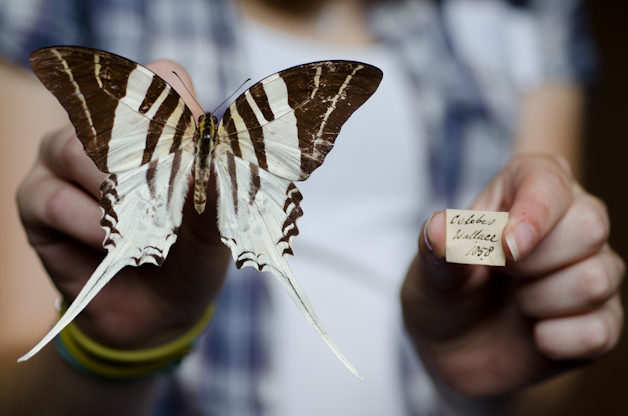
Where’s Wallace? There’s Wallace!

Wallace 3

The Museum’s Hope Entomological Collection is pushing five million specimens. We have room after room, with row after row of cabinets packed full of insects from all over the world. Our collection includes the oldest pinned insect in the world, beetles collected by Darwin and Dr Livingstone’s tsetse fly. It’s packed full of treasures. But even now, some of its gems remain hidden.

So, this week’s rediscovery of several hundred priceless specimens is pretty incredible. But what makes it even more remarkable is the fact that they were found by one person… who is 17 years old!

Athena MartinAthena Martin goes to Wood Green School in Witney and is spending four precious weeks of her summer holiday in the Entomology collection. She is taking part in the Nuffield Research Placement programme, which supports young people studying science to gain practical experience in the workplace. Athena applied to the Museum because she would like to study zoology at university and wanted to see what that might involve.

Her enormous task was to search 3,340 drawers like the one she’s holding here on the hunt for specimens collected by the famous Victorian natural historian, Alfred Russel Wallace.

This year marks the centenary of Wallace’s death and is a chance to celebrate his incredible achievements in collecting and research. The Museum has decided to seize this opportunity to catalogue and rediscover the large number of specimens collected by the Wallace. Darren Mann, Head of Life Collections, explained: “We knew we had 1000s of Wallace’s specimens in there, but we needed clarity. Our accession register goes back more than 160 years, but is listed by species, not collector.”

 - Kite swallowtails
Kite swallowtails

So, Athena began searching through the Lepidoptera (moth and butterflies) cases, reading tiny little labels, hoping to read the magic word…Wallace. Some days were completely fruitless, but she soon built up a lengthy list of the precious specimens. In total, in just three weeks, Athena has rediscovered more than 300 of Wallace’s finds. Her favourites are these beautiful kite swallowtail butterflies, but perhaps the most significant is a Dismorphia butterfly found in the Amazon. Almost all of Wallace’s Amazon specimens were lost on his journey home, when his boat is thought to have caught fire. Nobody at the Museum knew we owned this valuable specimen.

On top of the many Wallace beetles that were rediscovered last year, the Museum is now building up a very clear picture of just how many precious Alfred Russel Wallace specimens it has and, thanks to Athena’s diligent work, we now know exactly where to find them!

If you are interested in more stories from our Entomology collection, follow their brilliant blog, Hope you like insects.

Rachel Parle, Education Officer

What’s lurking in the attic?

DSC_8154

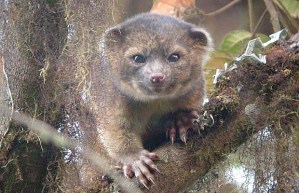
Last week saw the announcement of a new carnivore on the block, the rather adorable olinguito. This little South American mammal is the first carnivore to have been discovered for 35 years and demonstrates the importance of museum collections… in case we needed any convincing!

Olinguito

As you may have read, the olinguito was discovered by Dr Kristofer Helgen of the Smithsonian Institution after he saw some mysterious specimens preserved in the collections of the Field Museum in Chicago. After lots of careful study of the skins and skulls, Dr Helgen realised that these animals had gone unidentified for centuries. Since then he has successfully seen and photographed the cute creature in its Andean habitat. But, as highlighted by the Observer newspaper, if the museum’s collections had not been carefully maintained, we may never have known of the existence of this raccoon relative in the first place.

The UK’s natural history collections are currently facing a serious threat. With specialist curators becoming almost as rare as the olinguito itself, specimens across the country are at risk of rapid decay and damage. To discuss current difficulties and create some solutions, we’re holding a one day seminar here at the Museum of Natural History on 20th November. ‘Crap in the Attic?’, as it has been amusingly named, is intended to help professionals to maintain, use and explore their collections in a sustainable way.

If your institution has a natural history collection, and you’re based within a couple of hours’ travel from Oxford, why not join us? You never know, it might help you to uncover the next new species hidden in your attic!

Rachel Parle, Education Officer

The Art and Science of Taxidermy

Derek Frampton

On Sunday 18 August we had the pleasure of welcoming professional freelance taxidermist Derek Frampton to the Museum of the History of Science, where our joint exhibition, Natural Histories, is being shown. As part of the exhibition’s public programme Derek delivered a very popular illustrated Table Talk on the Art and Science of Taxidermy.

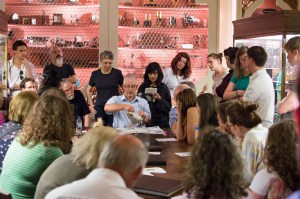
An attentive audience

Derek has pretty much been a taxidermist his whole life, having started by collecting, dissecting and drawing animals as a boy. Since then he has done a lot of work for museums, including us and the Natural History Museum in London, where he helped prepare Guy, the Museum’s famous gorilla.

“I really liked drawing and painting animals and would collect things I found. Then I realised I could open them up and became fascinated by the way they worked inside – the mechanics of the muscles and skeleton,” Derek told visitors to the event.

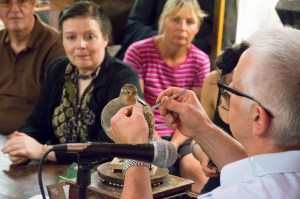
Finishing touches
Finishing touches

“But after a while the specimens started to get smelly and I’d get into trouble with my mum. So I’d have to throw them away and find some new ones. Eventually somebody said to me that the technique for preserving the animals was called taxidermy. I bought a book on it and I have been doing it ever since.”

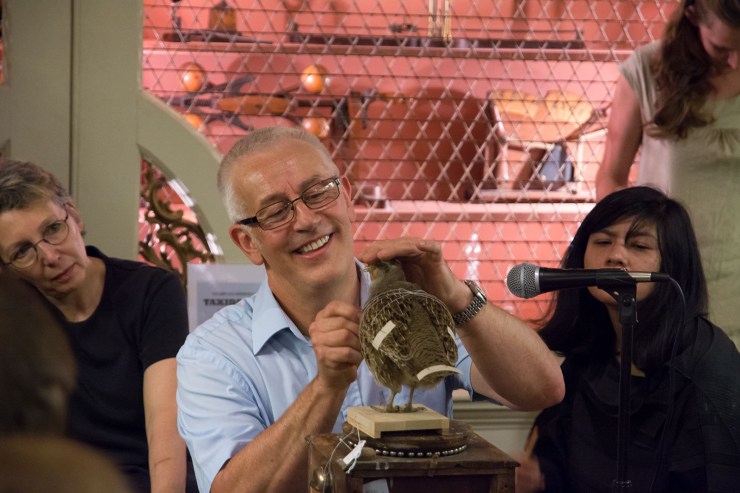
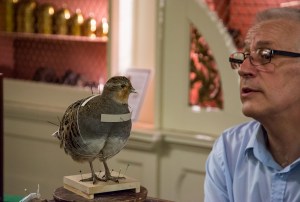
For the Table Talk, Derek brought along the skin of a female partridge which had been killed in a road traffic accident.

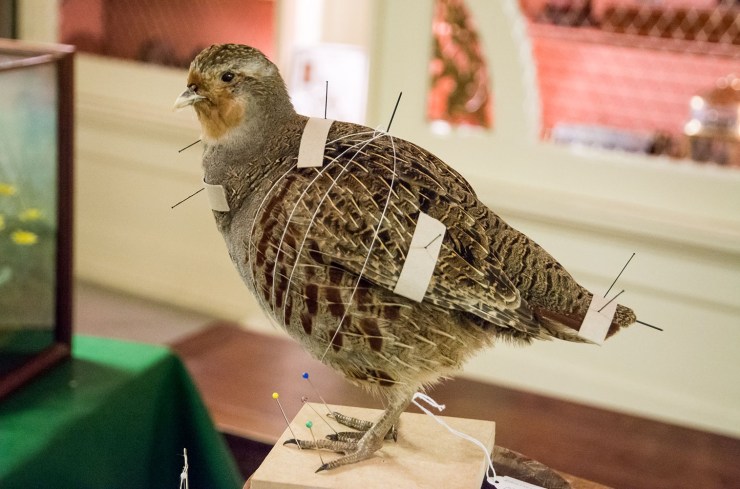
During the hour he went through the process of turning the prepared skin into a finished piece of taxidermy. Using a photograph of a live partridge as a reference, Derek padded the bird with tow, a natural fibre, and inserted florists’ rods to give it a natural shape and posture.

Derek Frampton and the partidge
Partridge and Derek Frampton

At the end of the process the bird was tied and pinned to allow the skin to fully dry and contract, after which the cotton bindings will be removed.

The presentation was a fascinating insight into the half-art, half-science of taxidermy and the perfect complement to the Collect, Preserve, Study display in the Natural Histories exhibition.

The Art and Sciene of Taxidermy

Comings and goings

Minerals being organised
Naomi organising the minerals

The summer’s a time of comings and goings in the Museum, and a perfect opportunity for all sorts of people to get a bit of experience of working in a museum. Last week saw the end of a placement for Naomi, a 3rd year Earth Sciences undergraduate here at Oxford. She has just spent two weeks helping us to catalogue a large collection of North of England minerals. She was fascinated to find specimens of rare minerals from mines and quarries near her home and her student mapping area, both of which are in Cumbria. Many of the mines were still working when the collection was made, but today they are disused and many are flooded or lost.

Robert working on the displays

School student Robert also joined us for a week as part of his school work experience scheme. He spent a day repairing fossils and helping staff spruce up the palaeontology displays. There’s lots of competition for our very few work experience placement opportunities, but we could see why Robert was keen to work in the Museum. He loves geology and is really keen to study Earth Sciences at university – maybe here at Oxford.

Afternoon tea  break gave Robert the perfect opportunity to find out from Naomi what it is like to be an Earth Scientist at Oxford, and indeed what made so many of the staff sitting round the table want to study and make a career in geology. Geology is a subject that can make a big difference to lives, whether prospecting for ores, oil or water supplies, or understanding geo-hazards such as earthquakes and volcanoes. But there’s no doubt about it, working outdoors in the field was a big attraction… and so was working with amazing and rare specimens in a museum!

We’ll be looking forward to following Naomi and Robert in their geological careers.

Monica Price
Assistant Curator, Mineral Collections

Shell-sorters

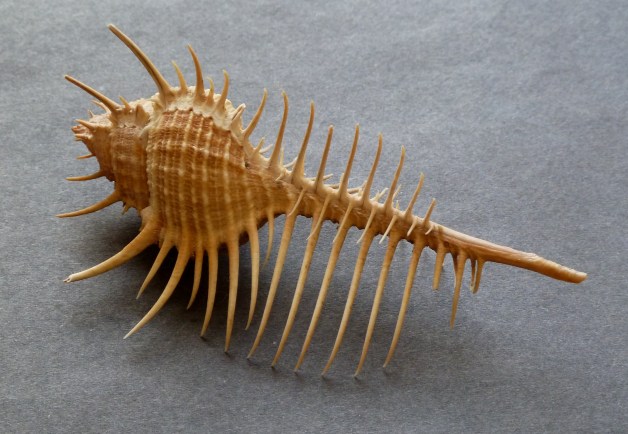
Venus Comb Murex (Murex pecten)The mollusc collection at the Museum is formidable, estimated to comprise in excess of 100,000 lots, collected by several notable amateur shell collectors over the last 200 years. Unfortunately, until quite recently, this collection was in a fairly disorganised state. Parts have been catalogued on paper in the past 40 years, but a much larger part was stored away in drawers and boxes, with some unopened for decades…
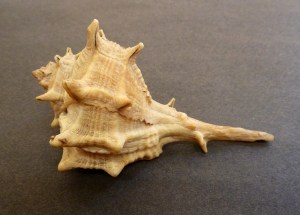
Spiny dye-murex (Bolinus brandaris)

Over the past ten years, the majority of these extra collections have been sorted into family level; that is, grouped by family classification but not further divided into genus and species.

To take this organisation further, the entire mollusc collection is now being properly curated and the details recorded on an electronic database so that researchers can find and access the material more easily.

Over the past three months, ten hard-working volunteers have given up their time every Monday to help with the current (very
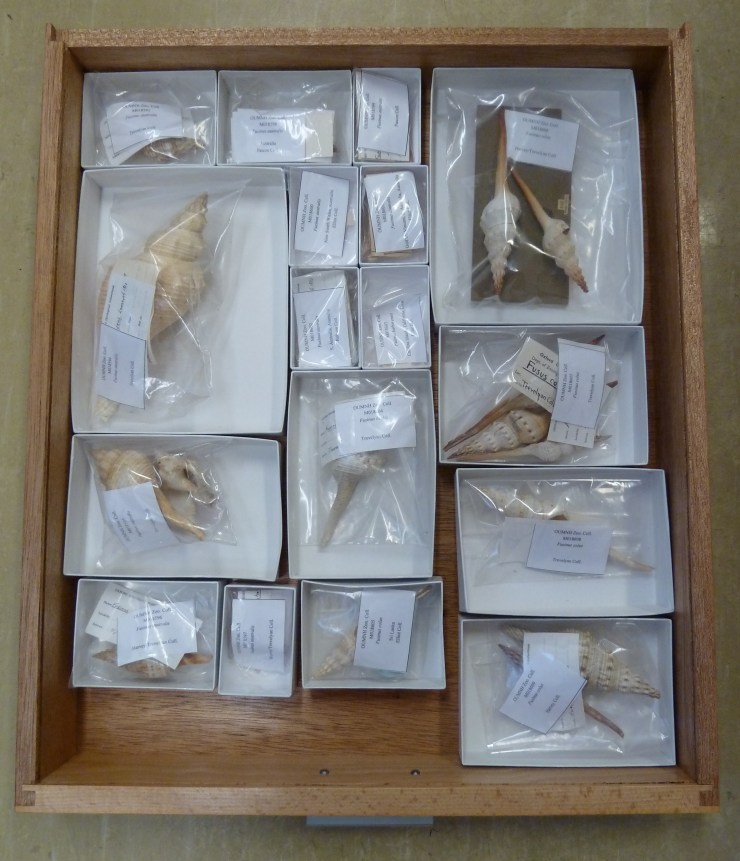
time consuming) stage in the process. Working mainly on marine gastropods, the volunteers first remove the shells from their original boxes or bags and re-package them using modern museum storage materials.

An unsorted drawer...
An unsorted drawer…

The species names are checked against an online database and updated where necessary. The volunteers then organise each family alphabetically by genus and within genus by species. The final stage in the process is to record the details of each specimen onto an online database and to label the newly-packaged shells. That’s a lot of work.

...and a newly-sorted drawer
…and a newly-sorted drawer

Thanks to their enthusiasm and great team work, our volunteers have sorted, checked and curated over 8,000 lots of shells and reorganised them into more than 250 drawers. Around 3,500 specimens have been added to the database since March, taking the total number of lots in the mollusc database to nearly 20,000.

Only another 80,000 to go!

Carolyn Lewis, Palaeobiology Technician