Every breath you take

IMG_3738

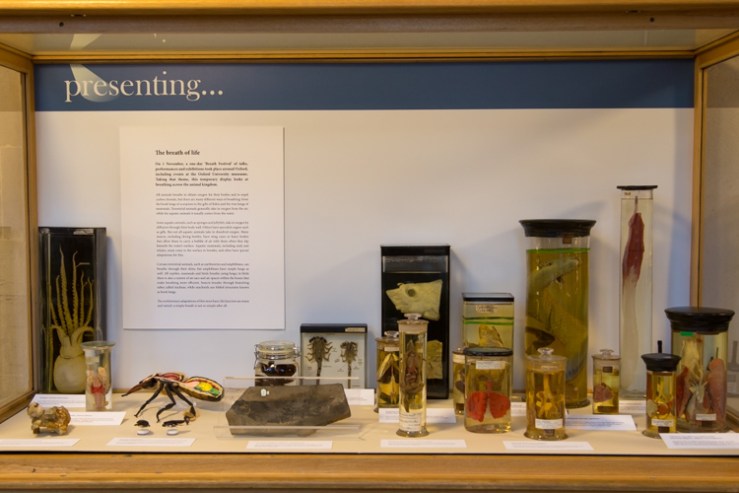
Tomorrow afternoon the Museum will host talks, tours and a dance performance as part of the Breath Festival, a unique series of events coordinated by the Oxford University Hospitals Artlink programme. To coincide with the festival we have put together a special display in our changing Presenting… case, all about breath and breathing across the animal kingdom.

There’s something of the Halloween macabre about the display too, with its pink-coloured lungs and eviscerated bodies suspended in spirit. Here’s a taster of the display, but to see the full selection head down to the Museum either for the Breath Festival tomorrow, Saturday 1 November, or at any time during the rest of the month.
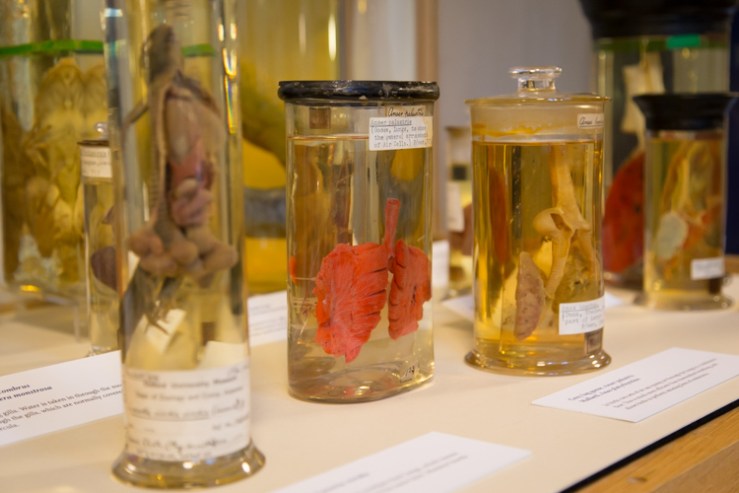
Lungs of a lizard, goose and duck.
Lungs of a lizard, goose and duck

The breath of life
All animals breathe to obtain oxygen for their bodies and to expel carbon dioxide, but there are many different ways of breathing: from the book lungs of scorpions to the gills of fishes and the true lungs of mammals. Terrestrial animals generally take in oxygen from the air, while for aquatic animals it usually comes from the water.

Crocodile and alligator lungs

Some aquatic animals, such as sponges and jellyfish, take in oxygen by diffusion through their body wall. Others have specialist organs such as gills. But not all aquatic animals take in dissolved oxygen. Many insects, including diving beetles, have wing cases or hairy bodies that allow them to carry a bubble of air with them when they dip beneath the water’s surface. Aquatic mammals, including seals and whales, must come to the surface to breathe, and often have special adaptations for this.

Certain terrestrial animals, such as earthworms and amphibians, can breathe through their skins, but amphibians have simple lungs as well. All reptiles, mammals and birds breathe using lungs; in birds there is also a system of air sacs and air spaces within the bones that make breathing more efficient. Insects breathe through branching tubes called tracheae, while arachnids use folded structures known as book lungs.

The evolutionary adaptations of this most basic life function are many and varied: a simple breath is not so simple after all.

Visitors pick out their favourite specimen

Scott Billings – Public engagement officer

Presenting… Dr Hilary Ketchum

IMG_2219

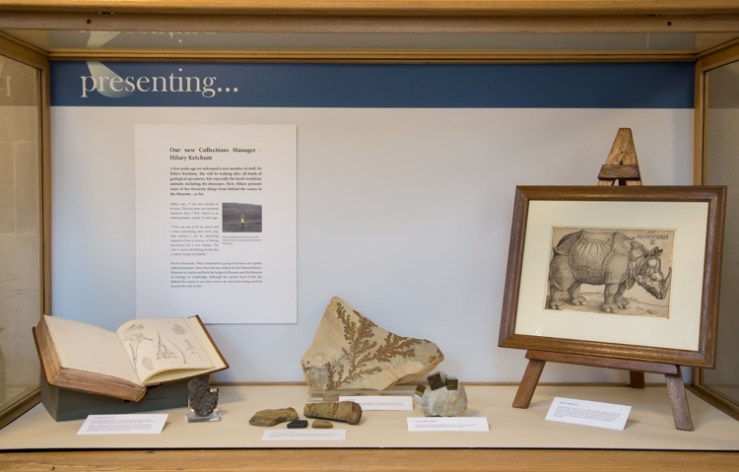
A few weeks ago we welcomed Dr Hilary Ketchum as our new collections manager for the geological collections. Hilary will be looking after all kinds of specimens, but especially the fossil vertebrate animals, including the dinosaurs. To welcome her, and to announce her arrival to the public, we have handed over our regularly-changing Presenting… display so that Hilary can exhibit some of her favourite things (so far) from behind the scenes in the Museum.

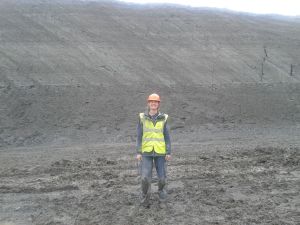
Hilary looking for plesiosaurs in the Oxford Clay on a rainy day. She’s never found one.

For her doctorate, Hilary researched a group of Jurassic sea-reptiles called plesiosaurs. Since then she has worked for the Natural History Museum in London and both the Sedgwick Museum and the Museum of Zoology in Cambridge. Although she spends most of the day behind the scenes in our store rooms she also loves being involved in activities and events.

I am very excited to be here. This has been my favourite museum since I first visited as an undergraduate, nearly 15 years ago. I love my job as it’s so varied and I learn something new every day. One minute I can be answering enquiries from scientists, or finding specimens for a new display. The next I can be identifying fossils that a visitor found on holiday.

A few of Hilary’s selection of specimens are include here. To see the full display, look for the Presenting… case just to the right of the Welcome Desk near the entrance to the Museum. An online archive of the Presenting… series is also available on our website.

IMG_2222
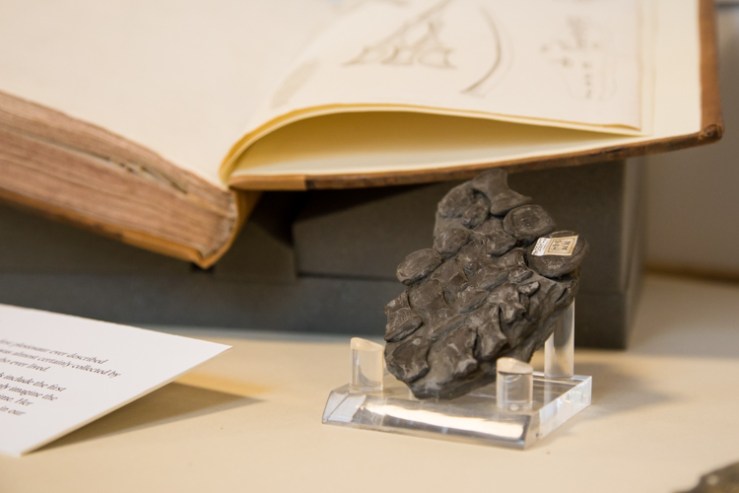
The first plesiosaur – Part of a flipper from the first plesiosaur ever described scientifically. It was almost certainly collected by Mary Anning, one of the greatest fossil-hunters who ever lived.
IMG_2223
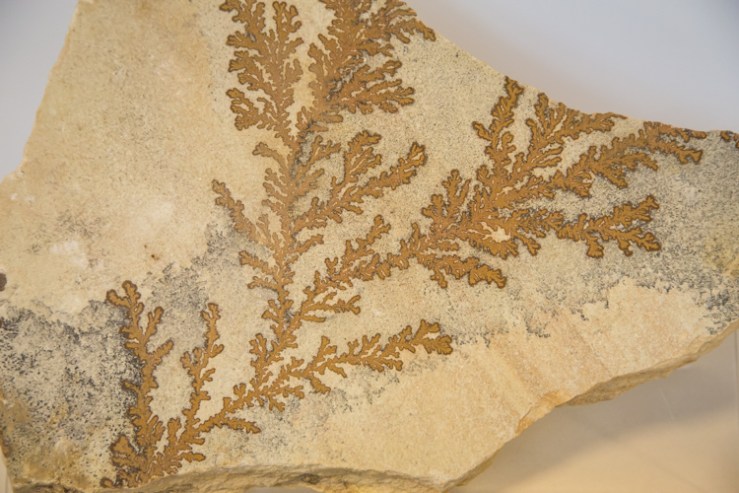
Dendrites – This may look like a fossil plant but it is actually a form of mineral growth called a dendrite. This type of crystal growth can also be found in snowflakes.
IMG_2220
Cubic pyrite crystals – This specimen of “Fool’s Gold” is from Spain. “I find it amazing that something so straight and orderly can arise in nature,” says Hilary.

Scott Billings – Public engagement officer
 

Am feeling quite jolly!

"Many thanks for kind congratulations – am feeling quite jolly!"
“Many thanks for kind congratulations – am feeling quite jolly!”

This lovely example of Alfred Russel Wallace’s beautiful handwriting and cheerful nature was written to chemist and Wallace’s good friend Raphael Meldola. He wrote it on his 90th (and sadly last) birthday. It is particular favourite of Annette Lord, who has scanned and transcribed the Museum’s collection of 300+ Wallace documents.

Fungus weevils (Anthribidae) collected by Wallace

Today marks 100 years since Wallace’s death and provides a good opportunity to reflect on his achievements. We’ve set up a display in the Museum to mark the occasion and show some of the most impressive Wallace specimens in our collection. Wallace travelled to remote, dangerous parts of the world in search of new and fascinating species. He was a meticulous and careful collector; you can’t help but marvel at how the incredibly long antennae of these beetles survived the journey back to Britain!

Wallace is now credited by many as co-author of the theory of evolution through natural selection, so it is very exciting to hear that today Sir David Attenborough is due to unveil a statue to the great man at the Natural History Museum in London.

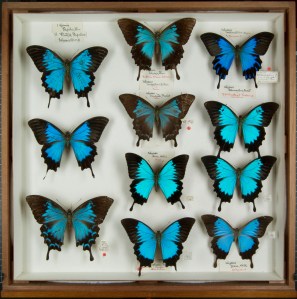
Ulysses Butterflies (Papilio Ulysses)
Ulysses Butterflies (Papilio Ulysses) collected by Alfred Russel Wallace

Wallace is not a household name like his collaborator Charles Darwin, but naturalists and Wallace fans all over the world will appreciate this gesture and the new interest in his work that this will promote.

If you would like to know more about Alfred Russel Wallace, you may like to see this new slideshow that the BBC have released today. It tells the story of his life and works and is narrated by Sir David Attenborough, one of Wallace’s greatest supporters.

Rachel Parle, Education Officer


Why Wallace?

David Attenborough in the Museum with Wallace's Giant Bee
Sir David Attenborough in the Museum with Wallace’s Giant Bee

Sir David Attenborough is arguably the world’s most famous living naturalist and broadcaster. Here he sits in the Museum of Natural History, holding our priceless Wallace’s Giant Bee specimen. So why did a man as important (and busy!) as Attenborough take the time to pose for our photo? It’s because Attenborough, like thousands of other natural history enthusiasts, knows that Alfred Russel Wallace is one of the greatest naturalists, geographers and explorers of all time. So what’s so great about him? Why are we dedicating Wallace Week to celebrating his work?

Chris Jarvis, Education Officer, explain why he thinks Wallace is so special…

Chris at Sedgwick
Chris Jarvis at the Sedgwick Museum

Last week I gave a talk on Alfred Russel Wallace at the Sedgwick Museum in Cambridge. I was asked ‘Why does Wallace deserve the statue next to Darwin’s, which he’s likely to get in London’s Natural History Museum?’ My answer was that ‘He deserves a statue as an inspiration on the importance of following your own interests, despite the barriers that may stand in your way’.

Unlike Darwin, Wallace was a largely self-made man. Born into a large family (he was the 8th of 9 children) that was always on the edge of financial disaster, Wallace was inspired by his love of the natural world around him and encouraged to explore it. Later he wrote that he could recall virtually every detail of the environment of the river Usk that was his playground but could hardly remember anything of his family, even faces, from that time! His love of the great outdoors led him to teach himself botany and entomology and how to collect, identify and preserve insects. Today, at a time when many children are being diagnosed as suffering from ‘Nature Deficit Disorder’ Wallace is a particularly pertinent example of the benefits of exploring the natural world.

At school, Wallace described himself as a ‘dull, ignorant and uneducated person’. Lessons were basic and dry and he left school finally in 1837 aged 14. Ironically for the father of Biogeography it was Geography that he found the driest of subjects, after Latin grammar!

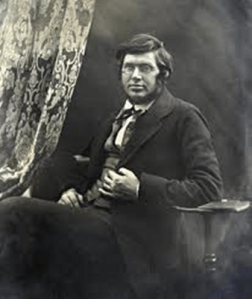
Young Wallace
Young Wallace

Despite this, Wallace was a voracious reader and seems to have sought out his own curriculum. His family, although poor in other ways, always had interesting books around the house and Alfred was introduced to libraries, museums and working men’s institutes from an early age. His favourite books as a child included ‘Gulliver’s Travels’, ‘Robinson Crusoe’ and Mungo Park’s ‘Travels in West Africa’ and clearly fuelled the lust for adventure that led to his collecting trips in the tropics.

Wallace’s understanding of the importance of self-education and modest beginnings led him to be a firm supporter of the aphorism that ‘knowledge is power’ and he was involved in advising on setting up public libraries, museums and other free institutions that encouraged education throughout his life. His legacy, as important as all his discoveries and theories are, is surely as an inspiration to all of us to get out into nature, to read about what you find there and then share that knowledge with others, it may lead you to some amazing places and discoveries as it did Wallace!

Space traveller’s arrival

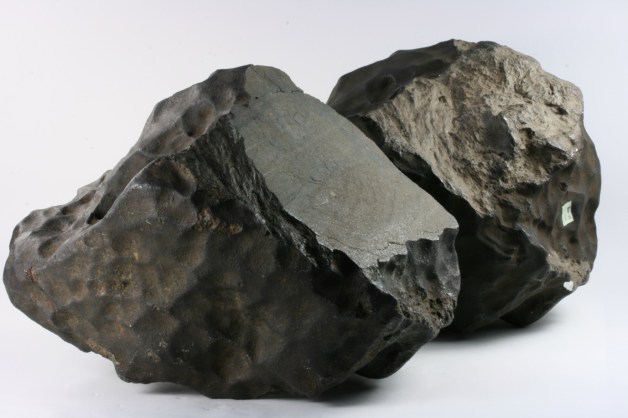
Limerick meteoriteTwo hundred years ago today, at 9 o’clock in the morning on 10 September 1813, the residents of County Limerick in Ireland had a bit of a surprise. They heard loud bangs as a shower of meteorites fell to ground. More than 48 kilograms of rock had just arrived from space!
More specifically, it had come from the asteroid belt, a band of rocky debris that orbits the Sun between Mars and Jupiter. Collisions can knock asteroids out of orbit, and occasionally send them hurtling on a collision course with Earth. Small fragments burn up in the Earth’s atmosphere, forming meteors or ‘shooting stars’. Larger pieces fall to the Earth’s surface, and these are known as meteorites.

Limerick chondrulesThe meteorite that fell over County Limerick broke into pieces, and the one in our collection is the second largest. It weighs nearly 8.5 kilograms, and landed near the village of Faha on the estates of the Blakeney family. The Rev. Robert Blakeney was an Oxford graduate whose ministry was in the parish of South Elm in Somerset. The meteorite was perhaps found in the rectory after his death, as it was the new rector’s younger brother, the Rev. John W. Griffith, who presented it to the University of Oxford in 1825.
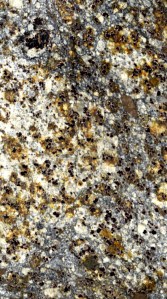
The outer crust of the meteorite is smooth and dark where the surface melted as it fell through the Earth’s atmosphere. The inside is a pale grey rock. Look closely at the photograph to the left, and you can see flecks of metal – nickel iron alloy – and tiny rounded crystalline grains called chondrules. The picture shows an area about 35 mm x 20 mm.

The chondrules show that the Limerick belongs to a class of stony meteorites called ‘chondrites’. At around 4.55 billion years old, chondrite meteorites are some of the oldest materials in the Solar System. They give researchers important clues about how the planets – including the Earth – originally formed.

To celebrate the 200th anniversary of the arrival on Earth of the Limerick meteorite, we are exhibiting it in  ‘Presenting…’, a changing display of treasures from the Museum’s collection. Although the main Museum is closed, this display can be seen by visitors on the way through to the Pitt Rivers Museum, so do come and have a look. It might be the oldest thing you’ll ever see!

Photography: Dara Lohnes

Monica T. Price, Head of Earth Collections

Lightning strikes!

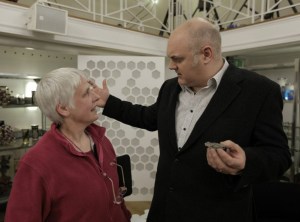
Science Club presenters Mark Miodownik, left, and Dara Ó Briain, right, talk fulgurites with Monica Price, assistant curator of Mineralogy Collections  at the Museum

I’ve just been getting our fulgurites out of their drawer for their second outing to London. ‘What’s that?’ I hear you ask. Well, the clue’s in the name, for ‘fulgur’ is Latin for lightning. Fulgurites form when lightning strikes the ground; and if the ground happens to be made of sand, the intense heat of the lightning melts the grains of sand to form a tube of natural glass. The longest known fulgurite is nearly five metres long, but they are always very fragile things.

A bit of discussion about fulgurites at the end of filming the pilot programme
A bit of discussion about fulgurites at the end of filming the pilot programme. Presenter Dara Ó Briain is holding the Drigg fulgurite. Photo: Alastair Duncan

So why is a fulgurite going to London? We get all sorts of requests to see specimens, from researchers, amateur enthusiasts, students and artists, and even people who are just curious. Our collections are there to be used and enjoyed after all. But in this particular case the producers of the BBC4 programme Science Club were making a pilot for their new series and were looking for a fulgurite to star in the show.

I took two different fulgurites to the recordings, both found in the early 19th century. One is a piece labelled as coming from Drigg in Cumberland. This was a famous discovery; even Charles Darwin knew about them, for he wrote that the fulgurites he discovered in South America were very like those of Drigg in appearance. The second was found in Westphalia, Germany, and it shows a glassy trace of the lightning’s path as it passed through the sand.

Mark was determined to have his photograph taken holding a fulgurite.
Mark was determined to have his photograph taken holding a fulgurite! Photo: Alastair Duncan

For this pilot programme Science Club was investigating natural disasters. Presenter Dara Ó Briain was joined by expert demonstrator Professor Mark Miodownik who had quite a shocking experience with a lightning machine! We were also shown why it is dangerous to stand under a tree during a thunder storm, and we heard about the lucky escapes some people have when struck by lightning.

Fulgurites are rather rare and special, and as the pictures show, both presenters enjoyed a chance to get a close look at these natural curiosities.

The pilot programme was successful, and one of our new Education trainees, Liz Danner, will be taking the fulgurites back for the final filming of Science Club this week. If you would like to see them too, they will feature in our next ‘Presenting…‘ display soon. Follow the blog and we’ll let you know when

Watch out for more Science Club on BBC4 – it’s fascinating and fun.

Monica Price, Assistant curator, Mineral Collections