Two pints of lager and a puffin, please

FFTMC Puffin Bar

Seen anything unusual in town recently? If you’re a resident or visitor in Oxford you may have noticed that some strange things have popped up around the city centre. A naked ape-man on the corner of Broad Street and Cornmarket, for example; or a Utahraptor dinosaur in Blackwell’s children’s section. You see, the Museum has had some escapees while we’ve been closed, in a project we’ve called Goes to Town.

Every night, as everyone knows, the specimens in the Museum come alive. And they got talking. And they soon realised they were jealous of their colleagues who had escaped to gallivant around town. In fact, they got so restless being pent up inside the closed Museum, that in the end we thought it best to take them out for a pint.

Have you seen our beer mats advertising Goes for a Pint?

So, over the past four weeks, members of the Education team and some super volunteers have been heading out to local Oxford pubs, armed with some great specimens to show off to unsuspecting pub-goers. But that’s not all – for Museum Goes for a Pint we’ve also been hosting our very own natural history-themed pub quiz!

Each week, we have either joined a pub’s regular quiz, or compiled our own special event. We arrive around 7pm and chat to people in the bar about the Museum and its collections, before diving into the quiz around 8pm. Quiz rounds have been roughly based on the pubs themselves (‘rusty’ coloured animals at the Rusty Bicycle; oak tree teasers at the Royal Oak…you get the idea). We’ve had just as much fun writing the quizzes as we hope the quiz-goers have taking part.
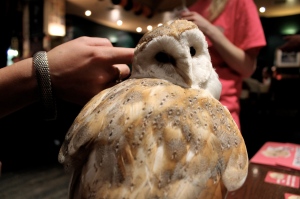
Barny gets a stroke from a quiz-goer.

The idea for Museum Goes for a Pint came from Kathy Clough, a project volunteer, shortly before the Museum closed for the roof repairs. It fit perfectly into our plans to get out and about in the city during the year.

We would like to thank the wonderful pubs who have hosted us so far: The Rusty BicycleFar From the Madding CrowdJames St TavernThe Royal Oak and The Royal Blenheim.

But we’re still only half way through. We’ve got three pubs left to visit. So if you find yourself in the Eagle & Child next Wednesday, the Cape of Good Hope on Tuesday 26 November, or the Big Society on Monday 2 December, look out for some pink t-shirted individuals juggling barn owls and entomology trays.

If you’ve no other plans then do come along and join us. The quizzes are free, and different each week. And where else are you going to get a pint and a puffin?

Simone Dogherty, Education officer
The One Show

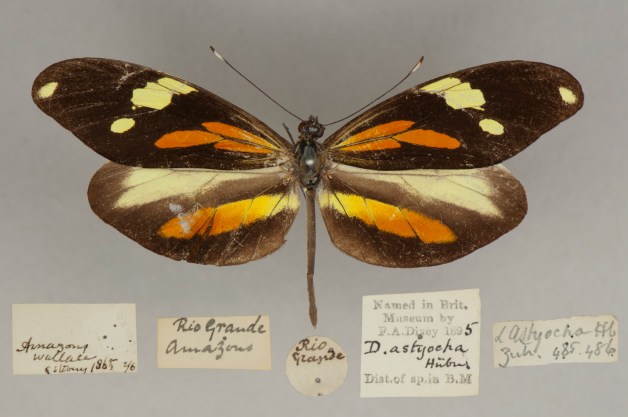
Amazon Dismorphia Wallace

Last week, members of our conservation team were presented with a wonderful opportunity to get out of the ‘Whale Tank’ and make their way to London to escort some very special specimens to the BBC.

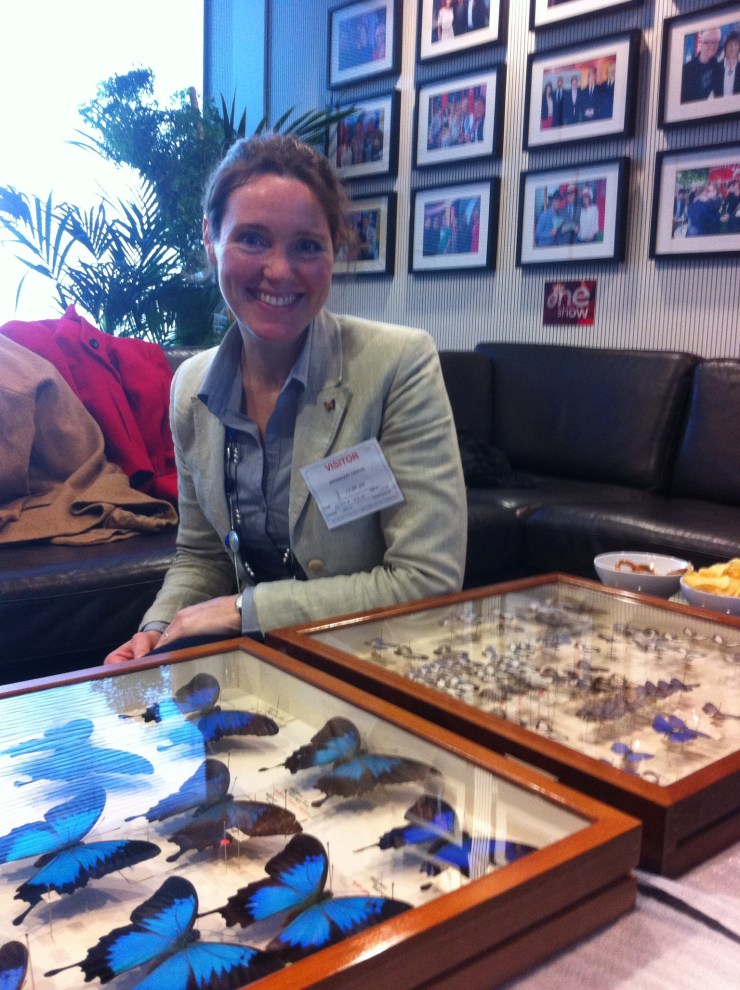
The precious cargo consisted of newly-discovered Alfred Russel Wallace butterfly specimens that were uncovered in the Museum’s Life Collection by 17-year-old Athena Martin, a Nuffield Research Placements work experience student. This story featured on Thursday night’s edition of The One Show, where presenter Mike Dilger spoke about Athena’s project with the Museum and was able to show, on national television, the fruit of her hard work.

Papilio
Papilio ulysses. Examples collected by Wallace are marked with a red dot.

Two cases of butterflies were used on the programme and contained specimens collected by Wallace during his exploration of the Malay Archipelago. The show focused in particular on Papilio ulysses, and it was a joy to witness Mike Dilger’s excitement at discovering Wallace’s handwritten collection labels.

Our specimens, which were shown alongside some wonderful footage of CT scans of a developing chrysalis, made for excellent viewing for anyone with an interest in Lepidoptera.

If you missed it the first time around please do have a look on the BBC iPlayer. The butterfly feature begins at about 15’40”.

Gemma Aboe with the drawers of Wallace specimens.

We are very grateful for coverage on The One Show as it was an excellent opportunity to demonstrate, outside the Museum environment, the significance of natural history specimens, as well as highlight the important work of our conservators. It was also a thrill to be on set and watch the live show, so thanks a lot to the BBC for asking us along.

Nicola Crompton, Conservation intern
Gemma Aboe, Assistant conservator

Into the Wilderness

Wildnerness python

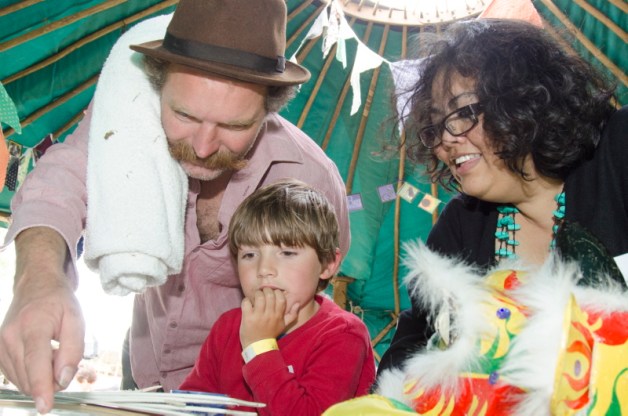
Ah, the rough-smooth joy of snakeskin. Who could resist a little stroke? Well, a few people definitely can it seems (ophidiophobics), but certainly not this young chap. Along with hundreds of other visitors, this family stopped by at the Oxford University Museums yurt at this year’s Wilderness Festival where we spent four great days showing off objects from the collections and indulging in a bit of festival craft.

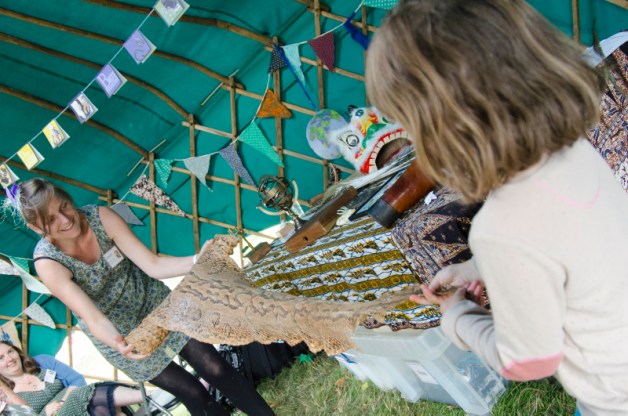
Wilderness signThe weather was kind, and armed with a brilliant team of volunteers and festival-hardy staff we welcomed costumed, painted and be-masked revelers to our tent to learn about the museums and get up close to some great objects. Outside in the sunshine, people whiled away the day making Pitt Rivers Museum-inspired hats, Museum of the History of Science planispheres and our own peacock headdresses.
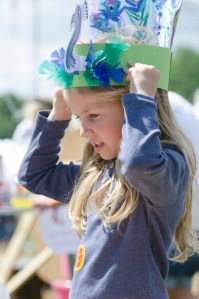
Peacock headdress
Peacock headdress

We had a really positive response to everyone who came along and joined in with the activities, and although I shouldn’t brag, this is a nice comment from one parent which I will share:

We had a really fantastic time at the Oxford University Museum area. They love making Napoelon style hats which kept them occupied for ages. They also really enjoyed looking at the bugs and inspecting the snake skin. The staff couldn’t have been more helpful – they had a great rapport with the kids and were a friendly team. Please come again next year!” – Mother and two daughters, aged 8 and 6.

As for Wilderness itself, things took a rather stranger and more adult turn after nightfall as the Bacchanalian Masked Ball got into full swing in a hitherto hidden vale amongst the lantern-lit trees. No record exists of that portion of the evening but suffice to say that visions were beheld and morning heads were a little sore.

Yurt
The camp
Family
Investigating the collections
Insect drawer
The pinned insect drawer
Rock python
The ever-popular rock python skin (so long it didn’t fit in the tent!)

Thanks to everyone who came to help out, and to everyone who visited on the day. And thanks to the Wilderness Festival team for setting us up with a lovely green yurt as our base-camp.

More next year, perhaps…

Scott Billings, Communications coordinator

Thanks to Chris Wood for the photos.

Chris Packham Goes to Town

Chris Packham

We have had the pleasure of hosting the brilliant Chris Packham at the Museum recently. He has been filming with the collections for a forthcoming series for the BBC. Keep an eye out for that.

In the meantime, we chatted to Chris about our Goes to Town trail of specimens around Oxford city centre. He was very enthused about the idea and volunteered for this snap in front of our banner outside the front of the Museum.

Chris said: “I think this is a really good idea. If it encourages people who otherwise wouldn’t visit the Museum to come along and have a look at things then that is really worthwhile.”

It is almost a couple of weeks since the release of the specimens and we are now looking forward to receiving entries to our competition. To enter, you’ll need to visit all twelve specimens on the trail and tell us, via the website, which has the highest Danger rating and which has the highest Rarity rating. Prizes will be given to people whose names are drawn out of the hat when the Museum reopens in February next year.

But for you blog readers, here’s a sneaky taster:

Here's an escapee in situ. You'll have to get up close to read the all-important ratings...
Here’s an escapee in situ. You’ll have to get up close to read the all-important ratings…
Photo: Mike Peckett

Ode to a Dodo

Professor Dodo

Now here’s a sad story
That you all should hear
About a funny old bird
Who had never known fear

Till explorers landed
Upon the isle of Mauritius
And the creatures they brought
Found this Dodo delicious

Too docile to fight
Too flightless to flee
Now a head and a foot
Are all you can see

There’s a rather nice article on the Guardian website today all about our famous Dodo remains. Journalist Henry Nicholls interviewed our zoological collections manager Malgosia Novak-Kemp, who showed Henry the only known surviving soft tissue remains from the extinct Dodo.

The article includes a reference to Hilaire Belloc’s poem, so it seemed appropriate to share this little Ode to a Dodo with you. We wrote it as part of our Goes to Town trail, which is launching in Oxford next week.

You can watch a short trailer about this at goestotown.com, but suffice to say that the Dodo will feature, along with his Ode, in one of our partner venues. See if you can find him and all the other exhibits from Tuesday next week.

Scott Billings, Communications coordinator