Ubiquitous and Inconspicuous

THE INVISIBLE HISTORY OF THE MUSEUM’S GLASS DISPLAY CASES


Glass cases play an integral role in museums and galleries, but they are designed to be overlooked and ignored. In this blog post, Librarian and Archivist Danielle Czerkaszyn uses research collected by Helen Goulston (AHRC Collaborative Doctoral Partnership PhD Candidate) to uncover the invisible history of OUMNH’s glass display cases and considers how they have evolved alongside the museum during its 160-year history.


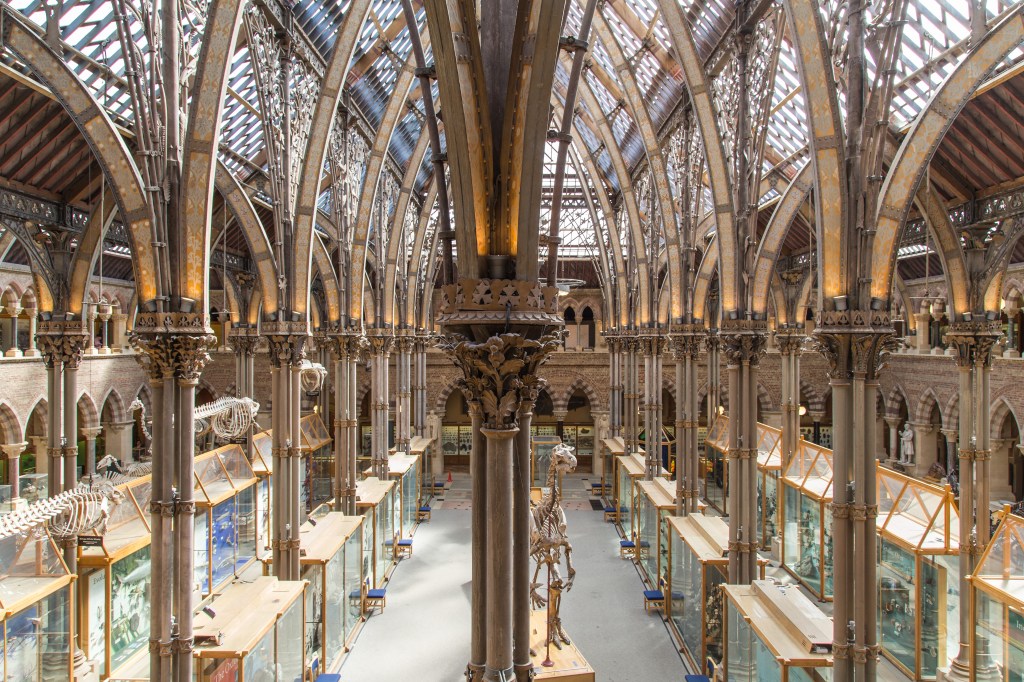
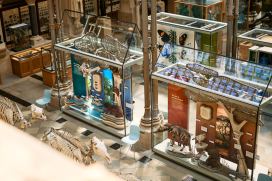
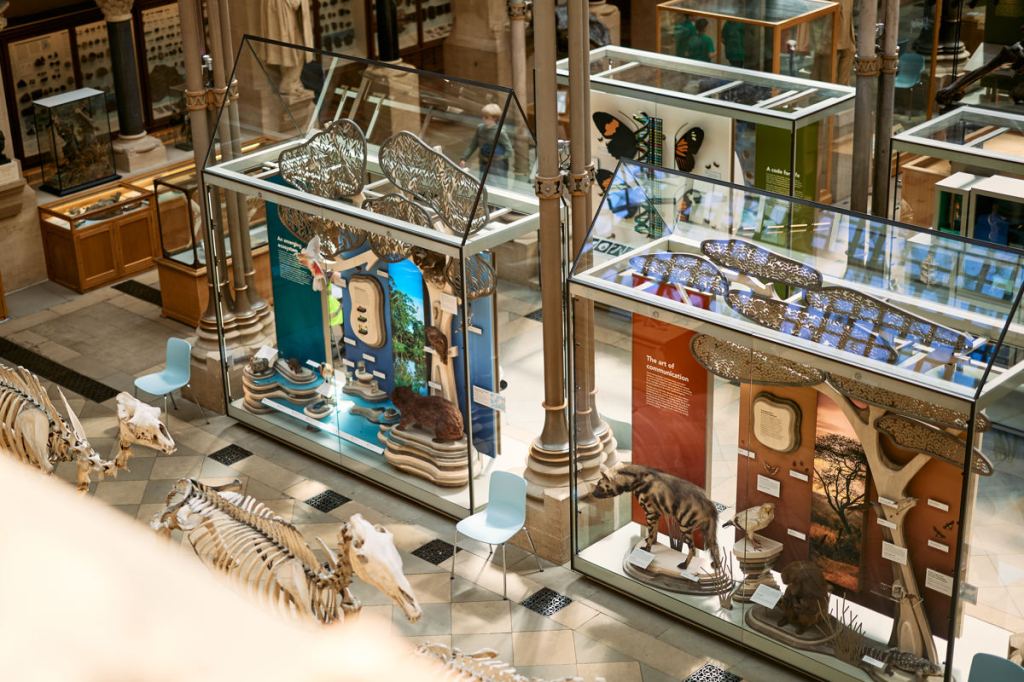
Since 2018, the Museum has been working to refresh its Main Court by installing new permanent displays. This morning, we placed the final specimen in our brand new “Open Oceans” display, concluding the latest phase of the redisplay project. The “Open Oceans” display is housed in one of eight new conservation-grade glass cases installed last year. While some visitors have welcomed the new cases, others have mourned the loss of the wooden cases or questioned why they needed to be replaced. Others have wondered why the tops of the new glass cases have roofs with different heights. To answer these questions, we need to dive into the museum archive…

A CASE HISTORY

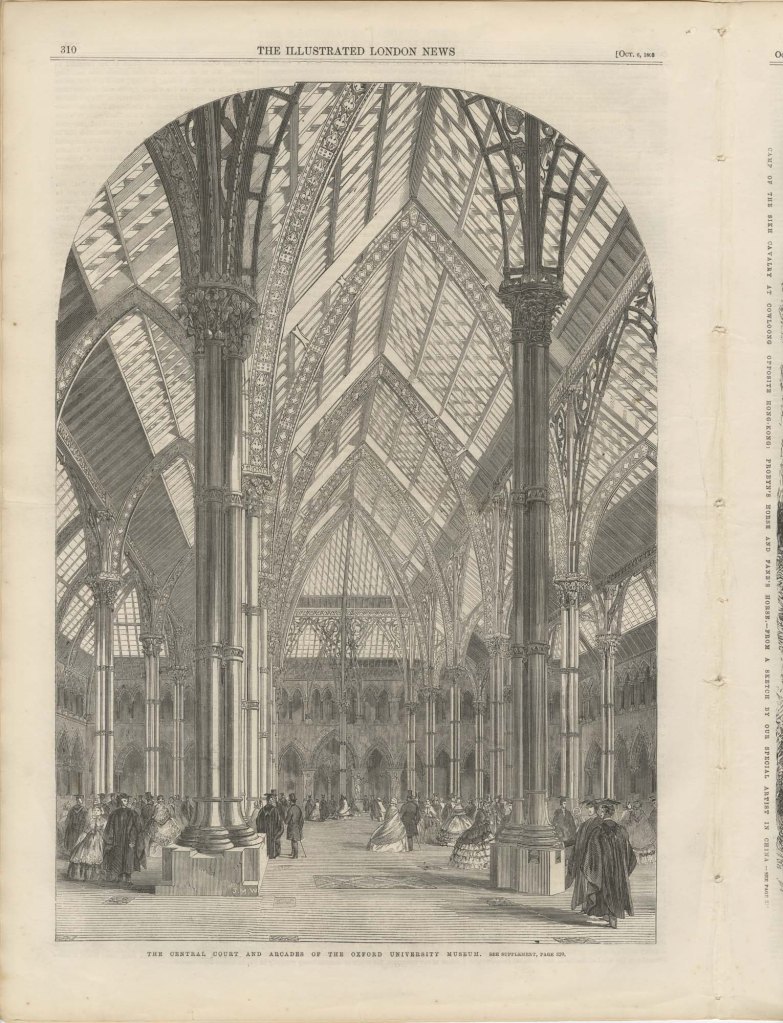
When visitors arrived at the newly-opened museum in 1860 they would have been greeted by an empty central court, devoid of displays. While the fabric of the building was more or less complete, and preparation for the installation of displays had already begun, the university’s scientific and natural history collections had not yet been transferred to the building.

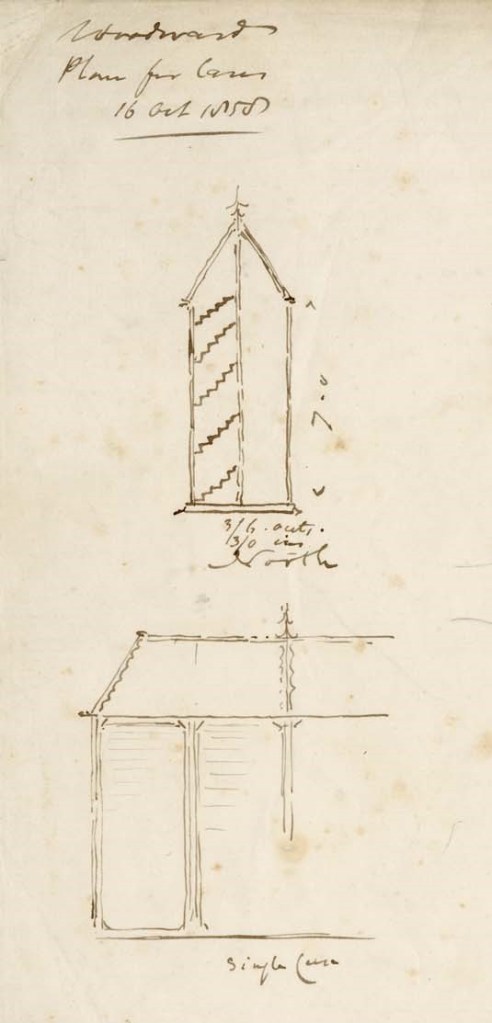
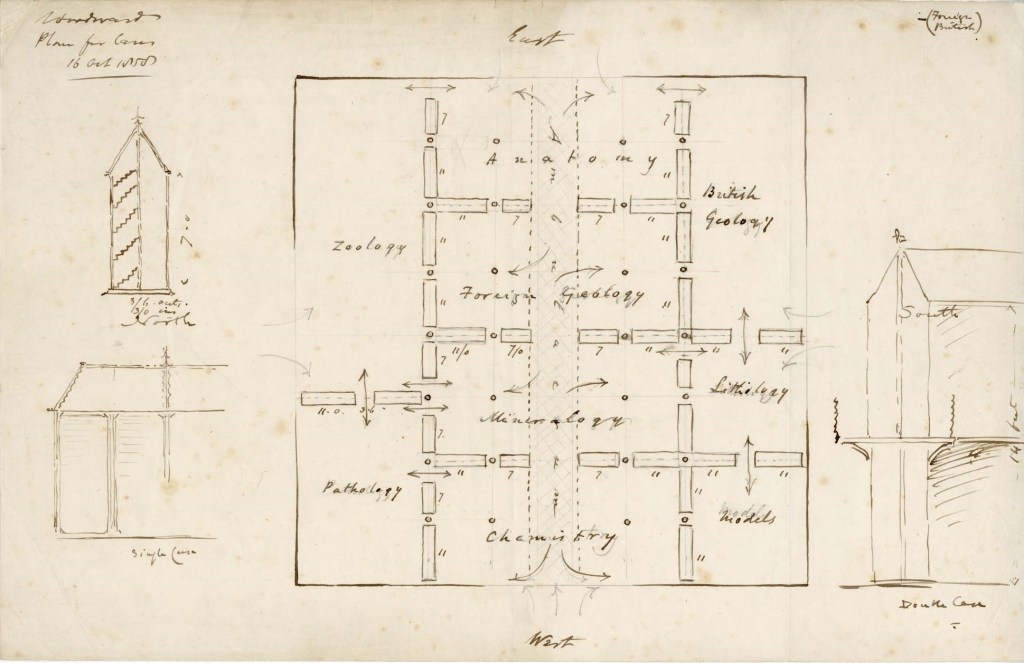
A sketch in the archive dated 16 October 1858 by architect Benjamin Woodward shows an early plan for the display cases to be arranged between the iron columns in the Main Court, allowing visitors to circulate among the exhibits, with display cases echoing the Gothic revival architecture. The right of the document shows grand double-height displays with a central balustrade that were never realised, but cases similar to those on the left would be ordered in January 1862.
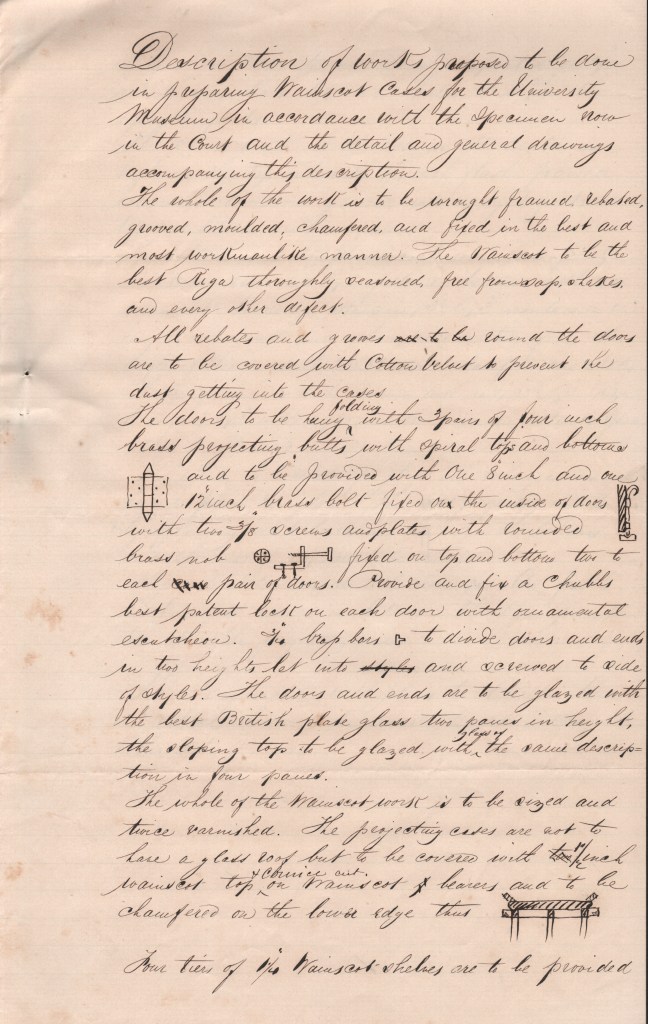
The 1862 tender document written by William Bramwell, Clerk of Works at the Museum, shows two types of upright display cases ordered for installation between the iron columns — some with pitched roofs and others with flat tops, which were considerably cheaper. Though the design of the cases resembles Woodward’s original sketches, the tender included detailed specifications that addressed the practicalities of displaying specimens, such as cotton velvet door linings to stop dust from getting in.

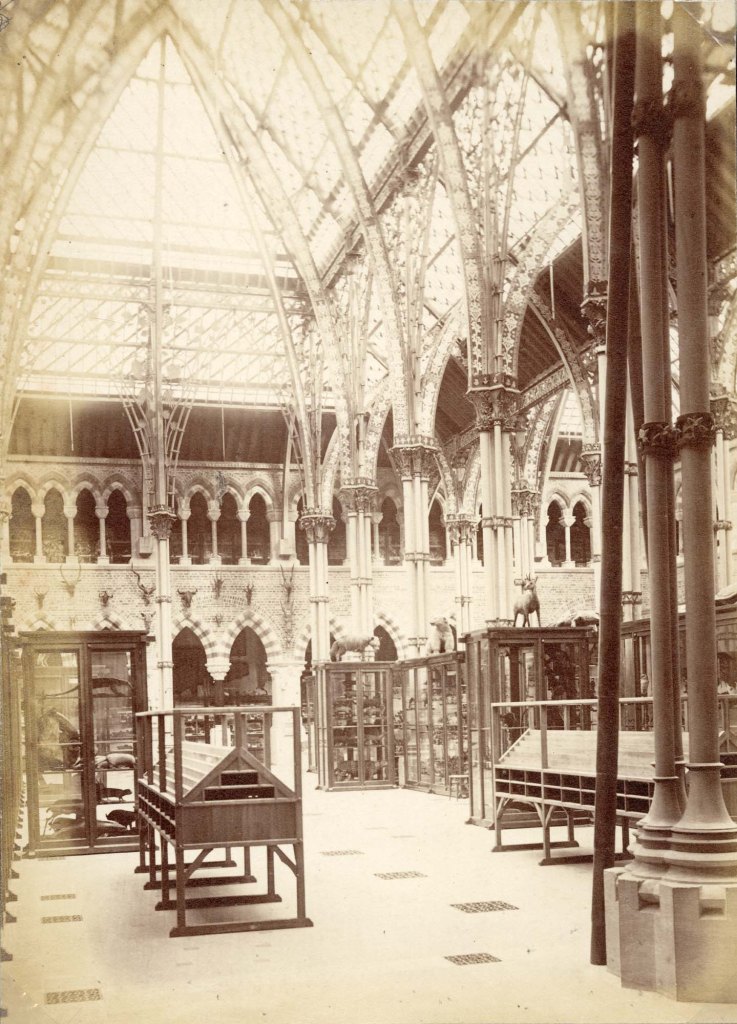
In addition to the upright centre court cases, ten table cases were ordered from the high-end London cabinet makers, Jackson and Graham, at a cost of £344.10. The same firm was also commissioned to fit the tall wall cases in the outer corridors. Plans and photographs from the archive show that the installation of these cases was piecemeal and it wasn’t until 1866 that all the display cases were fully in place.
WHY REPLACE THE CASES?

The wooden display cases that we have been replacing may look old, but few of the original cases from 1866 survive. While some of the old display cases were moved behind the scenes for preservation, others found homes in different museums or were disposed of when they were beyond repair. The most recent timber-framed cases in the Main Court are 20th-century replicas that have been heavily modified, particularly in the late 1960s-early 1970s, and again in the early 2000s when the clear acrylic roofs were added. Some of these modifications affected the stability of the cases, particularly when the doors were opened, making them unsafe for staff to access. Other modifications meant the cases were no longer dust or pest-proof, which poses a risk to specimens.
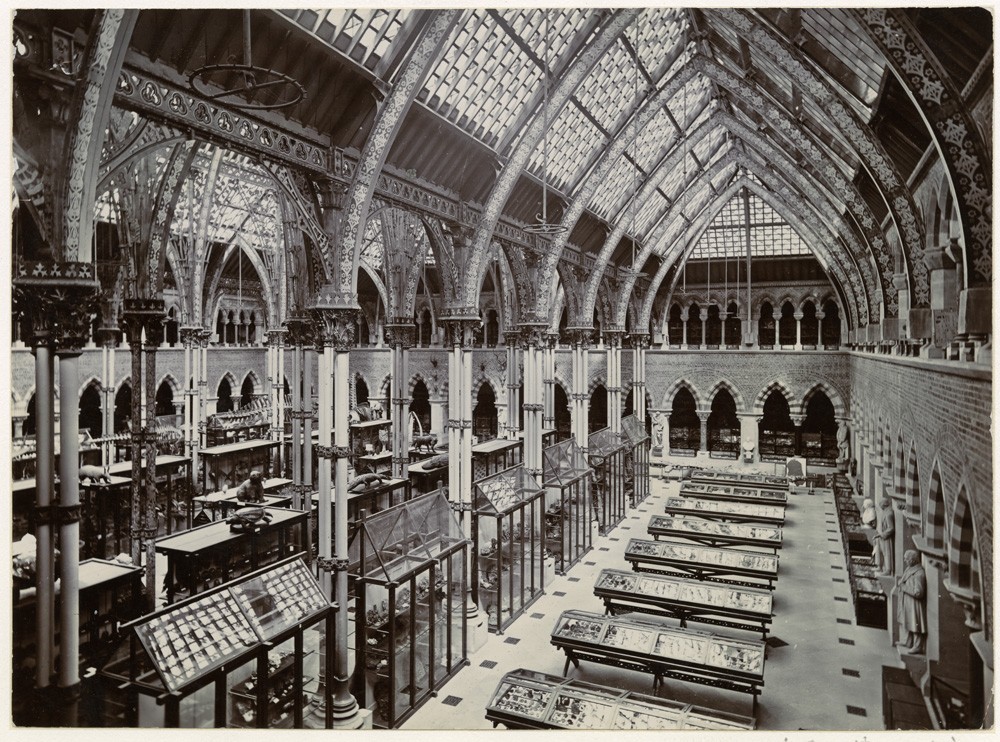
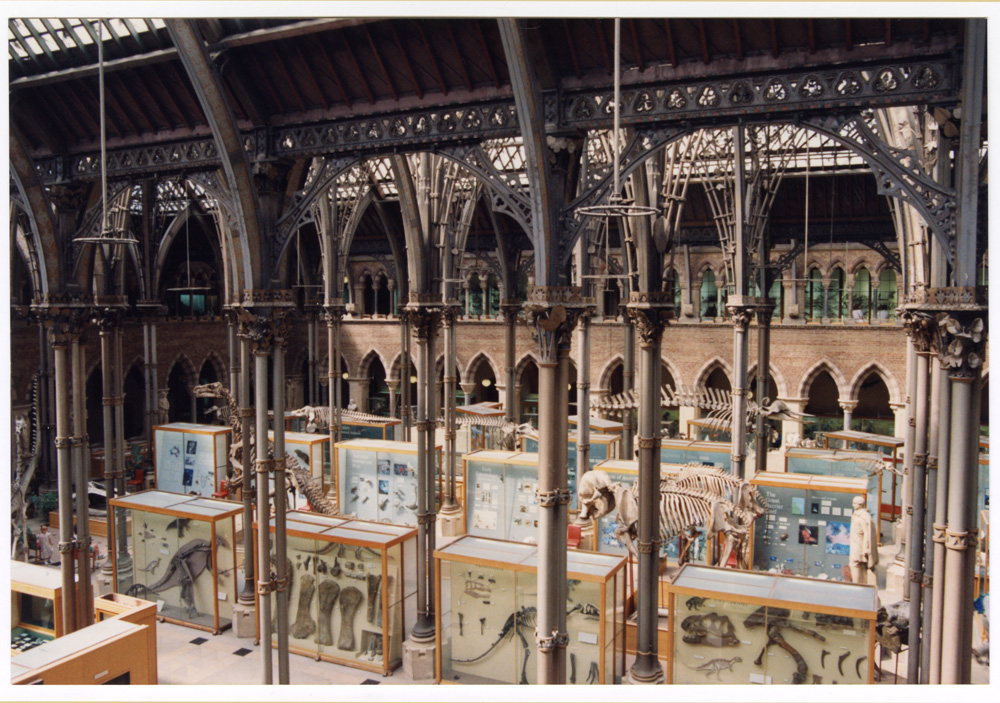
As these wooden display cases neared the end of their life, the museum and Oxford University Estates worked with Oxford City Council and Historic England to approve the replacement of the cases and ensure the redevelopment was historically sensitive to our Grade 1 listed Victorian building.

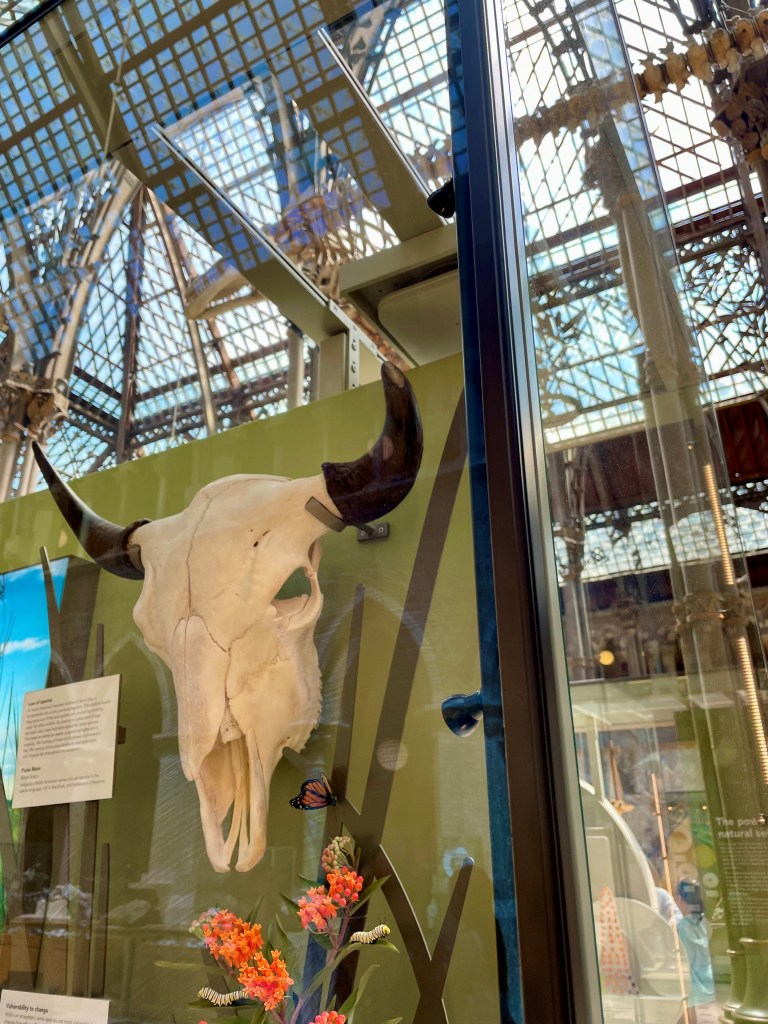
For this reason, the new cases retain the original 1866 arrangement and are built to the same dimensions. We have also returned to the original form, including outer aisle cases with alternating pitched and flat roofs. It was decided early on that the new cases would not be lined in wood because timber can be detrimental to the conservation of certain specimens. However, the design of the edges of the new cases sought to mirror the craftmanship of the 1866 cases by emulating the beading on the edges – albeit much more subtly, and in bronze rather than timber – complementing the colours of the ironwork in the museum roof.
A CASE FOR THE FUTURE

The new glass cases are built by museum showcase experts ClickNetherfield and provide a stable, pest-proof environment for our delicate and historically important specimens. Their design artfully captures the character of the museum building, while still focusing the visitor’s attention on their contents. It is hoped that the new displays will last for at least another two decades, and the cases even longer. During that time, millions of eyes will be cast over our displays, but the glass cases that protect them may barely even be noticed.

“The True Nature of Nature Itself”

MAKING ART WITH SWIFTS FROM THE MUSEUM’S COLLECTIONS


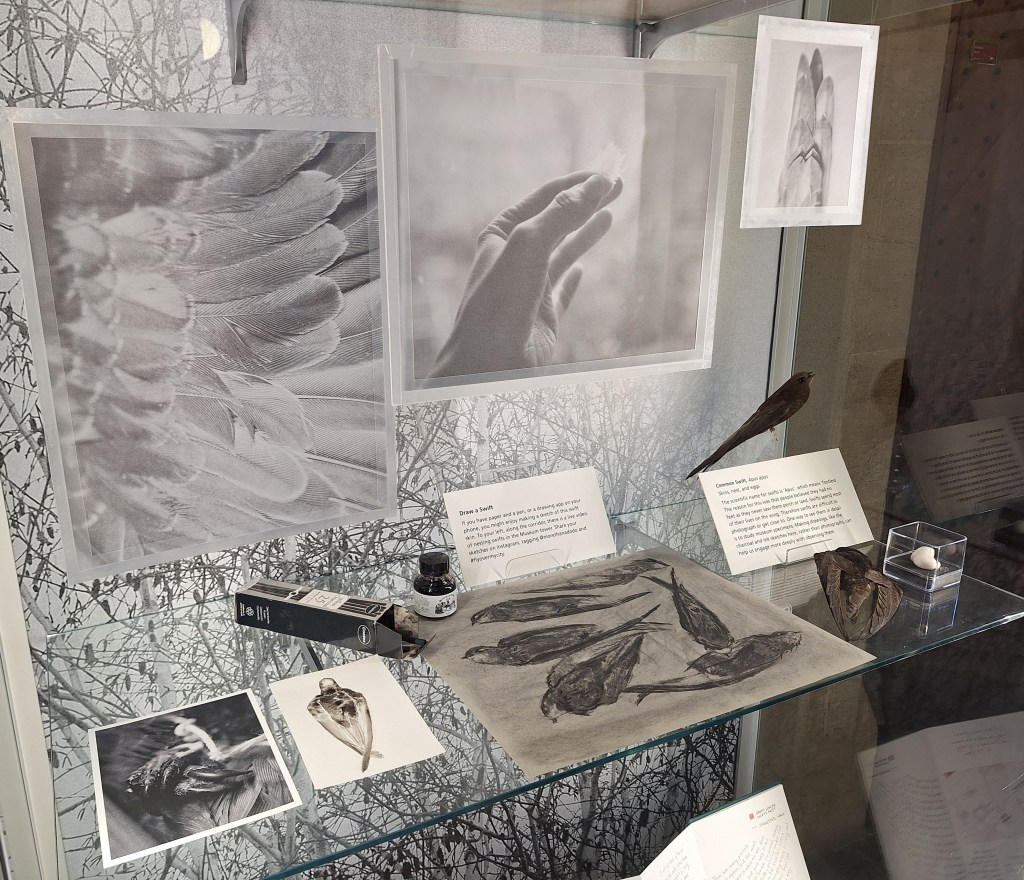
Between 14th May and 21st July, the mixed media artwork Fly Over My City was on display at the Museum of Natural History, delighting visitors with a visual and auditory exploration of swifts and the threats they face in urban environments. In this blog post, artist Becca Jeffree discusses working with Museum collections to create the piece, and the value of museums as venues for combining art and sciences.


While studying at London’s Natural History Museum years ago, another student had become upset with a group of artists who were drawing from the floor of the birds gallery, blocking his way. Studying birds in a cabinet was not as worthwhile, he felt, as studying in the field. Moreover, drawing seemed to him out of place within a science museum. Yet sketching specimens has historically played an important role in learning about biodiversity, and is particularly important for those whose access to wildlife is restricted.

Perhaps it is unsurprising that this discord arose in a natural history museum. Art is often separated from science in society and culture, with science tending to dominate debates about understanding nature. Museums, however, are rare places where art and science are welcomed equally and beautifully combined. Few places embody this better than Oxford University Museum of Natural History — a work of Victorian art shaped by the idea that art and science can take one another to higher levels. As historian John Holmes puts it in The PreRaphaelites and Science, the building expresses the “true nature of nature itself” through its architecture. It is a place where the study and interpretation of the natural world are cross-disciplinary.

Fly Over My City (2023) by Becca Jeffree, on display at the Museum of Natural History

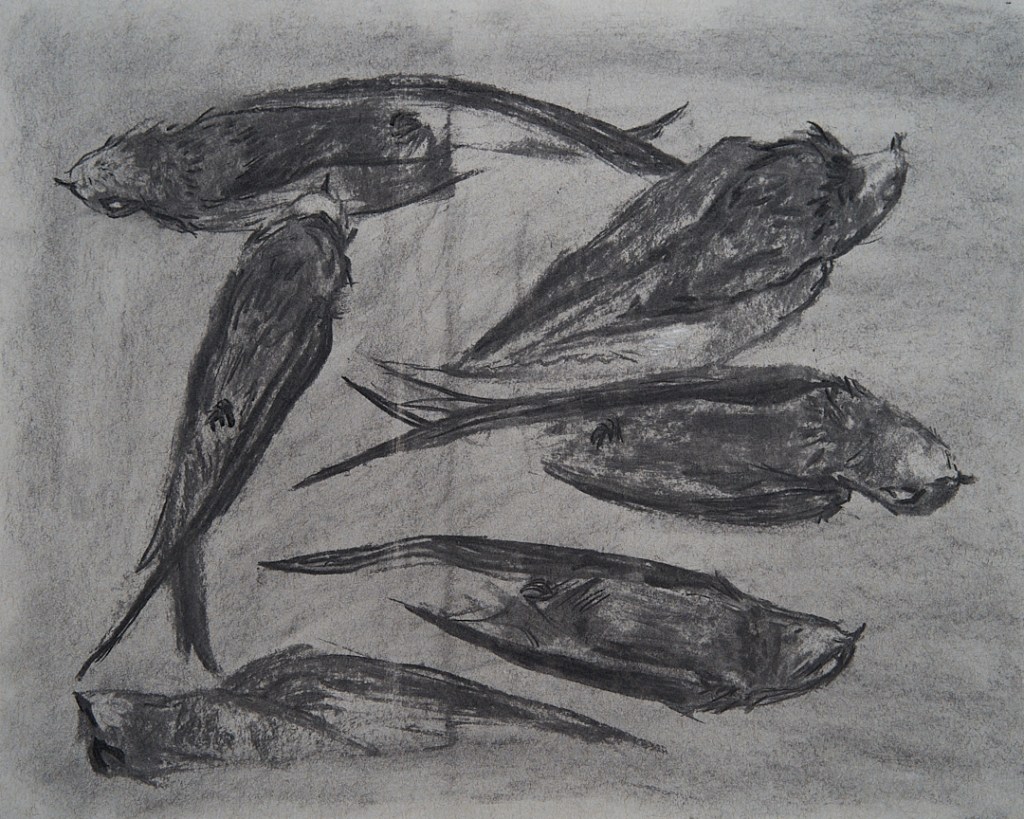
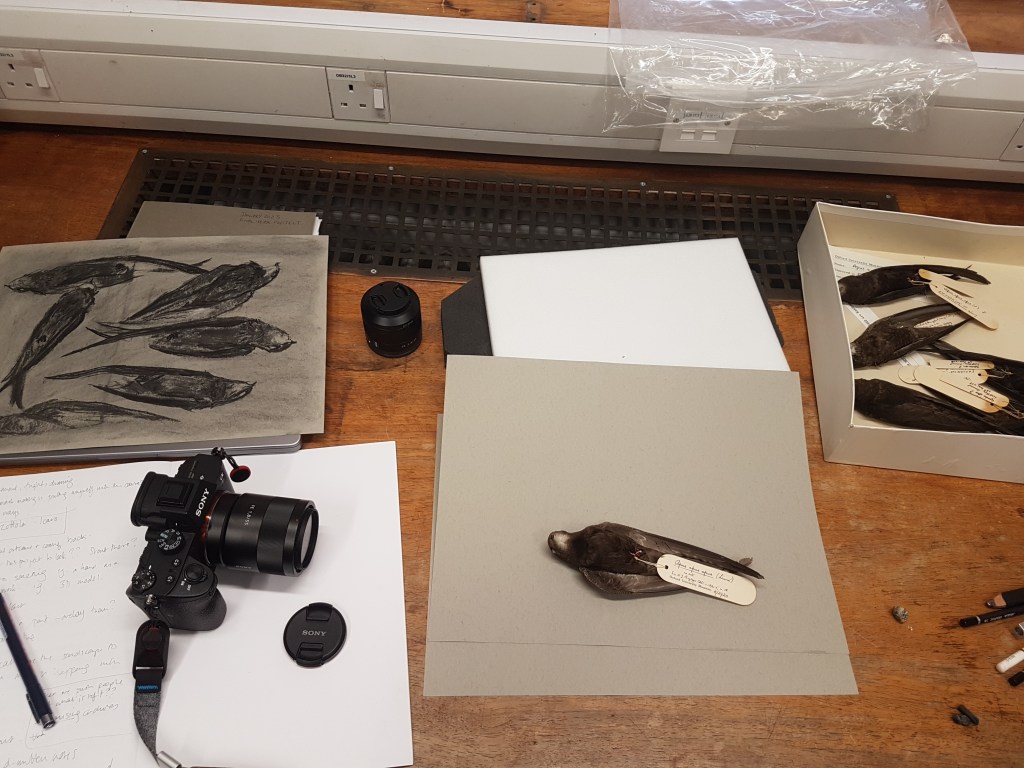
I recently collaborated with the Museum when making my artwork about the built environment and the common swift (Apus apus). Swifts are transient animals and as they rarely land they are difficult to see up close. They are found in the UK for only a short time each summer, fly fast, and are in decline. Through access to the Museum’s avian collections, I had a unique opportunity to see swift bodies up close and observe them in detail through drawing. Most of the specimens are bird skins; the skin, plumage, wing bones, skull and feet are preserved but not the internal organs, and they are not mounted like the ones we often see in cabinets. When I handled the swifts, I was asked to wear gloves to protect the specimens and avoid exposure to any harmful chemicals that may have been used to preserve them. Even though I couldn’t touch the swifts directly, I could still get to know their weight, size, colour, and notice interesting details like the shape of their chest feathers which are similar to their hummingbird relatives’.

Photographing, sketching and studying swifts from the Museum’s collections

Having physical access to museum specimens allowed me to root my artwork more in science, but also to draw out further layers of meaning, by responding to my own feelings and senses. The materials I included in the work – charcoal and tracing paper – were inspired by the swifts’ weightlessness, their texture, colour and the urban environment they often inhabit. The PreRaphaelites, whose worldview infuses the Museum building, regarded art as a valid investigative method. As John Holmes puts it, “if observation yields a true knowledge of nature, then making art that records and synthesises these observations is at once a disciplined method for conducting research and the best means to convey that knowledge.” I am grateful that the Museum continues to embrace this idea today, and for the value placed on artists as researchers and communicators of its collections.

Charcoal sketch of swifts, made using Museum specimens. From Fly Over My City (2023)

Visit Becca Jeffree’s website to find out more about the piece, and her other artwork

Of Jumping Mice and Megalosaurus

CELEBRATING THE RECENT ACQUISITION OF AN IMPORTANT ARCHIVE


By Danielle Czerkaszyn, Librarian and Archivist and Grace Exley, AHRC Doctoral Student


200 years since the first scientific description of a dinosaur, the Museum has welcomed a significant archival collection relating to the man who introduced us to Megalosaurus, William Buckland (1784-1856). The archive contains over 1,000 items including letters, notebooks, family papers, prints, and artworks. It joins the Museum’s existing Buckland archive, as well as more than 4,000 geological specimens, and helps fill in the knowledge gaps surrounding the life and work of Oxford’s first Reader in Geology and Mineralogy. Not only is there the potential to learn more about Buckland’s early life as a student at Christ Church, there is also material relating to the wider Buckland family, including his son, the zoologist Francis Trevelyan Buckland, and wife, the naturalist Mary Buckland (née Morland, 1797-1857).

Among the 70 letters in the archive that are addressed to Mary, there is correspondence from chemist William Wollaston, Scottish polymath Mary Somerville, and a lively letter from John Ruskin, explaining to Mary his disgust at all things marine:

“I dont [sic] doubt that those double natured or no-natured salt water things are very pretty alive, but they disgust me by their perpetual gobbling and turning themselves inside out and on the whole I think for purple and rose colour & pretty shape, I may do well enough with convolvulus’s [sic] & such things which dont [sic] eat each other up, backwards & forwards all day long.”

Ruskin was clearly teasing his friend, as molluscs happened to be Mary’s specialist subject!

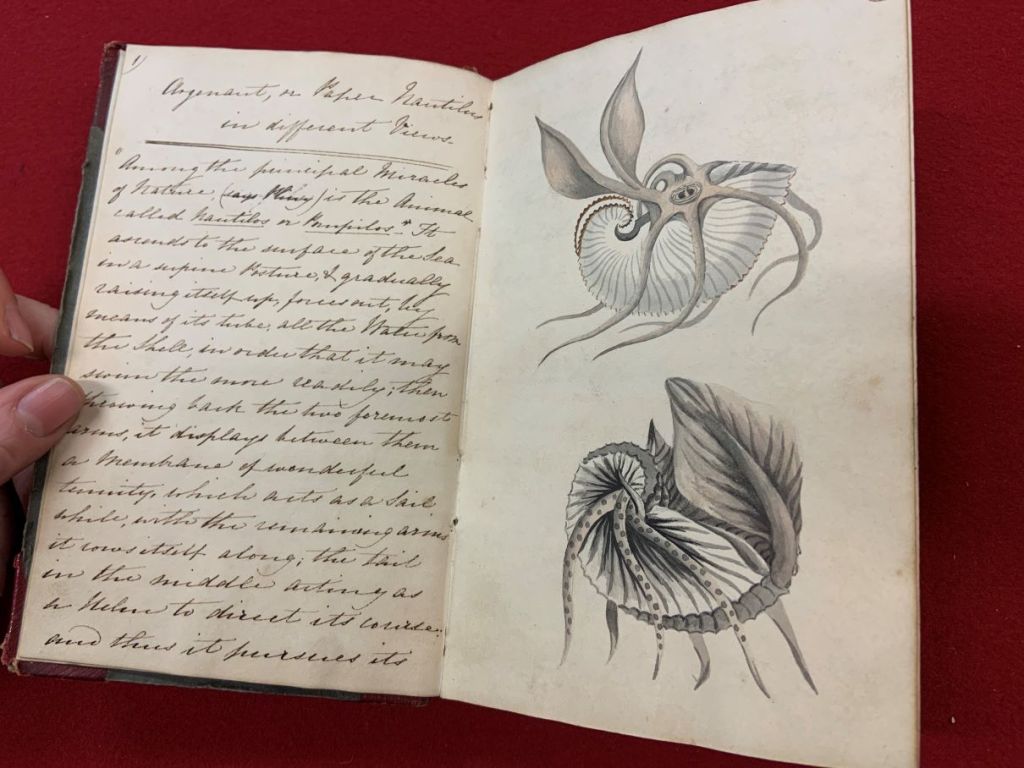
The collection also contains two sketchbooks belonging to Mary, one of which dates from June 1817, seven years before her marriage to William and contains exquisite ink and watercolour illustrations of natural history specimens. 

The sketchbook gives us a rare glimpse into how a nineteenth-century woman learned about natural history.  The book contains copied passages from natural history texts, enabling us to trace what Mary was reading. Her interests spanned geology and mineralogy, and she also included pieces on zoological curiosities and even polar exploration. She read and copied extracts from a variety of sources, some of which – George Shaw’s Zoological Lectures, for example – were intended to suit a lay-audience (as Shaw put it, intended as a “familiar discourse with Lady-Auditors”). However, other elements of her reading were probably never intended for a woman like Mary — she also copied passages from the Transactions of the Geological Society even though women could not join as Fellows until 1919. As archival materials relating to women are often sparse, this is a truly rare and incredibly valuable insight into how Mary used her connections to access resources and the techniques she used to teach herself about natural history.

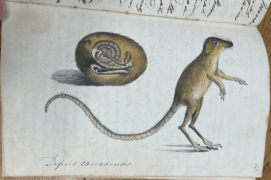
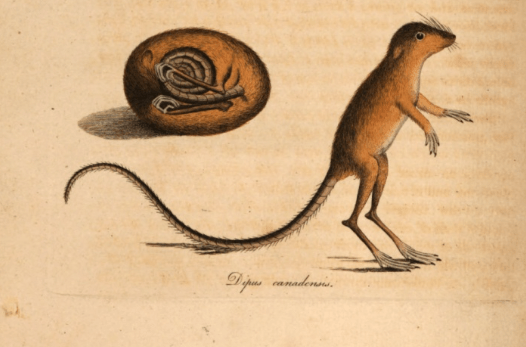
Perhaps the most striking feature of the notebook is its intricate, exquisite illustrations. These, done in watercolour, ink, and pencil, are reproductions of the figures from the works Mary copied out. A favourite in the sketchbook is the “Canadian Jumping Mouse”, a long-tailed rodent described in a piece in the Transactions of the Linnaean Society by Major General Thomas Davies in 1797. There are also many representations of molluscs (detailed enough to repulse Ruskin), mineral specimens, and occasional fold-out geological sections. As we flick through the book, we can see Mary experimenting with media and techniques — not only developing as an artist but also honing her skills as a scientific illustrator.

The skills and knowledge Mary developed in her natural history notebook were crucial to her later collaboration with William, as well as her own independent work as a draughtswoman before her marriage. In 1824, when Buckland presented the jaw of Megalosaurus to the Geological Society, it was “M. Morland” who provided the painstakingly detailed plates. Research has begun to uncover the extent of Mary’s work as a naturalist and illustrator, and now, with the help of the materials in the newly acquired archive, we can explore the origins of her skills. The archive is currently in the hands of a Paper Conservator, Anna Español Costa, to ensure the material is kept in the best condition for many years to come. Items from the archive will feature in the Breaking Ground exhibition, opening in October 2024.


Our fundraising campaign saw us receive generous support from the National Heritage Memorial Fund, Arts Council England/V&A Purchase Grant Fund, Friends of the National Libraries, Headley Trust, and other private donors. Additionally, in late 2022, we launched the Buckland Papers Appeal, asking members of the public to help us meet our target to purchase the archive. Thank you to all our funders and members of the public who responded to our call. We could not have raised the money so quickly without your support and we are now thrilled to share the archive with you all.

Wasp Faces: Power Struggles and Royal Drama


By Kristian Suszczenia, Intern


The second you step into the Museum of Natural History you will notice a remarkable thing about nature: its diversity. Instantly, you see huge whale bones, a distant elephant skull, birds, fish, dinosaurs, and a mounted kaleidoscope of colourful insects. This variation is what many of us love most about biology.

But diversity occurs at a much finer scale than the magnitudes of difference that exist between species. Often there is ‘Individual Variation’ — differences that occur within species. Person to person, specimen to specimen, each organism is unique, just like us humans!

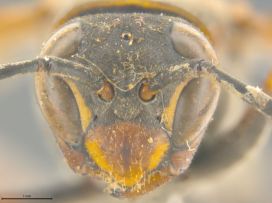
Buried under the 5 million other insects of the HOPE collection is a drawer that houses a species of the genus Polistes, a social paper wasp collected from Brazil. A close look at their faces reveals staggering individual variation. Before getting confirmation from specialists, the Museum staff found it hard to believe that these four faces could even belong to the same species. The question is, why are they so different? Is there an evolutionary benefit to all these wasps having their own style of eyeliner?

Variation in the faces of paper wasps

It is well-known that individual variation can give certain members of a species an edge over others, especially when it comes to dating! From guppies to fruit flies, females often prefer mates that stand out with unique colours and patterns, perhaps because they are simply more noticeable.

Yet dating is not a sufficient explanation for our fashionable paper wasps. They get a very different benefit from their unique looks — not so much standing out, but being memorable. For them, a memorable identity is a way to remember who goes where in a critical pecking order.

Thanks to a lot of elegant work by Polistes specialists, we understand that bespoke face markings tend to evolve in species that have multiple queens in a linear hierarchy. A Polistes queen can start a hive alone but often benefits from forming a group of queens that can all cooperate together in a single hive. In order to cooperate, the queens must decide on a dominance hierarchy amongst themselves. To do this they take part in brutal one-on-one battles as they assess each other’s prowess.

After they establish an initial order, each wasp will constantly test the adjacent ranks (their closest match) with darts and lunges as they try to climb the ladder for extra reward and simultaneously defend their place. Four punishes Three for transgressions and plots against Five’s downfall. It’s a royal reality show.

This part-insect, part-spartan society is certainly fascinating, but what does it have to do with the wasps’ faces?

In order for queens to defend their rank from their adjacent competitors, they need to know exactly who’s who. Unique faces are more recognisable and more memorable. Being able to recognise and recall every individual wasp allows queens to track their rivals based on their faces and avoid a lot of violent misidentification. Imagine if a queen were to look forgettable; every other queen in the hive would see her as a potential challenge to their power. She wouldn’t last long. But having a memorable face allows individuals to avoid unnecessary scraps and make for a more efficient hive overall.

After learning the story of the wasps, it seems plausible that humans may have evolved our fantastically recognisable faces for societal advantages too — perhaps to avoid getting mistaken for an enemy, perhaps so we can trade favours, or maybe just to avoid general confusion. It would certainly make life difficult if all your co-workers had the exact same face. Remembering names is hard enough already!

Four Museum staff willing to volunteer their faces!

A.R. WALLACE’S ARCHIVE NOW AVAILABLE ONLINE


“In all works on Natural History, we constantly find details of the marvellous adaptation of animals to their food, their habits, and the localities in which they are found.”

– A.R. Wallace

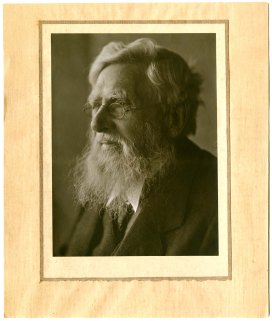
2023 marks a number of important anniversaries in the UK: it has been 75 years since the founding of the NHS and the arrival of the Empire Windrush in London, and 100 years since the first outside broadcast by the British Broadcasting Company. Importantly for the Museum, it is also the 200th anniversary of the birth of Alfred Russel Wallace (1823-1913), the trailblazing biologist, geographer, explorer, and naturalist.

Wallace was one of the leading evolutionary thinkers of the nineteenth century and is most well-known for independently developing the theory of natural selection simultaneously with Charles Darwin. The publication of Wallace’s paper “On the Tendency of Varieties of Depart Indefinitely from the Original Type” in 1858 prompted Darwin to quickly publish On the Origin of Species the following year. He was a pioneer in the field of zoogeography and was considered the leading expert of his time on the geographical distribution of animal species. He was also one of the first scientists to write a serious exploration of the possibility of life on other planets.

Wallace undertook extensive fieldwork in the Amazon River basin and the Malay Archipelago. He spent four years in the Amazon from 1848-52 but unfortunately lost much of his collection when the ship he returned to Britain on caught fire. Afterwards, he spent eight years in the Malay Archipelago (1854-62), building up a collection of 125,660 specimens including 109,700 insects, many of which are currently housed at Oxford University Museum of Natural History. In fact, we now hold one of the largest collections of Wallace specimens in the country.

In addition to entomological specimens, OUMNH holds a large and varied archival collection relating to Wallace. The archive includes original insect illustrations sent to Wallace by contemporary entomologists, photographs, and even obituaries. By far the largest portion of the collection is 295 letters of correspondence, of which 285 were penned by Wallace himself. The bulk of Wallace’s letters were written to fellow scientists, including the chemist and naturalist Raphael Meldola and the evolutionary biologist Edward Bagnall Poulton.

We are happy to announce that, in celebration of Wallace’s 200th year, we are making the entire Wallace correspondence available to browse online!

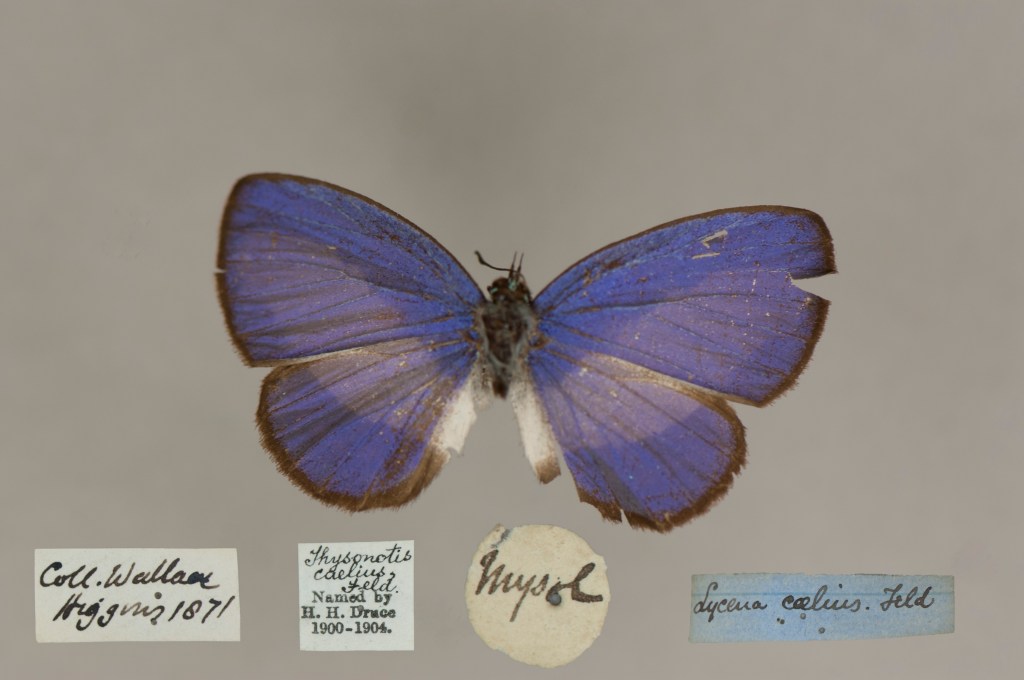
Several of the letters in the collection can be connected to the Wallace entomological collections held at OUMNH, providing us with invaluable insights into the history of these specimens. For example, you can read this 1896 letter from Wallace to Poulton in which Wallace discusses the changing of hands of his entomological collections, from Samuel Stevens to Edmond Higgins following Stevens’ retirement in 1867. The Museum subsequently acquired some of Wallace’s entomological specimens through Edmond Higgins, including the two beautiful examples shown above.

These letters are a potential treasure trove of information about Wallace and his collections, and we hope they will be of great interest to researchers in the field, as well as to the public. Interested? Learn more about Alfred Russel Wallace or explore his archive online.


Article by Matthew Barton, Digital Archivist at OUMNH

The Beginning of the End: Do locusts still spell danger for humanity?


By Ella McKelvey, Web Content and Communications Officer


A few days ago, I was working from home when a delivery driver arrived with a strange parcel – a cardboard box stamped with the letters FRAGILE that seemed to be producing a peculiar, scratching sound. Tentatively, I opened the cardboard box and pulled out a plastic punnet filled with newspaper, old egg cartons, and… wait! Was that an antenna? 

The parcel turned out to be a box of locusts, ordered by my housemate who uses them to feed her pet reptiles. I set the punnet down beside me and tried to continue with my morning’s work. But over the next few hours, the locusts grew increasingly restless, bouncing against the walls of their punnet like hot, microwaved popcorn. The sight and sound of the insects began to return memories of the infamous locust swarms of 2020 — one in a series of near-apocalyptic events that befell us that fateful year. Worryingly, climate change is set to make locust swarms increasingly common, with Sardinia currently facing its worst locust swarm in thirty years.1 

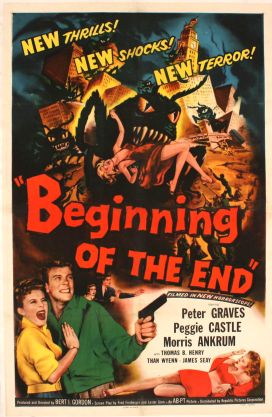
Left: A poster for The Beginning of the End (1957) about a fictional invasion of giant, mutant locusts in Illinois. Right: A real-life locust swarm near Satrokala, Madagascar (2014).

Throughout history, locusts have been widely understood as symbols of maleficence and misfortune. One of the oldest written references to locusts is, of course, the Biblical story of the ten plagues of Egypt, in which locusts were sent as a punishment from God. Since then, these infamous insects have been featured in art, books, music, and films as harbingers of destruction. Americans of the mid-twentieth century were somewhat obsessed with giant locusts and grasshoppers which were featured everywhere from cartoons to postcards. 1957 saw the release of the movie The Beginning of the End – a schlocky Hollywood sci-fi tale about a swarm of giant, mutant locusts invading Illinois. The film’s principal Entomologist describes locusts as “deadly killer[s]”, both “intelligent and strong”. Real-life locusts are, indeed, very strong for their size, with back legs that can catapult them up to a metre from standing. This means that it would be feasible for the human-sized locusts in The Beginning of the End to jump as far as forty metres — a terrifying thought!2  

While The Beginning of the End is ridiculous both in premise and execution, I can’t deny that I find the concept of giant locusts pretty nightmarish. Earlier in the week, I sent an email to the Life Collections team to enquire about the possibility of looking through our pinned locusts and snapping a few photos of the biggest and grisliest specimens. As I walked upstairs to entomology, I braced myself for an encounter with some fearsome insects. But what I found were a few drawers of modest-sized locusts that looked about as benign as garden grasshoppers. Many of them were even stuffed with wool; more like teddy bears than agents of Armageddon. 

Left: Anacridium aegyptium or Egyptian Locust from the Collections at OUMNH. Right: Underside of a locust specimen showing cotton wool stuffing.

According to Collections Assistant Rob Douglas, stuffing large insect specimens with cotton wool used to be a common entomological practice. Insects with fatty insides, like locusts, must be gutted to ensure good preservation. Following the removal of the insects’ insides, cotton was often used to return their abdomens to their usual size and shape. Locusts’ ample fat stores contribute as much to their physical prowess as their powerful hind legs; sustaining them through migrations of up to 310 miles a day.3 Such migrations occur when locusts are exposed to a dry spell followed by wet weather, allowing for the sudden regrowth of vegetation. These conditions will cause locusts to switch their solitary lifestyles for gregariousness, coming together to chomp their way through crops and vegetation at a density of 80-160 million insects per square mile. A large migrating swarm of locusts has been estimated to need as many calories in a day as 1.5 million human males, explaining why even ordinary-sized locusts are capable of causing agricultural annihilation.

If it weren’t for government and international interventions, the 2020 locust swarms in East Africa could have caused up to $8.5 billion in economic damages by the year-end.5 But locusts can do much worse. One of the most notorious locust swarms on record was that of the Rocky Mountain locust in the USA between 1874 and 1877. According to some accounts, the swarm caused damages to agriculture equivalent to $116 billion in today’s money, leaving behind piles of locust carcases up to six feet high.6 

When it comes to protecting crops from locusts, prevention is better than cure. Likely locust outbreaks can be pre-empted by studying weather patterns and using satellite imagery to keep an eye on vegetation growth.7 Once a (potential) locust swarm has been identified, traditional methods of locust management involve the use of pesticides to wipe out the insects as soon as possible. Back in the 1950s, this meant dowsing locusts with DDT. But as the drawbacks of synthetic pesticides become increasingly apparent, chemical interventions are being replaced with the application of naturally occurring ‘pesticides’ like the fungus Metarhizium acridum.  

Our understanding of locusts has come a long way since the release of The Beginning of the End. One of my favourite news stories of the past month was the announcement by a laboratory at Michigan State University that locusts have been successfully used to ‘sniff out’ mouth cancer.8 It turns out that locusts no longer just spell danger for humanity — they can smell danger for humanity too! These cancer-detecting locusts are, in my opinion, far more ‘sci-fi’ than the giant bugs imagined by scriptwriters of the 1950s, reminding us that, when it comes to science, the truth is often stranger than fiction. Reports like these demonstrate that scientific research has the power to transform our relationship with the pests that have tormented us for thousands of years.


[1] Sardinian farmers suffer worst locust invasion in over 30 years | Reuters 

[2] https://www.st-andrews.ac.uk/~wjh/jumping/perform.html

[3] https://www.nationalgeographic.com/animals/invertebrates/facts/locusts

[4] Weis-Fogh T. 1952 Fat combustion and metabolic rate of flying locusts (Schistocerca gregaria Forskål)Phil. Trans. R. Soc. Lond. B2371–36http://doi.org/10.1098/rstb.1952.0011

[5] Dominy, Nathaniel J., and Luke D. Fannin. “The sluggard has no locusts: From persistent pest to irresistible icon.” People and Nature 3, no. 3 (2021): 542-549.

[6] Lockwood, Jeffrey A. Locust: The Devastating Rise and Mysterious Disappearance of the Insect that Shaped the American Frontier. London: Hachette (2004).

[7] Zhang, Long, Michel Lecoq, Alexandre Latchininsky, and David Hunter. “Locust and grasshopper management.” Annu. Rev. Entomol 64, no. 1 (2019): 15-34.

[8] https://www.technologyreview.com/2022/06/21/1054532/cyborg-locust-brain-hacked-sniff-out-cancer/