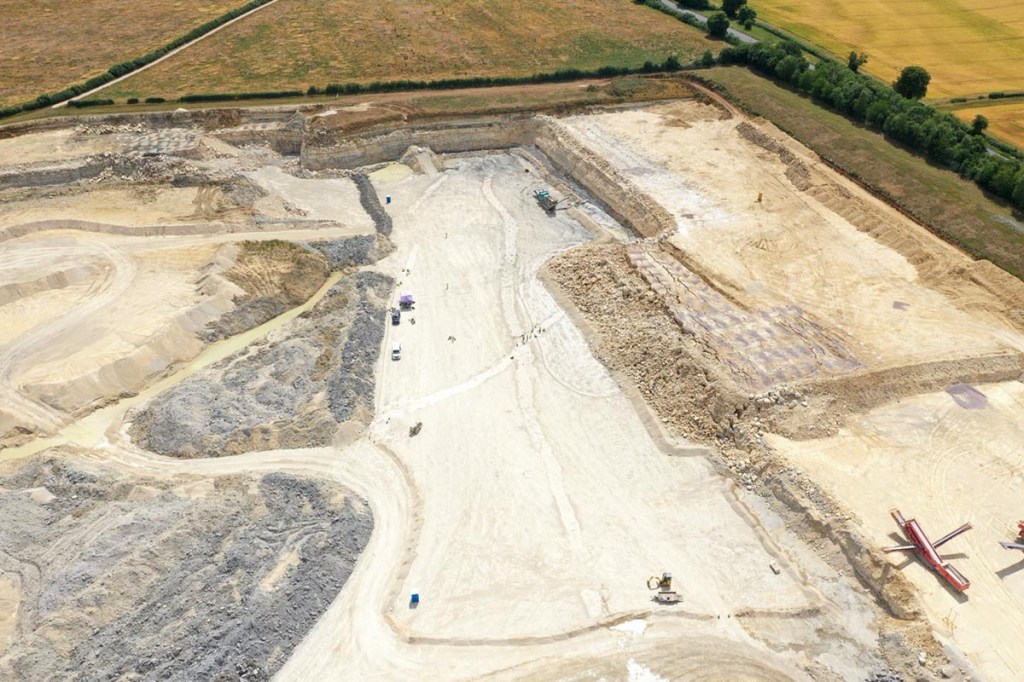
Excavations at Oxfordshire’s ‘dinosaur highway’ continued this summer to uncover Europe’s longest sauropod dinosaur trackway.
The 2025 Dewars Farm trackway site, drone photography. Credit: Richard Butler | University of Birmingham
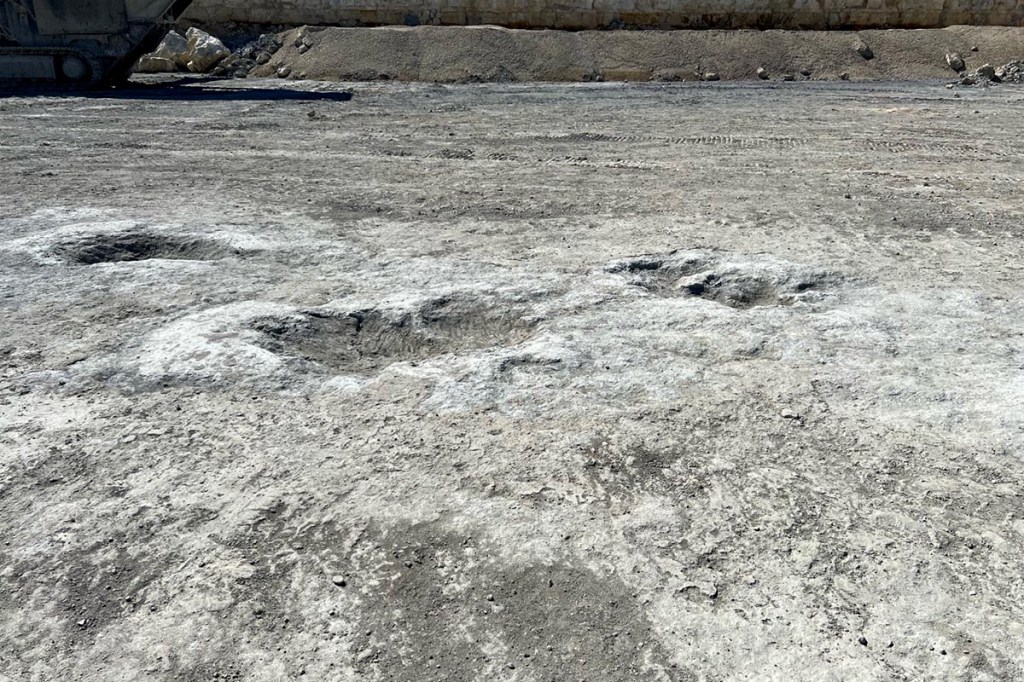
Following the success of the excavation last summer, which featured on BBC Two’s Digging For Britain, a new area of Dewars Farm quarry near Bicester has been uncovered. Teams from the Universities of Oxford, Birmingham and Liverpool John Moores joined forces for a week-long dig in the hot, dry summer of 2025. Hundreds more individual prints from four trackways were identified and documented, including Europe’s longest sauropod dinosaur trackway at some 220 metres from the first to the last exposed footprint.
The four new trackways found at the 2025 Dewars Farm site were each made by sauropod dinosaurs, large-bodied long-necked herbivores like Cetiosaurus, that made their way along an exposed mudflat on the edge of a lagoon some 166 million years ago – during the Middle Jurassic Period.
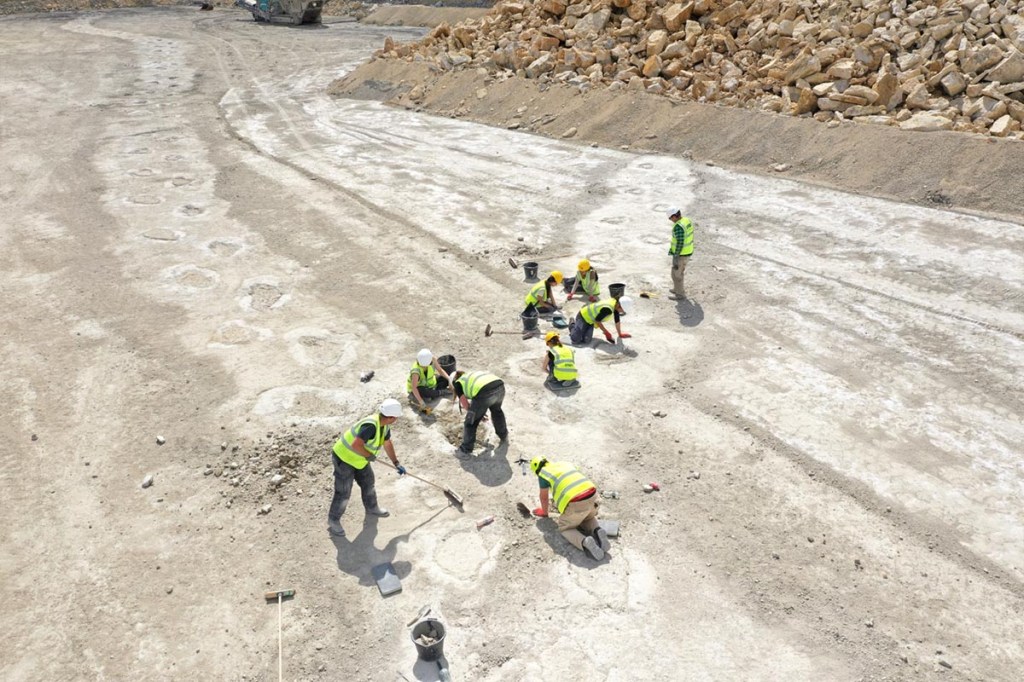
Cleaning Europe’s longest sauropod dinosaur trackway. Credit: Richard Butler | University of Birmingham
The excavation was made possible through the continued collaboration with the quarry operators Smiths Bletchington, Dewars Farm and Duns Tew Quarry Manager Mark Stanway, and his staff. As in 2024, a team of more than 100 people worked at the site, co-led by Oxford University Museum of Natural History (OUMNH) and University of Birmingham (UoB) and joined by collaborators from Liverpool John Moores University. Over seven days, the teams battled against a much drier, harder surface than the previous year focusing on a set of around 80 very large (up to 1m long) sauropod prints, that ran approximately north-south across the entire site.
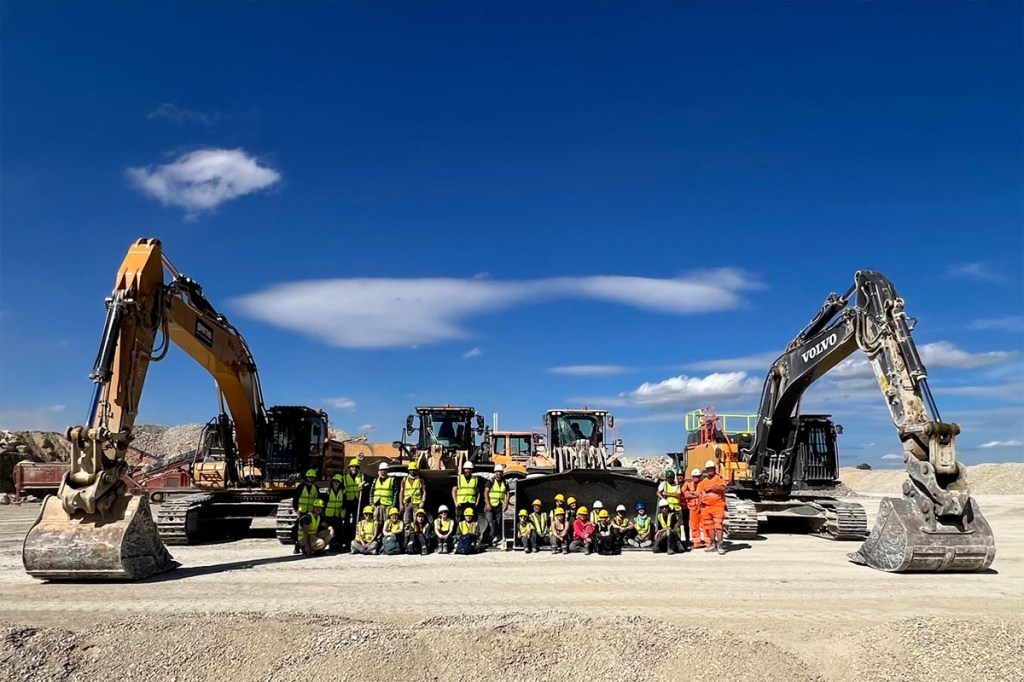
Part of the 2025 excavation team and the fantastic Smiths Bletchington staff. Credit: Emma Nicholls | OUMNH
In addition to the largest sauropod trackway, three others were uncovered, one of which is a continuation of prints first found in 2022. Although not continuously exposed, it may prove to be an even longer trackway once all the data is pieced together. Smaller finds included marine invertebrates, plant material and a crocodile jaw. New for 2025, systematic sampling of the sediments that both underlie and fill the prints was undertaken, the analysis of which is underway.
More of the footprint surface is likely to be exposed over the coming years, and a full description of the significance, new scientific discoveries and potential for future preservation of the site is expected soon.
Sets of sauropod dinosaur footprints, each up to 1 metre long. Credit: Emma Nicholls | OUMNH
In February 2023, the Museum was lucky enough to acquire an important historical archive – a collection of notes, correspondence, artworks, photographs and family documents belonging to geologists William and Mary Buckland. But before the archive can be enjoyed by visitors and researchers, it must first be cared for, ensuring its preservation for generations to come. Thanks to generous funders, the Museum was able to hire a Project Paper Conservator, Anna Espanol Costa. Considering the Museum had not had a paper conservator since the mid-1990s, Anna was incredibly resourceful with her use of tools and materials, utilising everything from makeup sponges and soft brushes to tweezers and dental picks. In this blog post, we share insights from the eight months she spent assessing, cleaning and repairing some of the most at-risk and important material in the archive, as well as some unexpected surprises she found along the way…
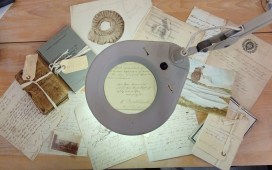
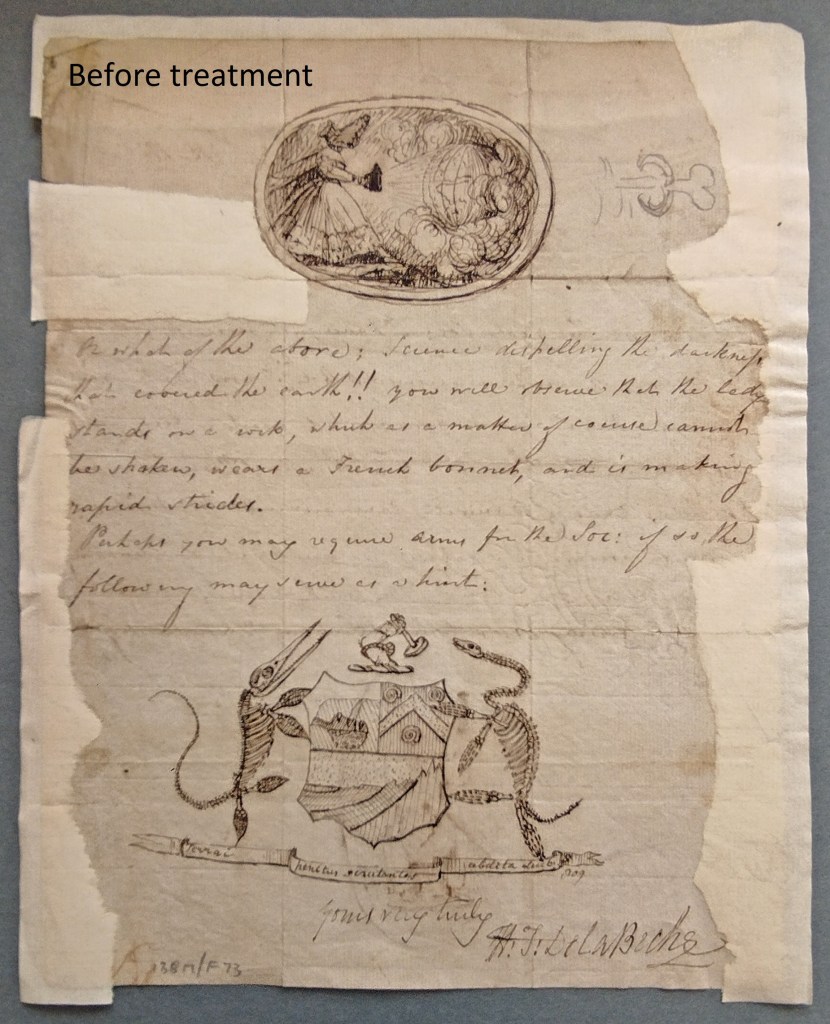
Paper can be used to store information for decades, if not centuries, but it is still vulnerable to frequent handling and poor environmental storage conditions. When the Museum acquired the Buckland archive it was around two hundred years old and, unsurprisingly, many of its items needed care and restoration. Over the years, the papers had been housed in the standard file folders and boxes you would use for office documents, rather than an important historical archive. Many of the folders were overcrowded and had been tied together with string. Some manuscripts had been damaged due to too many items being stored in the same folder, and there were places where the string had cut into the larger pieces of paper causing tears. The most fragile and vulnerable items showed signs of chemical and physical damage, including iron-gall ink corrosion; chemicals in the ink had started to eat through the paper, causing cracks and loss of ink, and consequently text, in some areas.
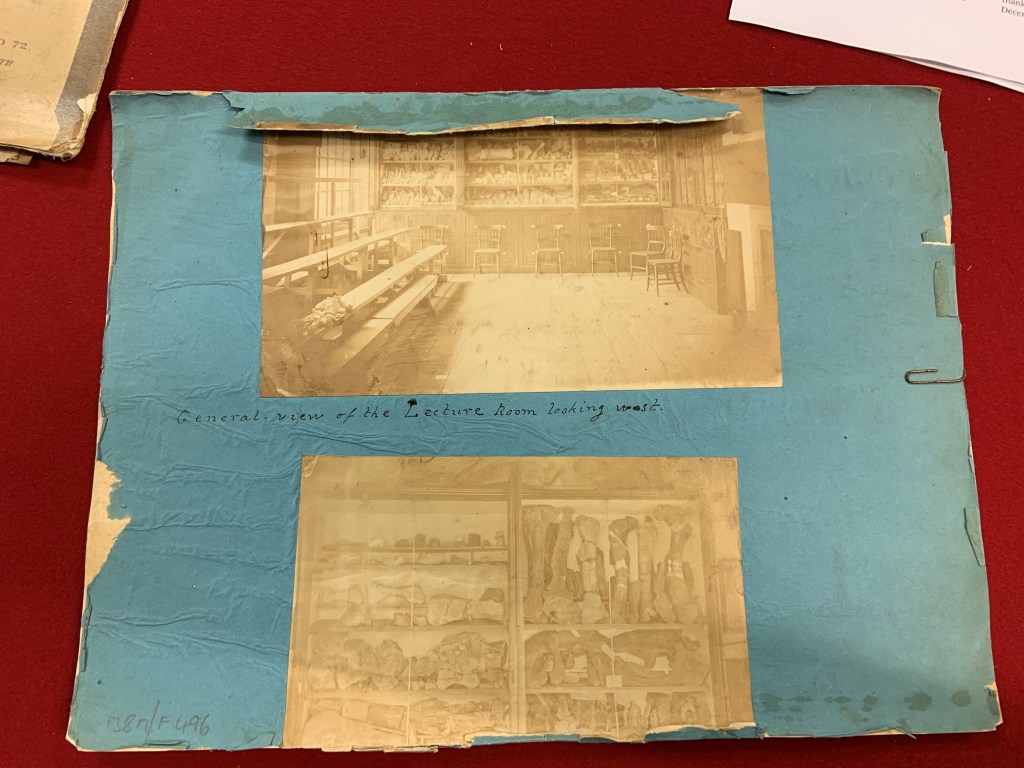
Before treatment: Photographs mounted on an unsuitable bright blue backingBefore treatment: An unsuitably preserved letter with ingrained dirt
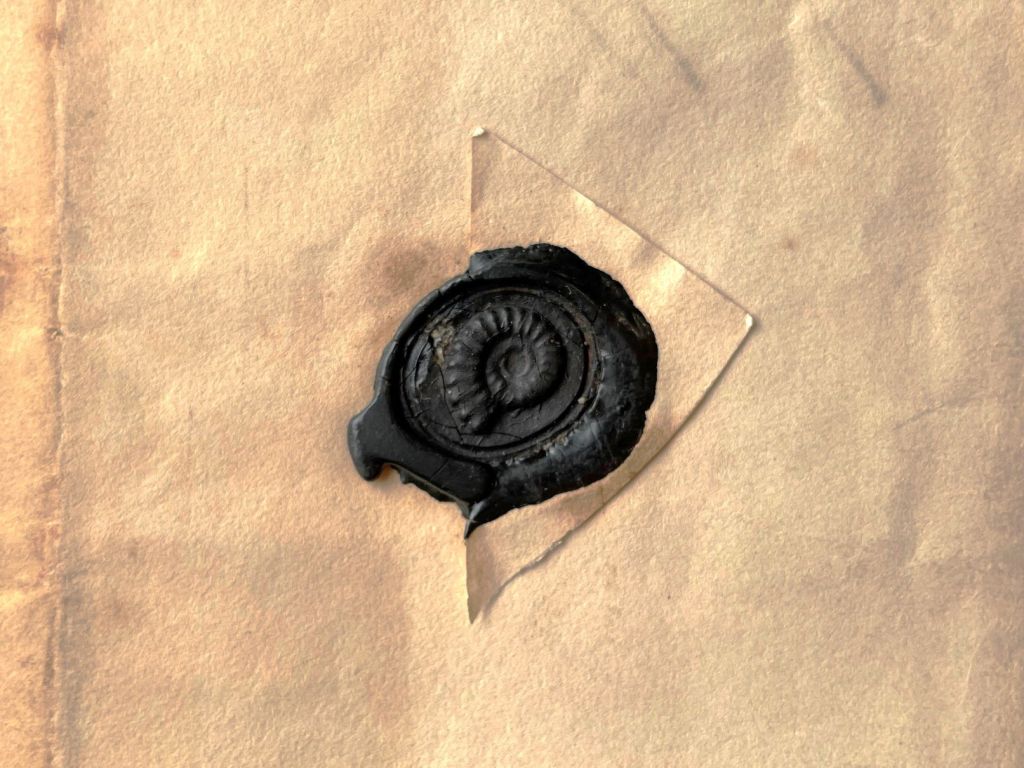
Past efforts had been made to restore the documents, but sometimes these had disfigured the original manuscripts: “in-fills” had been made with unsuitable paper, and backing sheets had been added in bright colours like blue or green. The archive was also being held together with unstable and rusty paper clips, and many of the original wax seals had cracks. It would have been a great shame to lose any of the seals, which feature beautiful examples of natural history icons, like ammonites and cephalopods.
PRESERVING HISTORY
The objective of my work was to stabilise the Buckland archive to ensure its long-term preservation and restore the appearance of the collection so it could be safely handled, digitised and exhibited in future.
One of the most important principles behind conservation is doing the ‘least amount to do the most good’. Conservation aims to slow down the ageing and deterioration process by using treatments that will not damage or disfigure the integrity of the original document. Conservation may be preventative — for instance, moving documents to a new box that creates the right ‘microclimate’ for their preservation. It may also be interventive — e.g. repairing with non-acidic and reversible materials that can be easily removed at any time, and that also can stand the test of time.
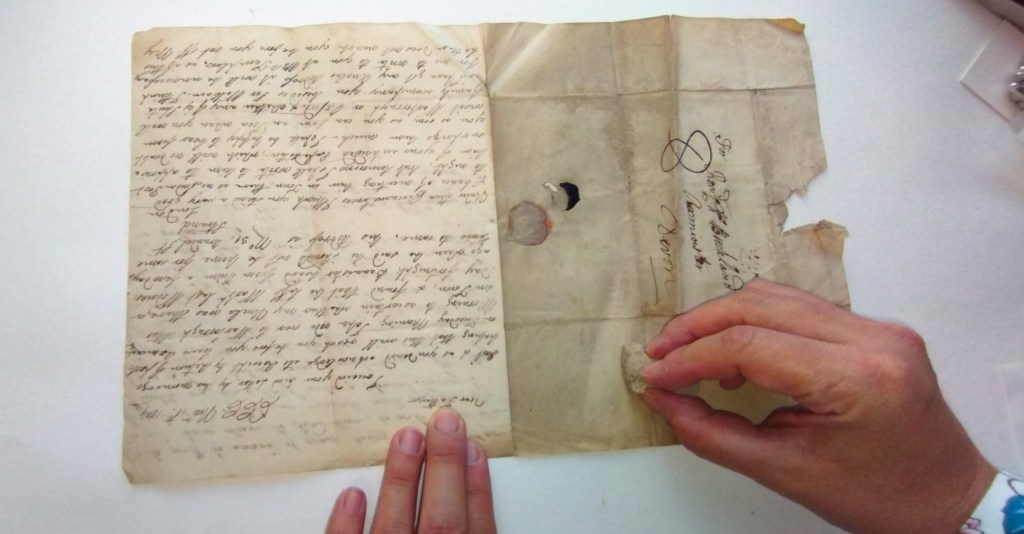
During my time at the Museum, I have been able to conserve a number of the most at-risk and important pieces of archival material. In some cases, this involved a light clean with a soft brush and re-housing of the most overcrowded items. In other cases, I performed more interventive and invasive conservation treatments including mechanical surface cleaning with smoke sponges, relaxing folds with paperweights or steam, stabilising iron-gall inks with gelatin to prevent further corrosion, mending tears with different grades of Japanese papers and tissues, and cleaning and consolidating cracks in the wax seals on the letters to prevent further loss. I also tackled some of the previous ‘repairs’ by eliminating old animal glue which had left the manuscripts shiny in places, carefully removing the unsuitable paper, and adding supports where necessary, thus leaving no traces of the bright blue backing paper.
Cleaning a letter to remove ingrained dirtA wax seal on a letter in the archive, featuring an ammonite motif
INTERESTING AND UNEXPECTED STOWAWAYS
As well as undertaking conservation repairs, I also documented the condition of the items; photographing the manuscripts before and after conservation treatments to ensure the Museum, or any other future conservators, have a record of my work. Whilst undertaking conservation treatments, I found some interesting and unexpected stowaways in the archive. What looked to be small holes in one of the pages of a letter ended up being recognised by one of the Museum’s entomologists as spider frass (poop). A moth had also decided to call the papers home at some point in the last two hundred years as I came across a small cocoon that was now long dead, desiccated (dry) and dusty. The most unusual find, however, was a small black dot that I initially thought was an insect. However, employing the help of a microscope and one of the Musuem’s entomologists, we realised that it was actually a seed! What kind of seed, and how or when that seed came to reside in the Buckland archive, we don’t know, but it shows the archive had a life and story of its own long before it came to rest here in the Museum.
A JOB WELL DONE
Overall, I was pleased with the amount of work I was able to accomplish at the Museum. I managed to conserve a significant amount of the archive and was fortunate enough to work with, and learn from, a range of museum staff, including palaeontologists, geologists, zoologists, entomologists and the Life and Earth collections conservators. It has been a privilege to share and exchange knowledge with my colleagues and work collaboratively on the preservation of an important archive. I look forward to hearing about some of the research findings it produces, and to see it shared with the public in future exhibitions and displays.
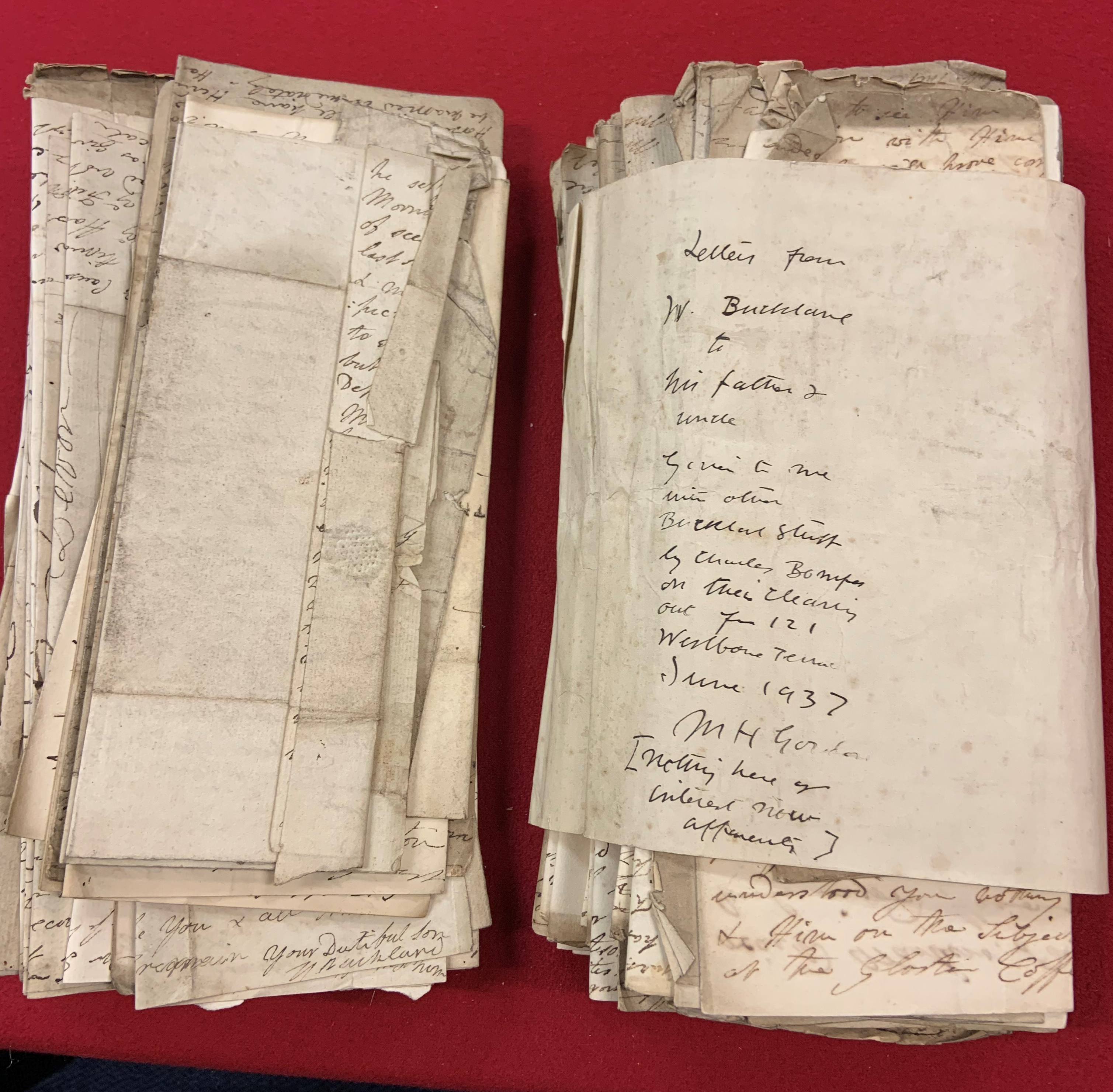
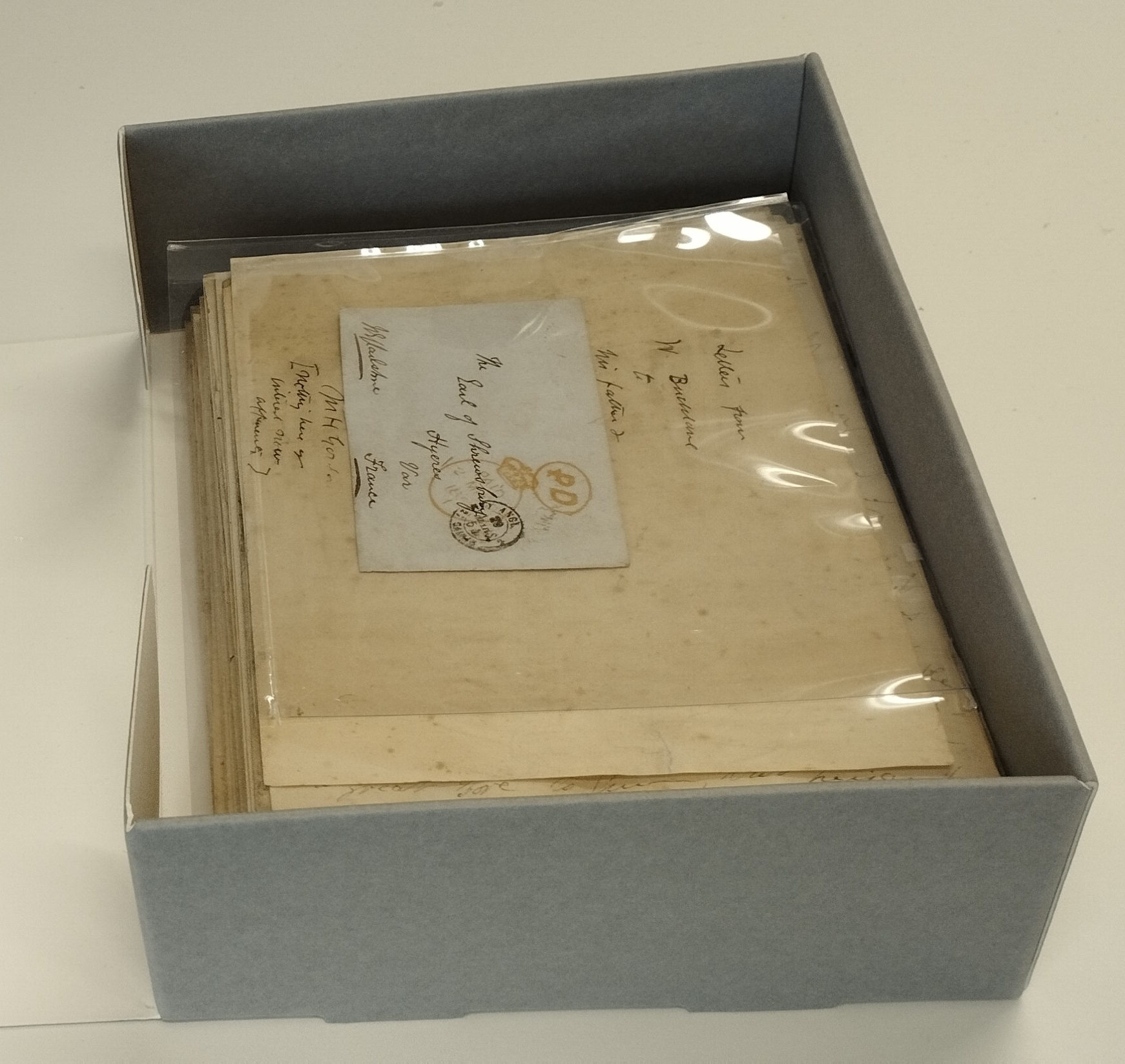
Bundle of letters before treatmentBundle of letters after treatment
Thank you to the National Manuscripts Conservation Trust and Helen Roll Charity for funding Anna’s work. Items from the Buckland archive will feature in the Museum’s upcoming exhibition ‘Breaking Ground’ opening 18th October 2024.
THE INVISIBLE HISTORY OF THE MUSEUM’S GLASS DISPLAY CASES
Glass cases play an integral role in museums and galleries, but they are designed to be overlooked and ignored. In this blog post, Librarian and Archivist Danielle Czerkaszyn uses research collected by Helen Goulston (AHRC Collaborative Doctoral Partnership PhD Candidate) to uncover the invisible history of OUMNH’s glass display cases and considers how they have evolved alongside the museum during its 160-year history.
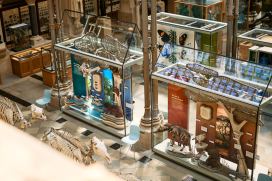
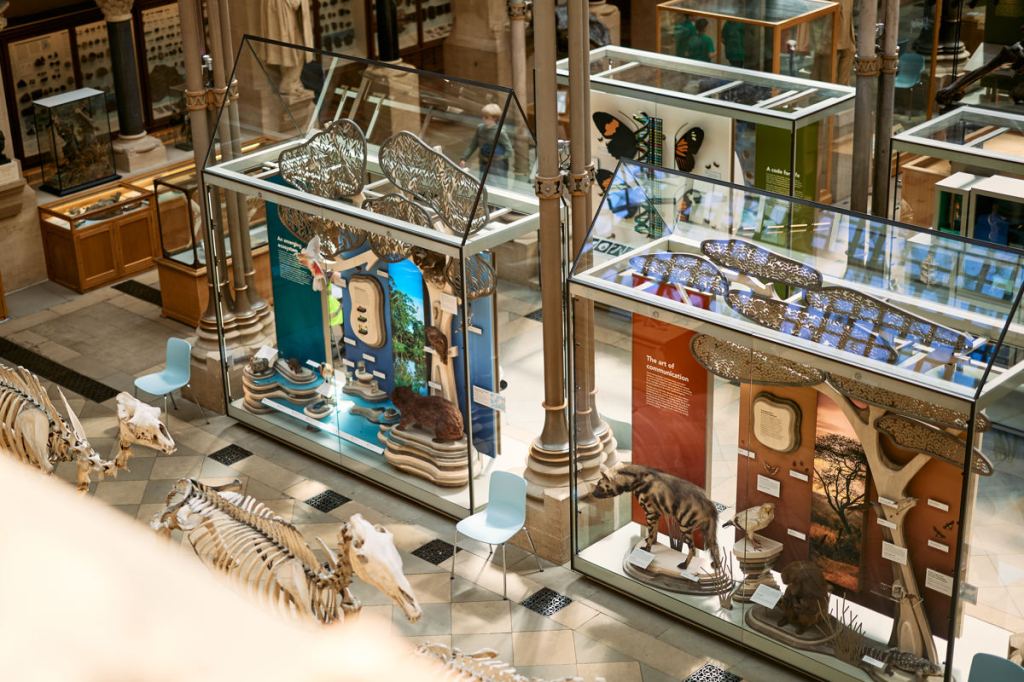
Since 2018, the Museum has been working to refresh its Main Court by installing new permanent displays. This morning, we placed the final specimen in our brand new “Open Oceans” display, concluding the latest phase of the redisplay project. The “Open Oceans” display is housed in one of eight new conservation-grade glass cases installed last year. While some visitors have welcomed the new cases, others have mourned the loss of the wooden cases or questioned why they needed to be replaced. Others have wondered why the tops of the new glass cases have roofs with different heights. To answer these questions, we need to dive into the museum archive…
A CASE HISTORY
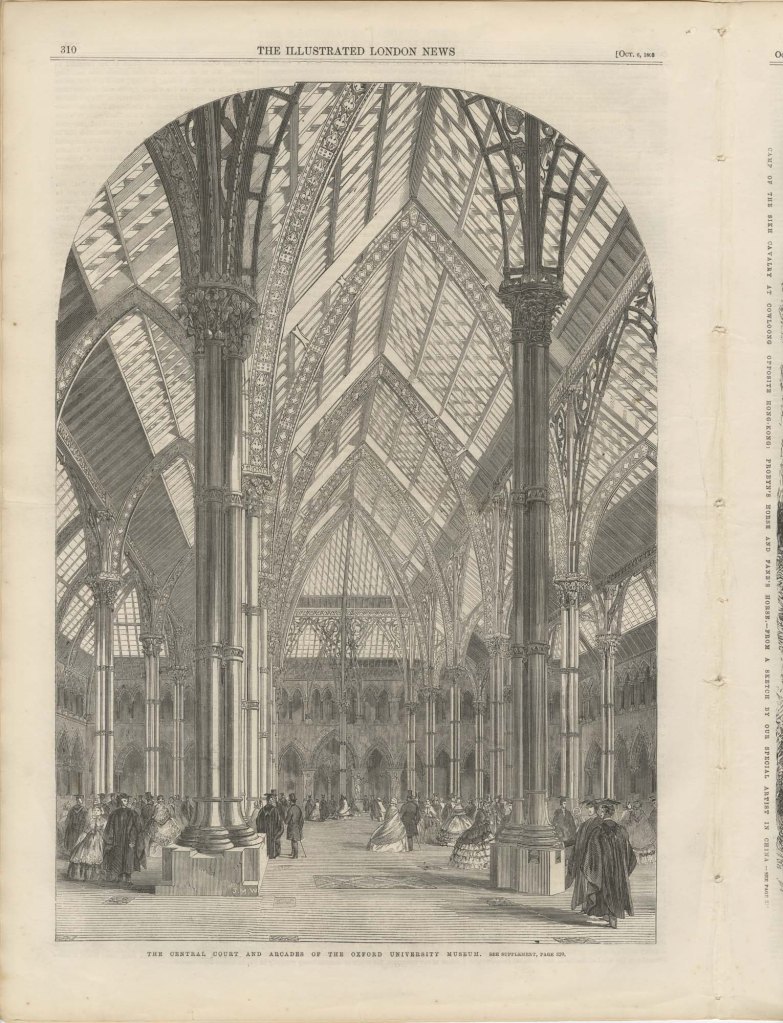
When visitors arrived at the newly-opened museum in 1860 they would have been greeted by an empty central court, devoid of displays. While the fabric of the building was more or less complete, and preparation for the installation of displays had already begun, the university’s scientific and natural history collections had not yet been transferred to the building.
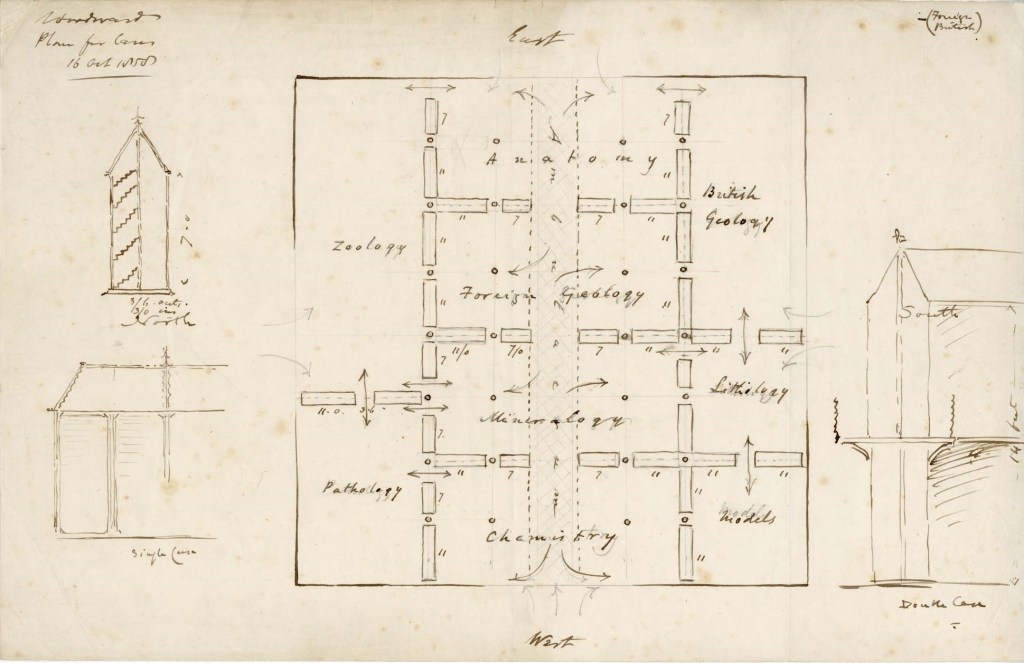
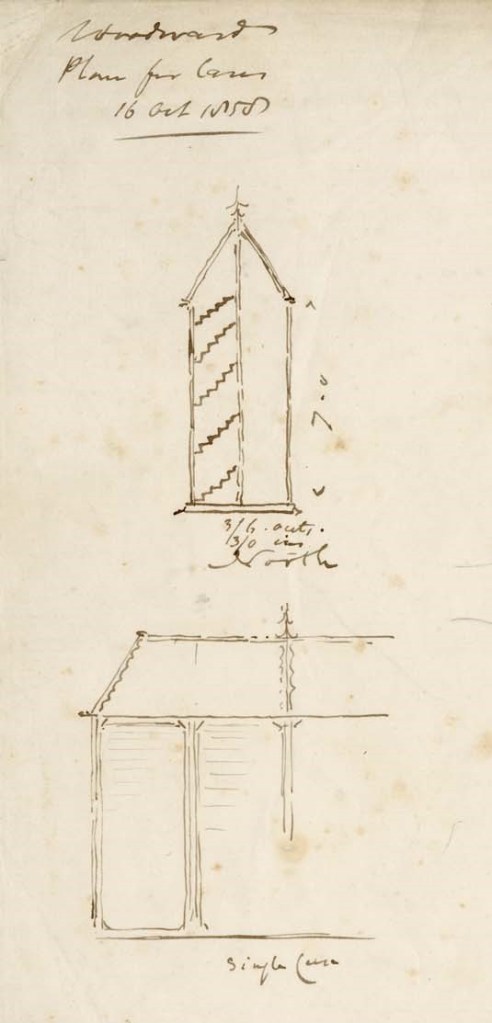
A sketch in the archive dated 16 October 1858 by architect Benjamin Woodward shows an early plan for the display cases to be arranged between the iron columns in the Main Court, allowing visitors to circulate among the exhibits, with display cases echoing the Gothic revival architecture. The right of the document shows grand double-height displays with a central balustrade that were never realised, but cases similar to those on the left would be ordered in January 1862.
The empty Main Court of the Museum when it opened in 1860, London Illustrated NewsSketch by Benjamin Woodward showing an early plan for the arrangement of displays in the Main Court, 16th October 1858Close-up from Benjamin Woodward’s 1858 sketch envisaging similar display cases to those that would be ordered in January 1862
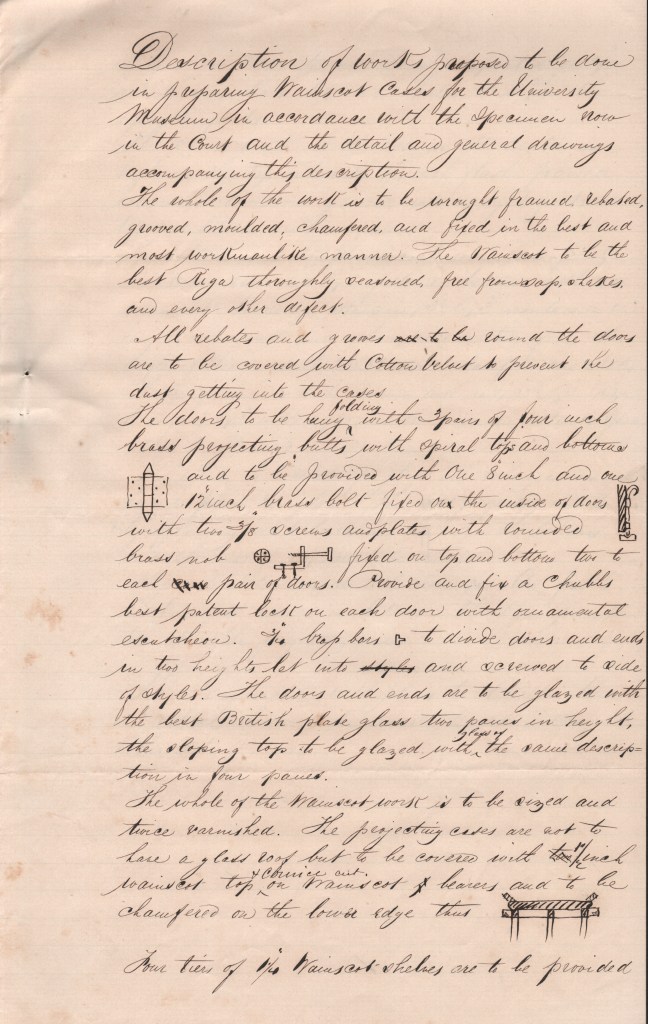
The 1862 tender document written by William Bramwell, Clerk of Works at the Museum, shows two types of upright display cases ordered for installation between the iron columns — some with pitched roofs and others with flat tops, which were considerably cheaper. Though the design of the cases resembles Woodward’s original sketches, the tender included detailed specifications that addressed the practicalities of displaying specimens, such as cotton velvet door linings to stop dust from getting in.
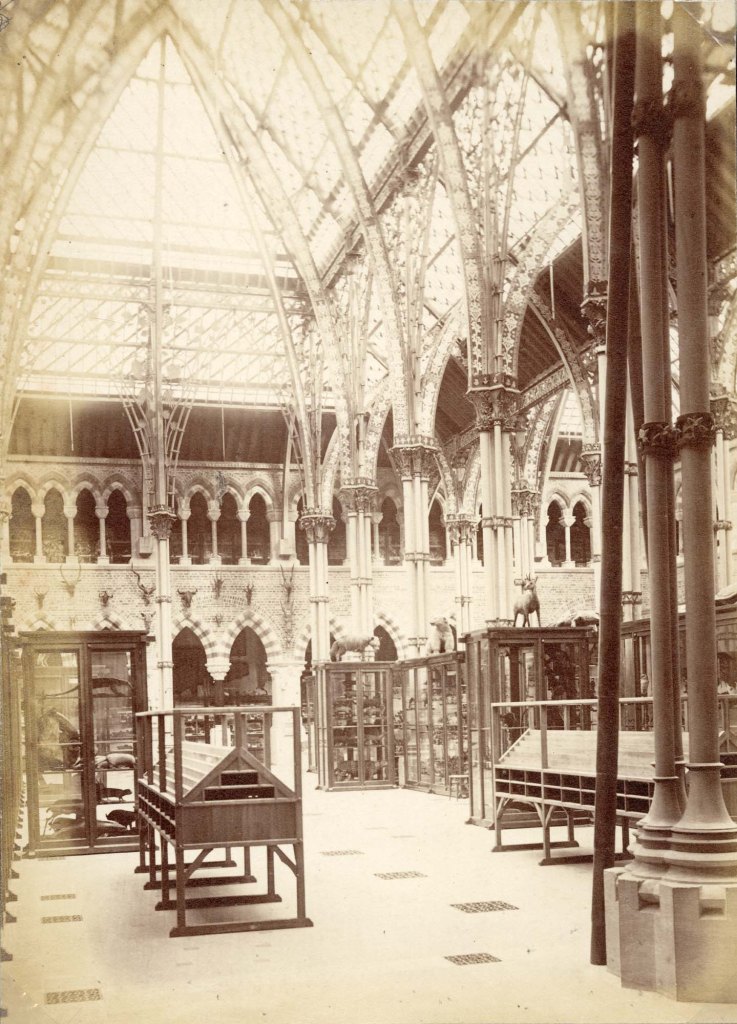
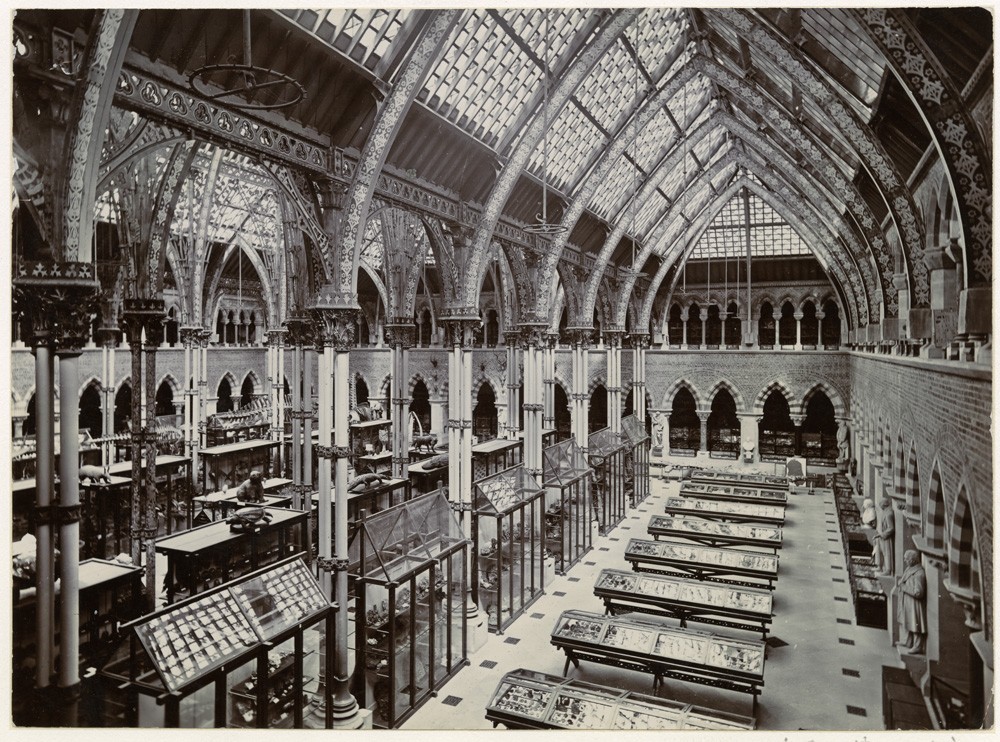
In addition to the upright centre court cases, ten table cases were ordered from the high-end London cabinet makers, Jackson and Graham, at a cost of £344.10. The same firm was also commissioned to fit the tall wall cases in the outer corridors. Plans and photographs from the archive show that the installation of these cases was piecemeal and it wasn’t until 1866 that all the display cases were fully in place.
A tender document written for the Museum’s first display cases, written by William Bramwell in 1862The Main Court of the Museum prior to 1864
WHY REPLACE THE CASES?
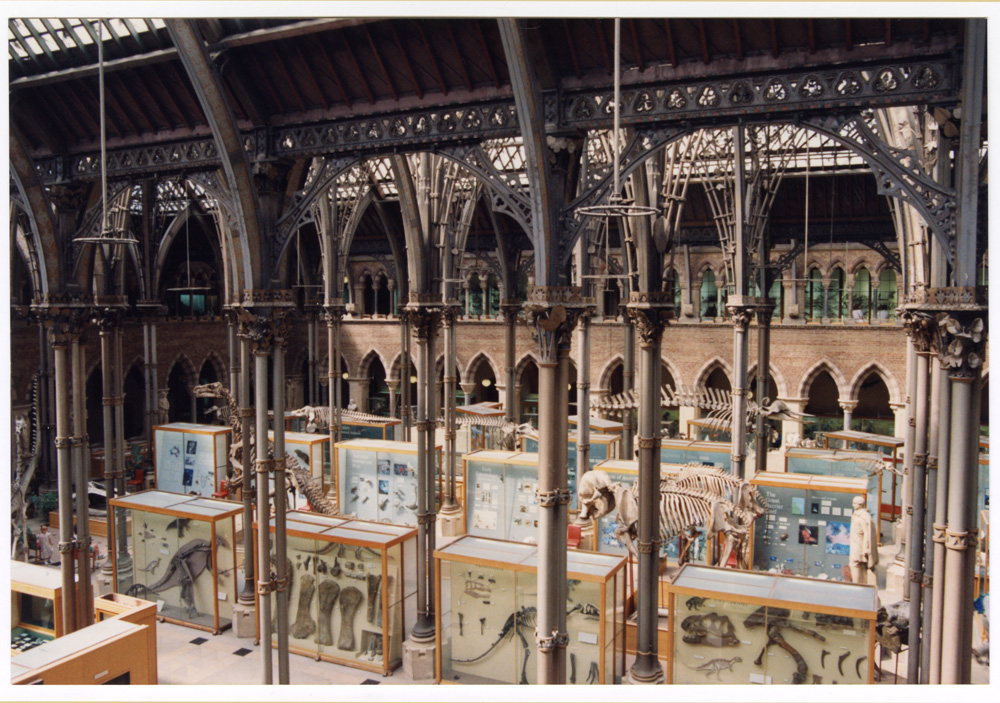
The wooden display cases that we have been replacing may look old, but few of the original cases from 1866 survive. While some of the old display cases were moved behind the scenes for preservation, others found homes in different museums or were disposed of when they were beyond repair. The most recent timber-framed cases in the Main Court are 20th-century replicas that have been heavily modified, particularly in the late 1960s-early 1970s, and again in the early 2000s when the clear acrylic roofs were added. Some of these modifications affected the stability of the cases, particularly when the doors were opened, making them unsafe for staff to access. Other modifications meant the cases were no longer dust or pest-proof, which poses a risk to specimens.
Main Court in 1870s, by Henry Taunt, showing roofed display cases with alternating pitchesMain Court in 1990s, with un-roofed display casesMain Court in 2017 with acrylic roofs re-added to the display cases
As these wooden display cases neared the end of their life, the museum and Oxford University Estates worked with Oxford City Council and Historic England to approve the replacement of the cases and ensure the redevelopment was historically sensitive to our Grade 1 listed Victorian building.
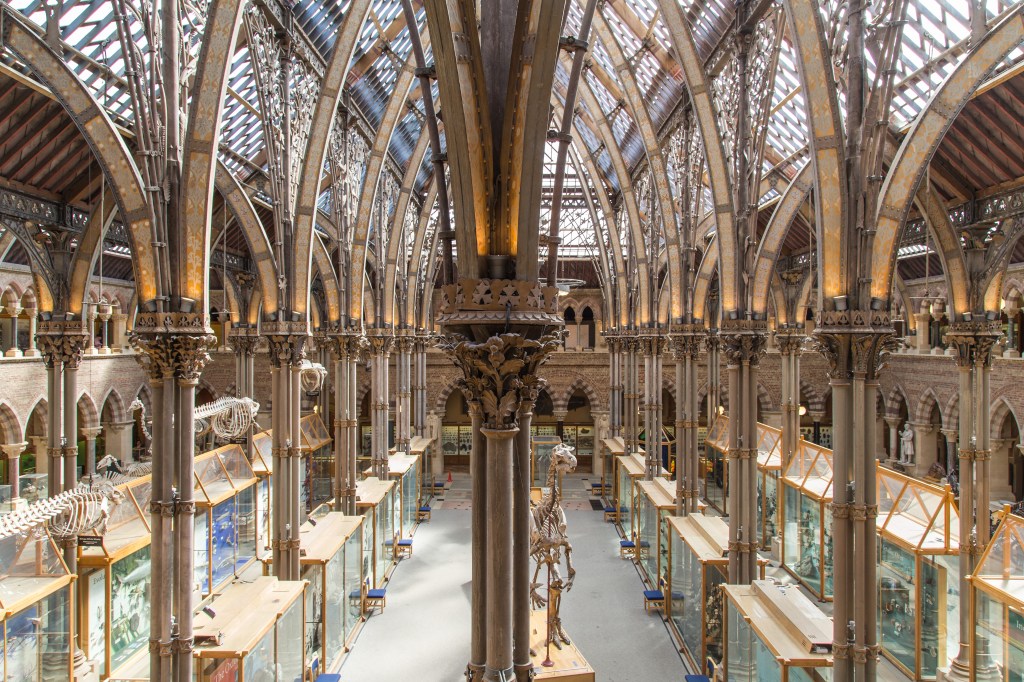
For this reason, the new cases retain the original 1866 arrangement and are built to the same dimensions. We have also returned to the original form, including outer aisle cases with alternating pitched and flat roofs. It was decided early on that the new cases would not be lined in wood because timber can be detrimental to the conservation of certain specimens. However, the design of the edges of the new cases sought to mirror the craftmanship of the 1866 cases by emulating the beading on the edges – albeit much more subtly, and in bronze rather than timber – complementing the colours of the ironwork in the museum roof.
New display cases, photographed in 2024Close-up of bronze beading on the new display cases
A CASE FOR THE FUTURE
The new glass cases are built by museum showcase experts ClickNetherfield and provide a stable, pest-proof environment for our delicate and historically important specimens. Their design artfully captures the character of the museum building, while still focusing the visitor’s attention on their contents. It is hoped that the new displays will last for at least another two decades, and the cases even longer. During that time, millions of eyes will be cast over our displays, but the glass cases that protect them may barely even be noticed.
MAKING ART WITH SWIFTS FROM THE MUSEUM’S COLLECTIONS
Between 14th May and 21st July, the mixed media artwork Fly Over My City was on display at the Museum of Natural History, delighting visitors with a visual and auditory exploration of swifts and the threats they face in urban environments. In this blog post, artist Becca Jeffree discusses working with Museum collections to create the piece, and the value of museums as venues for combining art and sciences.
While studying at London’s Natural History Museum years ago, another student had become upset with a group of artists who were drawing from the floor of the birds gallery, blocking his way. Studying birds in a cabinet was not as worthwhile, he felt, as studying in the field. Moreover, drawing seemed to him out of place within a science museum. Yet sketching specimens has historically played an important role in learning about biodiversity, and is particularly important for those whose access to wildlife is restricted.
Perhaps it is unsurprising that this discord arose in a natural history museum. Art is often separated from science in society and culture, with science tending to dominate debates about understanding nature. Museums, however, are rare places where art and science are welcomed equally and beautifully combined. Few places embody this better than Oxford University Museum of Natural History — a work of Victorian art shaped by the idea that art and science can take one another to higher levels. As historian John Holmes puts it in The PreRaphaelites and Science, the building expresses the “true nature of nature itself” through its architecture. It is a place where the study and interpretation of the natural world are cross-disciplinary.
Fly Over My City (2023) by Becca Jeffree, on display at the Museum of Natural History
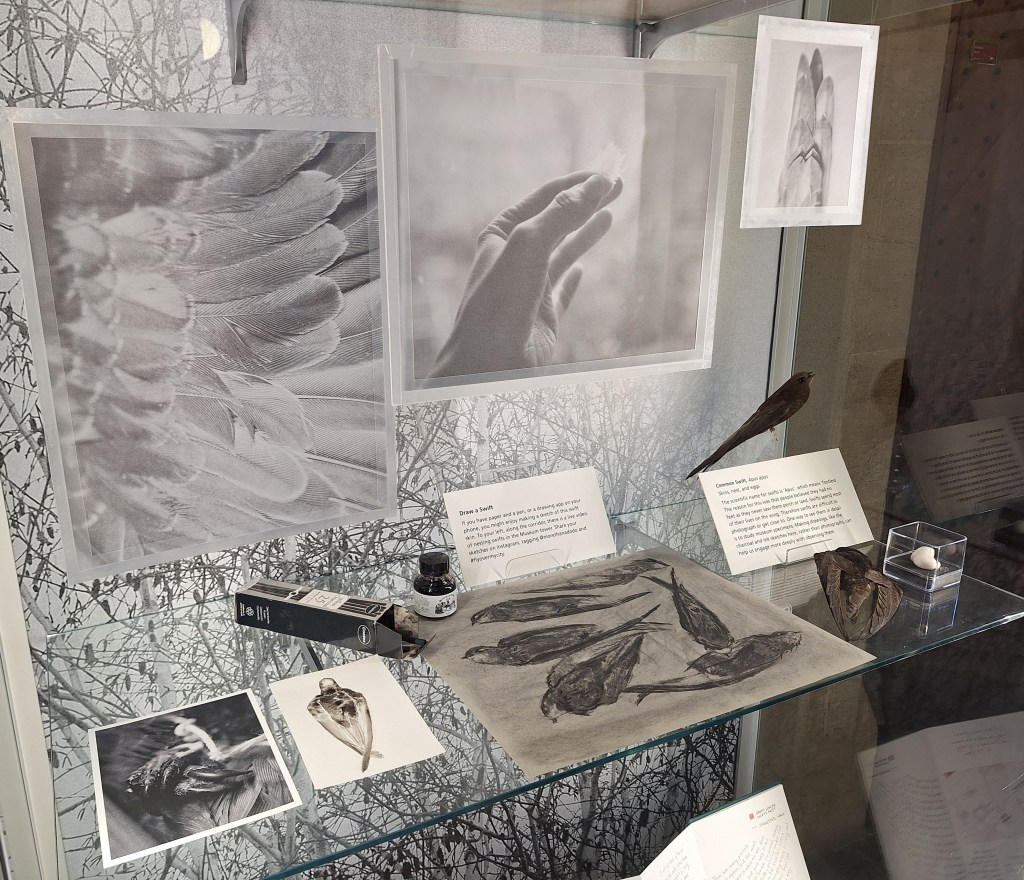
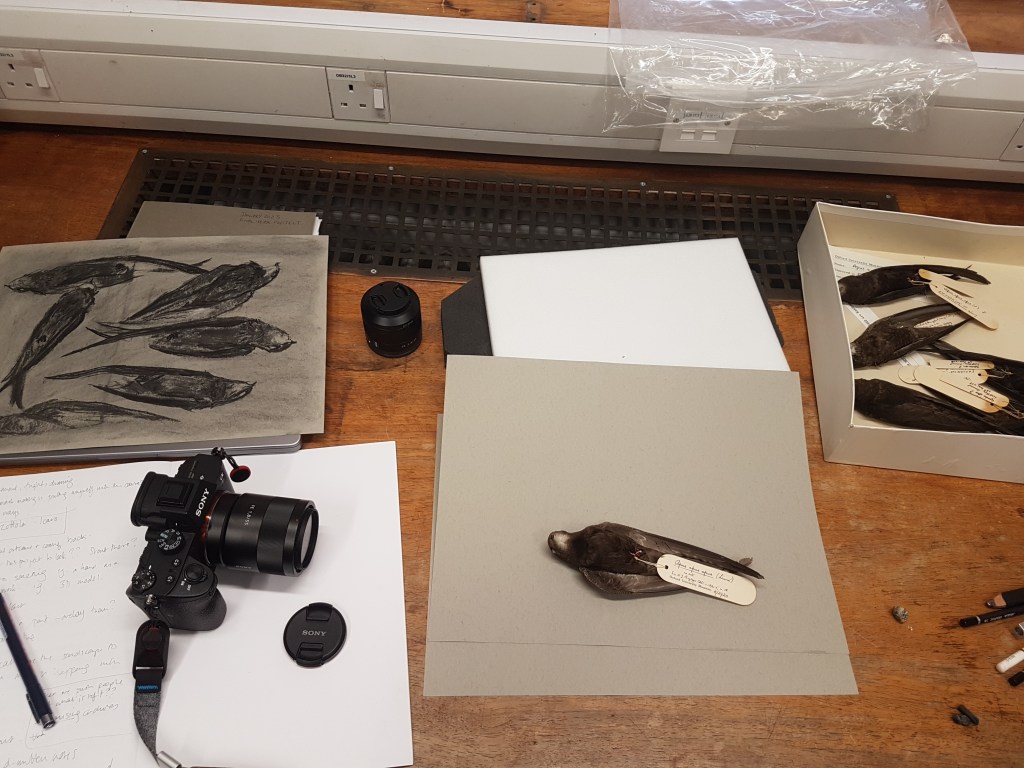
I recently collaborated with the Museum when making my artwork about the built environment and the common swift (Apus apus). Swifts are transient animals and as they rarely land they are difficult to see up close. They are found in the UK for only a short time each summer, fly fast, and are in decline. Through access to the Museum’s avian collections, I had a unique opportunity to see swift bodies up close and observe them in detail through drawing. Most of the specimens are bird skins; the skin, plumage, wing bones, skull and feet are preserved but not the internal organs, and they are not mounted like the ones we often see in cabinets. When I handled the swifts, I was asked to wear gloves to protect the specimens and avoid exposure to any harmful chemicals that may have been used to preserve them. Even though I couldn’t touch the swifts directly, I could still get to know their weight, size, colour, and notice interesting details like the shape of their chest feathers which are similar to their hummingbird relatives’.
Photographing, sketching and studying swifts from the Museum’s collections
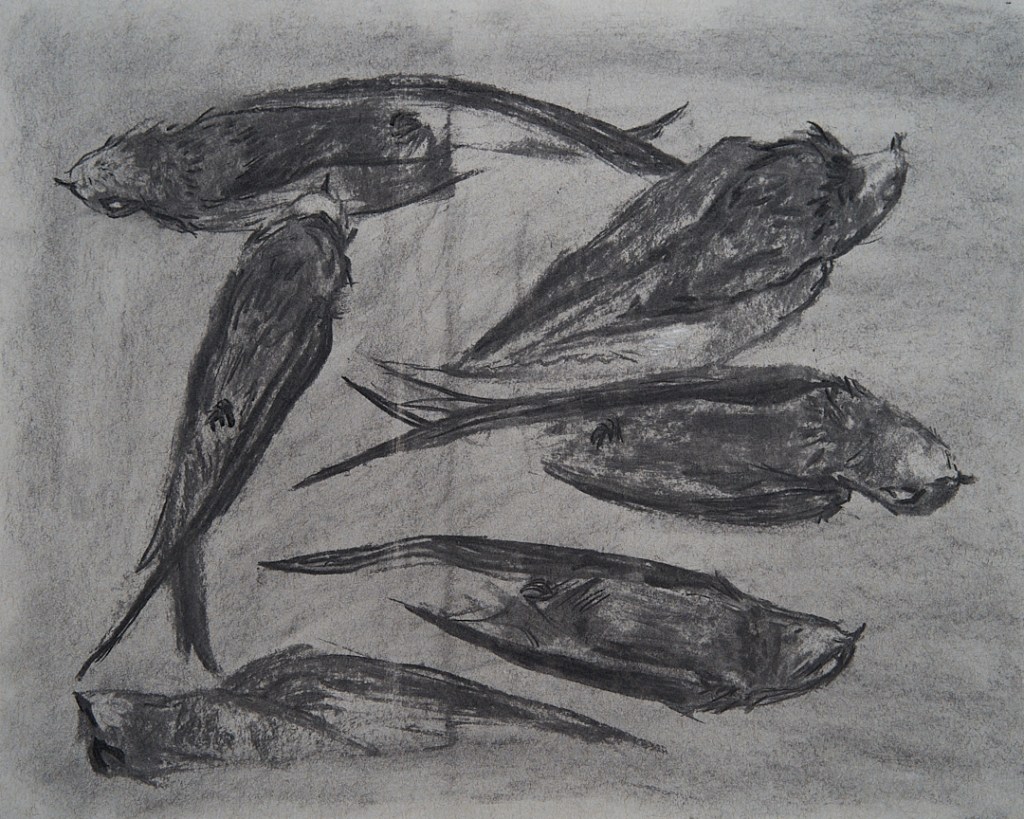
Having physical access to museum specimens allowed me to root my artwork more in science, but also to draw out further layers of meaning, by responding to my own feelings and senses. The materials I included in the work – charcoal and tracing paper – were inspired by the swifts’ weightlessness, their texture, colour and the urban environment they often inhabit. The PreRaphaelites, whose worldview infuses the Museum building, regarded art as a valid investigative method. As John Holmes puts it, “if observation yields a true knowledge of nature, then making art that records and synthesises these observations is at once a disciplined method for conducting research and the best means to convey that knowledge.” I am grateful that the Museum continues to embrace this idea today, and for the value placed on artists as researchers and communicators of its collections.
Charcoal sketch of swifts, made using Museum specimens. From Fly Over My City (2023)
Dr Emma Nicholls and colleagues discuss some of the fascinating stories behind the species and specimens featured on these stamps.
Megalosaurus stamps
Two of the stamps in the Age of Dinosaurs stamp set include artistic reconstructions of Megalosaurus by the palaeo-artist Joshua Dunlop. The animal that nineteenth-century naturalists once understood to be a lumbering long-legged lizard is now depicted as a fearsome Jurassic predator that ran on its hind legs and tore into prey with its large serrated teeth. Dunlop shows Megalosaurus wading through shallow coastal waters, preparing to pounce on Cryptoclidus¸ a plesiosaur that lived alongside Megalosaurus in Jurassic Britain. The artwork also shows Megalosaurus covered in feathers. Although we don’t have any direct evidence that Megalosaurus was a feathered dinosaur, feather-like filaments have been found among the fossils of other dinosaurs such as Sciurumimus, meaning it is highly possible that Megalosaurus had feathers too.
OUMNH’s famous Megalosaurus type specimen, a lower-right jawbone with teethMegalosaurus stamp from the Age of Dinosaurs series
Dapediumstamps
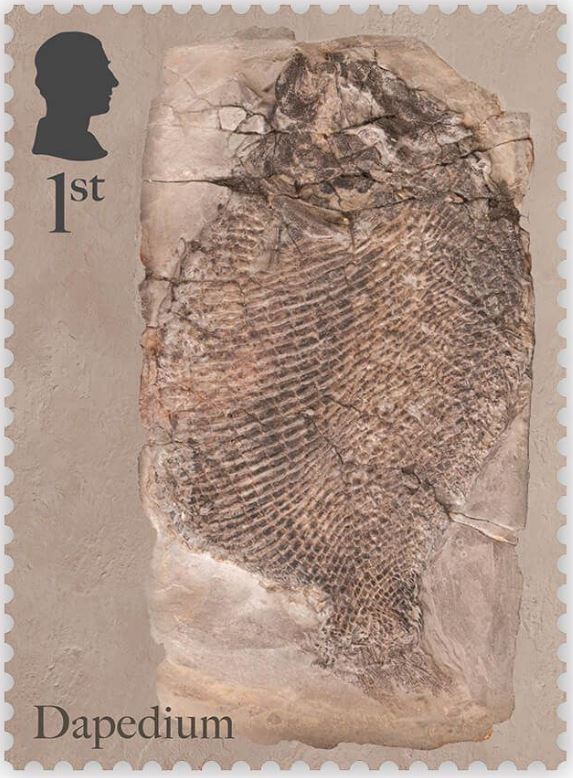
OUMNH collaborated directly with Royal Mail to help produce the Age of Dinosaurs miniature sheet, which showcases fossils collected by Mary Anning. One of the stamps in this collection features a photograph of the fossil of an extinct Jurassic fish, Dapedium, which is housed at OUMNH.
Despite Anning’s illustrious reputation, it wasn’t always known that this Dapedium specimen was connected to her — all that was known about it was that it had probably once belonged to William Buckland and had been collected from Lyme Regis.
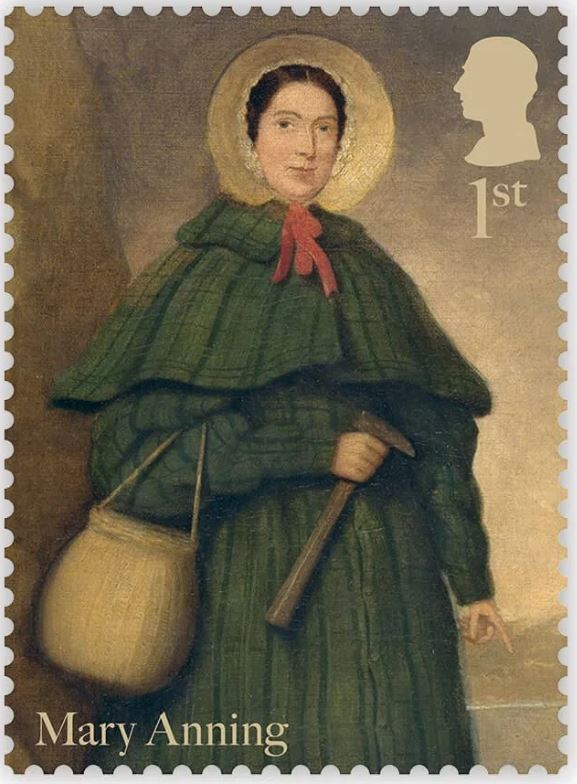
Stamp from the Age of Dinosaurs series featuring a portrait of Mary AnningStamp from the Age of Dinosaurs series featuring a Dapedium fossil from OUMNH
Although Anning is one of the most prolific fossil collectors to have worked in Lyme Regis, naturalists like Buckland often visited Anning to go “fossicking” together, or purchase fossils from her. There are very few archival records of transactions between Anning and other fossil collectors from this time, making it difficult to decipher exactly who extracted fossils such as this, found in nineteenth-century Dorset.
Fortuitously, while Dr Sue Newell was conducting research for her PhD on the Buckland Collection in 2021, she found an exciting letter in OUMNH Archive, dated 3rd September 1829. It was from a former student of Buckland’s, Beriah Botfield, and contained details of two fossils that Buckland had bought from Anning to present to the University of Oxford. Using evidence in the letter, Sue was able to work out that Botfield was referring to a Dapedium fossil which she later recognised tucked away in OUMNH’s fossil store.
Botfield had had the fossil mounted in an expensive (and very heavy!) stone frame, with “Presented by Beriah Botfield Esq. Dapedium politum. Lyme, Dorset” beautifully inscribed on the front surface. At the time, the identity of Anning as the fossil’s original finder, identifier, preparator and vendor, was probably common knowledge and, typically, Botfield did not consider these facts important enough to record on his presentation frame.
The Dapedium fossil is a near-complete example of this Jurassic fish, in which scale patterns and delicate fin structures are preserved in breathtaking detail. Dapedium is the first OUMNH object to grace a Royal Mail stamp – an ideal choice given its scientific and historic importance.
Visit the Museum to see the Dapedium fossil as well as temporary displays about the new stamp collection.
CELEBRATING THE RECENT ACQUISITION OF AN IMPORTANT ARCHIVE
By Danielle Czerkaszyn, Librarian and Archivist and Grace Exley, AHRC Doctoral Student
200 years since the first scientific description of a dinosaur, the Museum has welcomed a significant archival collection relating to the man who introduced us to Megalosaurus, William Buckland (1784-1856). The archive contains over 1,000 items including letters, notebooks, family papers, prints, and artworks. It joins the Museum’s existing Buckland archive, as well as more than 4,000 geological specimens, and helps fill in the knowledge gaps surrounding the life and work of Oxford’s first Reader in Geology and Mineralogy. Not only is there the potential to learn more about Buckland’s early life as a student at Christ Church, there is also material relating to the wider Buckland family, including his son, the zoologist Francis Trevelyan Buckland, and wife, the naturalist Mary Buckland (née Morland, 1797-1857).
Among the 70 letters in the archive that are addressed to Mary, there is correspondence from chemist William Wollaston, Scottish polymath Mary Somerville, and a lively letter from John Ruskin, explaining to Mary his disgust at all things marine:
“I dont [sic] doubt that those double natured or no-natured salt water things are very pretty alive, but they disgust me by their perpetual gobbling and turning themselves inside out and on the whole I think for purple and rose colour & pretty shape, I may do well enough with convolvulus’s [sic] & such things which dont [sic] eat each other up, backwards & forwards all day long.”
Ruskin was clearly teasing his friend, as molluscs happened to be Mary’s specialist subject!
Mary Buckland’s notebook, recently acquired by OUMNH
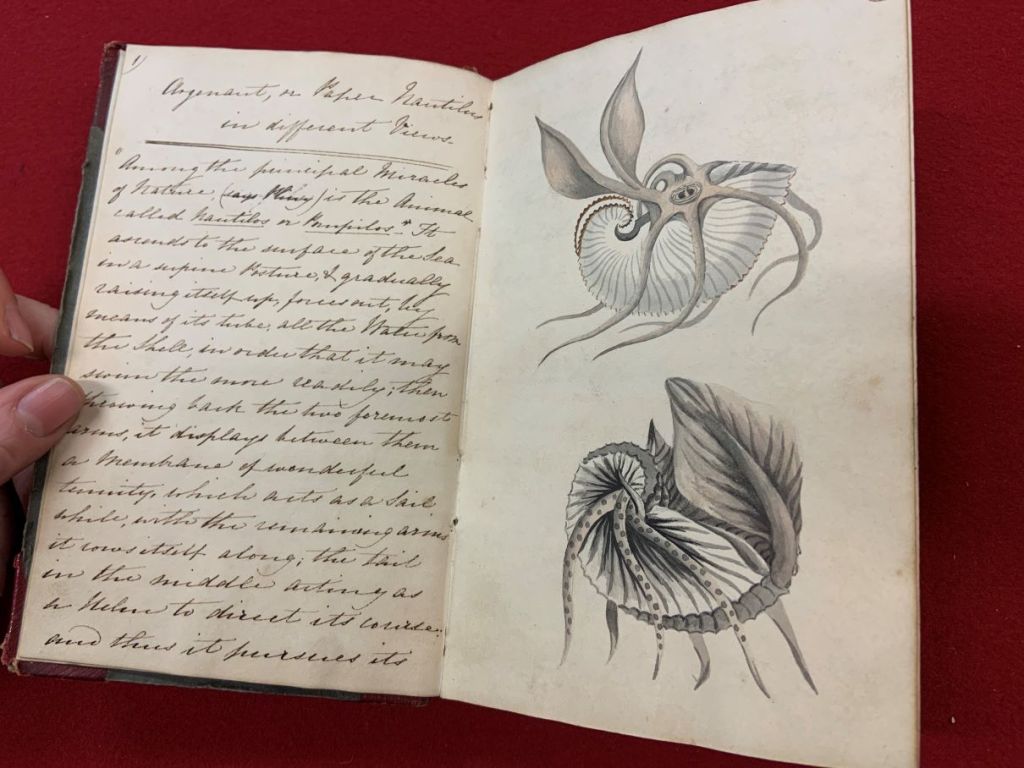
The collection also contains two sketchbooks belonging to Mary, one of which dates from June 1817, seven years before her marriage to William and contains exquisite ink and watercolour illustrations of natural history specimens.
Illustration of Megalosaurus type fossil by Mary Morland, used in the original 1824 description of the species.Fulgurite, or, as Mary called it a ‘vitrified sand tube’. These form when lightning strikes the ground, particularly sandy surfaces. Similar examples are present in the remains of Mary’s mineral collection, held by OUMNH.
The sketchbook gives us a rare glimpse into how a nineteenth-century woman learned about natural history. The book contains copied passages from natural history texts, enabling us to trace what Mary was reading. Her interests spanned geology and mineralogy, and she also included pieces on zoological curiosities and even polar exploration. She read and copied extracts from a variety of sources, some of which – George Shaw’s Zoological Lectures, for example – were intended to suit a lay-audience (as Shaw put it, intended as a “familiar discourse with Lady-Auditors”). However, other elements of her reading were probably never intended for a woman like Mary — she also copied passages from the Transactions of the Geological Society even though women could not join as Fellows until 1919. As archival materials relating to women are often sparse, this is a truly rare and incredibly valuable insight into how Mary used her connections to access resources and the techniques she used to teach herself about natural history.
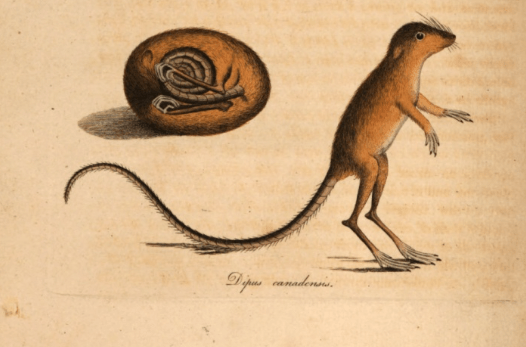
Perhaps the most striking feature of the notebook is its intricate, exquisite illustrations. These, done in watercolour, ink, and pencil, are reproductions of the figures from the works Mary copied out. A favourite in the sketchbook is the “Canadian Jumping Mouse”, a long-tailed rodent described in a piece in the Transactions of the Linnaean Society by Major General Thomas Davies in 1797. There are also many representations of molluscs (detailed enough to repulse Ruskin), mineral specimens, and occasional fold-out geological sections. As we flick through the book, we can see Mary experimenting with media and techniques — not only developing as an artist but also honing her skills as a scientific illustrator.
The skills and knowledge Mary developed in her natural history notebook were crucial to her later collaboration with William, as well as her own independent work as a draughtswoman before her marriage. In 1824, when Buckland presented the jaw of Megalosaurus to the Geological Society, it was “M. Morland” who provided the painstakingly detailed plates. Research has begun to uncover the extent of Mary’s work as a naturalist and illustrator, and now, with the help of the materials in the newly acquired archive, we can explore the origins of her skills. The archive is currently in the hands of a Paper Conservator, Anna Español Costa, to ensure the material is kept in the best condition for many years to come. Items from the archive will feature in the Breaking Ground exhibition, opening in October 2024.
Our fundraising campaign saw us receive generous support from the National Heritage Memorial Fund, Arts Council England/V&A Purchase Grant Fund, Friends of the National Libraries, Headley Trust, and other private donors. Additionally, in late 2022, we launched the Buckland Papers Appeal, asking members of the public to help us meet our target to purchase the archive. Thank you to all our funders and members of the public who responded to our call. We could not have raised the money so quickly without your support and we are now thrilled to share the archive with you all.








 More Than A Dodo