What’s on the van? – Trilobite

Trilobite

This week’s What’s on the van? comes from Dr David Legg, Post-doctoral Research Fellow in the Museum’s Earth Collections.

This particular trilobite specimen (Acaste inflata) was collected and named by John William Salter during the Ledbury Railway Tunnel cutting in 1864. Salter worked with many famous scientists during his career; he was an apprentice of the famous mineralogist James De Carle Sowerby, before becoming a curator for Adam Sedgwick at the Woodwardian Museum in Cambridge (now the Sedgwick museum), and in his later years he assisted Roderick Murchison on his work on Siluria. During this time, Salter developed an interest in the trilobites of Wales and was considered a world expert on this group.

Trilobites are a group of arthropods (the group that includes spiders, scorpions, crustaceans, insects, etc.) characterised by the possession of a hard exoskeleton composed of calcium carbonate. They are some of the first animals with hard parts found in the fossil record. The first trilobites appeared roughly synchronously on various continents around 520 million years ago, and went extinct during the largest mass extinction of all time at the end of the Permian (c. 251 million years ago), nearly 20 million years before the first dinosaurs appeared.

Acaste inflata belongs to a group of trilobites called the phacopids. The eyes of phacopid trilobites are unlike any others in the animal kingdom. The eye may consist of over 50 lenses, each separated from the next by a thick interlenticular cuticle. Because there are no modern animals with similar eyes it is unclear how they functioned to produce a clear visual image, however, the shape of each individual lens meant it was capable of focussing on objects of varied distance without the need for any additional focal mechanism (like the human lens which needs to change shape in order to see objects of different distances).

This picture is a bit strange because the trilobite is enrolled (curled up like a woodlouse) and the view is of the top of the head. We assume that this was a form of defence used by most trilobites.
What's on the van?

What’s on the van? – Wallace’s giant bee

Wallace_photo

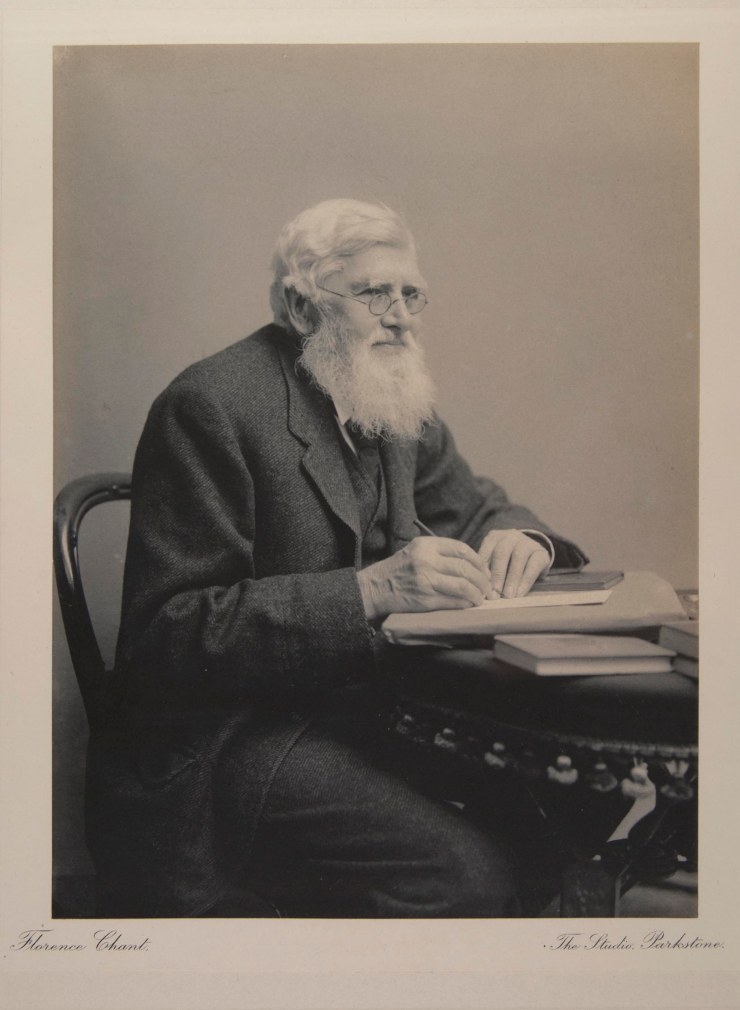
This Thursday, 7th November, marks 100 years since the death of the famous Victorian naturalist Alfred Russel Wallace. Wallace was an intrepid explorer and prolific collector and is hugely important in our understanding of the natural world. He co-discovered evolution by natural selection with Charles Darwin and we are fortunate to have several hundred of his specimens and letters in our collections here at the Museum of Natural History. 

To celebrate the life of such an important scientific figure, we’re dedicating this week on the blog to all things Wallace. We’ll be sharing some hidden gems, little known facts about the great man and stories of Museum staff walking in the footsteps of Wallace.
So here begins Wallace Week, with a description of one of his fantastic specimens…

_Megachile

This week’s What’s on the van? comes from Sally-Ann Spence of Minibeast Mayhem and the Bug Club.

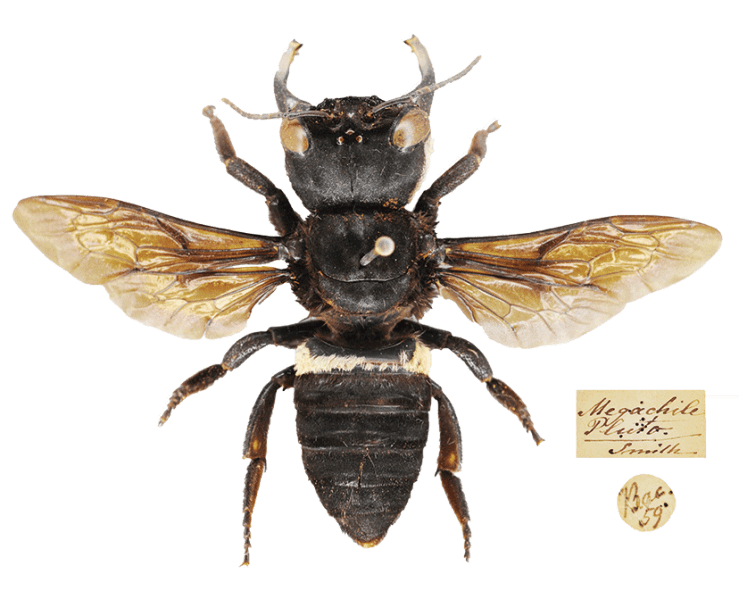
A single female bee stands out dramatically from all the bees in Oxford University Museum of Natural History’s bee collection and not for one reason, but three.

Firstly and quite simply is her impressive size. With a 63mm (2.5”) wingspan she completely dwarfs all her companions. Secondly, she has the most enormous and impressive mouthparts: jaws longer than her actual head held agape in the same fashion as a stag beetle’s mandibles.

The third reason and perhaps the most special, is not associated directly with her body, but the little unobtrusive label impaled with her on the pin. Alfred Russel Wallace was inordinately fond of using tiny round paper discs to store information on when mounting his specimens and this bee is in fact called Wallace’s Giant Bee, Megachile [Chalicodoma] pluto, the world’s biggest bee. It was first discovered by Wallace in Indonesia in 1858 and then thought to be extinct until 1981, when it was rediscovered by the American entomologist Adam C. Messer.

It really is the most interesting and unusual bee. The females are not only larger than the males in general size but also have the markedly more impressive mouthparts. They appear to use these jaws to collect resin from trees by rolling it up into neat balls for transport in flight. Then they mix it with wood and dried fibres to make a waterproof nesting material.

The next amazing thing is where they actually build their communal nests. Not underground or in cavities, but inside the already existing nests of tree-dwelling termites. Surprisingly, very little is known about the world’s biggest bee. It may be nesting within the termite colony to ensure a microclimate for its own young. It may be gaining protection from predators and parasites by being there. Perhaps it is a combination of these reasons.

It is possible that when Wallace collected this specimen in 1858 he was completely unaware of its nesting behaviour, so it then remained hidden for so long within its termite cloak. Even the local people were unaware of its very existence, although local folklore was based upon it.

This lone female bee and her famous collector are a constant reminder to us all today why research is so vital and of the huge importance of museum collections.

What's on the van?

What’s on the van? – Stromatolite

_Stromatolite

This week’s What’s on the van? comes from Dr Tracy Aze, Museum of Natural History Research Fellow.

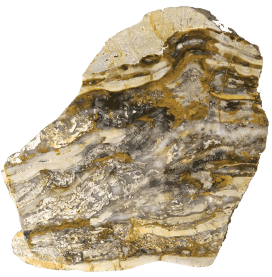
This rock called a stromatolite (from the Greek strōma, meaning mattress or bed and lithos meaning rock) is from a very old suite of rocks called the Porsanger Dolomite Formation in Norway, and is at least 542 million years old.

Modern day stromatolites in the Hamelin Pool Marine Nature Reserve, Shark Bay, Western Australia. Image from www.rockhounds.com.
Modern day stromatolites in the Hamelin Pool Marine Nature Reserve, Shark Bay, Australia.

Stromatolites are produced by the activity of ancient blue-green algae, otherwise known as cyanobacteria. The algae are photosynthetic and need good light conditions to allow them to photosynthesise, consequently they live in shallow waters where sunlight can penetrate. They grow in thin mats on the sea floor, which helps them maximise the amount of light they receive. Over time these mats are covered by sediment grains, which block the sunlight and the algae move up through the sediment layer as they migrate back towards the light. This process happens time and time again over many years and the layering that can be seen in this rock is built up as a result.

The algae that produce stromatolites represent some of the earliest life forms on Earth and some deposits have been dated at 3.5 billion years old! Although they are some of our most primitive life forms, communities of these types of algae can still be found living today in shallow warm waters in places such as Western Australia and The Bahamas and visiting these places is thought to be bit like looking through a window to our distant geological past.

What's on the van?

What’s on the van? – Jervis Label

_GalleryLabels-066

This week’s What’s on the van? comes from Monica Price, Head of Earth Collections.

A story to tell
Each of the millions of different objects in our Museum has a story to tell – what it is, where it is from, who collected it, when and why. All that information is collected together on the specimen’s label, and museum curators look after labels like this just as carefully as they do the specimens themselves.

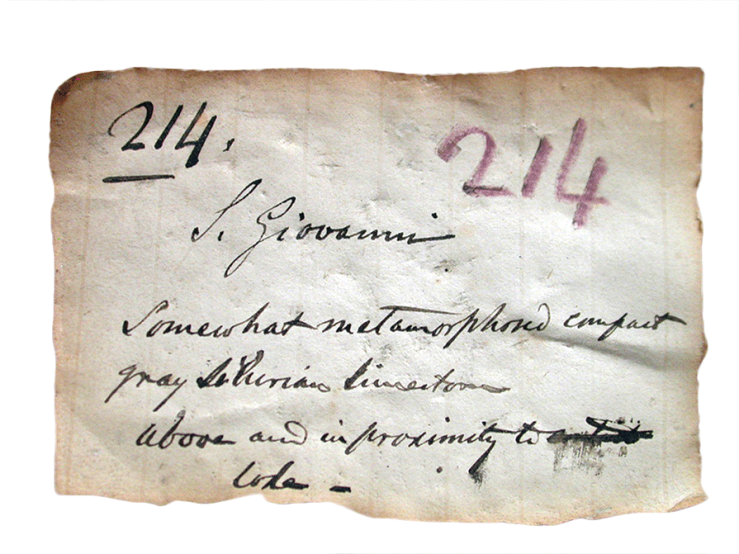
Some of the labels in the Museum are very old, but the handwriting can be distinctive. Although this label does not say who wrote it, we can tell from the handwriting, the style of number, and the Italian locality, that it was written by an Englishman called William Jervis. He was a geologist who worked at the Museo Industriale Italiano (Italian Industry Museum) in Turin during the second half of the 19th century.

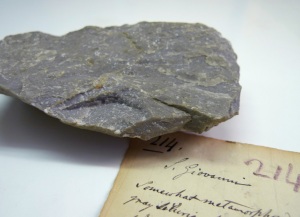
Label 2William Jervis wrote books on the rocks and minerals of Italy that are important for ores, building materials and water supplies. He also put together sets of rocks samples to be sold to other museums and universities. He trimmed each one to a neat rectangular shape and gave it a number. On the label, he’d write the number, what the rock was, and exactly where it was collected. Some of his labels are very detailed indeed and show that his samples came from places no longer accessible today. The specimen accompanying this label is one of a set of Sardinian rocks. It comes from San Giovannni mine, near Iglesias, and shows the kind of grey limestone that was found close to the ‘lode’, the vein of lead and zinc ore minerals which was being worked by the miners.
Do you have a collection of geological specimens, or maybe shells, plants or insects? It is always a good idea to do what William Jervis did, put a number on each specimen (maybe using a little paper label), and then write all the information about it on a label. It’s also a good idea to keep that information all together in a book or on a computer so that if a label goes missing, the information is kept safe. Don’t forget to keep a back-up of your computer file though, just in case!

What's on the van?

What’s on the van? – Oxford Dodo

_Oxford_dodo

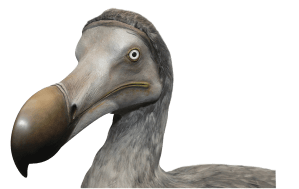
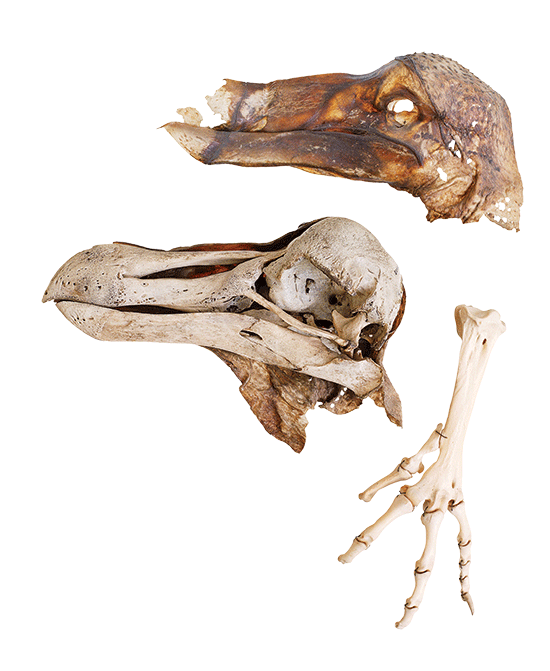
L-IMG_1879It’s time for one of the stars of the Museum’s collection! One of our most famous specimens, the dodo even features on our logo.

This week’s What’s on the van? comes from Malgosia Nowak-Kemp, Collections Manager in the Museum’s Life Collections.

The Dodo of Mauritius was discovered in the late sixteenth century by Dutch sailors stopping on the island for water and fresh food supplies. Because of its inability to fly, the Dodo was considered a great exotic curiosity and a few of the birds were shipped to Europe, India and Japan. One of them ended up in London, in the Tradescant collection. This collection, widely known as the “Ark”, was assembled in the seventeenth century by gardeners to the royalty and aristocracy, father and son John Tradescant. The stuffed Dodo was displayed to the public and described in the Tradescants’ catalogue as “Dodar, from the island of Mauritius. It is not able to fly, being so big”.

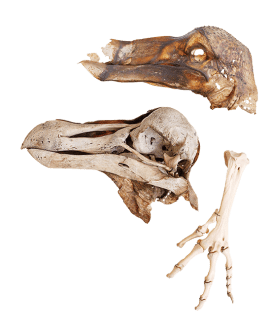
After the death of the Tradescants, the “Ark” was presented by its new owner, Elias Ashmole, to the University of Oxford, and in 1683 placed in the newly built Ashmolean Museum. Over the years, the specimens suffered from damage inflicted by insect pests and too frequent handling by visitors, and by 1756 only the Dodo’s head and one of its feet remained.

In 1848 it was firmly established that the Dodo was a member of the pigeon order: Columbiformes. In 2002, with application of DNA analysis, the Oxford Dodo yielded even more information about its origin. We now know that several million years ago its ancestors arrived in Mauritius from the Nicobar Islands, off India. Finding no natural enemies in their new habitat, and no competition for food, the lineage evolved in size and gradually lost its ability to fly. But in the end its size was not enough protection to stop humans, and animals introduced by them, like pigs, rats and monkeys, from causing the Dodo’s extinction.

What's on the van?

What’s on the van? – Silk Moth

_LEPI1997l[1]

This week’s What’s on the van? comes from Kotaro Fujiyoshi, a work experience student from Merchant Taylors’ school in Middlesex. He is currently on placement in the Museum’s Hope Entomological Collections.

This picture is of a silk moth called Rothschildia jorulla, which was described as a new species to science by the Museum’s first Professor of Entomology, John Obadiah Westwood (1805 –1893). It was collected in Cuautla, Morelos, Mexico in 1853.

Moths of this kind belong to a group called silk moths, or saturniids. There are over 2000 species of saturniids, one of them the world’s largest moth, Attacus atlas. This group of moths are widely exploited across many cultures as sources of silk. Some species of the group are very well known, for example the silk worm (Bombyx mori), used by Chinese textile manufacturers from at least 5000 years ago. This Rothschildia is no exception, as its silk has been used for producing textiles in Mexico.

Unlike their domesticated counterpart, the silkworm, this moth is very well adapted to a life in the wild. For example, its four translucent patches and two black eye-like spots on the wings can easily be mistaken for eyes. Birds looking for a meal would peck at these obvious vulnerabilities instead of the body, so that all the important organs and flight muscles of the moth are protected from a fatal blow.

Saturniids have reduced or completely dysfunctional proboscises (mouthparts) and do not feed. This means that they are very short-lived as adults, surviving for only about 2 to 3 weeks. They are able to survive these weeks without eating due to their energy stores: as caterpillars, they eat enough food to last them all the way from pupation to the end of their short few weeks as adults. After emergence, the males spend the majority of their remaining time fluttering about, looking for mates. Females emit sex pheromones, vital clues for the males, and the males smell their way to find their mates, using their comb-like antennae.

Saturniids are most diverse in the tropics and are often seen flying to house and street lights on relatively windless nights of warm seasons.

What's on the van banner 2