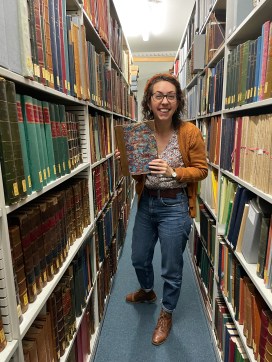
Danielle Czerkaszyn

You may already know that the museum contains millions of natural history specimens, but did you know that it also houses a world-class collection of books and journals, plus a priceless archive?  Held in 38 different locations across the museum, the collection of over 20,000 books covers all areas of natural history: zoology, geology, mineralogy, palaeontology, and is particularly known for its collection of entomology books and journals.  In fact, we believe it is the third largest entomology library in the UK after the Natural History Museum in London and the library of the Royal Entomological Society.  

In addition, there is a priceless archive of letters, maps, field notebooks, photographs, artwork and other items of interest.  Where else would you find letters from Charles Darwin, the death mask of the Swiss biologist and geologist Louis Agassiz, and the trowel that laid the foundation stone of the museum’s building in 1855.
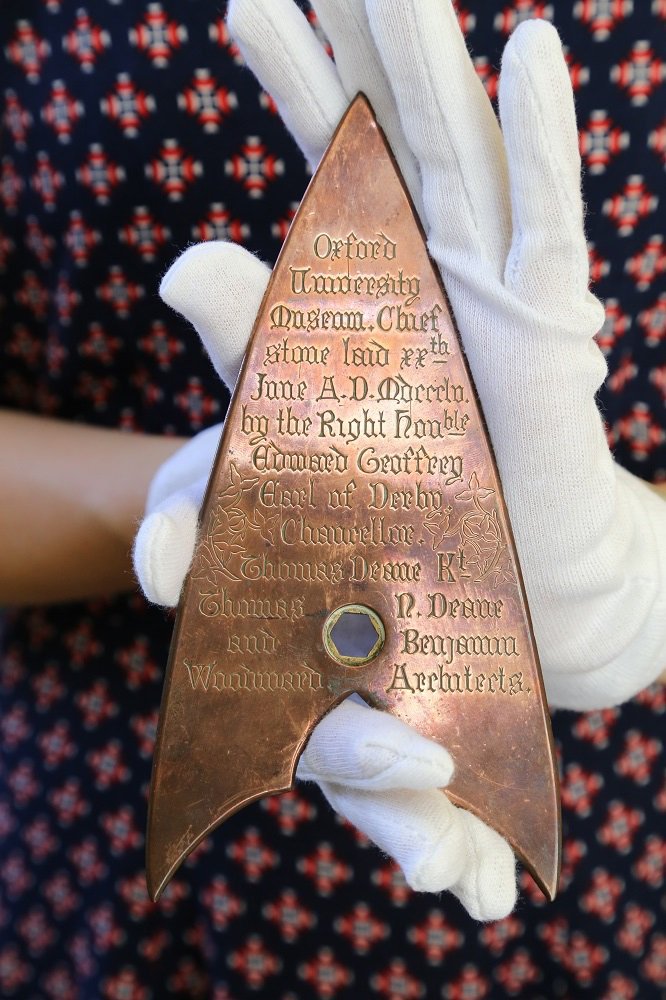
Trowel used to lay the Museum’s foundation stone

So, who is in charge of this fascinating treasure trove? That job falls to Danielle Czerkaszyn, the museum’s Librarian and Archivist.  I went along to meet Danielle to find out how she came to work at the museum, what her job involves and to learn more about the amazing collection in her care.
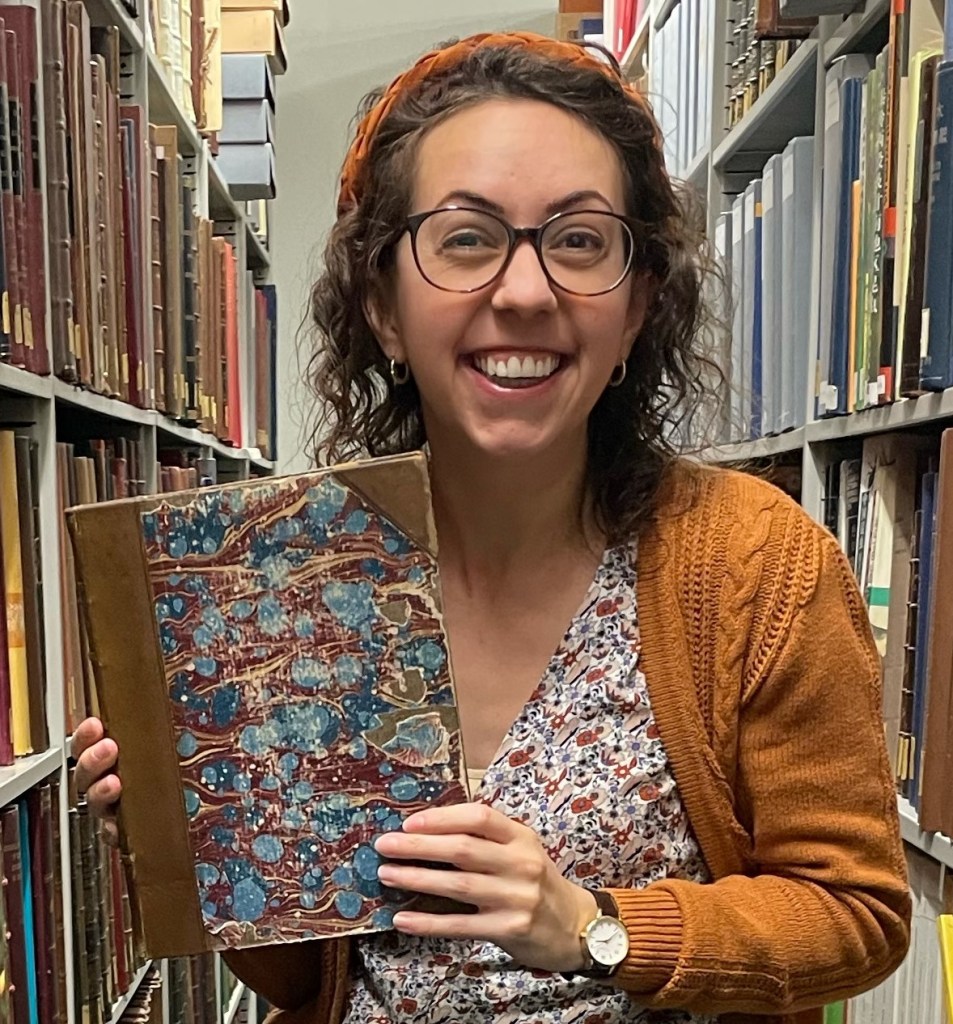
Danielle Czerkaszyn

From History to Natural History

Having first completed a degree in History in her native Canada, Danielle came to the UK to do a Master’s degree in Museum Studies.  Following this, she was selected for a place as a Graduate Library Trainee at the Bodleian History Faculty Library here in Oxford and secured her post at the Oxford University Museum of Natural History in 2017.  Danielle revealed:

“When I came for the interview, I was asked what my weakness would be in the role and I replied that I didn’t really know a great deal about natural history! The good thing is that I learn new things every day and my knowledge of natural history has expanded!”

As well as a valuable resource for staff at the Museum and other members of the University, the library and archive is open to anyone with an interest in natural history.  On a day to day basis, Danielle deals with many enquiries from the public requesting visits or requests for articles and chapters of books to be provided digitally to help with research.  High-use collections in the library and archive are currently in the process of being digitised which will make it even more accessible to natural historians around the world.  Danielle is also responsible for keeping the collection up to date with new publications and dealing with donations that come in from members of the public. 

Highlights of the Collection

I asked Danielle to choose some of her favourite entomology items from the collection and she suggested two incredible and unique works – one from the archive and one from the library. 

The first is William Jones’ Icones, one of the most scientifically important and stunning works on butterflies and moths ever produced.
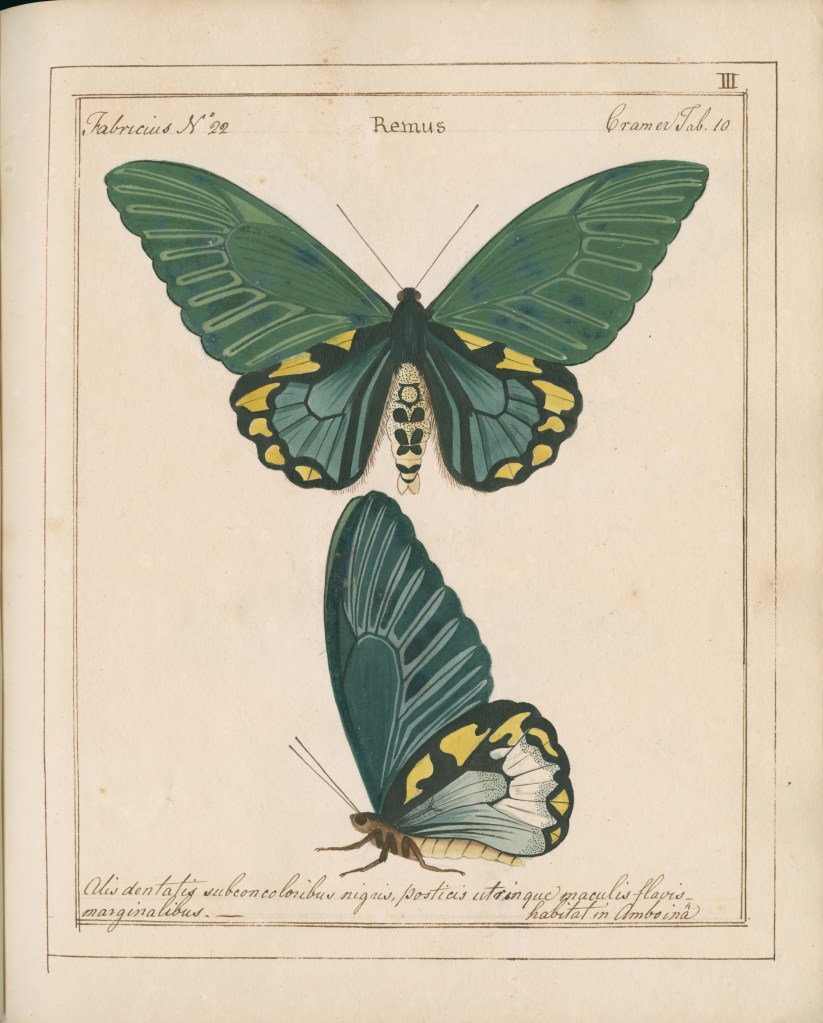
William Jones’ Icones

“This work as one of my favourites because the paintings are so

detailed and beautiful. Plus it is completely unique.” 

Danielle Czerkaszyn

Danielle’s second choice is Maria Sibylla Merian’s Metamorphosis Insectorum Surinamensium (Insects of Surinam) published in 1705. 
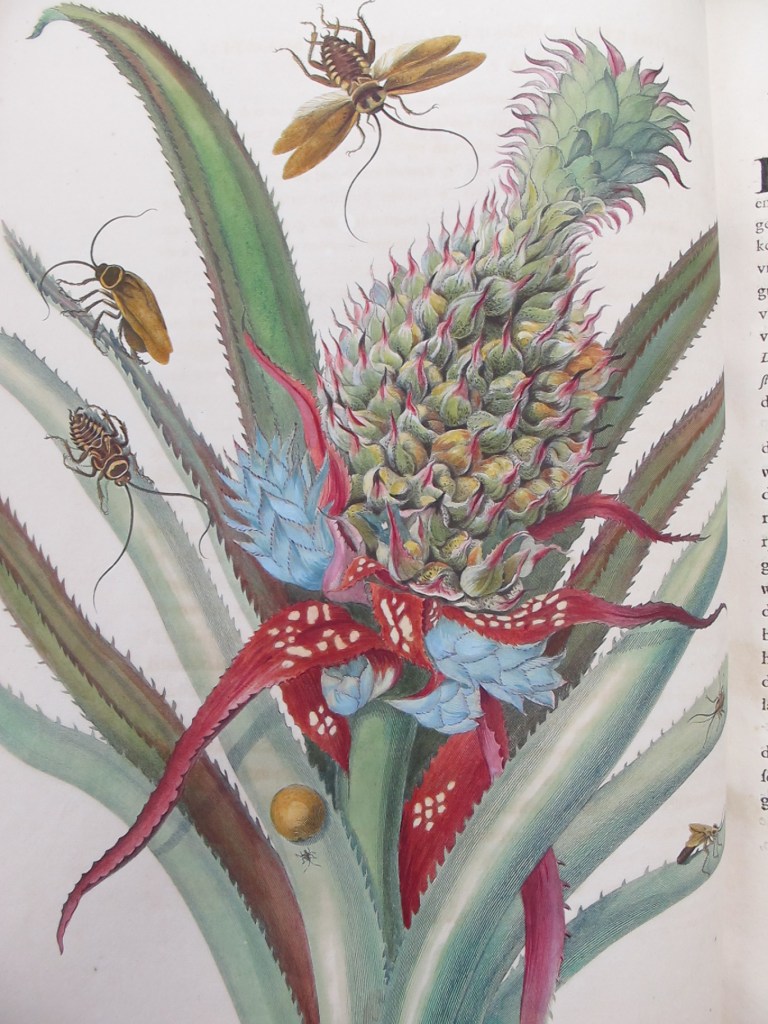
Maria Sibylla Merian’s Metamorphosis Insectorum Surinamensium (Insects of Surinam) published in 1705

“Maria Sibylla Merian is definitely a figure to be admired as a pioneering role model for women and I love showcasing her work.”

Danielle Czerkaszyn

Check out our blog posts on these incredible items from the collection to find out more:

William Jones’ Icones

Maria Sibylla Merian’s Insects of Surinam

Thank you so much to Danielle for giving us a fascinating insight into the library and archive here at the Museum of Natural History, and for sharing some of the incredible works in her care. 

To find out more about the library and archive visit https://oumnh.ox.ac.uk/library.

Do you have a favourite book on insects? Tell us about it here or in the comments below.
Through the looking glass

With our Life, As We Know It redisplay project now underway, our Senior Archives and Library Assistant Danielle Czerkaszyn takes a behind-the-scenes look at how we captured the contents of the current displays for the Museum’s archive.

The archive here holds a unique collection of natural history books, journals and documents covering a wide range of subjects related to the Museum’s collections and research. It also contains papers and objects on the history of the building, providing an institutional memory of Oxford’s ‘University Museum’ since its foundation in 1860.

From an archive perspective it was really important to document the current layout of the cases, their specimens and text before they were removed from the court to make way for the new showcases in the first phase of our redisplay work.

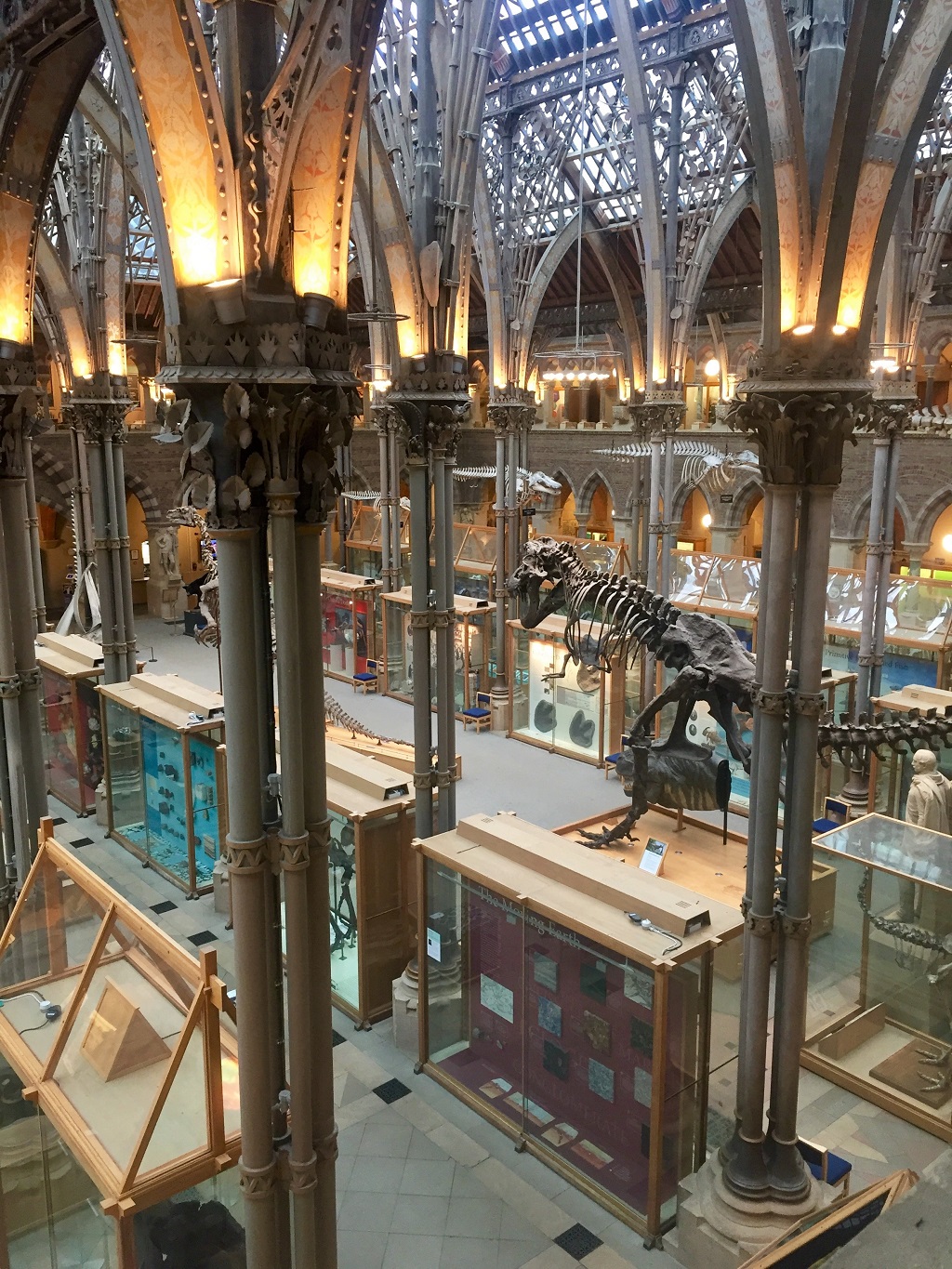
The museum in late 2019

The displays as we know them – with exhibitions on the Oxfordshire dinosaurs, Alice in Wonderland, the Oxford Dodo, and more – were last changed in 2000. For the last 20 years visitors to the Museum would remember their first time being wowed by the Megalosaurus jaw – the world’s first scientifically-described dinosaur – or charmed by the Dodo made famous in Lewis Carroll’s Alice Adventures in Wonderland.

Although after 20 years it is time for a change, the stories and information in the displays are too good to be forgotten. So before anything was removed we began to build the archive for the future.

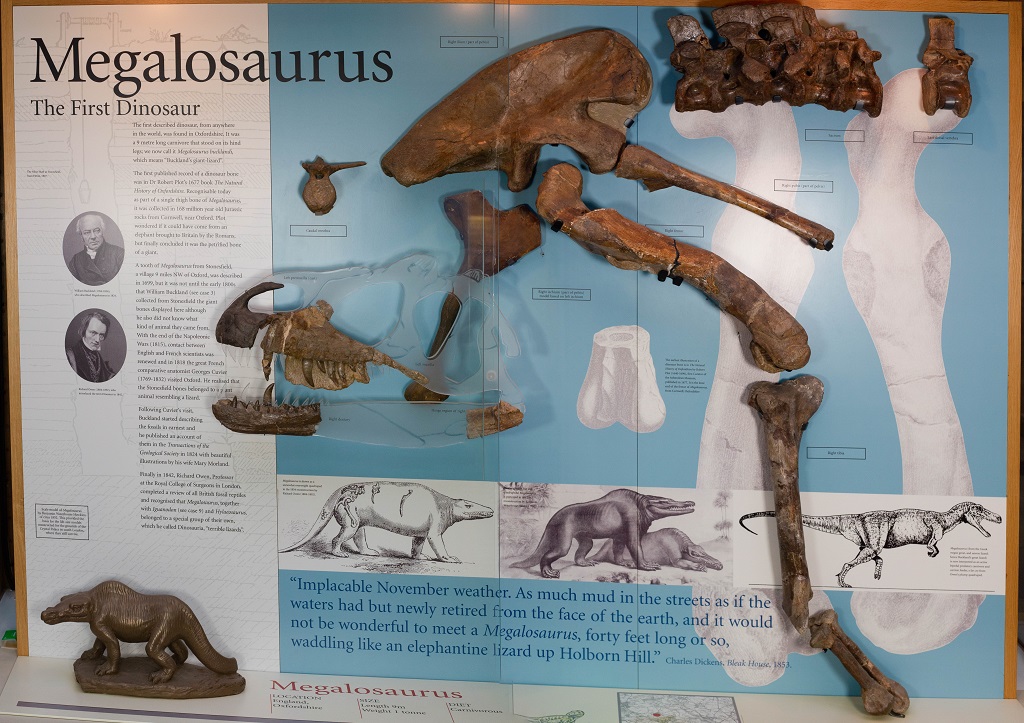
A display of the fossilised remains of Megalosaurus
The previous display on Megalosaurus: The First Dinosaur

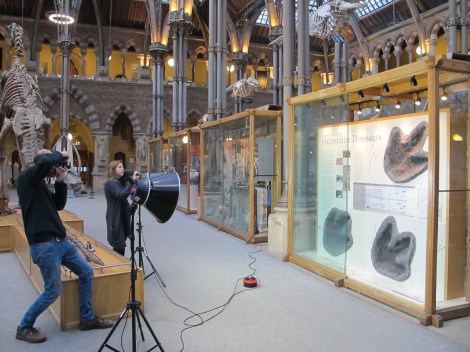
The best way to capture all the information of the displays was through high resolution photography, but this was not as straightforward as we hoped.

The first two obstacles to good photographs are pretty obvious to anyone looking at the cases: glass causes huge amounts of glare; and each case has a big dividing line down the centre where the two sliding glass doors meet, cutting what should be a lovely seamless image into two halves.

To avoid glare and the solve the problem of the dividing line, our photographer Scott opened each individual side of the case, photographed two or three images of the display, and then stitched the separate photos together using Photoshop.

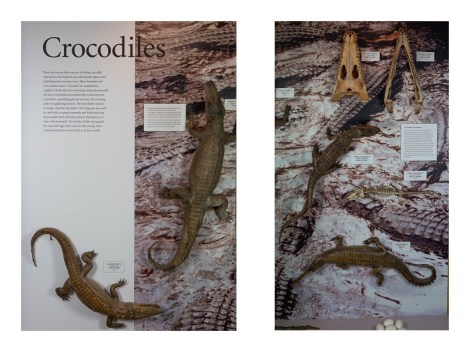
Each case was photographed in two or three segments

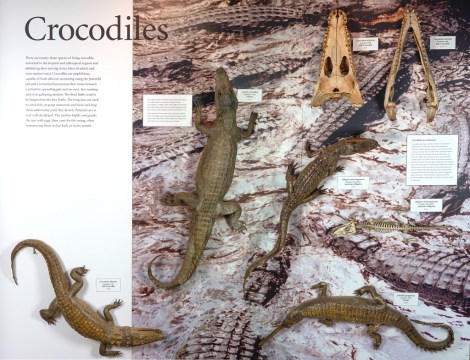
The segments were then stitched back together and adjusted for exposure and colour balance to create the final image

Another obstacle to taking good photographs of the displays came from the Museum itself. Some of our larger display furniture, such as the glass case for the Atlantic Bluefin Tuna or the huge T. rex plinth – got in the way of a nice straight shot. Because these items are so large and heavy they were impossible to move, so we had to improvise and do our best.

Capturing the displays before the current cases were removed allowed us to keep an archival record of their contents

Thankfully, we managed to get shots of all 24 displays before they were removed and so a record of each case now rests with the Museum’s archive. If anyone wants to know what the display cases in the court looked like from 2000 to 2020, they will now be able to look back at the images in the archive and recall the magic of the Oxford Dodo exhibit that perhaps first made them fall in love with the Museum.

Our new displays are now in development, and will include some beautiful presentations of the diversity of life, looking at the importance and fragility of biodiversity and human impact on the environment. These new exhibits will show how the biological processes of evolution combine with the geological processes of our dynamic Earth to give rise to the immense, interconnected variety of the natural world.

We look forward to telling you more about that here as the project progresses.

The Life, As We Know It redisplay project is supported by a generous grant from FCC Communities Foundation.