A Seed of Doubt

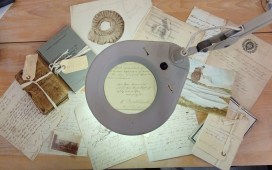
In February 2023, the Museum was lucky enough to acquire an important historical archive – a collection of notes, correspondence, artworks, photographs and family documents belonging to geologists William and Mary Buckland. But before the archive can be enjoyed by visitors and researchers, it must first be cared for, ensuring its preservation for generations to come. Thanks to generous funders, the Museum was able to hire a Project Paper Conservator, Anna Espanol Costa. Considering the Museum had not had a paper conservator since the mid-1990s, Anna was incredibly resourceful with her use of tools and materials, utilising everything from makeup sponges and soft brushes to tweezers and dental picks. In this blog post, we share insights from the eight months she spent assessing, cleaning and repairing some of the most at-risk and important material in the archive, as well as some unexpected surprises she found along the way…


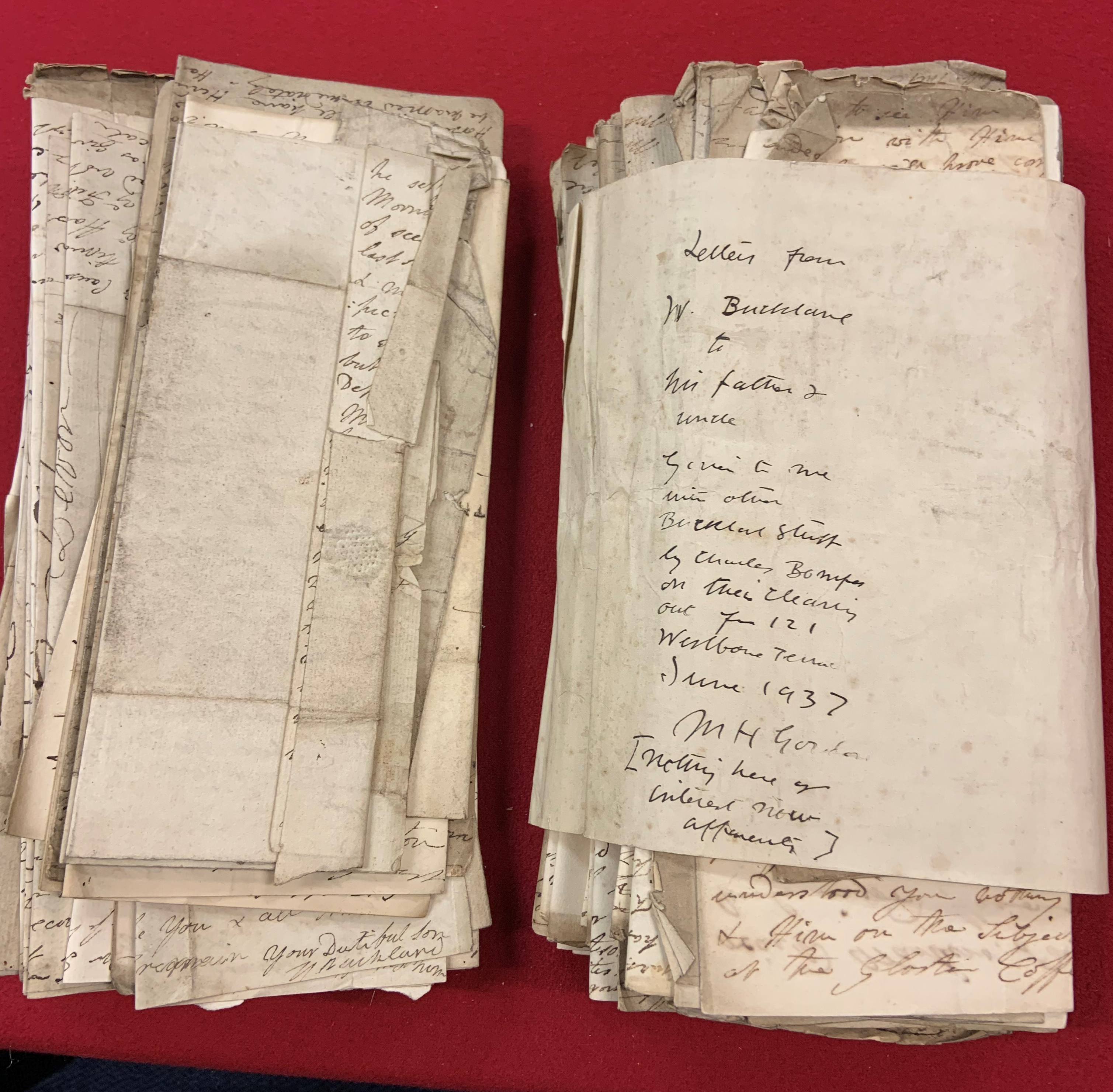
Paper can be used to store information for decades, if not centuries, but it is still vulnerable to frequent handling and poor environmental storage conditions. When the Museum acquired the Buckland archive it was around two hundred years old and, unsurprisingly, many of its items needed care and restoration. Over the years, the papers had been housed in the standard file folders and boxes you would use for office documents, rather than an important historical archive. Many of the folders were overcrowded and had been tied together with string. Some manuscripts had been damaged due to too many items being stored in the same folder, and there were places where the string had cut into the larger pieces of paper causing tears. The most fragile and vulnerable items showed signs of chemical and physical damage, including iron-gall ink corrosion; chemicals in the ink had started to eat through the paper, causing cracks and loss of ink, and consequently text, in some areas.
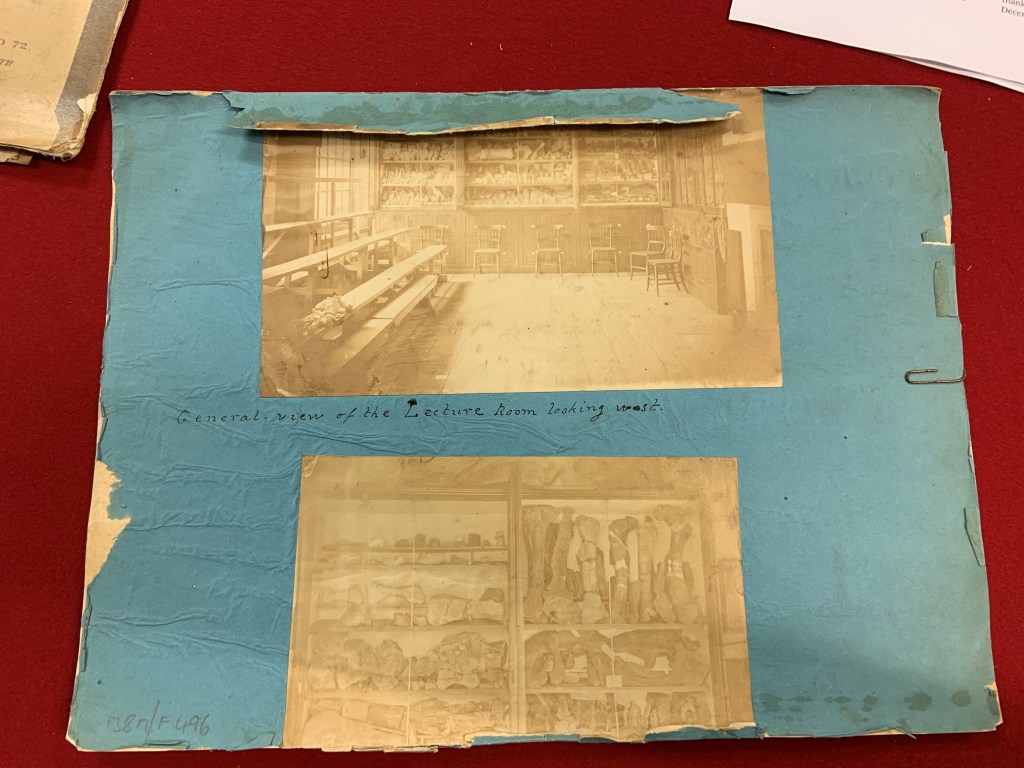
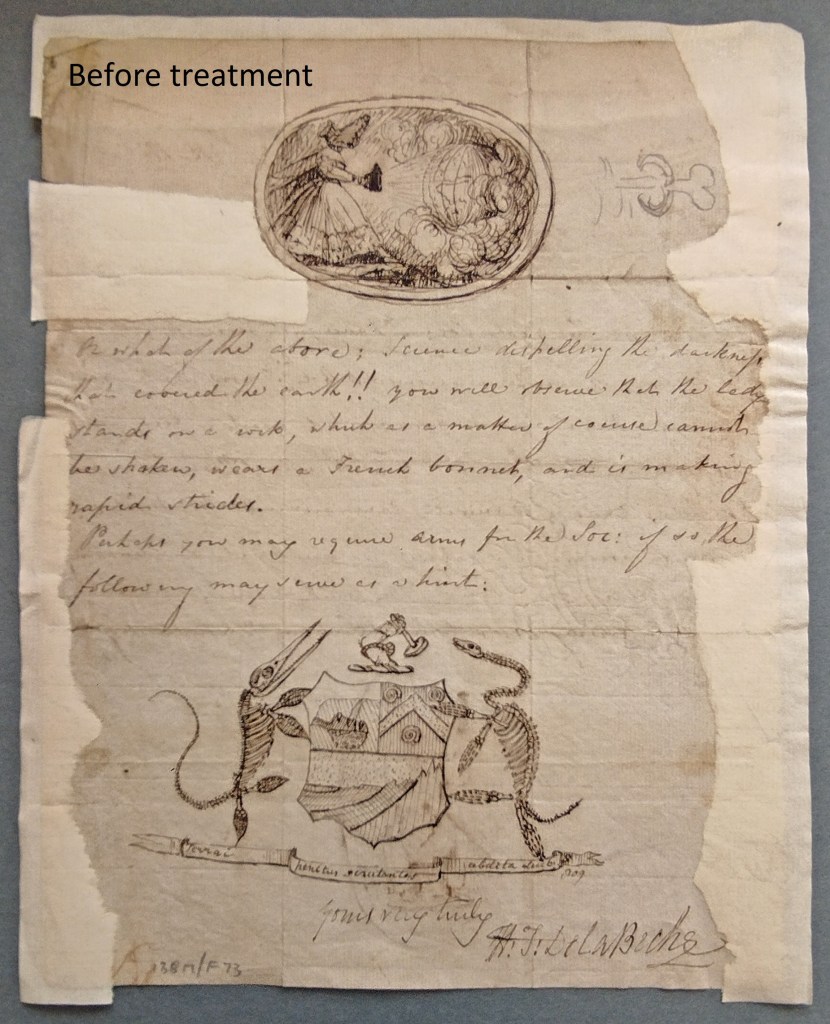
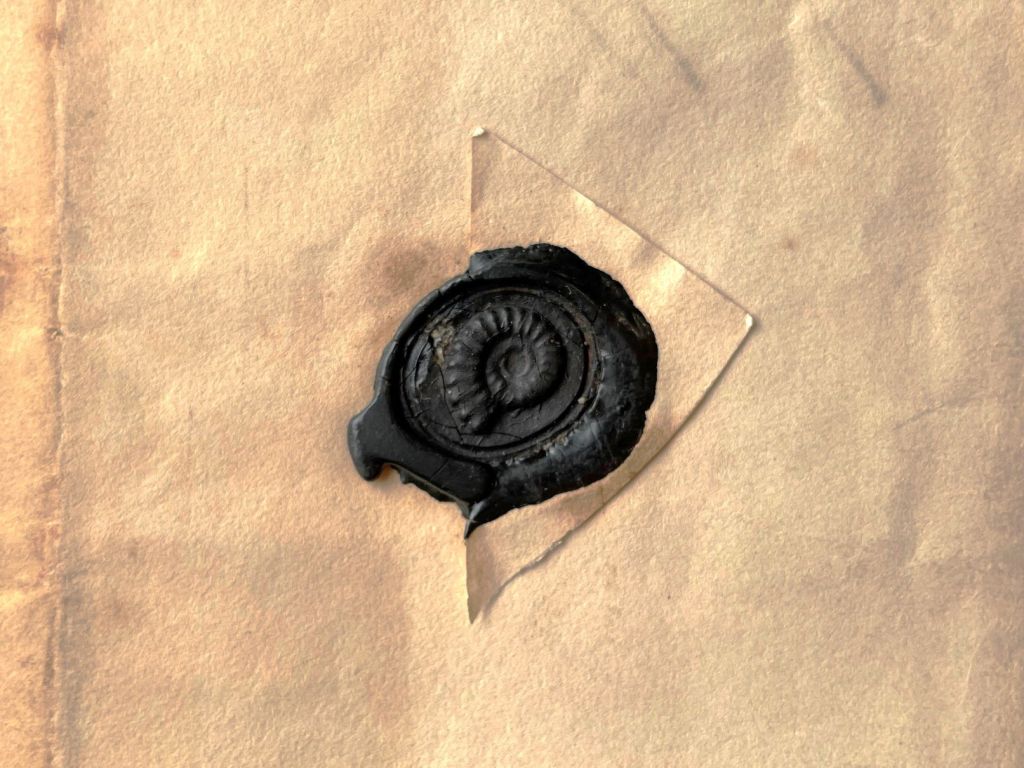
Past efforts had been made to restore the documents, but sometimes these had disfigured the original manuscripts: “in-fills” had been made with unsuitable paper, and backing sheets had been added in bright colours like blue or green. The archive was also being held together with unstable and rusty paper clips, and many of the original wax seals had cracks. It would have been a great shame to lose any of the seals, which feature beautiful examples of natural history icons, like ammonites and cephalopods.

PRESERVING HISTORY

The objective of my work was to stabilise the Buckland archive to ensure its long-term preservation and restore the appearance of the collection so it could be safely handled, digitised and exhibited in future.

One of the most important principles behind conservation is doing the ‘least amount to do the most good’. Conservation aims to slow down the ageing and deterioration process by using treatments that will not damage or disfigure the integrity of the original document. Conservation may be preventative — for instance, moving documents to a new box that creates the right ‘microclimate’ for their preservation. It may also be interventive — e.g. repairing with non-acidic and reversible materials that can be easily removed at any time, and that also can stand the test of time.

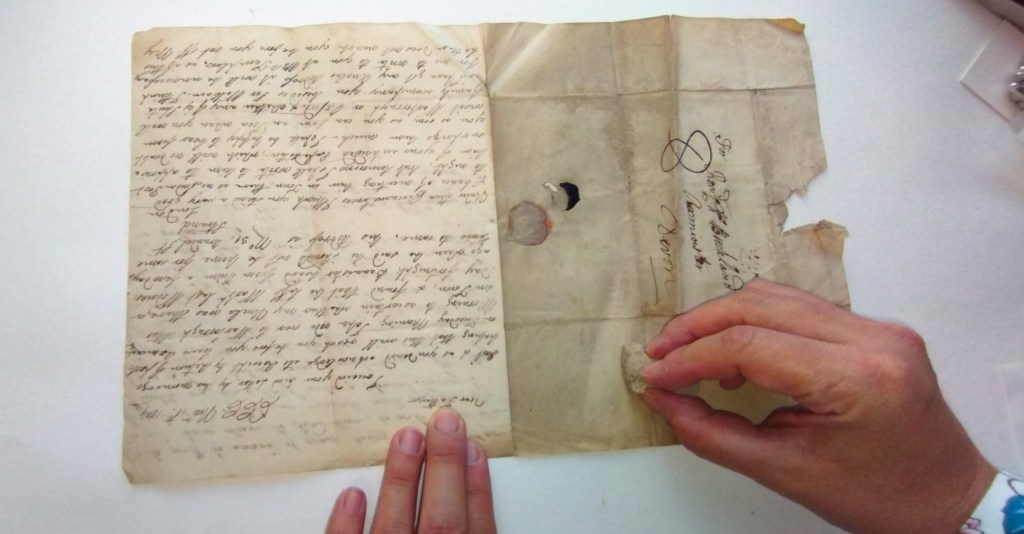
During my time at the Museum, I have been able to conserve a number of the most at-risk and important pieces of archival material. In some cases, this involved a light clean with a soft brush and re-housing of the most overcrowded items. In other cases, I performed more interventive and invasive conservation treatments including mechanical surface cleaning with smoke sponges, relaxing folds with paperweights or steam, stabilising iron-gall inks with gelatin to prevent further corrosion, mending tears with different grades of Japanese papers and tissues, and cleaning and consolidating cracks in the wax seals on the letters to prevent further loss. I also tackled some of the previous ‘repairs’ by eliminating old animal glue which had left the manuscripts shiny in places, carefully removing the unsuitable paper, and adding supports where necessary, thus leaving no traces of the bright blue backing paper.
INTERESTING AND UNEXPECTED STOWAWAYS

As well as undertaking conservation repairs, I also documented the condition of the items; photographing the manuscripts before and after conservation treatments to ensure the Museum, or any other future conservators, have a record of my work. Whilst undertaking conservation treatments, I found some interesting and unexpected stowaways in the archive. What looked to be small holes in one of the pages of a letter ended up being recognised by one of the Museum’s entomologists as spider frass (poop). A moth had also decided to call the papers home at some point in the last two hundred years as I came across a small cocoon that was now long dead, desiccated (dry) and dusty. The most unusual find, however, was a small black dot that I initially thought was an insect. However, employing the help of a microscope and one of the Musuem’s entomologists, we realised that it was actually a seed! What kind of seed, and how or when that seed came to reside in the Buckland archive, we don’t know, but it shows the archive had a life and story of its own long before it came to rest here in the Museum.

A JOB WELL DONE

Overall, I was pleased with the amount of work I was able to accomplish at the Museum. I managed to conserve a significant amount of the archive and was fortunate enough to work with, and learn from, a range of museum staff, including palaeontologists, geologists, zoologists, entomologists and the Life and Earth collections conservators. It has been a privilege to share and exchange knowledge with my colleagues and work collaboratively on the preservation of an important archive. I look forward to hearing about some of the research findings it produces, and to see it shared with the public in future exhibitions and displays.
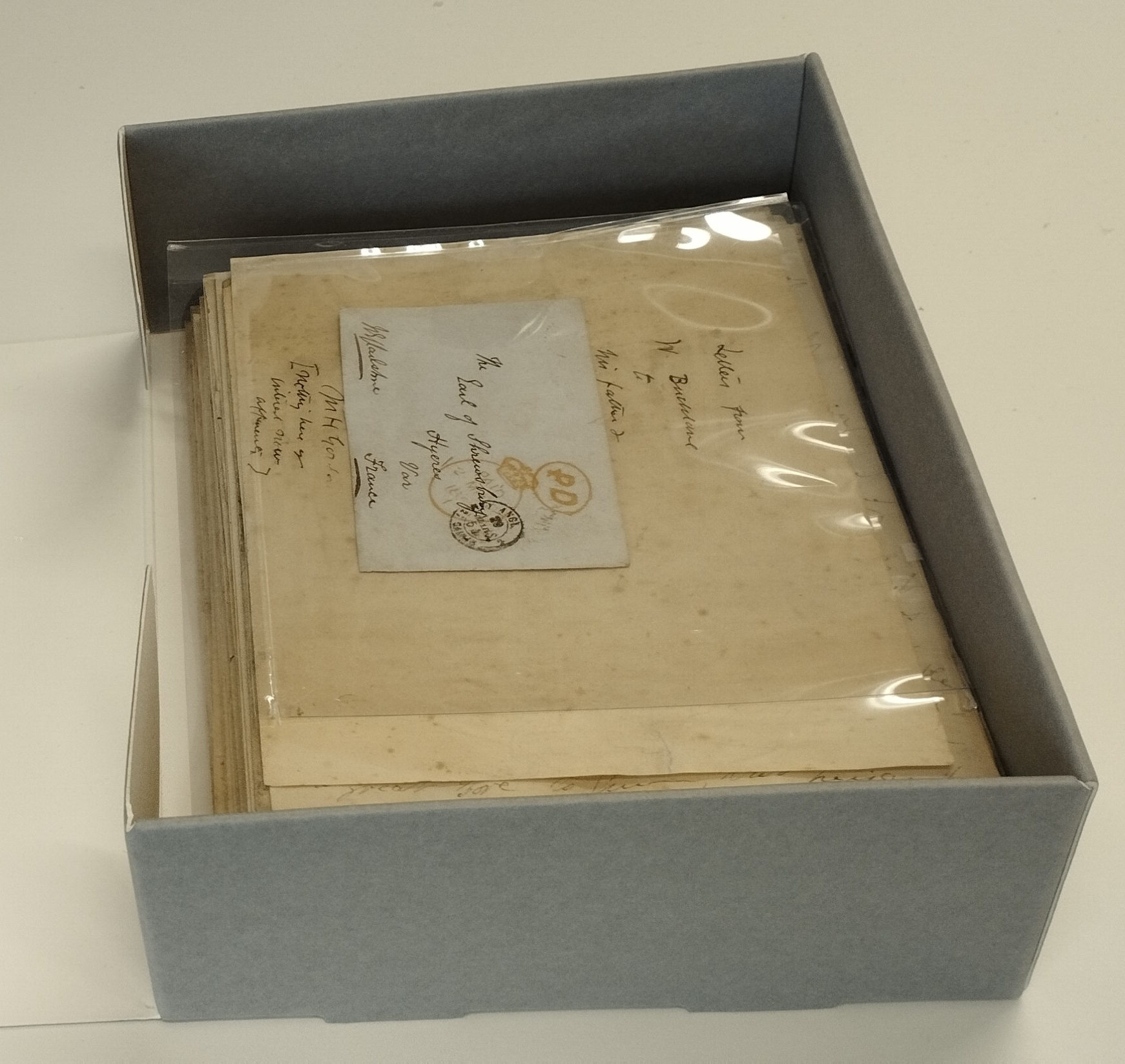
Thank you to the National Manuscripts Conservation Trust and Helen Roll Charity for funding Anna’s work. Items from the Buckland archive will feature in the Museum’s upcoming exhibition ‘Breaking Ground’ opening 18th October 2024.
Ubiquitous and Inconspicuous

THE INVISIBLE HISTORY OF THE MUSEUM’S GLASS DISPLAY CASES


Glass cases play an integral role in museums and galleries, but they are designed to be overlooked and ignored. In this blog post, Librarian and Archivist Danielle Czerkaszyn uses research collected by Helen Goulston (AHRC Collaborative Doctoral Partnership PhD Candidate) to uncover the invisible history of OUMNH’s glass display cases and considers how they have evolved alongside the museum during its 160-year history.


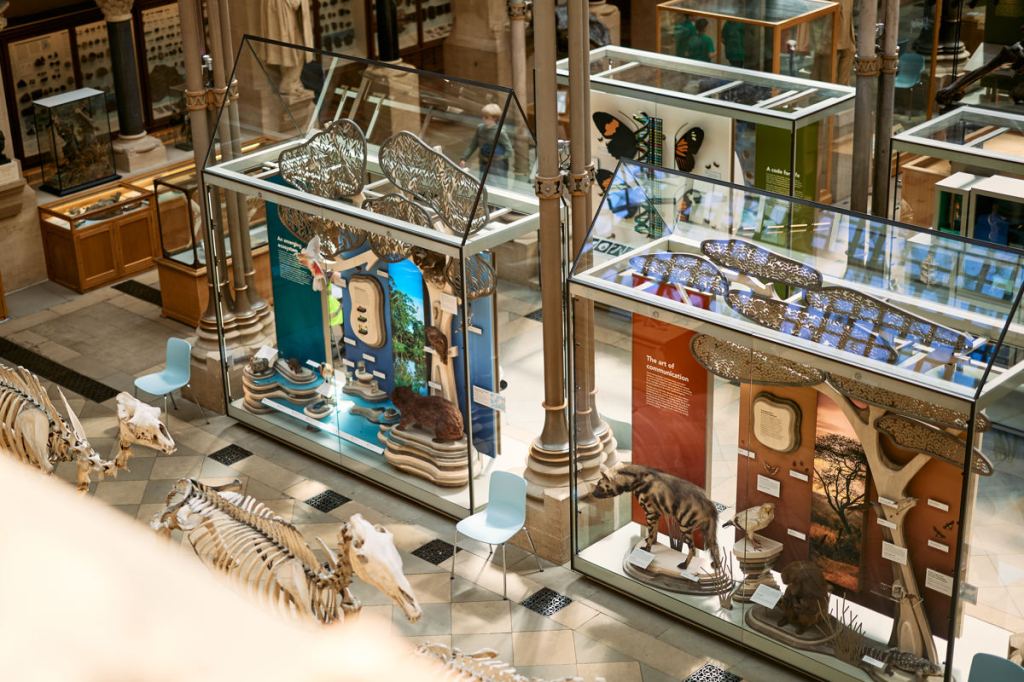
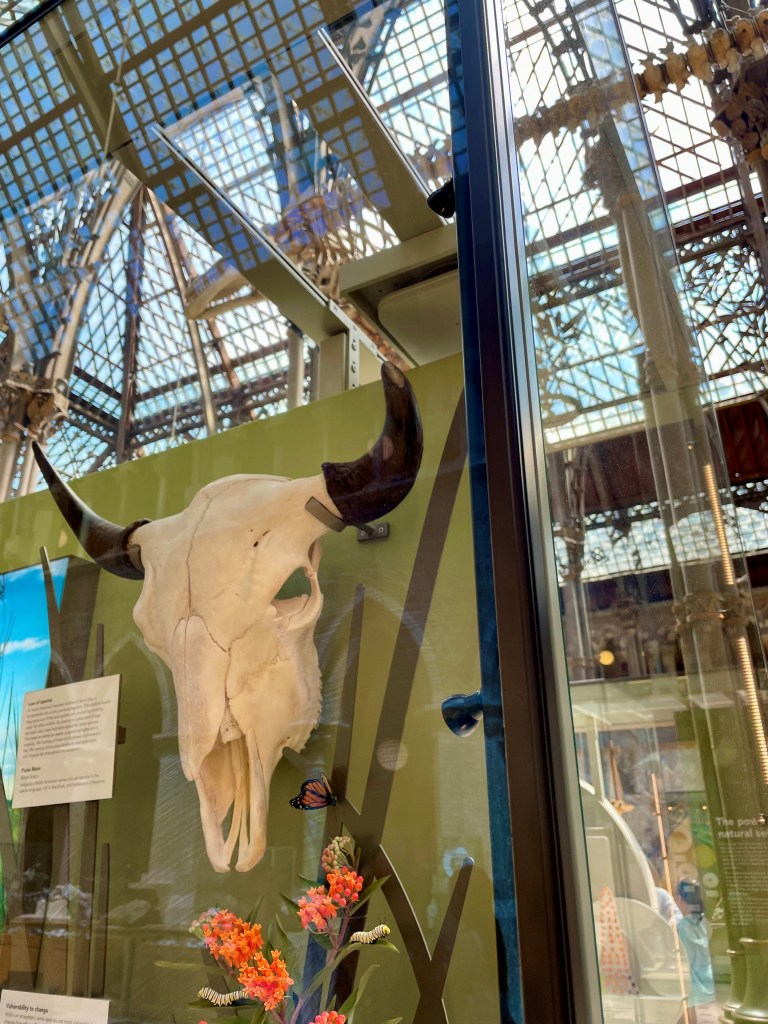
Since 2018, the Museum has been working to refresh its Main Court by installing new permanent displays. This morning, we placed the final specimen in our brand new “Open Oceans” display, concluding the latest phase of the redisplay project. The “Open Oceans” display is housed in one of eight new conservation-grade glass cases installed last year. While some visitors have welcomed the new cases, others have mourned the loss of the wooden cases or questioned why they needed to be replaced. Others have wondered why the tops of the new glass cases have roofs with different heights. To answer these questions, we need to dive into the museum archive…

A CASE HISTORY

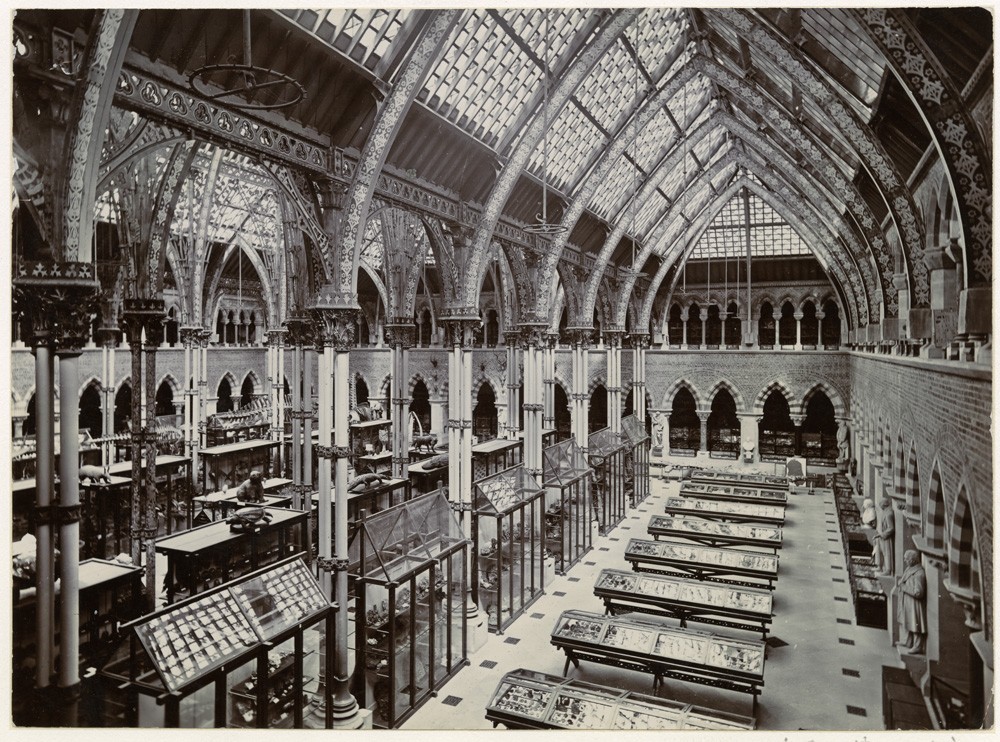
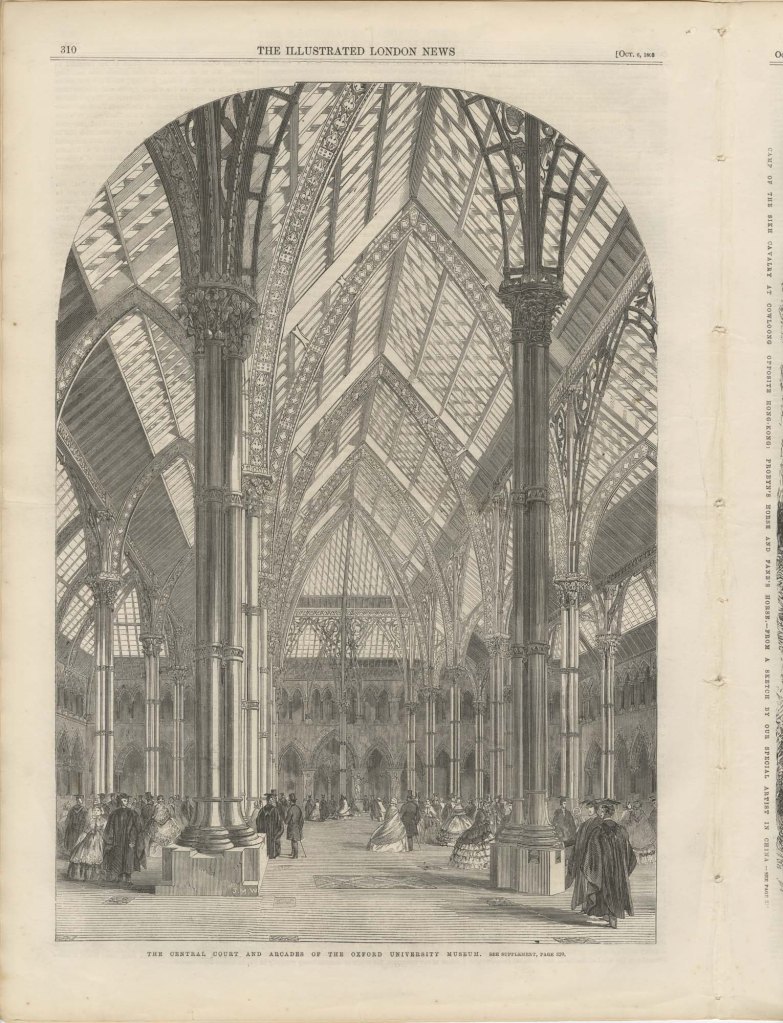
When visitors arrived at the newly-opened museum in 1860 they would have been greeted by an empty central court, devoid of displays. While the fabric of the building was more or less complete, and preparation for the installation of displays had already begun, the university’s scientific and natural history collections had not yet been transferred to the building.

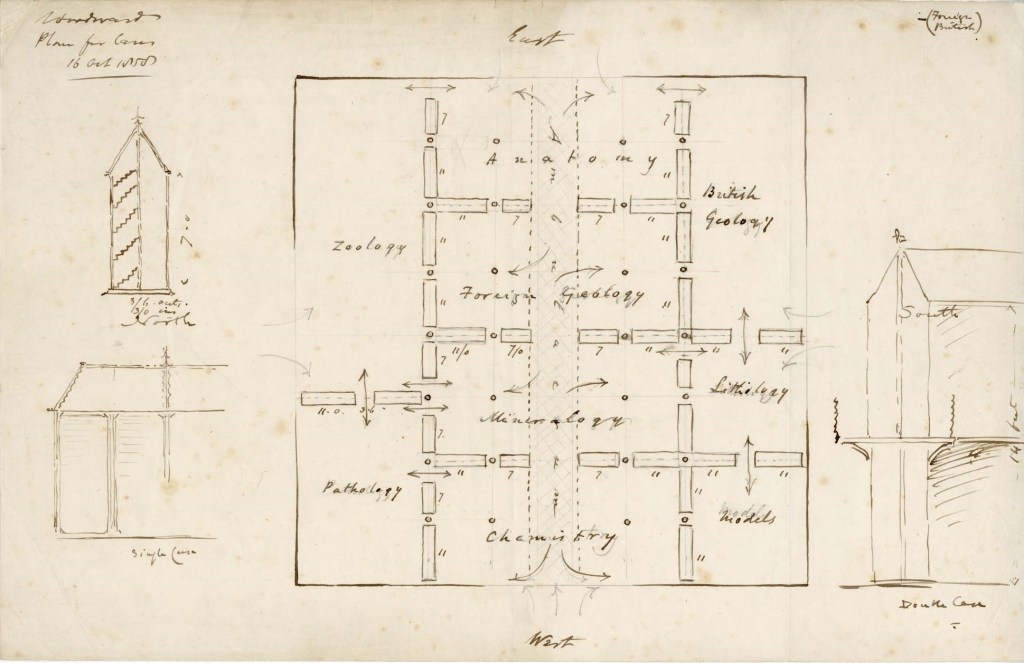
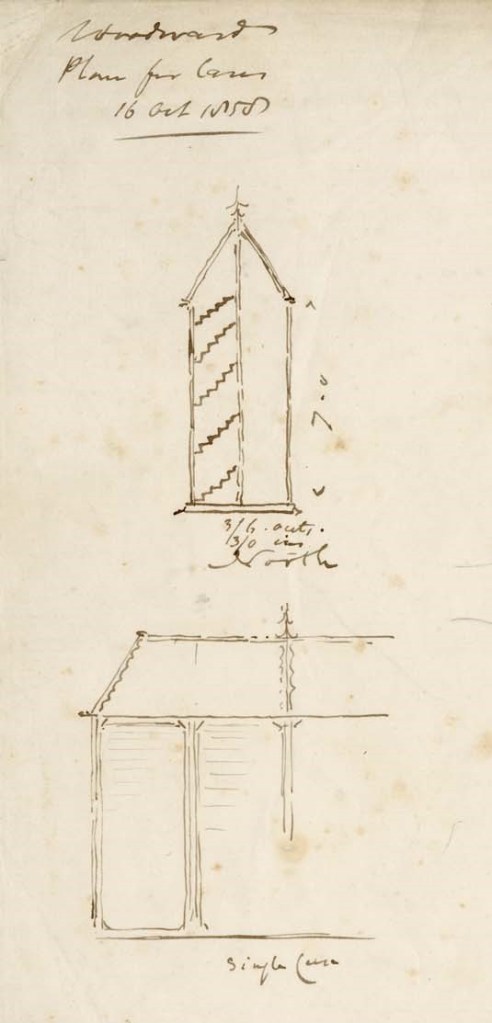
A sketch in the archive dated 16 October 1858 by architect Benjamin Woodward shows an early plan for the display cases to be arranged between the iron columns in the Main Court, allowing visitors to circulate among the exhibits, with display cases echoing the Gothic revival architecture. The right of the document shows grand double-height displays with a central balustrade that were never realised, but cases similar to those on the left would be ordered in January 1862.

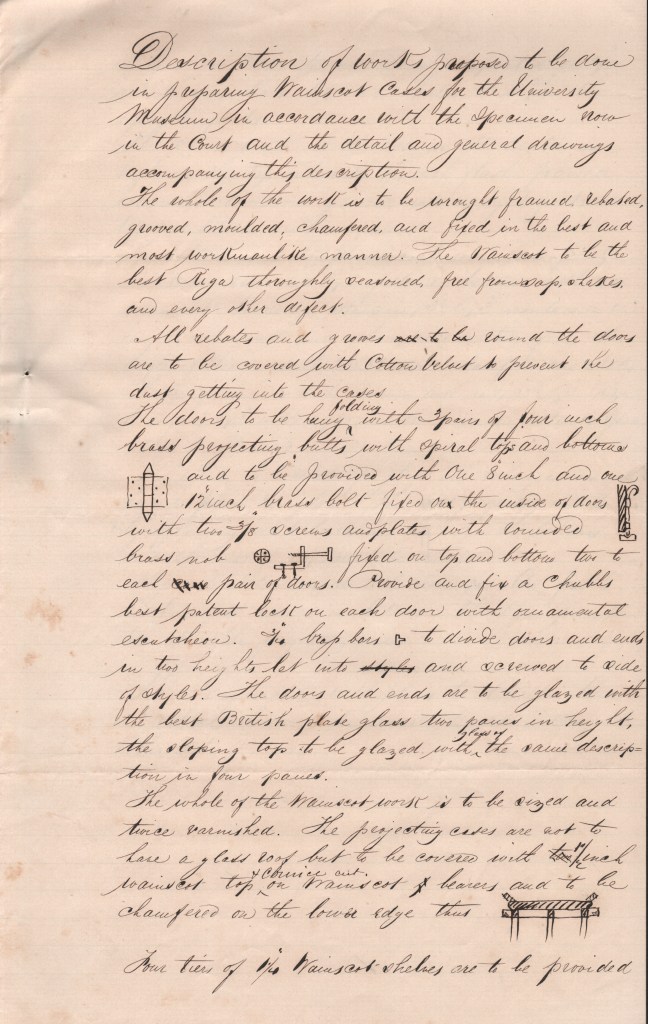
The 1862 tender document written by William Bramwell, Clerk of Works at the Museum, shows two types of upright display cases ordered for installation between the iron columns — some with pitched roofs and others with flat tops, which were considerably cheaper. Though the design of the cases resembles Woodward’s original sketches, the tender included detailed specifications that addressed the practicalities of displaying specimens, such as cotton velvet door linings to stop dust from getting in.

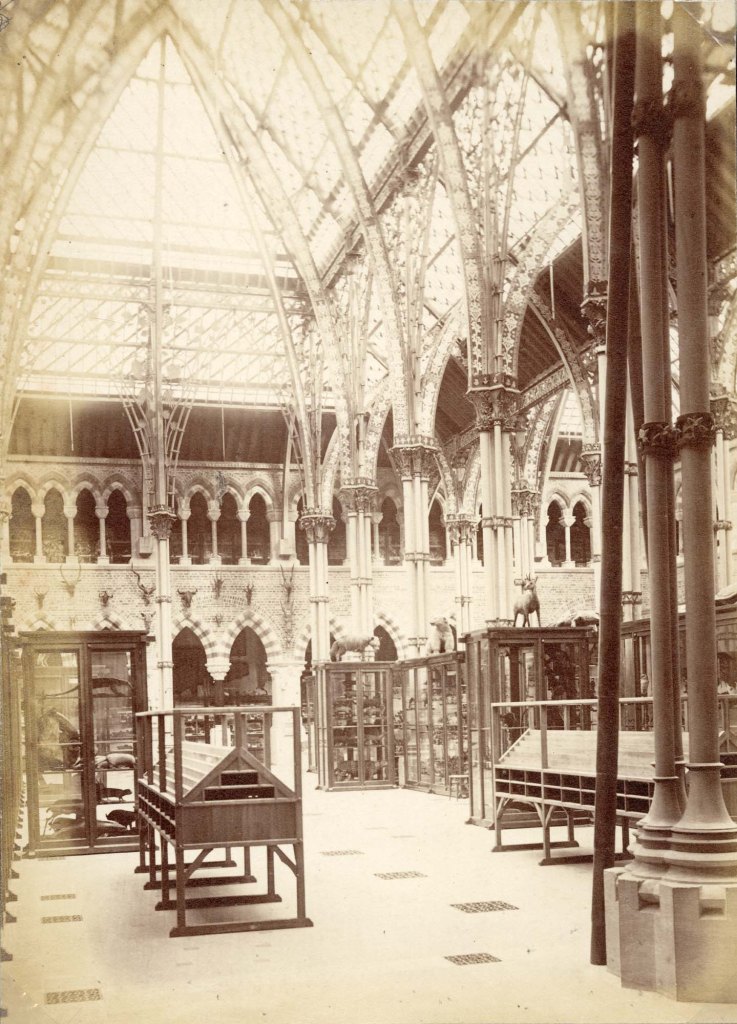
In addition to the upright centre court cases, ten table cases were ordered from the high-end London cabinet makers, Jackson and Graham, at a cost of £344.10. The same firm was also commissioned to fit the tall wall cases in the outer corridors. Plans and photographs from the archive show that the installation of these cases was piecemeal and it wasn’t until 1866 that all the display cases were fully in place.

WHY REPLACE THE CASES?

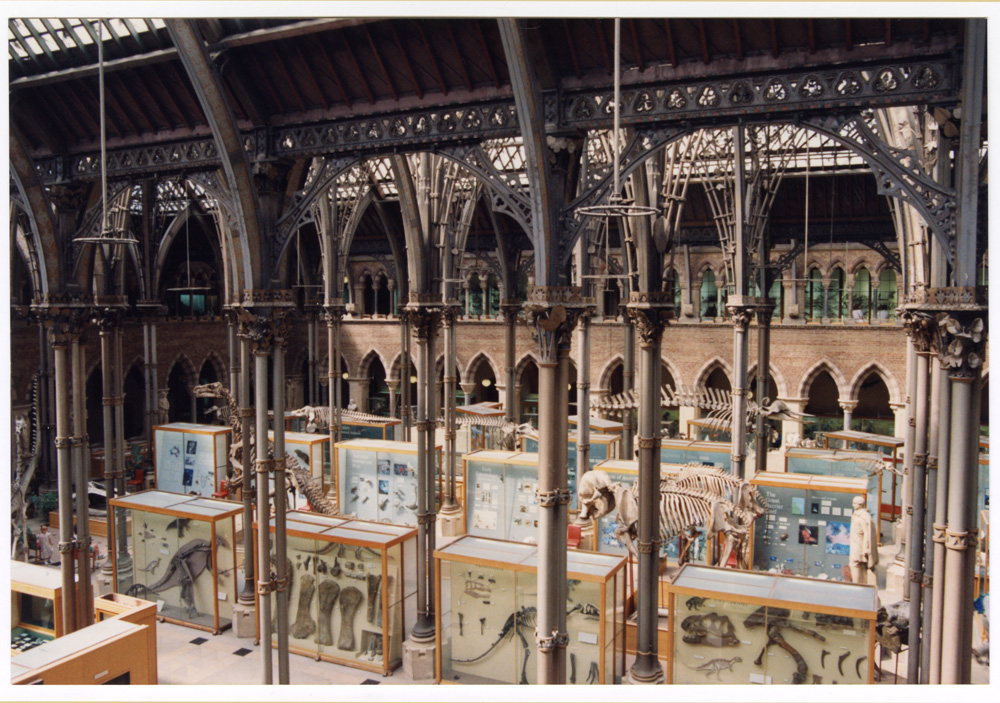
The wooden display cases that we have been replacing may look old, but few of the original cases from 1866 survive. While some of the old display cases were moved behind the scenes for preservation, others found homes in different museums or were disposed of when they were beyond repair. The most recent timber-framed cases in the Main Court are 20th-century replicas that have been heavily modified, particularly in the late 1960s-early 1970s, and again in the early 2000s when the clear acrylic roofs were added. Some of these modifications affected the stability of the cases, particularly when the doors were opened, making them unsafe for staff to access. Other modifications meant the cases were no longer dust or pest-proof, which poses a risk to specimens.

As these wooden display cases neared the end of their life, the museum and Oxford University Estates worked with Oxford City Council and Historic England to approve the replacement of the cases and ensure the redevelopment was historically sensitive to our Grade 1 listed Victorian building.

For this reason, the new cases retain the original 1866 arrangement and are built to the same dimensions. We have also returned to the original form, including outer aisle cases with alternating pitched and flat roofs. It was decided early on that the new cases would not be lined in wood because timber can be detrimental to the conservation of certain specimens. However, the design of the edges of the new cases sought to mirror the craftmanship of the 1866 cases by emulating the beading on the edges – albeit much more subtly, and in bronze rather than timber – complementing the colours of the ironwork in the museum roof.

A CASE FOR THE FUTURE

The new glass cases are built by museum showcase experts ClickNetherfield and provide a stable, pest-proof environment for our delicate and historically important specimens. Their design artfully captures the character of the museum building, while still focusing the visitor’s attention on their contents. It is hoped that the new displays will last for at least another two decades, and the cases even longer. During that time, millions of eyes will be cast over our displays, but the glass cases that protect them may barely even be noticed.


“The True Nature of Nature Itself”

MAKING ART WITH SWIFTS FROM THE MUSEUM’S COLLECTIONS


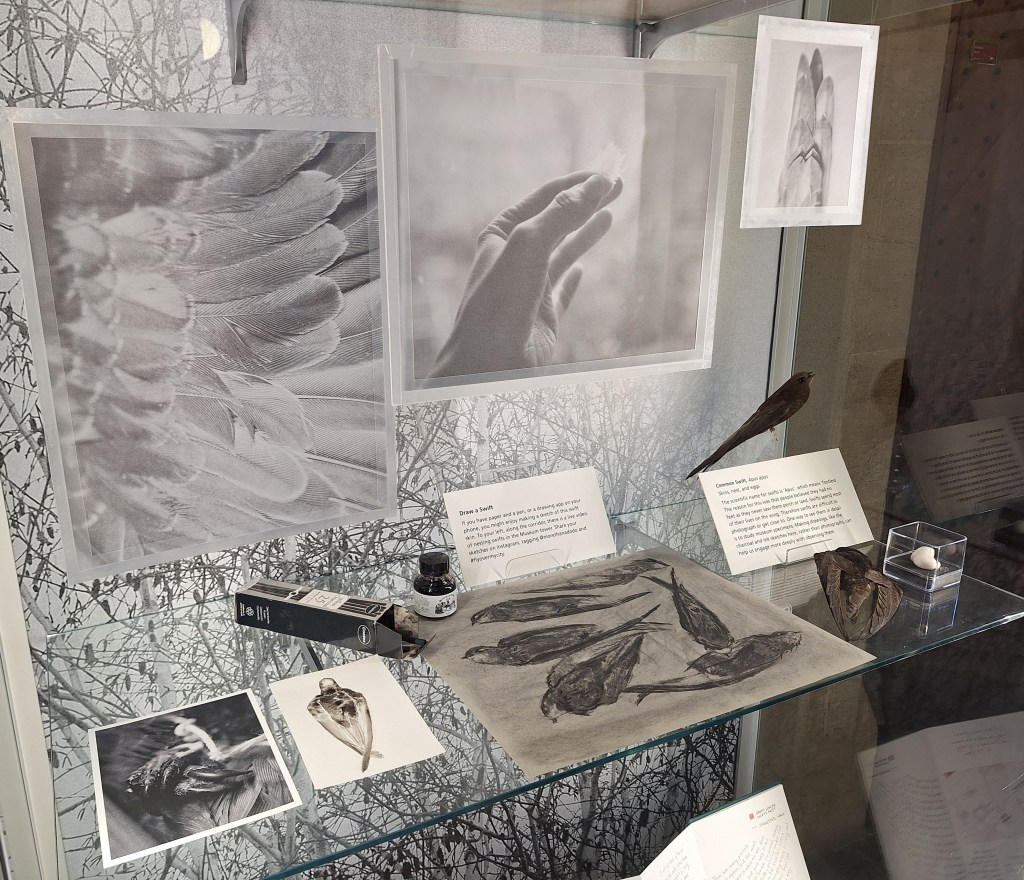
Between 14th May and 21st July, the mixed media artwork Fly Over My City was on display at the Museum of Natural History, delighting visitors with a visual and auditory exploration of swifts and the threats they face in urban environments. In this blog post, artist Becca Jeffree discusses working with Museum collections to create the piece, and the value of museums as venues for combining art and sciences.


While studying at London’s Natural History Museum years ago, another student had become upset with a group of artists who were drawing from the floor of the birds gallery, blocking his way. Studying birds in a cabinet was not as worthwhile, he felt, as studying in the field. Moreover, drawing seemed to him out of place within a science museum. Yet sketching specimens has historically played an important role in learning about biodiversity, and is particularly important for those whose access to wildlife is restricted.

Perhaps it is unsurprising that this discord arose in a natural history museum. Art is often separated from science in society and culture, with science tending to dominate debates about understanding nature. Museums, however, are rare places where art and science are welcomed equally and beautifully combined. Few places embody this better than Oxford University Museum of Natural History — a work of Victorian art shaped by the idea that art and science can take one another to higher levels. As historian John Holmes puts it in The PreRaphaelites and Science, the building expresses the “true nature of nature itself” through its architecture. It is a place where the study and interpretation of the natural world are cross-disciplinary.

Fly Over My City (2023) by Becca Jeffree, on display at the Museum of Natural History

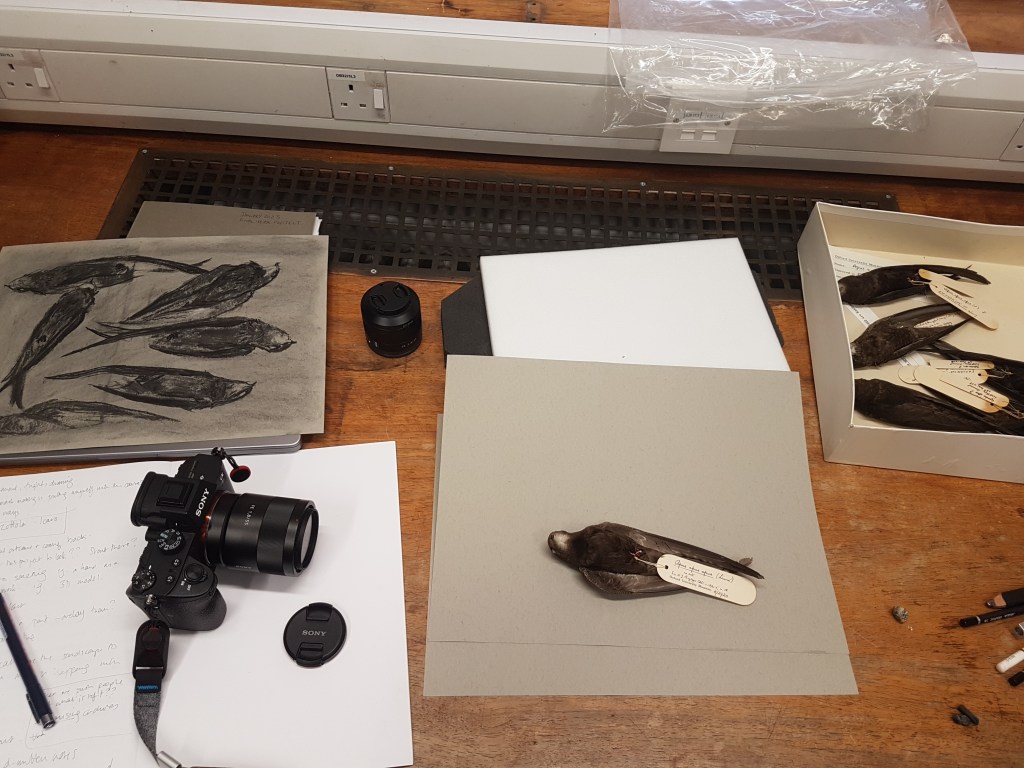
I recently collaborated with the Museum when making my artwork about the built environment and the common swift (Apus apus). Swifts are transient animals and as they rarely land they are difficult to see up close. They are found in the UK for only a short time each summer, fly fast, and are in decline. Through access to the Museum’s avian collections, I had a unique opportunity to see swift bodies up close and observe them in detail through drawing. Most of the specimens are bird skins; the skin, plumage, wing bones, skull and feet are preserved but not the internal organs, and they are not mounted like the ones we often see in cabinets. When I handled the swifts, I was asked to wear gloves to protect the specimens and avoid exposure to any harmful chemicals that may have been used to preserve them. Even though I couldn’t touch the swifts directly, I could still get to know their weight, size, colour, and notice interesting details like the shape of their chest feathers which are similar to their hummingbird relatives’.

Photographing, sketching and studying swifts from the Museum’s collections

Having physical access to museum specimens allowed me to root my artwork more in science, but also to draw out further layers of meaning, by responding to my own feelings and senses. The materials I included in the work – charcoal and tracing paper – were inspired by the swifts’ weightlessness, their texture, colour and the urban environment they often inhabit. The PreRaphaelites, whose worldview infuses the Museum building, regarded art as a valid investigative method. As John Holmes puts it, “if observation yields a true knowledge of nature, then making art that records and synthesises these observations is at once a disciplined method for conducting research and the best means to convey that knowledge.” I am grateful that the Museum continues to embrace this idea today, and for the value placed on artists as researchers and communicators of its collections.

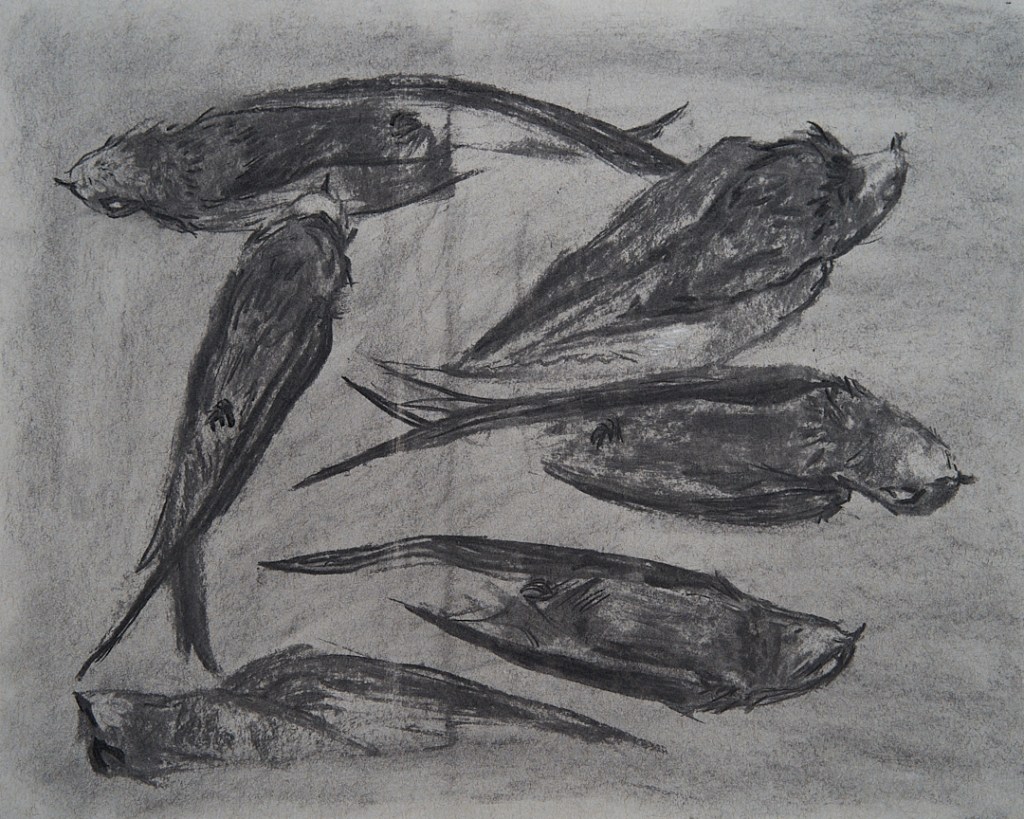
Charcoal sketch of swifts, made using Museum specimens. From Fly Over My City (2023)

Visit Becca Jeffree’s website to find out more about the piece, and her other artwork

Lungfish, lithographs and libel


By Mark Carnall, Collections Manager


In addition to the many thousands of biological specimens that can be found at Oxford University Museum of Natural History, we also possess a variety of objects that originate from historical versions of the Museum’s displays. These include models, casts, and illustrations of various kinds, used to represent organisms that were otherwise difficult to preserve and display.

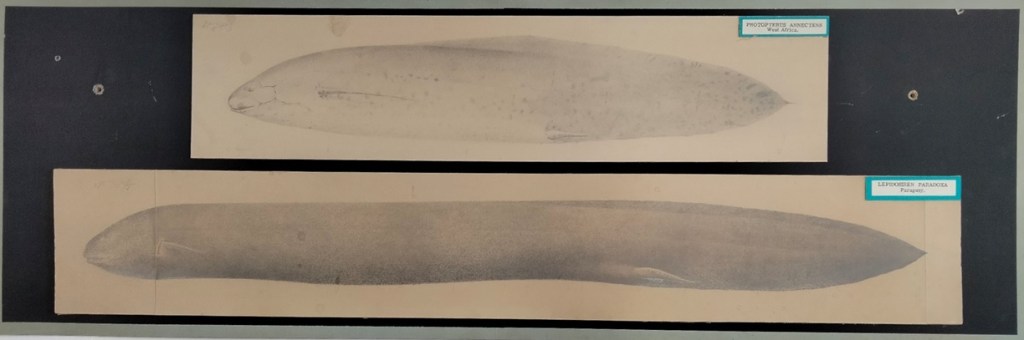
That any of these exhibition materials survive at all is down to pure happenstance and luck. At the time when they were removed from display, these artefacts would have just been seen as outdated ‘display furniture’ and all but destined to have been thrown away. One surviving piece of ex-display material, which catches my eye almost daily as it sits in my office, is a rather large pair of illustrations showing a South American and a West African lungfish mounted on a black backing board.

Mounted illustrations of West African lungfish, Protopterus annectens (top) and South American lungfish, Lepidosiren paradox (bottom). The board they are mounted on measures 93cm across.

By pure coincidence, I recently came across lithograph reproductions of these illustrations in an 1895 publication by E. Ray Lankester. Had these fish not have been my office-mates, I might not have paid the lithographs in the paper much attention, nor recognised their significance. 

E. Ray Lankester was a noted Zoologist who studied at Oxford University and was the holder of the Linacre Chair. He was also heavily involved in adding to the collections and displays here at OUMNH. His 1895 paper – a smash hit I’m sure we all remember – was titled On the Lepidosiren of Paraguay, and on the external characters of Lepidosiren and Protopterus, and sought to add more reliable evidence on the appearances of lungfishes. 

Lungfishes were of particular interest to scientists at the end of the nineteenth century. Though seemingly related, the different species of lungfish caused no small amount of head-scratching, given that they were found in freshwater ecosystems as far apart as Australia, Africa, and South America. As their name suggests, they are fish but also air-breathing, and the fact that they possess lungs also marked them for scientific interest at the time.

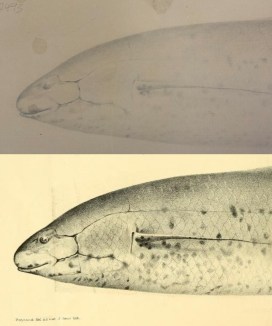
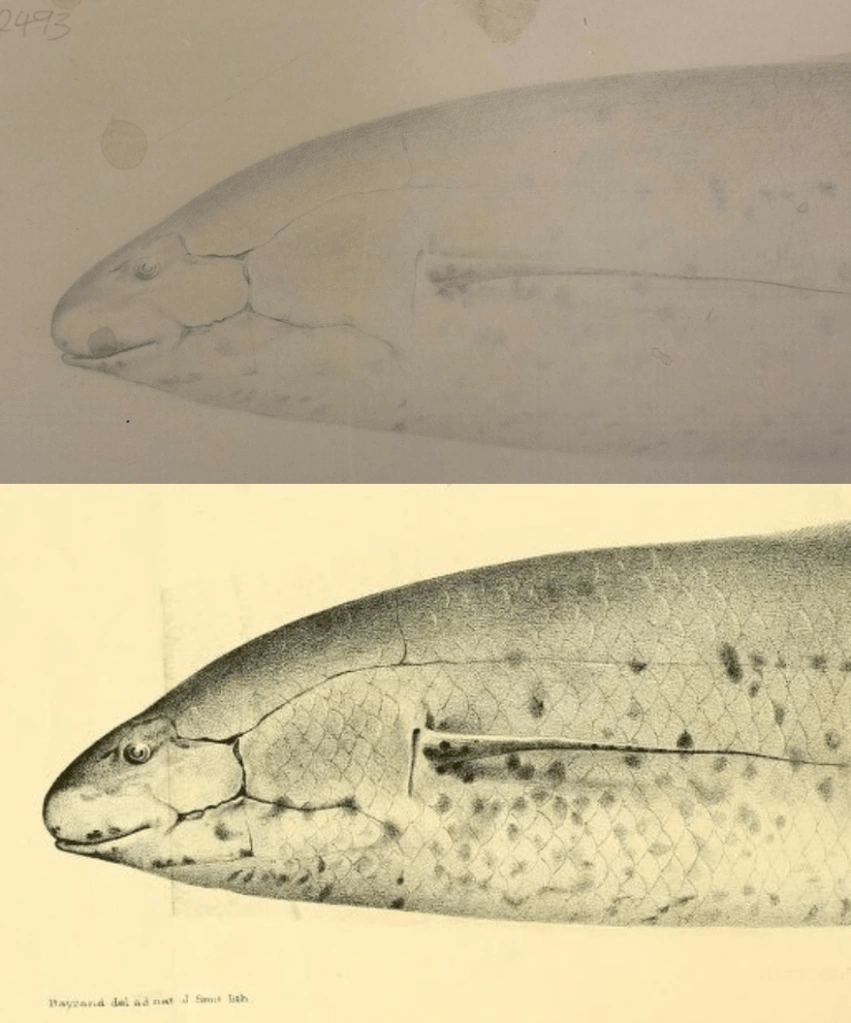
Comparison of Bayzand’s original drawing of Protopterus annectens (top) and screen-capture of the published figure (bottom). You’ll no doubt agree with Lankester that the changes to the scales are egregious and vexing. 

Interestingly (well, interesting to me!) is that Lankester adds an extensive note in the paper about the illustration of the specimens, explaining that he is unhappy with how Bayzand’s original drawings have been modified in the process of transforming them into lithographs for publication. According to Lankester, these modifications introduced inaccuracies. In particular, he complained that the lithographer had made it look like the lungfishes were covered in scales, and stresses that “[a]s a matter of fact, no scales at all[,] or parts of scales[,] are visible on the surface” of the lungfish. Instead, he makes clear that in real life (or, in this case, in preserved life) the scales of the fish are overlaid with soft tissue. Comparing the figure in the paper with the illustrations in my office confirms that the lithographer had, indeed, inaccurately reproduced the original drawings.

The happy coincidence of me finding Lankester’s paper led me to several important revelations. Firstly, we now know that Bayzand’s original drawings of the lungfish can still be found here at OUMNH. Secondly, we can surmise that, at some point in the past, these drawings were displayed in the Museum’s galleries. We can also corroborate that the original illustrations are different to the published versions, meaning that, if we are to believe Lancaster, they are also more accurate than those in the publication. Finally, we now know that two of the Museum’s specimens were cited with extra biographical information in Lankester’s paper.

Sadly, these exciting findings mean that my office mates will probably have to be relocated and take up residence in the Museum’s archives alongside their subject matter…

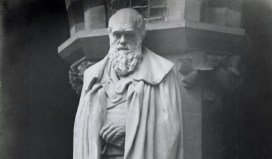
A stone statue of a bearded man, hands crossed at his front, shoulders draped in a cloak

Babylon: Natural Theology versus Scientific Naturalism

When the campaign to build the Museum was launched, science at Oxford was understood as natural theology. By the time the Museum opened in 1860, a new secular approach to science was on the rise.

In this last episode of the Temple of Science podcast series we see how the art and science of the Museum responded to the challenge posed by Charles Darwin’s theories of evolution and natural selection, and the scientific naturalism that they epitomised. 

You can watch the whole series here.
(https://www.youtube.com/playlist?list=PLxCYszldeUZGdD75meu90fvsH2Vjq54YE)

‘Chambers of the Ministering Priests’

The Museum was not originally simply a museum as we understand it today: It was an entire science faculty. In episode four of the Temple of Science podcast series we see how the museum’s overarching principle of design – that art should be used to teach science and to inspire generations of scientists – was put into practice in some of its less familiar but no less beautiful spaces. 

You can watch the whole series here.
(https://www.youtube.com/playlist?list=PLxCYszldeUZGdD75meu90fvsH2Vjq54YE)