Chafers
During the summer you may notice large beetles flying around in gardens and other green spaces. These insects are called ‘chafers’. While they may look similar, there are in fact several different species all known by this common name.
The name chafer comes from the Old English word for beetle, ceafor. It is similar to the modern German word for beetle, käfer. So, ‘chafer’ really just means ‘beetle’ but in English it came to be used for beetles that were particularly noticeable. Chafers got themselves noticed because they are large, the adults can fly and often emerge in large numbers at the same time of year, sometimes making a buzzing noise as they fly. They are attracted to lights, so often fly in open windows, then bump around the room trying to get out. Farmers and gardeners often think of them as pests because they can damage plants.
Chafers all have a similar life cycle. The larvae live in the soil or dead wood, often for several years. They are sometimes thought of as pests because they may feed on the roots and other parts of plants, but they are important recyclers, feeding on dead, decaying material and helping to return the nutrients it contains back into the soil. The larvae then pupate and survive the cold winter months in this form. The adults emerge in late spring, or summer, depending on the species. It may seem that large numbers of beetles have suddenly appeared out of nowhere, but in fact these adults have just emerged at the same time. The adult beetles mate and lay eggs which will become the next generation of larvae.
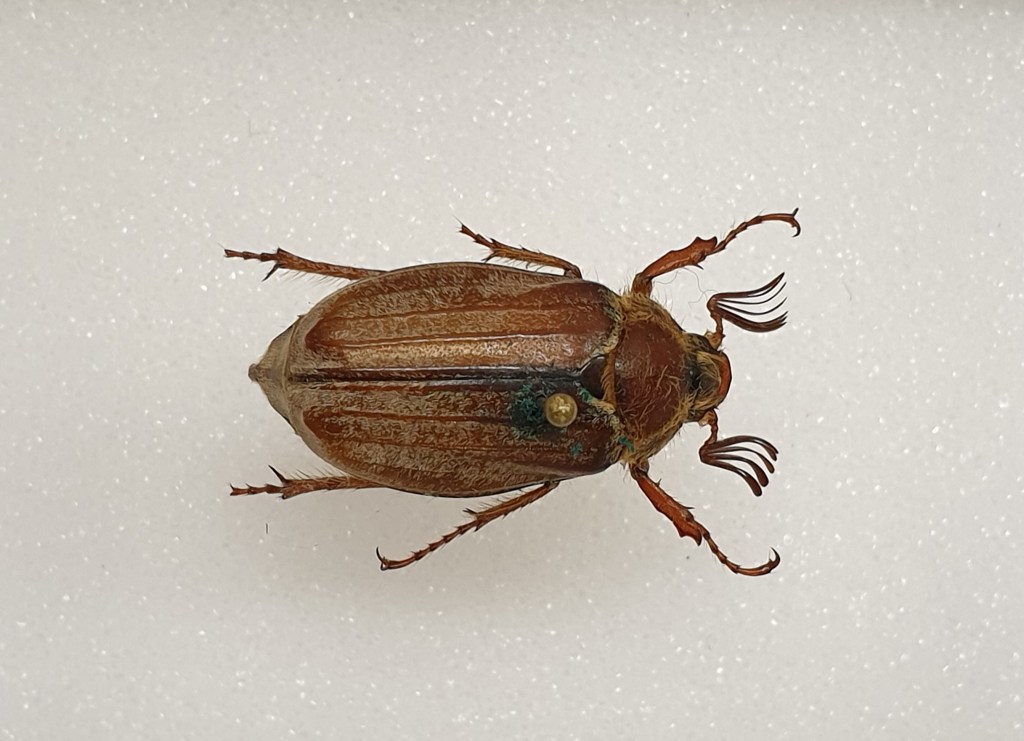
The largest of the British chafers is the cockchafer (Melolontha melolontha). The adults emerge in late April or May, giving it another common name, the ‘Maybug’. They fly in a wobbly way and make a buzzing noise. This can make them seem a bit alarming but they are completely harmless to humans.
Cockchafers were once a huge agricultural pest and could emerge in such numbers that people were encouraged to eat them! A French recipe for cockchafer soup was published in the 1800s (https://en.wikipedia.org/wiki/Cockchafer_soup) and in the 1920s, German children were reportedly eating sugar coated cockchafers.
Pesticides brought this marvellous beetle to the brink of extinction in the UK during the last century. Now changes in agriculture and pesticide use mean that cockchafers are making a comeback and they can be found across England, although they still rarer in Scotland. The nationally much rarer Northern Cockchafer (Melolontha hippocastani) is found in Scotland, Northern England and Ireland.
The Summer Chafer (Amphimallon soltitiatis) looks a bit like the cockchafer, but is smaller, at about 20mm, and had a rounded, rather than pointed tail end . Traditionally, this beetle is associated with the Summer Solstice, or longest day of the year, because the adults often emerge in the second half of June. In fact, the Summer Chafer can be found all over Britain in June and July. Kate and Susie found lots of Summer Chafers on a visit to Orchard Meadow Primary School in Oxford on 23 June this year and have seen it in the grounds of several other schools we have visited.
Another similar beetle is the Welsh Chafer Hoplia philanthus which, despite its name, is not restricted to Wales, but also found in Southern England and the Midlands. It is smaller and less ‘hairy’ than the other chafers and can be recognised by the single large ‘claws’ on the end of its legs.
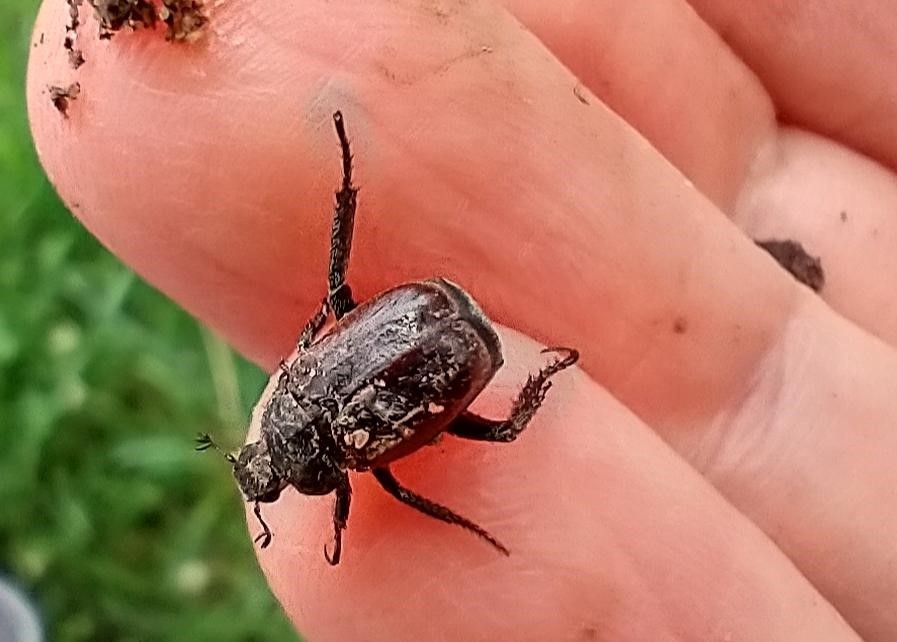
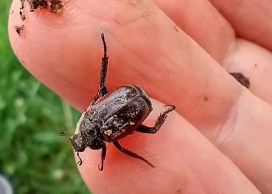
Eleanor and her father kindly sent us this picture of a Welsh Chafer they caught in their garden in the Midlands recently using a pitfall trap they made after watching Kate’s video from a few weeks ago. We’d love to see pictures of beetles and other insects you have found.
Some chafers are a striking green colour. One of these is the Rose Chafer (Cetonia aurata) which flies between May and October. Gardeners may consider it as a pest, particularly if they grow roses, because the beetles feed on their plants but, like the other chafers, these beetles are also important recyclers.
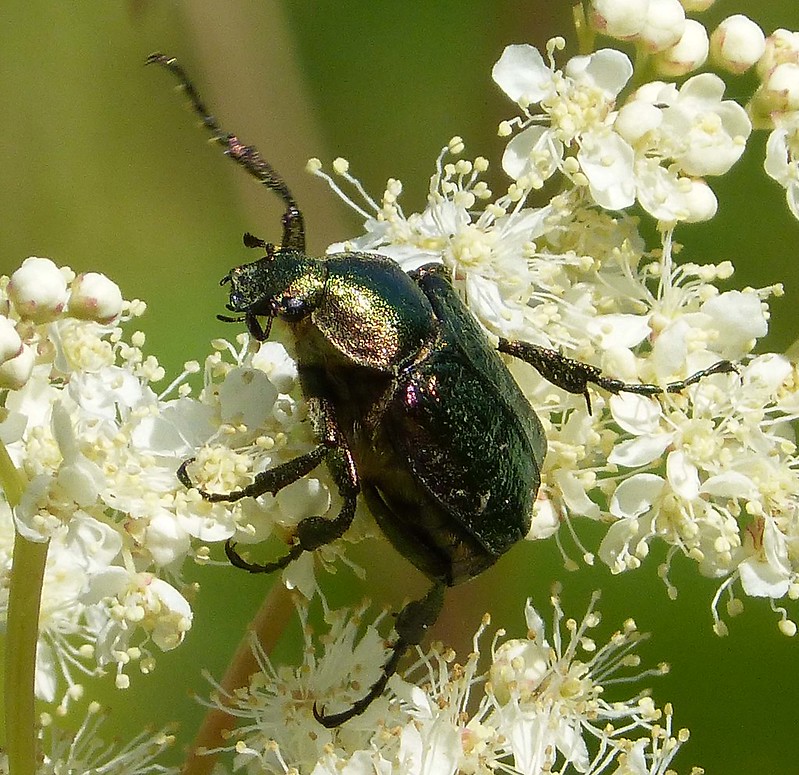
Another green chafer is the Noble Chafer (Gnorimus nobilis). You can tell the two apart because the Rose Chafer has smooth wing cases but the Noble Chafer has wrinkled ones and is metallic green with white speckles. While adult Noble Chafers feed on plants like hogweed, the larvae live in the decaying wood of old fruit trees. Because of this, the Noble Chafer is found in traditional orchards. As these have disappeared, so has this beautiful beetle which is now rare and a priority species under the UK biodiversity framework.
So, look out for chafers this summer and send us pictures of the ones you find. You may even come across one that’s quite rare!