A Botanical Journey In Time

Following the completion of our Life, As We Know It redisplay project earlier this year, we are taking a look at some of the exceptionally skilled people who helped to bring it all together. In this article, model maker Inese Veismane recalls some of the weird and wonderful extinct plants that we needed for our new displays…

I remember the exact moment I saw the message from the Museum of Natural History. I had just returned home from a trip, switched my phone back on after the flight, and there it was – waiting for me to jump into the unknown. It came at a time when my personal life was shifting in a difficult direction, and in an unexpected way, this project became something that held me steady.

My work usually lives in the botanical world – delicate flowers, soft forms and colours, artsy details ­– so stepping into a space shaped by scientific accuracy and unfamiliar subjects felt like entering a new landscape. This time, I was asked to create not only plants but organisms like worms, including the intricate and challenging Christmas tree worms.
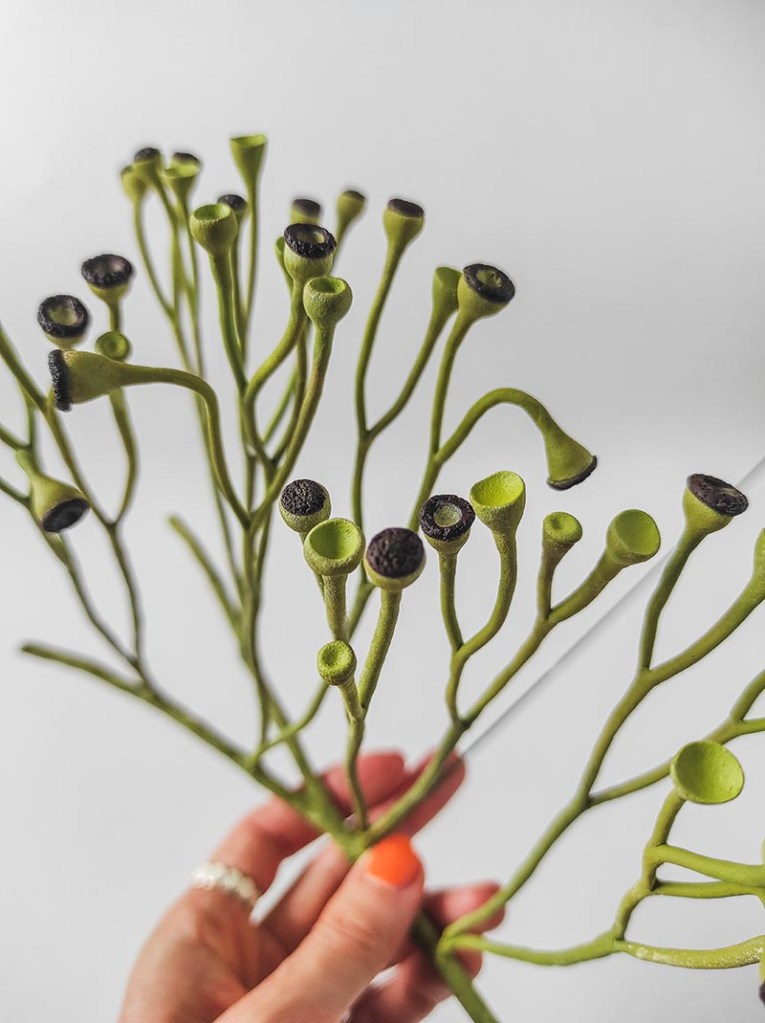
The commission began in 2023, and from the very start, it was clear that this would be a different kind of creative process. Instead of observing a living plant or working from my own references, I was guided by scientific material provided by the museum. There was a responsibility to honour not just the visual beauty of each subject but also its structure, proportions, dimensions, and defining characteristics.

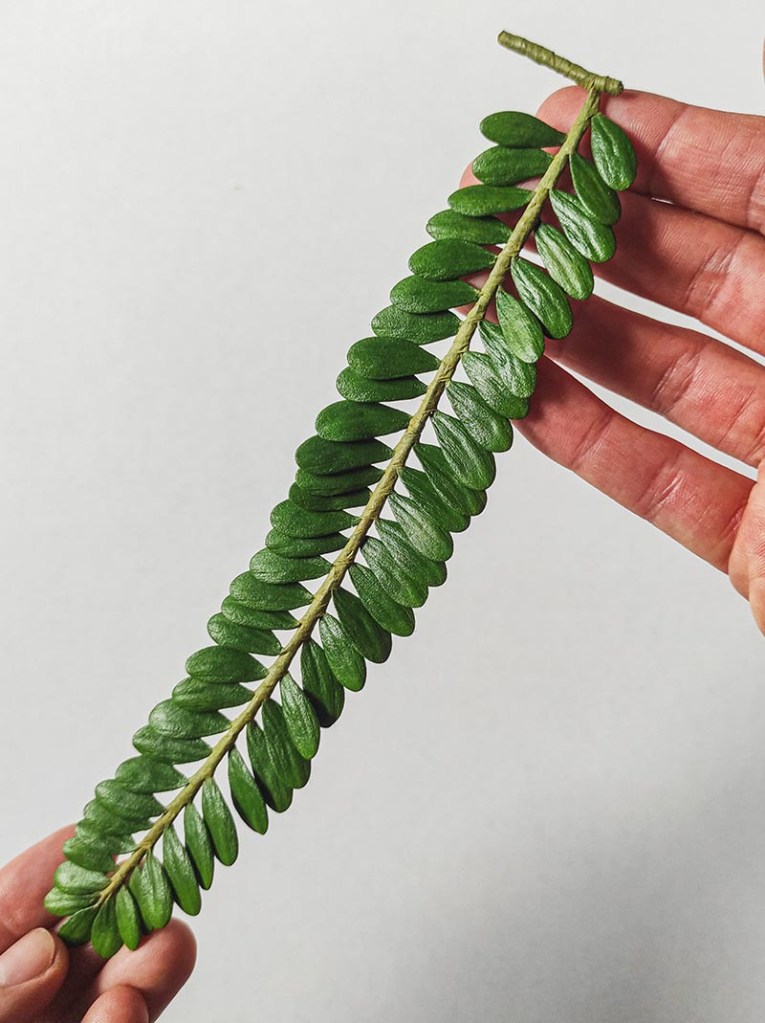
I work with air-dry clay, building each form slowly by hand. My process is intuitive but also very attentive – I spend time studying botanical forms and shapes and then transforming that into something tangible. With these models, I had to balance that intuitive, artistic approach with careful observation. It became a dialogue between art and science.
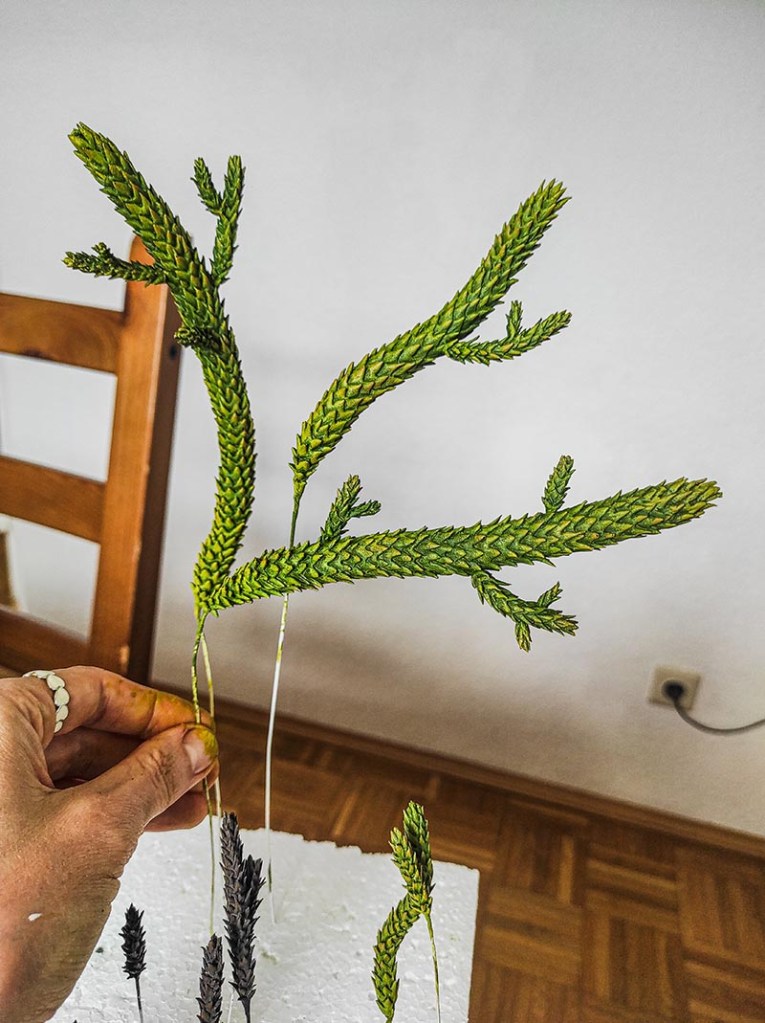
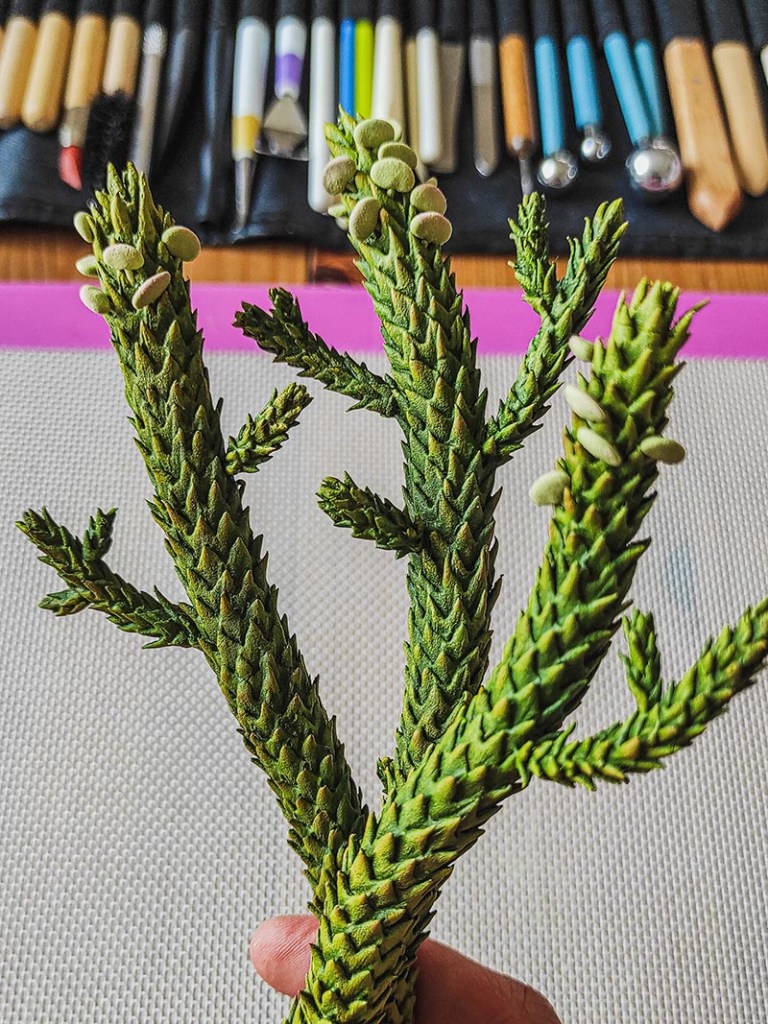
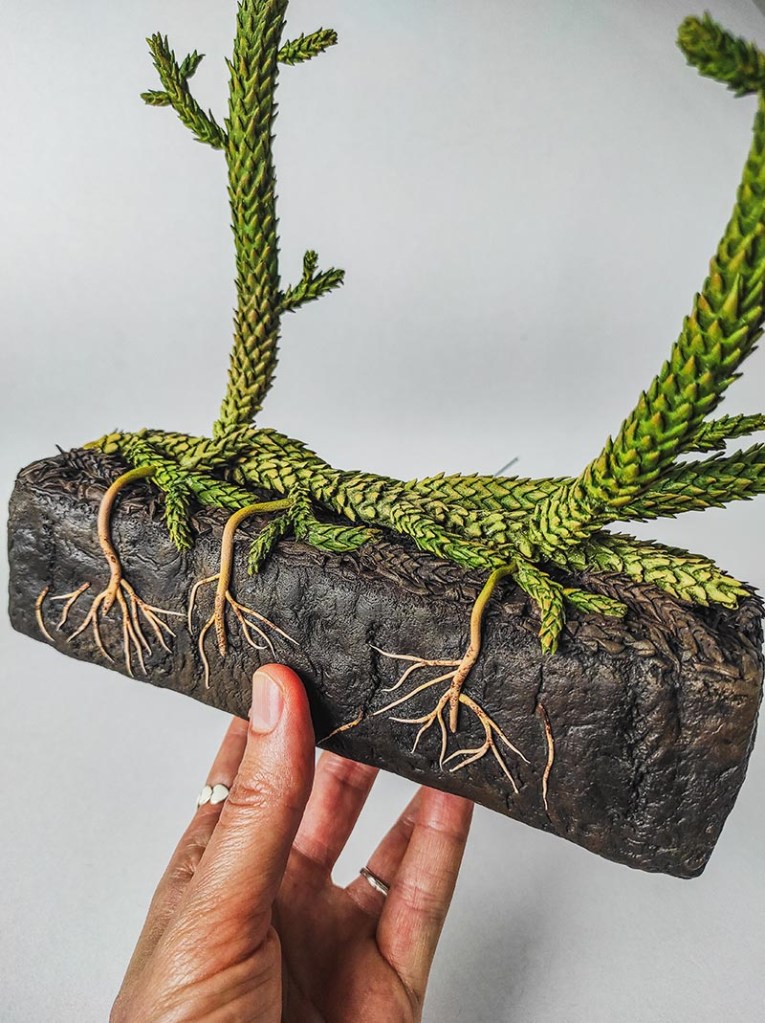
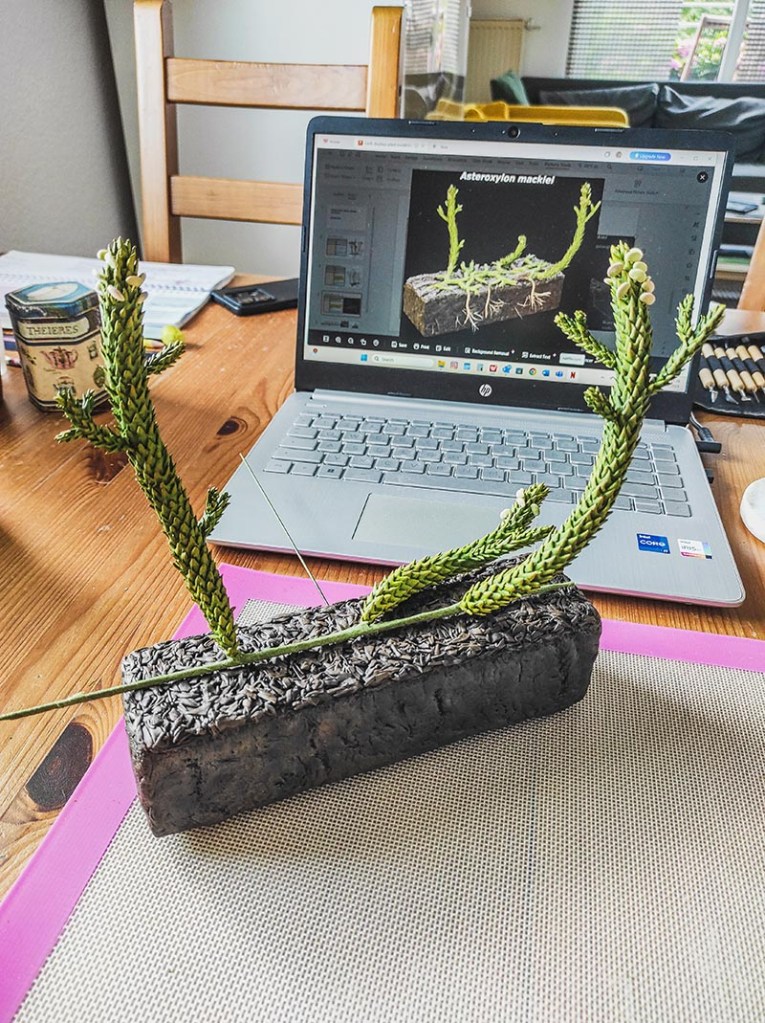
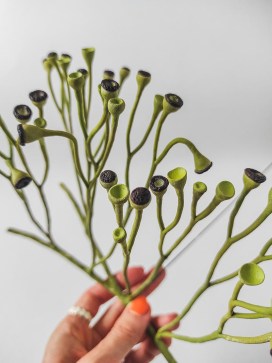
Working on the early plants became one of the most interesting parts of the project. Recreating species like Asteroxylon mackiei, Rhynia, and Cooksonia felt like reaching into a distant past. These are plants that no longer exist, known only through scientific study and careful reconstruction. There was something deeply humbling in shaping them by hand – giving form to something that once lived hundreds of millions of years ago. It felt like a journey back in time. I had to rely entirely on references and guidance while still allowing the forms to come alive through my own interpretation.
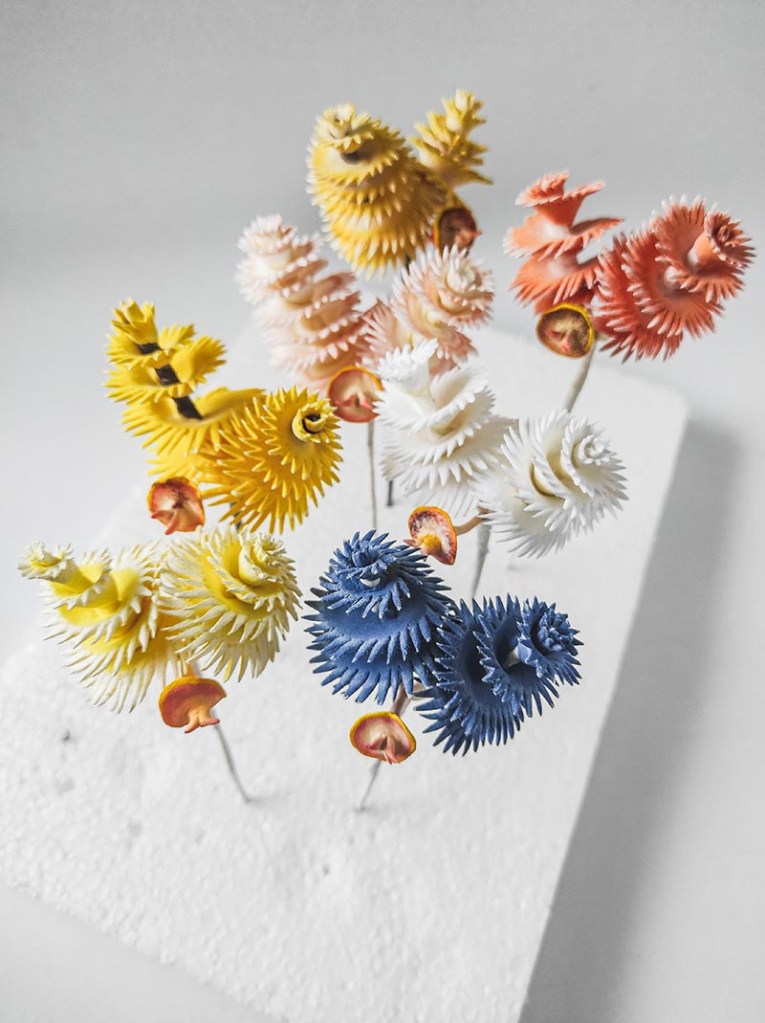
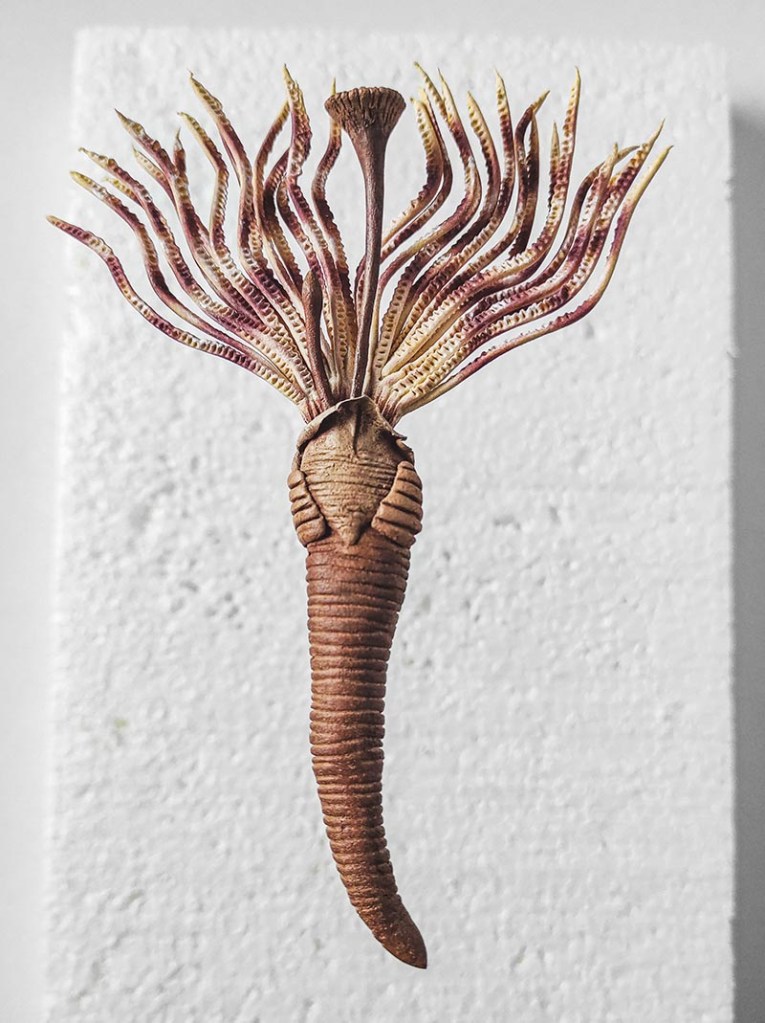
One of the most meaningful parts of this creative process has been witnessing the transformation of each piece – from a simple beginning to something that holds presence and detail. I also find importance in sharing these stages on my social media. It creates a sense of continuity – an archive of the work that can be returned to over time.

Looking back, this experience has expanded the way I see my work. It reminded me that even when we step outside of what feels familiar, the essence of creating remains the same: to pay attention, to be patient, and to trust that something will slowly take shape.

There is also something special in knowing that these handmade models will live within the Museum and become a part of a much larger story – held in a space where art and science meet.

*

See more of Inese’s work at: www.instagram.com/cooleblumen/
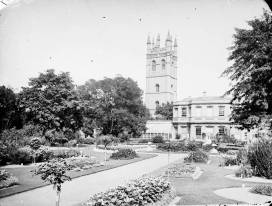
Black and white photograph of borders, paths, and trees with spired tower in background

Celebrating 400 years of botany at Oxford University

By Danielle Czerkaszyn, Librarian and Archivist

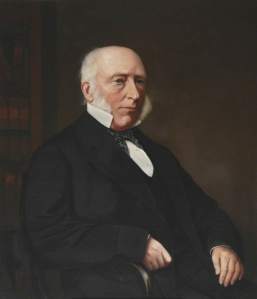
John Phillips, Professor of Geology (1856-1874)

As a natural history museum, we are perhaps slightly unusual: aside from some fossilised plants, there are no botanic specimens in our collections. The reason for this is that when the Museum opened its doors in June 1860, Oxford Botanic Garden had already been around for a considerable 239 years, and it was considered unnecessary to move it.

Today, the Botanic Garden celebrates 400 years since its founding as the Oxford Physic Garden on 25 July 1621. To mark this anniversary we’ve explored our archive to highlight some connections between the Museum and Botanic Garden, in a relationship that continues to this day.

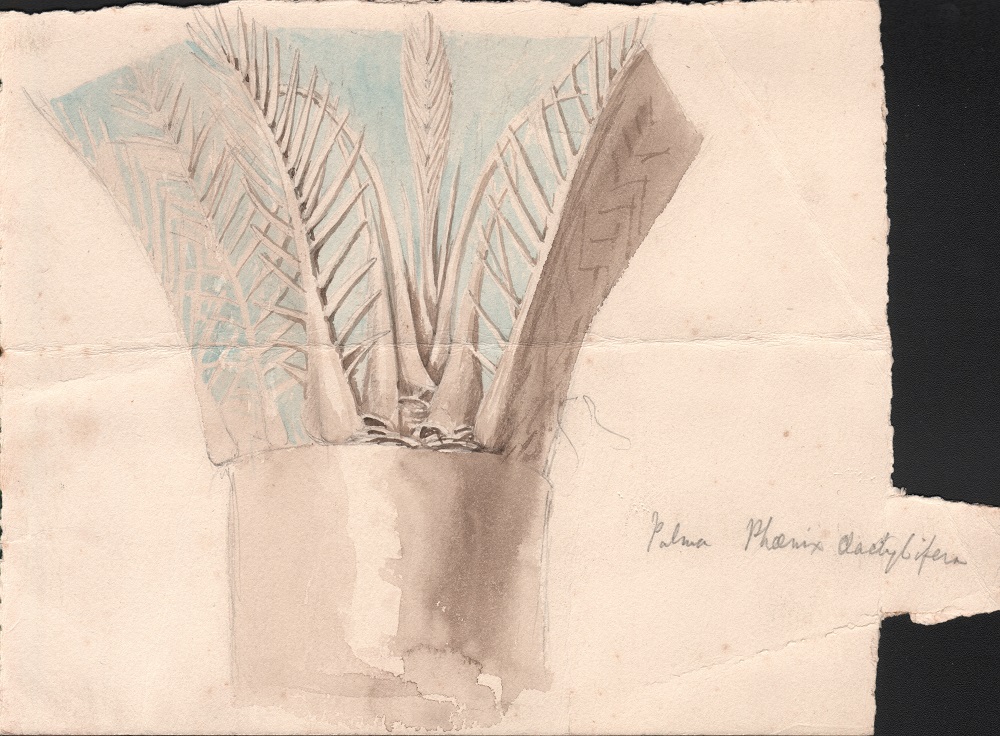
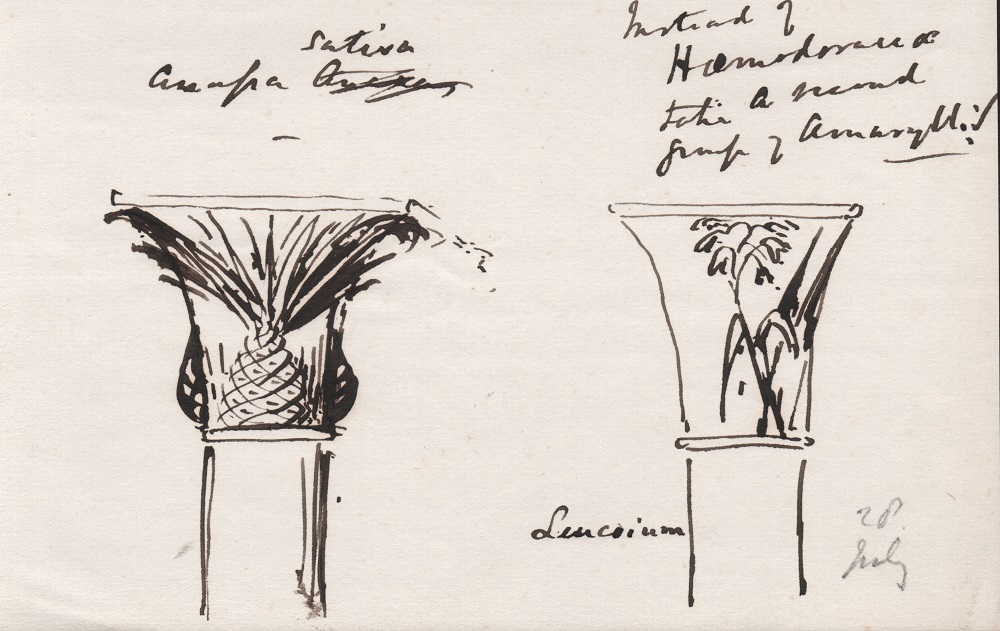
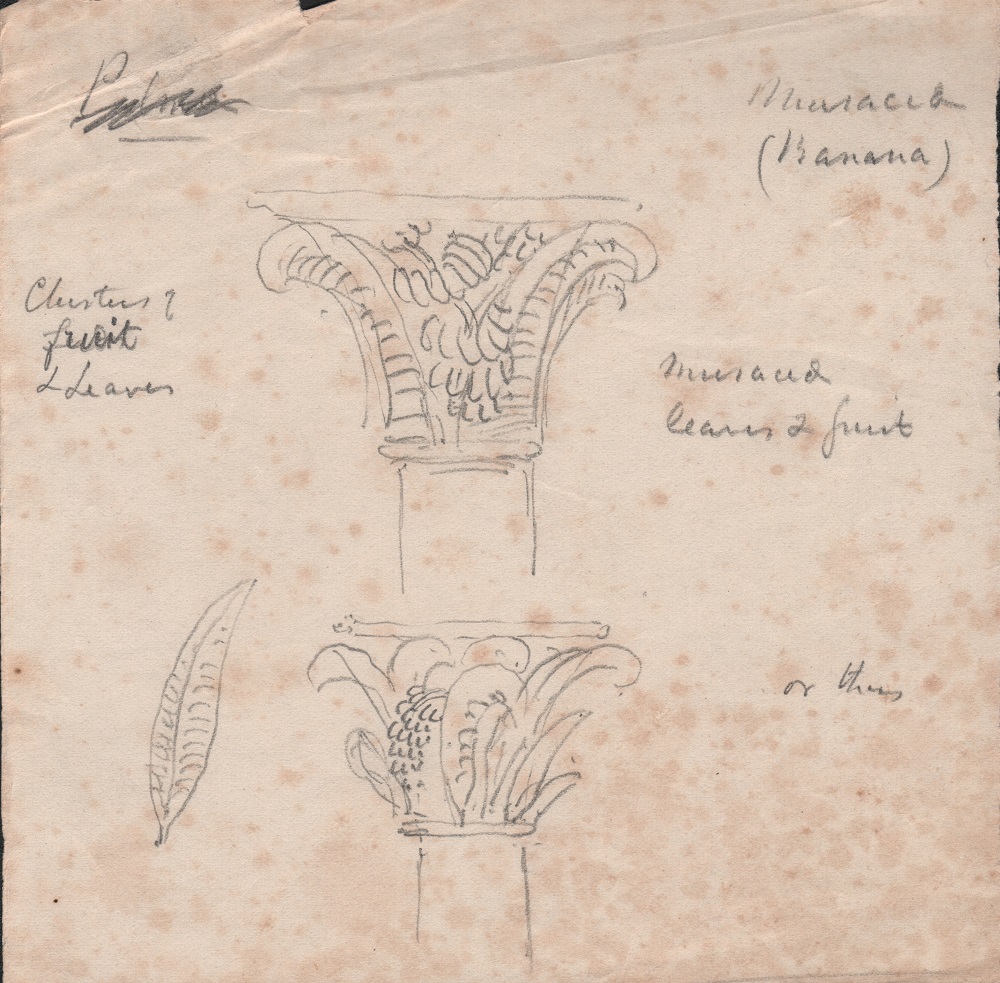
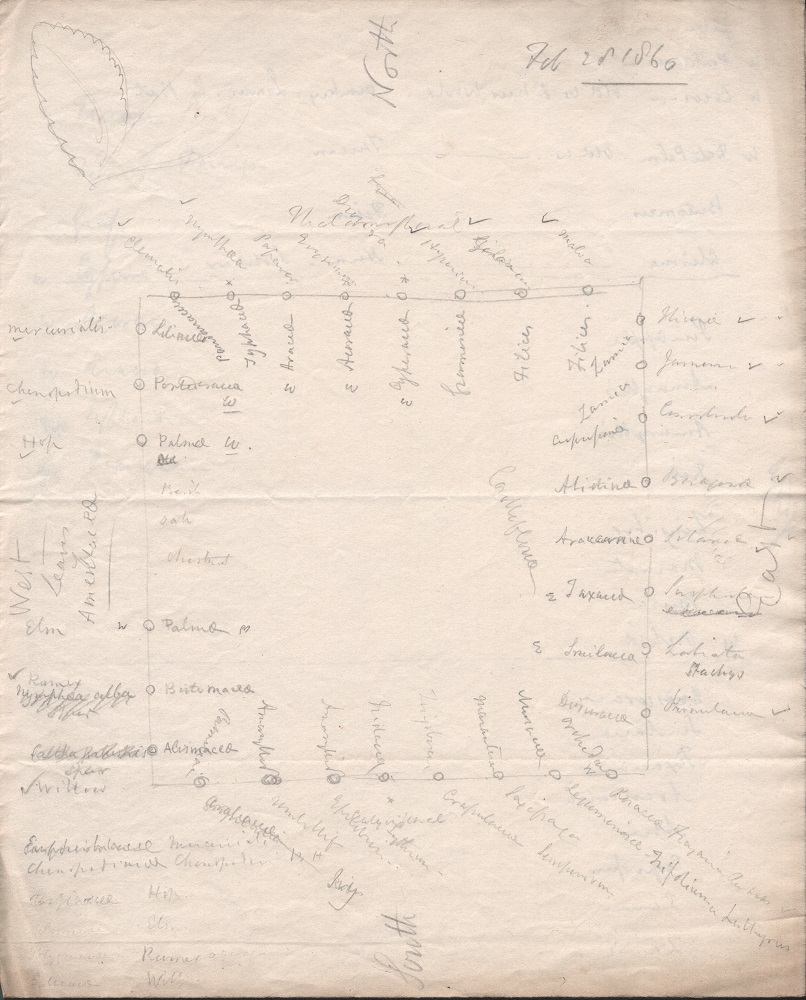
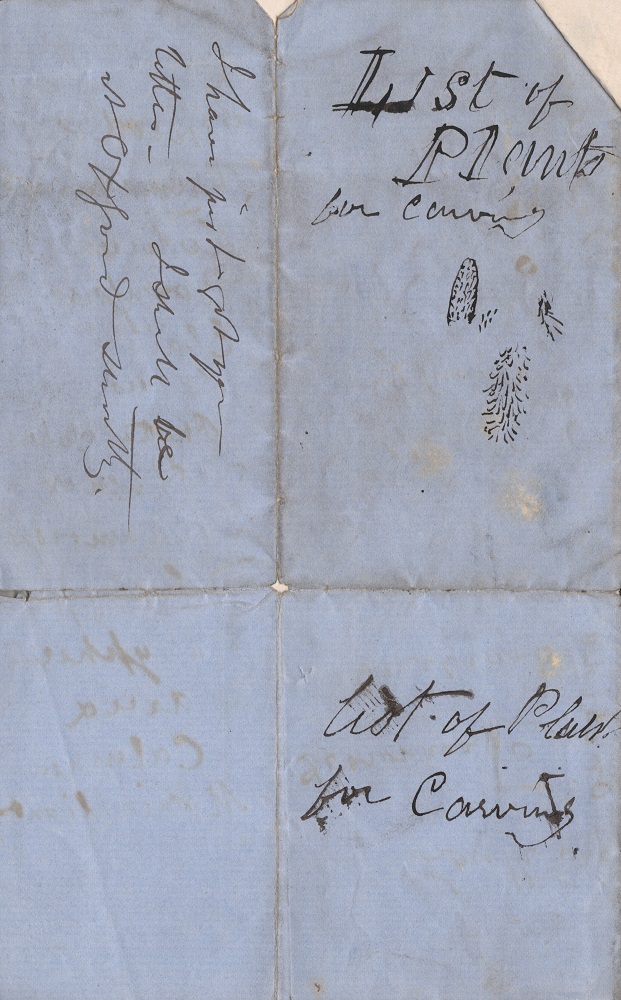
With its Pre-Raphaelite influence, the design of the Museum was conceived as an object lesson in art; both beautiful and instructive, it should teach students and visitors alike about the natural world. One of the most noticeable decorative teaching tools are the columns, capitals and corbels that surround the main court of the museum. Following Pre-Raphaelite principles, these were designed by Professor of Geology and the first Keeper of the Museum, John Phillips, who sketched most of the designs and outlined the order they would go in.

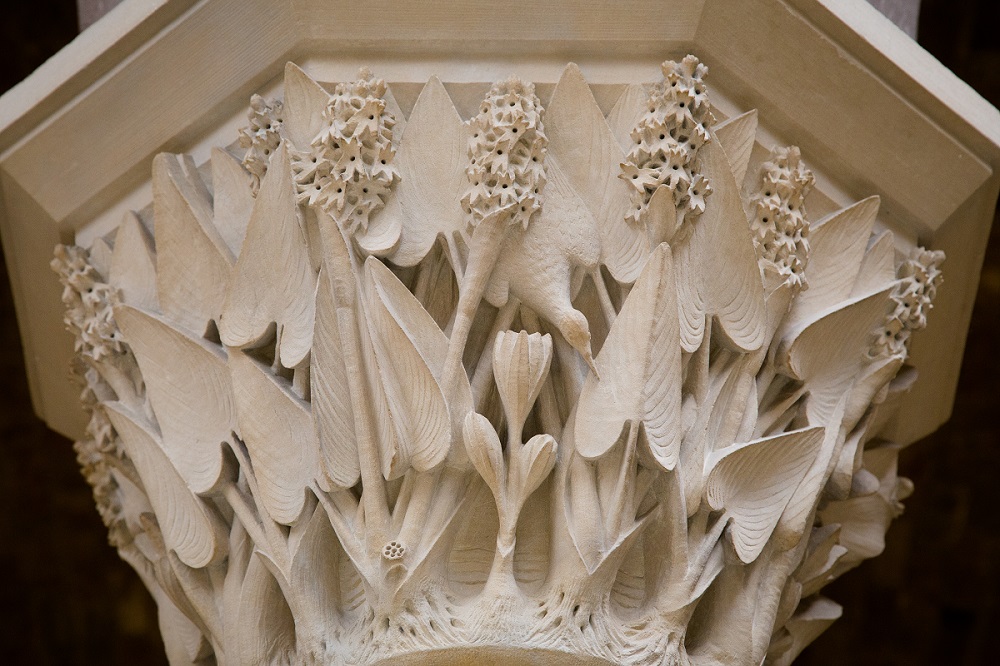
The plans called for 126 columns, 64 piers and 192 capitals and corbels. Each column was made from a different decorative stone from around Britain and Ireland, topped with a carved capital and flanked by a pair of corbels carved into plants representing the different botanical orders. As it was decided early in the design process for the Museum that the Oxford Botanic Garden would not move from the High Street, these carved plants were meant to ‘satisfy the botanist.’ Each column was supposed to be labelled with the name of the stone, its source, and the botanical name of the plant, but unfortunately only the geological inscriptions were completed.

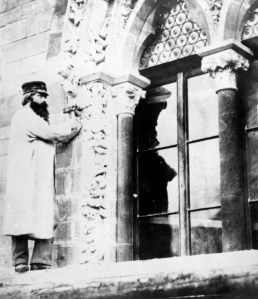
James O’Shea carving the Cat window found on the front façade of the Museum, c. 1860

The carvings were created by ‘Nature’s own Pre-Raphaelites’ the O’Shea brothers, James and John, and their nephew, Edward Whelan. Working in collaboration with Charles Daubeny, Professor of Botany and head of the Oxford Botanic Garden, Phillips supplied the O’Sheas with specimens of the plants he had chosen, and so the carvings were made from life. Each capital is different and unique based on the plants they were representing. Some are simple and elegant while others are more intricate and hide small birds, animals and insects.

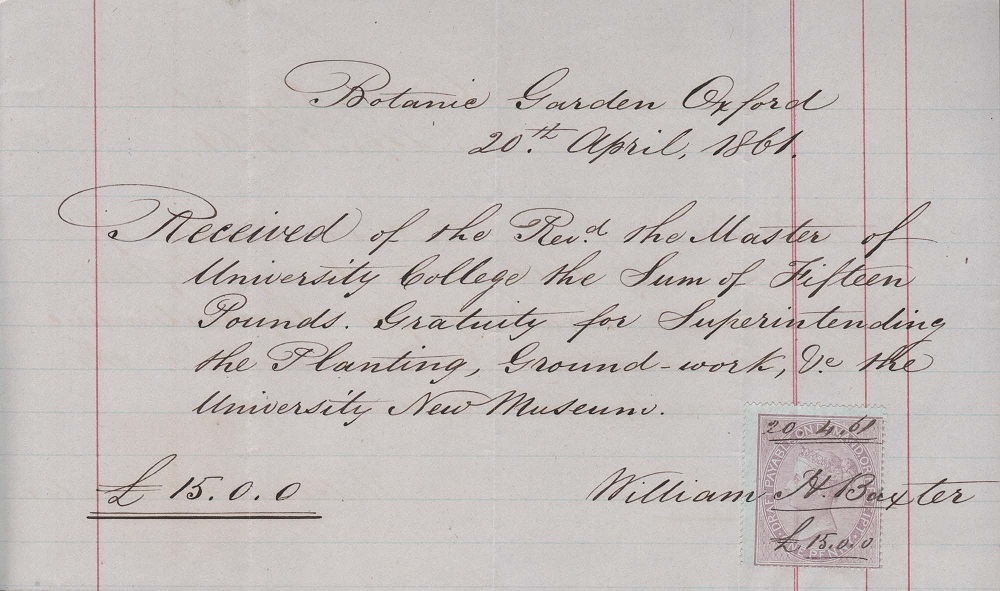
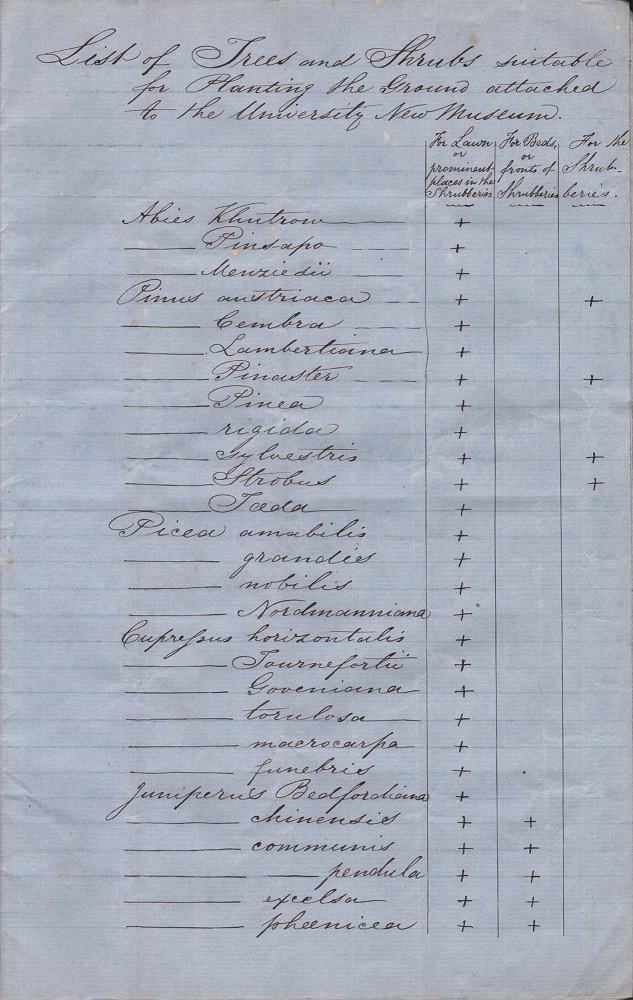
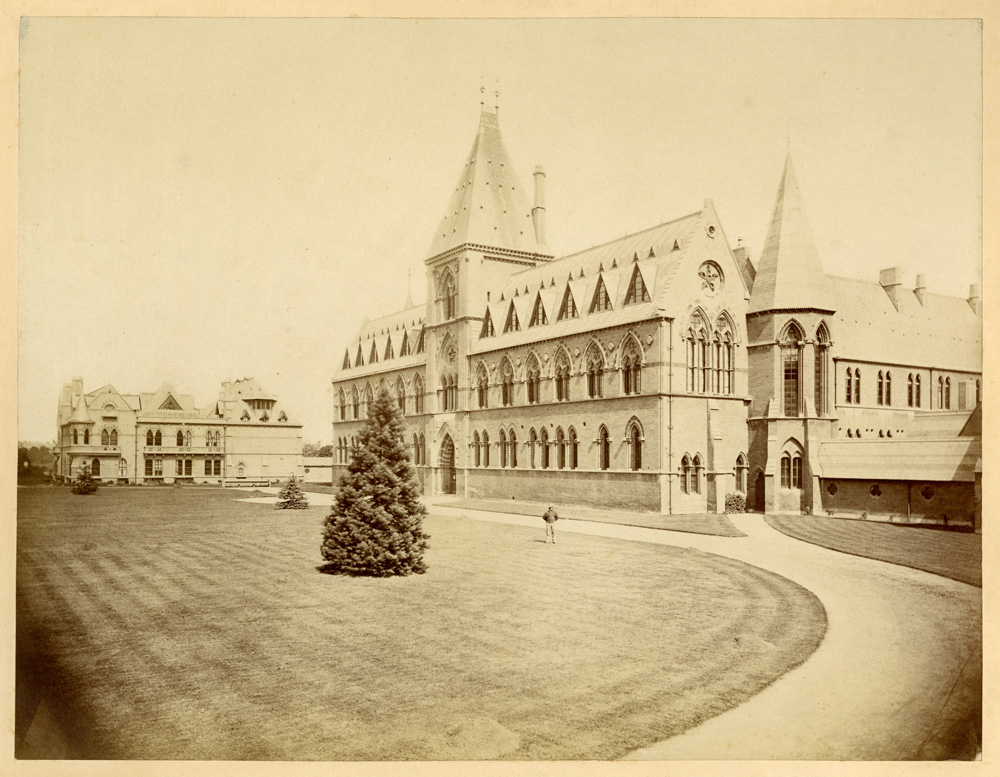
Phillips also worked with another curator at the Botanic Garden, William H. Baxter, who advised on suitable trees and shrubs to adorn the grounds surrounding the Museum. Over the years, as landscaping has changed and additional science buildings have been added around the Museum, only one of the trees chosen by Phillips and Baxter has survived. It is the imposing Giant Sequoia on the front lawn, which was planted in the early 1860s and is believed to be one of the oldest specimens in the United Kingdom.

Our connection to Oxford Botanic Garden continues to the present day. As the Museum embarks on the first major redisplay of its permanent exhibits in almost 20 years, staff are collaborating with the Garden to reference plants for displays showing the immense, interconnected variety of the natural world.

We are very pleased to be strengthening the Museum’s long relationship with the Botanic Garden, and would like to take this opportunity to wish everyone there a very happy 400th birthday!

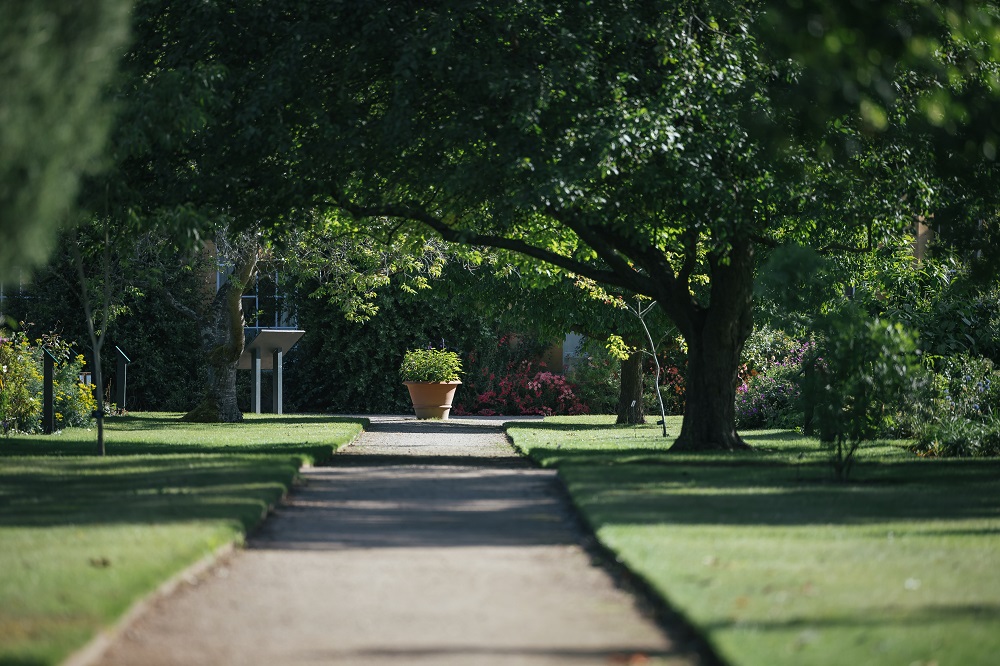
Oxford Botanic Garden today
Top image: Oxford Botanic Garden in 1880