Make a butterfly feeder

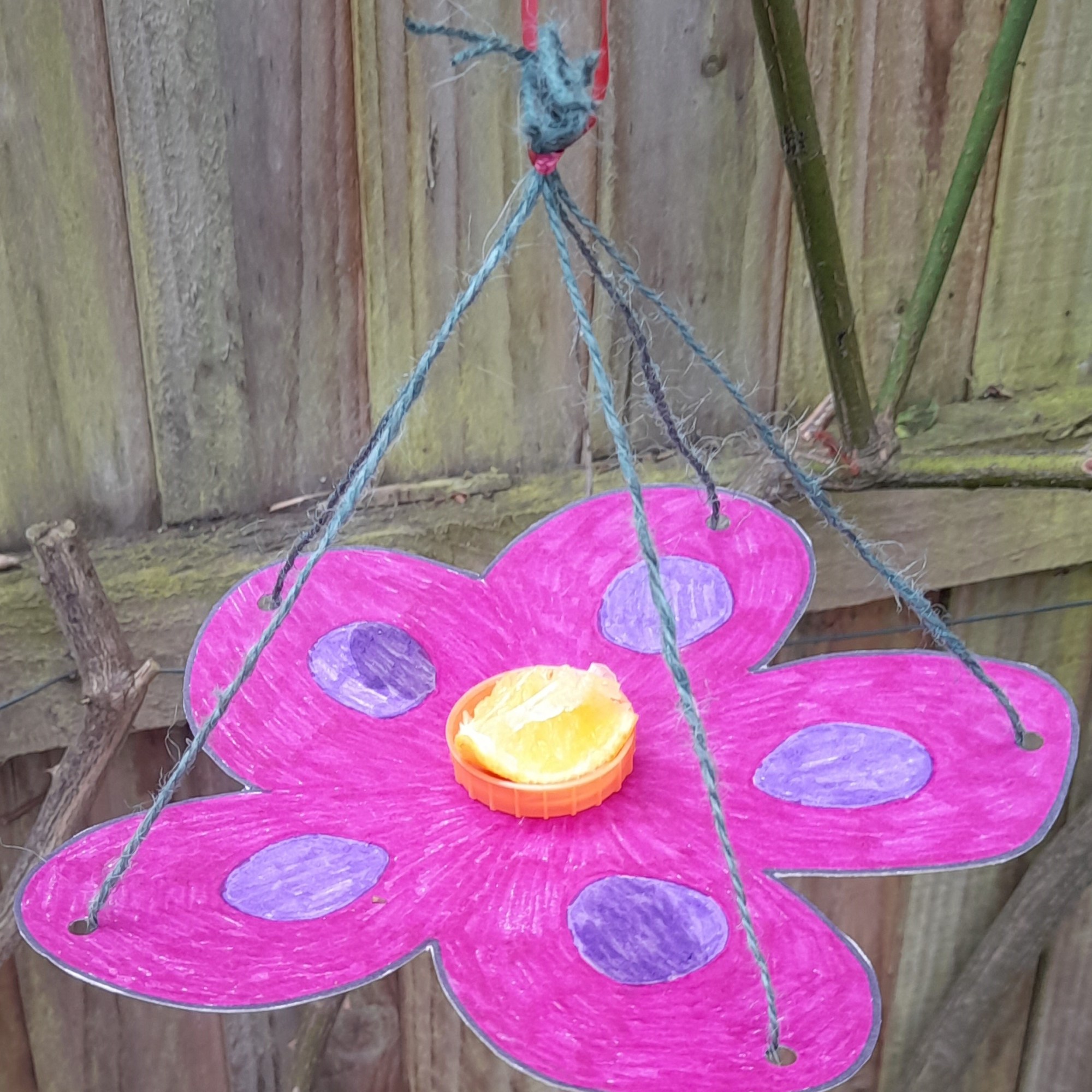
In the last post Kate told us all about her favourite butterfly. In this post I will be showing you how to make your own butterfly feeder, from items you might commonly have at home, to help attract butterflies, and other insects, to your outside space. I had to raid my recycling bin for key materials.

Here are the same instructions on how to make a butterfly feeder, as can be seen in the video:

What you will need:

  • Cardboard
  • Coloured pens or paints
  • String or wool
  • Glue or sticky tape
  • Scissors
  • Bottle top
  • Hole Punch
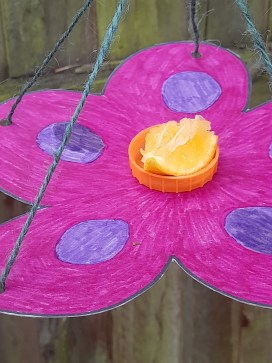
  1. Take a piece of cardboard and draw a flower with five petals, roughly 20cm wide.
  2. Decorate your flower in any way you wish.
  3. Cut out your flower.
  4. Fix the bottle top to the middle of your flower using glue or sticky tape.
  5. Use a hole punch to make a hole at the edge of each petal of your flower.
  6. Cut five pieces of string or wool, each roughly 40cm long.
  7. Tie the five pieces of string together at one end.
  8. Turn your flower over and thread a piece of string through each hole, and tie the five pieces of string together.
  9. Tie an additional piece of string, or wool, to the knot.
  10. Hang your butterfly feeder in a sunny, but sheltered, spot outside.
  11. Mix together sugar and water, or take a small piece of overripe fruit (e.g. orange or banana), and put it in the bottle lid.

Watch to see any butterflies, or other insects, that visit your feeder. You could investigate which foods different species prefer.

Please tell us about your butterfly feeders and investigations. We would love to see photos of them. Contact us or email at hopelearning@oum.ox.ac.uk.
Insect super powers: surviving the winter

Insects have some really cool super powers and surviving extreme temperatures is one of them!  Have you ever wondered how insects manage to survive in the cold winter months? 

In the Summer, insects are all around us but in Winter they seem to disappear.  Where do they go and how do they survive the extremes of winter?  Unlike us, insects can’t put on a coat, hat and gloves or turn up the central heating!  With such a small body size, they could easily freeze as the temperature drops but they have some pretty cool ways of making sure their species continues to the next generation.

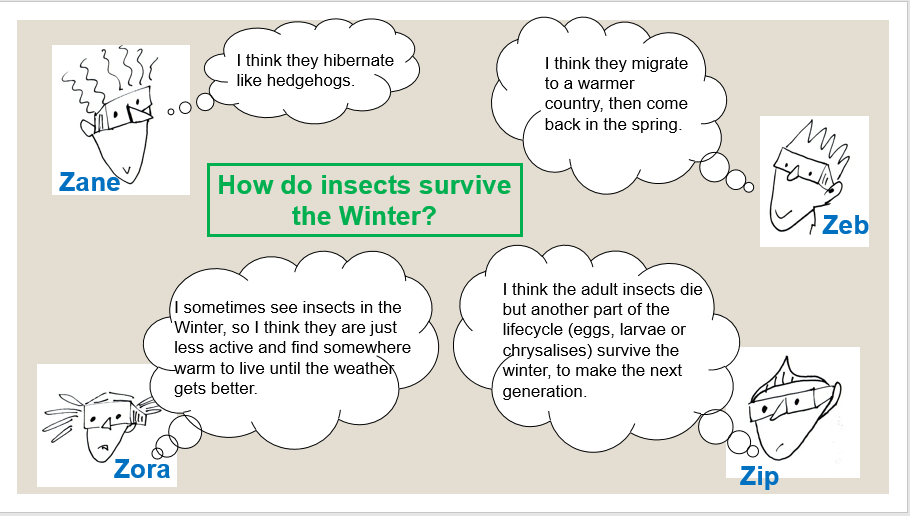
Take a look at these ideas. Who you think is right? Do you have a different idea?

Zane, Zeb, Zora and Zip are all right!

Strategy 1: Diapause

This is similar to mammalian hibernation where adults survive the winter in a state of torpor or dormancy.  Insects find suitable places to spend the winter such as holes in dead wood, under leaf litter or inside sheds and other buildings. They then become inactive, their heart rate slows right down and some insects even produce anti-freeze chemicals to stop them from freezing. 

Here are some insect species that undergo diapause:

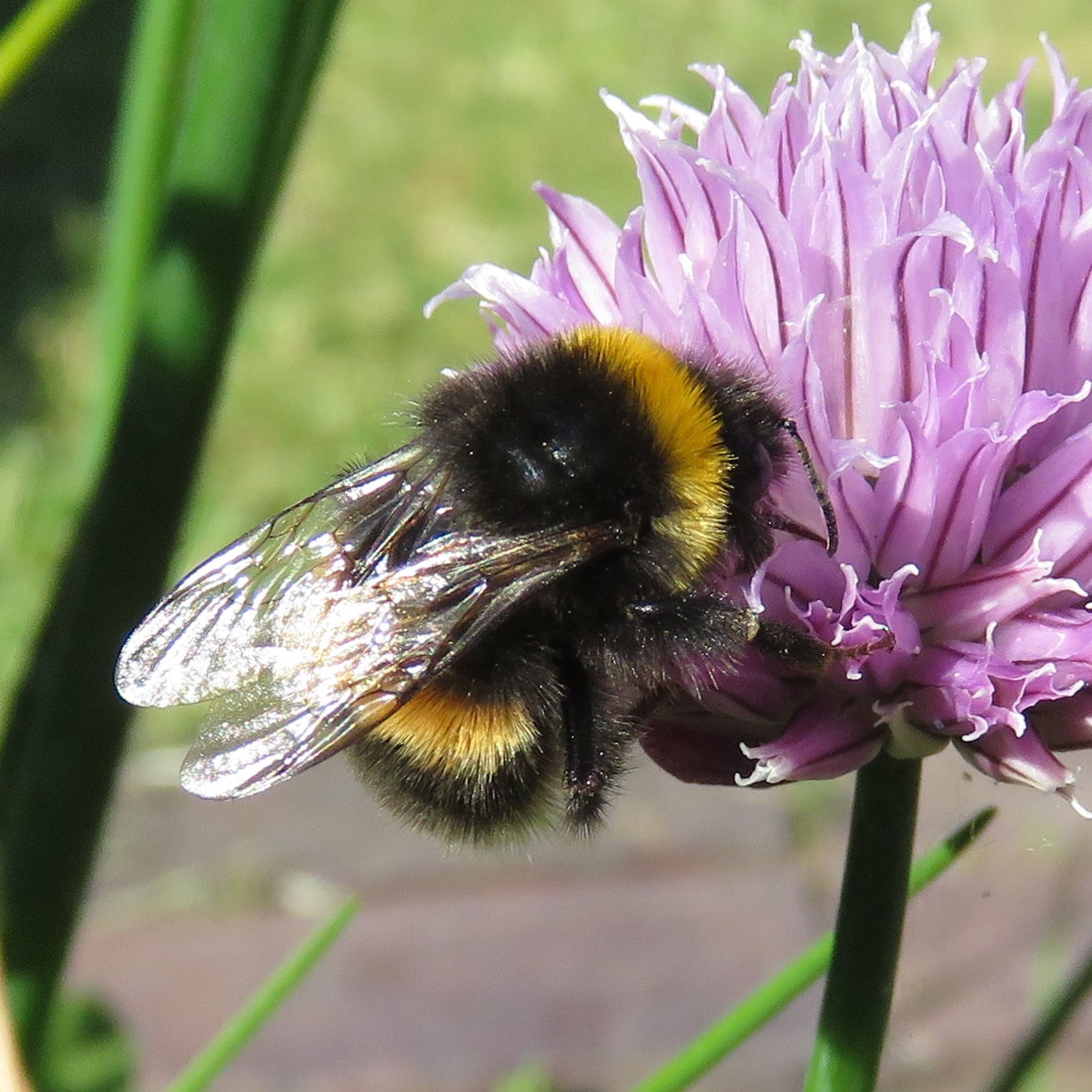
During the Winter, only the queen bumblebee survives and amazingly all the other bumblebees die.  The queen spends the winter in an underground burrow already carrying the eggs that will be the next generation.

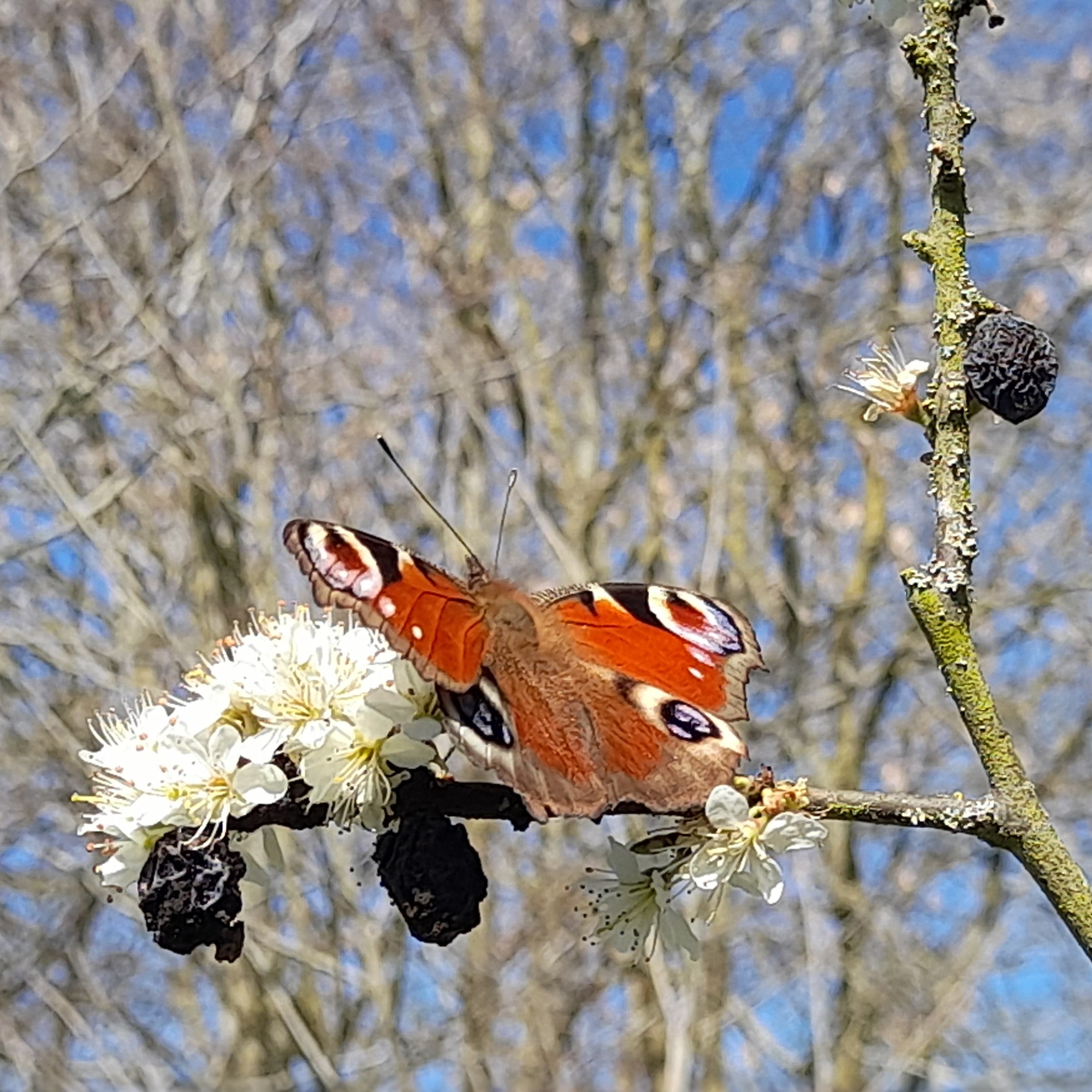
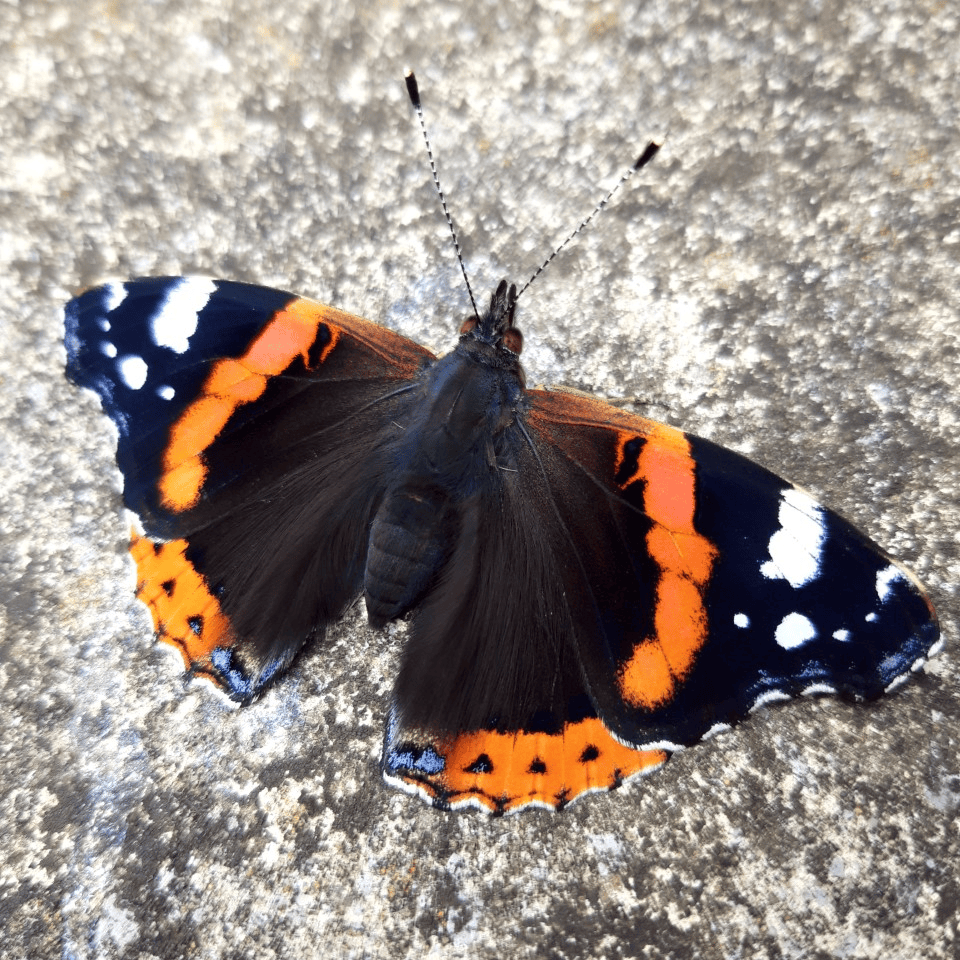
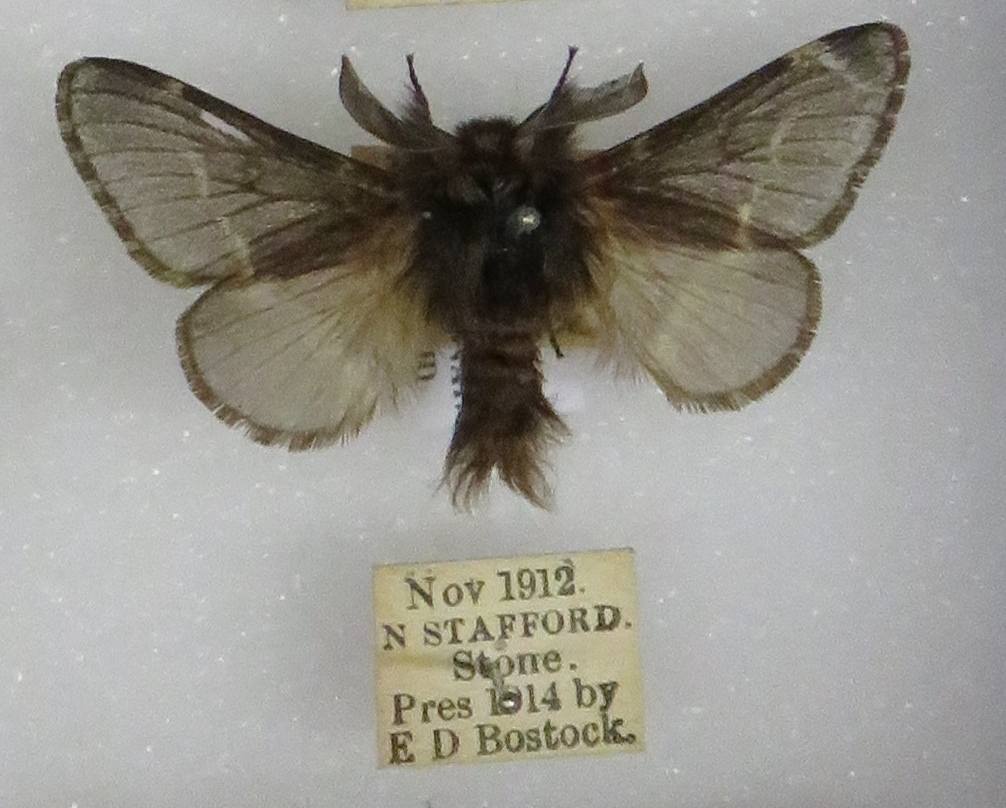
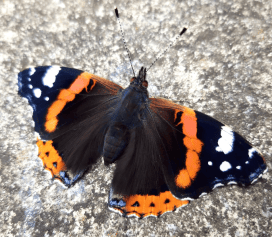
Butterflies such as Peacocks, Brimstones and Red Admirals shelter in garden sheds during diapause.  Sometimes you can find them inside houses – do not disturb!

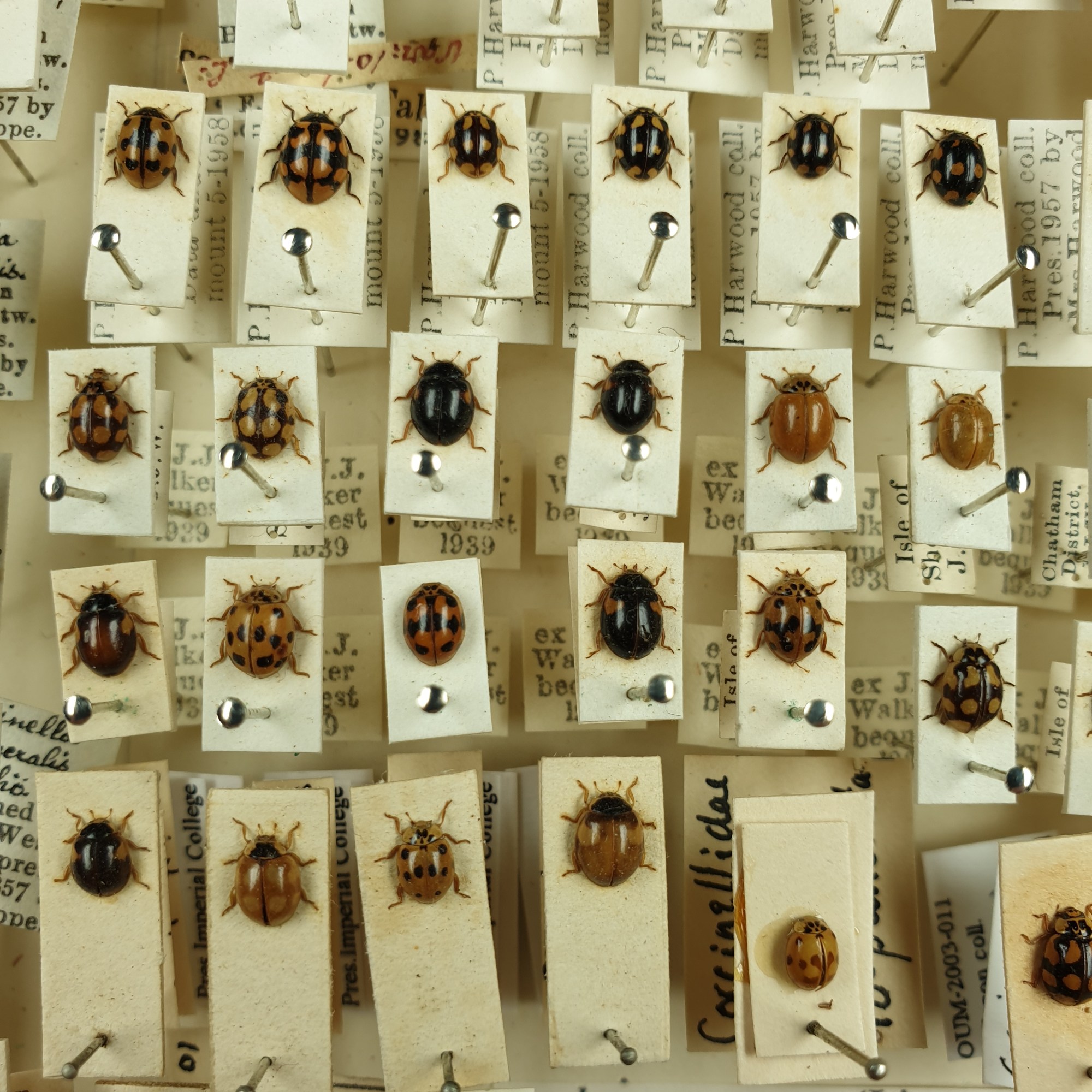
Ladybirds huddle together in groups, for example, under bark of trees.

Strategy 2: Seasonal Lifecycles

The adult form of many insect species will not survive the winter but one of the other stages of their lifecycle (either the eggs, larvae or chrysalises) will survive by keeping warm in places such as leaf litter, under bark or in long grass waiting to be activated by the warmth of the sun in the spring.

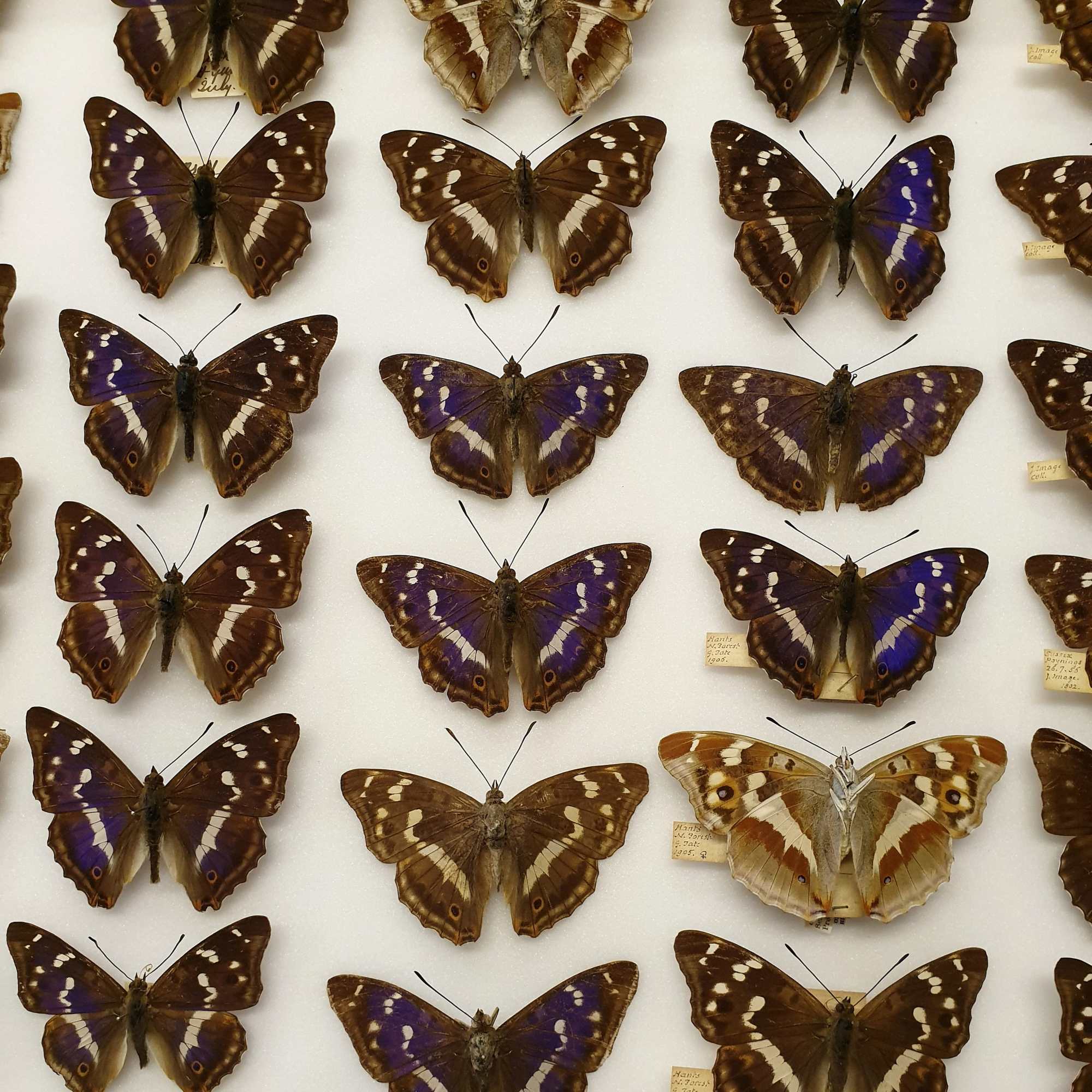
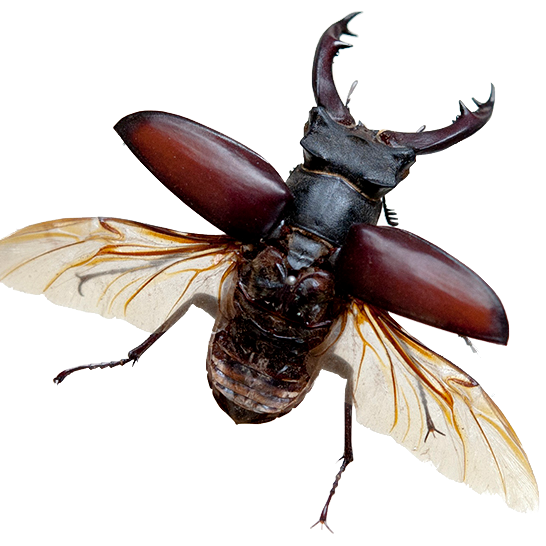
The larval stage of the Stag Beetle and the Purple Emperor butterfly survive the winter, but the adults die.

Strategy 3: Migration

A few British insects such as the Painted Lady and Clouded Yellow butterflies migrate to Africa for the Winter.  Individual Painted Ladies have been recorded making journeys of nearly 2,500 miles. Unlike birds, the same individuals do not make the return journey the following year – that journey is made by a new generation.

Strategy 4:  Remain Active

Lots of insects do, in fact, remain active in the winter.  It is just harder to find them because they are keeping warm under leaf litter, amongst long grass or, in the case of aquatic insects, under water.  Most insects who do this are just feeding and waiting for the Spring when they can find a mate and reproduce but some species, such as Winter Moths and December Moths, reproduce during the winter months.

We would love to see your photos or hear about insects you have seen this Winter. What can you find in your garden or local outside spaces?  Be careful not to disturb them too much! You can tell us about it using the form on our Contact Us page, or email us at hopelearning@oum.ox.ac.uk.
All that glitters…

The latest display in our changing Presenting… series showcases some of the incredible colours seen in many insects. Zoe Simmons, collections manager in our Life Collections, explains how such wonderful hues are created.

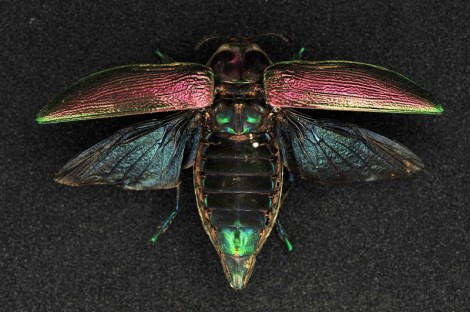
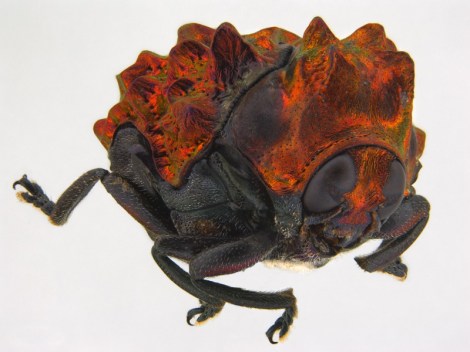
Reflected and refracted light creates the many bright and shining colours found in some insects. The dazzling natural display shown in the specimens here is formed through a combination of embedded pigments and sculpted surfaces on each insect’s external skeleton.

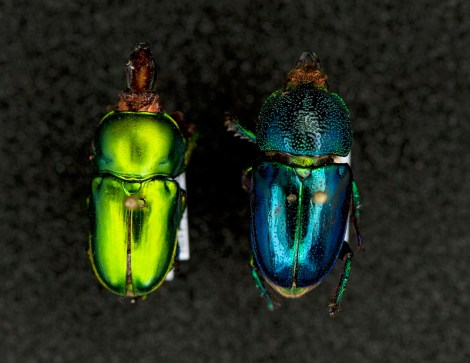
Some species can be variable in colour. Here a pair of Lamprima, a genus of Stag Beetles, shows off the range of colours present in the species.

Different pigment chemicals are responsible for different colours. Carotenoids produce yellow, orange and red hues, while bilins may be green, or blue if linked with proteins. They reflect and absorb different wavelengths of light, and the wavelengths that are reflected are the ones that we see as colour. Typically humans can see wavelengths of 390-700 nanometres, with the lower wavelengths perceived as blue, and the higher ones as red.

Many of the Leaf Beetles (Chrysomelidae) exhibit metallic colours.

Many insects also have multiple thin layers over their upper surfaces to help protect them and prevent dehydration. Variations in thickness and chemical composition of these layers can interfere with the transmission of light, refracting and scattering it back.

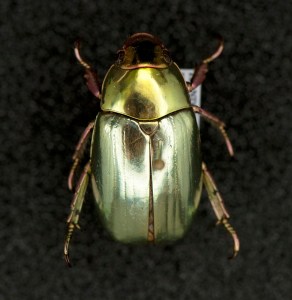
Some of the most striking metallic colours are found in the genus Chrysina, where species can be rose, silver or gold.

The shape of the surface layer can reflect light in a multitude of directions, with micro-folds, grooves, pits, hairs and scales all helping to produce complex colours and effects.

The formation and purpose of these colours is scientifically interesting, with research having applications in areas such as nanotechnology. But these insects are also simply beautiful examples of the spectacular diversity of the natural world.

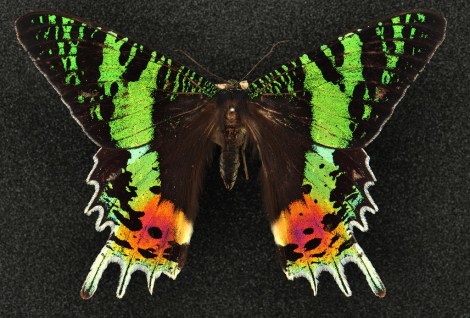
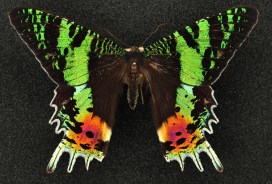
Sunset moths (Uraniidae) are so called because of the dazzling array of colours on their wings. As day-flying moths they are brightly coloured like many butterfly species.