Happy Valentine’s Day!

February 14th is St Valentine’s Day, traditionally a day to celebrate love!   To mark this special day, we thought it would be fun to look at love in the insect world. Of course, insects don’t go on dates but how do they go about securing a mate?  There is a dazzling array of ways in which insects have evolved to attract a mate, as well as some bizarre mating behaviours; some rather romantic and some definitely not!

Tokens of Love!

The Empididae family of flies, also known as dagger flies because of their piercing mouthparts, include some species where the male fly will tempt females into mating by offering them a so-called nuptial gift.  This gift is not a lovely box of chocolates or a dozen red roses, but a juicy item of prey carefully wrapped in silk.  The male gives this nuptial gift to the female who catches his eye.  Females of some species have evolved special features to attract males, such as feathery scales on their legs or inflatable abdominal sacs.  Entomologists have even discovered that there is a relationship between the size of the gift given and the time that the females will spend mating.  So the bigger the gift, the more likely the mating is to be successful. 
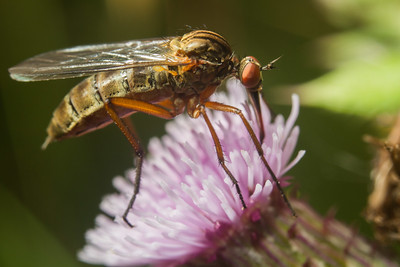
© Lennart Tange, CC BY-NC 2.0

Off with his head!

Rather less romantic, is the alarming mating behaviour of the praying mantis. With more than 2,400 known species ranging from 1cm to 18cm in size, praying mantises (Order: Mantodea) are a diverse group of insects found in many different habitats.  Most are found in warmer regions, particularly in tropical and subtropical climates, although they can also be found in some areas of Southern Europe. 
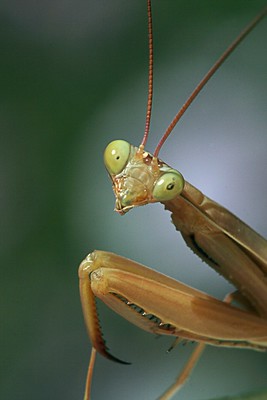
© CatDancing, CC BY-NC 2.0

Highly-skilled hunters, praying mantises eat insects and other small invertebrates such as spiders, but larger species have also been known to eat mice, small amphibians, snakes, and even birds and bats!  When it comes to mating, the male takes his life in his hands! Hungry females, who will soon need to lay eggs, need all the food they can get and if the male isn’t very careful, he can find himself turned into a meal as the female munches into his head whilst they mate. Read this article and watch this video if you dare!

Deadly Praying Mantis Love

Happy Valentine’s Day to you all!  Do you know any other examples of bizarre or interesting insect behaviour that you would like to share? Let us know in the comments, or by using the Contact Us page

Carnivore conservation

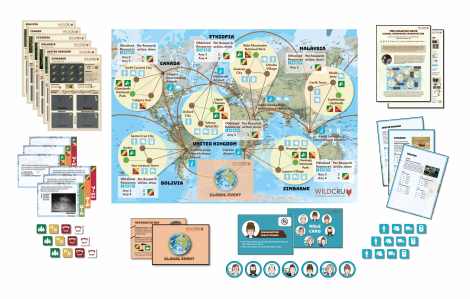
A new choose-your-own-adventure board game created by researchers from the University of Oxford’s Department of Zoology puts players centre-stage in a global carnivore conservation challenge. The educational game is launching a Kickstarter fundraising campaign today and here co-designer Dr Cedric Tan tells us all about it…

Have you ever wondered what it’s like being a conservation biologist? We have spent the past year creating and testing a brand new board game – The WildCRU Game: Global Carnivore Conservation – that reveals some of the challenges faced by conservationists, the animals themselves, and the indigenous people who live with them. We’re now looking to get the game out to schools and communities all across the world with a £40,000 Kickstarter funding campaign featuring lots of rewards and discounts for our backers.

The game has been co-designed by Jennifer Spencer and myself to appeal to non-scientists and people of different ages. Players work together cooperatively as WildCRU researchers to gather the resources to complete carnivore conservation projects across the globe.

Stories in the game are taken directly from the real experiences of the WildCRU team. Players must decide what to do in choose-your-own-adventure-style encounters to gather the equipment, personnel, and transport resources they need for their projects.

In developing this game, we chose six varied WildCRU projects including the Hwange Lion Research project, based in Zimbabwe, and the famous water vole study in the UK, to show players the breadth of WildCRU’s research.
– Co-designer Jennifer Spencer, WildCRU

Multiple choice research questions are also based on real WildCRU research; they reveal more about the environment of each project – the flora, herbivores, competitor carnivores, and study species of the study sites. With the additional pressure of Global Events, players will learn about how difficult wildlife conservation projects can be.

It has been great to see that the game appeals to both kids and adults. People have found it to be an immersive experience in which players experience the challenges of real people, real situations and real research. We also hope that the game will provide local families with the opportunity to learn about the wildlife around them, and how to live in harmony alongside it.

Through the game and our other education efforts we’re hoping to increase environmental awareness and to introduce a wide variety of people to the science and processes behind real-world conservation.

Images and video: Laurie Hedges (lauriehedges.com)