Events 4U in ’22!

Happy New Year!  We hope 2022 is full of exciting times and awesome insect discoveries. We are SO excited because this year, we are inviting you to join us for FREE Crunchy on the Outside events here at the museum. Come and take part in some fabulous activities specially designed for young people, aged 10 – 14, interested in natural history and insects in particular. Keep an eye on this blog for news of forthcoming events.

Read on to find out more about the first event happening in February half term and how to book!
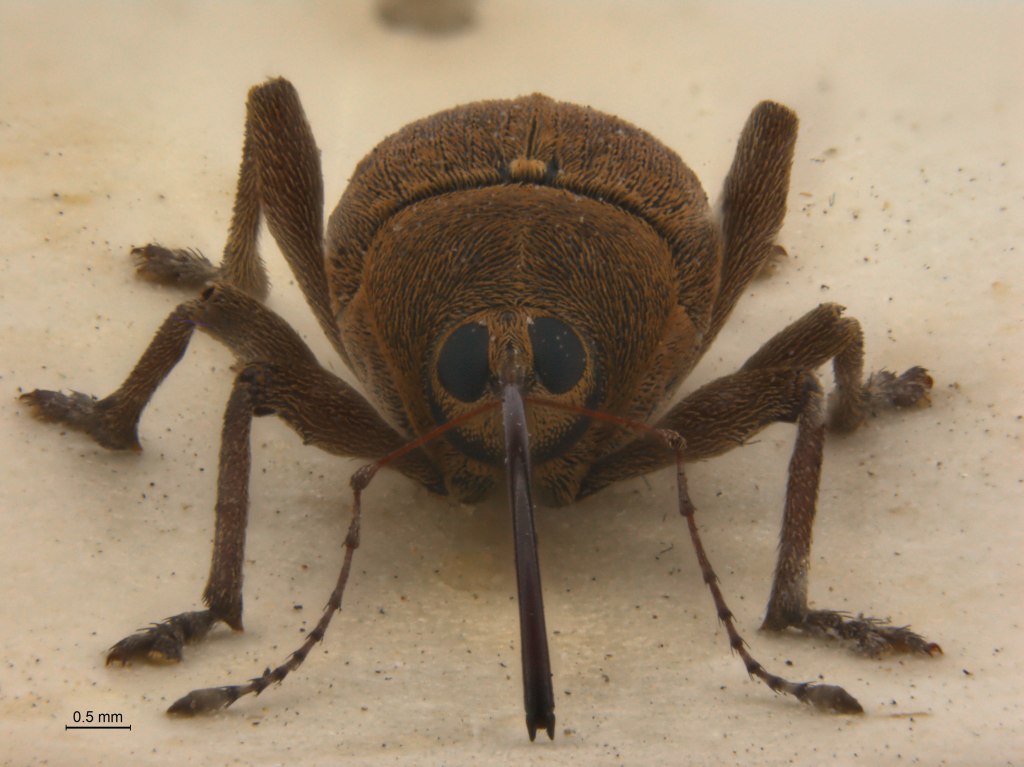
Acorn Weevil – Curculio glandium

Insects under the Lens – Wednesday 23rd February 2022, 1 – 3pm

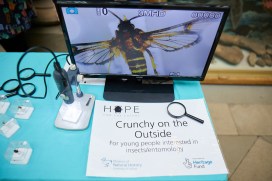
Intrigued by insects? Join us to take a closer look at some of the museum’s 5 million insect specimens under a variety of different lenses. We will be using microscopes and digital photography to reveal beautiful details of insect anatomy not visible to the naked eye.  This workshop promises to unlock some of the secrets of the insect world and develop your powers of observation!
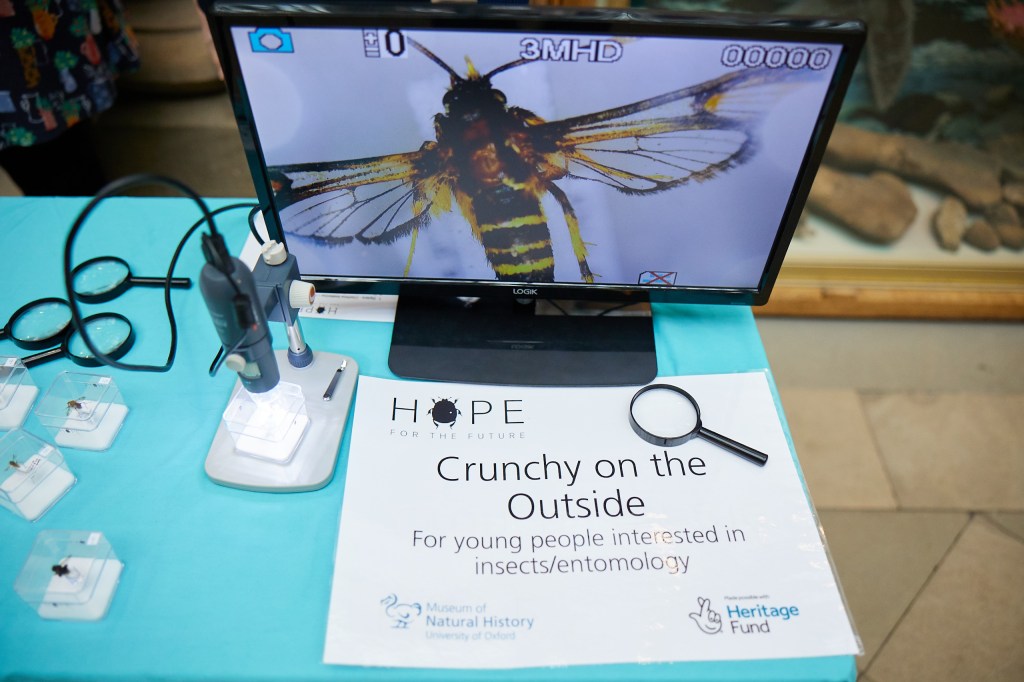
Six-belted Clearwing Moth under the microscope

FREE workshop – Insects under the Lens 

Wednesday 23rd February 2022 , 1pm to 3pm

Museum of Natural History, Parks Road, Oxford, OX1 3PW

10 to 14 year olds

To book – email: hopelearning@oum.ox.ac.uk
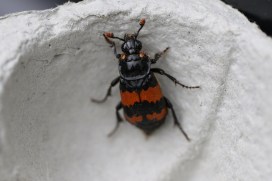
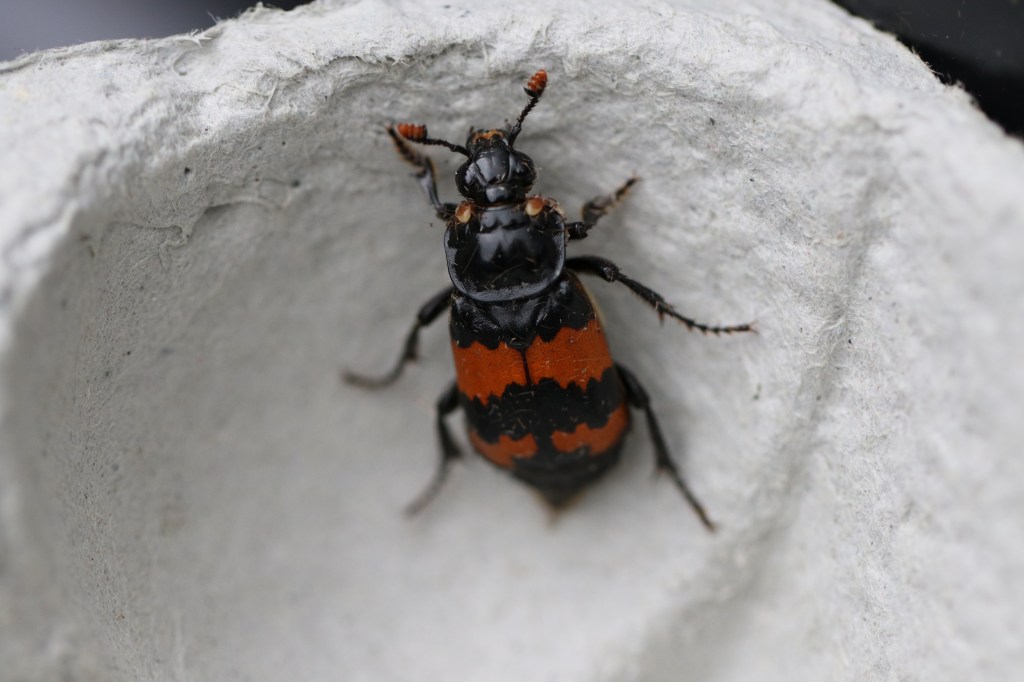
Carrion Beetles

Carrion beetles are a family of beetles, Silphidae, that feed on decaying organic matter, such as dead animals. This makes them important natural recyclers.

Banded Burying Beetle © Ashleigh Whiffin

They are also Ashleigh Whiffin’s favourite group of insects. She tells us a bit about them in this video:

Ashleigh Whiffin, Assistant Curator of Entomology for National Museums Scotland, telling us about her favourite group of insects.

Do you know of any other insects that act as decomposers and natural recyclers? Tell us about them in the comments below or in the Contact us section of the blog.

Christmas Quiz Answers

We hope you enjoyed our Crunchy Christmas Quiz! Here are the answers.

  1. The holly and the ivy mining bee
  2. Adventomologists
  3. The Grinchafer
  4. The most wonderful time of the yearwig
  5. Snowmantis / Snowmantid
  6. Bethlehemiptera
  7. Myrrhino beetle
  8. 25 December moth
  9. Angelytra
  10. Yulepidoptera

Have fun over the holidays and have a Happy New Year!

Christmas Quiz 2021

To round off an eventful year here at Crunchy on the Outside, we have put together a quiz for you combining our two favourite things: Insects and Christmas!

There are ten questions in the video. Each of the answers is formed by smashing together the two clues. One clue is about insects, the other about Christmas. We’ve included a couple of examples at the start to help you get the hang of it. Don’t worry if a question seems tricky, it’s just for fun and we’ve included some clues below.

Clues

  1. The scientific name of this insect is Colletes hederae.
  2. You will find out about what these scientists study here: https://crunchyontheoutside.com/category/people/
  3. We wrote about these insects in the summer: https://crunchyontheoutside.com/2021/07/05/chafers/
  4. Complete title of the song: Clue: “It’s the most wonderful….”.
  5. This insect may seem holy, but it’s looking for prey.
  6. Find out the name of this group of insects here: https://oumnh.ox.ac.uk/files/2insectidpdf-0
  7. This beetle is named after another horned animal.
  8. We wrote about this insect recently: https://crunchyontheoutside.com/2021/11/29/the-delightful-december-moth/
  9. You’ll need to know the scientific name for the wingcases/hardened forewings of a beetle.
  10. Find the name of this group of insects here: https://oumnh.ox.ac.uk/files/2insectidpdf-0

Answers

Good luck! We’ll publish the answers on the blog on Christmas Eve, so keep an eye out for them. Let us know how many you got right!

Best wishes for Christmas and the new year from all of us at the Crunchy blog!

Kate, Rodger & Susie

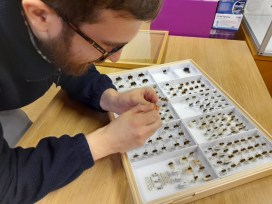
Louis Lofthouse

Louis is a Collections Assistant, for the HOPE for the Future Project, at Oxford University’s Museum of Natural History. Here he is telling us about his role and how he first became interested in insects.

Louis mentions that through his job he gets to see rare and extinct insects that you normally might not get the chance to see. Can you tell us about any rare or extinct insects that you know about? Let us know in the comments below, or through the contact us page.

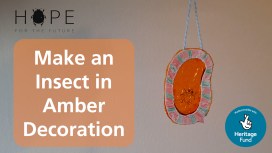
Make an Insect in Amber Decoration

Insects that have been trapped in amber (fossilised plant resin) can be preserved in amazing, stunning and beautiful detail. This short video shows you how to make a fossilised insect themed decoration that can be hung on your Christmas tree for the festive period, or can be displayed around you home all year round.

I have included the written instructions in case you find them helpful.

You will need:

  • A glue stick
  • Scissors
  • A Pencil
  • Card (e.g. cereal box)
  • Paper String/wool
  • Orange cellophane sweet wrapper(s)
  • Coloured pencils/pens/glitter

Instructions

  1. Take two pieces of card that are roughly the same size. Put them together with the plain sides facing out.
  2. On one side draw a frame, at least 1cm thick. It can be any shape you choose.
  3. Carefully cut out the frame, including the middle.
  4. Check that your cellophane wrapper will cover both frames. If not, use two.
  5. Use the glue stick to attached the cellophane to the patterned side of the frames.
  6. Trim the cellophane around the frames.
  7. Take a small piece of paper that will fit inside the frames and draw an insect on one side. Trim the excess paper around the insect and then draw a similar insect on the other side.
  8. Use the glue stick to attach the frames together with the insect in the middle, and with the wool/string forming a loop that you can use to hang your decoration.
  9. Decorate your frame using coloured pencils, pens, glitter or anything else that you choose.

We would love to see your amber decorations. Also, can any of you spot the key feature of an insect that I forgot to draw to my insect picture in the video? Let us know in the comments, or by the Contact us page.

To find out more about Insects in Amber look out for a post early next year.