

Out on a limb
Each summer the Museum runs its Undergraduate Bursary Scheme to give university students hands-on experience working in a museum of natural history. The scheme accepts applications from students from underrepresented backgrounds who are ordinarily resident in the UK. Here, Helena Rowlstone tells us about her time on the Scheme investigating mammalian limb evolution and scanning bones from the Museum collection.
The structure and shape of different mammals can vary hugely. Consider the differences between dog and a whale, one a land mammal, the other a marine mammal. One of the most dramatic shifts in mammalian evolution originates from the transition from land to water, where some animals evolved flippers and paddles rather than a typical leg. Over six weeks at the Museum, I had the incredible opportunity to explore this aspect of evolution, working on Dr Julia Schwab’s research into the anatomical adaptations of mammals.
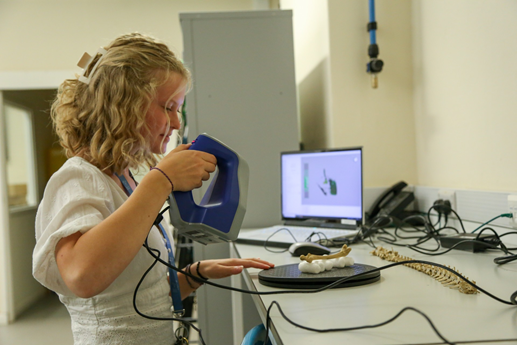
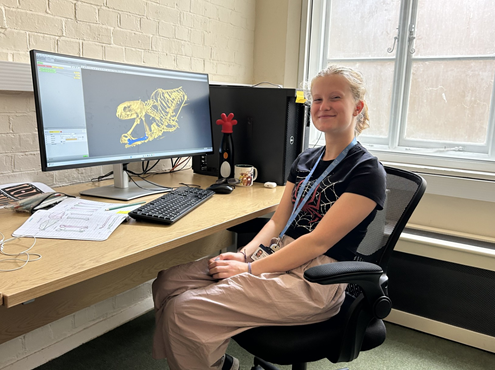
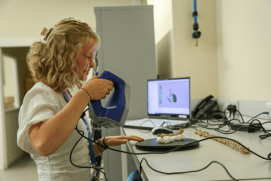
During the project I learned how to process CT scans to create digital 3D models in software called Amira; how to use a surface scanner to make 3D models from physical specimens; and how to use programmes such as 3D Slicer and R for analysis. In total, I processed CT scan data for 86 limb bones from species in the Mustelidae family, which includes weasels, combining the information with pre-existing models for other mammal species to allow comparisons to be analysed.
Prior to the placement I was already considering pursuing a career in museums. I believe that they play an important role in educating society about Earth history, current biodiversity, potential future climate change, and information to support and promote conservation – all things that I feel very passionate about. After six weeks here, I am even more confident that this is the pathway I will follow – the community aspect being such an inspiring feature at the Museum. All the staff were incredibly welcoming and gave me so much advice and guidance. Seeing their respective niches and interests has let me experience all aspects of museum life and it is inspiring to see their dedication to their work.
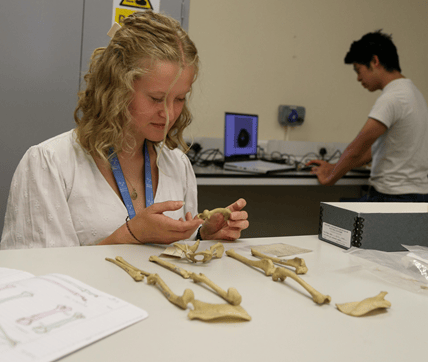
From an academic perspective, this placement has been invaluable. I have developed skills in data collection, processing and analysis, understanding of software, as well as experience in a longer-term research project. These are all qualities that will significantly enhance my future research career and provide me with expertise that I cannot get in the classroom. I have high hopes that this is only the start of my research career, and I sincerely hope that I can one day return to work in this museum. I cannot thank Julia, Hannah and the wider Museum enough for this bursary scheme and all their advice and guidance they have given me.
Are you an undergraduate student in the UK and interested in our paid Undergraduate Bursary Scheme? You can learn more on our website.

