Nature’s Waste Management Team

A Spotlight Specimens special for Oxford Festival of Nature

By Darren Mann, Head of Life Collections

One cow can produce over nine tonnes of dung per year. With a population of about 3.4 million cows in the UK alone, that’s a heck of a lot of dung deposited on our grasslands. Just imagine how much dung is produced every year if we include the output of horses, sheep, pigs, and all the wild animals out there.

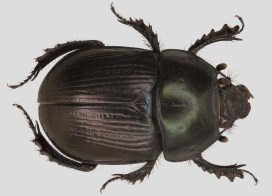
Dor Beetle – Geotrupes mutator

All of this dung is broken down by a multitude of invertebrates, including flies, worms, and beetles, as well as bacteria, fungi, and weathering. One of the key groups involved in the removal and degradation process is the aptly named ‘dung beetles’.

In the UK there are 61 species of dung beetle, though sadly just over half of these are now in decline and some have already become regionally extinct. UK dung beetles vary in size from just 3 mm to over 25 mm and occur wherever dung is found, though some prefer sandy soils and others like to live in woodlands.
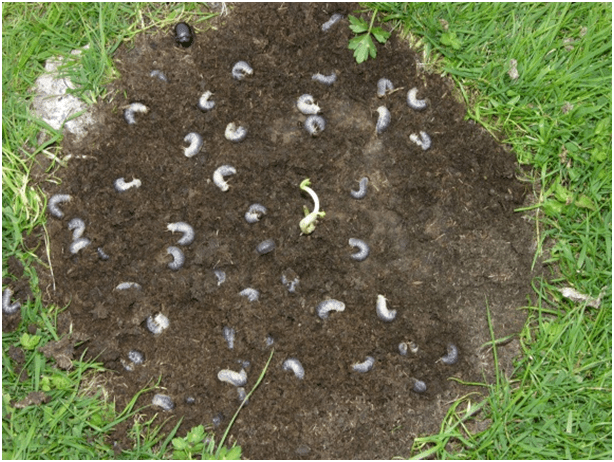
Larvae in dung pile
Dung beetle larvae (Aphodius fossor)

As adults, dung beetles feed on the liquid part of dung. The larvae of most of our species live inside the dung pile and are called the dwellers. These munch their way through the solid matter of the dung pile, gradually breaking it down over a few months. Other species such as Geotrupes mutator, pictured above, excavate a tunnel and bury the dung below ground. These tunnellers construct a brood chamber in which their young develop.
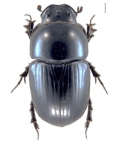
Aphodius fossor
Aphodius fossor

Through their actions, dung beetles perform a number of valuable ecosystem services. The most obvious is dung removal and degradation which leads to improved soil health by nutrient cycling and soil movement. By burying the dung they reduce the amount of available breeding habitat for pest flies and livestock parasites too.

All of these important services have been estimated to save the UK cattle industry £367 million per year. The value of dung beetles doesn’t end there as they also provide an important source of food for farmland mammals and birds. So next time you see a pile of dung in a field, just think of all the hard working beetles within…

Staff and associates of the Museum also run the Dung beetle UK Mapping Project – affectionately abbreviated to DUMP!

OFoN_logo_green block_small

Making Microsculpture

Microsculpture

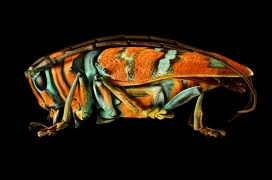
Today we are excited to be opening our new special exhibition, Microsculpture: The Insect Photography of Levon Biss. You may well have already heard about Microsculpture, and have perhaps watched the video showing how Levon Biss made these incredible portraits of insects from the Museum’s collection.

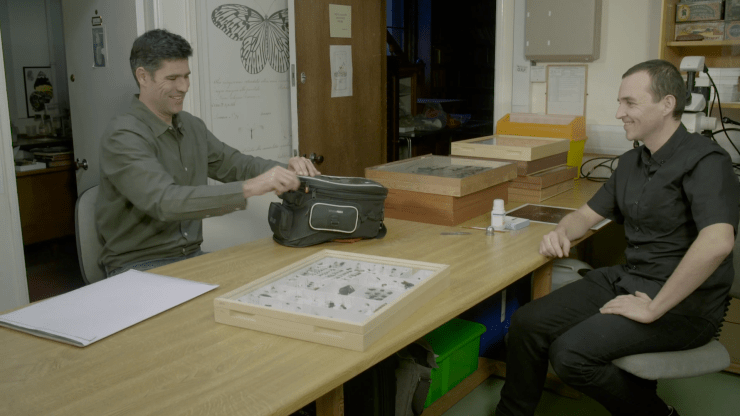
As we open the show in the Museum’s main court we wanted to give a little more insight into the process that Dr James Hogan, an entomologist in our Life Collections, went through to select and describe the specimens for the project. So I put a few questions to James to explain the making of Microsculpture from his point of view.

James Hogan (right) selecting specimens with Levon Biss

There are 23 specimens on show in the exhibition: how did you choose these particular ones?
We wanted a wide variety of specimens that would all show some interesting surface detail. Some were also chosen for their spectacular colours, interesting shapes or strange appearance.

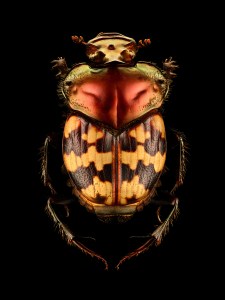
Splendid-necked Dung Beetle (Helictopleurus splendidicollis). From Madagascar. Length: 10 mm
Splendid-necked Dung Beetle (Helictopleurus splendidicollis) from
Madagascar. Length: 10 mm

But perhaps 95 per cent of the specimens we initially considered were rejected because we had some pretty strict criteria; very hairy specimens, which includes most bees, were out as the image processing was too difficult; the specimens had to be intact, so no broken antennae or legs.

Probably the biggest problem was finding specimens which were clean enough. Because Levon’s technique reveals so much detail, any dirt on the specimen is glaringly obvious. And the whole idea was to look at the surface structures, which are obviously very small and easily obscured by any dirt.

How did you prepare them for their close-ups?
All the specimens needed a bit of preparation work before being ready for Levon’s photography. First they needed to be remounted on the end of long pins to allow more clearance space for the lighting setup. Some of the specimens are very small and fragile and this is the stage where damage is most likely to occur.

After remounting, all the insects needed at least some degree of cleaning under the microscope. For this I used a range of fine paintbrushes; we also make our own tools from micro-pins bent into different points and hooks. Again, I had to be careful to not damage the specimens – easily done by over-enthusiastic cleaning!

Where do the specimens come from?
The specimens in the exhibition are from the Museum’s very large insect collection, stored behind the scenes in many different rooms. The insects in the show are from all over the world, from a back garden in England to a remote island near Antarctica. Some were collected over 150 years ago while others were collected very recently by Museum staff.

Of particular historical significance is the Tricolored Jewel Beetle (Belionota sumptuosa) which was collected by the Victorian naturalist and explorer Alfred Russel Wallace, co-publisher of the theory of evolution with Charles Darwin in 1858.

Tricolored Jewel Beetle (Belionota sumptuosa), collected by Alfred Russel Wallace in Seram Island, Indonesia. Length: 25 mm
Tricolored Jewel Beetle (Belionota sumptuosa), collected by Alfred Russel Wallace in Seram Island, Indonesia. Length: 25 mm

How big are the actual specimens in comparison with the photos?
The actual specimens are mostly pretty small, ranging from 6 mm to about 30 mm. Some of the larger printed photographs will be about a thousand times larger than the specimen!

Orchid Cuckoo Bee (Exaerete frontalis) from Brazil. Length: 26 mm
Orchid Cuckoo Bee (Exaerete frontalis) from Brazil. Length: 26 mm

What do you hope people will get out of the pictures in the exhibition?
To me insects are beautiful creatures and Levon has done an outstanding job of revealing this. I hope the photographs will spark people’s interest in insects and inspire more people to study them.

The photographs certainly pose some interesting questions, and reveal that there is so much we don’t know, particularly about the functions of all their strange and varied adaptations.

Is it valuable to showcase specimens from the collections in this way?
One of the most exciting parts of this exhibition for me was the opportunity to show part of the Museum’s collection which visitors don’t normally see.

The collection is used all the time by scientists, artists and educators, but unfortunately most of it is unsuitable for display because the specimens are so small. Levon’s ultra-high resolution photography has in a way solved this problem, allowing us to showcase some of these spectacular, but tiny and fragile creatures in all their beauty.

The Flame-Shouldered Blister Beetle – re-discovered at last!

Image

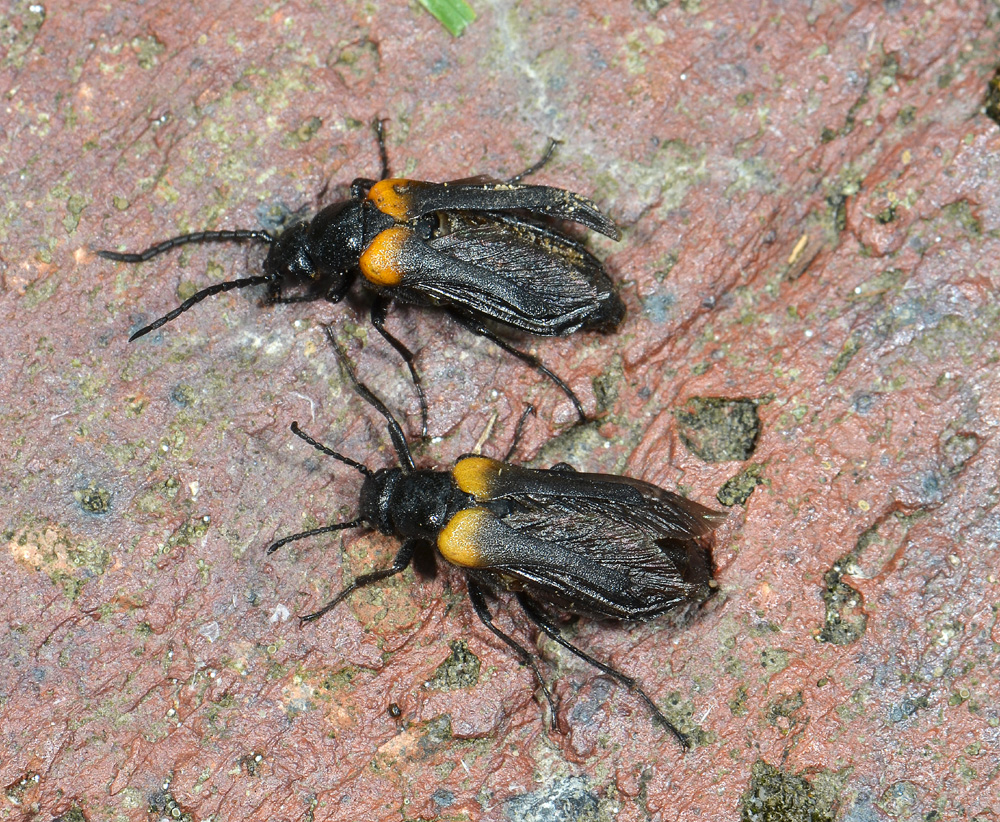
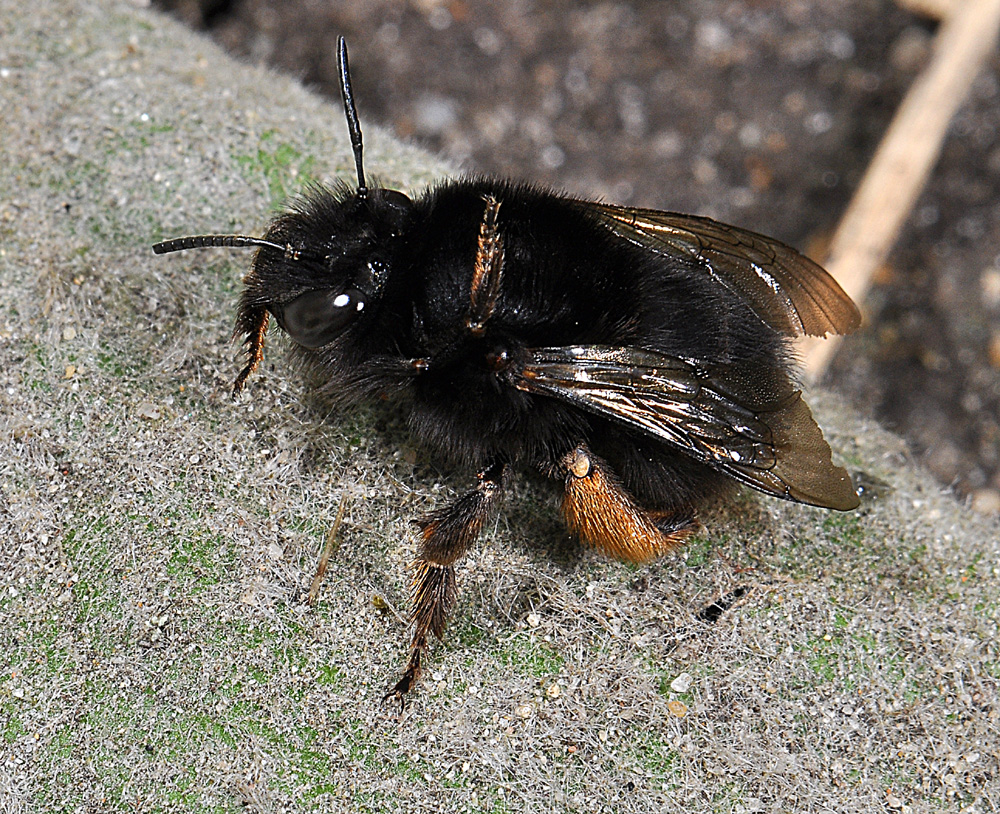
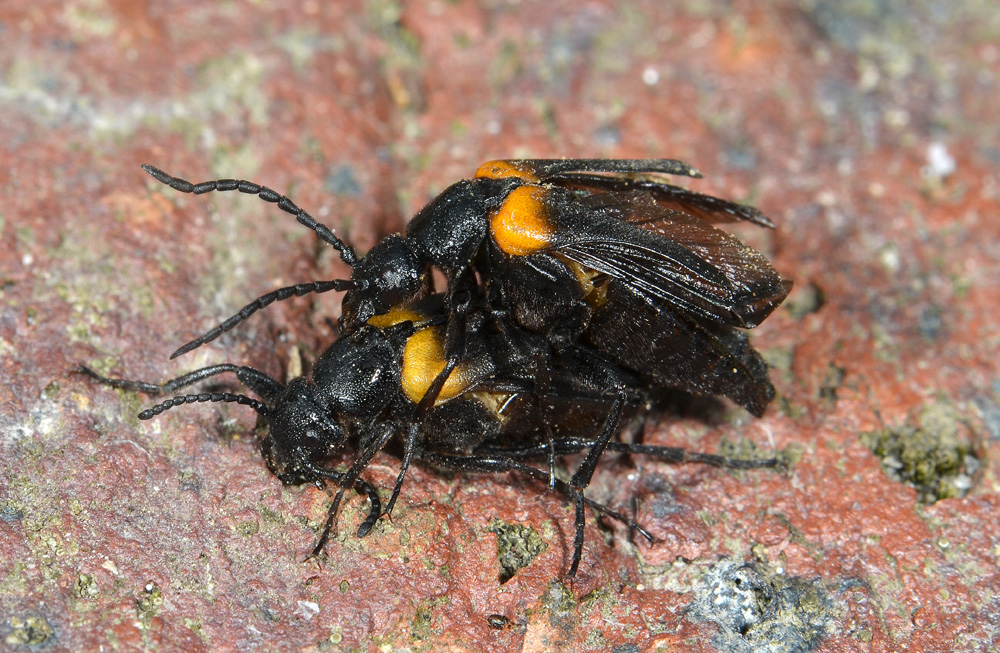
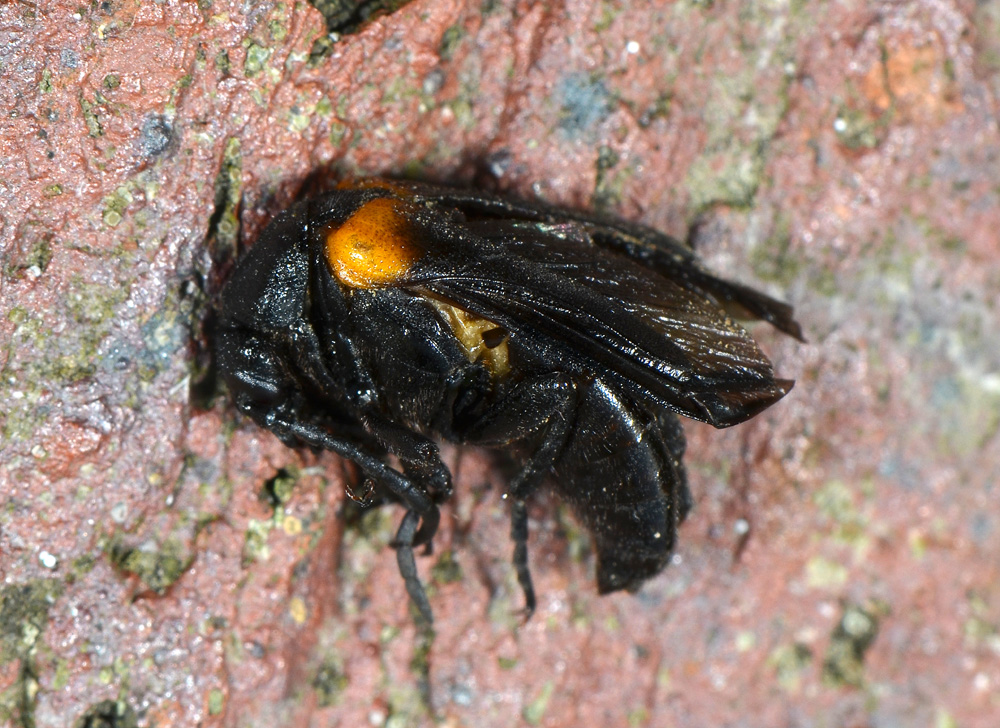
One of Britain’s rarest beetles is the secretive, endangered Flame-shouldered Blister Beetle Sitaris muralis – belonging to the family Meloidae (oil and blister beetles). This attractive 8-14 mm long beetle was last found in Oxfordshire up until 1969, but then it was rediscovered in Brockenhurst, Hampshire in 2010 (the last New Forest record before that was in 1947) on a brick wall over 100 years old. However, they are seldom seen outside the nest burrows of the Hairy-footed Flower Bee Anthophora plumipes in old mortar [the entry / exit point looks rather like bullet holes].

Image

It is not clear why this parasitic beetle is so rare as the host is widespread throughout Britain and common in the south in spring; the larvae feed on the bee’s brood.

Paul and Helen Brock have found the beetle each year since 2010 mainly in August, mostly dead with at least one apparently evicted from the nest (the latest finds though, on 20-21 August 2013 were alive). Others may be trodden on by passers by, as these clumsy insects fall to the pavement in a busy village site. The slightly brighter males have much longer antennae than females; both sexes have strange-shaped wings designed to enter a bees nest.

Image

The bright orange is presumed to be a warning. In addition to sporting warning colours, during perceived danger such as attack by a possible predator, males curl up in defence, remaining in the position for up to a minute.

Image

This elusive insect could turn up almost anywhere, but is most likely in southern England on a brick wall- so keep an eye out next time you are out and about!

Our thanks to Paul and Helen Brock for supplying the content and photographs for this post.