Community science: what’s the value?

ONE SCIENTIST OFFERS HER PERSPECTIVE


By Sotiria Boutsi, Intern

I am PhD student at Harper Adams University with MSc in Conservation Biology, currently doing a professional internship at the Museum of Natural History in the Public Engagement office. My PhD uses genomic data to study speciation in figs and fig wasps.


For most of our history, humans have been observational creatures. Studying the natural world has been an essential tool for survival, a form of entertainment, and has provided the backbone for various legends and myths. Yet modern humans are rapidly losing practice when it comes to environmental observation. As more and more of us relocate to busy urban environments, we find ourselves with little to no time to spend outdoors. Knowledge of the natural world is rapidly becoming the purview of professionals — but it doesn’t have to be this way…

Community science is a term that describes scientific research activities conducted by amateurs, often involving observation or simple computational tasks. Many citizen science projects target schools or families, but everyone is a welcome participant. The purpose of such projects, which run all around the world, is to encourage non-professionals to get involved in science in a fun, voluntary manner, while also collecting data that are valuable for scientific research.

One of the most common forms of community science is biodiversity monitoring. Biodiversity monitoring projects invite people with various levels of expertise to record observations of different species in their local area, and upload evidence like photographs and sound recordings to a user-friendly database. In doing so, they also provide important monitoring data to scientists, like information about the date and location of wildlife sightings.
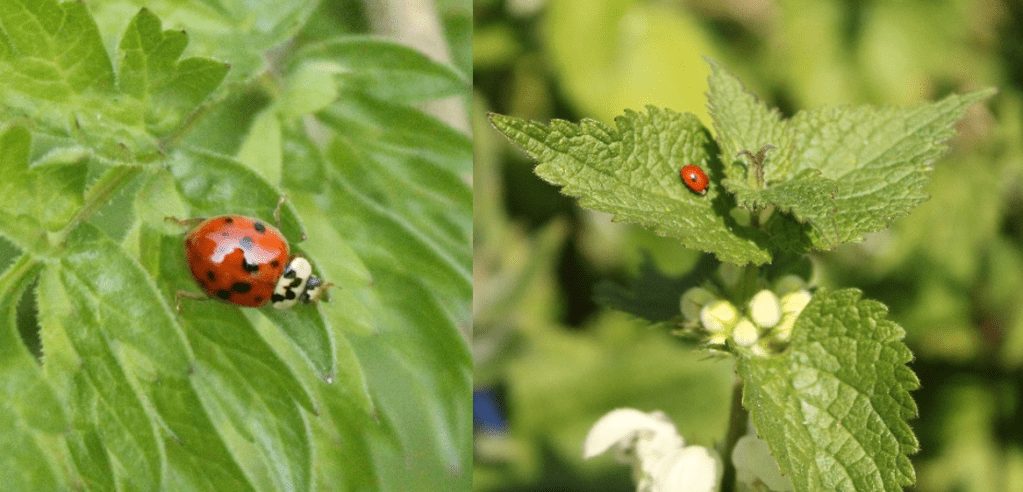
The Asian Ladybeetle (Harmonia axyridis) was first spotted in the UK in 2004 and since then it has become very common. It is considered one of the most widespread invasive species in the world, with introductions throughout Europe, North and South America, as well as South Africa. Reported observations through the UK Ladybird Survey (Enter ladybird records | iRecord) can help us monitor the spread of this insect and see how other, native species respond to its presence.

There are a variety of mobile apps and online platforms for reporting observations, with some specialising in particular groups of organisms like plants or birds. From the raw data that is uploaded to these platforms, species can be identified through a range of different methods:

  1. Automatic identification from uploaded evidence – often using techniques like image/sound analysis or machine learning
  2. Community feedback – multiple users can view uploaded evidence and make suggestions about which species have been recorded
  3. Direct use of users’ own suggestions – for users who are more experienced with species identification

But are these data actually used by scientists? Although individual contributions to community science projects may seem to be of minor importance, when considered collectively they act as extremely valuable records. Having distribution data for species can help us understand their habitat preferences, and also enable us to monitor invasive organisms. Moreover, long-term data can inform us about species’ responses to changes in their environments, whether that is habitat alteration or climate change. Science is driven by the accumulation of data, and citizen science projects can provide just that.

Biodiversity monitoring through citizen science projects encourage us to notice the tiny beings around us, like this beautifully coloured shiny Green Dock Beetle (Gastrophysa viridula). Moreover, recording common species like the European Honeybee (Apis mellifera) over different years can reveal temporal patterns, like early arrival of spring.

In addition to the benefits to the scientific field, community science projects can also be of huge value to their participants. Firstly, engaging in such activities can help us re-establish our relationship with the wildlife in our immediate environment — we might finally learn to identify common species in our local area, or discover new species that we never realised were so close by. It is surprising how many species we can even find in our own gardens! Moreover, community science events, like biodiversity-monitoring “BioBlitzes”, encourage people from different backgrounds to work together, strengthening local communities and encouraging environmental protection.

Oxford University is currently running the community science project “Oxford Plan Bee“, focusing on solitary bees. The project is creating a network of bee hotels: small boxes with branches and wooden cavities where harmless, solitary bees can rest. The hotels are spread throughout the city, and locals are invited to observe the bee hotels, take photos, and send in their findings.

Overall, community science is as much about being an active participant in the community as it is about doing science. These projects are a celebration of both collective contributions and individual growth. More than anything, they are a chance to pause and notice the little things that keep our planet running.


Want to get involved? Here is a selection of my favourite citizen science projects…

Recording species observations – global:

Recording species observations – UK-based:

Bioblitz events:

Read more:

How a Citizen Science project helped solve a mystery of UK butterflies: Painted Lady migration secrets unveiled – News and events, University of York

Citizen Science Hub – British Ecological Society
Citizen Science Platforms | SpringerLink

Citizen Science in the Natural Sciences | SpringerLink

The Marvellous Maybug

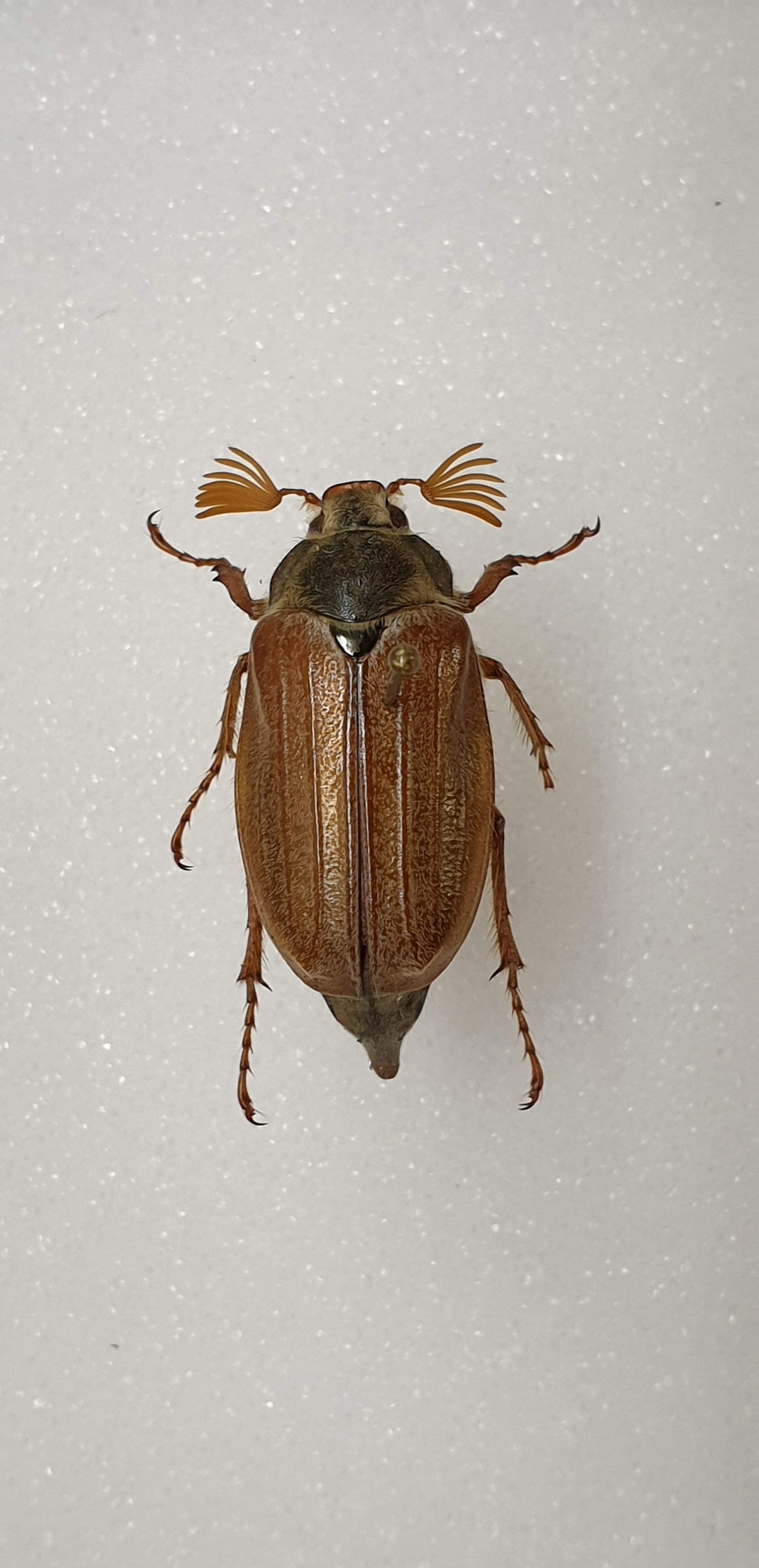
As the month of April fades into May a certain beetle can be found flying noisily about its business. Cockchafers, often called Maybugs, are relatively large members of the Scarab beetle family. There are three different species of Cockchafer found in Europe;

  • The common cockchafer, Melolontha melolontha
  • The forest cockchafer, Melolontha hippocastani
  • The large cockchafer, Melolontha pectoralis

Cockchafers spend most of their lives, 3 to 4 years, as larva, living underground, munching away at the roots of plants. In large numbers they can become pests, doing significant damage to crops.

It is as adults that they emerge above ground, flying around for roughly 5 to 6 week looking for a mate and feeding on the leaves of trees. They can usually be spotted making their noisy flight at dusk on warm evenings. You may even find them flying into and around your outside lights.

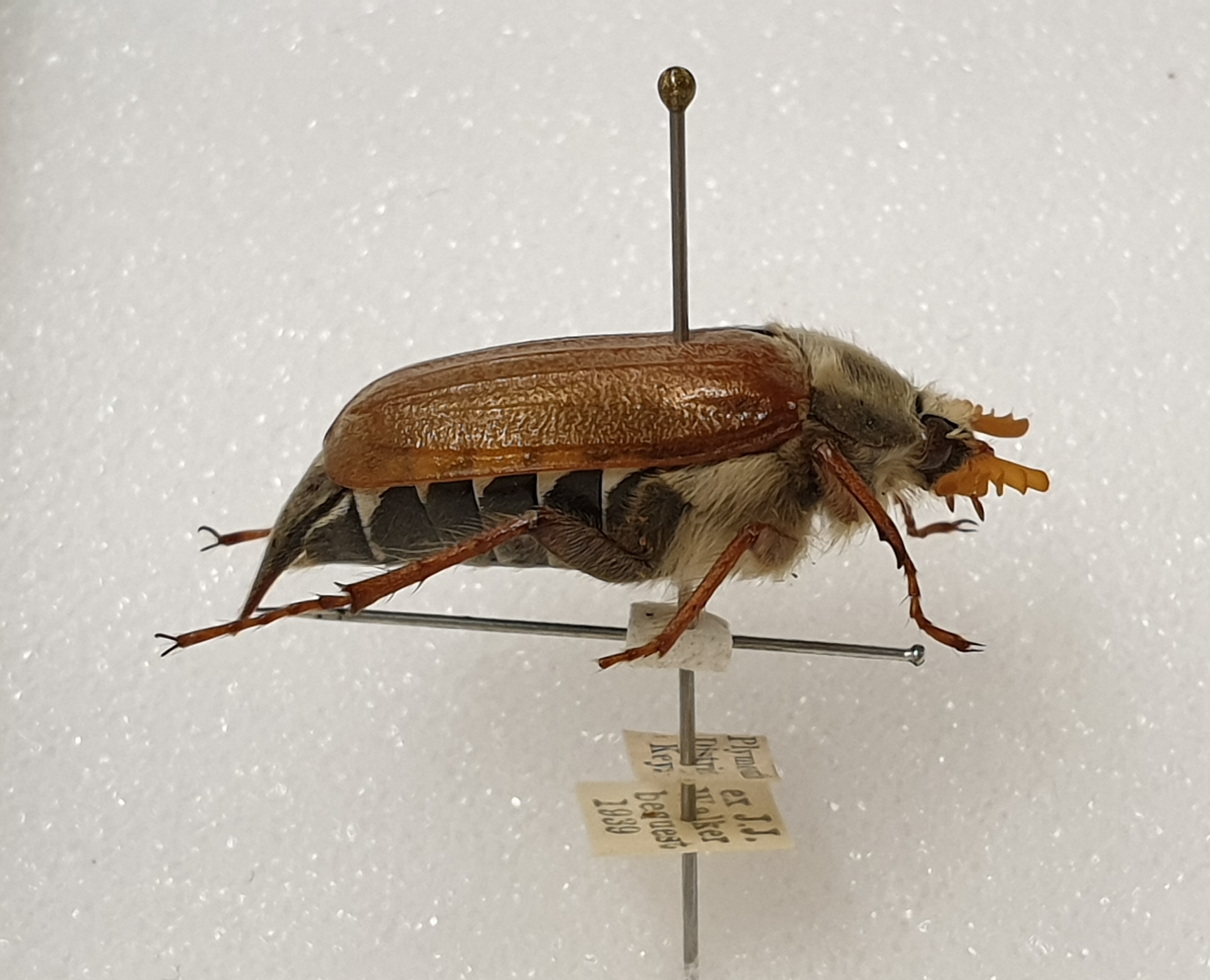
Common Cockchafer (Melolontha melolontha) © OUMNH

They are around 3cm long, with reddish brown wing cases and distinctive fan shaped antennae. Despite their intimidating size and noisy flight, they are actually harmless to humans. I once had one fly in the house and land on my big toe, waking me up from a nap!

Pesticides used farming in the mid-1900s brought them to the brink of extinction in the UK. However, changes in farming practises and pesticide use has allowed them to make a comeback. They can now be found across England, are particularly common in the south of England and the Midlands. They are much rarer in Scotland.

Do you know of any other insects that are considered pests by farmers? Let us know in the comments below or via the contact us section of the blog.

Disappearing Butterflies

HOW TO SOLVE A BIOLOGICAL MYSTERY USING MUSEUM COLLECTIONS AND DNA TECHNOLOGY


By Rebecca Whitla, PhD student at Oxford Brookes University


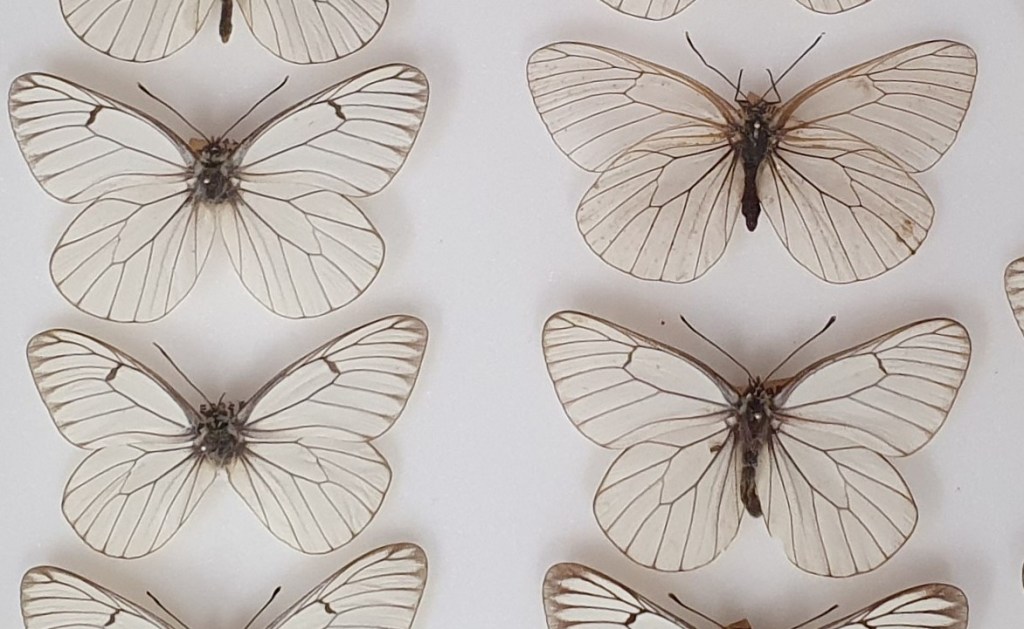
The Black-veined white butterfly (Aporia crataegi) was a large, charismatic butterfly with distinctive black venation on its wings. Once commonly found in the UK, the species unfortunately went extinct here in around 1925, with the last British specimens collected from Herne Bay in Kent. It isn’t fully understood why the species disappeared from the UK, but climate change, predation, parasites, and disease have all been suggested to have caused its disappearance — perhaps with several of these factors contributing to its decline. Central to solving the mystery of the disappearance of the Black-veined white will be the collections of butterflies that are stored in museums like OUMNH.

Butterflies tend to be well-represented in museum collections, and the Black-veined white is no exception. While the species has now been extinct in the UK for around 100 years, Lepidoptera enthusiasts from previous centuries often captured wild Black-veined white specimens for their personal collections. The abundance of Black-veined white butterflies in museum collections, like the collections at OUMNH, serve as a valuable repository for scientific research — including my own!

Black-veined white butterflies in the collections at OUMNH

Between June and December 2021, I undertook a research project using OUMNH’s Black-veined white butterflies. My task was to extract enough DNA from the butterflies to use for ‘whole genome sequencing’ — in other words, I was attempting to extract DNA from butterfly specimens to decode their complete DNA sequence. Getting DNA sequences from the historical specimens that are kept in Museums is no easy task, as DNA degrades over time. Nonetheless, animal specimens from natural history museums have successfully been used for whole genome sequencing and genetic analysis in the past, including species as diverse as longhorn beetles and least Weasels.

In order to work out how to extract DNA from the specimens, I had to try a variety of methods. This included experimenting to find out whether butterfly legs or abdomen fragments yielded more DNA, and whether non-destructive methods of DNA extraction were as effective as destructive methods. An example of a non-destructive method of DNA extraction would be a process like soaking a sample overnight and using the leftover liquid for DNA extraction, whereas a destructive method might involve mashing a whole leg or abdomen segment to use as a DNA source.

Preparing a DNA sample

Overall, I found that destructively sampling the legs of the butterflies gave the most reliable results, and also had the added benefit of not destroying the wings or abdomen of the specimens. Keeping the wings and abdomens of the butterflies intact will likely prove useful for conducting morphological studies in future.

Now that I have a reliable DNA extraction method, the next step in my research will be to analyse more Black-veined white specimens from a span of different time periods leading up to the species’ disappearance. I will then compare samples collected from each time period to calculate the genetic diversity of the species at each point in time, leading up to its disappearance. If I find a steady decline in the species’ genetic diversity over time, this may indicate a gradual extinction of the species. This is because we expect that, as numbers of a species decrease, inbreeding will become common, resulting in less diversity in the species’ DNA. However, if the populations of Black-veined white butterflies went extinct very suddenly, the decline in genetic diversity will probably be less pronounced. Learning more about the fate of the Black-veined White could not only help us unlock the historical mystery of the species’ decline in Britain, but will also help us understand more about the species’ decline in other parts of the world.


British Insect Collections: HOPE for the Future is an ambitious project to protect and share the Museum of Natural History’s unique and irreplaceable British insect collection. Containing over one million specimens – including dozens of iconic species now considered extinct in the UK – it offers us an extraordinary window into the natural world and the ways it has changed over the last 200 years. The HOPE for the Future project is funded by the National Lottery Heritage Fund, thanks to National Lottery players.

Your questions answered: ‘Which is the most successful species of ant?’

Noah contacted us recently with an intriguing question: ‘What is the most successful species of ant?’. It really got us thinking! Insects are a very successful group of animals, and ants are very successful insects, but how could we decide which is the most successful?

There might be different ways we might measure success. It is the most numerous ant? Or the group with the most species? It might be the species that’s most widely spread across the globe? Perhaps it’s the longest-lived, or the largest?

Successful ants

Ants are a very successful group of insects. The biologist E.O. Wilson (who died recently) estimated that there may be a million ants for every human being, but the truth is that we don’t really know. Although they are small, there are so many of them that they may make up a quarter of the mass of all land animals!

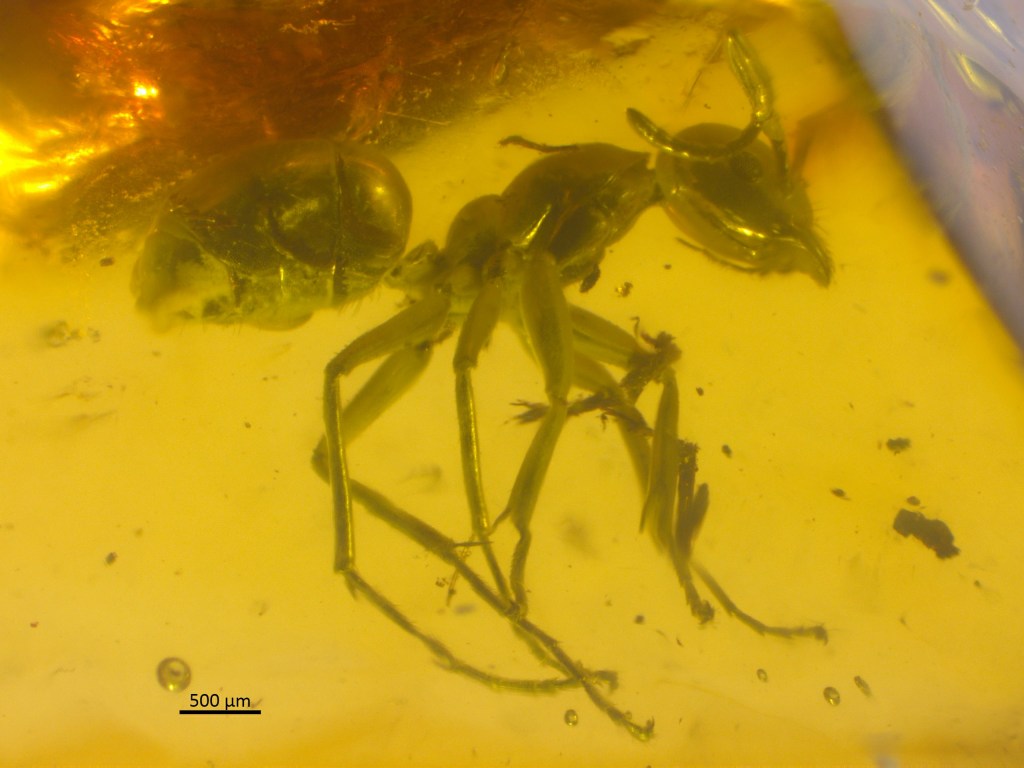
Scientists think that ants probably evolved from a type of wasp 168 million years ago. They became really successful after flowering plants evolved about 100 million years ago. We know this because ants appear much more often in the fossil record, and we start to find many more species . One of the oldest fossil ants is Sphecomyrma, found trapped in 99 million year old amber from Myanmar.

Micrograph of a fossil ant trapped in amber. Species undetermined. 50 million years old.
Fossil Ant trapped in Amber. Image Credit: OUMNH

Features that have helped ants to become so successful include:

  • Their social nature – ants in a nest are good at cooperating.
  • They modify habitats – most animals can only survive in certain conditions but ant colonies can change their surroundings to suit them.
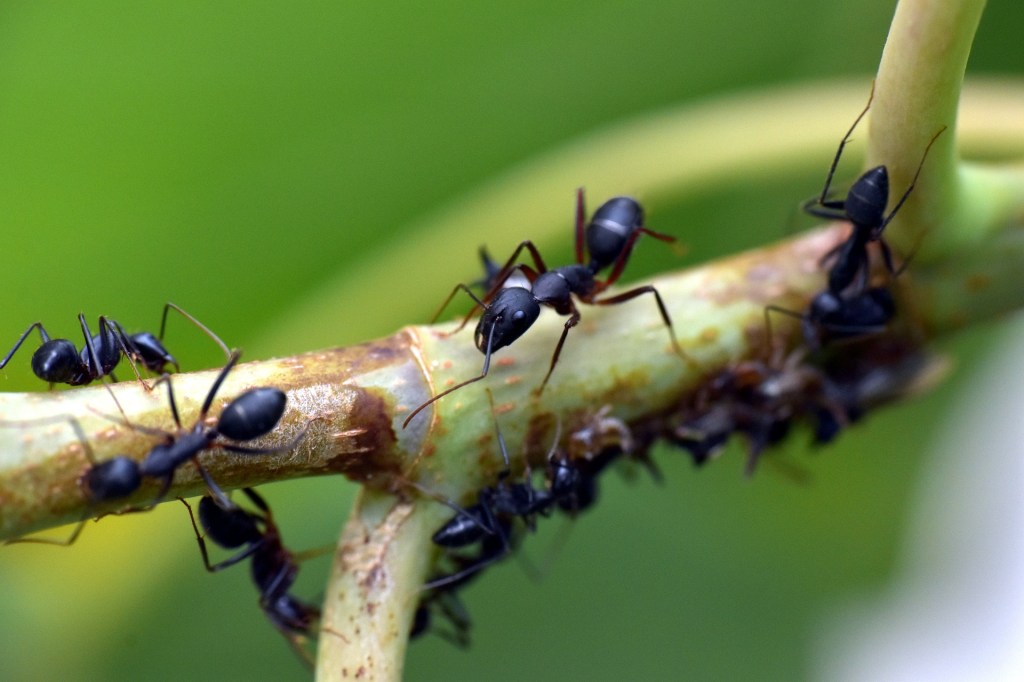
  • Ants can use a wide range of food sources. Some species even farm – growing fungi or ‘milking’ aphids for food.
  • Defence – ants are really good at defending themselves and each other. They are strong, have biting mouthparts and produce acid. The origin of the word ‘ant’ means ‘biter’.
  • Some species form supercolonies – huge nests containing several queen ants. This level of cooperation and organisation help some ant species to be mega-successful.
The ability of ants to cooperate helps make them successful.

Which ants are most successful?

So, ants are very successful as a group of insects. Here are some examples of ant species that might be the most successful:

Most numerous: Difficult to say, but perhaps the Argentine ant Linepithema humile.

Widest distribution: Several contenders for this, but perhaps the fire ant Solenopsis invicta.

Most different species: The genus Pheidole with over 1,000 described species.

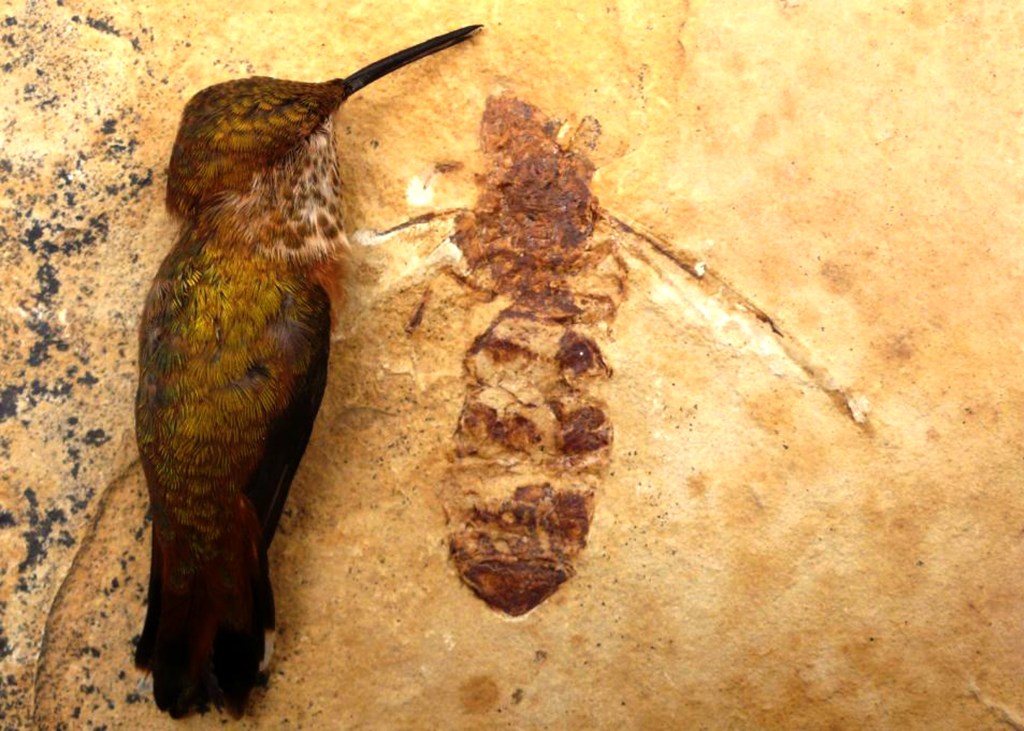
Largest: The fossil giant ant Titanomyrma gigantuem was the largest ant to have lived. The queens were 6cm long with a wingspan of 15cm.That’s about the same size as a hummingbird!

Longest lived: We think oldest individual ant on record in a laboratory was a queen of the species Pogonomyrmex owyheei which lived to be 30 years old. Colonies of ants can survive for centuries in nature, continuing through many generations of ants.

The fossil giant ant Titanomyrma lubei, with a hummingbird for comparison.
Image Credit: Simon Fraser University CC BY 2.0

The fact is, however, that every species has most of the characteristics that make all ants successful, so perhaps the most common British ant, the Common Black Ant, Lasius niger, is as good a candidate for most successful as any? It’s also worth remembering that entomologists think we have only described about two thirds of all ant species – so there are many more left to discover!

We hope that answers Noah’s question. If you have a question about insects or the museum you’d like to ask us, just write it in the comments or send us a message using the Contact Us page.

The Red Tailed Mason Bee

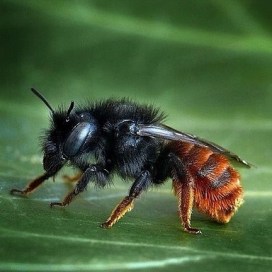
You may well have noticed some bees recently. One of the earliest solitary bees to emerge in spring is the Red Tailed Mason Bee, Osmia bicolour. They are very distinctive and make their nests in a very particular place.

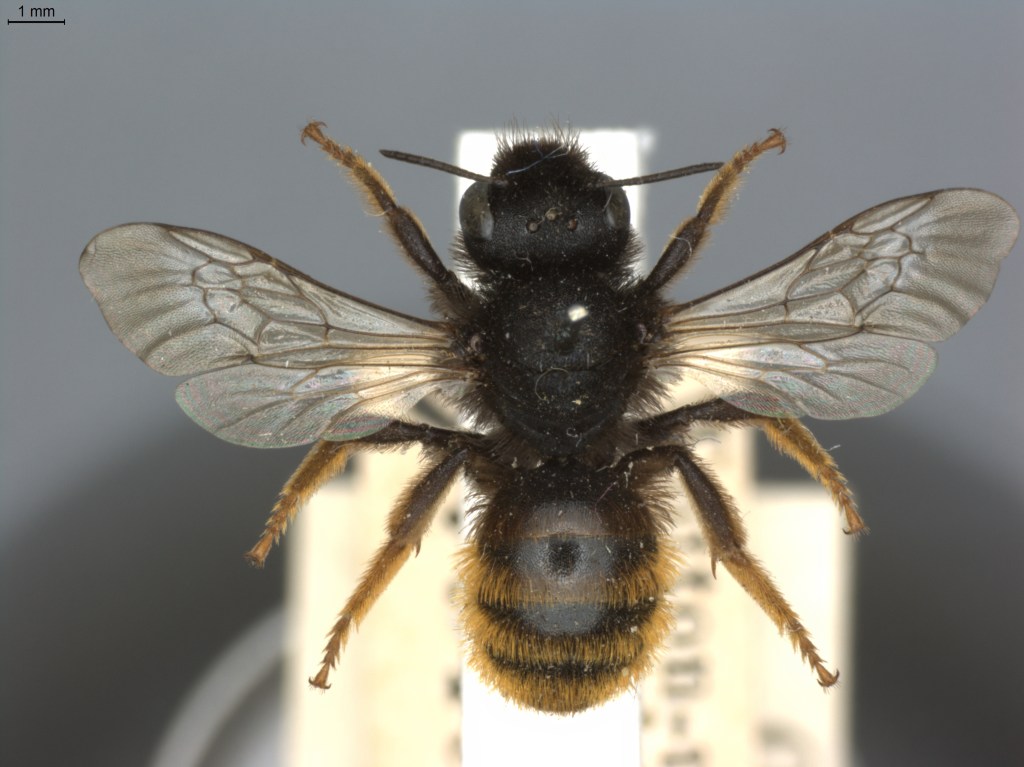
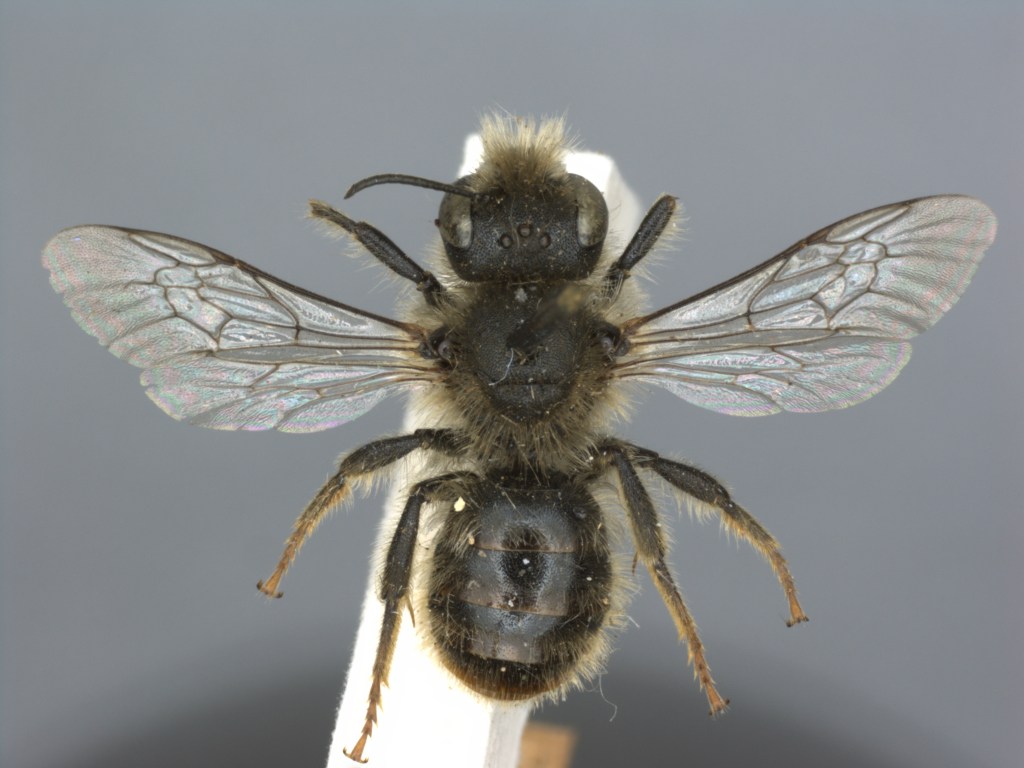
The males emerge first, sometimes as early as March. They have yellowish bands. They are the followed in a couple of weeks by females which have distinctive red-banded abdomens, giving this bee its common name. The adults may continue flying well into July, so you have plenty of time to spot them. This species of bee is mainly found across southern England and the Midlands and South Wales. This is because it prefers chalk and limestone grassland and so is mainly in areas with this type of habitat.

Female Red Tailed Mason Bee making a snail shell nest. Copyright © John Walters, used with kind permission.

The Red Tailed Mason Bee is unusual in that the females make their nests in empty snail shells. A female bee works diligently to select a suitable shell then prepare the nest. She will then defend this vigorously. She will make several cells within the spiral of one shell, laying an egg in each cell. She will provide each egg with pollen as food for the larvae when they hatch. She will separate each cell with a glue-like substance called mastic. She makes this by chewing up pieces of leaf. When the nest is completed, she will plug the shell with more mastic and will then search for debris such as grass stems, fallen leaves and pine needles to carefully cover and camouflage it. She may also spread more mastic over the outside of the shell.

Entomologists think it is likely that this behaviour protects the shell and its contents from parasites and predators. Safe inside, the eggs will hatch and the larvae will develop inside the shell, feeding on their supply of pollen. They will then survive the winter as pupae, emerging as the next generation of adults the following spring.

So, if you spot an old snail shell, it’s worth keeping an eye on it; it may just become a nest for a Red Tailed Mason Bee. We’d love to hear about your bee sightings and to see your pictures. Get in touch with us using the comments below or by the Contact Us page.

Header image: Red-tailed mason bee, Osmia bicolor female. Image: František ŠARŽÍK CC BY 3.0

BREAKING NEWS: Once in a lifetime insect emergence

There is a secretive and enigmatic species of moth that will only emerge from their pupa in very specific conditions, on the first day of April. These once in a lifetime conditions are due to be met in the Oxford area today.

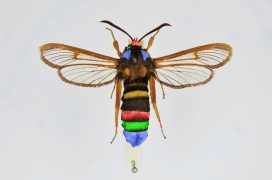
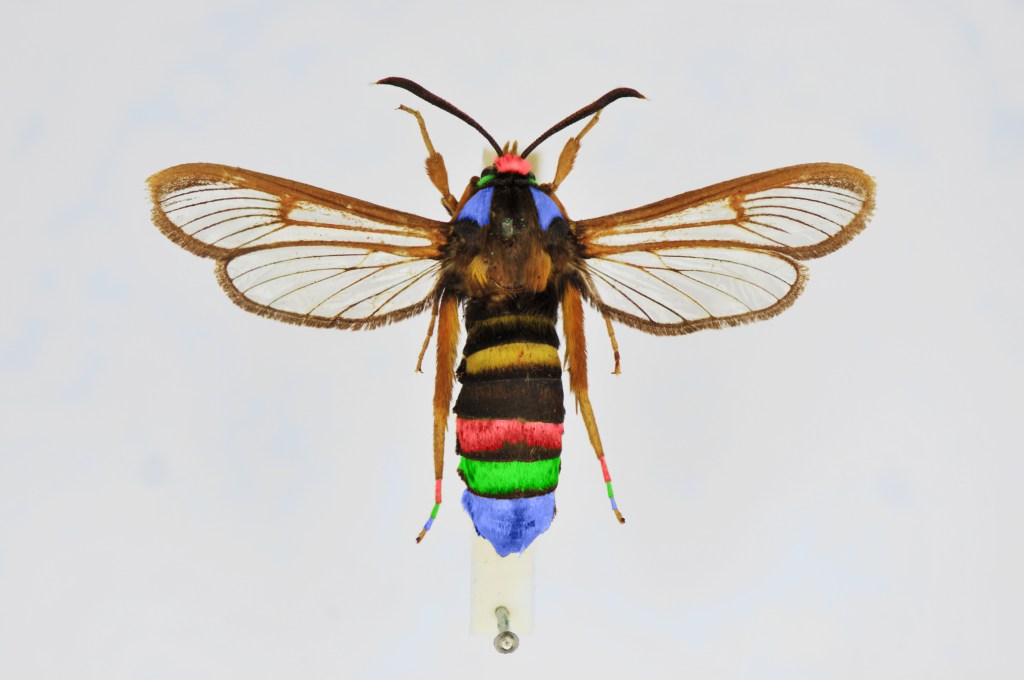
The caterpillar of this insect sub species, known as the Lesser April Jester moth (Stulte aprilis dies), will find a sheltered, confined space in which to pupate. In nature, cracks in rocks are an ideal location, but it has adapted to built environments by using the gaps between paving stones. Here it will stay, for years or even decades, until the required environmental conditions are met. When a cold snap follows an unseasonably warm spell, the adult will emerge from the pupa. Entomologists from Oxford University Museum of Natural History believe that the weather we have experienced recently meets these conditions, and is the best chance to see emerging adults for several decades.

Specimen of Lesser April Jester moth (Stulte aprilis dies), collected in Oxford in 1951

The moth will exit the pupal case and, if necessary, will tunnel to the surface, squeezing out through the cracks in the pavement. It will unfurl its glorious, clear wings, displaying the red, blue, green and yellow stripes, on its back, for all to see. It will then fly off to find a mate, to ensure the next generation of this rarely seen insect.

Burrow of Lesser April Jester moth (Stulte aprilis dies) in pavement of Parks road, 1 April 1951

Unfortunately so many jester moths never make it out of their pupa, whether due to the required conditions never being met, or to not having enough energy to dig their way to the surface. If you wish to help, gently inserting and then removing small twigs between paving stones to loosen the soil can help to ease their paths.

The last know sightings in Oxfordshire occurred on Parks Road in Oxford on 1st April 1951. Please let us know if you catch sight of this moth, and even better please share any photos you may take either in the comments below, or via the Contact us page.