From Fossil To Flesh: Reconstructing a Phascolotherium
Following the completion of our Life, As We Know It redisplay project earlier this year, we are taking a look at some of the exceptionally skilled people who helped to bring it all together. In this article, taxidermist Alexandra Rose Cherrett tells us about the ‘unusual proposal’ that she received one day…
I was sitting at my studio desk ready to start the day with some admin. I often receive emails enquiring about commissions ranging from peoples’ pets to wild animals that have been found by the public, asking for them to be preserved after death through taxidermy. At the top of my inbox was an email with an “unusual proposal” from the Museum of Natural History in Oxford.
As a taxidermist I have been lucky enough to work on a wide range of animals over my short career, from kingfishers to vultures, hedgehogs to lemurs and many more in-between. Safe to say I was not expecting the request to taxidermy an animal that hasn’t walked the earth for 165 million years.
I was then introduced to Phascolotherium; a small, furry mammal that lived in the Mid Jurassic alongside Megalosaurus, the first dinosaur ever named and discovered, right here in Oxford, UK. A proverbial stone’s throw from the museum itself.
Now, I have always been rather obsessed with dinosaurs. My obsession and adoration for dinosaurs and wildlife has been evenly matched for as long as I can remember. Suddenly I found my Jurassic Park dreams were coming to life. An impossible task? I thought, “Life, uh…finds a way”.
The first challenge was that only the jawbone and teeth of Phascolotherium had ever been discovered. I was given a reference image by Paleo artist, Julius Csotonyi, from which I primarily worked.
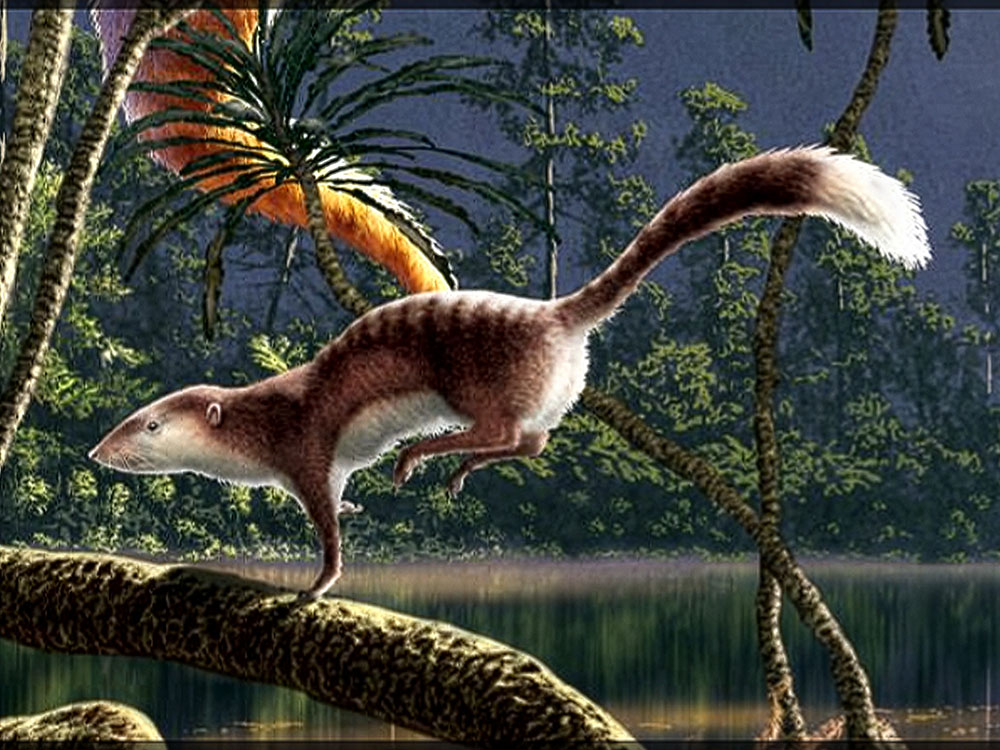
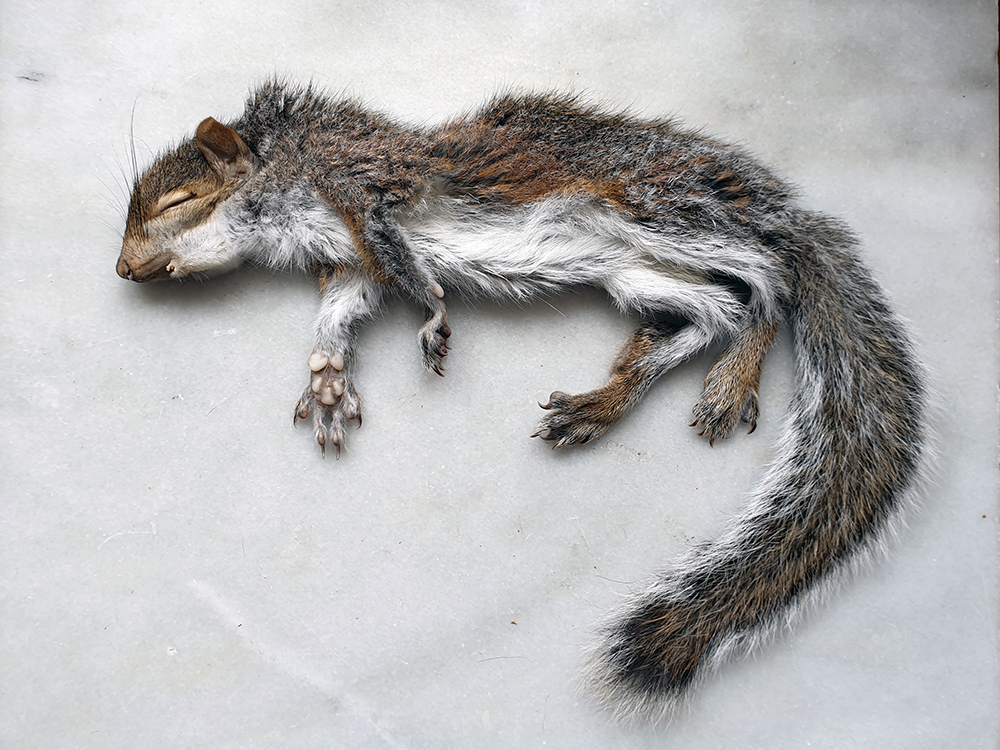
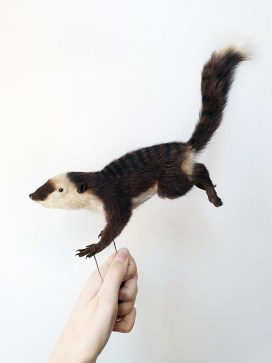
It was rodent-like in nature, with an elongated head, a lithe body and a long, plumed tail. My first thought was to use a squirrel as the base as the limb structure and body shape were so similar. I knew I had a pair of juvenile grey squirrels in my freezer that could be the perfect size, one was donated as a cat kill and the other perished at a wildlife rescue.
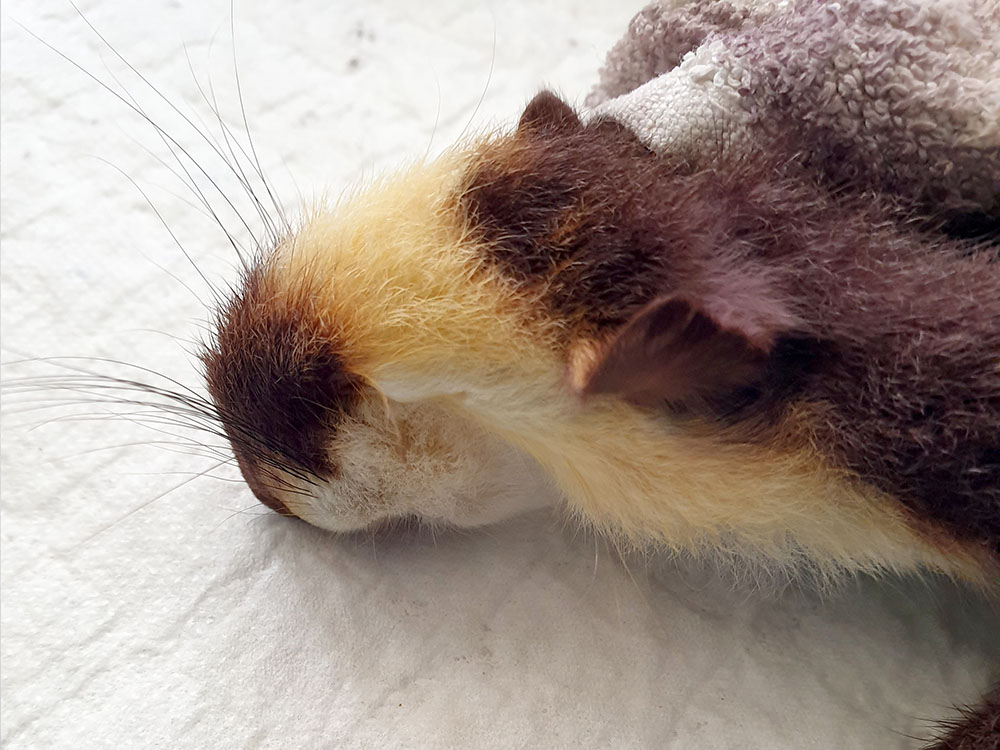
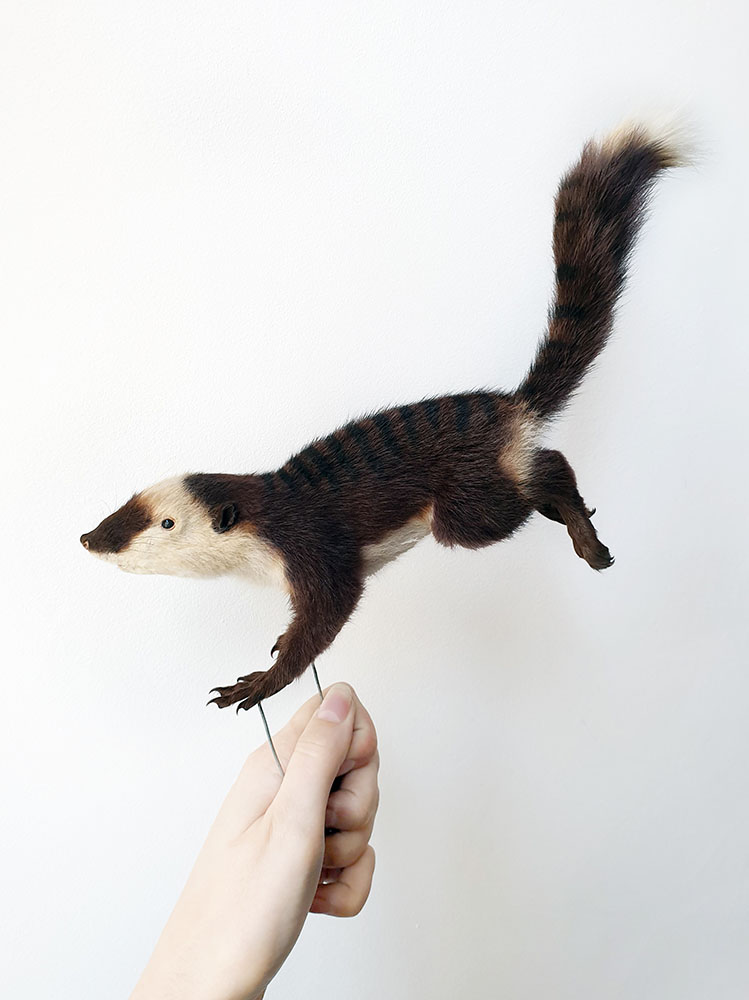
The most obvious visual changes were the colouration. The artworks showed a body of a dark reddish hue, with patches of white on the face, stomach and tip of the tail and stripes stemming down the spine. My next step of course, was Boots. A few boxes of Garnier hair dyes and peroxide bleach later and I had a completely different animal skin laid out on my desk.
My next process was to create the body form over which the skin would be fitted. For mammal taxidermy, I usually carve or cast a head out of balsa wood or PU foam and make a bind up copy of the body and limb shape from woodwool.
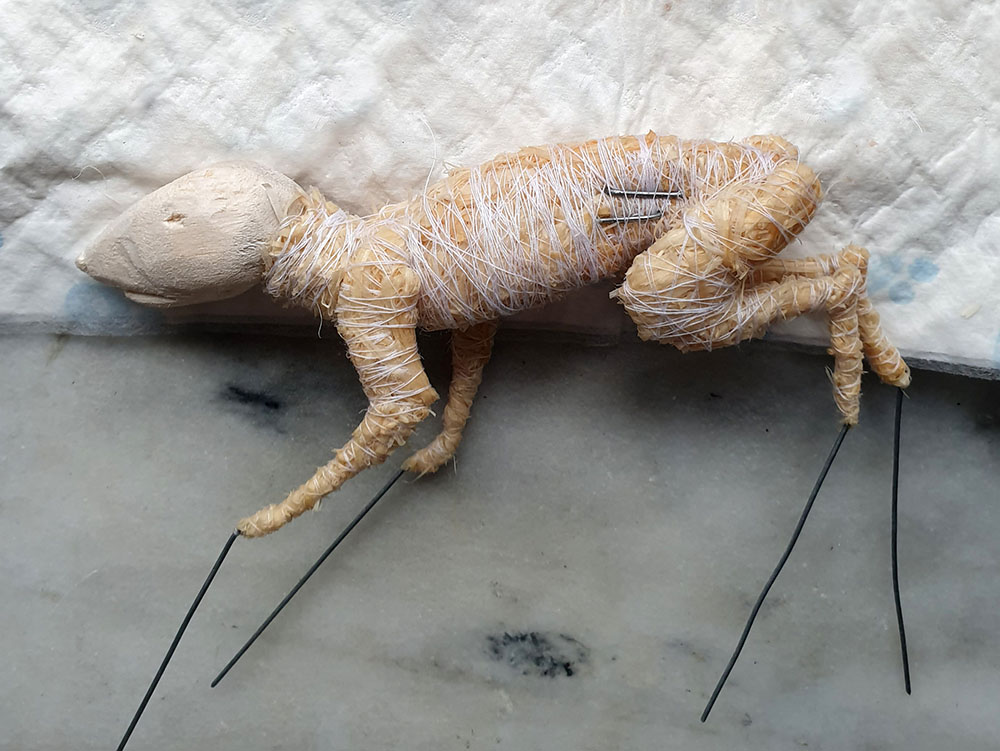
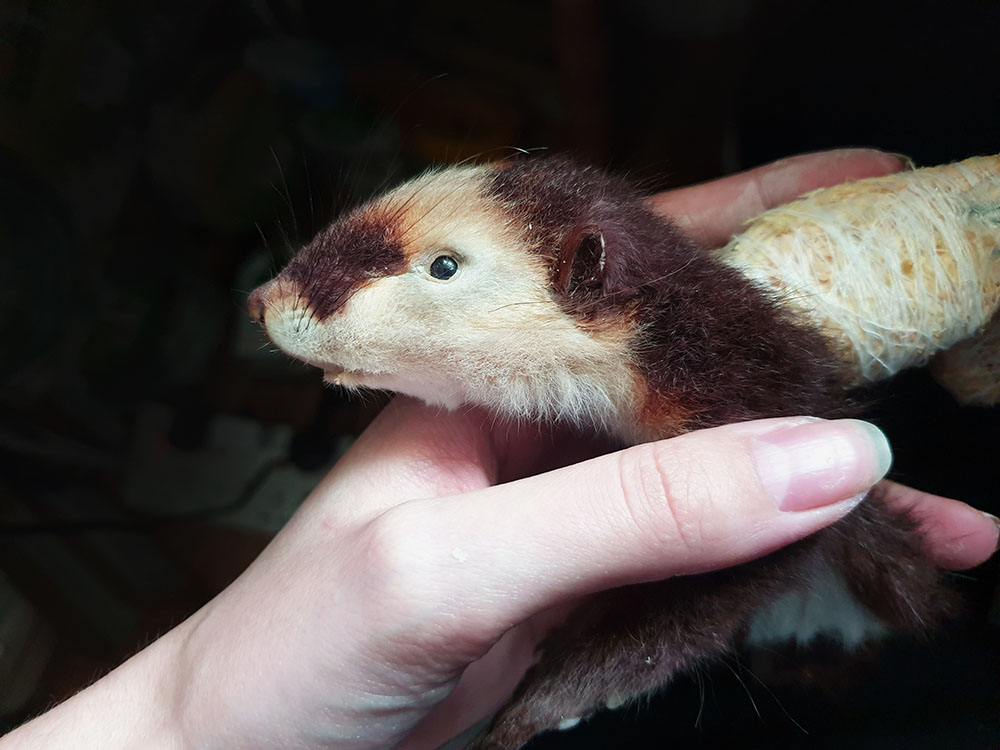
With the head essentially being a non-existent shape, I copied the paleo-art and carved a small balsa block to a similar shape as a large shrew. The body was very similar to the young squirrel already so that was a simple workaround.
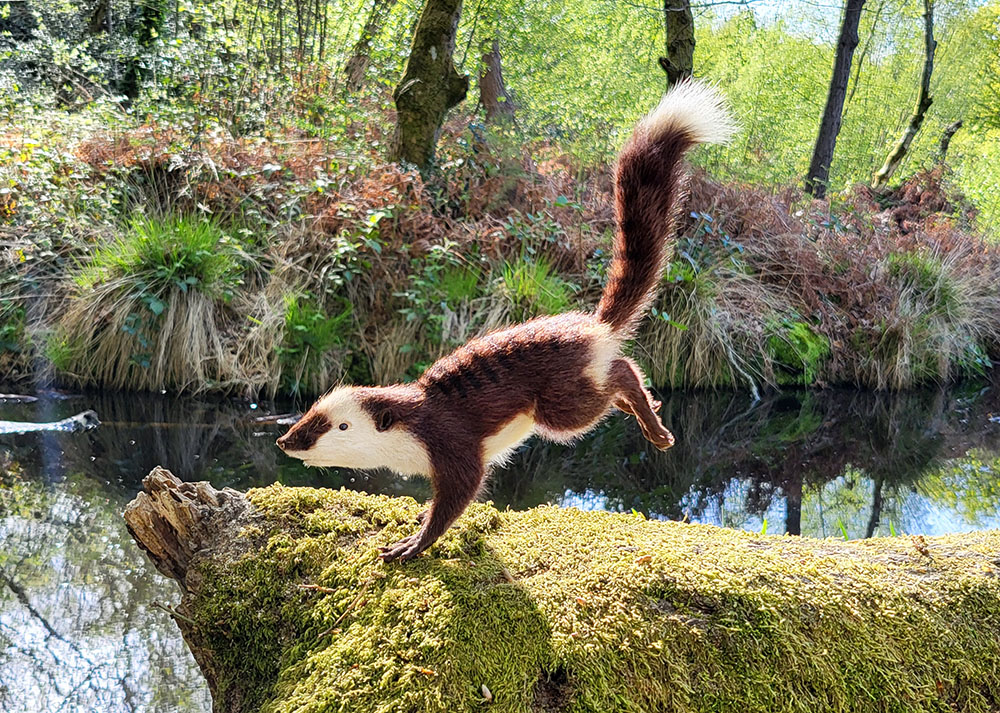
With the nature of its surroundings and the looming Megalosaurus, I imagined this creature was indeed, always on the run. So, an action pose was created, mid run, which highlighted its slight build and balancing tail very nicely.
When dressing the skin, the biggest alteration was the eye and ear placement. The young squirrel had eyes around 8mm, whereas Phascolotherium measured in at 4mm. Not to mention they were set further back and lower, as were the ears at two thirds their original size and shape. I made an incision across the eyelid and manipulated the skin to fit its new size and position, copying the same methodology for the ears. Almost instantly, a face that hadn’t been seen for 165 million years was right there looking back at me.
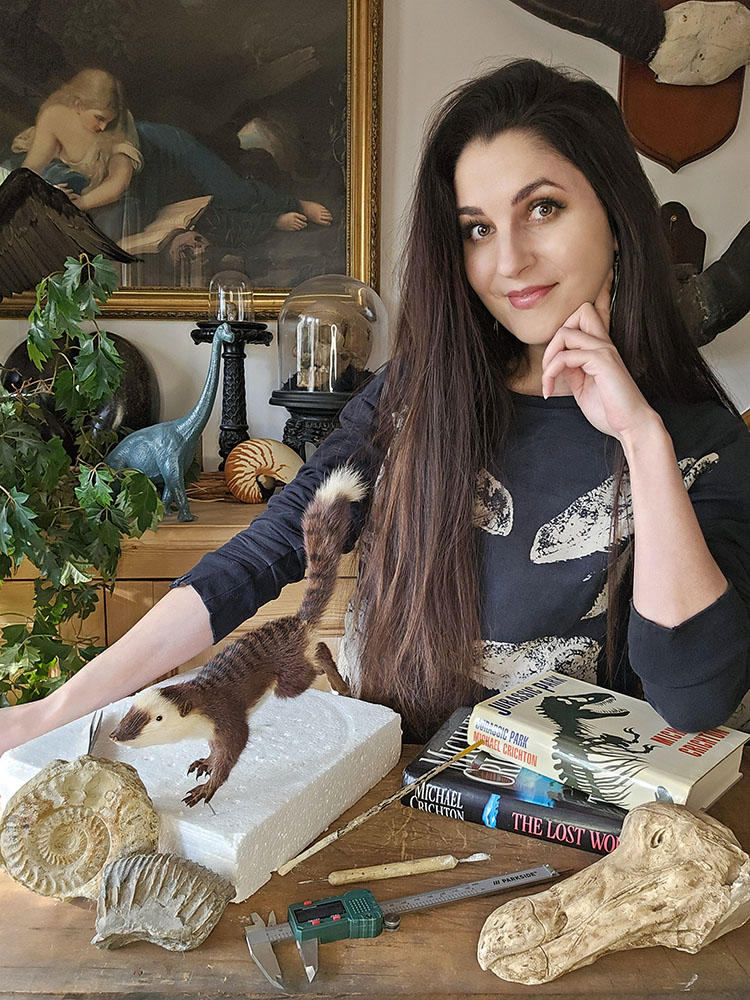
I have been fortunate enough to work with the Museum of Natural History on a few projects now and it’s safe to say this project has been one of my biggest challenges and greatest pleasures to date.
www.alexandrarosetaxidermy.co.uk
Instagram: @alexandrarosetaxidermy
Facebook: @alexandrarosetaxidermy