Insect super powers: dodging death

Being near the bottom of the food chain isn’t ideal.  Insects have many different predators including lots from the insect world itself and that’s before you’ve even started to take account of all the birds, fish, reptiles, amphibians and mammals that consider insects an important part of their diet.  So how do insects dodge death and defend themselves against predators?  Read on to find out about some cunning techniques and surprising solutions!

Chemical Warfare

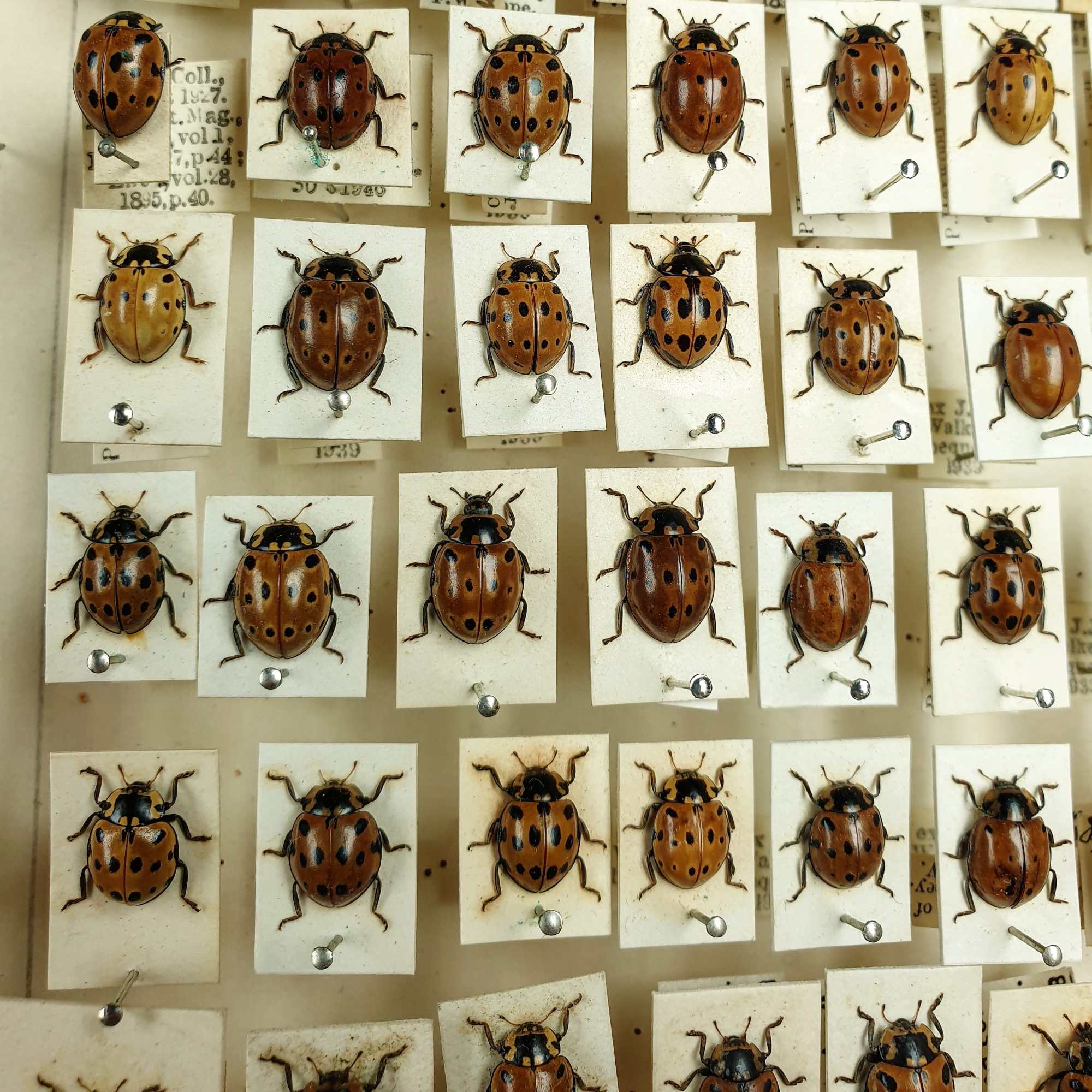
Did you know that some species of ladybird have clever, and some rather disgusting, ways of deterring predators?  Not only do many species display the bright warning colours of red or yellow combined with black, but some can exude a stinky yellow liquid through their knees when in danger.  This is called reflex bleeding because the liquid is made from their blood.  You may have noticed it if you have picked up a ladybird and seen yellow spots of liquid on your hand. 
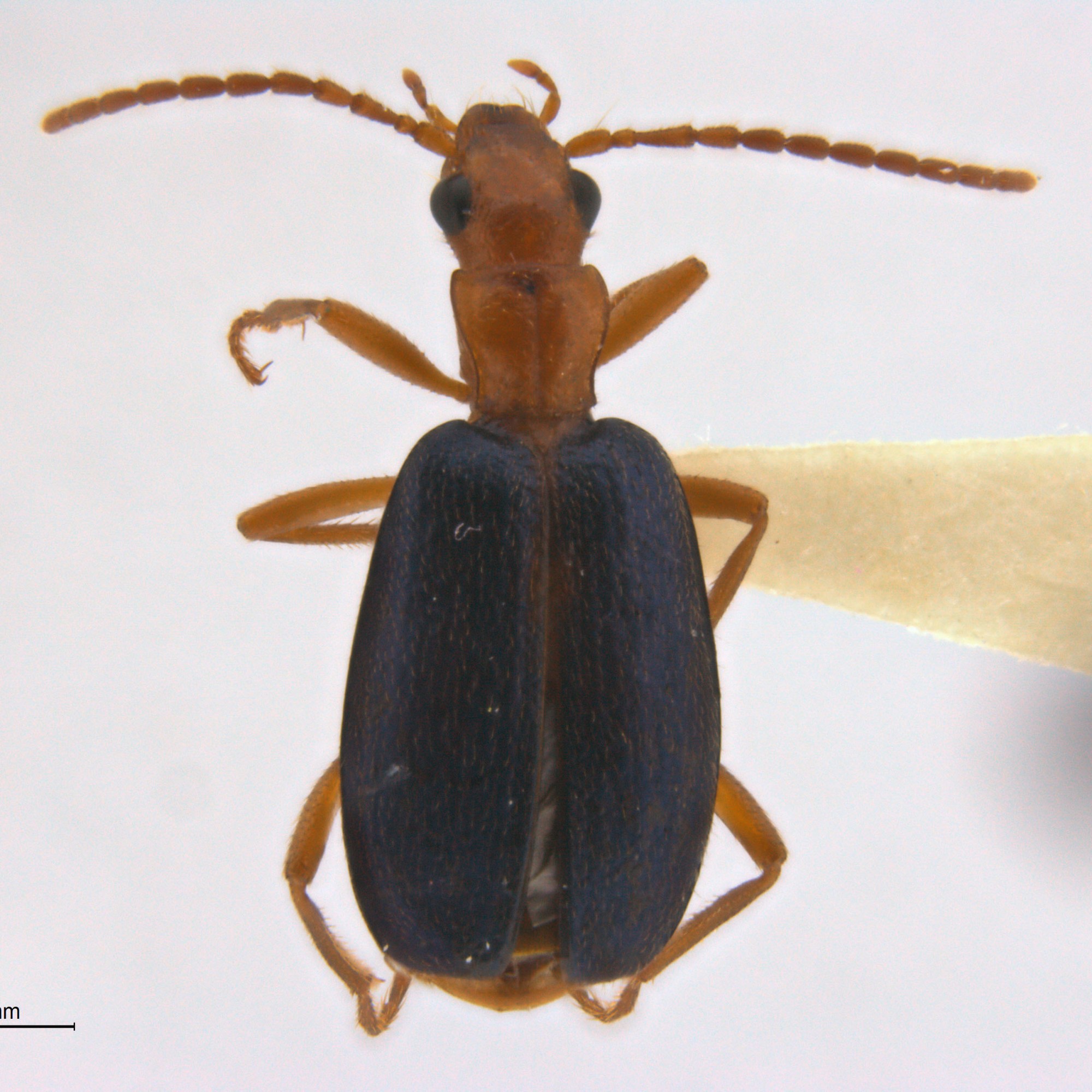
Other insects can squirt noxious fluids into the air when they feel threatened.  Wood Ants, for example, spray formic acid.  The incredible Bombardier Beetle (seen here on the right) can combine two different liquids stored in separate chambers in its abdomen to produce a boiling hot chemical that literally explodes from the beetle’s rear. I wouldn’t like to be on the receiving end of that!

Cloaks of Invisibility

For many insects, protection from predators is all about not being seen.  There are some amazing masters of disguise whose camouflage is so good we have trouble spotting them.  For example, many moths are almost invisible when resting in their preferred habitat such as on the bark of trees.
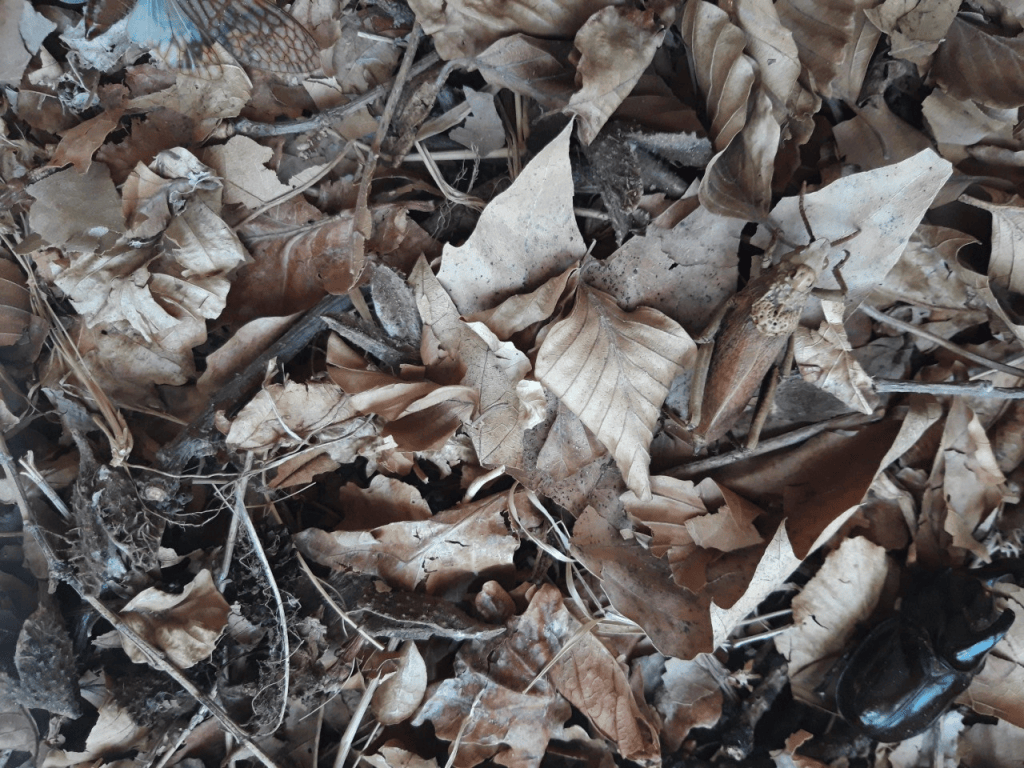
How many insects can you spot?

Another form of camouflage is to disguise yourself as an object of no importance, such as a twig.  When threatened, this beetle (Platyrhinous resinosis) rolls over, draws in its legs, lies very still and looks just like a bird poo!
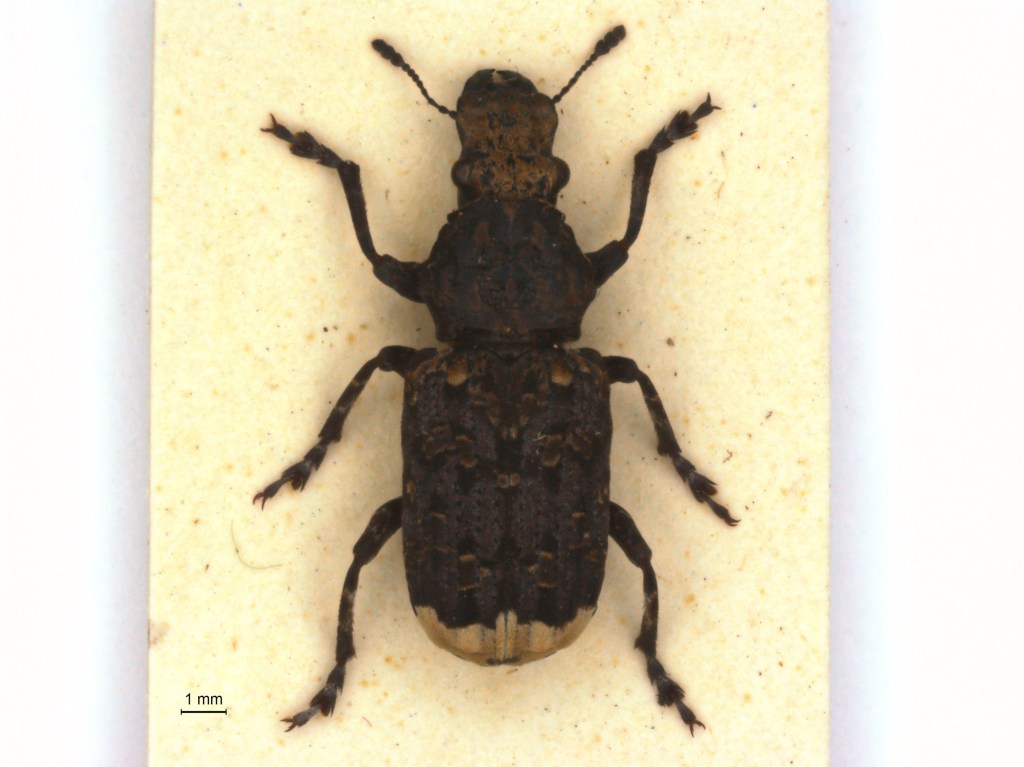
Platyrhinous resinosis

Masters of Disguise

If you can’t blend in with your background, you could always be a master of mimicry and pretend to be something really scary! This Hornet Clearwing is not actually a hornet with a powerful sting. It’s a moth, but by mimicking the colours and form of the hornet it will manage to put off many a hungry bird!
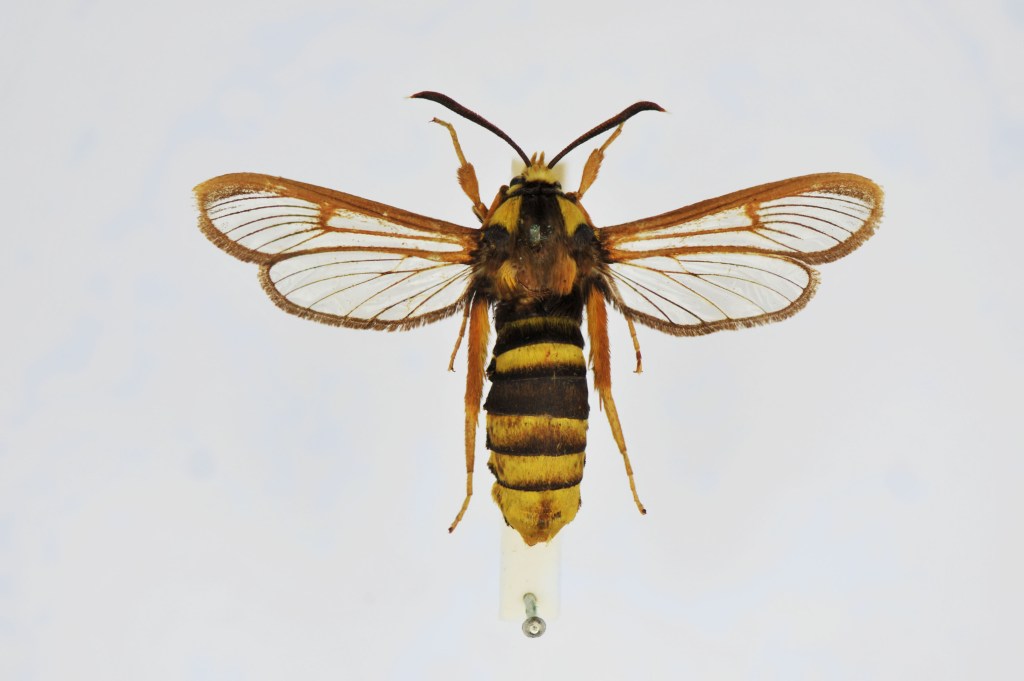
Serious Weaponry

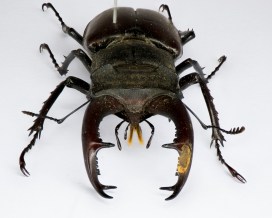
Some insects have formidable weapons that may serve to fend off rivals, help catch prey and deter predators.  Look at the ferocious jaws of the Stag Beetle or the sharp pincers, or forceps, at the rear end of the earwig.  They might make you think twice before tackling these guys! In fact, the jaws of the Stag Beetle are all show!  They are actually quite weak and may even prevent Stag Beetles from feeding in their adult form. The fact that they exist at all just shows how effective they are at warding off predators.
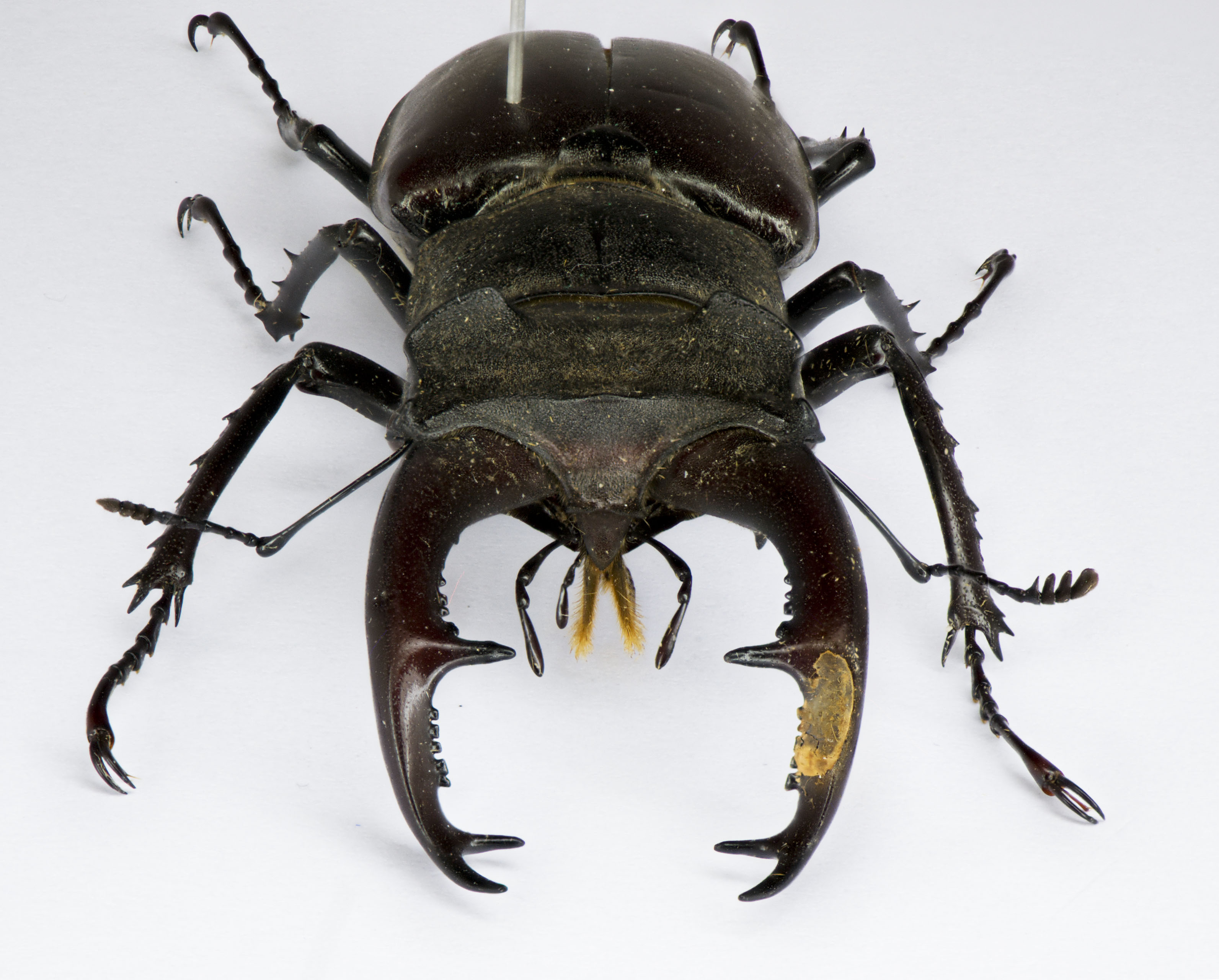
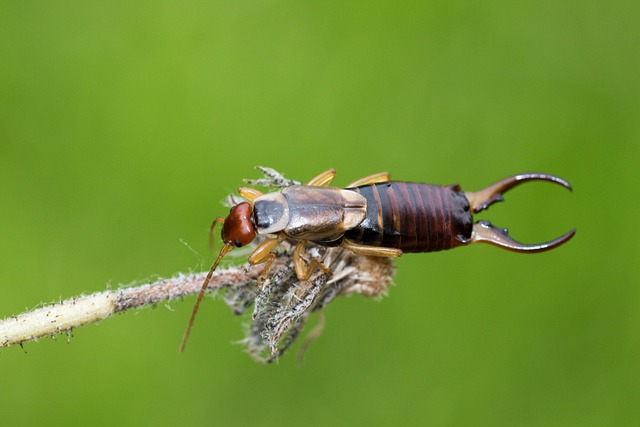
Let us know if you have a favourite story about how insects dodge death and survive in a world full of predators.

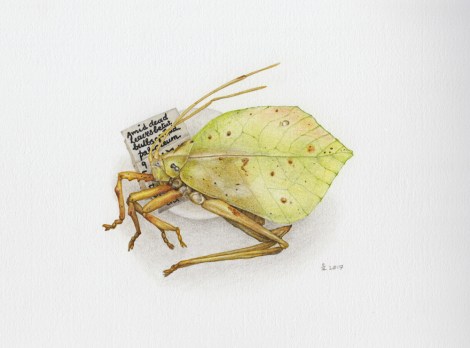
Imitation game

Last month we had the pleasure of hosting artist and scientist Dr Immy Smith as part of her week-long takeover of @IAmSciArt on Twitter. Drawing inspiration from the Museum’s collections, Immy has created some beautiful paintings. Here she tells us a little more about her interests and work…

My current artwork is focused on crypsis and mimicry – the ways that animals and plants disguise themselves or pretend to be something they’re not. Cryptic camouflage helps animals to avoid being seen, often to help them catch prey – or to avoid becoming prey themselves! Mimicry is also often about trying not to get eaten: the harmless hornet moth, for example, mimics a stinging insect to deter predators. I use these themes to develop print art projects, and also public workshops to help people learn more about the ecology of cryptic animals.

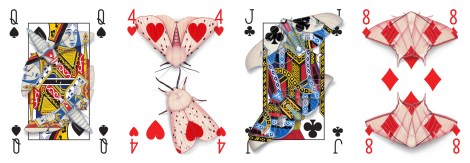
Cryptic Cards by Immy Smith

In my arts practice I try to imagine how animals and plants might evolve to camouflage themselves on human-made materials, and what they might look like. Will we one day find moths adapted to hide on advertising hoardings, or beetles mimicking litter? I made an entire deck of Cryptic Cards as a response to this kind of question.

Another project I’m working on at the moment is called Emergent Crypsis. This is a collaboration with Norweigan generative artist Anders Hoff who makes art using algorithms executed by a computer. I’m imagining how creatures might adapt to an extreme example of human-made patterns – computer generated abstract images.

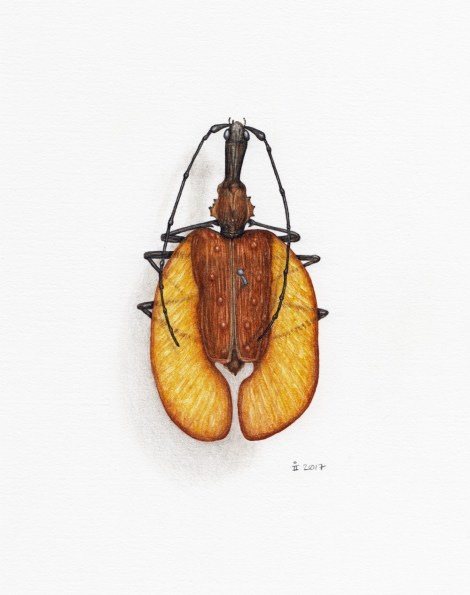
Violin Beetle (Mormolyce phyllodes) by Immy Smith

My work requires me to closely study many animals and plants, but how do I learn about all these species in order to draw their imaginary relatives? How do I make my art a convincing representation of how life might find ways to hide on human-made art?

One answer is of course, the internet. I’ve been lucky enough to find many wildlife photographers online who are kind enough to let me use their images as reference. But photographs alone are not always enough to get to know the fine details and defining characteristics of a species: the joints and articulations of small insects, for example, are best studied from specimens. And some species are rare, or even extinct, and it can be hard to find photographic a reference.

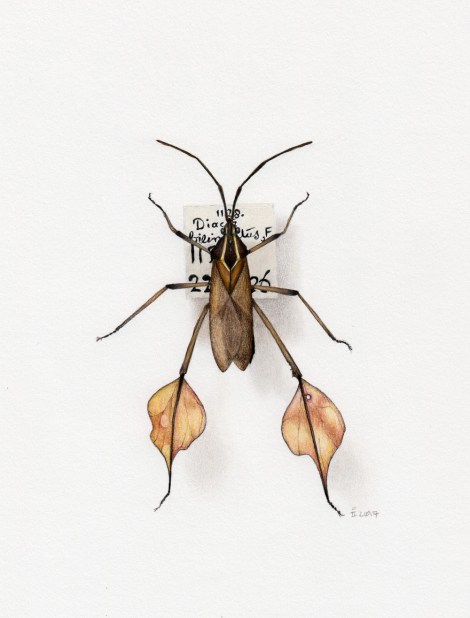
Leaf-footed Bug (Diactor bilineatus) by Immy Smith

This is where scientific collections come into the picture. The collections held in museums and other institutions are not only essential for scientists and scientific illustrators, they are also an invaluable resource for artists of many disciplines, science communicators, and educators of many kinds. In the collections at the Oxford University Museum of Natural History I can photograph and sketch leaf-mimicking insects, for example, that are native to the forests of South America which I may never visit. I can study in minute detail the articulation of beetles that are rarely seen, and which might be difficult to find – and irresponsible to collect – myself.

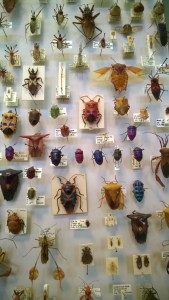
A display of terrestrial bugs (Heteroptera) in the Museum, including the Leaf-footed Bug painted by Immy Smith

Not only do I find specific species that I want to study in natural history collections, I often see new ones – animals I didn’t know about or hadn’t thought of drawing before. In the same week that I visited Oxford, I also made a trip to Herbarium RNG in Reading to study plant mimicry, and found similar inspiration there. I can channel all this into both aesthetic art destined for print and sciart workshops that communicate the wonders of insects or plants with the wider community.

Working on sciart projects and educational workshops helps me appreciate the multitude of ways in which collections benefit research and education. We must try to communicate the plethora of roles they play, and the host of ways they cross into our lives – whether through scientific research on insects pollinators of the crops we eat, or via a deck of cards made by someone like me for mainly recreational purposes. We must fight to protect scientific collections because they are a resource that benefits all of us as a society.