Lungfish, lithographs and libel


By Mark Carnall, Collections Manager


In addition to the many thousands of biological specimens that can be found at Oxford University Museum of Natural History, we also possess a variety of objects that originate from historical versions of the Museum’s displays. These include models, casts, and illustrations of various kinds, used to represent organisms that were otherwise difficult to preserve and display.

That any of these exhibition materials survive at all is down to pure happenstance and luck. At the time when they were removed from display, these artefacts would have just been seen as outdated ‘display furniture’ and all but destined to have been thrown away. One surviving piece of ex-display material, which catches my eye almost daily as it sits in my office, is a rather large pair of illustrations showing a South American and a West African lungfish mounted on a black backing board.
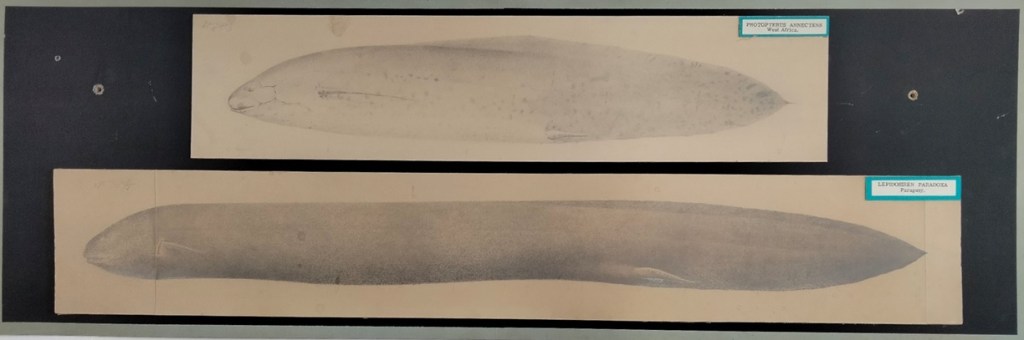
Mounted illustrations of West African lungfish, Protopterus annectens (top) and South American lungfish, Lepidosiren paradox (bottom). The board they are mounted on measures 93cm across.

By pure coincidence, I recently came across lithograph reproductions of these illustrations in an 1895 publication by E. Ray Lankester. Had these fish not have been my office-mates, I might not have paid the lithographs in the paper much attention, nor recognised their significance. 

E. Ray Lankester was a noted Zoologist who studied at Oxford University and was the holder of the Linacre Chair. He was also heavily involved in adding to the collections and displays here at OUMNH. His 1895 paper – a smash hit I’m sure we all remember – was titled On the Lepidosiren of Paraguay, and on the external characters of Lepidosiren and Protopterus, and sought to add more reliable evidence on the appearances of lungfishes. 

Lungfishes were of particular interest to scientists at the end of the nineteenth century. Though seemingly related, the different species of lungfish caused no small amount of head-scratching, given that they were found in freshwater ecosystems as far apart as Australia, Africa, and South America. As their name suggests, they are fish but also air-breathing, and the fact that they possess lungs also marked them for scientific interest at the time.
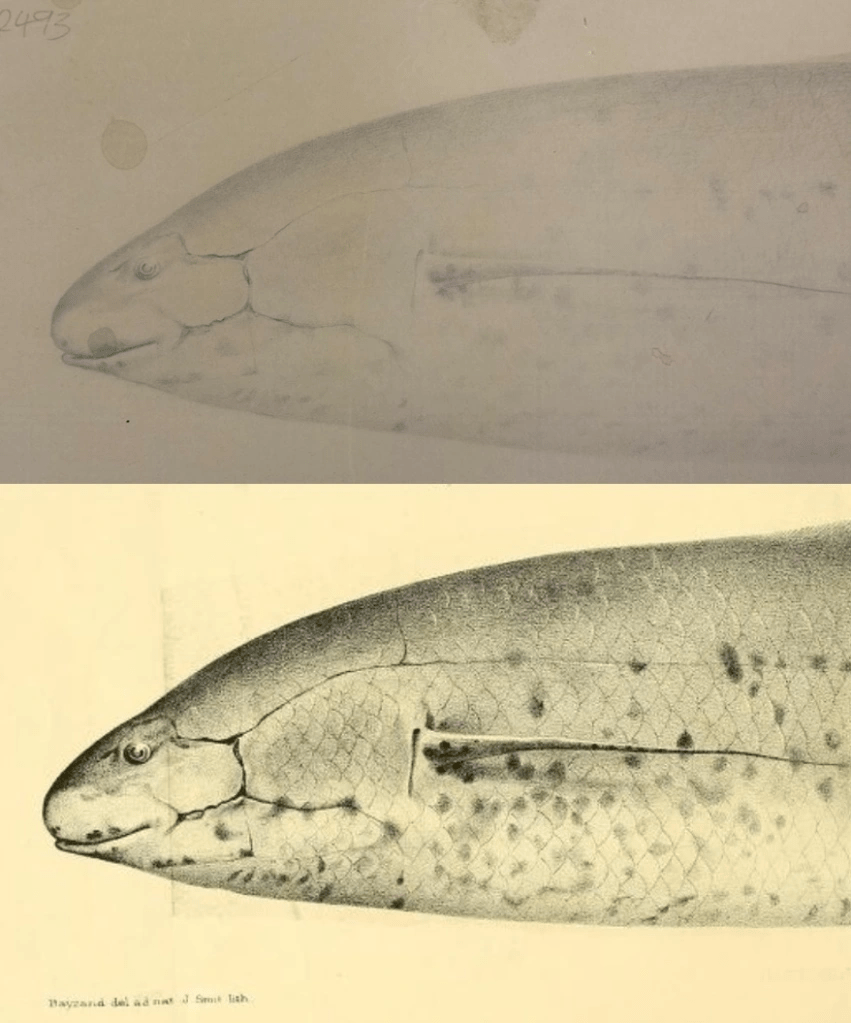
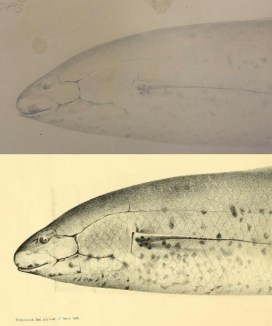
Comparison of Bayzand’s original drawing of Protopterus annectens (top) and screen-capture of the published figure (bottom). You’ll no doubt agree with Lankester that the changes to the scales are egregious and vexing. 

Interestingly (well, interesting to me!) is that Lankester adds an extensive note in the paper about the illustration of the specimens, explaining that he is unhappy with how Bayzand’s original drawings have been modified in the process of transforming them into lithographs for publication. According to Lankester, these modifications introduced inaccuracies. In particular, he complained that the lithographer had made it look like the lungfishes were covered in scales, and stresses that “[a]s a matter of fact, no scales at all[,] or parts of scales[,] are visible on the surface” of the lungfish. Instead, he makes clear that in real life (or, in this case, in preserved life) the scales of the fish are overlaid with soft tissue. Comparing the figure in the paper with the illustrations in my office confirms that the lithographer had, indeed, inaccurately reproduced the original drawings.

The happy coincidence of me finding Lankester’s paper led me to several important revelations. Firstly, we now know that Bayzand’s original drawings of the lungfish can still be found here at OUMNH. Secondly, we can surmise that, at some point in the past, these drawings were displayed in the Museum’s galleries. We can also corroborate that the original illustrations are different to the published versions, meaning that, if we are to believe Lancaster, they are also more accurate than those in the publication. Finally, we now know that two of the Museum’s specimens were cited with extra biographical information in Lankester’s paper.

Sadly, these exciting findings mean that my office mates will probably have to be relocated and take up residence in the Museum’s archives alongside their subject matter…
Danielle Czerkaszyn

You may already know that the museum contains millions of natural history specimens, but did you know that it also houses a world-class collection of books and journals, plus a priceless archive?  Held in 38 different locations across the museum, the collection of over 20,000 books covers all areas of natural history: zoology, geology, mineralogy, palaeontology, and is particularly known for its collection of entomology books and journals.  In fact, we believe it is the third largest entomology library in the UK after the Natural History Museum in London and the library of the Royal Entomological Society.  

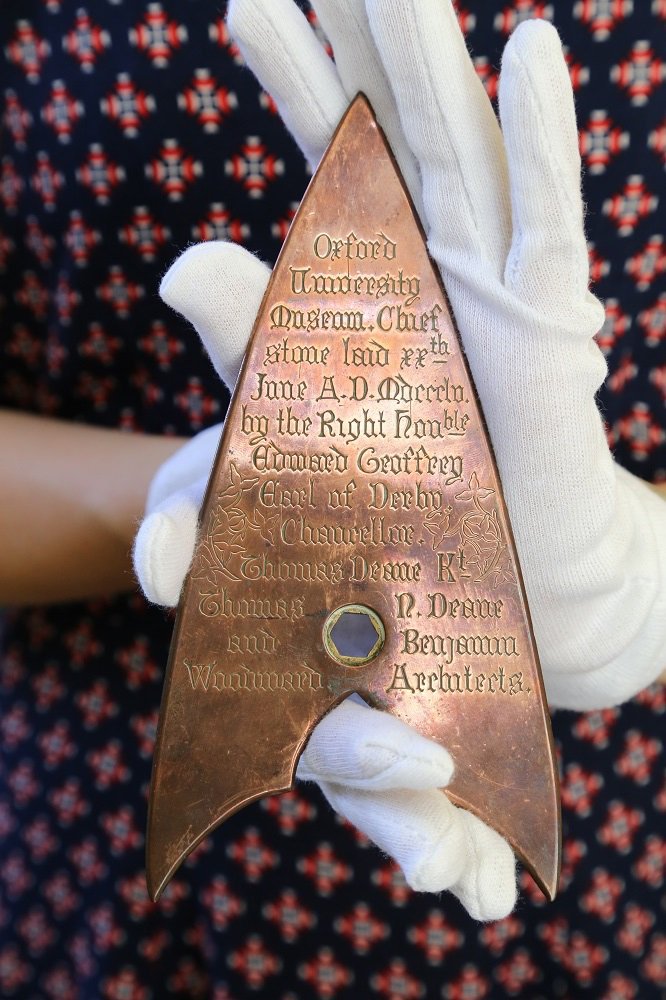
In addition, there is a priceless archive of letters, maps, field notebooks, photographs, artwork and other items of interest.  Where else would you find letters from Charles Darwin, the death mask of the Swiss biologist and geologist Louis Agassiz, and the trowel that laid the foundation stone of the museum’s building in 1855.

Trowel used to lay the Museum’s foundation stone

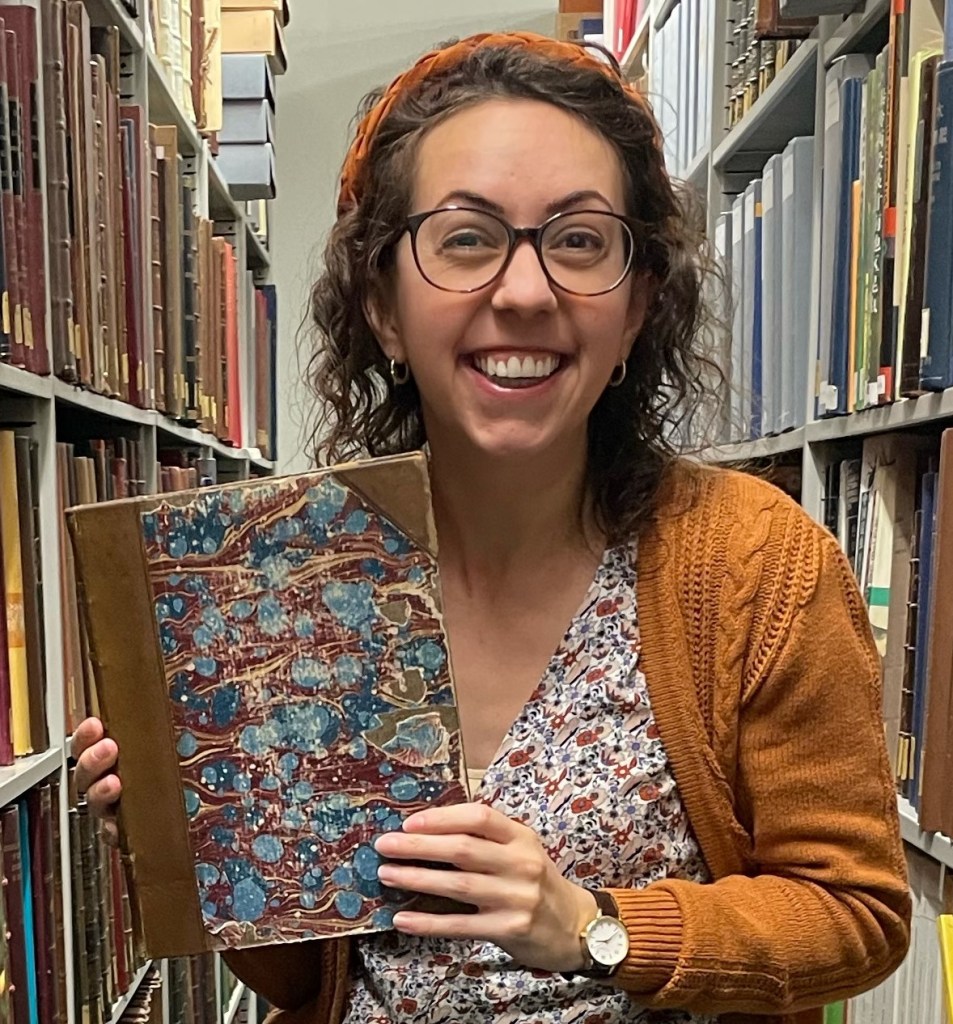
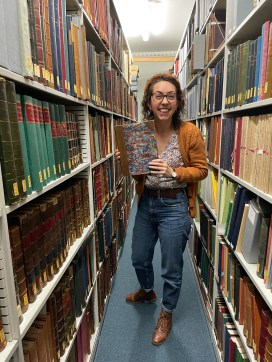
So, who is in charge of this fascinating treasure trove? That job falls to Danielle Czerkaszyn, the museum’s Librarian and Archivist.  I went along to meet Danielle to find out how she came to work at the museum, what her job involves and to learn more about the amazing collection in her care.

Danielle Czerkaszyn

From History to Natural History

Having first completed a degree in History in her native Canada, Danielle came to the UK to do a Master’s degree in Museum Studies.  Following this, she was selected for a place as a Graduate Library Trainee at the Bodleian History Faculty Library here in Oxford and secured her post at the Oxford University Museum of Natural History in 2017.  Danielle revealed:

“When I came for the interview, I was asked what my weakness would be in the role and I replied that I didn’t really know a great deal about natural history! The good thing is that I learn new things every day and my knowledge of natural history has expanded!”

As well as a valuable resource for staff at the Museum and other members of the University, the library and archive is open to anyone with an interest in natural history.  On a day to day basis, Danielle deals with many enquiries from the public requesting visits or requests for articles and chapters of books to be provided digitally to help with research.  High-use collections in the library and archive are currently in the process of being digitised which will make it even more accessible to natural historians around the world.  Danielle is also responsible for keeping the collection up to date with new publications and dealing with donations that come in from members of the public. 

Highlights of the Collection

I asked Danielle to choose some of her favourite entomology items from the collection and she suggested two incredible and unique works – one from the archive and one from the library. 

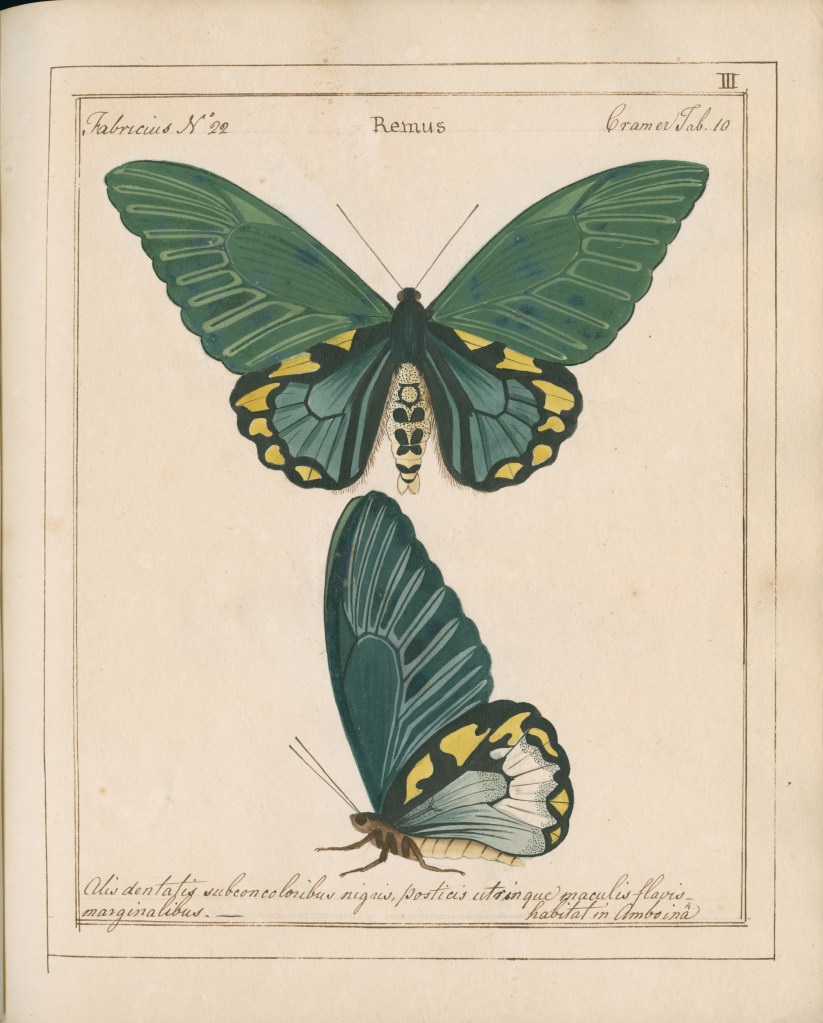
The first is William Jones’ Icones, one of the most scientifically important and stunning works on butterflies and moths ever produced.

William Jones’ Icones

“This work as one of my favourites because the paintings are so

detailed and beautiful. Plus it is completely unique.” 

Danielle Czerkaszyn

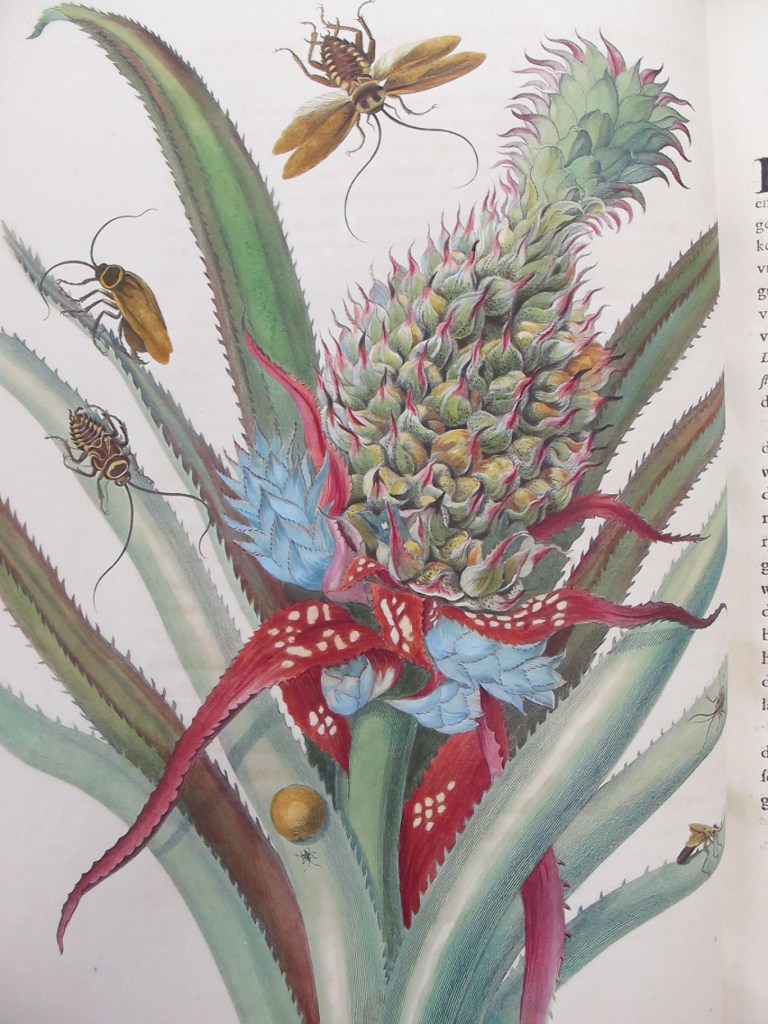
Danielle’s second choice is Maria Sibylla Merian’s Metamorphosis Insectorum Surinamensium (Insects of Surinam) published in 1705. 

Maria Sibylla Merian’s Metamorphosis Insectorum Surinamensium (Insects of Surinam) published in 1705

“Maria Sibylla Merian is definitely a figure to be admired as a pioneering role model for women and I love showcasing her work.”

Danielle Czerkaszyn

Check out our blog posts on these incredible items from the collection to find out more:

William Jones’ Icones

Maria Sibylla Merian’s Insects of Surinam

Thank you so much to Danielle for giving us a fascinating insight into the library and archive here at the Museum of Natural History, and for sharing some of the incredible works in her care. 

To find out more about the library and archive visit https://oumnh.ox.ac.uk/library.

Do you have a favourite book on insects? Tell us about it here or in the comments below.

Red-Tailed Bumblebee

If you see a big jet-black bumblebee with a red tail in Britain, its probably the Red-tailed Bumblebee, Bombus lapidarius. If it has a scruffy white collar, then its a male.

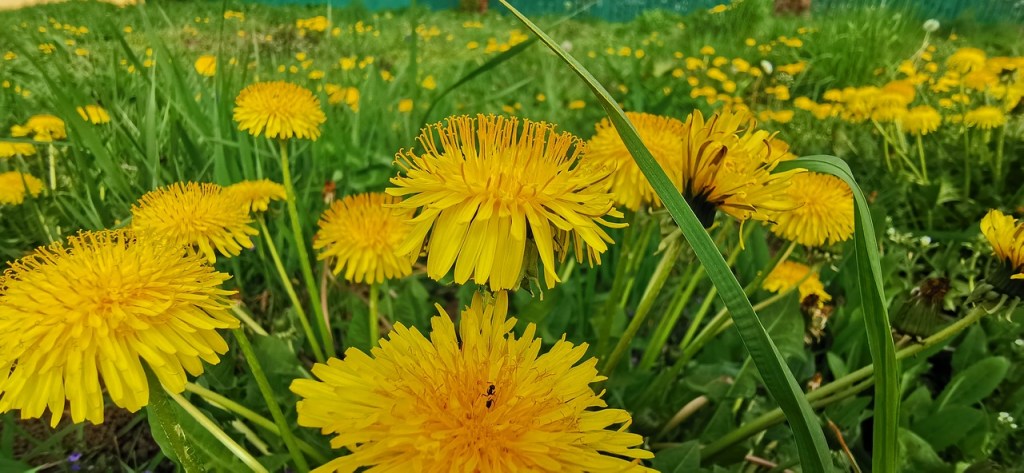
The Red-tailed Bubmblebee has extended its range northwards in recent years and is now common throughout Britain. It can often be seen in parks and gardens. The workers have short tongues and forage on flowers like daisies and thistles which have a big area for them to land on and are made up of small florets, each with a little nectar. Leaving dandelions to grow in the spring helps provide food for these and other insects early on in the growing season.

Let dandelions grow in spring to help insects. Image credit: Pixabay / Claudiu Mladin CC0

The Queens nest under stones and so are sometimes disturbed when these are moved. If you find one like this, have a look without disturbing it then just put the stone back. They may also enter our homes through open windows in search of nesting sites.

The Red-shanked carder bee, Bombus ruderarius, can look similar but is much scarcer in the UK. While the Queens of B. ruderarius are smaller. the workers of the two species can be a similar size. You can tell the difference by looking at the back legs. B ruderarius has red pollen baskets on its otherwise black legs, whereas the leg hairs of B. lapidarius are all black.

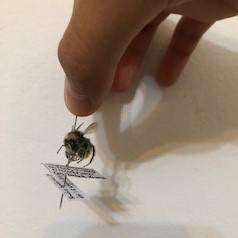
Lincoln Kwong was one of the participants at our Summer school in August. He was so inspired by the HOPE collections team at the museum that he decided to start his own insect collection. One of his first specimens was a dead red-tailed bumblebee that he found in his garden. He preserved and pinned this and recorded the data following advice from James.

Bombus lapidarius. Image credit: Lincoln Kwong

Let us know if you have your own collection. You can get in touch using the CONTACT US page. We’d also love to see any pictures any would be happy to feature them in our PHOTO GALLERY!

Featured image credit: Gail Hampshire CC BY 2.0

Spiders: Super, Not Scary!

Related to insects, arachnids are a fascinating group of invertebrates. Several species of spider can be found in and around our home at this time of year, but not everyone welcomes them! Here we take a look at some of these super spiders and why there is no need to be scared.

Most spiders don’t want to come into our homes because they are too warm, too dry and there isn’t enough food (or perhaps they feel the same way about humans as many people do about spiders!). A few species do venture into our dwellings and have probably been associated with us for thousands of years and often perform a useful housekeeping job in reducing the number of flies inside the home.

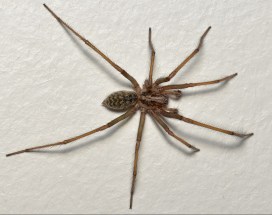
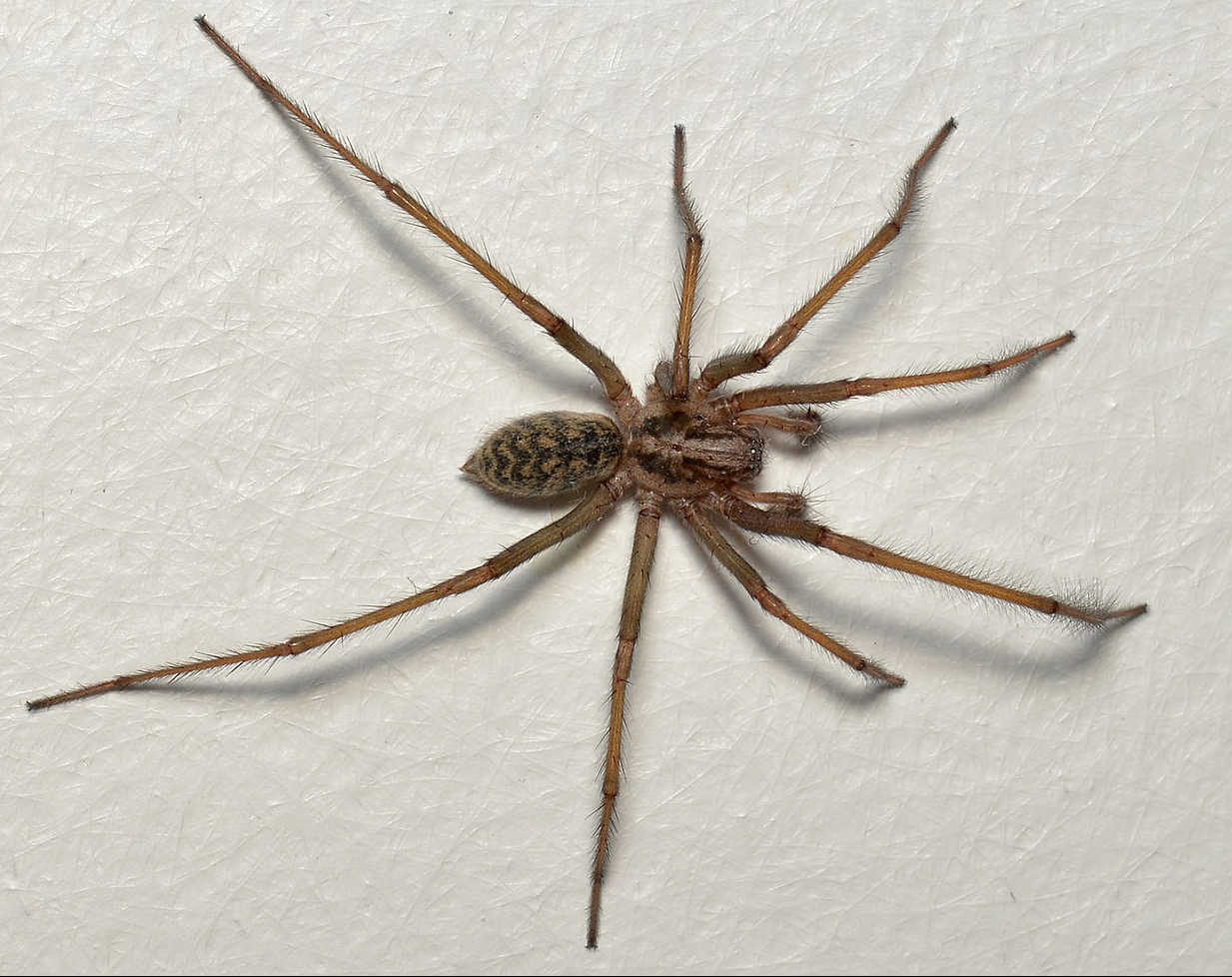
House Spider (Tegenaria domestica).

The House Spider, Tegenaria domestica.

The House Spider builds a funnel-like web. It sits inside waiting for prey to land on the web, emerging quickly to trap it. Indoors, this is the spider we are likely to find in the bath! Some people feel alarmed by them, but they are completely harmless and will retreat into the plughole (or their funnel web) if they feel threatened. The males are active in the summer so when you see a house spider indoors it will probably be a male looking for a mate. The females usually eat them after mating, so the House Spiders you may find in your home in the late autumn will probably be females which can live for two years or more.

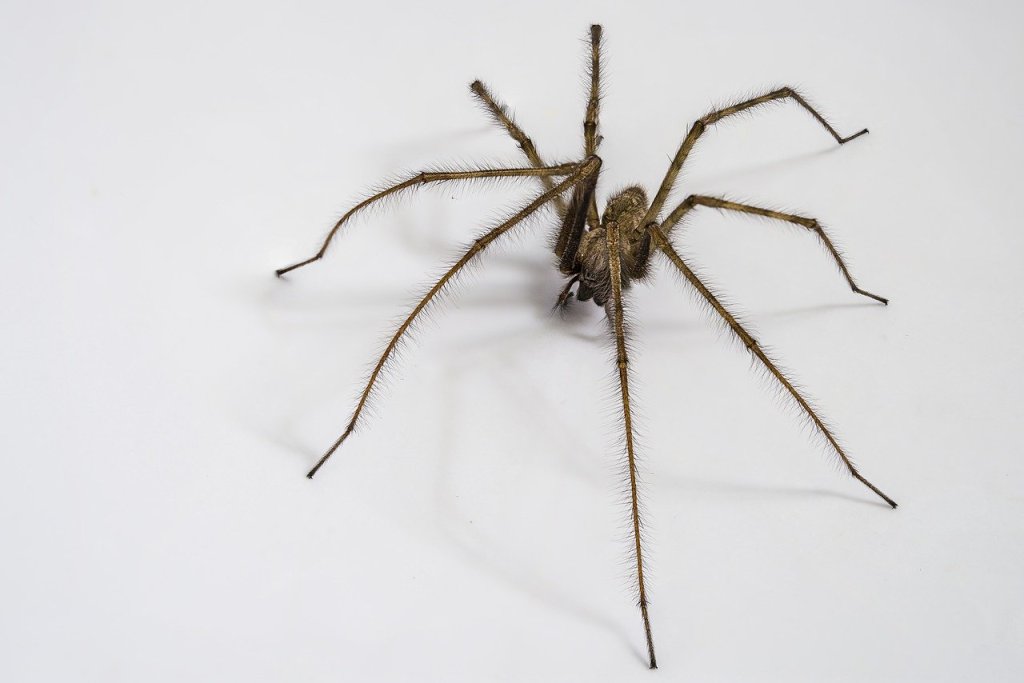
Giant House Spider (Eratigena atrica).

Giant House Spider, Eratigena atrica. Image credit: Ryan Hodnet CC BY-SA 4.0

The Giant House Spider has a similar appearance to the house spider but is larger. Females can grow up to 18mm in body length with a leg span of 45mm. Those long legs enable them to be one of the fastest running spiders: they can move at up to 0.5 m/s (1.2 mph). Their speed of movement can be startling but they are in fact easily outpaced by normal human walking speed (4 mph). They only use their speed for short bursts and the females normally stay within their funnel webs. It’s the males we see out and about in our homes in summer and autumn, looking for mates. Although the mouth parts of these spiders are theoretically capable of piercing human skin, they prefer solitude and to retreat when startled and so only bite rarely when provoked. Their venom cannot harm us.

‘Money Spider’ (Linyphia sp.)

This money sider landed on me while I was writing the article!

‘Money Spiders’ are not a single species. Hundreds of different small spiders are called ‘Money Spiders’. In the UK they usually belong to the Family Linyphidae. They get their common name from a folk saying that if one lands on you it’s lucky because it will spin you some clothes, meaning you will come into some money. If anyone has ever had a garment spun by a spider we’d love to hear about it! Money Spiders often land on us in the summer because they travel through the air on strands of silk, a method called ‘ballooning’. Money Spiders are completely harmless to humans and most go entirely unnoticed by us because they are so small.

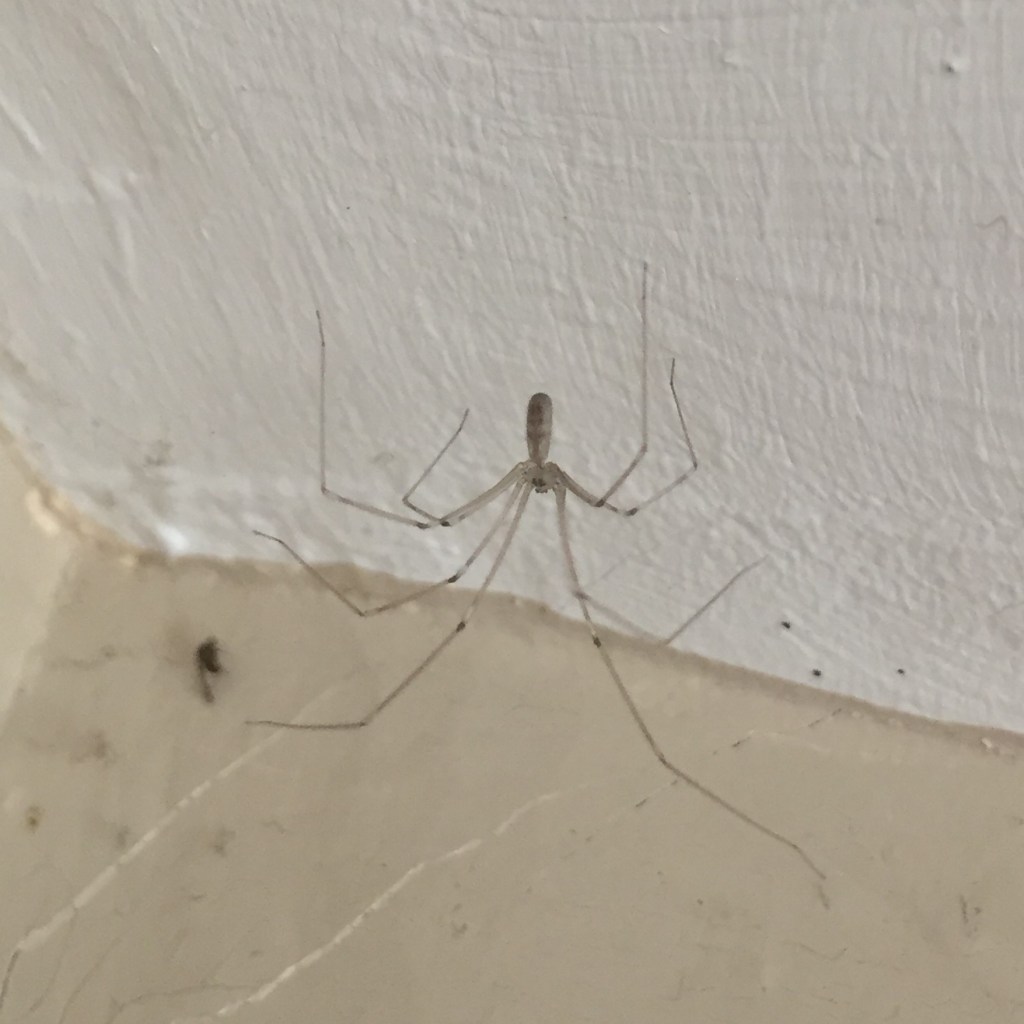
Daddy Long Legs Spider (Pholcus phalagiodes)

‘Daddy Long Legs’ Spider (Pholcus sp.), not to be confused with a Crane Fly.

The Daddy Long Legs Spider is also known as the ‘Cellar Spider’. It prefers to spin loose strands of web in corners which it uses to capture prey. It is not to be confused with the Crane Fly, also called a ‘Daddly Long Legs’ in the UK, which is a fly, so has a pair of wings. These spiders will often start vibrating if you come close in an effort to scare you off. Alternatively, they may curl up completely and ‘play dead’. They are completely harmless.

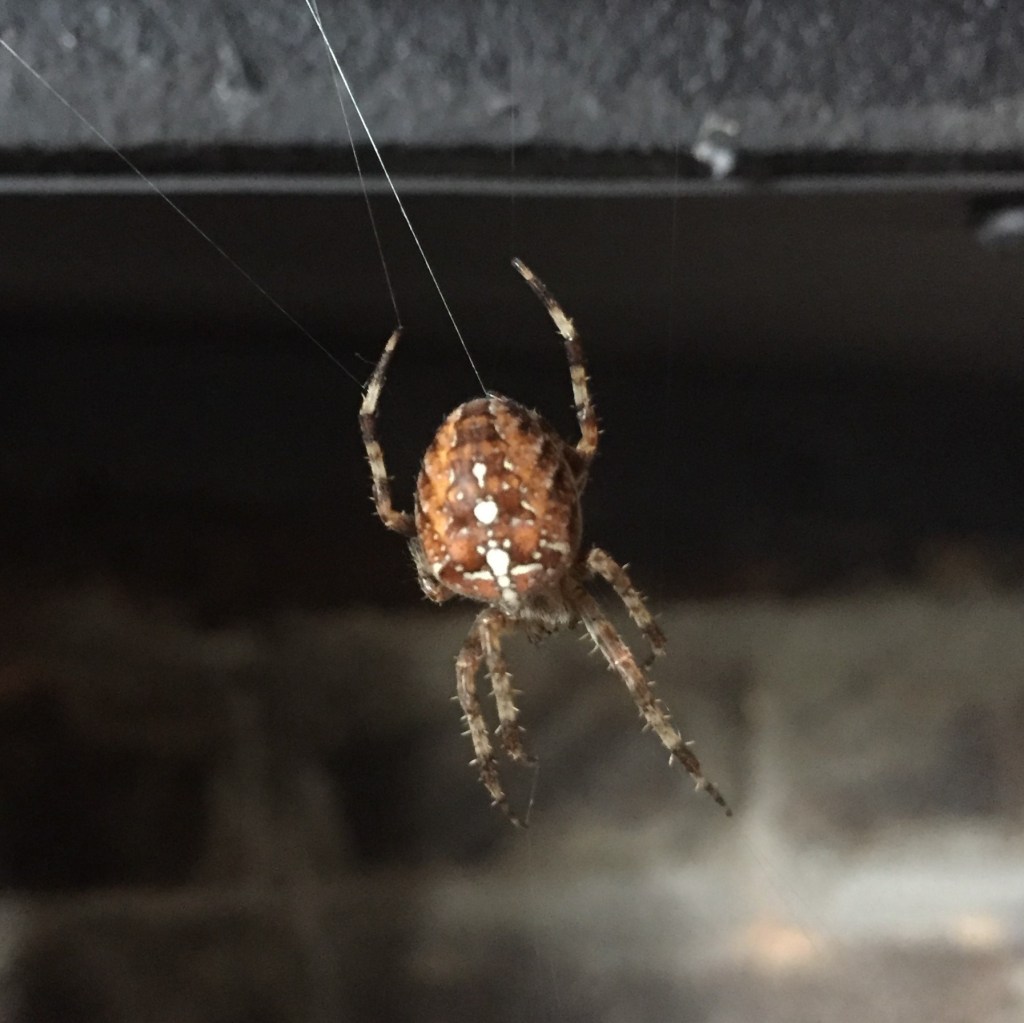
Garden Cross Spider (Araneus diadematus).

Garden Cross Spider, Araneus diademata.

The Garden Cross Spider is usually found in the garden, but sometimes venture into our homes, as shown in the picture. They are large web-spinning spiders. Their webs are usually very noticeable on autumn mornings, revealed by drops of dew sticking to the strands. They can be recognised by the distinctive cross pattern on their back. The body of females can be up to 15mm long, although the males are a lot smaller and so we rarely notice them. Females can often be found protecting a ball of eggs or young spiderlings. They will be defensive of these, but are completely harmless.

Want to know more?

If you enjoyed reading about these house spiders, you might also like this post about the colour-changing Crab Spider.

Have you had any spider encounters at home? We’d love to hear about them! You can get in touch using the Contact Us page.

people: amo spooner

Meet Amo Spooner, Collections Manager for Coleoptera, Hemiptera and Small Orders.  Her job, here at the Museum of Natural History, indulges her love of both insect collections and animals in general.   I met up with Amo to find out what sparked her interest in the natural world, how she began working at the Museum of Natural History and what her current job involves.

How did you first become interested in insects?

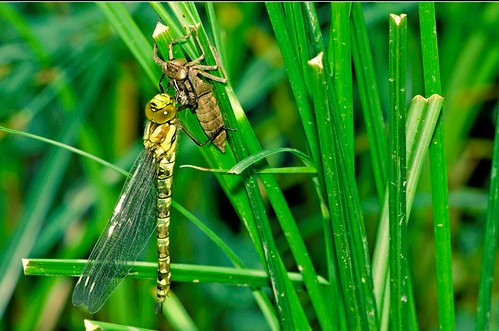
I have always loved the natural world and have a very vivid memory of being woken up in the early morning by my Grandad who wanted to show me some dragonflies emerging from their nymphs in our pond.  We rushed out to the pond where dragonflies were pulling their bodies out of the last of their nymph exoskeletons and emerging as adults. I kept the nymph skins as a souvenir and even have a tattoo of an adult dragonfly emerging from its nymph stage to remind me of that time.

How did you come to work in entomology?

After leaving school, I went to college to do a First Diploma and a BTEC National Diploma in Animal Management.  At college, I learnt how to care for a wide range of animals from guinea pigs to geckos and helped to run the Exotic Unit.  Once I had completed my qualifications, I decided to train as a Veterinary Nurse.  It was during the final year of my degree that I first volunteered at the Museum of Natural History and by the time I finished University, I realised that I really wanted to work at the museum, particularly with the insect collection.  I moved to Oxford, volunteered at the museum during the day and worked at Waitrose in the evenings to fund my time at the museum. 

After volunteering for around 1000 hours, I got my first paid job at the museum! This was working on a collection of entomological specimens that Oxfordshire County Council had donated to the museum.   Much of the collection was damaged, but it was possible to save some specimens and incorporate them into the wider museum collection. 

What is your role here at the Museum?

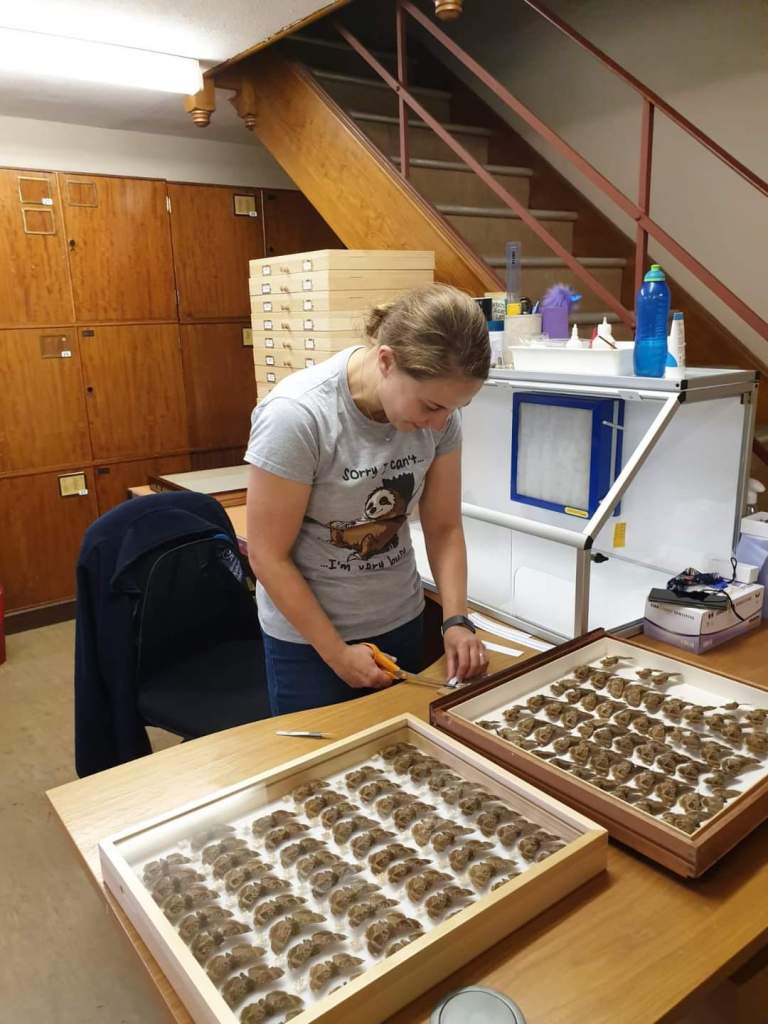
I have now worked at the museum for around 11 years and have had several different roles during that time, including re-curating the World Coleoptera collection housed in the Huxley Room.  Now, I am on secondment from my Collections Manager role for Coleoptera (beetles), Hemiptera (true bugs) and Small Orders (Dragonflies, praying mantis, cockroaches, lacewings, grasshoppers and allies), leading the collections team responsible for re-curating the British insect collection as part of the HOPE for the Future project.

(See our blog post on Tom Greenway to find out more about this re-curation.)

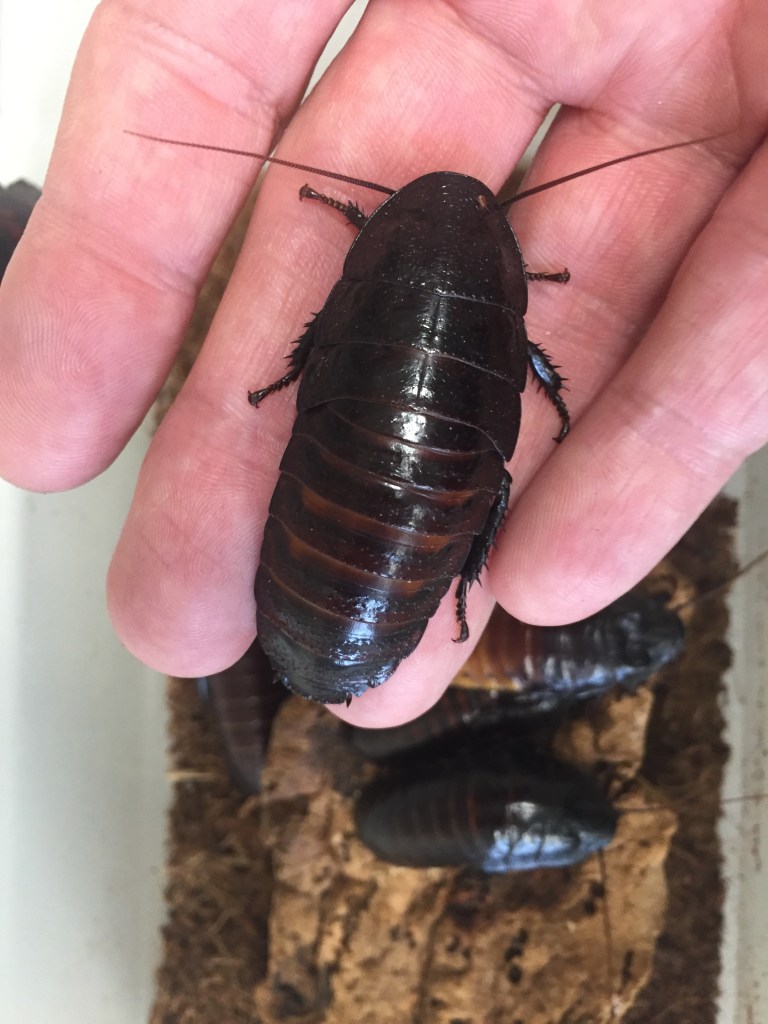
Together with one of my team, I am also responsible for looking after the museum’s collection of live insects and other invertebrates.  These include Madagascan Hissing Cockroaches, Tarantulas, Stick insects and a Peacock Mantis.  I enjoyed designing and working with an expert to build their new tanks a couple of years ago. 

Madagascan Hissing Cockroach

Can you tell us about any particularly challenging aspects of your role?

One of the most challenging aspects of my job is the battle to protect the specimens from insect pests!  When live insects infest specimen drawers they can cause considerable damage and it is part of my job to ensure that drawers are checked on a regular schedule to ensure any infestations do not get out of control.  This has been particularly challenging during the pandemic when the museum has been closed and access to the collections, even for those of us who work here, has been limited.

What do you enjoy most about your job?

I am fascinated by the history of the collections.  For example, my favourite entomology collection in the museum is the Baden-Sommer collection which dates back to the early 1900s.  It is housed in its original furniture, and is really rich in a wide variety of species, including an incredible number of type specimens.  I really enjoy understanding how specimen data labels and pinning techniques have changed over time.  For example, when faced with an undated specimen, the handwriting on labels and how an insect is pinned can give you clues about its age. It’s like being an insect detective!

I take great pride and comfort in the fact that my work helps to keep the collection safe for future generations.  The work that I am currently undertaking on the British Insect collection as part of the HOPE for the Future project is a great example of this, and will result in the collection being accessible to the public online, and available for teaching and research for many years to come. 

Thank you so much, Amo, for some fascinating insights into your role at the museum. Good luck with the Hope for the Future project!

Hedgehog Awareness Week

For Hedgehog Awareness Week, Zoology Collections Manager Mark Carnall and Museum Librarian and Archivist Danielle Czerkaszyn discuss these prickly and charming creatures.

The 2-8 May is Hedgehog Awareness Week, which give us an excuse, not that one were needed, to talk about these charismatic mammals. Although the West European hedgehog (or common hedgehog if you’re in Europe, these vernacular names get very confusing when geography and language is taken into account), Erinaceus europaeus, is probably the hedgehog that springs to mind to many of our readers, there are nearly twenty living species of hedgehog and many fossil species are known.

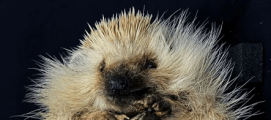
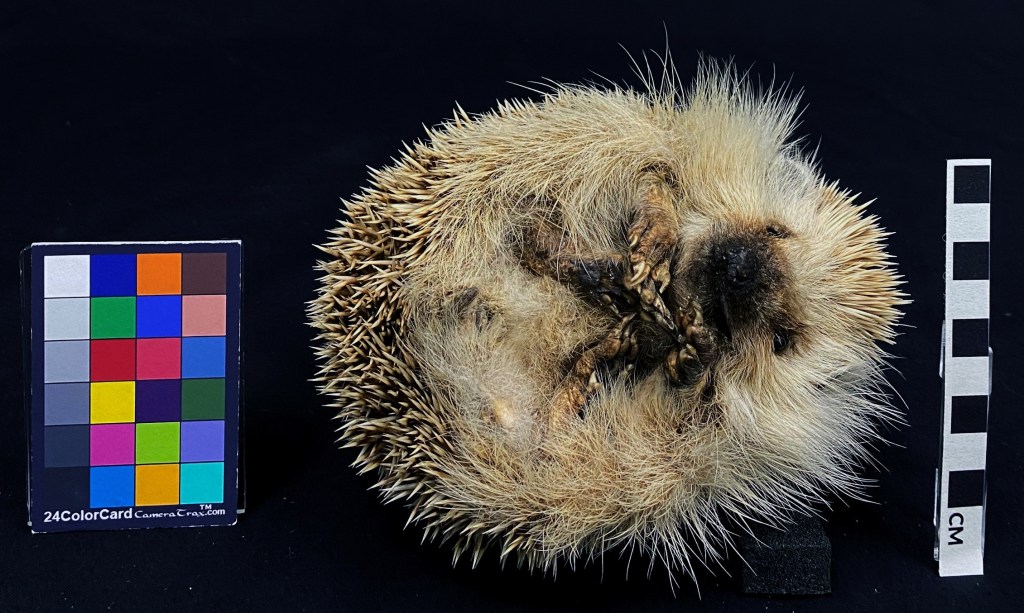
Hedgehog specimen at OUMNH

In terms of evolutionary relationships they share a family with the moonrat and the rather wonderful gynmures, distinctly un-hedgehog-like relatives.

Their characteristic spikes that run across the back of hedgehogs are modified hairs which are periodically replaced and each individual hedgehog has around 7000 spines at any one time, varying slightly with age and size. Behaviourally, they are competent climbers (and have a built in shock-absorbing coat should they fall) and surprisingly perhaps, all species are thought to be competent swimmers.

Although much loved across their native range, Erinaceus europaeus, is considered a pest species in New Zealand where it was deliberately introduced as a form of biological control, by acclimatisation societies and possible as pet animals. They have now spread to all but the highest parts of New Zealand threatening native species of birds, amphibians, reptiles and directly competing with native mammal species.

In 2020, Erinaceus europaeus was added to the Red List for British Mammals as vulnerable across the lists for Great Britain, England, Scotland and Wales informed by analysis of citizen science data although there remains some uncertainty about true population levels.

Unsurprisingly perhaps they are comparatively well represented in the collections at the Museum including specimens donated and prepared for the Museum from the 19th Century through to much more recent specimens acquired from road death animals for display. The specimen pictured above being one such relatively recent acquisition for display in the Museum’s display case on the animals featured in Alice in Wonderland.

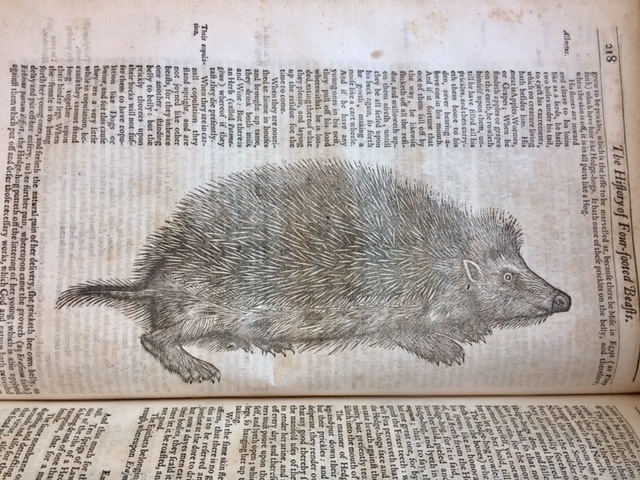
We’ll leave you with one more hedgehog from the Museum’s library and archives. Hedgehogs unusual appearance initially led to some odd beliefs about why their quills existed. For example, in his book ‘The History of Four-Footed Beasts and Serpents’ (1658) Edward Topsell wrote:

“The hedgehog’s meat is apple, worms and grapes: when he findeth them upon the earth, he rolleth on them until he hath fylled up all his prickles, and then carrieth them home to his den.”

– Edward Topsell

One of the most common questions about hedgehogs is how do they mate? The answer is of course, very carefully.