BREAKING NEWS: Once in a lifetime insect emergence

There is a secretive and enigmatic species of moth that will only emerge from their pupa in very specific conditions, on the first day of April. These once in a lifetime conditions are due to be met in the Oxford area today.

The caterpillar of this insect sub species, known as the Lesser April Jester moth (Stulte aprilis dies), will find a sheltered, confined space in which to pupate. In nature, cracks in rocks are an ideal location, but it has adapted to built environments by using the gaps between paving stones. Here it will stay, for years or even decades, until the required environmental conditions are met. When a cold snap follows an unseasonably warm spell, the adult will emerge from the pupa. Entomologists from Oxford University Museum of Natural History believe that the weather we have experienced recently meets these conditions, and is the best chance to see emerging adults for several decades.
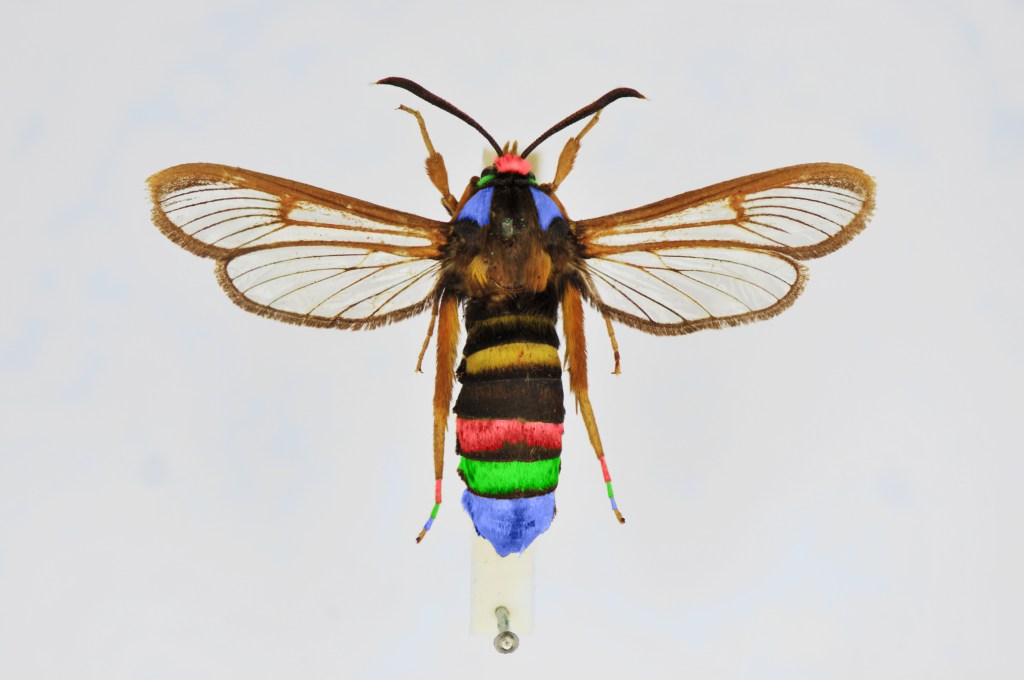
Specimen of Lesser April Jester moth (Stulte aprilis dies), collected in Oxford in 1951

The moth will exit the pupal case and, if necessary, will tunnel to the surface, squeezing out through the cracks in the pavement. It will unfurl its glorious, clear wings, displaying the red, blue, green and yellow stripes, on its back, for all to see. It will then fly off to find a mate, to ensure the next generation of this rarely seen insect.

Burrow of Lesser April Jester moth (Stulte aprilis dies) in pavement of Parks road, 1 April 1951

Unfortunately so many jester moths never make it out of their pupa, whether due to the required conditions never being met, or to not having enough energy to dig their way to the surface. If you wish to help, gently inserting and then removing small twigs between paving stones to loosen the soil can help to ease their paths.

The last know sightings in Oxfordshire occurred on Parks Road in Oxford on 1st April 1951. Please let us know if you catch sight of this moth, and even better please share any photos you may take either in the comments below, or via the Contact us page.
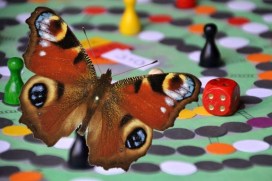
Book your place at our FREE Event this Easter!

Are you aged 10 – 14? Then join us for a FREE Crunchy on the Outside event here at the museum this Easter.

A Game of Life Cycles – Tuesday 12th April 2022, 1 – 3pm

Discover more about the stages of insect life cycles, then make and play your own insect-themed board game.  Can your insect make it through all the stages of metamorphosis to become an adult? Can they overcome the challenges along the way and lay eggs to make the next generation?

Here are all the details you need:

WHAT:              FREE workshop – A Game of Life Cycles

WHEN:             Tuesday 12th April 2022 , 1pm to 3pm

WHERE:           Museum of Natural History, Parks Road, Oxford, OX1 3PW

WHO:               10 to 14 year olds

To book – email: hopelearning@oum.ox.ac.uk

Insects Online

When the weather is chilly there aren’t many insects about, but we still have lots of online ‘Crunchy’ insect activities for you to try. We hope they will boost your insect expertise!

How to spot an insect

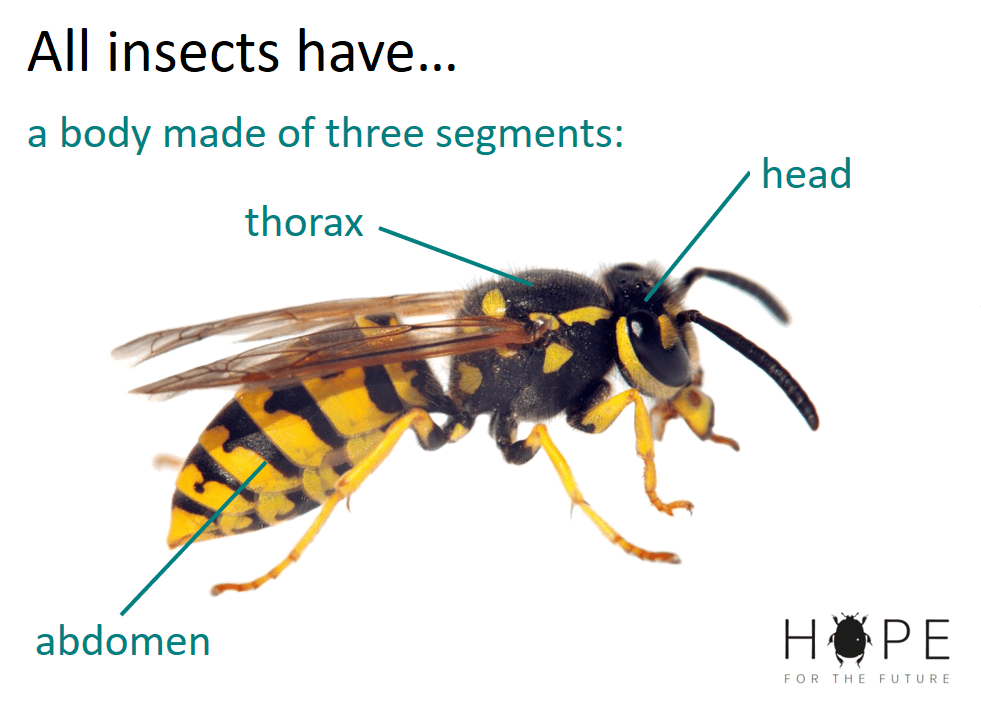
What makes an insect an insect? How to spot an insect is an introduction to insect anatomy: the body parts that make up an insect. Discover the key features entomologists use spot insects and how insects are different from some of their close relatives. You can then test yourself with our quick quiz!

Insect ID

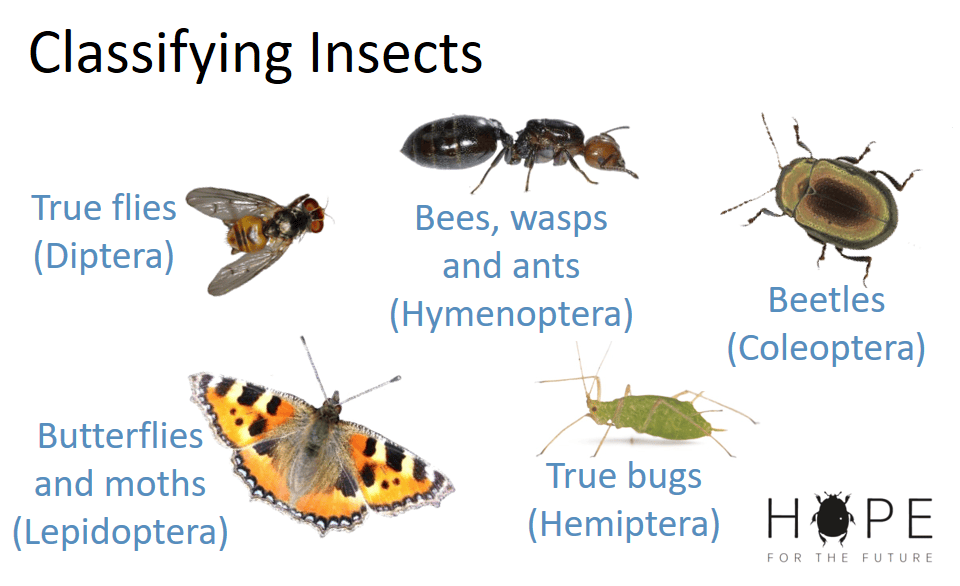
Ever wondered what that insect is? Insect ID takes you into a deeper exploration of the ‘Big 5’ groups of insects in Britain:

  • beetles
  • bees, wasps & ants
  • butterflies & moths
  • true flies
  • true bugs.

Discover the differences between them, learn how to spot each type and put your skills to the test with our ID challenge.  

Know your bees

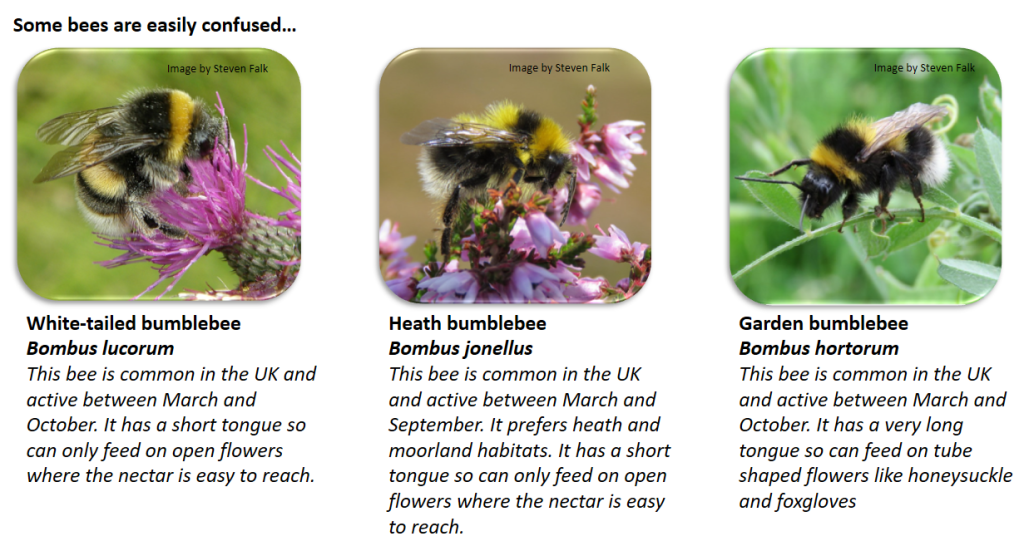
There is more to bees than hives and honey! Know your bees explores some of the rich variety of bees found in Britain. We’ve also included some tools to help you make your own observations of bees.

Looking for more?

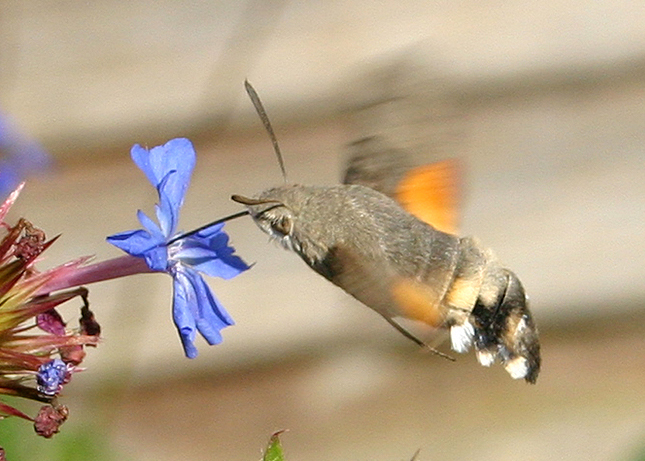
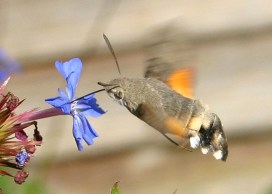
Hummingbird hawkmoth, Macroglossum stellatarum. Image credit: Rodger Caseby

If you’d like to go a bit further and, as the weather gets a bit warmer, get outside and do some investigating of your own, why not try one of our inset investigation ideas:

  • Different flowers asks whether different types of flower attract different insects
  • Insect Pollination investigates the range of important insect pollinators (it’s not just bees!)
  • Time of day explores whether different insects visit flowers at different times of day

We would love to hear how you get on. Get in touch using the comments below or the Contact Us page.

Bee-flies: A sign of Spring

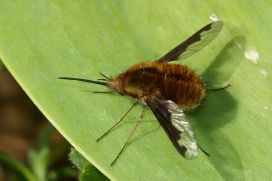
At this time of year, after the long winter months, we are all looking for signs of Spring.   One thing that entomologists look forward to is the first sightings of bee-flies.   These very cute, furry flies start to emerge in late February and early March.

Bombylius major, the dark-edged bee-fly, is one of Erica McAlister’s favourite British insects and she tells us why in this video.

Find out more about Bee-flies

To find out more about bee-flies, check out this page on the Dipterists Forum. There is also an excellent guide to bee-fly identification which you can find here.

In addition, the Dipterists Forum run an annual Bee-fly Watch which gathers together records of sightings.  This is really important for monitoring changes in distribution and flight period.  You can contribute to this important science project by adding your sightings here:

Bee-fly Watch | Soldierflies and Allies Recording Scheme (brc.ac.uk)

Have you seen any bee-flies yet this Spring? Let us know, too, by telling us below or by using the Contact Us page.

Insect Fun in the Museum – Saturday 12th March

Super Science Saturday: Fantastic Minibeasts

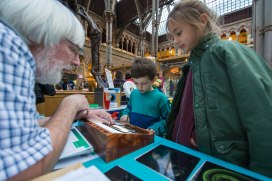
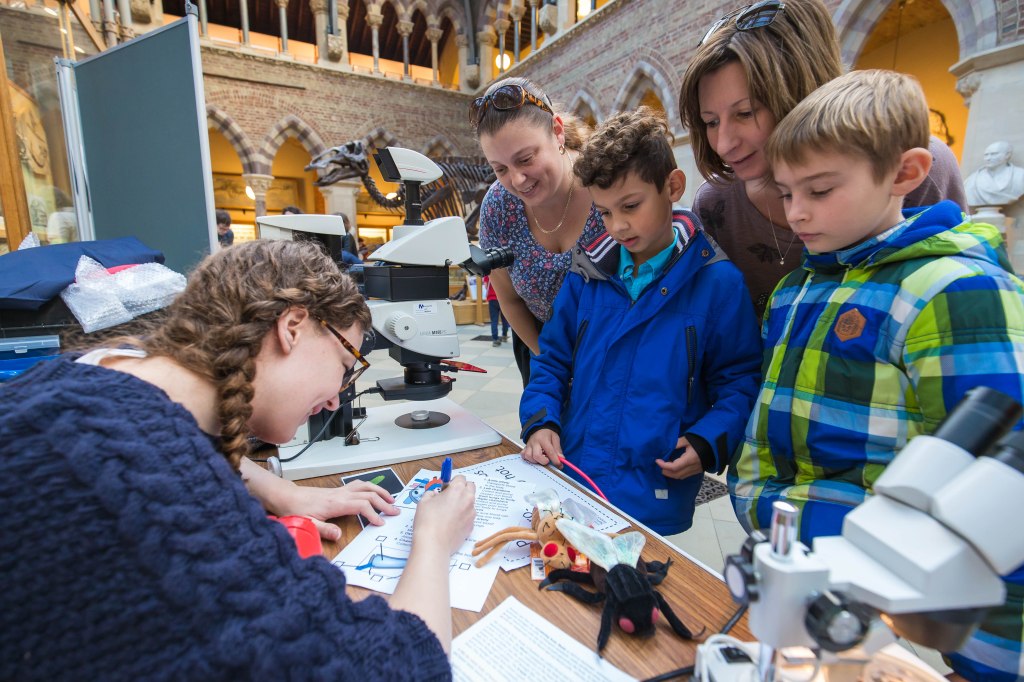
OUMNH Super Science Saturday by IWPhotographic

Drop in to the museum for this fun family Science Fair on Saturday 12th March, 12-4pm. Meet experts to find out more about tiny creatures like insects, spiders and more!

No need to book – just come along and, whilst you are in the museum, why not join us for our Insect Show: Insects: Beasties or Besties.

Insects: Beasties or Besties Family Science Show

Saturday 12th March, 1pm and 2.30pm

Ages 6+

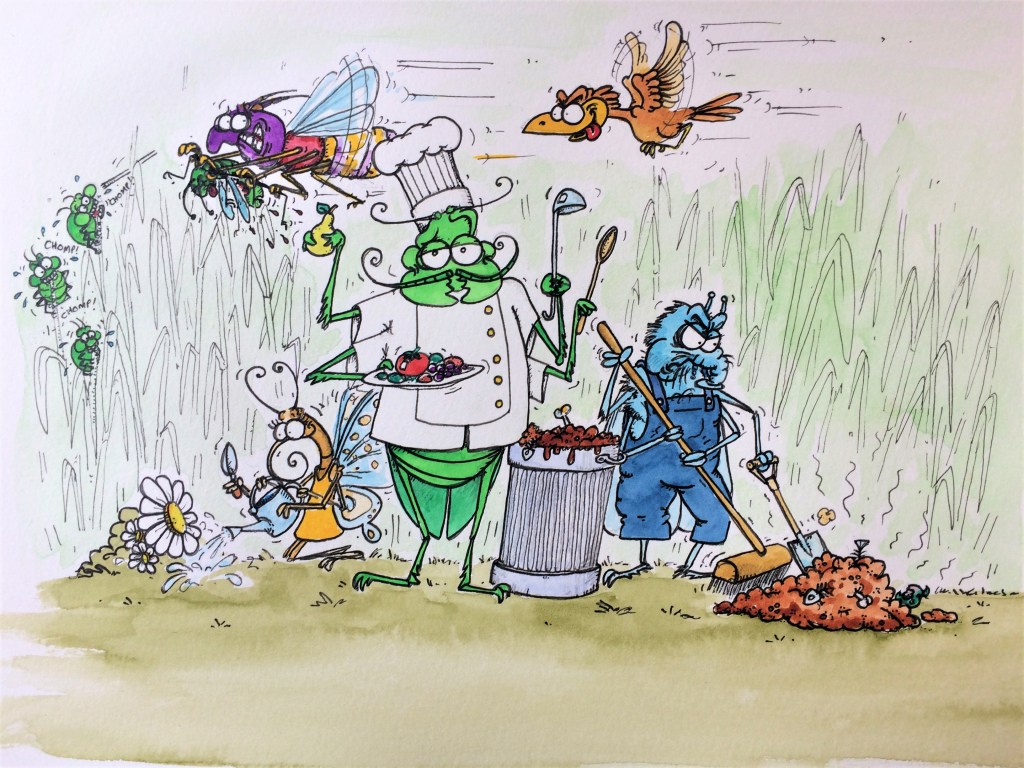
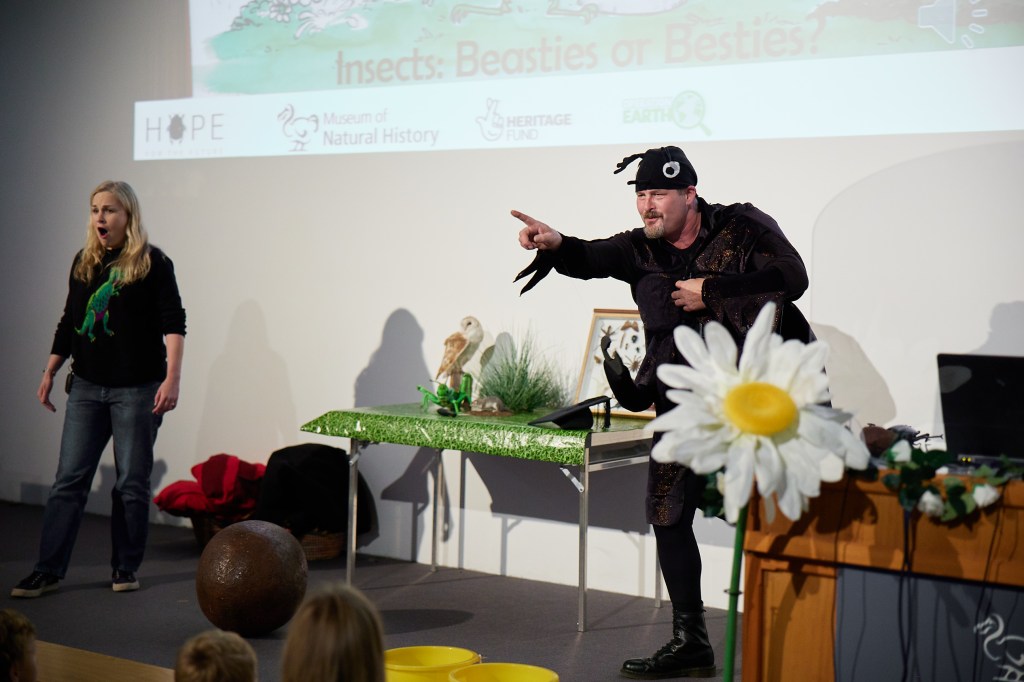
Come along to our fun and interactive family show all about insects. You’ll meet a visitor to the museum, with a dislike of insects, who is confronted by a giant talking dung beetle! The unlikely pair take a journey, looking at the wonderful, and vitally important, role of insects in our world.

Please note that the show will be held in the Museum’s Lecture Theatre which has a capacity of 195 seats and social distancing will not be in place. Visitors are encouraged to wear a face mask for the duration of the show and hand sanitiser will be available when you enter/exit. 

The show is FREE but please book online.

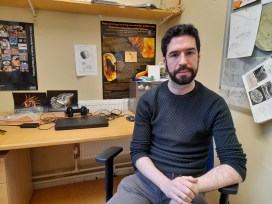
Ricardo Pérez-de la Fuente

Ricardo Pérez-de la Fuente, Deputy Head of Research here at the Oxford University Museum of Natural History, tells us how he first became interested in natural history. Hear about his work as a palaeoentomologist specialising in the study of insects fossilised in amber, including the discovery of a fascinating lacewing species from around 100 million years ago with an ingenious method of camouflage and defence.

Ricardo’s research into the fossilised lacewing species, Hallucinochrysa diogenesi, has shown that the strategy of covering the body with materials from the environment as a way to camouflage and defend, known as trash-carrying, evolved at least 100 million years ago. Several species of invertebrates use this strategy today, including green lacewing larvae, and some sea urchin and crab species. Can you think of other ways in which insects defend themselves from their prey? Let us know in the comments below or in the Contact Us section of the blog.