Who clothes there?

LEARNING ABOUT ANCIENT FASHION FROM NATURAL HISTORY COLLECTIONS


By Ella McKelvey, Web Content and Communications Officer


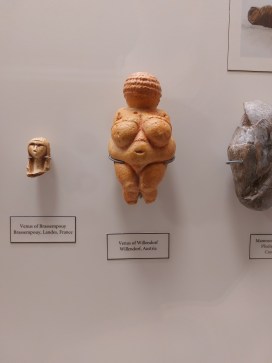
Tucked in a display case in the southwest corner of the Museum is a sculpture of an unidentified female figure, small enough to fit in your coat pocket. It is a replica of one of the most important examples of Palaeolithic artwork ever discovered; a 25,000-year-old carving known as the Venus of Willendorf. The Venus of Willendorf is one of several Palaeolithic statues found in Europe or Asia believed to depict female deities or fertility icons. Known collectively as the Venus Figurines, the carvings are similar in size and subject matter, but each has her own peculiarities. Many are naked, but some of the later examples are wearing distinctive garments, clothes we might describe today as ‘snoods’ or ‘bandeaux’. The Venus of Willendorf is easily distinguished by her statement headpiece; perhaps a spiralling hair-braid or ceremonial wig. But there is another, more exciting interpretation — this strange, thimble-like adornment might actually represent a woven fibre cap, making it the oldest ever depiction of human clothing.
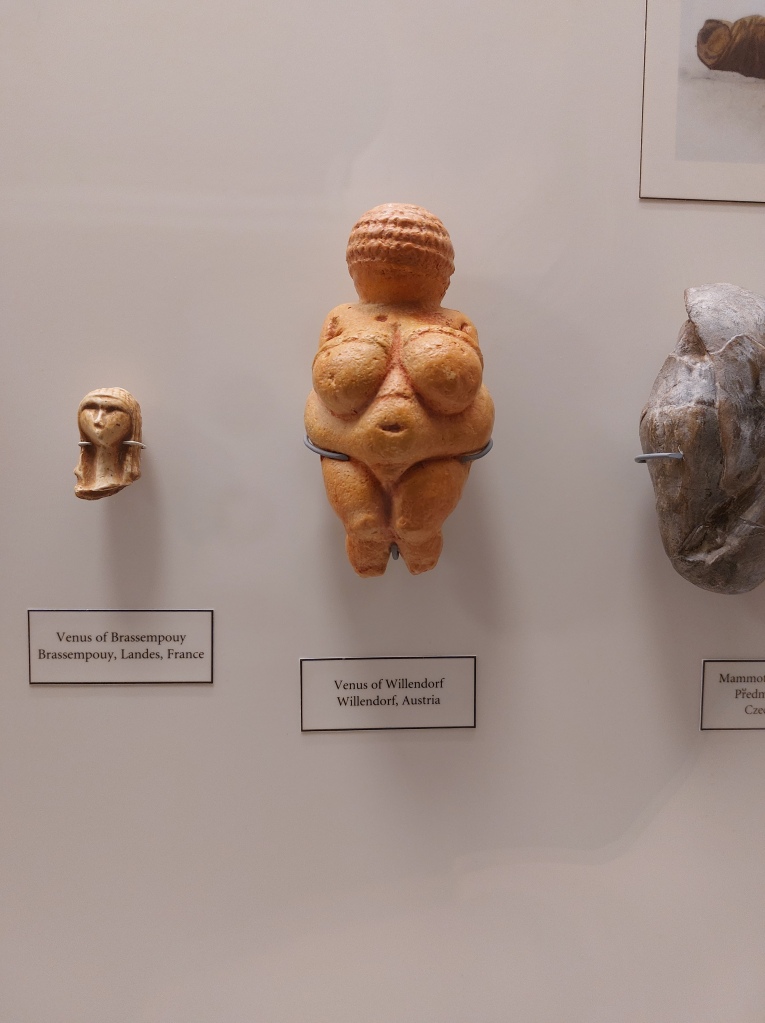
The Venus Figurines are incredibly important to the study of human fashion because they significantly predate any direct archaeological evidence of ancient clothing. The oldest surviving garment dates back an astonishing 5,000 years; an exceptionally-preserved linen shirt discovered in an Egyptian tomb. But our species, Homo sapiens, has a much longer history, perhaps up to a quarter of a million years. How much of this time have we spent wearing clothing? And why did we even begin to dress ourselves in the first place?

By comparing human genes to those of our furrier primate relatives, researchers have been able to estimate that modern humans lost their body hair around 240,000 years ago. A mutation in a gene called KRTHAP1 likely led to a decrease in our production of the protein keratin, the building block of hair. The exact reason why this mutation spread through the population is still up for speculation. One commonly held theory is that, with less body hair, our ancestors could sweat and tolerate higher temperatures, allowing them to expand their habitats from sheltered forests into sun-drenched savannahs. But at some stage, our ancestors started covering their skin again — leaving us to wonder when nakedness became a nuisance.

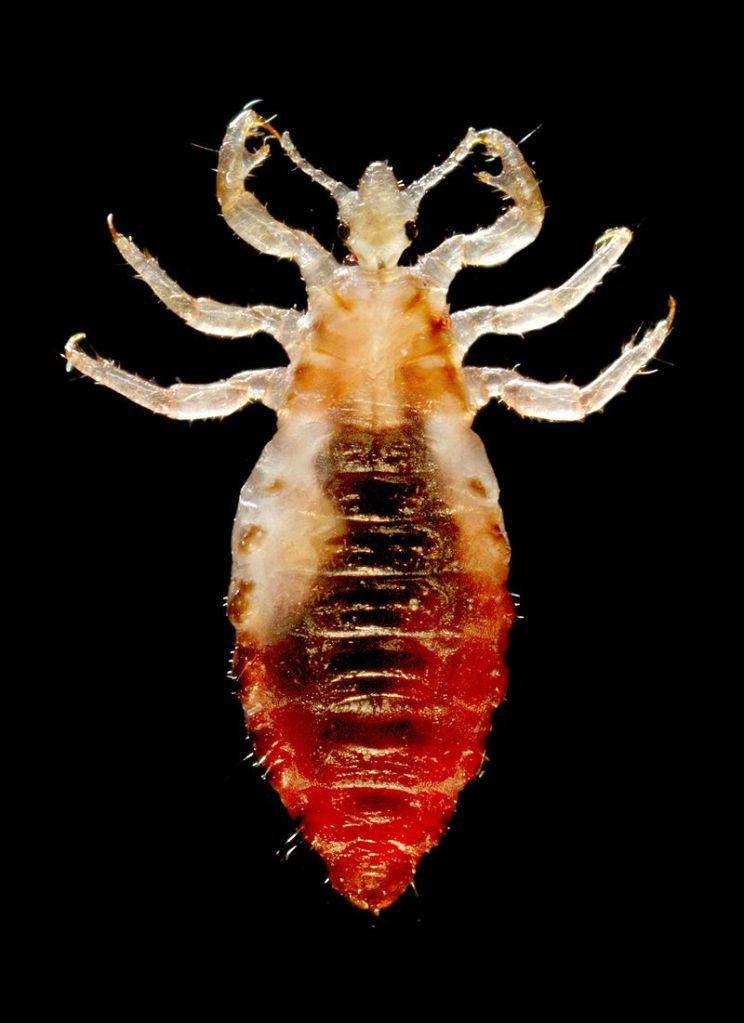
An intriguing clue about the circumstances that led to the adoption of clothing has come from studying the DNA of our parasites — namely, clothing lice. In 2010, researchers used genetic sequencing to determine that clothing lice split from their ancestral group, head lice, between 170,000 and 83,000 years ago. When compared with genetic data from our own species, we can begin to weave a story about the origins of clothing that ties in with human migration. Gene sequencing has helped us work out that Homo sapiens originated in Africa but must have begun migrating towards Europe between 100,000 and 50,000 years ago, a window which overlaps neatly with the evolution of clothing lice. Is it possible that clothing lice are a consequence of the widespread adoption of clothing; a result of humans migrating into more northerly latitudes with cooler temperatures?

Curiously, there are indications in the archaeological record that human clothing could date to an even earlier stage in our species’ history than the expansion of humans into Europe. In 2021, researchers uncovered 120,000-year-old bones from a cave in Morocco believed to be used to process animal hides. There is a strong possibility that humans would have used these tools to make wearable items out of hunted animals, including blankets, cloaks, or perhaps more structured garments.

It seems likely that the first clothes humans made from hides were loose-fitting capes or shawls, which may have been more important for protection or camouflage than keeping warm. There are numerous reasons why other animals cover themselves with foreign objects besides thermoregulation. ‘Decorating’ behaviours occur in animals as diverse as crabs, birds, and insects, allowing them to disguise themselves from predators, or protect themselves from UV radiation. While early humans might have only needed simple clothing items to aid with disguise, as the climate began cooling 110,000 years ago, cloaks probably wouldn’t have cut it; our species must have learned how to make multi-layered and closer-fitting garments to maintain high enough body temperatures. Archaeology provides a similar estimate for the adoption of constructed garments, based on the discovery of 75,000-year-old stone awls — tools used for puncturing holes in hides to prepare them to be sewn together.

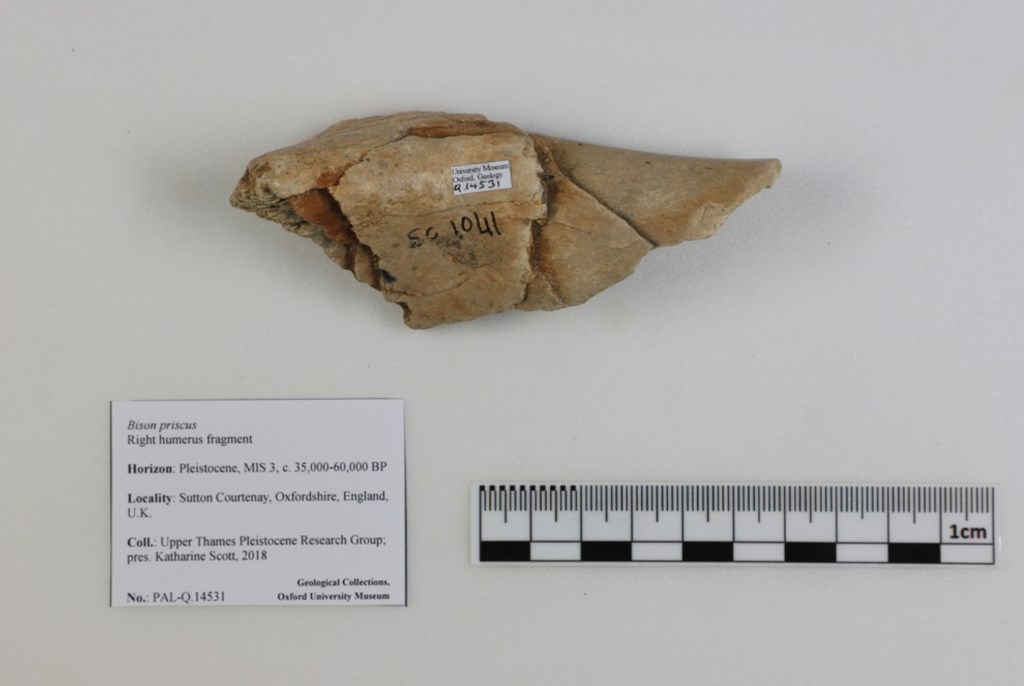
Homo sapiens‘ ability to make complex clothing items may have helped give our ancestors a competitive edge over the Neanderthals in Europe. Researchers have studied sub-fossil material in museum collections to learn about the changing distributions of European mammals throughout human history, allowing them to deduce that Neanderthals only had access to large animals like bison to make cape-like clothing from. But, in addition to bison, Homo sapiens lived alongside other, fluffier animals like wolverines during the last Ice Age, which could have been hunted to make warm trims for our clothing. Studies like these are highly speculative, but with such a threadbare archaeological record, they contribute valuable insight into the landscapes of ancient Europe.
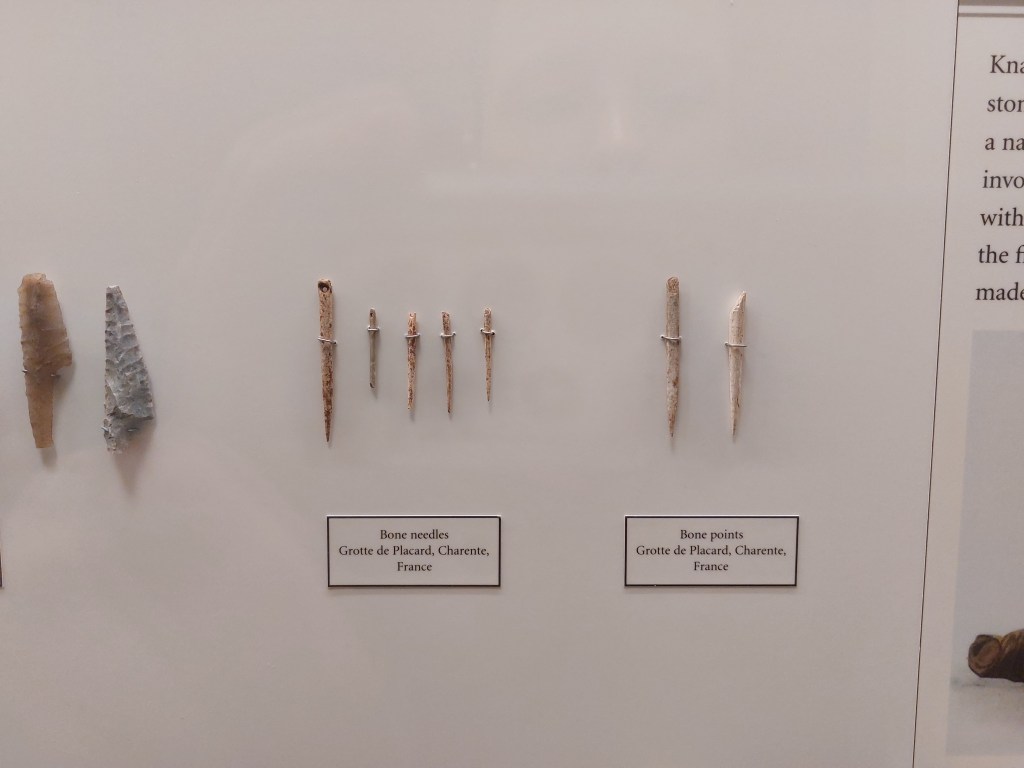
The Neanderthals might have been less well-dressed than our Homo sapiens ancestors, but we can’t be certain that humans of our own species were the only prehistoric fashionistas. The oldest sewing needle to have ever been discovered dates to 50,000 years before present and was actually found in a cave associated with Denisovans — a group of extinct hominins we know little about. The Denisovans may be an extinct subspecies of Homo sapiens, but they might also have formed an entirely separate species altogether, perhaps learning how to sew independently of modern humans.

Following the invention of sewing was another crucial innovation in the history of human clothing — the ability to make textiles. In 2009, a group of researchers discovered 36,000-year-old evidence of textile-based clothing in the form of microscopic flax plant fibres that had been dyed and twisted together. There are many potential uses of twisted fibres such as these, but scientists have been able to study the organisms associated with the fibres, finding the remains of skin beetles, moth larvae, and fungal spores that are all commonly associated with modern clothing. Humans do not simply fashion clothes, we also fashion microhabitats, capable of supporting organisms as diverse as insects, fungi, and bacteria.

The discovery that humans have been making textiles into clothing for 36,000 years lends credence to the theory that the Venus of Willendorf is wearing a woven cap — but we might never be able to draw any certain conclusions about such an ancient artefact. Until just ninety years ago, humans could only make textiles from biodegradable materials, meaning that we have very little evidence about the clothing that our ancient ancestors wore. Thankfully, however, the story of human fashion is closely interwoven with the natural histories of hundreds of other species, allowing us to stitch together a patchwork history, utilising evidence from all corners of the kingdom of life.
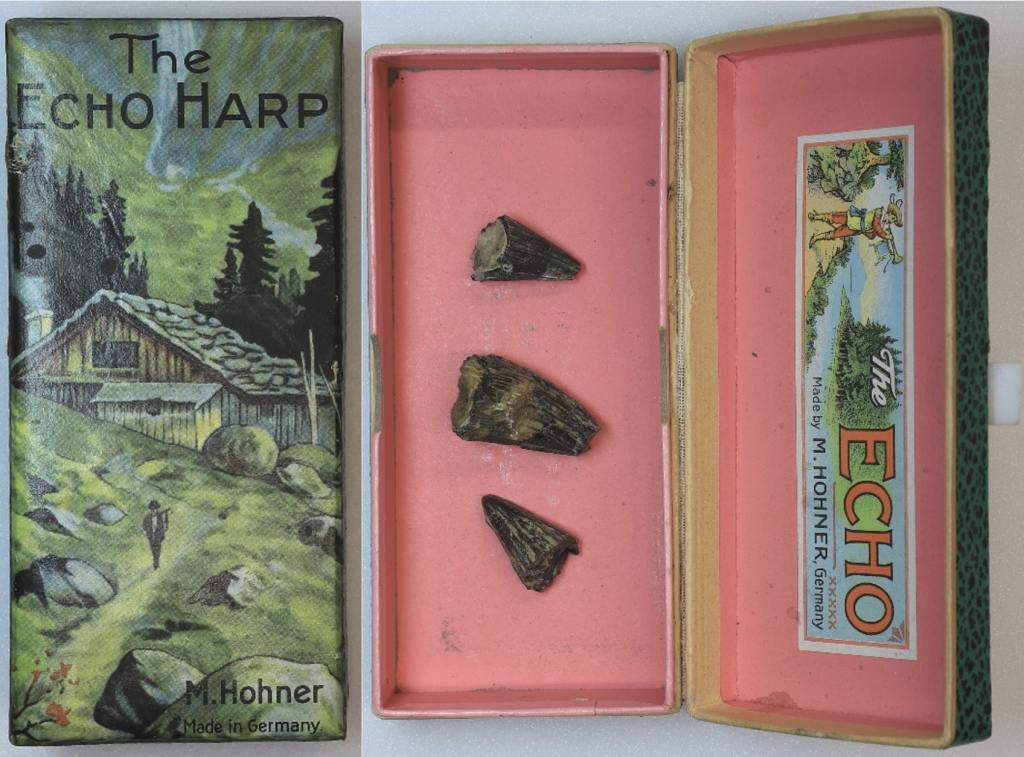
The outside and inside of a box, showing its contents

Boxes, Bags, and Bones

NO, THERE WEREN’T HARMONICAS IN THE JURASSIC!


Looking through the collections at OUMNH never gets boring, but sometimes a drawer will open up to reveal something even more eye-catching than the fossils usually found inside. Whilst working on the Museum’s Jurassic marine reptiles a few weeks ago, I came across something particularly surprising: a jewel-green box with a fantastic piece of art on the front. I was instantly intrigued and reminded of all the other times I had encountered a holder as fascinating as the specimen inside it.

Storage in museum collections is an ongoing pursuit of balance between ideal environmental conditions, specimen accessibility, and efficient use of space. This balance applies to all levels of storage: from building to room, cabinet to specimen tray. OUMNH’s Earth Collections are stored in conservation-grade, acid-free boxes or trays made of plastic or cardboard. These boxes are sometimes layered with low-density foam or ‘plastazote’ which can be carved to fit the specimen and keep it from being jostled or damaged. Holders with lids can also provide a micro-environment for specimens to help minimise their exposure to changes in humidity and temperature. The use of these standard materials not only helps protect specimens from degradation but can also deter pests from harbouring in collections spaces.

However, historical collections like those at OUMNH may retain holders that are not standard use. Sometimes, a clean and empty plastic Ferrero Rocher box is the perfect size for that small mammal skeleton that needs storing! Other times, an unusual holder might have been the only thing a field collector had on hand to transport a specimen to the Museum.

A harmonica box containing pliosaur teeth, a marine reptile that lived during the Jurassic (145.5 million – 201.6 million years ago).

One example of an unusual specimen holder is this ‘Echo Harp’ box by pre-eminent German harmonica manufacturer Hohner, likely from the 1960s. The box no longer holds a harmonica, but instead accompanies pieces of Jurassic pliosaur teeth from Weymouth, Dorset. Pliosaurs were a kind of carnivorous marine reptile related to plesiosaurs, with four flippers, and long tails and necks. If they hadn’t gone extinct in the Cretaceous-Paleogene extinction event 66 million years ago, perhaps they would have come to appreciate the harmonica and its artistic packaging!

Aside from their artistic value, museums may sometimes retain unusual holders because they contain primary source information on the specimen. One such example is a ‘Bryant and May’s Patent Safety Matches’ box in our Earth collections, bearing a packaging design from the early 1900s. The box actually houses a chicken tarsometatarsus bone excavated from “High St. New Schools” in Oxfordshire and is accompanied by a label which describes the particular layer of gravel the specimen was found in — important information for any archaeological or palaeontological find. Although the specimen is stored alongside Pleistocene fossils (10,000 – 2.6 million years ago), chickens did not originate in the UK, so the bone is likely from much more recent times. Someone still must have thought it was important enough to keep in its own special holder!

A Tate and Lyle sugar bag containing a Jurassic specimen, with handwriting on the outside describing the stratigraphy the fossil was found in.

Similarly, this ‘Tate and Lyle Granulated Sugar’ paper bag features a handwritten original notation in blue pen on the outside. The bag originally contained a specimen found in a collection of Jurassic gastropods and bivalves from Somerset, with the handwriting describing the fossil’s stratigraphic information. The bag also features a recipe for cinnamon apples on the reverse, which we have yet to try!

A wooden box and the Quarternary fossils (up to 2.6 million years ago) it originally housed. An accompanying letter describes the delivery of the fossils to William Buckland, Oxford University’s First Reader in Geology.

In addition to primary source information, original holders may also provide specimens with provenance. This ovular wooden box filled with organic stuffing material originally contained Quarternary fossil specimens found in Peak’s Hole, Derbyshire. The Museum archive also holds a handwritten letter describing the specimens inside the package and how they were found. The letter dates to 1841 and is addressed to Oxford University’s first Reader in Geology, William Buckland.  The specimen holder forms part of a group of objects with such a strong interconnection, and such strong documentation, that retaining the box is a matter of course.

All in all, it’s great that we’ve come so far in the advancement of safe and stable housing for specimens. At the same time, it’s always fascinating to see what else has made its way into collections, just by nature of being able to hold things, either for a short time or a long one. Despite living in the Earth Collections – among fossils, rocks, and the geological past – these objects offer us a little bit of human history too.


By Brigit Tronrud, Earth Collections Assistant

Squashed Fly Biscuits

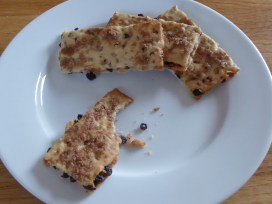
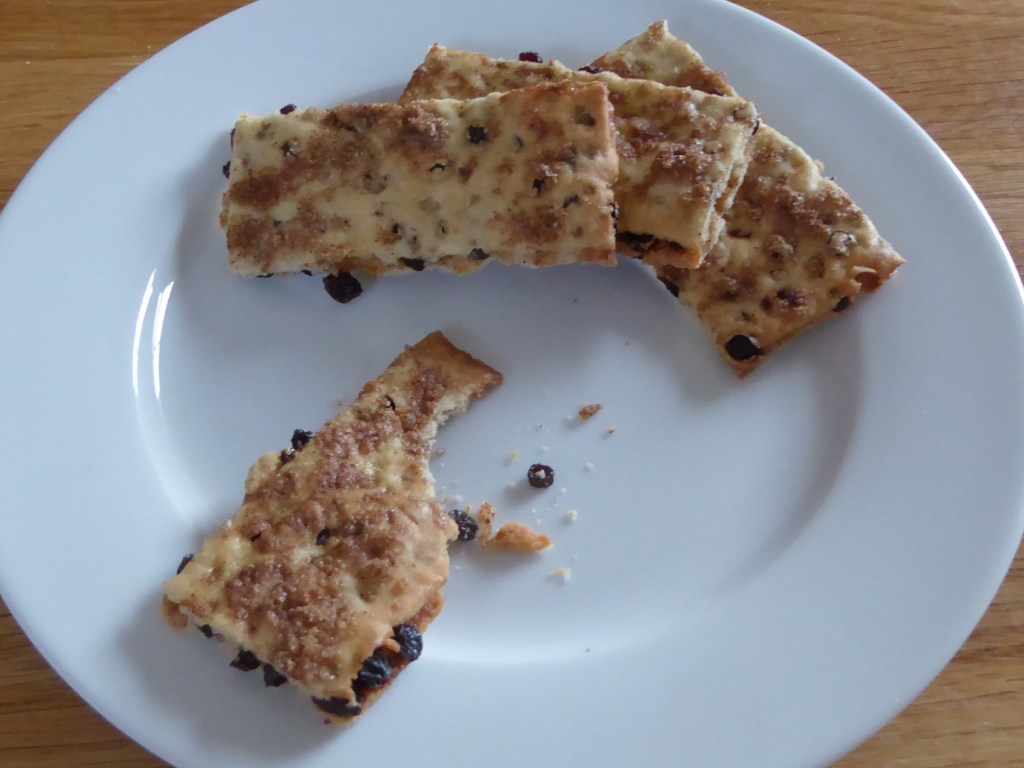
Don’t worry dipterists, these delicious biscuits don’t actually have flies inside them! Also known as Garibaldi biscuits, the ‘flies’ are actually currants. Why not have a go at making them?

You will need:

  • Baking tray – lightly greased or with baking paper
  • Mixing bowl
  • Rolling pin
  • Wooden spoon
  • Teaspoon
  • Knife
  • Plate
  • A work surface sprinkled with flour
  • A wire rack to cool the biscuits
  • Oven pre-heated to 200oC (180oC if it’s a fan oven) / Gas mark 6
  • Oven gloves
  • A grown-up assistant

Ingredients:

  • 225g plain flour, plus a little extra for dusting
  • 100g currants
  • 75g lightly salted butter
  • 50g caster sugar
  • 5 tablespoons of milk
  • 1/2 teaspoon of ground cinnamon, mixed with 3 tablespoons of sugar
  • 3 drops of vanilla extract
  • Beaten egg or milk to glaze

How to make the biscuits:

1 Wash your hands. Make sure your assistant washes theirs too.

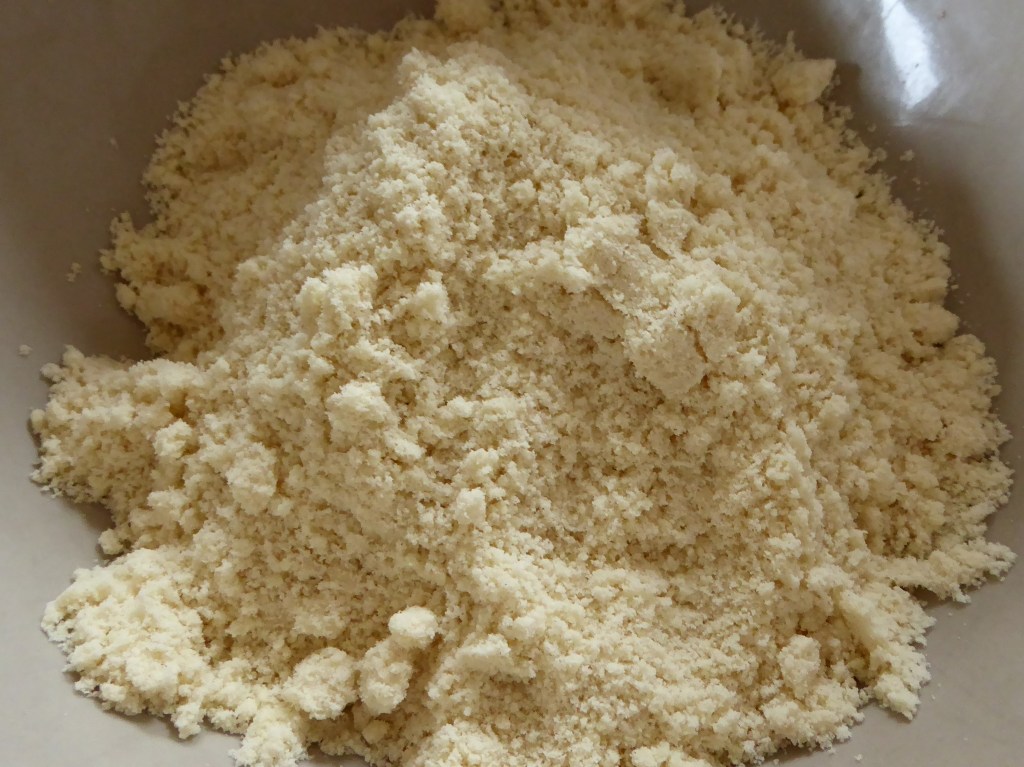
2 In the mixing bowl, rub the butter into the flour using your fingertips. Keep going until the mixture looks like breadcrumbs.

3 Add the sugar and milk.

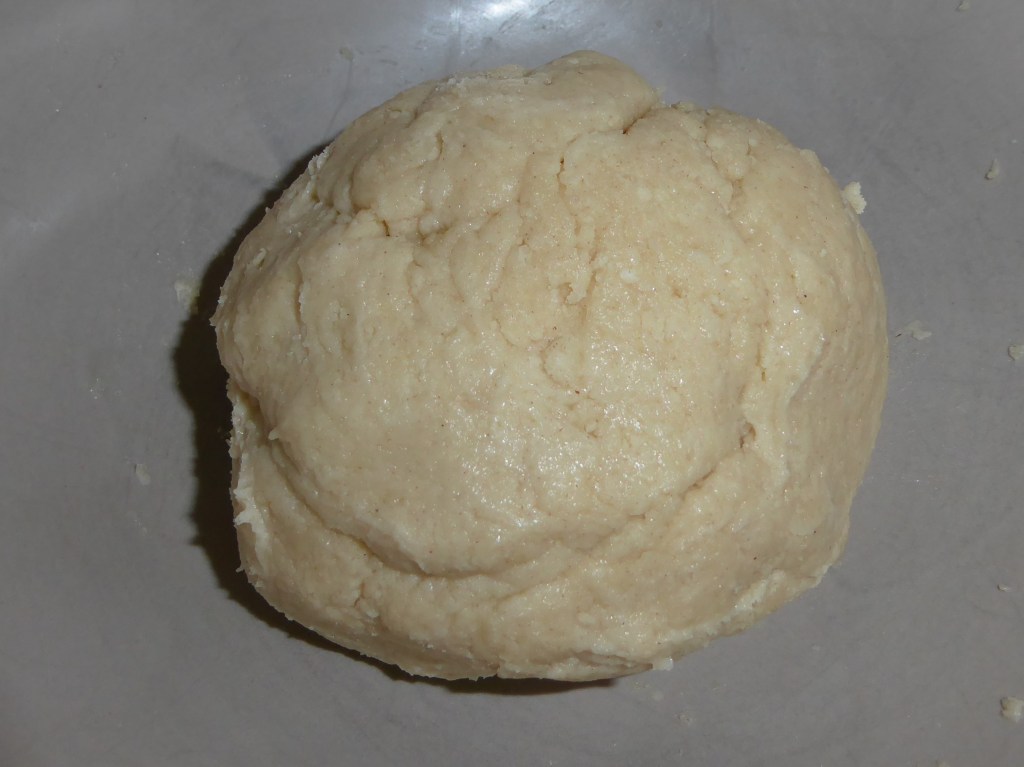
4 Mix the ingredients together in a bowl until it forms a smooth dough.

4 Cover the bowl with a plate and put in the fridge for 30 minutes to cool.

5 While you are waiting, lightly grease the baking tray, or lay some baking paper on it, and lightly sprinkle flour on your work surface.

6 Pre-heat the oven to 200oC (180oC if it’s a fan oven) / Gas mark 6

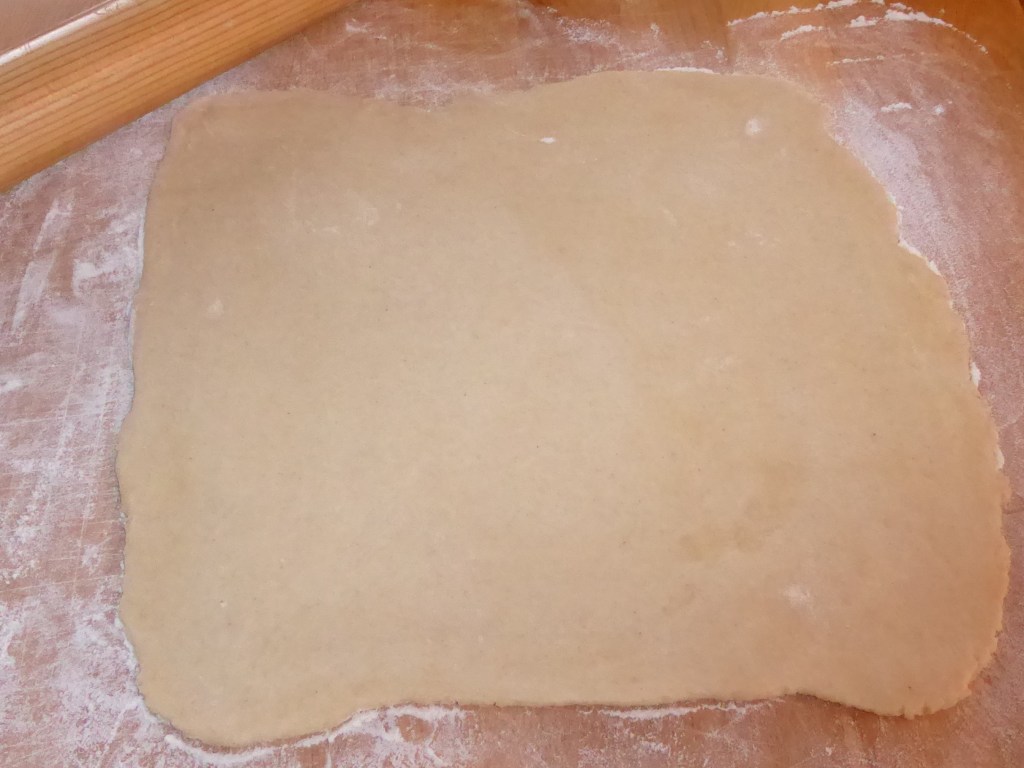
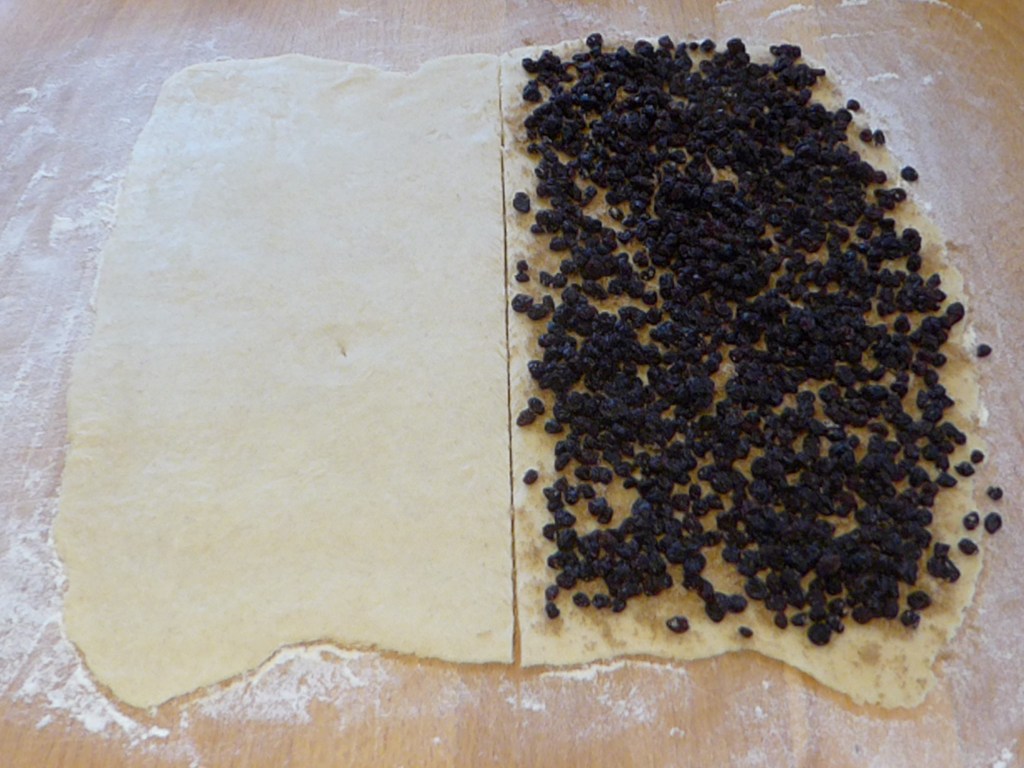
7 Using the rolling pin, roll out the dough on the floured work surface until it is spread out into a 30cm square.

8 Cut the square of dough in half with a knife.

9 Scatter one half with the cinnamon & sugar mix and the currants. Save some of the cinnamon/sugar mix for the topping.

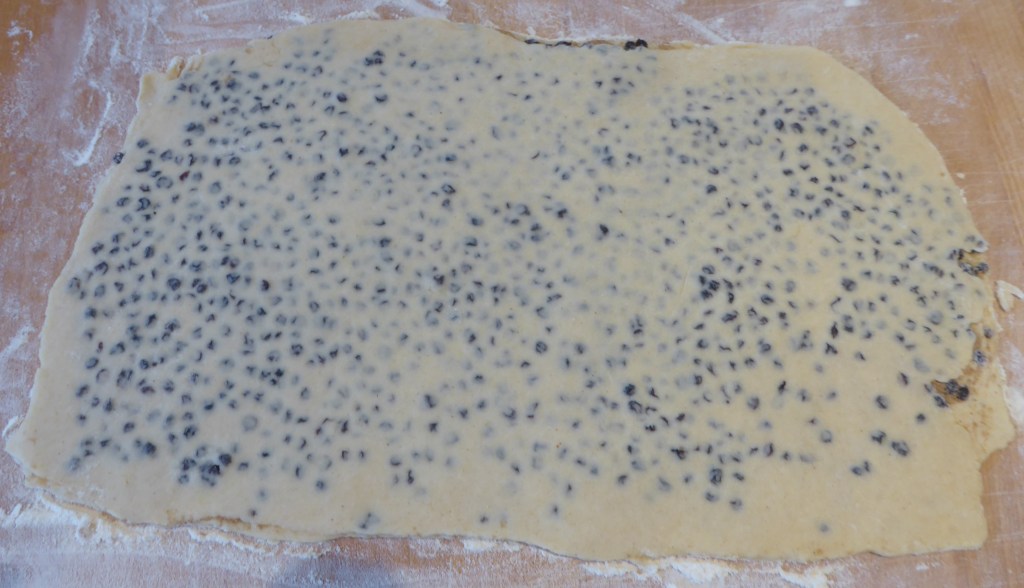
10 Put the other half on top, making a sandwich with the currants in the middle.

11 Roll the dough again until it’s about 5mm thick. You should see the currants showing through.

12 Carefully lift the dough onto the prepared baking tray. Ask your assistant to help you.

13 Trim the edges and use the knife to score the dough into 8cm x 4cm rectangles. Be careful not to cut right through.

14 Brush with egg or milk, then scatter the remaining cinnamon/sugar mix on top.

15 Bake in the oven for 15-20 minutes. Ask your assistant to help, taking them out when they are golden.

16 Cool the biscuits on the wire rack and then break them into individual biscuits.

If you want to make the biscuits vegan, replace the butter with vegan block and the dairy milk with plant milk. Brush the biscuits with plant milk instead of egg wash.

We hope you enjoy eating and sharing your biscuits! If you liked this recipe, why not have a go at making our iced beetle biscuits?

This is the last post from Crunchy on the Outside because the HOPE for the future project has come to an end. We have really enjoyed sharing the amazing world of insects with you. The blog will stay online for the time being and you can check out all that’s happening at the Museum on our Main Website.

Make a model wasp

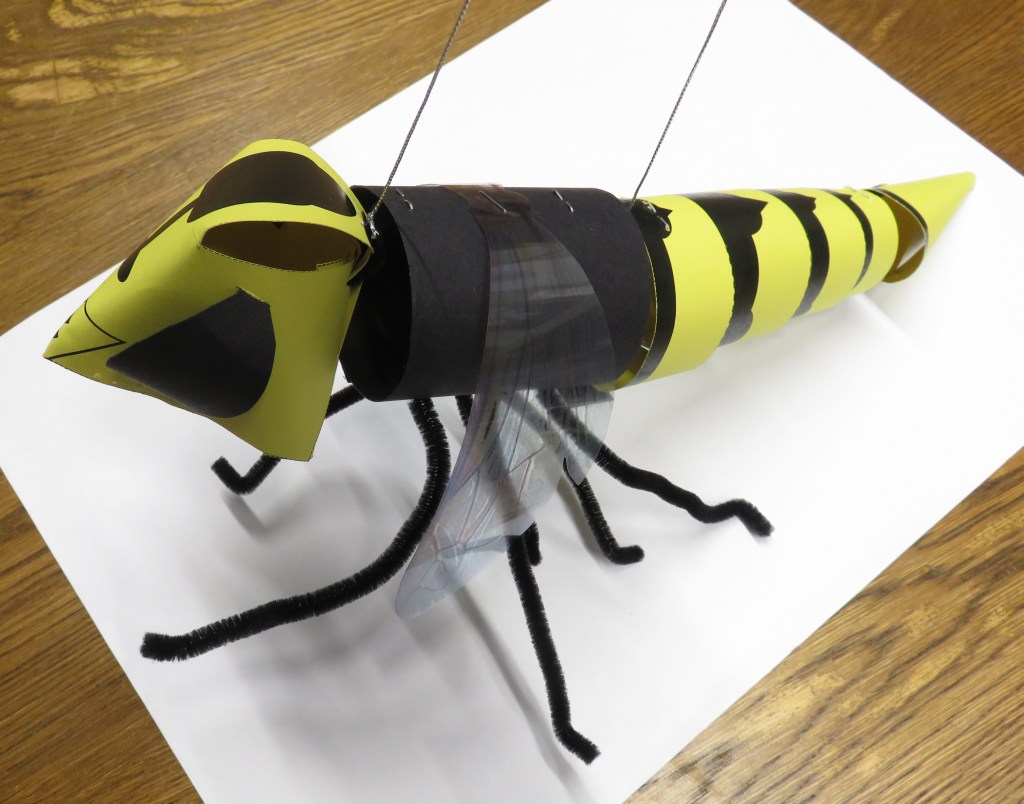
At or recent Wonderful Wasps! event, we learned what a diverse group of insects wasps are and how important they are to the environment. We finished by making marvellous model wasps. Here’s a template for making one of your own at home. Some parts of this ‘make’ are a little trick but we think the end result is well worth it!

What you will need

  • A print-out of the template. Ideally print the body parts on yellow card but paper will work too. Print the wings onto white paper
  • Five black or brown pipe cleaners
  • A piece of string, thread or wool
  • Scissors
  • A stapler

Making your wasp

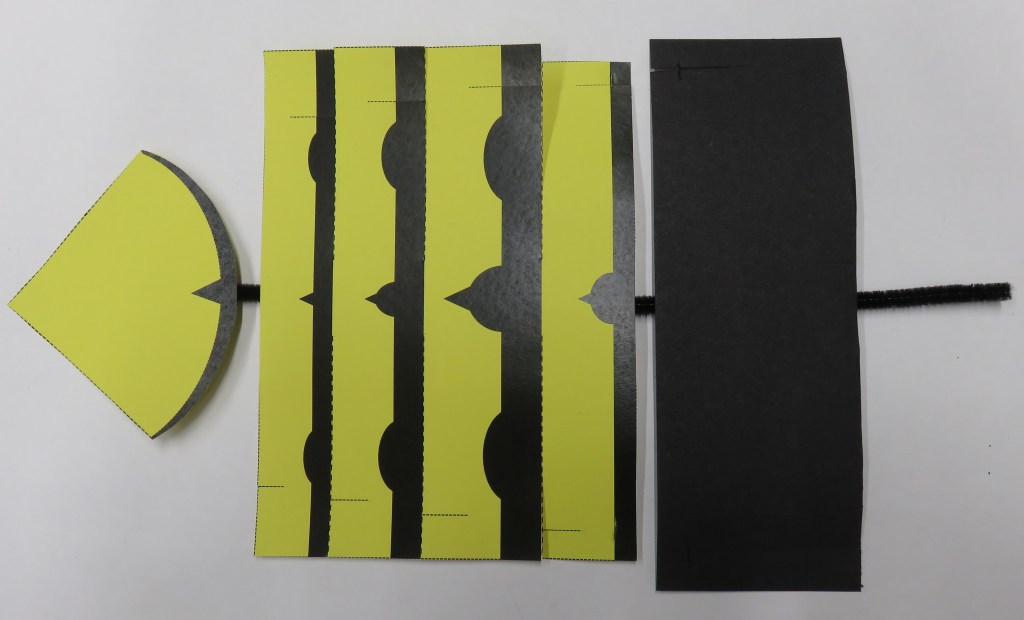
1 Cut out the pieces.

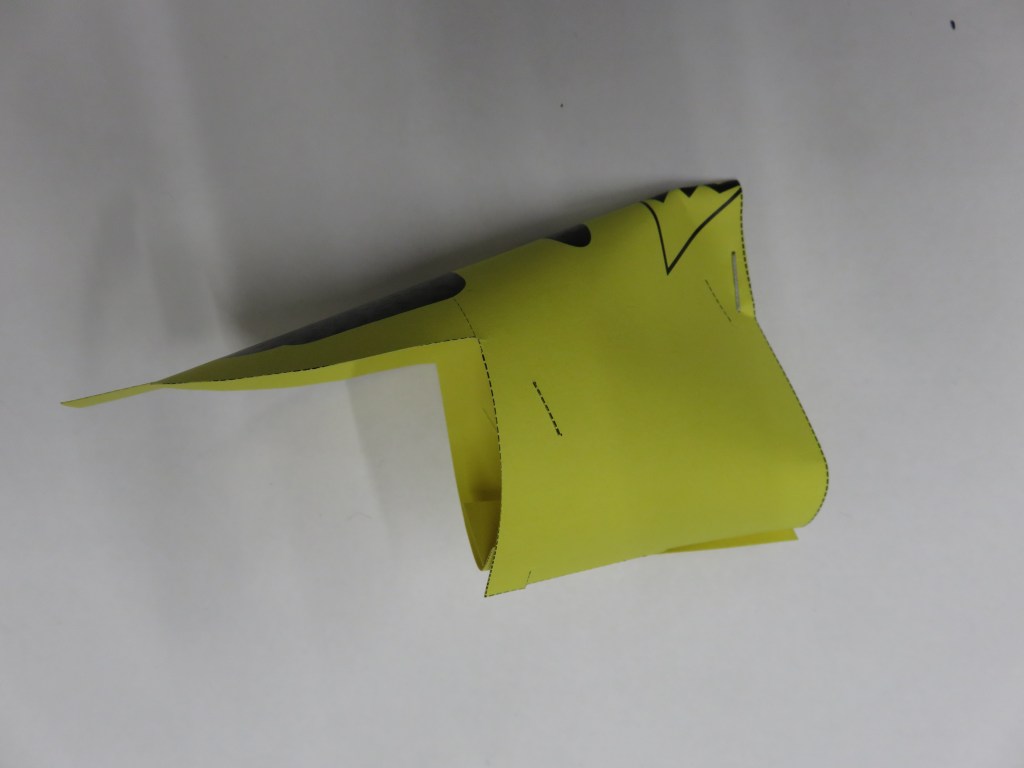
2 Carefully make cuts in the card as shown by the dotted lines.

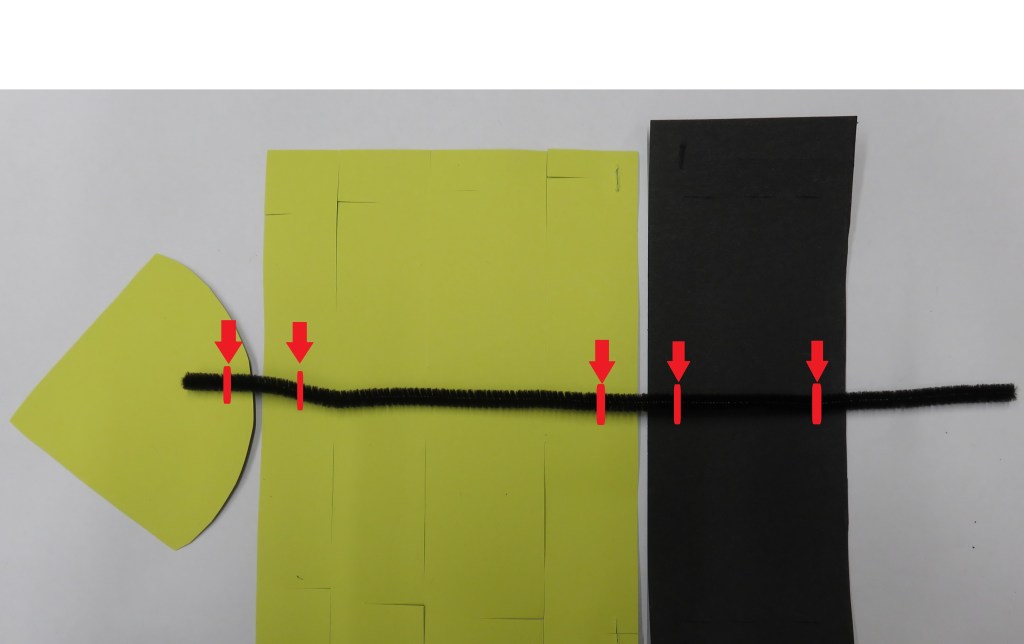
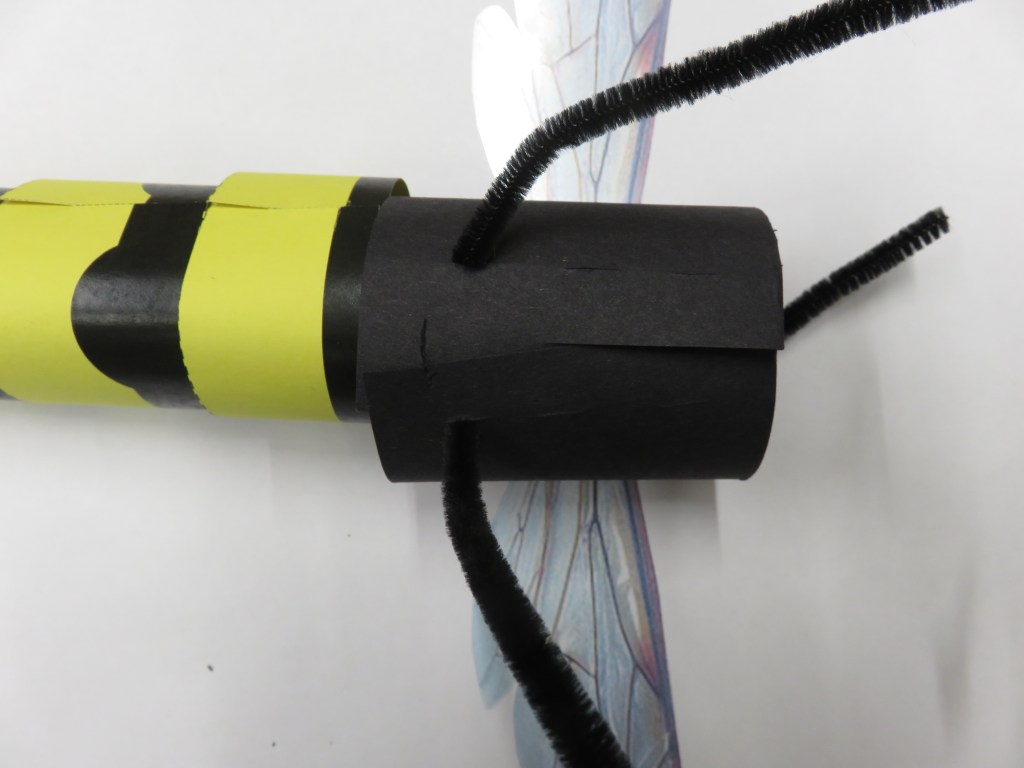
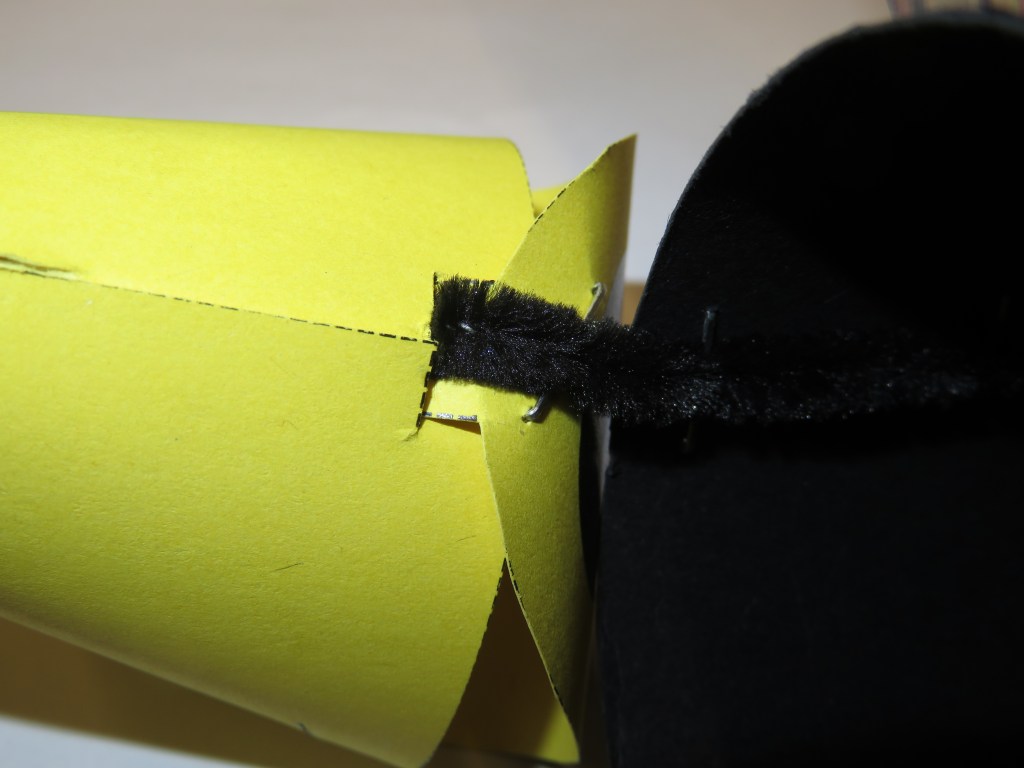
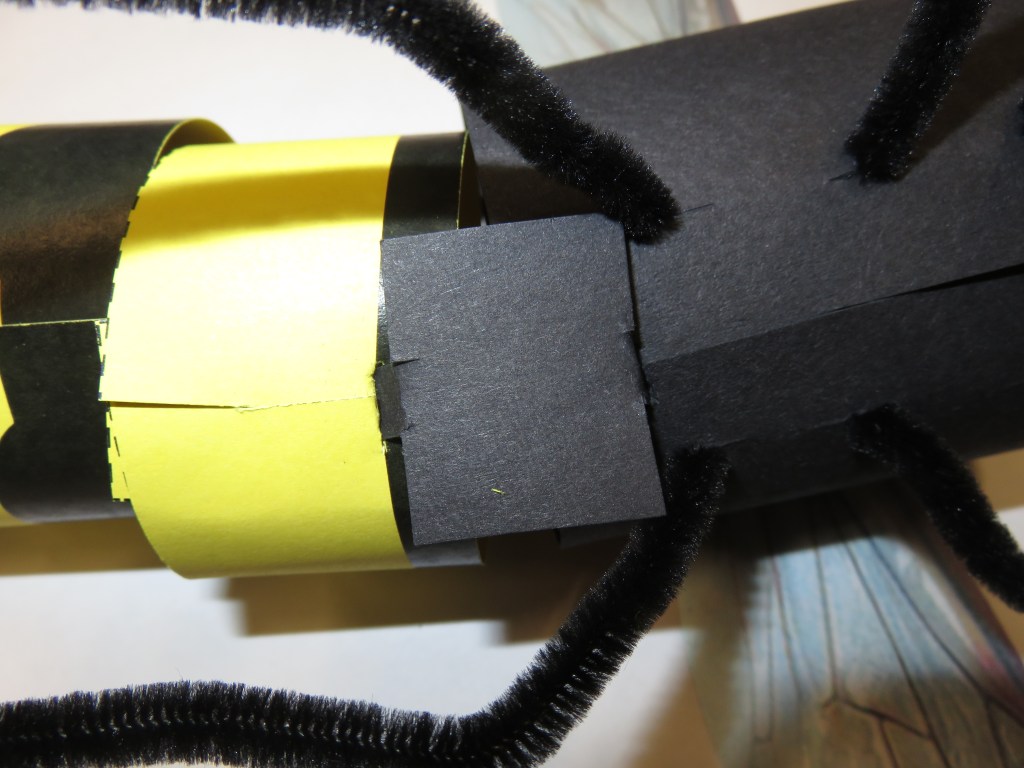
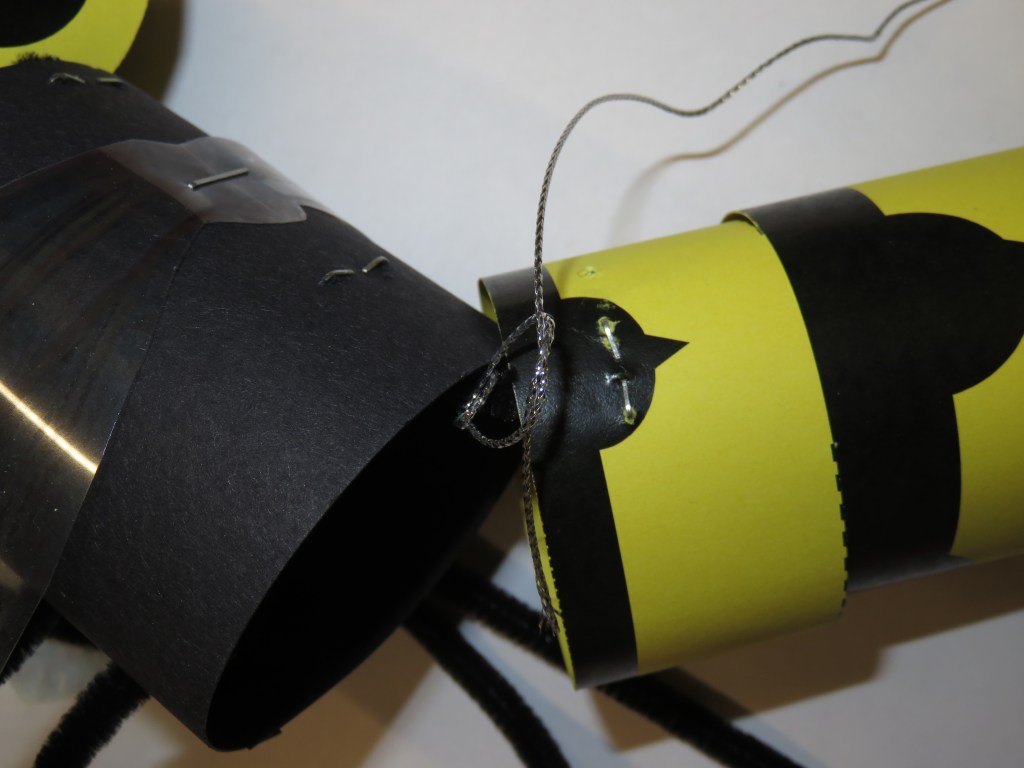
3 Arrange the thorax, abdomen and last segment pieces in a line. Staple a pipe cleaner to these pieces as shown in the pictures below.

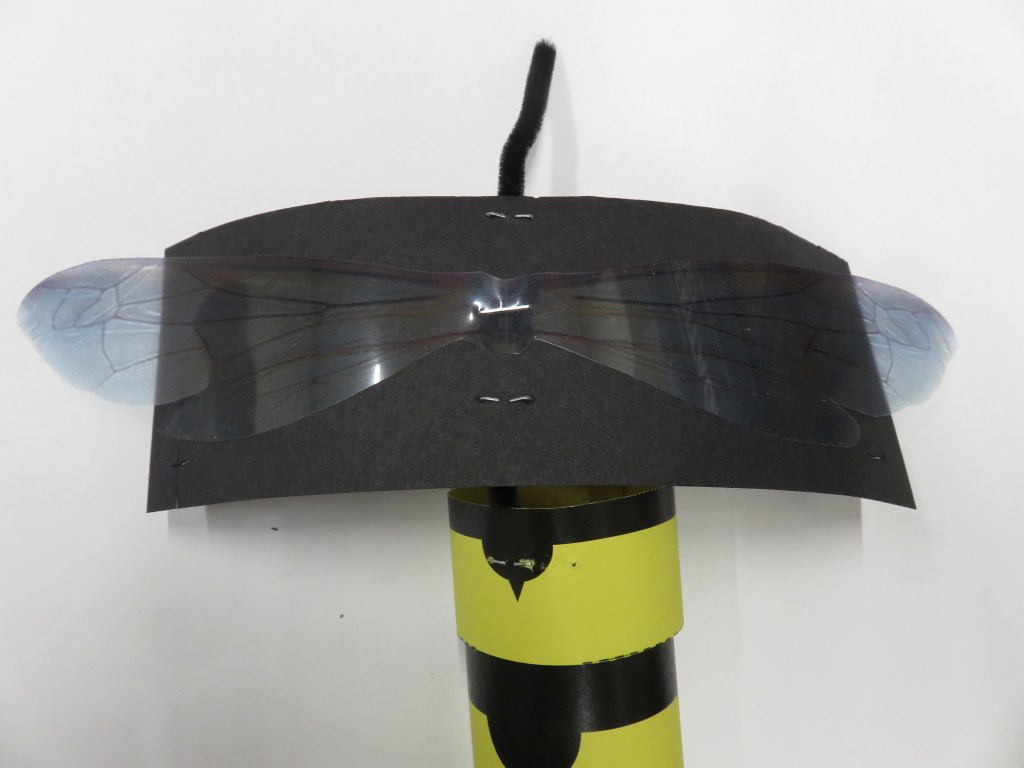
4 Staple the wings onto the thorax.

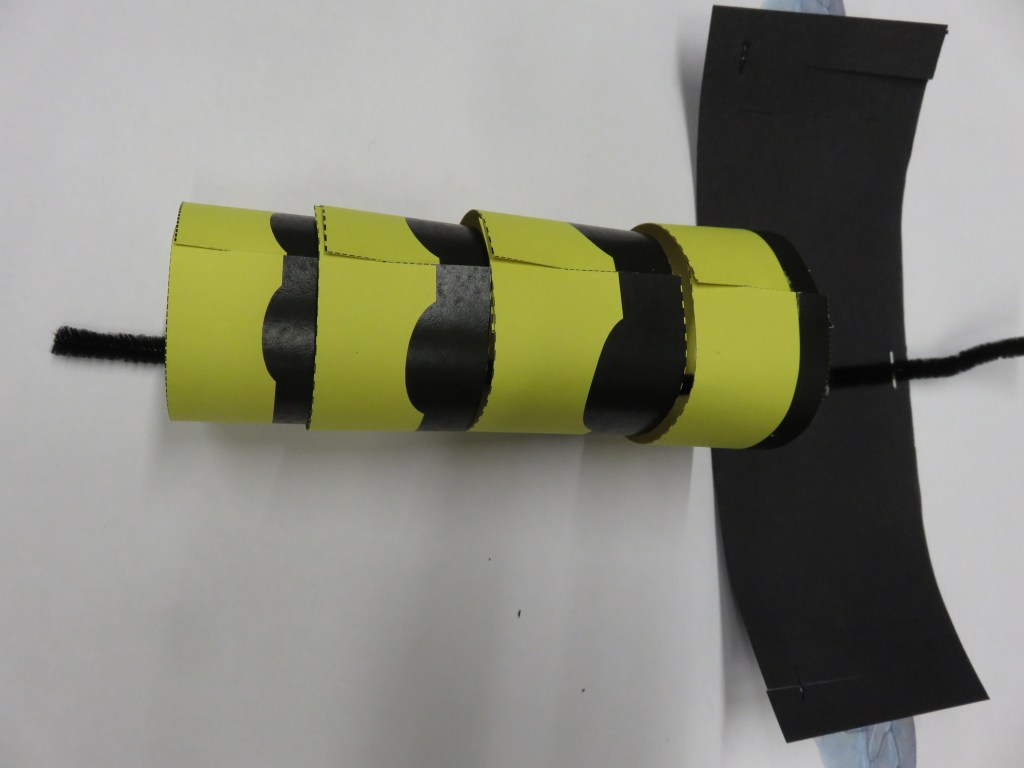
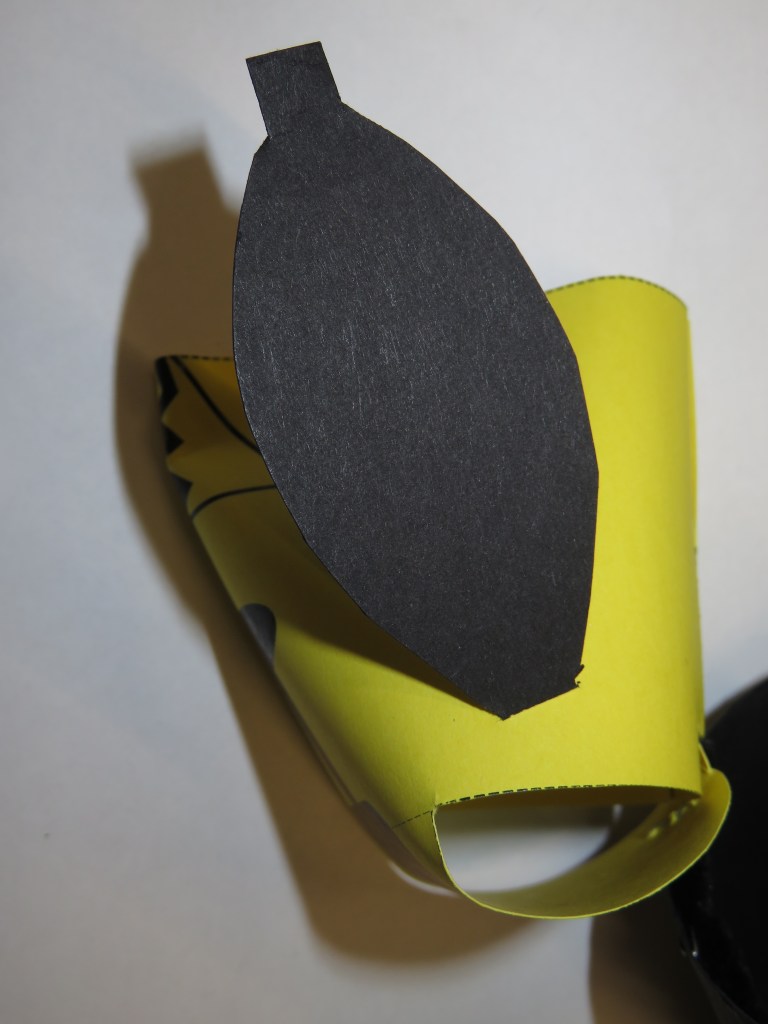
5 Fold the last segment into a cone shape and secure with a staple.

6 Bend each abdominal section into a circle, slipping the slots together to secure it.

7 Bend the thorax into a circle, slipping the slots together to secure it.

8 Thread 3 pipe cleaners through the holes in the thorax to make 6 legs.

9 Bend the sides of the head together, slipping the slots together to secure it.

10 Staple the bottom edges of the head together

11 Staple the thorax end of the pipe cleaner onto the flap forming the top of the head. Push the end, attached to the tab into the slot.

12 Attach the eyes to the head by pushing the tabs into the slots.

13 Use the waist to connect thorax and abdomen by pushing the tabs into the slots.

14 Tie one end of a string to the pipe cleaner between the thorax and abdomen and the other end between the head and thorax.

Your wasp puppet is now ready!

We hope you enjoyed building your model wasp. When you have finished playing with it, you can use the pipe cleaners for another craft activity and recycle the rest of your model. If you enjoy craft, you might also like to try to try your hand at making an Origami Ladybird.

Your questions answered: ‘Which plants will help butterfly larvae?’

Brian contacted us recently with this question. He is planning a nature garden and wants to attract pollinating insects. That means attracting, not just the adults, but providing food for the larvae too.


The best advice is to to include a range of plants in your garden and to avoid using pesticides. This will attract a range of different insects to your garden. While many adult insects are generalists, feeding on a range of flowers, their larvae are often adapted to a specific species. An example is the Small Tortoiseshell butterfly, Aglais urticae. While the adult butterflies feed on nectar from many different flowers, the caterpillars feed only on the common nettle. The problem is that many gardeners are happy to grow lots of pretty flowers but sometimes less keen to give space to ‘weeds’ like nettles.

Our friends at the Charity Butterfly Conservation have produced a great list of food plants, which you can find here: https://butterfly-conservation.org/sites/default/files/butterflyfoodplants.pdf

We hope that helps Brian and everyone else spending chilly winter days planning their garden. If you have made a garden to attract insects, we’d love to share photos in our Gallery.

Darren Mann

In the latest of our series of interviews with people who work with insects, we talk with Darren Mann, who is Collections Manager at the Museum of Natural History in Oxford, and an expert in dung beetles.

How did you first become interested in insects?

I’ve always been interested, as long as I can remember.  I was one of those kids who had ice-cream tubs full of caterpillars, spiders and woodlice in jars, and tadpoles in buckets. I started the serious study of insects when I was ten. 

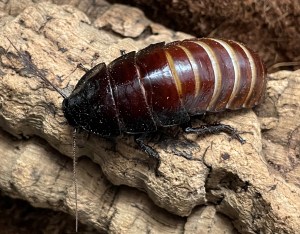
My junior school teacher Terry Denman pretty much changed my life. He was a vegetarian, as was I and we veggies were rare back then. More importantly, he had a real passion for natural history and that was apparent in our classroom, we had frogspawn and newts and even a fish tank full of Madagascan Hissing Cockroaches. Cockroaches were an unusual pet in those days, and when I left school he gave me three females and a male. I called him George, and they lived next to my bed – I think I cried with happiness when they had their first babies. 

I was not always the most well-behaved or attentive kid at school. Mr Denman noticed I liked natural history and got me to work by saying ‘you need to write a story, write it about the cockroaches’.  I used to sit by their tank and write about the cockroaches.  Who knows what would have happened if he hadn’t found that avenue for me to put my energies into?!

What is your role at the Museum?

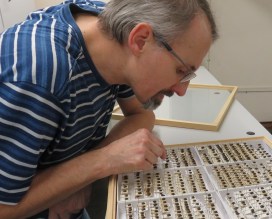
I have been very fortunate: the collections here at the museum are amazing! I spend about half my time working with the collections and doing research on beetles. About 20% of my job is teaching and outreach, giving lectures and talks, for students, visiting school kids and natural history groups. 10-15% is answering enquiries and giving advice, and pest identification “I found this bug in my garden what is it?” The remainder is administration and the paper work side of working with the collections. 

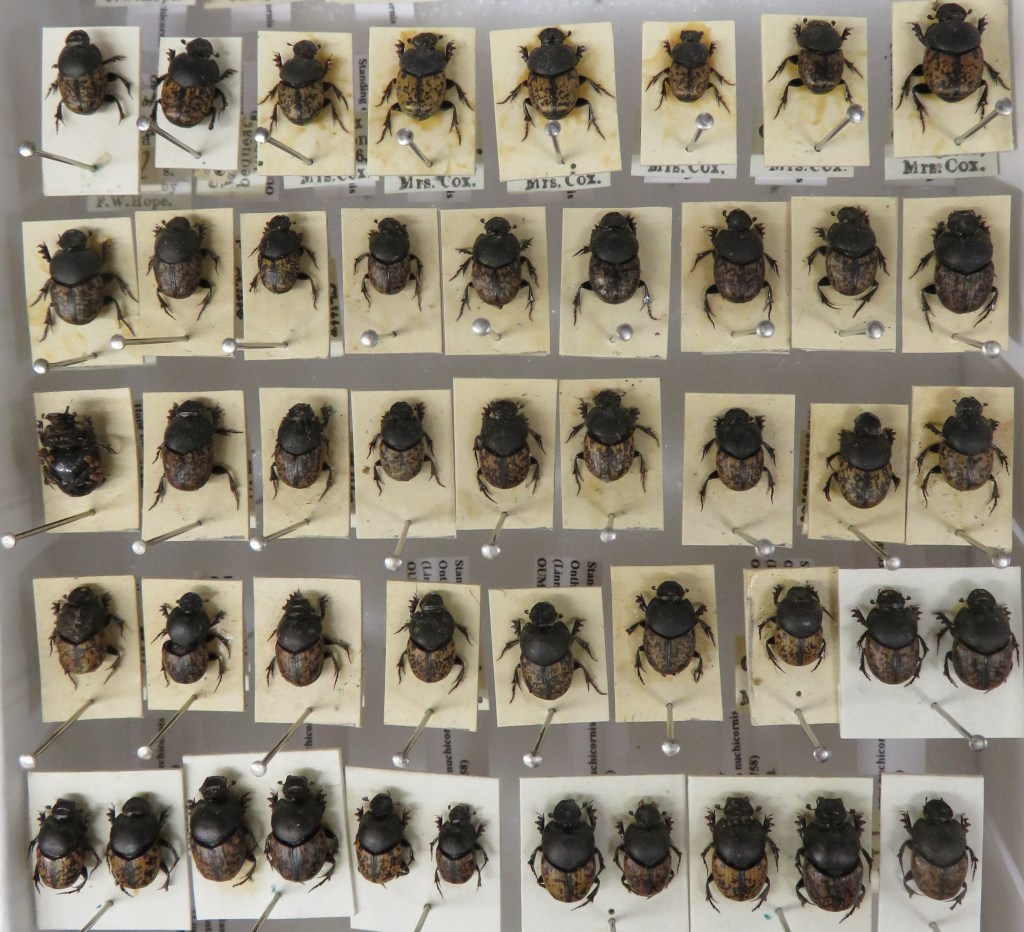
Dung beetles from the museum collections

What is the beetle project you are working on?

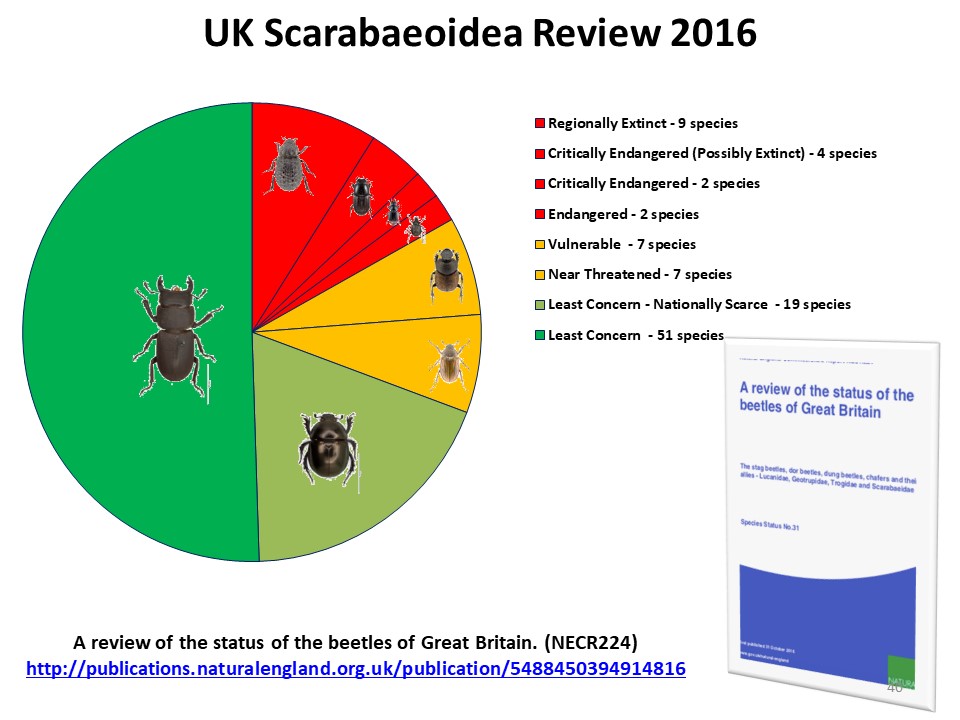
In 2016, I was approached by English Nature, the government agency for nature conservation. They were reviewing the conservation of British animals and plants so they could update the conservation status of different species.  If a species had been under threat of extinction, was that still correct today? Had the number of threatened species gone up or down?

The last review for beetles was done in 1992 and there were a lot of errors and it was out of date. One person had tried to do all beetles I one go and that’s an almost impossible task, there are over 4,000 different types in the UK! I was approached to do the Scarce and Threatened Review for dung beetles and chafers because that’s my favourite group.  I declined as I didn’t have time to commit to a lot of extra work. I suggested my mate – Steve Lane, he did the bulk of work and then we spent time chatting and providing data and information. We gathered data from across the UK though amateur naturalists, museum collections and books and articles.  Based on the number of records over the last 100 years, we calculated how the different species had changed and published our work. 

A review of the status of beetles

It was an eye opener for me as there are a few species I thought were still widespread or common, that had drastically declined. However, I didn’t realise they were in trouble because they in were in parts of the UK I rarely visit.  There’s the Cockchafer, everyone knows the May bug, and that’s doing ok. But there’s a second species – the chestnut cockchafer in Scotland, which is not doing so well. I’ve never seen it as I don’t go Cockchafer hunting Scotland. The only one’s being seen were from people light trapping for moths. We discovered more species were declining than were previously believed. Since you can’t be everywhere all the time you don’t notice some of these declines.

We wrote about all the endangered species, and over the last five years Ceri (my wife and dung beetle hunting partner) and myself have taken holidays in search of some our rarest dung beetles. So far we’ve found two species that were thought extinct in Britain, and a few that are critically endangered but hadn’t been seen for 15 years and one for nearly 90 years.

What is your favourite insect?

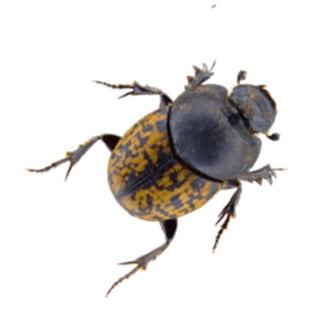
“A very pretty beetle” Onthophagus nuchicornis

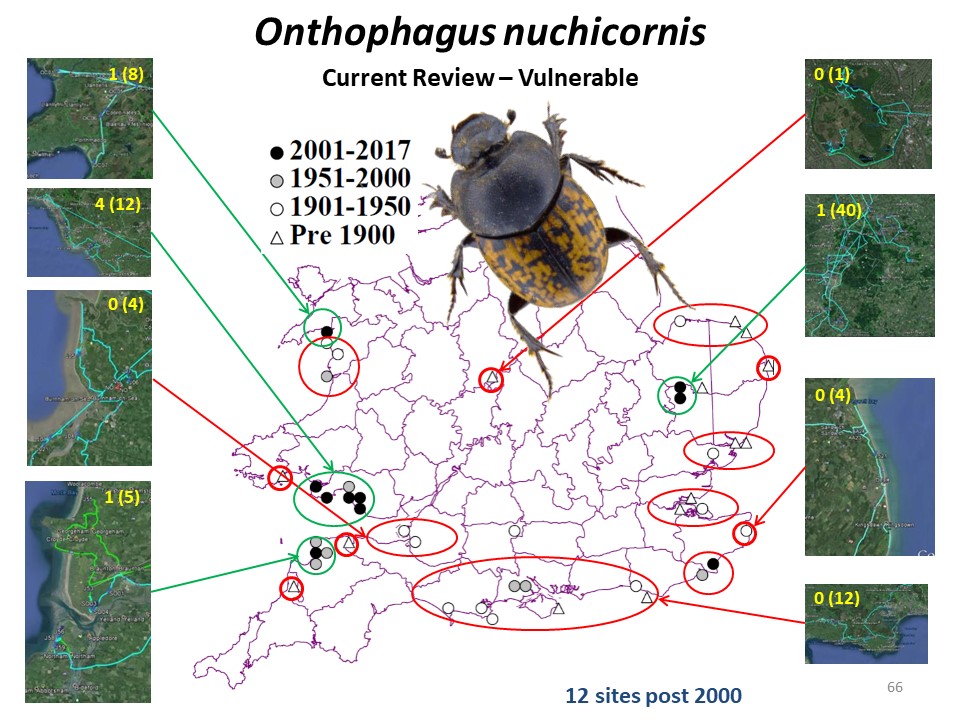
It’s really difficult to choose just one, but I think my favourite is a dung beetle. We gave it the common name Dillwyn’s dung beetle (Onthophagus nuchicornis). As Lewis W. Dillwyn (1778-1855) was one of first people to catch it. It’s very pretty with a dark pattern contrasting against an almost cream background.

Ceri, Steve and myself have spent many years surveying across the UK for this beetle. Worryingly, its numbers have crashed more than any other UK dung beetle and it has gone extinct at over 90% of the sites where it used to live. In most cases we don’t know why this is, but this beetle is a good indicator of a broader decline in species.

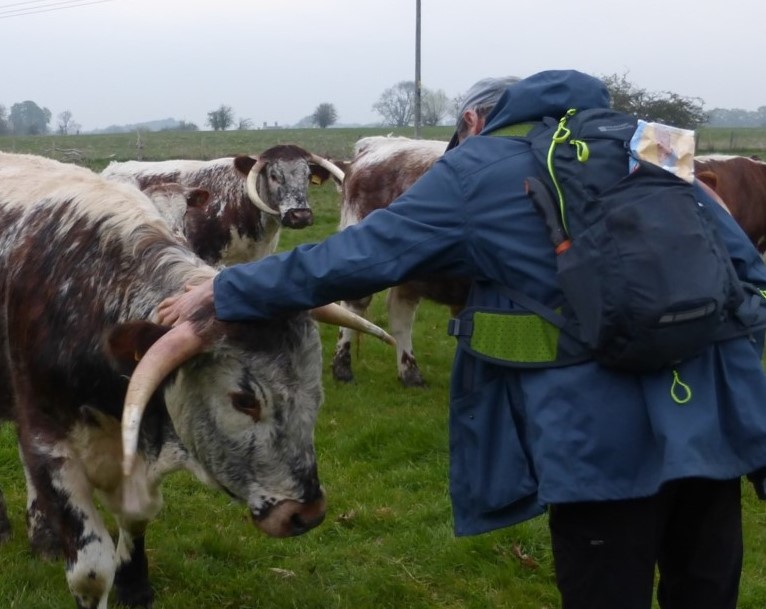
Darren and his favourite Longhorn Cattle

If you enjoyed reading about Darren’s work as an entomologist, take a look at other posts about people who work with insects in our ‘People‘ section.