The Red Tailed Mason Bee

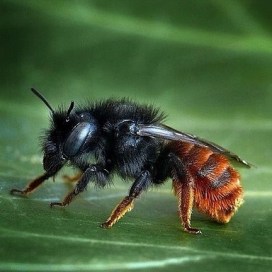
You may well have noticed some bees recently. One of the earliest solitary bees to emerge in spring is the Red Tailed Mason Bee, Osmia bicolour. They are very distinctive and make their nests in a very particular place.
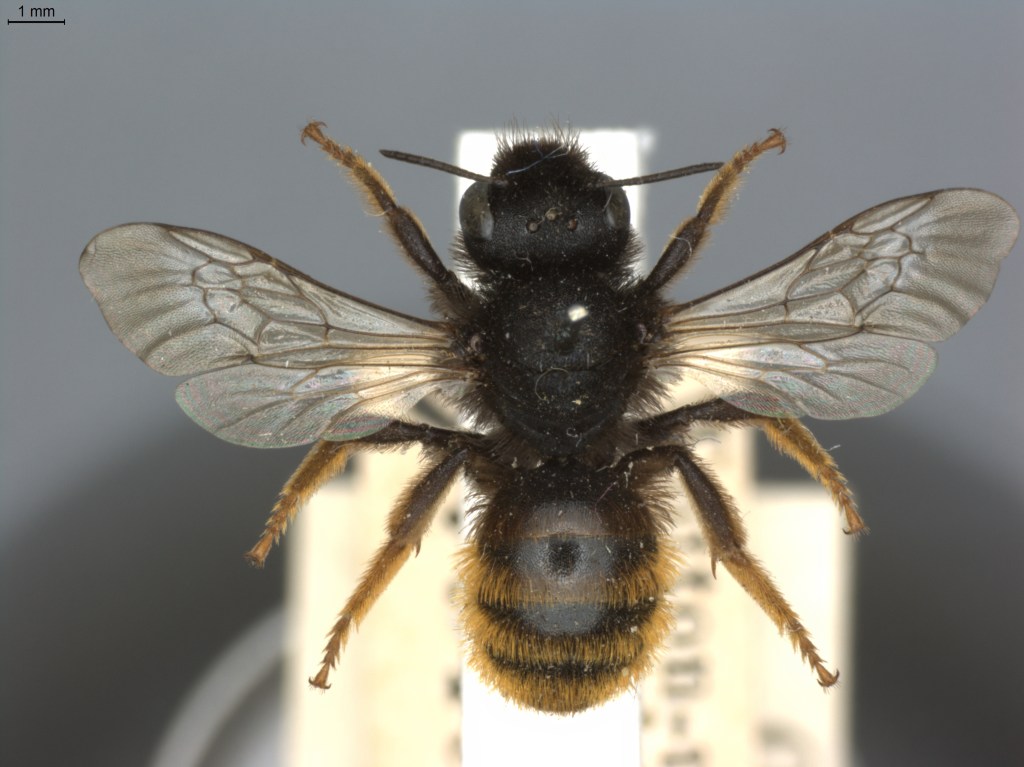
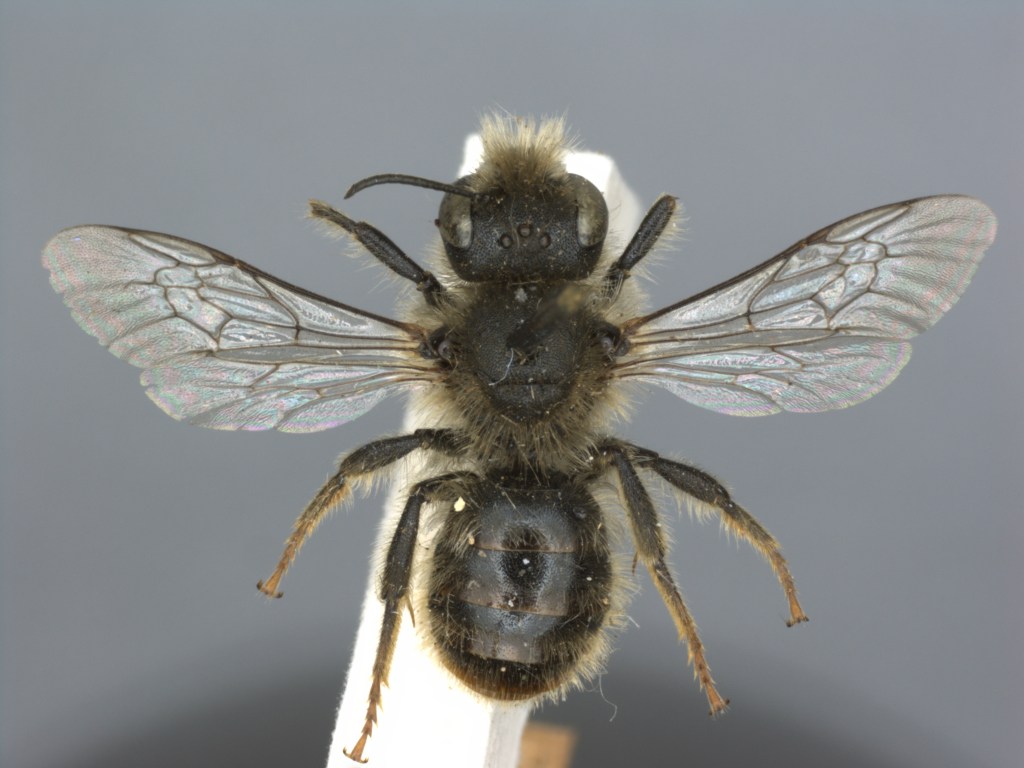
The males emerge first, sometimes as early as March. They have yellowish bands. They are the followed in a couple of weeks by females which have distinctive red-banded abdomens, giving this bee its common name. The adults may continue flying well into July, so you have plenty of time to spot them. This species of bee is mainly found across southern England and the Midlands and South Wales. This is because it prefers chalk and limestone grassland and so is mainly in areas with this type of habitat.

Female Red Tailed Mason Bee making a snail shell nest. Copyright © John Walters, used with kind permission.

The Red Tailed Mason Bee is unusual in that the females make their nests in empty snail shells. A female bee works diligently to select a suitable shell then prepare the nest. She will then defend this vigorously. She will make several cells within the spiral of one shell, laying an egg in each cell. She will provide each egg with pollen as food for the larvae when they hatch. She will separate each cell with a glue-like substance called mastic. She makes this by chewing up pieces of leaf. When the nest is completed, she will plug the shell with more mastic and will then search for debris such as grass stems, fallen leaves and pine needles to carefully cover and camouflage it. She may also spread more mastic over the outside of the shell.

Entomologists think it is likely that this behaviour protects the shell and its contents from parasites and predators. Safe inside, the eggs will hatch and the larvae will develop inside the shell, feeding on their supply of pollen. They will then survive the winter as pupae, emerging as the next generation of adults the following spring.

So, if you spot an old snail shell, it’s worth keeping an eye on it; it may just become a nest for a Red Tailed Mason Bee. We’d love to hear about your bee sightings and to see your pictures. Get in touch with us using the comments below or by the Contact Us page.

Header image: Red-tailed mason bee, Osmia bicolor female. Image: František ŠARŽÍK CC BY 3.0
Book your place at our FREE Event this Easter!

Are you aged 10 – 14? Then join us for a FREE Crunchy on the Outside event here at the museum this Easter.

A Game of Life Cycles – Tuesday 12th April 2022, 1 – 3pm

Discover more about the stages of insect life cycles, then make and play your own insect-themed board game.  Can your insect make it through all the stages of metamorphosis to become an adult? Can they overcome the challenges along the way and lay eggs to make the next generation?

Here are all the details you need:

WHAT:              FREE workshop – A Game of Life Cycles

WHEN:             Tuesday 12th April 2022 , 1pm to 3pm

WHERE:           Museum of Natural History, Parks Road, Oxford, OX1 3PW

WHO:               10 to 14 year olds

To book – email: hopelearning@oum.ox.ac.uk

Insects Online

When the weather is chilly there aren’t many insects about, but we still have lots of online ‘Crunchy’ insect activities for you to try. We hope they will boost your insect expertise!

How to spot an insect

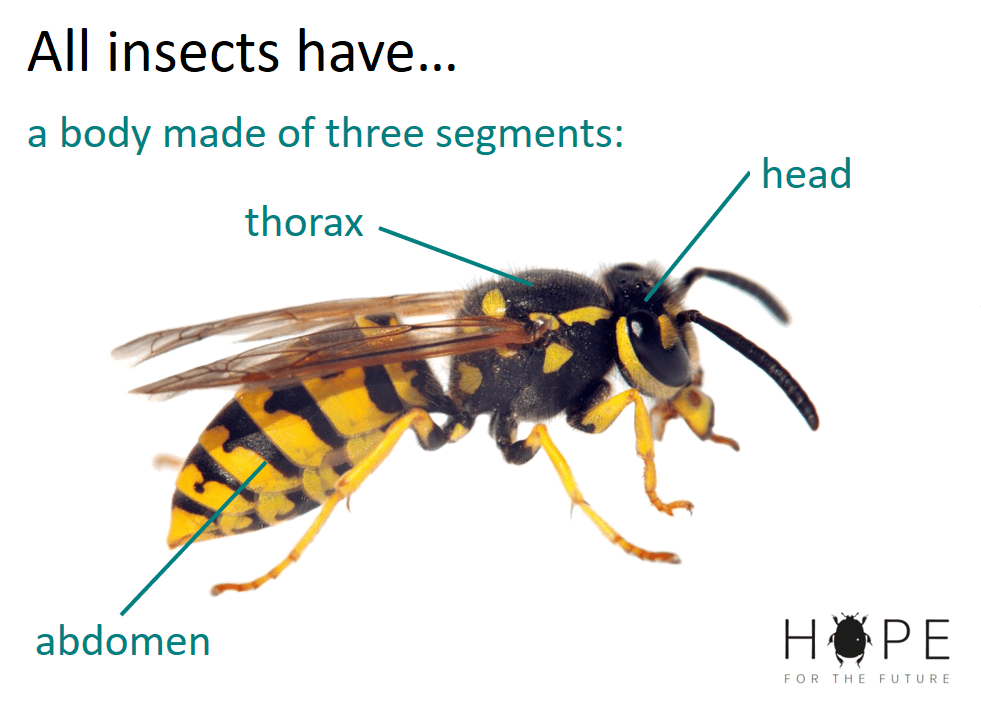
What makes an insect an insect? How to spot an insect is an introduction to insect anatomy: the body parts that make up an insect. Discover the key features entomologists use spot insects and how insects are different from some of their close relatives. You can then test yourself with our quick quiz!

Insect ID

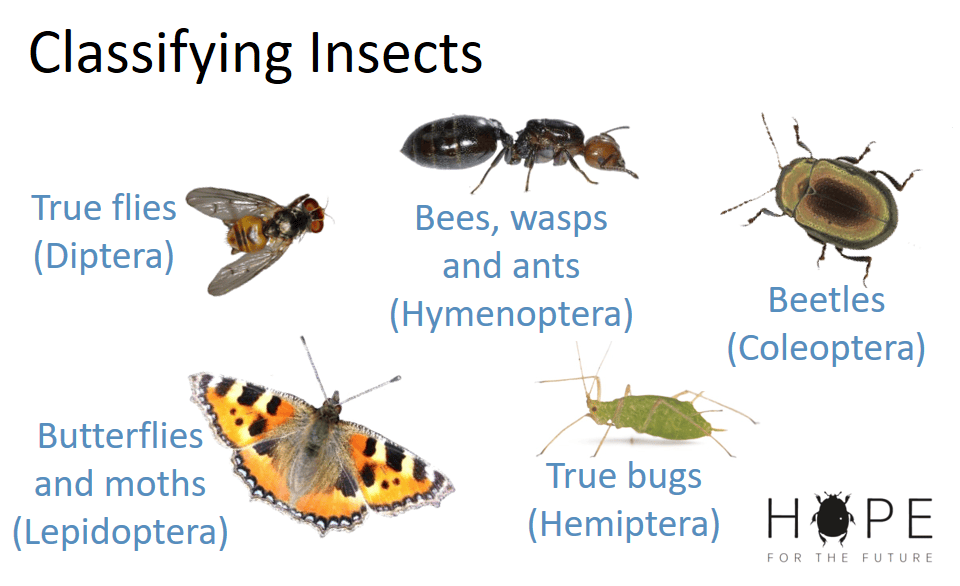
Ever wondered what that insect is? Insect ID takes you into a deeper exploration of the ‘Big 5’ groups of insects in Britain:

  • beetles
  • bees, wasps & ants
  • butterflies & moths
  • true flies
  • true bugs.

Discover the differences between them, learn how to spot each type and put your skills to the test with our ID challenge.  

Know your bees

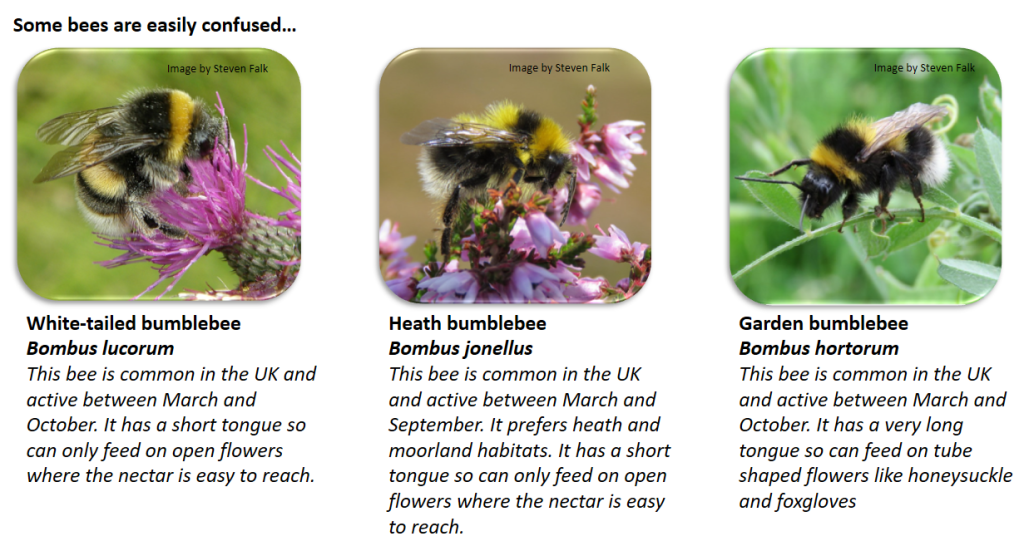
There is more to bees than hives and honey! Know your bees explores some of the rich variety of bees found in Britain. We’ve also included some tools to help you make your own observations of bees.

Looking for more?

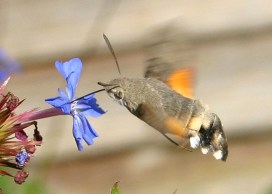
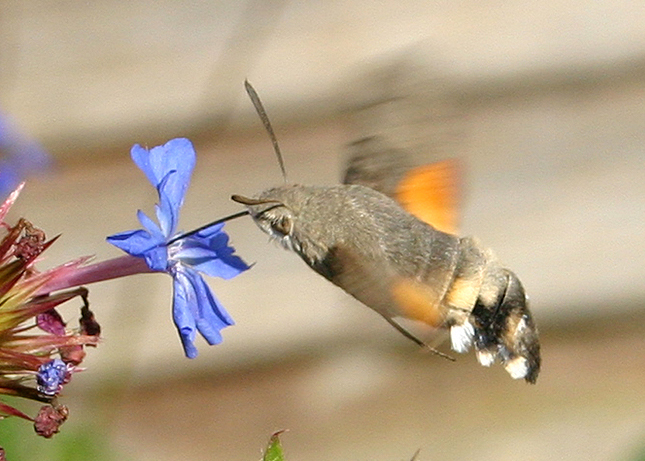
Hummingbird hawkmoth, Macroglossum stellatarum. Image credit: Rodger Caseby

If you’d like to go a bit further and, as the weather gets a bit warmer, get outside and do some investigating of your own, why not try one of our inset investigation ideas:

  • Different flowers asks whether different types of flower attract different insects
  • Insect Pollination investigates the range of important insect pollinators (it’s not just bees!)
  • Time of day explores whether different insects visit flowers at different times of day

We would love to hear how you get on. Get in touch using the comments below or the Contact Us page.

Bee-flies: A sign of Spring

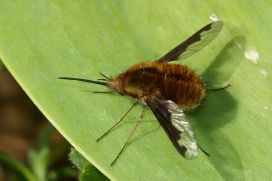
At this time of year, after the long winter months, we are all looking for signs of Spring.   One thing that entomologists look forward to is the first sightings of bee-flies.   These very cute, furry flies start to emerge in late February and early March.

Bombylius major, the dark-edged bee-fly, is one of Erica McAlister’s favourite British insects and she tells us why in this video.

Find out more about Bee-flies

To find out more about bee-flies, check out this page on the Dipterists Forum. There is also an excellent guide to bee-fly identification which you can find here.

In addition, the Dipterists Forum run an annual Bee-fly Watch which gathers together records of sightings.  This is really important for monitoring changes in distribution and flight period.  You can contribute to this important science project by adding your sightings here:

Bee-fly Watch | Soldierflies and Allies Recording Scheme (brc.ac.uk)

Have you seen any bee-flies yet this Spring? Let us know, too, by telling us below or by using the Contact Us page.

Insect Fun in the Museum – Saturday 12th March

Super Science Saturday: Fantastic Minibeasts

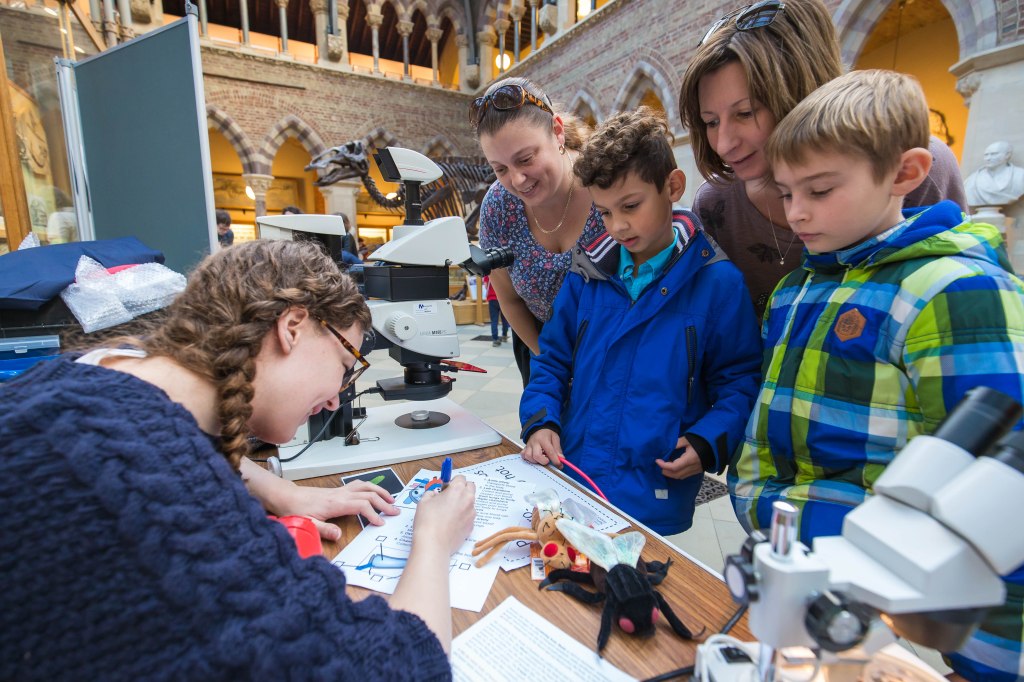
OUMNH Super Science Saturday by IWPhotographic

Drop in to the museum for this fun family Science Fair on Saturday 12th March, 12-4pm. Meet experts to find out more about tiny creatures like insects, spiders and more!

No need to book – just come along and, whilst you are in the museum, why not join us for our Insect Show: Insects: Beasties or Besties.

Insects: Beasties or Besties Family Science Show

Saturday 12th March, 1pm and 2.30pm

Ages 6+

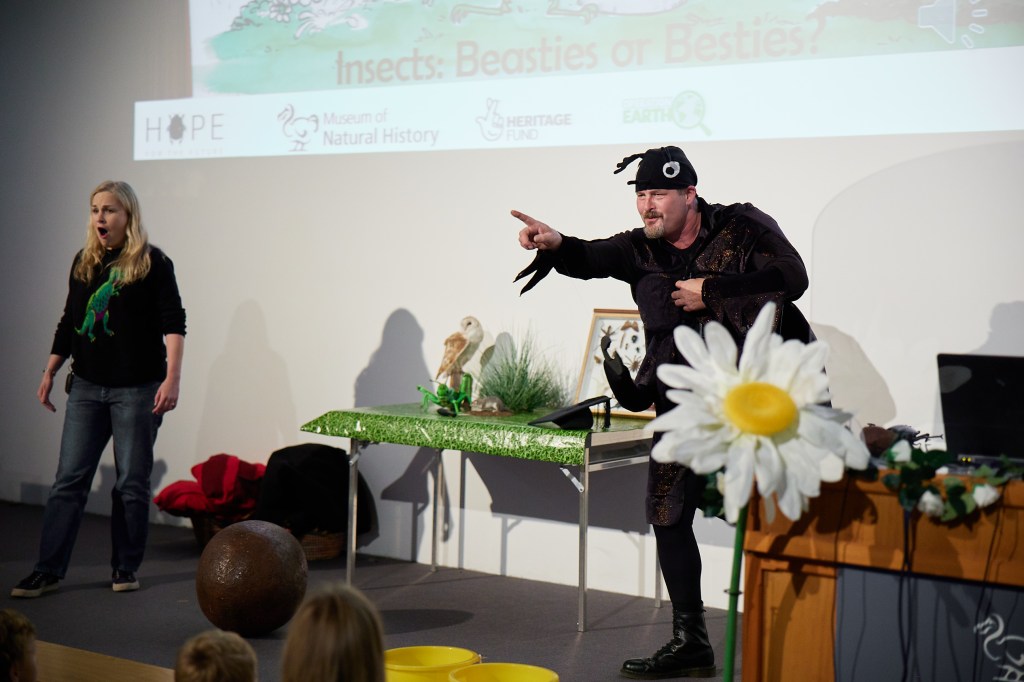
Come along to our fun and interactive family show all about insects. You’ll meet a visitor to the museum, with a dislike of insects, who is confronted by a giant talking dung beetle! The unlikely pair take a journey, looking at the wonderful, and vitally important, role of insects in our world.

Please note that the show will be held in the Museum’s Lecture Theatre which has a capacity of 195 seats and social distancing will not be in place. Visitors are encouraged to wear a face mask for the duration of the show and hand sanitiser will be available when you enter/exit. 

The show is FREE but please book online.

Red-Tailed Bumblebee

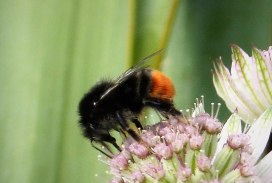
If you see a big jet-black bumblebee with a red tail in Britain, its probably the Red-tailed Bumblebee, Bombus lapidarius. If it has a scruffy white collar, then its a male.

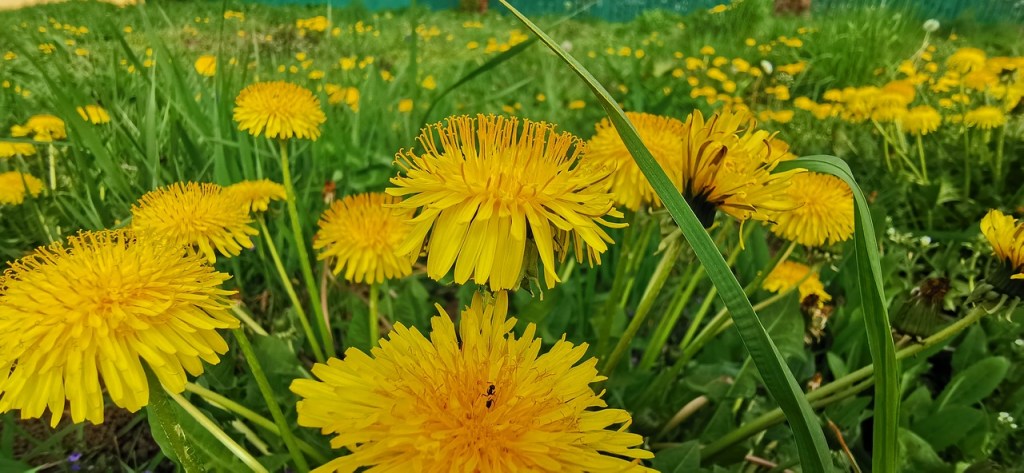
The Red-tailed Bubmblebee has extended its range northwards in recent years and is now common throughout Britain. It can often be seen in parks and gardens. The workers have short tongues and forage on flowers like daisies and thistles which have a big area for them to land on and are made up of small florets, each with a little nectar. Leaving dandelions to grow in the spring helps provide food for these and other insects early on in the growing season.

Let dandelions grow in spring to help insects. Image credit: Pixabay / Claudiu Mladin CC0

The Queens nest under stones and so are sometimes disturbed when these are moved. If you find one like this, have a look without disturbing it then just put the stone back. They may also enter our homes through open windows in search of nesting sites.

The Red-shanked carder bee, Bombus ruderarius, can look similar but is much scarcer in the UK. While the Queens of B. ruderarius are smaller. the workers of the two species can be a similar size. You can tell the difference by looking at the back legs. B ruderarius has red pollen baskets on its otherwise black legs, whereas the leg hairs of B. lapidarius are all black.

Lincoln Kwong was one of the participants at our Summer school in August. He was so inspired by the HOPE collections team at the museum that he decided to start his own insect collection. One of his first specimens was a dead red-tailed bumblebee that he found in his garden. He preserved and pinned this and recorded the data following advice from James.

Bombus lapidarius. Image credit: Lincoln Kwong

Let us know if you have your own collection. You can get in touch using the CONTACT US page. We’d also love to see any pictures any would be happy to feature them in our PHOTO GALLERY!

Featured image credit: Gail Hampshire CC BY 2.0