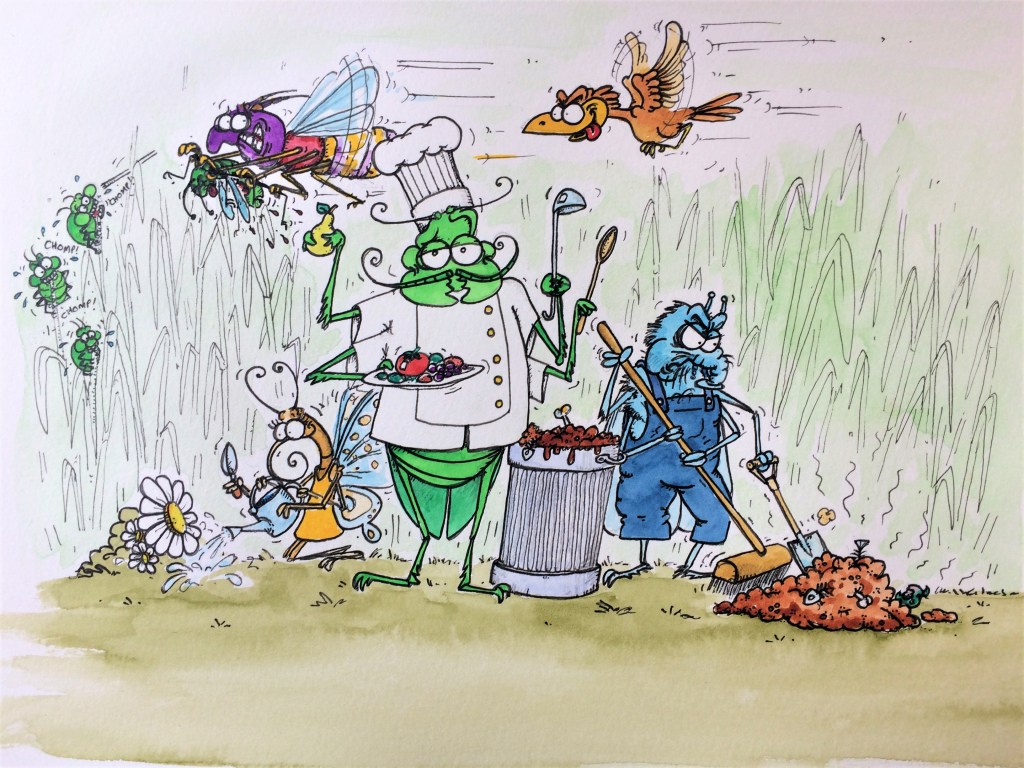
The unlikely pair take a journey, looking at the wonderful, and vitally important, role of insects in our world. From their position as pollinators, to their function in food chains; from the waste they recycle, to the many hours of joy and entertainment they bring as the heroes, and villains, of so many films, TV shows and books.
Come and see the show to find out how and why they are at risk, and what we can all do to help.
There will be two showings of “Insects: Beasties or Besties?” on Tuesday 26th October at 2pm and 3:30pm. Although the show is free of charge booking is essential. Tickets will be available to book soon. Keep an eye out for them on our What’s on page.
As part of the HOPE project, Kate, Rodger and I take insect specimens from the collection out to schools. Two questions I have been asked a number of times are:
Are they real?
Why did you kill them?
The answer to the first question is fairly simple. Yes! They are real insects that were once alive, but are now dead and have been carefully preserved. The answer to the second question is a little more complicated. The British Insect Collection, at Oxford University Museum of Natural History, consists of over 1 million specimens, collected over a period of about 200 years. I think the real questions are why do we keep this vast assortment of insects and what are they used for?
Identification
When investigating insects, it often is not possible to identify them out in the field, or from photographs. Some insects need to be looked at under a microscope, or even dissected, to tell them apart and identify them to species level. Also, just think how small some insects are, it could be very easy to miss them altogether. As a result, entomologists sometimes use insect collecting methods that involve killing the insects, and taking them back to their labs for identification.
The collection is also used to help with identification. If an entomologist comes across an insect species they have not seen before, or are struggling to identify, they can compare it with those already in the collection. Getting a correct identification is really important. It helps entomologists know if they are talking about the same insect.
Historical record
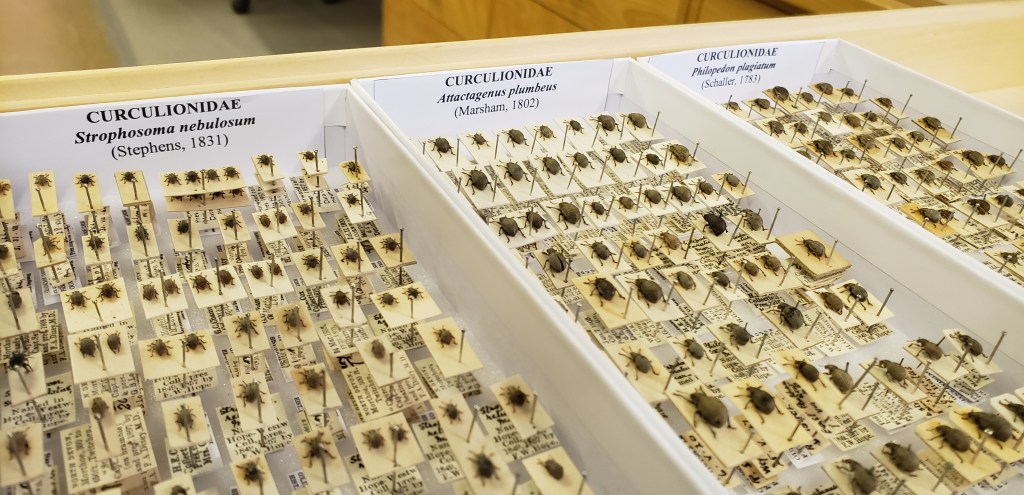
In the collection each specimen has a label which gives key information regarding where, when and by whom it was found. The collection contains specimens for almost the entire history of British entomology, giving us information on the biodiversity of Britain, during this time. From this we can see how insect populations have changed, for example how the numbers of the different forms of the Peppered moth (Biston betularia) varied during and after the Industrial Revolution. Scientists from all over the world regularly use and reference the British Insect Collection as part of their research.
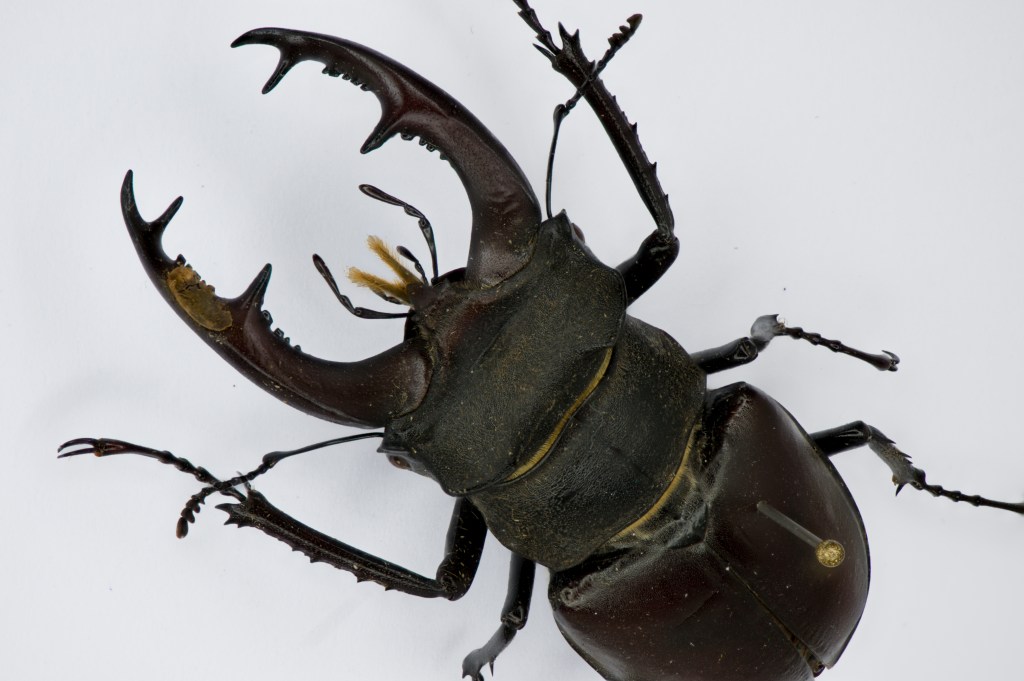
The collection offers an amazing glimpse into the natural world with dozens of iconic species now considered extinct in the UK, including the large copper butterfly and the blue stag beetle. It also contains many examples of the first British capture of insect species.
Education
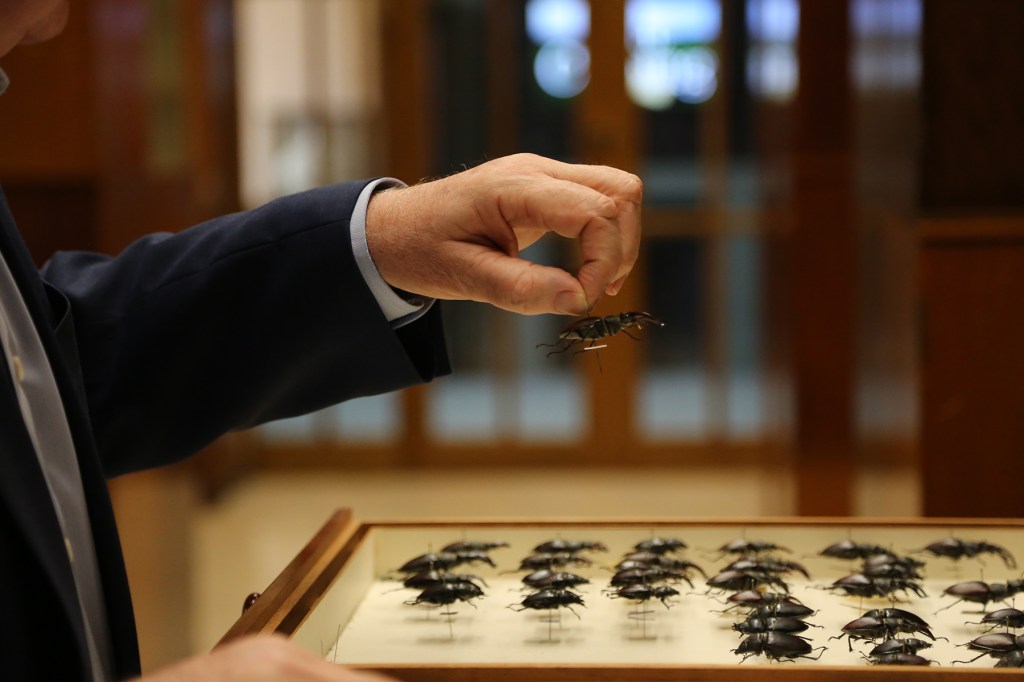
We use the collection to help people to learn about the wonders and importance of insects in our world. While it is very valuable for people to see living insects in their natural environment, they often move around very fast. It is much easier to use specimens from the collection to look at and understand the features of different insects.
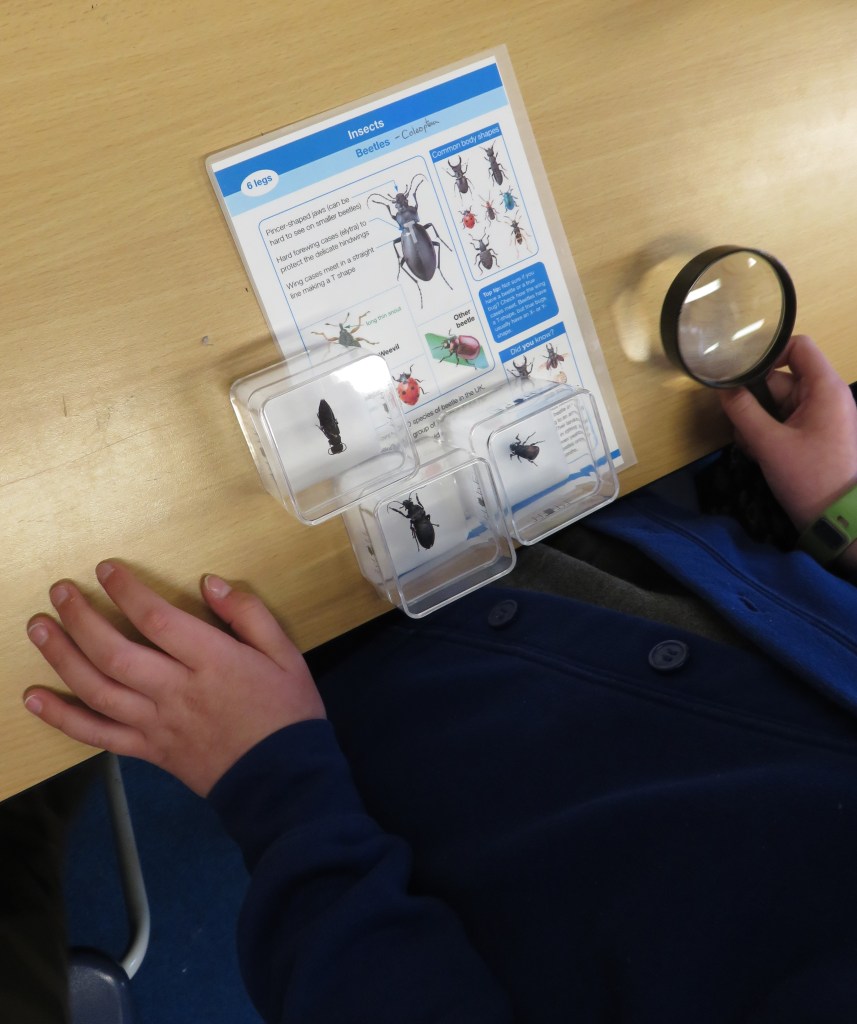
In my experience of taking specimens into schools, seeing these insects up close in this way not only inspires a sense of wonder, interest and excitement, but also allows those who are more nervous of these little critters to gain confidence as well as understanding.
For April Fool’s Day, our Senior Collections Manager Darren Mann recounts the story of an elegantly fake butterfly – Papilio ecclipsis –asking whether it was a piece of scientific fraudulence or practical joke that went awry.
James Petiver, a 17th-century London apothecary, was renowned for having one of the largest natural history collections in the world. Petiver (1665-1718) published some of the first books on British insects and created common names for some of our butterflies.
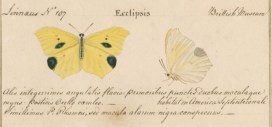
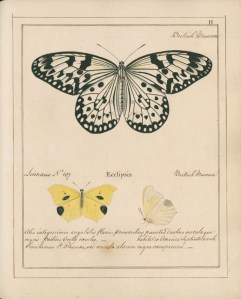
Volume 3, Plate II of Jones Icones – the two lower images are of Papilio ecclipsis
On plate 10 of his Gazophylacium naturae et artis — an illustrated catalogue of British insects (1702) he figured a unique butterfly that “exactly resembles our English Brimstone Butterfly were it not for those black Spots, and apparent blue Moons in the lower wings”. It was given to him by his late friend and butterfly collector William Charlton (1642-1702). This butterfly was later named Papilio ecclipsis by the father of taxonomy himself, Carl Linnaeus, in his 1763 work Centuria Insectorum Rariorum, and it became known as the Charlton Brimstone or the blue-eyed brimstone.
Petiver’s collection was purchased by Sir Hans Sloane (1660–1753), who later donated his entire ‘cabinet of curiosity’ to the nation, becoming the foundation for the Natural History Museum, London, originally part of the British Museum. It was here that wine merchant and naturalist William Jones (1745-1818) examined and later figured Petiver’s specimen in his Icones, an unpublished masterpiece of some 1,500 watercolour images of butterflies.
Jones’ Icones, held in the Museum’s archive, is the subject of numerous articles and is still examined by butterfly specialists the world over. Many of the specimens figured by Jones are no longer in existence, being ravished by pests or lost over time, so all that remains of these butterflies are the painted images within.
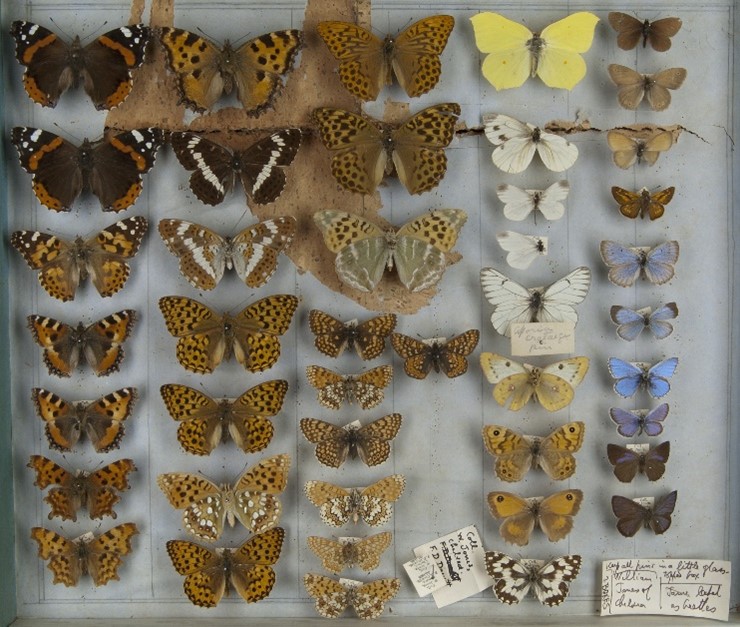
A drawer of British butterflies from the cabinet of William Jones. The Common Brimstone butterfly is the fourth from the right on the top row
When visiting London, Danish entomologist Johann Christian Fabricius (1745-1808) studied the paintings that Jones made and described over 200 species of butterfly new to science. Fabricius also visited the British Museum where he examined Petiver’s specimen of ecclipsis. In Entomologia systematica (1793) Fabricius revealed the enigmatic ecclipsis to be no more than a painted and “artificially spotted” specimen of the Common Brimstone (Gonepteryx rhamni). So, the dark spots and blue eyes were merely artistic licence, but whose?
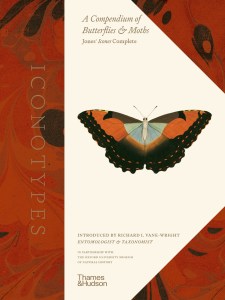
Iconotypes, published by Thames & Hudson, will be available from October 2021
Petiver’s specimen, seen by both Jones and Fabricus in the British Museum in the late 18th century, had mysteriously disappeared by the following century. It is said that when Dr. Gray (1748-1806), Keeper of National Curiosities at the Museum, heard of the deception he became so enraged that he “indignantly stamped the specimen to pieces.”
It is still unclear whether this was an example of scientific fraud by Charlton, or if it was intended as a practical joke that went awry.
There remain two specimens of ecclipsis in the collection of the Linnean Society. Although it is uncertain who created these, it is believed that these replicas were made by none other than our very own William Jones, as he was one of the few who had the artistic skills to undertake such work. The forthcoming publication of Iconotypes, showing Jones’ Icones in all its splendour, will hopefully demonstrate how he had both the knowledge and the skill to recreate these fascinating fakes.
Links and References
Salmon, M., Marren, P., Harley, B. (2001) The Aurelian legacy: British butterflies and their collectors. University of California Press.
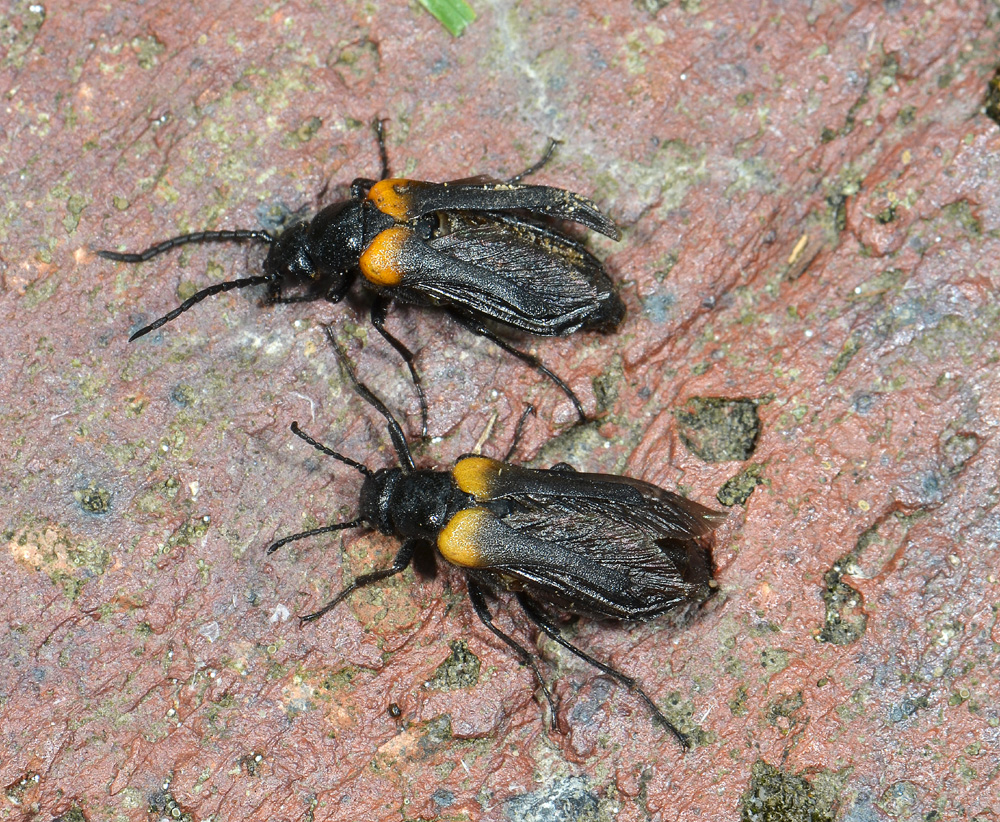
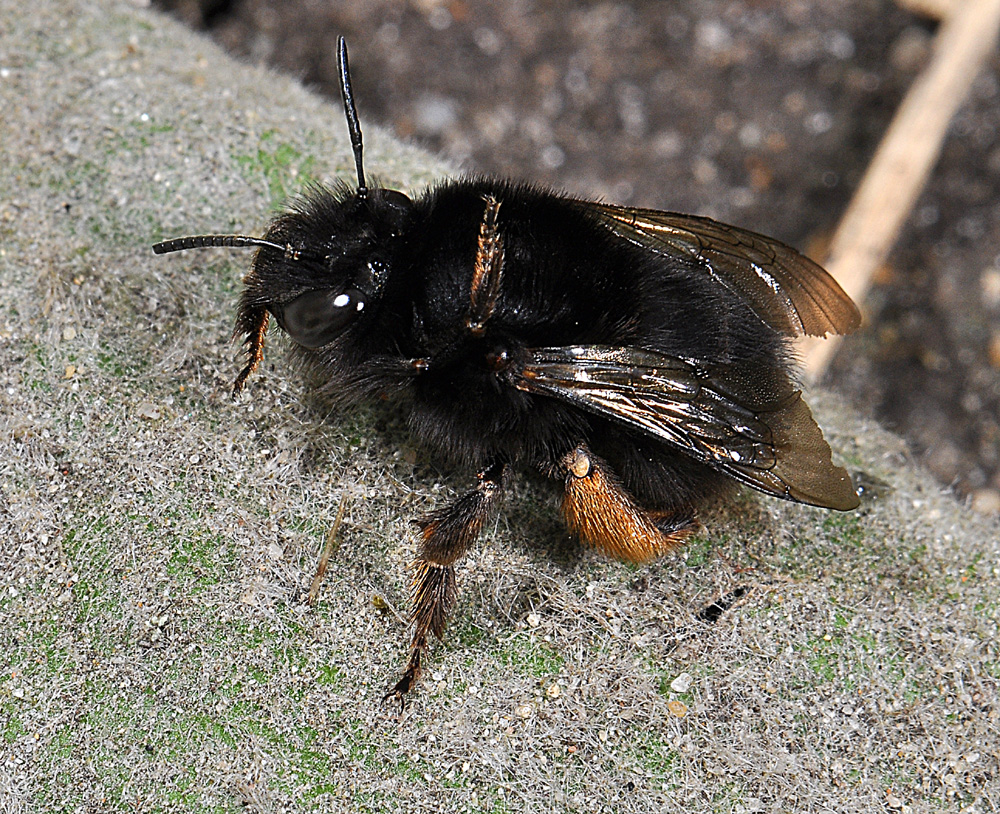
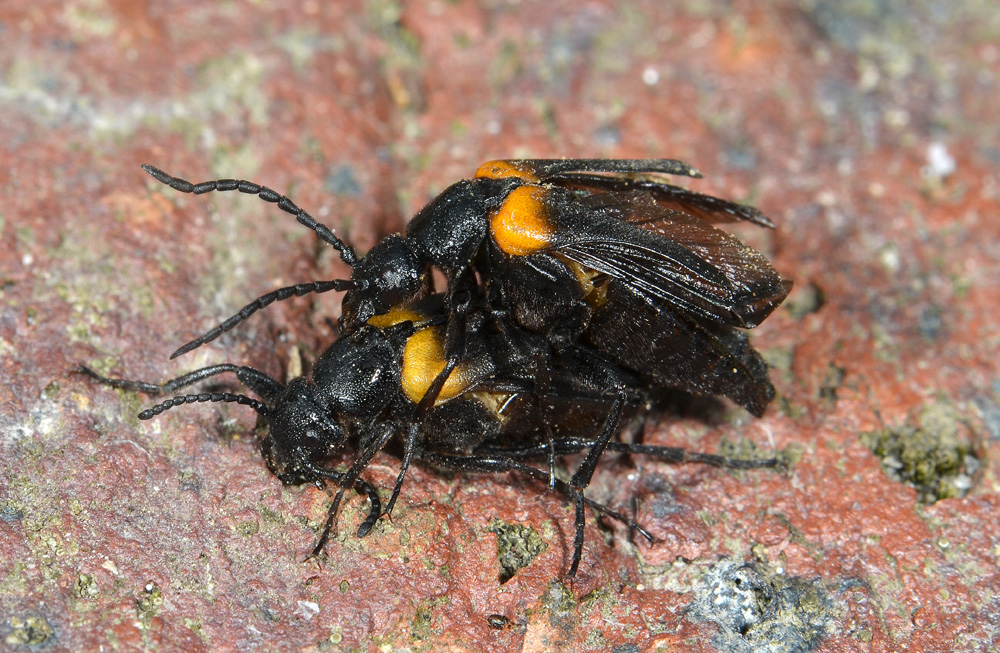
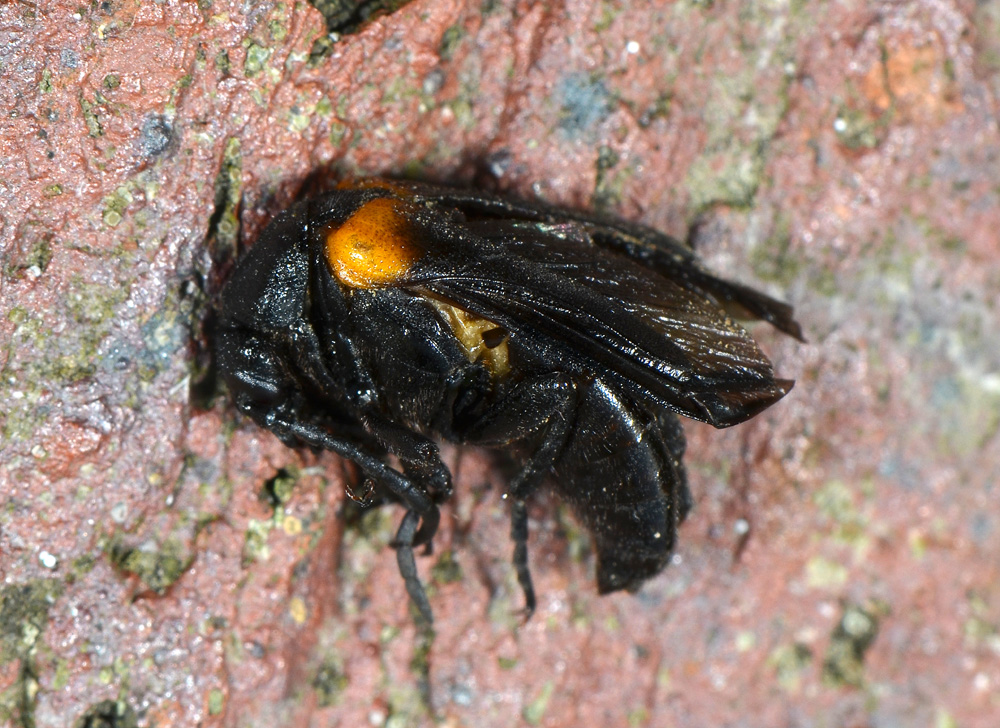
One of Britain’s rarest beetles is the secretive, endangered Flame-shouldered Blister Beetle Sitaris muralis – belonging to the family Meloidae (oil and blister beetles). This attractive 8-14 mm long beetle was last found in Oxfordshire up until 1969, but then it was rediscovered in Brockenhurst, Hampshire in 2010 (the last New Forest record before that was in 1947) on a brick wall over 100 years old. However, they are seldom seen outside the nest burrows of the Hairy-footed Flower Bee Anthophora plumipes in old mortar [the entry / exit point looks rather like bullet holes].
It is not clear why this parasitic beetle is so rare as the host is widespread throughout Britain and common in the south in spring; the larvae feed on the bee’s brood.
Paul and Helen Brock have found the beetle each year since 2010 mainly in August, mostly dead with at least one apparently evicted from the nest (the latest finds though, on 20-21 August 2013 were alive). Others may be trodden on by passers by, as these clumsy insects fall to the pavement in a busy village site. The slightly brighter males have much longer antennae than females; both sexes have strange-shaped wings designed to enter a bees nest.
The bright orange is presumed to be a warning. In addition to sporting warning colours, during perceived danger such as attack by a possible predator, males curl up in defence, remaining in the position for up to a minute.
This elusive insect could turn up almost anywhere, but is most likely in southern England on a brick wall- so keep an eye out next time you are out and about!
Our thanks to Paul and Helen Brock for supplying the content and photographs for this post.