Imitation game

Last month we had the pleasure of hosting artist and scientist Dr Immy Smith as part of her week-long takeover of @IAmSciArt on Twitter. Drawing inspiration from the Museum’s collections, Immy has created some beautiful paintings. Here she tells us a little more about her interests and work…

My current artwork is focused on crypsis and mimicry – the ways that animals and plants disguise themselves or pretend to be something they’re not. Cryptic camouflage helps animals to avoid being seen, often to help them catch prey – or to avoid becoming prey themselves! Mimicry is also often about trying not to get eaten: the harmless hornet moth, for example, mimics a stinging insect to deter predators. I use these themes to develop print art projects, and also public workshops to help people learn more about the ecology of cryptic animals.

Cryptic Cards by Immy Smith

In my arts practice I try to imagine how animals and plants might evolve to camouflage themselves on human-made materials, and what they might look like. Will we one day find moths adapted to hide on advertising hoardings, or beetles mimicking litter? I made an entire deck of Cryptic Cards as a response to this kind of question.

Another project I’m working on at the moment is called Emergent Crypsis. This is a collaboration with Norweigan generative artist Anders Hoff who makes art using algorithms executed by a computer. I’m imagining how creatures might adapt to an extreme example of human-made patterns – computer generated abstract images.

Violin Beetle (Mormolyce phyllodes) by Immy Smith

My work requires me to closely study many animals and plants, but how do I learn about all these species in order to draw their imaginary relatives? How do I make my art a convincing representation of how life might find ways to hide on human-made art?

One answer is of course, the internet. I’ve been lucky enough to find many wildlife photographers online who are kind enough to let me use their images as reference. But photographs alone are not always enough to get to know the fine details and defining characteristics of a species: the joints and articulations of small insects, for example, are best studied from specimens. And some species are rare, or even extinct, and it can be hard to find photographic a reference.

Leaf-footed Bug (Diactor bilineatus) by Immy Smith

This is where scientific collections come into the picture. The collections held in museums and other institutions are not only essential for scientists and scientific illustrators, they are also an invaluable resource for artists of many disciplines, science communicators, and educators of many kinds. In the collections at the Oxford University Museum of Natural History I can photograph and sketch leaf-mimicking insects, for example, that are native to the forests of South America which I may never visit. I can study in minute detail the articulation of beetles that are rarely seen, and which might be difficult to find – and irresponsible to collect – myself.

A display of terrestrial bugs (Heteroptera) in the Museum, including the Leaf-footed Bug painted by Immy Smith

Not only do I find specific species that I want to study in natural history collections, I often see new ones – animals I didn’t know about or hadn’t thought of drawing before. In the same week that I visited Oxford, I also made a trip to Herbarium RNG in Reading to study plant mimicry, and found similar inspiration there. I can channel all this into both aesthetic art destined for print and sciart workshops that communicate the wonders of insects or plants with the wider community.

Working on sciart projects and educational workshops helps me appreciate the multitude of ways in which collections benefit research and education. We must try to communicate the plethora of roles they play, and the host of ways they cross into our lives – whether through scientific research on insects pollinators of the crops we eat, or via a deck of cards made by someone like me for mainly recreational purposes. We must fight to protect scientific collections because they are a resource that benefits all of us as a society.
Brain washing

pro-cam

Our next exhibition – Brain Diaries: Modern Neuroscience in Action – opens on 10 March and in preparation we have indulged in a little bit of brain-washing… This article contains an image of a preserved human brain.

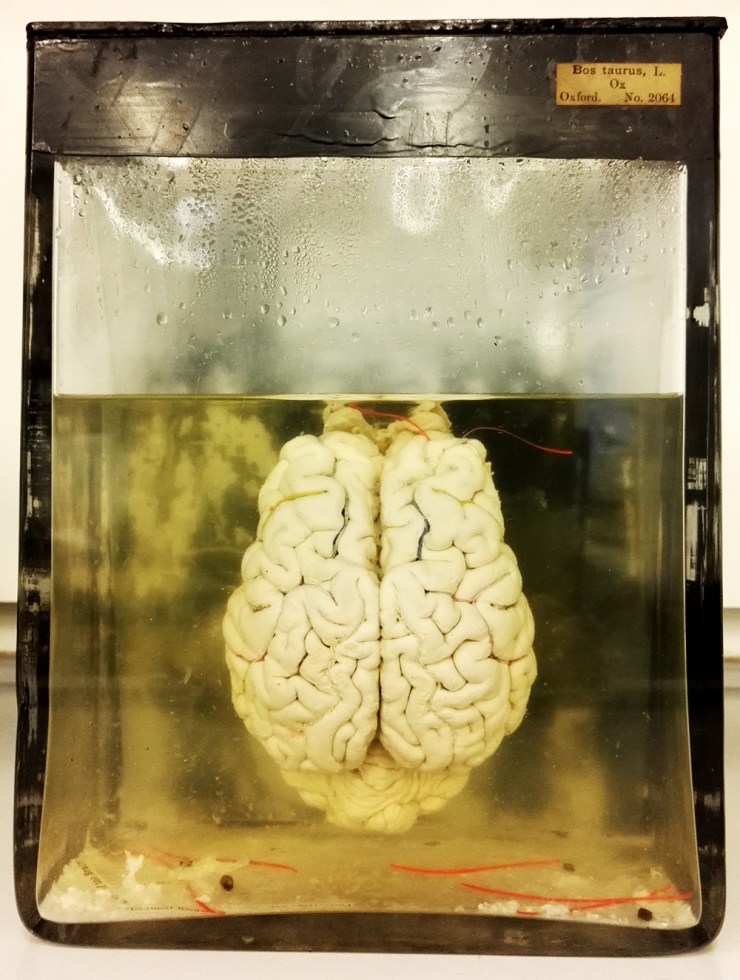
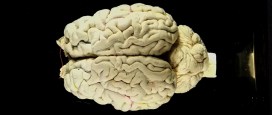
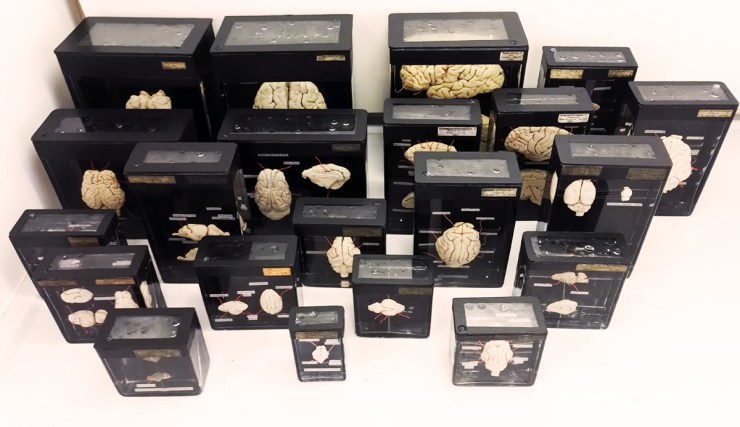
One of the first displays visitors will encounter is a ‘wall’ of 23 fluid-preserved mammal brains – from a Short-nosed Bandicoot to cow. The style of jar, with its black bitumen and paint backing, tells us that these were once used for display so it is exciting to put them in the public galleries again. Museum conservator, Jacqueline Chapman-Gray, runs us through the meticulous process she undertook to ensure these brains will look their best for their return to the limelight.

pro-cam
Cow brain before conservation treatment
A number of the brains had become dehydrated over time as the level of fluid – alcohol – had dropped. These needed to go through a rehydration programme to ensure their long-term preservation. This is more complex than simply adding more fluid to the jar. Instead the alcohol level needs to be increased gradually to avoid damaging the tissues.

dav
Brains soaking in alcohol
Others had started to detach from their glass mounts, or anatomy labels that marked each of the different areas or sections of the brain had come loose. These were carefully remounted using specialist conservation-grade materials and a steady hand! Three brains had become completely detached and were repaired using a polyester monofilament thread, otherwise known as fishing line.

dav
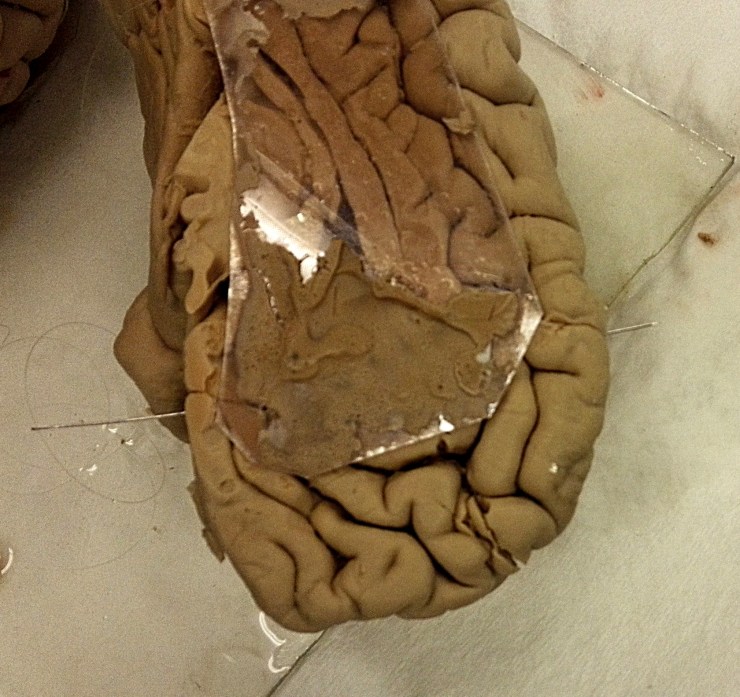
Repairing a human brain with a beading needle

dav
Labels found detached at the bottom of the jar
For the smallest of the brains a normal sewing needle was enough to pass through the tissues but for the larger two either a flexible 10cm beading needle or large 25cm mattress needle was needed. The original threading points were reused wherever possible though in one case this proved to be too difficult, as the tissue was soft and susceptible to breaking. With precision and patience I was able to gently stitch them back into place on the backing plate so they look as good as new.

All of the jars were given a thorough clean to ensure that seals were tight fitting and that the contents were shown off to their best. They were then filled with fluid to 4/5ths from the rim and the brains gently placed back inside.

Lids were sealed with clear silicone and each jar was topped up with a syringe through a small hole in the lid that is there for this very purpose – once full, this hole is also sealed.

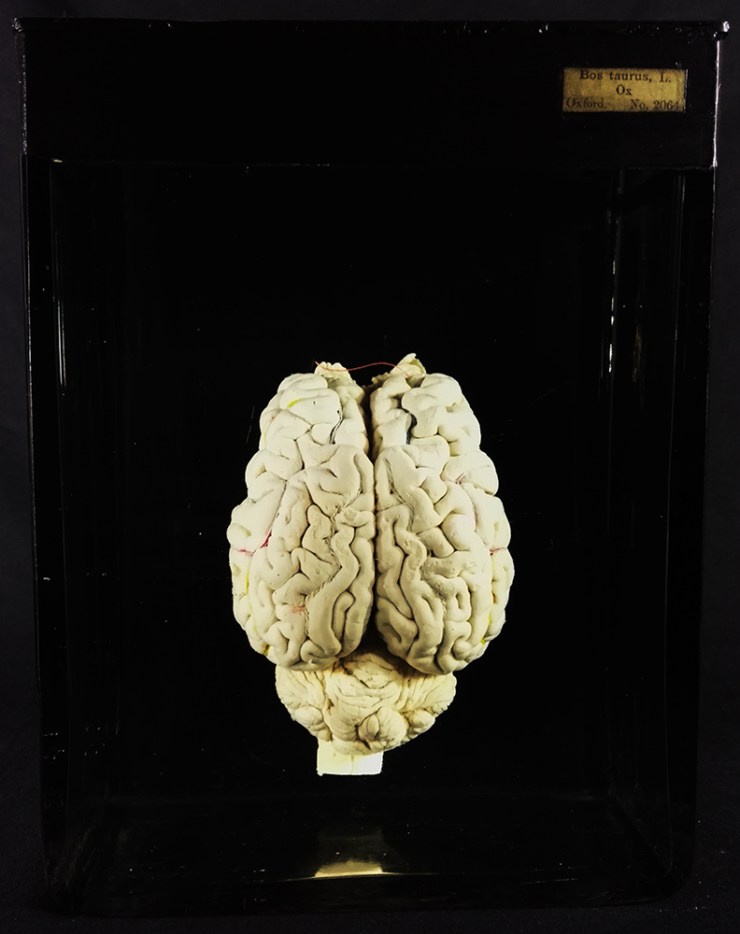
Lastly, after the seals had dried, for the final finishing flourish black paint was reapplied to the backs and tops of the jars to provide a contrasting backdrop.

pro-cam
Ta-dah… the cow brain after conservation treatment
Brain Diaries opens on Friday 10 March and runs until Monday 1 January 2018. Take a look at the website to find out more about the exhibition and accompanying programme of events at braindiaries.org

Mustachioed Robber Flies

To celebrate National Insect Week 2016 we thought we would introduce you to the custodians of the Hope Entomology Collection here at the Museum. Our insect collection is made up of a whopping 6 million specimens, so our resident entomologists definitely have their work cut out. However, they have taken a little time out to tell us all about their specialisms and why their favourite insects are the best.

Zoë Simmons – Life Collections

Zoe

I have many favourites in the collections that I look after- insects demonstrate an immense diversity of form and behaviour. So much so in fact that I defy anyone that says that there is not one thing that they do not find interesting among the almost one million species described to date.

One of the groups that I often find myself returning to though is the Asilidae or Robber Flies. This is a group of predatory flies that feed on a wide range of insect species. Many species sport heavily bristled moustaches, which are thought to protect their faces as they feed but have the added bonus of making the on-trend hipster insect of the moment.

Mustachioed Robber Fly
A ‘moustachioed’ Hornet Robber Fly in the wild

As is common with predators they have exceedingly good eyesight and will sit, perched until they spot movement, at which point they will strike at the prey item in the air.

The legs are furnished with long spines that help hold the prey and the mouthparts have evolved into a hardened beak-like structure which can stab through even the tough exoskeleton of beetles. Entomologists who specialise in catching Asilids have to be wary as these flies are not afraid to use this to their advantage.

IMG_9298

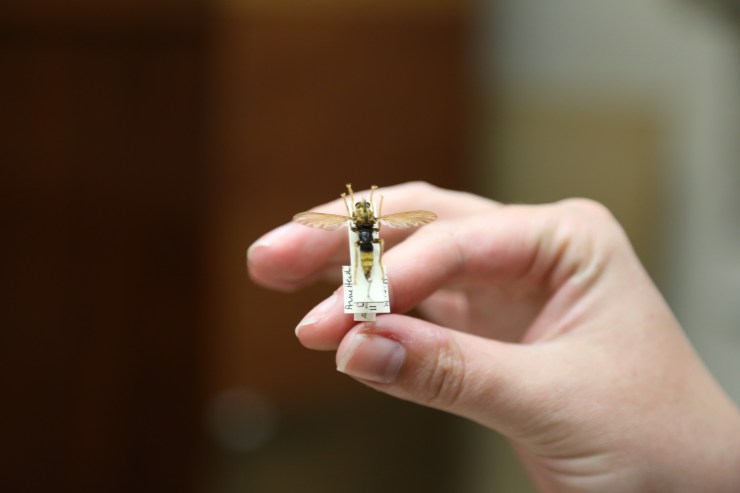
As it happens, the largest and most striking species of fly in Britain is the Hornet Robber Fly, or as it is more commonly known, Asilus crabroniformis. Superficially, its appearance closely resembles that of a hornet. Seen from a distance it is easy to see how the two species may be confused by the casual observer (pro-tip: look for the antennae. Hornets have long, obvious yellow-brown antennae whereas those of the Robber Fly are dark and small), so much so in fact that the species name for the Robber Fly crabroniformis, translates as ‘hornet-form’. This mimicry of a species that is able to sting affords the Robber Fly a level of protection. It does not have a sting itself but the bluff works well.

IMG_9311.JPG

Also of interest, and linked to the next post by Darren Mann, is the fact that this species is one of the top predators of dung beetles. The females require dung from a herbivore such as a horse or cow to lay their eggs in. As a consequence adults can often be found hanging out in fields near to piles of dung, hoping to meet the mustachioed mate(s) of their dreams, whilst snacking on dung beetles that fly in to start their own dung-related romance story. The presence of this Robber Fly species is often indicative of the quality of the dung and its associated beetle fauna, and as such should be greeted with warmth and a hearty ‘hurrah’ if spotted for it means that the habitat is healthy.