Spiders: Super, Not Scary!

Related to insects, arachnids are a fascinating group of invertebrates. Several species of spider can be found in and around our home at this time of year, but not everyone welcomes them! Here we take a look at some of these super spiders and why there is no need to be scared.

Most spiders don’t want to come into our homes because they are too warm, too dry and there isn’t enough food (or perhaps they feel the same way about humans as many people do about spiders!). A few species do venture into our dwellings and have probably been associated with us for thousands of years and often perform a useful housekeeping job in reducing the number of flies inside the home.

House Spider (Tegenaria domestica).
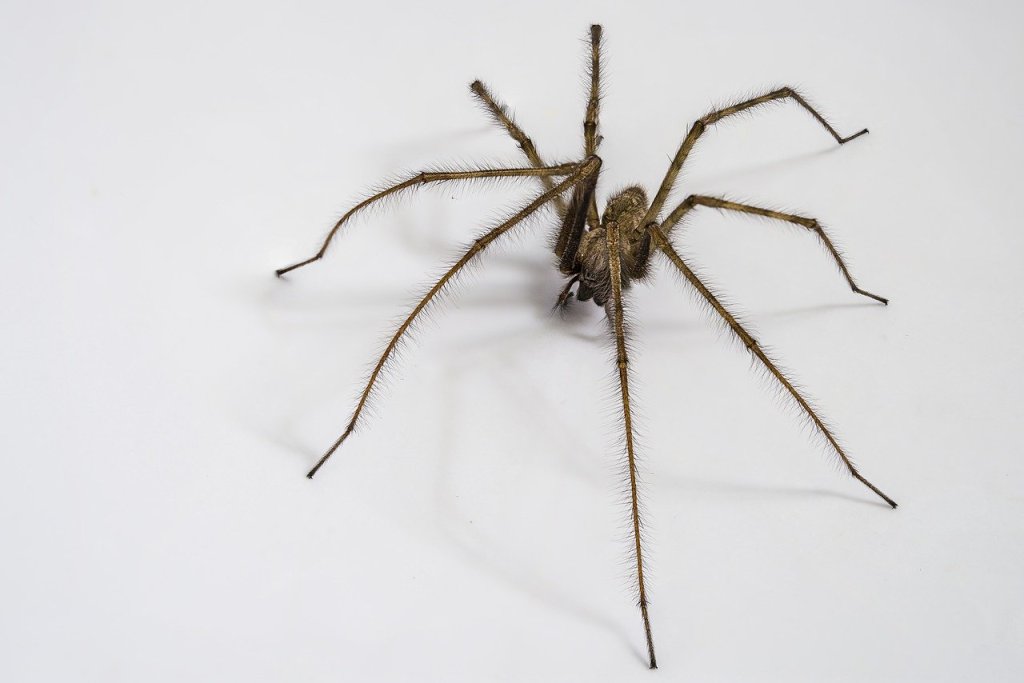
The House Spider, Tegenaria domestica.

The House Spider builds a funnel-like web. It sits inside waiting for prey to land on the web, emerging quickly to trap it. Indoors, this is the spider we are likely to find in the bath! Some people feel alarmed by them, but they are completely harmless and will retreat into the plughole (or their funnel web) if they feel threatened. The males are active in the summer so when you see a house spider indoors it will probably be a male looking for a mate. The females usually eat them after mating, so the House Spiders you may find in your home in the late autumn will probably be females which can live for two years or more.

Giant House Spider (Eratigena atrica).
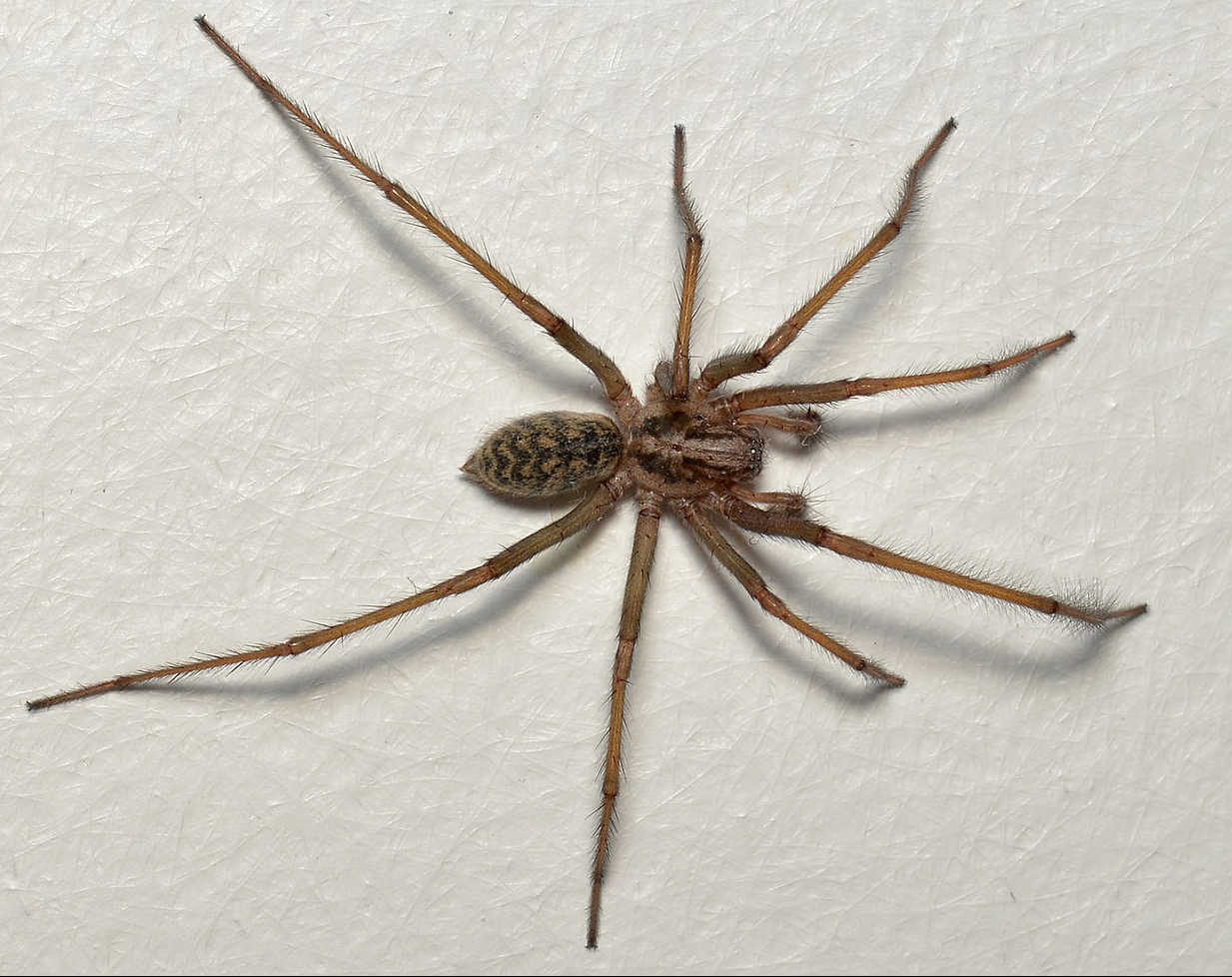
Giant House Spider, Eratigena atrica. Image credit: Ryan Hodnet CC BY-SA 4.0

The Giant House Spider has a similar appearance to the house spider but is larger. Females can grow up to 18mm in body length with a leg span of 45mm. Those long legs enable them to be one of the fastest running spiders: they can move at up to 0.5 m/s (1.2 mph). Their speed of movement can be startling but they are in fact easily outpaced by normal human walking speed (4 mph). They only use their speed for short bursts and the females normally stay within their funnel webs. It’s the males we see out and about in our homes in summer and autumn, looking for mates. Although the mouth parts of these spiders are theoretically capable of piercing human skin, they prefer solitude and to retreat when startled and so only bite rarely when provoked. Their venom cannot harm us.

‘Money Spider’ (Linyphia sp.)

This money sider landed on me while I was writing the article!

‘Money Spiders’ are not a single species. Hundreds of different small spiders are called ‘Money Spiders’. In the UK they usually belong to the Family Linyphidae. They get their common name from a folk saying that if one lands on you it’s lucky because it will spin you some clothes, meaning you will come into some money. If anyone has ever had a garment spun by a spider we’d love to hear about it! Money Spiders often land on us in the summer because they travel through the air on strands of silk, a method called ‘ballooning’. Money Spiders are completely harmless to humans and most go entirely unnoticed by us because they are so small.

Daddy Long Legs Spider (Pholcus phalagiodes)
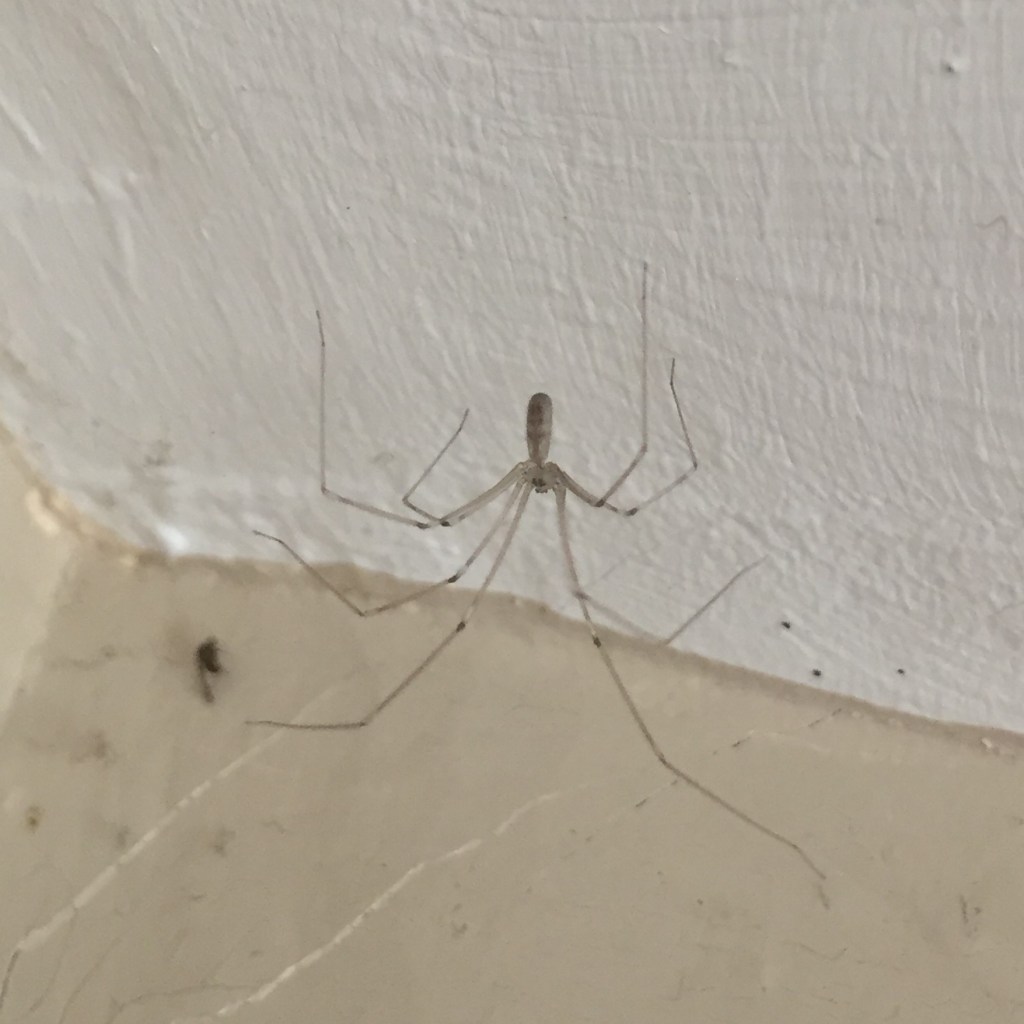
‘Daddy Long Legs’ Spider (Pholcus sp.), not to be confused with a Crane Fly.

The Daddy Long Legs Spider is also known as the ‘Cellar Spider’. It prefers to spin loose strands of web in corners which it uses to capture prey. It is not to be confused with the Crane Fly, also called a ‘Daddly Long Legs’ in the UK, which is a fly, so has a pair of wings. These spiders will often start vibrating if you come close in an effort to scare you off. Alternatively, they may curl up completely and ‘play dead’. They are completely harmless.

Garden Cross Spider (Araneus diadematus).
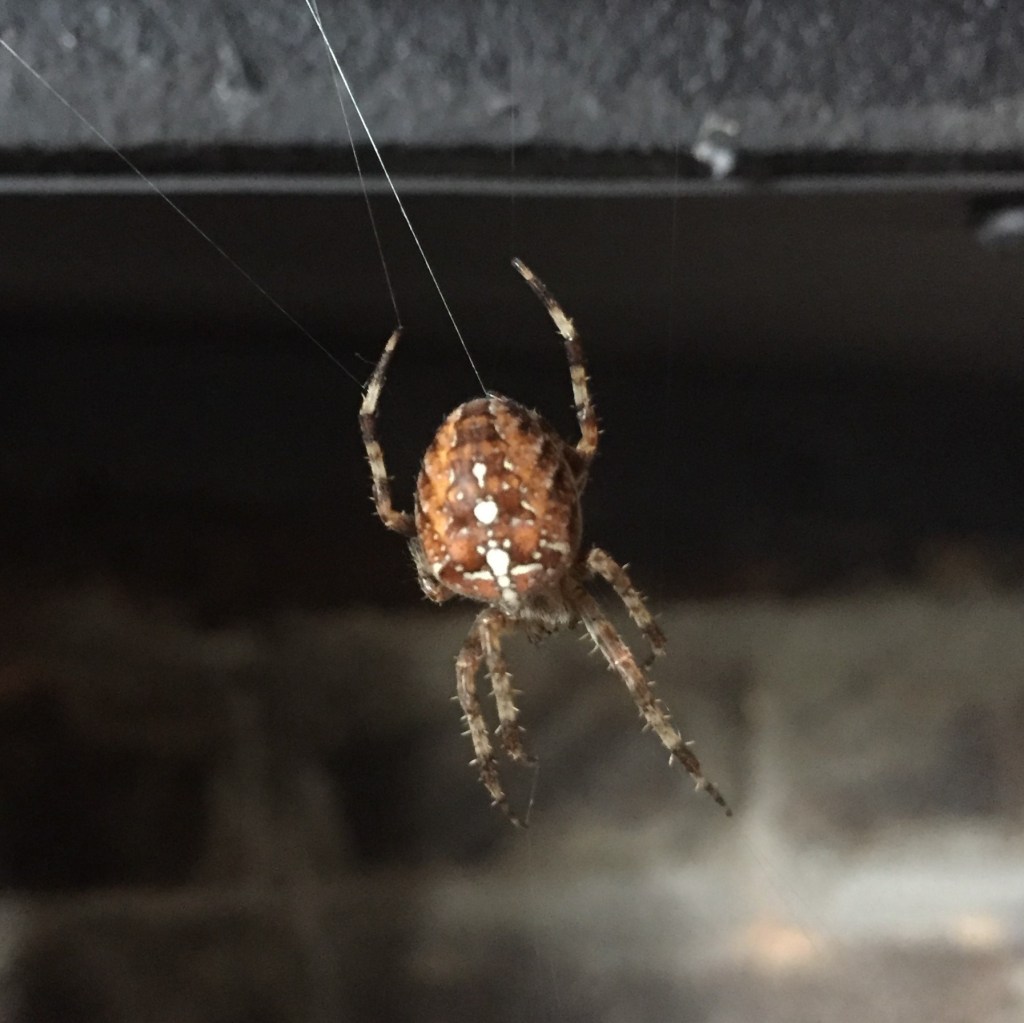
Garden Cross Spider, Araneus diademata.

The Garden Cross Spider is usually found in the garden, but sometimes venture into our homes, as shown in the picture. They are large web-spinning spiders. Their webs are usually very noticeable on autumn mornings, revealed by drops of dew sticking to the strands. They can be recognised by the distinctive cross pattern on their back. The body of females can be up to 15mm long, although the males are a lot smaller and so we rarely notice them. Females can often be found protecting a ball of eggs or young spiderlings. They will be defensive of these, but are completely harmless.
Want to know more?

If you enjoyed reading about these house spiders, you might also like this post about the colour-changing Crab Spider.

Have you had any spider encounters at home? We’d love to hear about them! You can get in touch using the Contact Us page.

Spiders’ eyes cast in Diamond Light

by Imran Rahman, Deputy Head of Research

There are plenty of reasons to visit Didcot. The railway station is an important junction between Oxford and the west of England, the Didcot Railway Centre houses a great collection of trains, if you like that sort of thing, and Didcot Town Football Club are currently a respectable fourth* in Division One West of the Southern League…

But if that’s not enough to tempt you, Didcot is also home to the UK’s only synchrotron – a multi-million pound facility that goes by the name of Diamond Light Source. In February, six members of the Museum’s research team visited Diamond to carry out some important experiments on spiders.

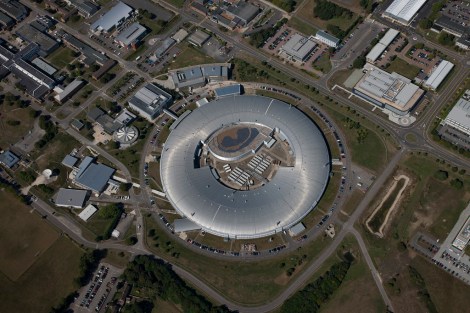
But before we get to that, what exactly is a synchrotron light source? Well, it is a type of particle accelerator which uses huge magnets to speed up tiny particles, usually electrons, until they are moving almost as quickly as the speed of light. The particles are sent flying around a ring-shaped machine hundreds of metres across – the ‘doughnut’ structure in the photo.

The Diamond Light Source synchrotron in Didcot, Oxfordshire. Particles are accelerated to close to the speed of light around the ‘doughnut’ structure. Image: Courtesy of Diamond Light Source

This beam of high-energy particles gives off large amounts of ‘light’, or electromagnetic radiation, when its direction is changed. This radiation, usually in the form of X-rays, can be funnelled down to experimental stations, known as beamlines, and used for lots of different measurements and experiments. As the UK’s national synchrotron light source, Diamond is visited by scientists from all over the world every year.

So what does a museum want with a powerful X-ray beam? One of our research fellows, Lauren Sumner-Rooney, is particularly interested in studying the eyes and brains of spiders. So the team, led by Lauren, went to Didcot to create some X-ray images of spiders from the Museum’s collections.

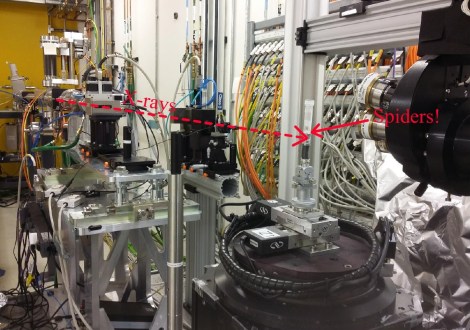
Ready for your X-ray close -up? A spider specimen is mounted in the I13-2 beamline at Diamond Light Source. Image: Lauren Sumner-Rooney

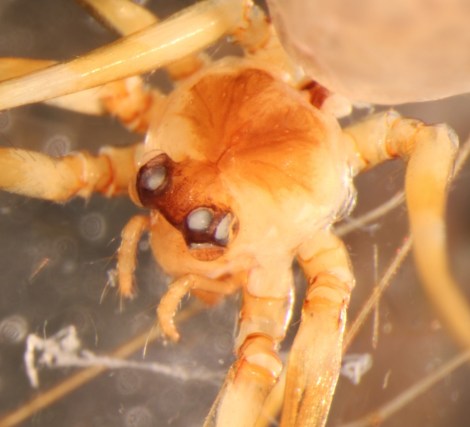
You may not have looked too closely at a spider’s head before, but they usually have eight eyes as well as eight legs. That said, there is actually quite a lot of variation in the number and structure of eyes between different species, and Lauren is interested in documenting this variation across selected spider families to investigate how it affects spiders’ brain structures.

Using the I13-2 beamline at Diamond, and fighting severe sleep deprivation with the aid of strategically-selected songs and snacks, the team was able to visualize details measuring less than one thousandth of a millimetre without damaging the precious specimens. They were assisted by Andrew Bodey, a senior support scientist at Diamond, and Emelie Brodrick, a PhD student at the University of Bristol.

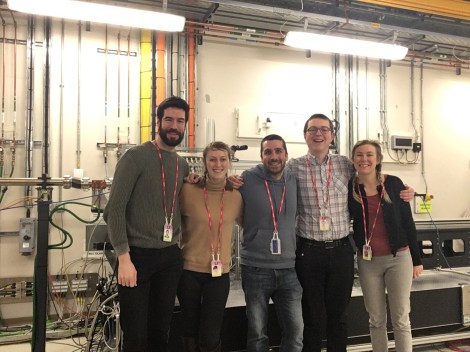
The research team following 72 hours of very little sleep! From left to right: Ricardo Pérez-de la Fuente, Lauren Sumner-Rooney, Imran Rahman, Jack Matthews and Emelie Brodrick. Image: Emelie Brodrick

Over the course of 72 straight hours, the team scanned 116 spiders, creating about 14 terabytes of data. This will form the basis of a variety of exciting scientific research projects at the Museum over the coming years. Watch this space for the results!

*Didcot Town were fourth in the Southern League Division One West table on 8th March. The Museum accepts no responsibility for any change in their position after this date.

Top image of Pholcus moca courtesy of Smithsonian Institution.

Steven’s Christmas spiders

by Steven Williams, Oxford Brookes University research student

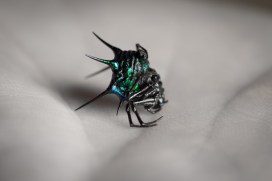
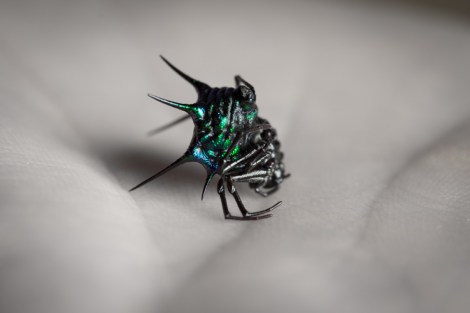
Described by A.G. Butler in 1873 as ‘the most gorgeously coloured spider in this genus’, Gasteracantha scintillans, with its metallic green iridescent abdomen, is the first of my Christmas Spiders.

img_0532
Spiky and sparkly: Gasteracantha scintillans

The beautiful colour of the abdomen certainly has a very festive feel and it would not be out of place next to a bauble on a Christmas tree; at least not in my house. This species and the other closely-related metallic Thorn Spiders are currently only found on the Solomon Islands.

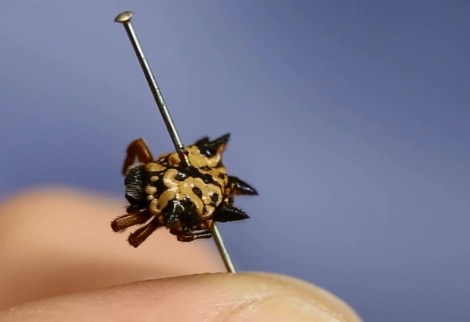
Christmas Island, in the Indian Ocean, is one of the locations where my second Christmas spider, Austracantha minax, can be found. Although not as striking as the metallic green of Gasteracantha scintillans, the layout of the abdominal spines on this spider almost give it the appearance of a star – perfect for the top of a Christmas tree, no?

Austracantha minax: starry, and found, amongst other places, on Christmas Island

The common name of ‘Christmas Spider’ is attributed to this species because in areas of Western Australia it is associated with the arrival of Christmas as the males reach maturity in mid-December and females in January.

Did you know that there is also an Eastern European folk tale of how tinsel came to be included in Christmas tree decorations? The legend tells of how spiders spun cobwebs on a poor family’s undecorated Christmas tree overnight. In the morning the webs turned to gold and silver and the family never lived in poverty again. So when you put the tinsel on the tree this year you could imagine you are a spider spinning a web!

With that spidery festive thought, have a very Merry Christmas from everyone at the Museum!