Eggs in the tower
By Chris Jarvis, Education Officer
We have our first eggs! After an earlier than usual return from the warmth of Africa, followed by a cold snap of north easterly winds, our swifts have begun to lay their first clutches of eggs in the tower.
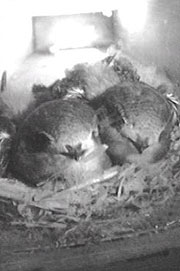
Ten eggs were counted on 14 May, some in pairs and some lying singly on nests. Birds in other nests appear to be incubating as well, sitting in pairs and screaming out at any newcomers investigating possible nesting sites.
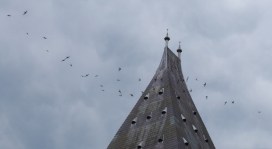
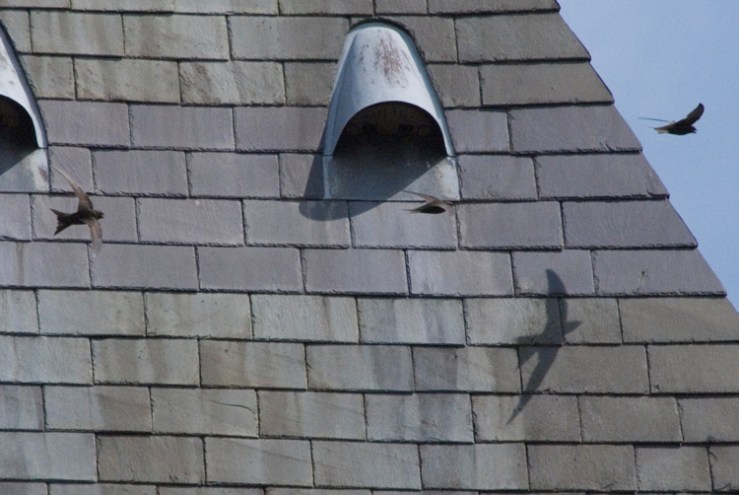
More swifts are arriving daily and screaming parties are urgently exploring for potential nesting locations. They buzz the tower’s nesting holes at speed and bang on the entrances with their wings like naughty teenagers playing a vociferous game of ‘knock and run’!
Typically, no bird has yet elected to nest in either of the boxes fitted with webcams. But as the weather warms and more swifts take up residence every day, we’re sure you’ll be able to follow all the drama of the Swifts in the tower very soon.

The delicate art of laying
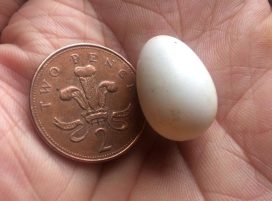
Swifts tend to lay their eggs in the mornings, usually between 8am and 11am. The small, fragile eggs are white to reflect light, an adaptation shared by most cavity-nesting birds that makes the eggs more visible to adults in the dark of the nest.
The first eggs this year appear to be quite early in the season compared with the observations by David Lack in the 1940s and 50s. At that time, when the study of the Museum’s colony began, the first eggs were recorded on average between 17 and 22 May, but sometimes none was laid until the first week of June.
Egg production and laying in swifts are very closely tied to the weather, and production seems to be triggered by the availability of food. Swifts feed exclusively on small airborne insects, which are more abundant in the warm thermals and light winds we experience on good summer days.
It takes a swift five days to produce and then lay an egg. Five days before our first eggs were laid it was sunny and warm, just before the strong, cold north easterly winds swept down over the weekend and lowered the temperature. The warmer early start to the summer seems to have triggered this early laying; whether this is a trend that is increasing as the climate changes is something we should able to answer with long-term datasets provided by studies like this.
Dealing with the weather
Whatever climate change has in store for us it is becoming clear that we won’t experience repeated hot summers. The unpredictability of the British summer reigns supreme.
Swifts have evolved several wonderful adaptations to deal with the vagaries of our weather. Their eggs can be left without an adult to keep them warm for several days. There are records of eggs being left unattended for almost a week and still developing normally. Although adults usually take it in turns to feed and brood the eggs, sometimes during the day the eggs are left unattended by both birds which are then able to forage far afield for food.
Unlike many songbirds which produce one egg a day until their clutch is completed, swifts are able to space out their laying. In a clutch of two or three eggs, the second or third may be laid two or three days after the first, depending on weather conditions. The birds will also limit the size of clutches, with clutches of three eggs the average in warm weather and two eggs the average in cold weather. This helps the adults to supply all of their young with enough food.
Finally, swifts may also eject eggs and lay a second clutch. Some studies have linked this behaviour to cold weather but this has not always been the case at the Museum colony and is a further line of investigation in the ongoing studies of these most secretive of birds.
From laying to hatching usually takes about 19 days, depending on the weather. So we should be seeing our first chicks at the very beginning of June, hopefully streaming live on the Swiftcam…
*
Screaming parties prospecting for nest sites are a good way for you to see if you have nesting swifts nearby. Any records really help with our understanding of the current population in the UK. You can help conservation and recording for the Oxford Swift City project, or use the RSPB’s Swift Mapper for the rest of the UK.