“The True Nature of Nature Itself”

MAKING ART WITH SWIFTS FROM THE MUSEUM’S COLLECTIONS


Between 14th May and 21st July, the mixed media artwork Fly Over My City was on display at the Museum of Natural History, delighting visitors with a visual and auditory exploration of swifts and the threats they face in urban environments. In this blog post, artist Becca Jeffree discusses working with Museum collections to create the piece, and the value of museums as venues for combining art and sciences.


While studying at London’s Natural History Museum years ago, another student had become upset with a group of artists who were drawing from the floor of the birds gallery, blocking his way. Studying birds in a cabinet was not as worthwhile, he felt, as studying in the field. Moreover, drawing seemed to him out of place within a science museum. Yet sketching specimens has historically played an important role in learning about biodiversity, and is particularly important for those whose access to wildlife is restricted.

Perhaps it is unsurprising that this discord arose in a natural history museum. Art is often separated from science in society and culture, with science tending to dominate debates about understanding nature. Museums, however, are rare places where art and science are welcomed equally and beautifully combined. Few places embody this better than Oxford University Museum of Natural History — a work of Victorian art shaped by the idea that art and science can take one another to higher levels. As historian John Holmes puts it in The PreRaphaelites and Science, the building expresses the “true nature of nature itself” through its architecture. It is a place where the study and interpretation of the natural world are cross-disciplinary.
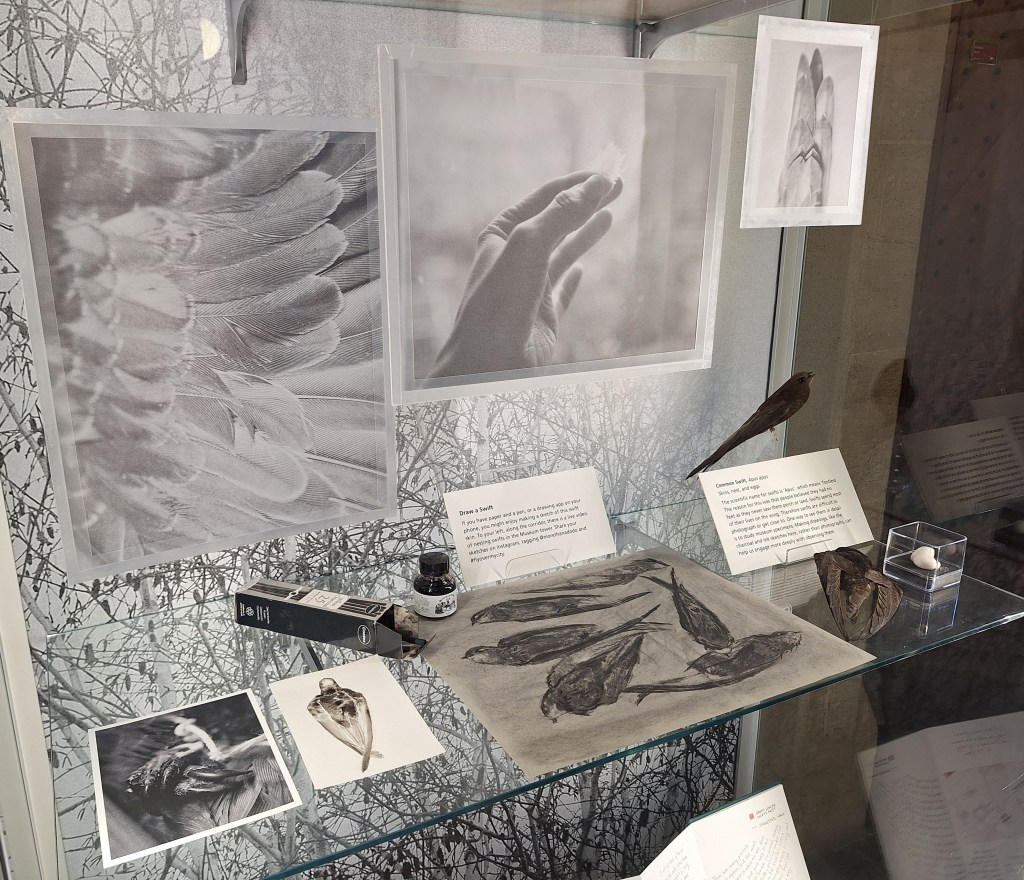
Fly Over My City (2023) by Becca Jeffree, on display at the Museum of Natural History

I recently collaborated with the Museum when making my artwork about the built environment and the common swift (Apus apus). Swifts are transient animals and as they rarely land they are difficult to see up close. They are found in the UK for only a short time each summer, fly fast, and are in decline. Through access to the Museum’s avian collections, I had a unique opportunity to see swift bodies up close and observe them in detail through drawing. Most of the specimens are bird skins; the skin, plumage, wing bones, skull and feet are preserved but not the internal organs, and they are not mounted like the ones we often see in cabinets. When I handled the swifts, I was asked to wear gloves to protect the specimens and avoid exposure to any harmful chemicals that may have been used to preserve them. Even though I couldn’t touch the swifts directly, I could still get to know their weight, size, colour, and notice interesting details like the shape of their chest feathers which are similar to their hummingbird relatives’.
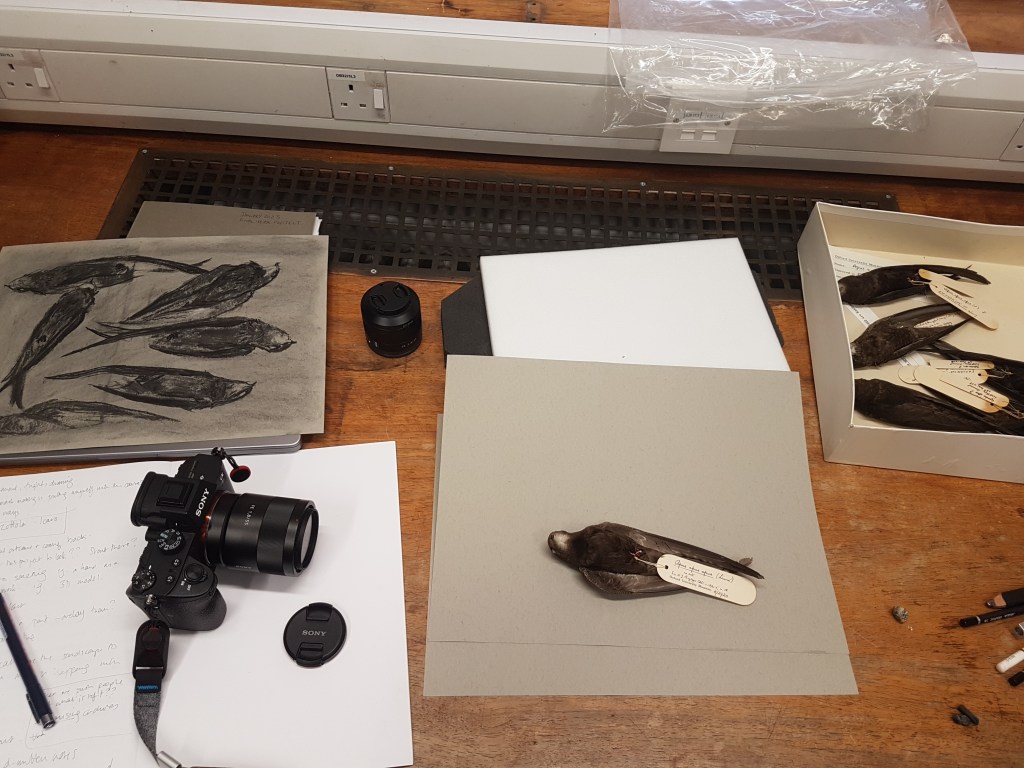
Photographing, sketching and studying swifts from the Museum’s collections

Having physical access to museum specimens allowed me to root my artwork more in science, but also to draw out further layers of meaning, by responding to my own feelings and senses. The materials I included in the work – charcoal and tracing paper – were inspired by the swifts’ weightlessness, their texture, colour and the urban environment they often inhabit. The PreRaphaelites, whose worldview infuses the Museum building, regarded art as a valid investigative method. As John Holmes puts it, “if observation yields a true knowledge of nature, then making art that records and synthesises these observations is at once a disciplined method for conducting research and the best means to convey that knowledge.” I am grateful that the Museum continues to embrace this idea today, and for the value placed on artists as researchers and communicators of its collections.
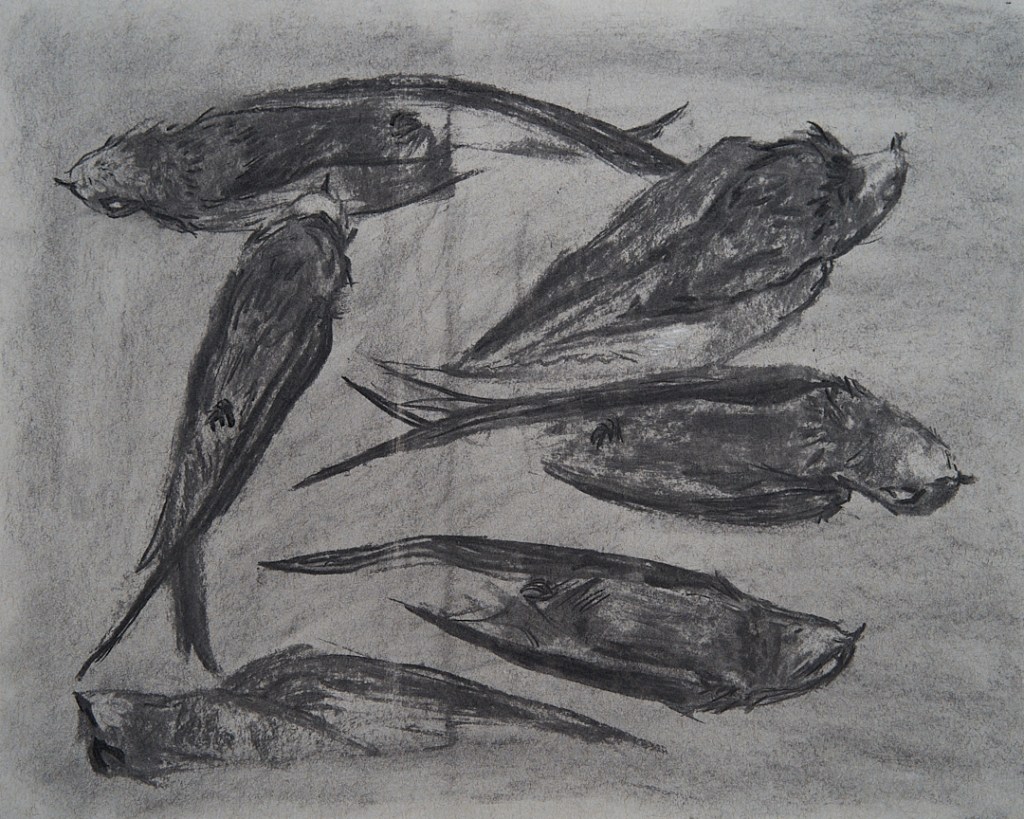
Charcoal sketch of swifts, made using Museum specimens. From Fly Over My City (2023)

Visit Becca Jeffree’s website to find out more about the piece, and her other artwork

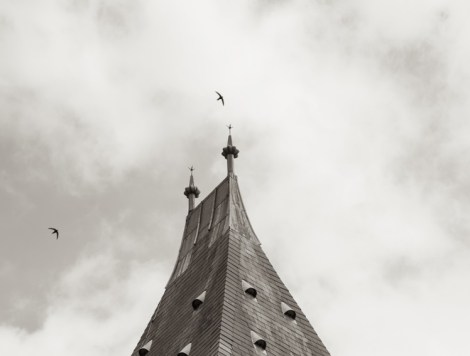
swifts flying around the museum tower against a cloudy sky

Swift Inspiration from the Sky

By Chris Jarvis, Education Officer

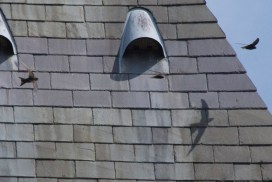
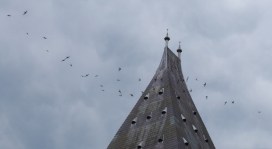
Swifts circling the Museum tower

Many of us at the Museum are inspired creatively, as well as scientifically, by the wonders of the natural world. So it is always uplifting to see that the Museum building and its collections evoke similar feelings in our visitors. However, apart from the odd, sneaked peek over the shoulder of someone busily sketching a specimen or spandrel, it is rare that we get to enjoy the results of their inspiration, which is why it was so nice to receive the poem below from Tony Owen.

Tony emailed us to say that, whilst teaching on the Summer International Programmes at Hertford College in 2018 and 2019, he often visited the Museum and became aware of the colony of swifts that annually nests in the Museum tower. Tony read about their fascinating lives, watched their progress through the breeding season on our live nest box cams and Swifts Diary, and enjoyed seeing them screaming around the tower itself.

This led to the inspiration for Tony’s poem – The Swifts. In putting pen to paper, Tony joins many other poets who have found inspiration from these amazing birds, including Ted Hughes, Anne Stevenson and Wilfred Owen.

It was very kind of Tony to share his poetry with us so we thought we would share it with you in the hope that it may inspire your own creativity from nature.

**

The  Swifts

By Anthony David Owen

From the African horn

ahead of the storm,

screaming parties

careering across the sky.

Slicing through the steam

of the Savannah and plain,

upon Saracen scimitar wings

that chase the rain.

Elusive and as quick

as the spring,

gliding high upon

the saharan westerly winds.

In meadows the grasses

and wildflowers are dry,

they sun their wings

and chase spiders and flies.

In airstream waterfalls

of cloud, air and sunlight,

they whirl and twirl

then skim and scythe.

To etch and Scribe

with black dagger wings,

upon the slate and tile

of Gothic and Victorian

spires and skies.

Swifts flying around the Museum tower

Flight and fight

By Chris Jarvis, Education Officer

Last week’s observations of the swift nest boxes in the Museum tower highlighted the drama the colony faces in the struggle for survival. This week’s survey made that struggle even more explicit…

Clambering through the darkened spaces of the Museum tower, lit faintly by the red lights that the swifts cannot see but which help give surveyors a dim view of the ladder rungs and observation platforms, I peered briefly into each nest box to count the birds and eggs.

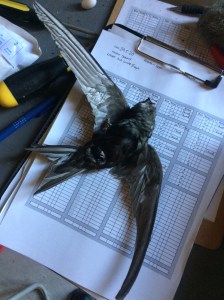
In one box I came across a dead bird, alone and lying on its back. Carefully bagging up the body for later investigation I continued my count while pondering the cause of its death, the sadness relieved slightly with the discovery of new eggs in other boxes and the promise of new life to come.

The body of a dead swift found during the weekly survey of the colony of birds in the Museum tower

Screams and banging from birds prospecting for nest sites are a regular backdrop to each survey. Birds call and swoop past the boxes only inches from my ears, separated by just a few roof slates. The birds within scream back in answer. But on this occasion, half way down the tower, I became aware of particularly loud and persistent screams and banging, coming from within a box.

A quick peek inside revealed a hectic struggle between at least three swifts, wings drawn back, wrestling and rolling around, pecking and slashing at each other with their sharp claws. It was actually impossible to see if the fight involved three or four birds as the struggle filled every inch of the small box with wings, beaks, claws and feathers.

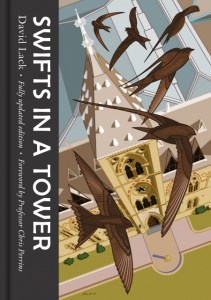
David Lack first documented these fights in his excellent book Swifts in a Tower. He proposed that they were the result of birds entering an already occupied box in the struggle to find a suitable nest site.

Swifts flying around the Museum tower
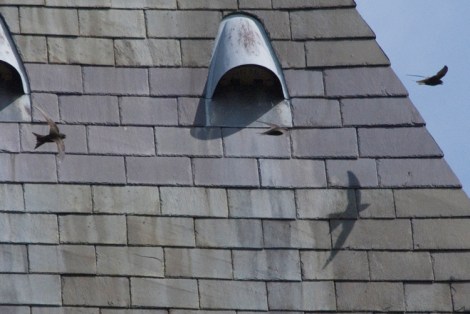
Swifts circle the tower prospecting for potential nest sites, screaming and banging to check which are occupied and which are vacant. Image: Gordon Bowdery

Sitting and anxiously listening beside the box, I recorded the fight lasting 15 minutes from the time I became aware of it. Lack documented ‘gladiatorial shows’ that lasted five and three quarter hours; they were painful to watch, he admitted, as the swifts have a surprisingly strong grip and claws capable of drawing blood, but rarely resulted in death.

When the noise died down, I gently lifted the cloth blind to take another look. Only two birds remained, both looking exhausted and fiercely gripping each other’s feet, one lying under the other. A quick flurry and the upper bird disengaged and jumped from the nest box entrance.

Cover of 2018 edition of Swifts in a Tower by David Lack
Cover of the 2018 edition of Swifts in a Tower by David Lack

Lack also mentions in his book that it is usually the bird underneath in these struggles that is the winner and I was relieved when the remaining bird picked itself up and returned to the two eggs, which had somehow remained in the nest, settled on top of them and preened itself. This suggested that the nest’s original occupant had won, driving off an intruder.

The screaming and banging outside the boxes is a check for a screamed response from within. It reveals whether a box is already occupied or empty, before the bird risks entry. Presumably, the fight I witnessed was the result of a bird not hearing a response or perceiving it as coming from another box.

The drama of the fight illustrates the incredible importance of nest sites and the fidelity the swifts have to them after a year on the wing. Nest sites are at a premium and swifts are almost totally dependent on nesting in old buildings as there are so few forests with suitably old, cavity filled trees remaining.

Once a nest is occupied the owners will fight furiously to defend it and David Lack did record occasional incidents of birds fighting to the death. So perhaps this was the cause of the dead bird I had found lying on its back, but that will have to wait for a later examination.

Meanwhile keep an eye on our nest box; you never know what drama may play out next…

It is important to record nest sites and, if you can, put up nest boxes. RSPB’s Oxford Swift City project, which the Museum and Oxford City Council were involved in, annually surveys and records nesting sites so that development in these areas is restricted during the breeding season and developers must include plans to protect and provide new nest sites when repairs to property or new building takes place. If you would like to help with the work of conserving one of the most dramatic annual migrants to our shores visit the RSPB site.

Eggs in the tower

By Chris Jarvis, Education Officer

We have our first eggs! After an earlier than usual return from the warmth of Africa, followed by a cold snap of north easterly winds, our swifts have begun to lay their first clutches of eggs in the tower.

Ten eggs were counted on 14 May, some in pairs and some lying singly on nests. Birds in other nests appear to be incubating as well, sitting in pairs and screaming out at any newcomers investigating possible nesting sites.

More swifts are arriving daily and screaming parties are urgently exploring for potential nesting locations. They buzz the tower’s nesting holes at speed and bang on the entrances with their wings like naughty teenagers playing a vociferous game of ‘knock and run’!

Typically, no bird has yet elected to nest in either of the boxes fitted with webcams. But as the weather warms and more swifts take up residence every day, we’re sure you’ll be able to follow all the drama of the Swifts in the tower very soon.

The swifts circle the Museum tower looking for suitable nesting sites

The delicate art of laying
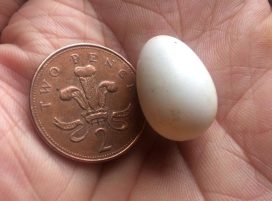
Swifts tend to lay their eggs in the mornings, usually between 8am and 11am. The small, fragile eggs are white to reflect light, an adaptation shared by most cavity-nesting birds that makes the eggs more visible to adults in the dark of the nest.

The first eggs this year appear to be quite early in the season compared with the observations by David Lack in the 1940s and 50s. At that time, when the study of the Museum’s colony began, the first eggs were recorded on average between 17 and 22 May, but sometimes none was laid until the first week of June.

Egg production and laying in swifts are very closely tied to the weather, and production seems to be triggered by the availability of food. Swifts feed exclusively on small airborne insects, which are more abundant in the warm thermals and light winds we experience on good summer days.

It takes a swift five days to produce and then lay an egg. Five days before our first eggs were laid it was sunny and warm, just before the strong, cold north easterly winds swept down over the weekend and lowered the temperature. The warmer early start to the summer seems to have triggered this early laying; whether this is a trend that is increasing as the climate changes is something we should able to answer with long-term datasets provided by studies like this.

Dealing with the weather
Whatever climate change has in store for us it is becoming clear that we won’t experience repeated hot summers. The unpredictability of the British summer reigns supreme.

Swifts have evolved several wonderful adaptations to deal with the vagaries of our weather. Their eggs can be left without an adult to keep them warm for several days. There are records of eggs being left unattended for almost a week and still developing normally. Although adults usually take it in turns to feed and brood the eggs, sometimes during the day the eggs are left unattended by both birds which are then able to forage far afield for food.

Unlike many songbirds which produce one egg a day until their clutch is completed, swifts are able to space out their laying. In a clutch of two or three eggs, the second or third may be laid two or three days after the first, depending on weather conditions. The birds will also limit the size of clutches, with clutches of three eggs the average in warm weather and two eggs the average in cold weather. This helps the adults to supply all of their young with enough food.

Finally, swifts may also eject eggs and lay a second clutch. Some studies have linked this behaviour to cold weather but this has not always been the case at the Museum colony and is a further line of investigation in the ongoing studies of these most secretive of birds.

From laying to hatching usually takes about 19 days, depending on the weather. So we should be seeing our first chicks at the very beginning of June, hopefully streaming live on the Swiftcam

*

Screaming parties prospecting for nest sites are a good way for you to see if you have nesting swifts nearby. Any records really help with our understanding of the current population in the UK. You can help conservation and recording for the Oxford Swift City project, or use the RSPB’s Swift Mapper for the rest of the UK.

Image: (c) Mark Garrett

All hail the swift

Image: Maciej Szymański

By Chris Jarvis, Education Officer

This week is Swift Awareness Week and that means it’s time to celebrate our screaming summer visitors – the avian ones, that is.

Here at the Museum we eagerly await the return of these long distance migrants each May. This is not only because for many of us they herald the start of summer, but also because the swifts that nest each year in the Museum tower are part of the longest-running continuous study of any bird species in the world.

Taking the long view of these amazing birds we know that, like all birds, they evolved from a particular group of dinosaurs. Birds, in effect, are living dinosaurs. The earliest fossil swift, the ‘Scania Swift’, is around 49 million years old and shows us that by this time they had already evolved in forms that are virtually indistinguishable from today’s birds. Today, they have diversified into around 100 different species including our Common Swift (Apus apus).

Swifts in the tower nests as seen on webcam
Swift chicks in a nestbox in the Museum tower, shown on the webcam feed

Swifts have taken life on the wing to the extreme. Not only are they the fastest recorded bird in level powered flight, reaching speeds of nearly 70mph, but once launching themselves from the nest that they hatched in they may not land for the next two years of their lives!

They are so adapted to life in the air that they are capable of eating, mating and even sleeping on the wing. During sleep, it is thought that the two hemispheres of the brain take it in turns to nap as the swift slowly circles at heights of up to 30,000 feet. They do not even land to collect nesting material, instead relying on whatever feathers or pieces of plant material are floating in the air to build their nests.

During this two-year flight they will follow their food – the seasonal blooms of flying insects that appear after summer rains – on a 14,000 mile annual migration to southern Africa and back, living in perpetual summer.

Whilst for a long time scientists thought swifts were closely related to similar looking birds, swallows and martins, DNA analysis has revealed that they are the product of another amazing type of evolution – called convergent evolution – where organisms with similar lifestyles independently evolve similar traits. It turns out that whilst swifts may look like swallows, they are actually more closely related to hummingbirds; swallows, on the other hand, are more closely related to kingfishers than to swifts.

Swifts flying around the Museum tower
Swifts circle the entrances to the nest areas in the Museum’s tower. Image: Gordon Bowdery

Studies show that the population of breeding swifts in the UK has roughly halved between 1995 and 2016. The causes of this decline are debated: Lack of nest sites, lack of food, and changes to global weather patterns have all been implicated. The truth is that a bird which lands only once a year is extremely difficult to study.

We hope for a successful breeding season here in the tower, but if you would like to observe them yourself you can watch the swifts on our nest cam and compare the ups and downs of their populations over the years on our website.