Bethany Milne from the Museum’s Visitor Experience team has spent some time working alongside the Exhibitions team to deinstall a temporary art exhibition. She has reflected on the day – what she enjoyed and what she learnt along the way.
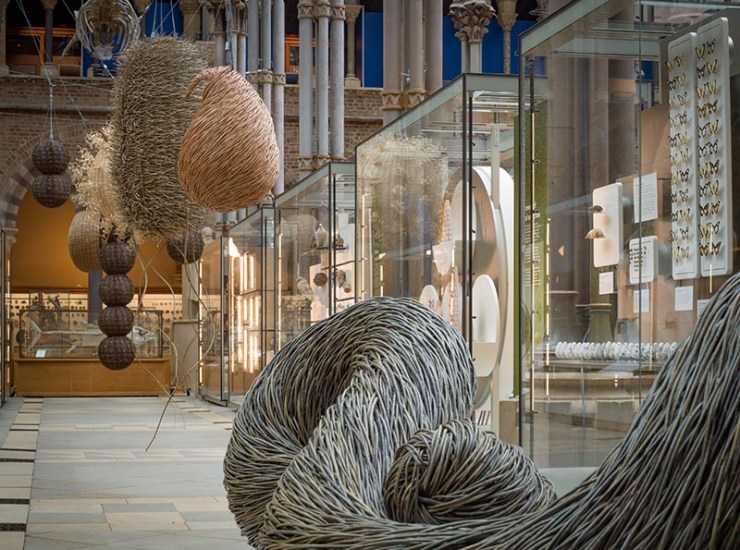
The deinstall of the Museum’s Deadly Six art installation is my first introduction into the world of exhibitions and an exciting one to start with. I have seen the display since it was first installed in September 2024 and I began working at the museum, watching it on my patrols of the court to make sure it stays intact and safe from all the little hands that pass through our doors every day. I didn’t imagine what it would be like to touch them myself until I found out I had the opportunity to join the team in taking them down.
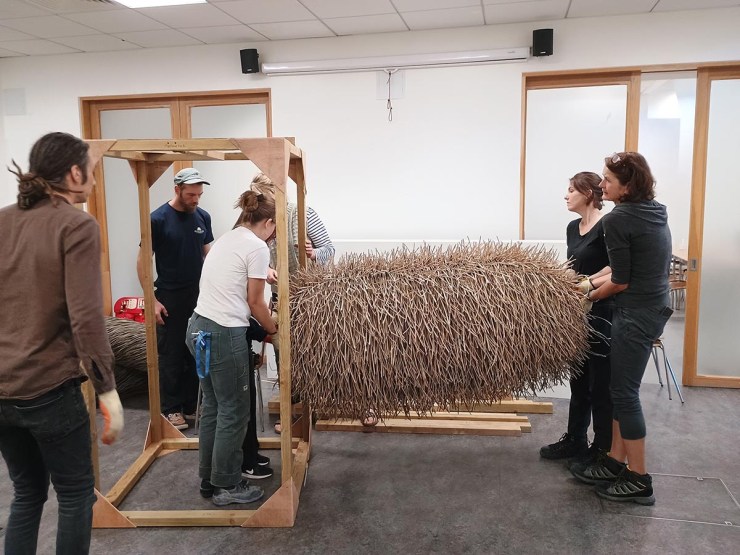
On September 8th I came into the museum at 8:30am to shadow the exhibitions team as a development day. Most of the staff and contractors were already there and so I started by talking to the Head of Exhibitions, Rachel, about what needed to be done. She showed me her schedule of the day, starting at 8am, going through to 5pm, in which we would derig all the sculptures and get them set up safely out of the public areas and into storage. After, I helped set up hoarding to keep the aisle where the work was being done secluded, as the museum would be open to the public as usual around us. This aspect was an interesting learning opportunity for me as I have no earlier experience with the manual labour aspect of the work, but I enjoyed being hands-on.
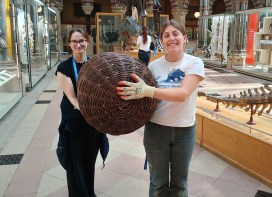
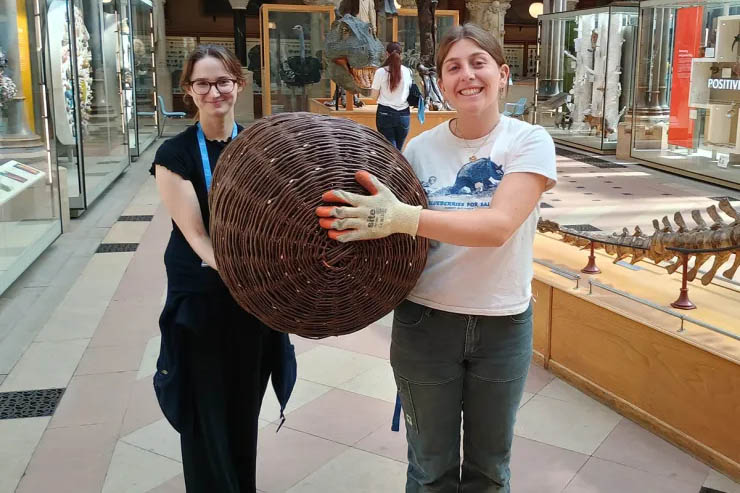
As I was doing this, the team from Outback Rigging worked on carefully lowering the suspended works to the ground and to our surprise; the take down was ahead of schedule. Most of them were removed by the middle of the day and these ones were simple to move. This was interesting to me as they seem so delicate, being large structures made of woven willow, but they proved sturdier than I thought. However, some were more difficult to take down than others, including the COVID sculpture. This was the most difficult to get down to the storage space, due to its intricate structure and its large size. Too wide to take down the stairs we usually use, Rachel organized with the Pitt Rivers to take it through their door, along the road and back into the Museum of Natural History through another door! What made this procedure more complicated was the sculpture itself, as its round construction meant there were no handholds. Luckily, the artist Issy Wilkes created some by looping some zip ties through the metal frame and, learning from the setup of the exhibition, used foam sheets to wrap around these painful to hold ties, to make the journey even easier. I felt it was an extremely rewarding process when we were finally able to put it down, as it required a lot of teamwork and shimmying about corridors to make it – I was very relieved we were able to keep it in one piece.
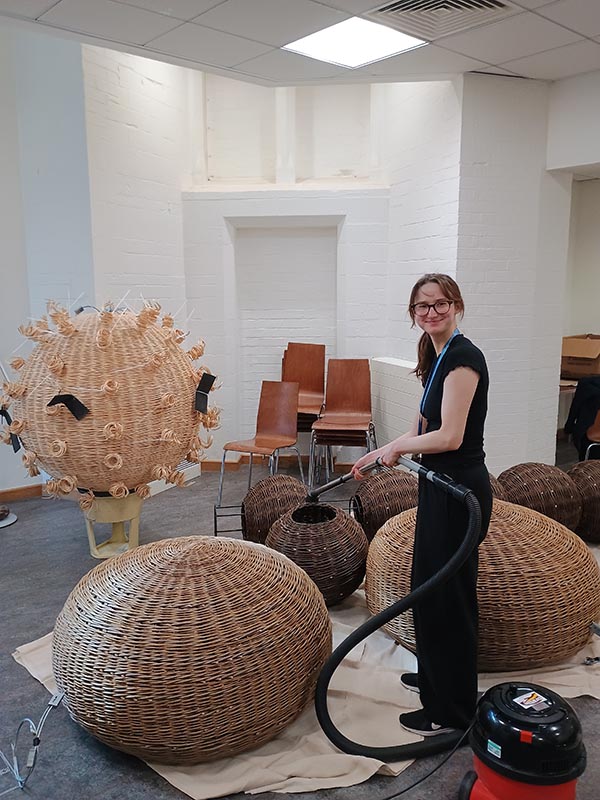
As the day went on and the sculptures were down and put away safely, I began to do smaller, but equally important tasks. The works themselves weren’t the only part of the exhibition, so I aided in removing the signage that was in the aisle that explained the meaning of each part. We also moved these down to the storage room, out of the way of the surrounding visitors and I began the task of removing the labels from inside. Another small step was vacuuming the sculptures. Despite regular conservation cleaning, hanging up in the court for so long had meant they had accumulated a lot of dust, which had to be cleaned out before they moved to their next home. These tasks were ones I wouldn‘t have thought of before the experience, but I realise that the smaller aspects are just as important as the larger ones when it comes to taking care of the exhibitions. It is our job to not only display the works as best we can, honouring their artistic intent and presenting to the audience in a way they understand, but this experience showed me how important the after care is, ensuring that they are well maintained to carry on their purpose and that the museum is returned to its original state.
Dr Caroline Wood, from the Public Affairs Directorate at Oxford University, takes us behind the scenes to uncover one of the most exciting dinosaur trackways in the world.
The information in a single footprint
The air pulses with seismic activity and under our feet deep vibrations race across the ground. Every so often, a shattering rumble rips out across the surroundings.
Dr Emma Nicholls, a vertebrate palaeontologist at Oxford University Museum of Natural History (OUMNH), has to shout to make her voice heard ‘…they are huge and they can’t see you. Remember, do not leave the designated safety area under any circumstances!’
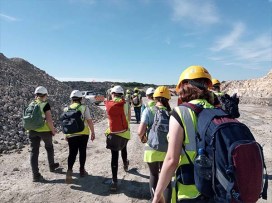
We all nod diligently, assuring her we have understood. Looking down at the immense footprints a few metres away, I try to imagine how painful it would be to be squashed by the foot of a ten tonne sauropod dinosaur. I’m pretty sure my hard hat wouldn’t be very effective protection… however, it isn’t dinosaurs that are rumbling and thundering all around us today, but thoroughly 21st-century quarry vehicles.
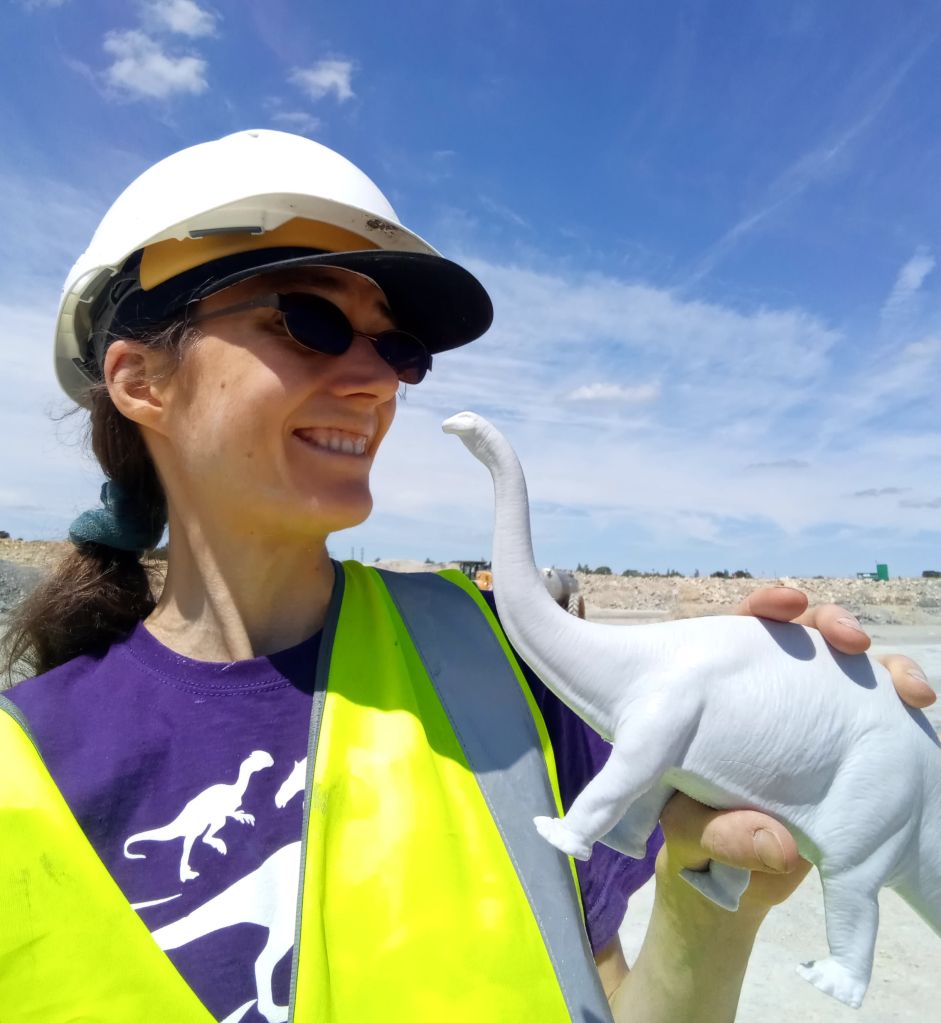
Author Dr Caroline Wood, at the dig site at Dewars Farm Quarry in North Oxfordshire
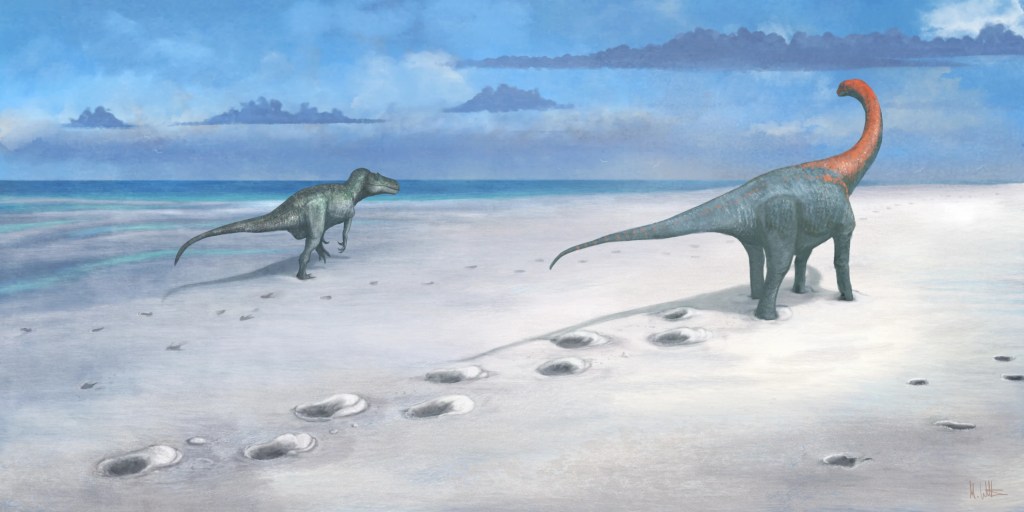
On a scorching hot summer’s day, I’ve come to help uncover a newly-discovered section of one of the longest dinosaur trackways in the world, here in North Oxfordshire. Whilst stripping back clay from the ground with his vehicle, quarry worker Gary Johnson stumbled upon a series of exquisitely preserved dinosaur footprints. The OUMNH team were called, and they soon made a visit to the site with two colleagues from the University of Birmingham. What they found was something really special; tracks from not just one type of dinosaur but at least two: a herbivorous sauropod (thought to be Cetiosaurus) and the terrifyingly-armed carnivore Megalosaurus, both hailing from the Middle Jurassic, approximately 166 million years ago.
This week, Smiths Bletchington have given site access to a team of researchers, students and staff from the Universities of Oxford and Birmingham. Our task today is to uncover the prints as much as possible, capture digital records, then create computer models to enable researchers across the world to study them further. As someone who has been obsessed with dinosaurs practically from birth (my first toy was a Triceratops), it feels like all my Christmases have come at once.
‘It’s amazing how much information you can get from a single footprint’
It is not the first time that footprints from these dinosaurs have been found in the area. In 1997, tracks from the same two types of dinosaur were unearthed at Ardley Quarry and Landfill Site in Oxfordshire, and can now be seen in the ‘Dinosaur garden’ at the Oxfordshire Museum in Woodstock. But the newly-unearthed footprints, which link up with the original, make it by far the largest and most significant dinosaur track site in the UK.
‘Some people may feel they’re not as visually dramatic as fossilised skeletons, but dinosaur footprints are incredibly useful resources for palaeontologists,’ Emma says. ‘They can give us a wealth of information about how these animals moved and travelled. In addition, footprints and other trace fossils can also give direct evidence of the environment within which the organism existed.’
‘It is possible that this huge Jurassic predator was tracking the sauropod to hunt.’
Dr Duncan Murdock
She points to the nearest Cetiosaurus tracks. ‘Each of the sauropod footprints has a distinct, raised ridge at the front. This indicates that the animal was walking in soft, wet sediment, but that it wasn’t so water-logged that the footprint collapsed. When the animal put its foot down, its weight caused the mud to splosh up in front, which has been preserved in situ.’
Dr Duncan Murdock, who is co-leading the excavation with Emma, as well as colleagues Professor Richard Butler and Professor Kirsty Edgar from the University of Birmingham, adds: ‘The climate here in the Middle Jurassic would have been warm and tropical, and the environment essentially a large, muddy lagoon.’ The sediment kicked up at the front of the prints was also the reason that the buried prints came to light in the first place, when quarry worker Gary Johnson felt the huge bumps as he worked to clear the mud with his vehicle.
Dinosaur footprints can also offer valuable clues into how different animals interacted, particularly when their tracks are found together, as they are here. ‘Here, we have trackways from at least four sauropods and one Megalosaurus,’ Duncan says. ‘Interestingly, the sauropods are a mixture of different sizes, so it is possibly a herd with juveniles or perhaps there are more than one type of sauropod represented here.’
At one point, the tracks intersect- which poses an interesting question for the research team – which dinosaur came first?
‘It looks as though the back of the Megalosaurus footprint has squished a section of the bump at the front of the Cetiosaurus print, meaning the carnivore came second,’ says Duncan. ‘Although inconclusive, it is possible that this huge Jurassic predator was tracking the sauropod to hunt.’
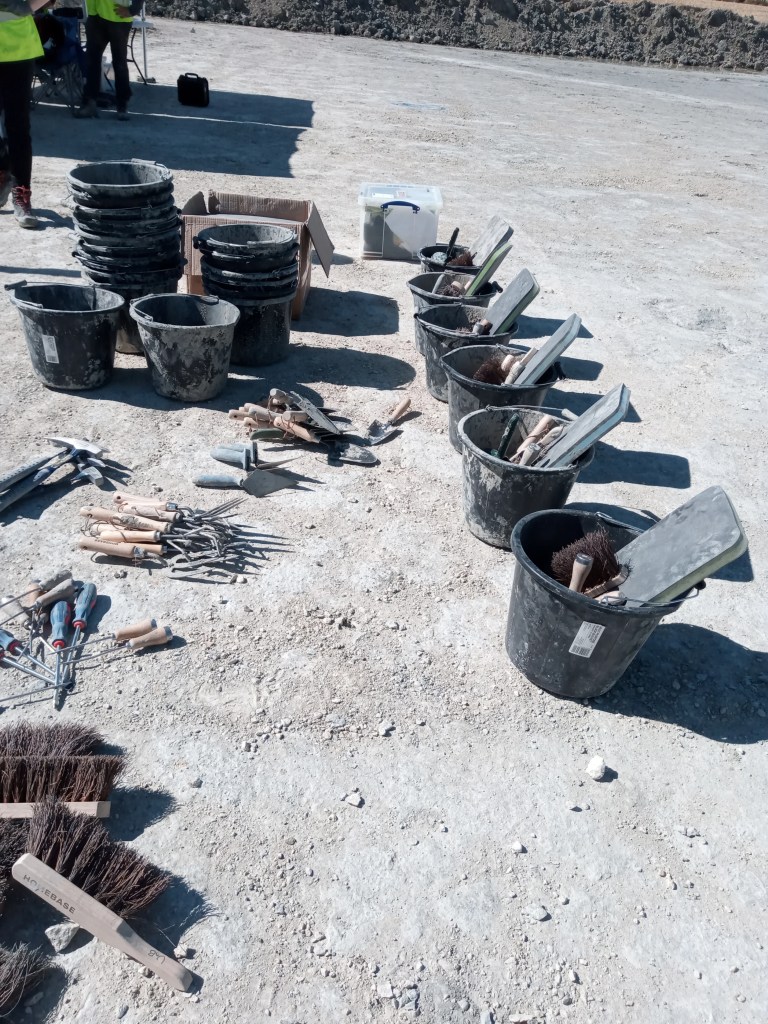
With most of the prints only partially excavated, it’s time I made myself useful. Fortunately, my lack of experience isn’t an issue; instead of high-tech specialist equipment, I am handed a bucket of supplies that could all be sourced from a hardware store. I don gloves and set to work on a sauropod print with a brush, sweeping out dust and loose stones. Besides being a good workout, it is a highly multisensory experience as I look, feel and ‘hear’ my way around the giant print. I am taught how to ‘listen’ for the edge of the print by tapping my shovel gently: the fossilised print gives a sharp, metallic ching whilst the surrounding mud makes a dull thump sound.
Excavation equipment at the dig site. Credit: Caroline Wood.
Slowly, under my hands, the full outline of the 90 cm long print is liberated. It amuses me to think how the enormous creature that stomped this way 166 million years ago would have been oblivious that, one day, a diminutive biped mammal would be sweeping out its footprints with assiduous, almost loving, attention.
I’m not the only one getting goose bumps. Emily Howard, a (second year going into third year) Earth Sciences undergraduate student at Oxford University is working on the footprint next to mine. ‘I feel really lucky to be doing this – there is no analogue for dinosaurs,’ she says. ‘When we have lessons in class, it often feels as though everything has already been found and documented… so to be involved with a new discovery and to play a part in the process of uncovering it is very special.’
‘To me, dinosaur trackways are much more “alive” than fossilised bones, which can only be from dead animals. Similar to when you see human footprints on a path ahead of you, a dinosaur track gives the impression that the creature could be miles away in the direction the tracks march on, but was here only a moment ago.’
Emily Howard
Capturing all the details
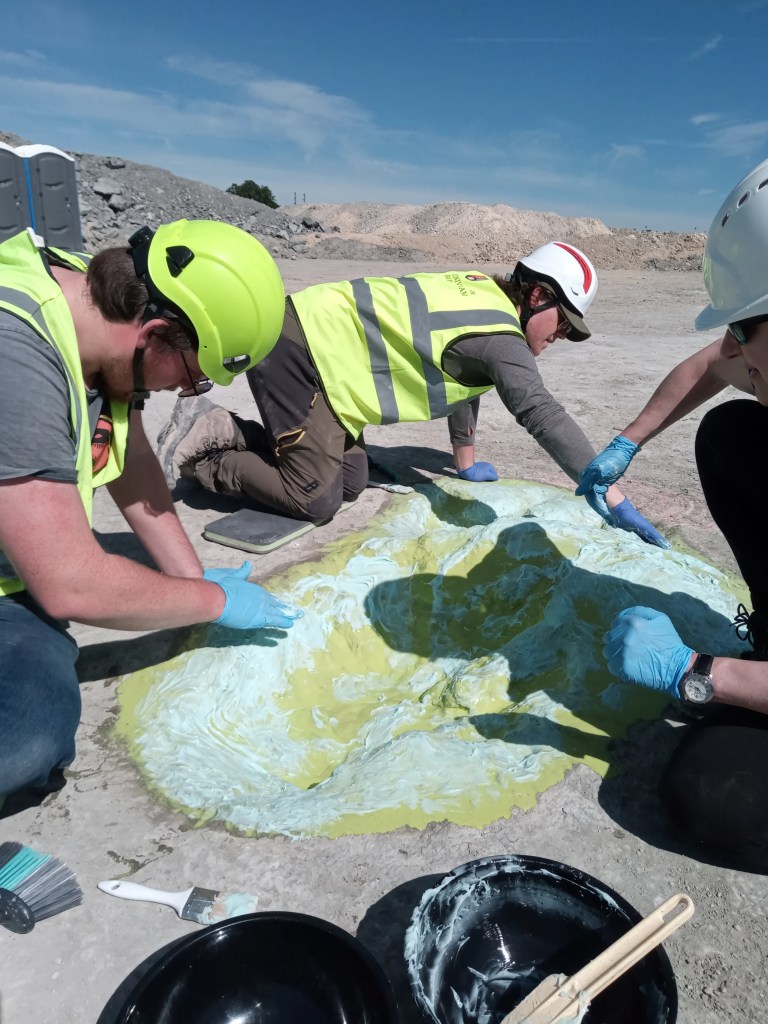
Nearby, one of the prints is undergoing more specialised treatment. Juliet Hay, a conservator in palaeontology at OUMNH, is massaging what looks like viscous turquoise toothpaste into the centre of a print. In the intense midday heat (which helps the materials work more quickly than on a cold wet day), the various layers that make the cast will soon bind together and solidify to create a mould that can be peeled off like a beauty mask.
‘Using the mould, we will be able to make 3D casts of the prints from various different materials, both for research and public engagement.’
Juliet Hay
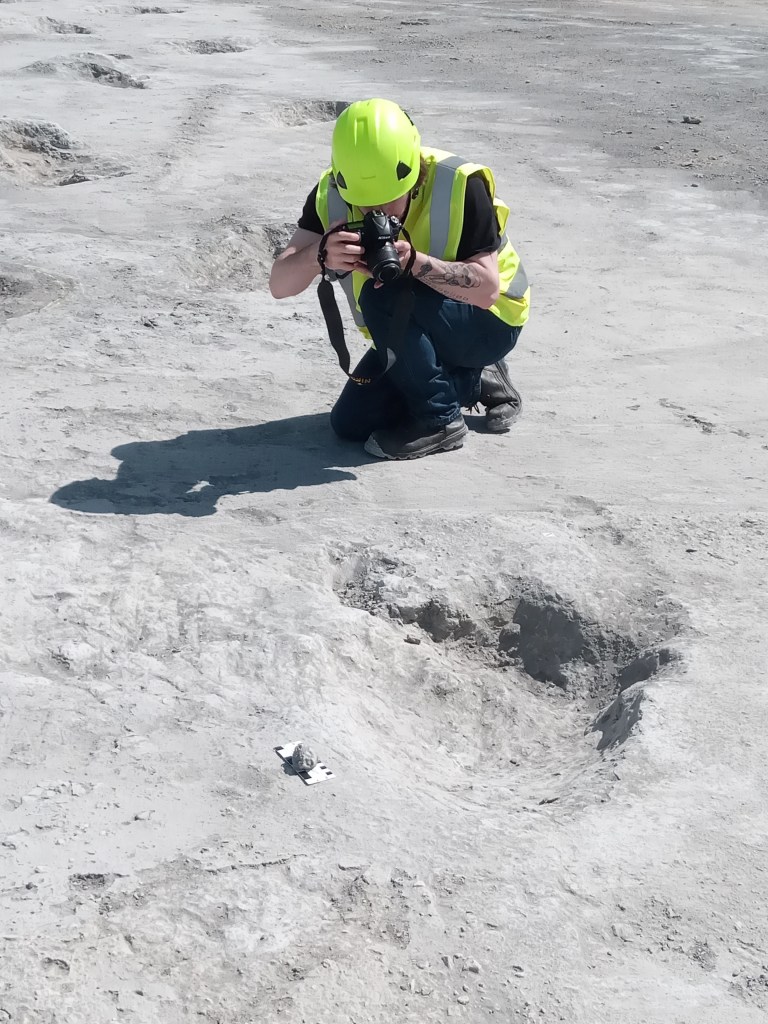
Creating a mould of one of the Megalosaurus footprints. Credit: Caroline Wood.A volunteer takes photographs of one of the Megalosaurus prints. Credit: Caroline Wood.
With so many prints to uncover, staff from all across OUMNH, as well as staff and students from the Universities of Oxford and Birmingham, have come to lend a hand, besides the collections team. ‘All the staff across the museum are excited,’ says Molly Appleby, Visitor Services Assistant at OUMNH. ‘The dinosaurs are such an iconic feature of our exhibits, so it is wonderful that we have all had the opportunity to be involved in this new discovery. This certainly makes a change to my day job!’
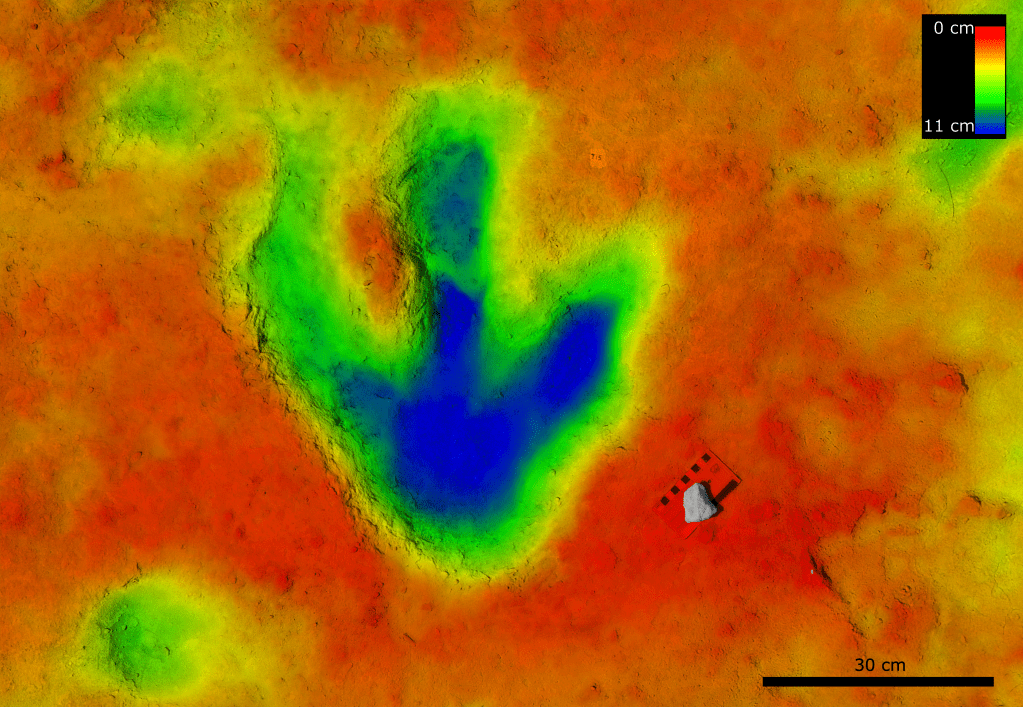
One of the Megalosaurus footprints coloured by depth. Credit: Dr Luke Meade, University of Birmingham.
The team’s aim goes beyond making physical models. A key outcome is to digitally record the prints so that computer software can reconstruct 3D virtual models, that can be used by researchers across the world.
‘Using photogrammetry and computer models, we will be able to work out details such as the height of the animals and their speed,’ Duncan says. ‘On the largest sauropod’s track, one of the prints is slightly out of sequence – almost as though the animal stopped and looked back over its shoulder. Hopefully, the computer models will help solve that mystery.’
To do this, you need data – and lots of it. I join some of the students who are busy taking close-up photographs of each footprint from as many different angles as possible. Once again, the equipment is straightforward: a standard DSLR camera. In theory, one student tells me, you could even use a mobile phone.
The photographs will be fed into computer software that will identify points of similarity and use trigonometry to reconstruct a 3D model of the print. For each print, between 60 and 100 photos will be taken. I’m told that more photographs are needed for the sauropod prints: being simpler shapes, it’s more taxing for the model to identify reference points.
‘This never ceases to be exciting’
‘Team- breaktime!’ As the sun reaches its noonday zenith, we convene under the OUMNH gazebos to escape into the shade. We refuel and reapply sunscreen, swapping stories of childhood dinosaur addictions and favourite scenes from Jurassic Park. For Emma though, the real-life science of dinosaurs will always trump fictional parodies.
‘Duncan and I have been working with Mark Stanway and the Smiths Bletchington team at the Quarry for nearly two years now, and it never ceases to be exciting,’ she says. ‘Excavating a brand-new Megalosaurus trackway in the 200th anniversary year of the discovery of Megalosaurus – the first dinosaur to be scientifically named and described anywhere in the world – is very special indeed.’
As my eyes are drawn along the length of the largest sauropod trackway, over 150 metres long in total, I realise that the huge footprints disappear under the cliff at the edge of the quarry. There are undoubtedly more tracks to be discovered…who knows what will be found in the future?
The area is still a working quarry with no public access, and will remain so in the medium term. However, Emma, Duncan, Richard and Kirsty are actively working with Smiths Bletchington and Natural England on options for preserving the site for the future.
You can learn more about the discovery and see the original Megalosaurus fossils on display at the Oxford University Museum of Natural History’s Breaking Ground exhibition.
By Nina Morgan – geologist, science writer and Honorary Associate of the Museum Picture research by Danielle Czerkaszyn, Librarian and Archivist
The expansion of the railways in the 19th century offered more than just faster travel times. The growing rail network opened up the potential for introducing the wonders of geology, scenery and history to the travelling public at large. It also made it possible for geologists working in the field to import the comforts of home. And it spawned a new form of popular science and travel writing – describing geology and scenery from the train.
The geologist John Phillips, then based in York but later first Keeper of the Museum, was among the first to recognise these advantages. In 1841 he was on assignment mapping with the fledgling geological survey in southwest Wales. He expected the project to last several months, so rented a house in Tenby and – missing his home life – asked his sister Anne, along with Mary, her maid, and Cholo, their dog, to travel from York to Tenby join him.
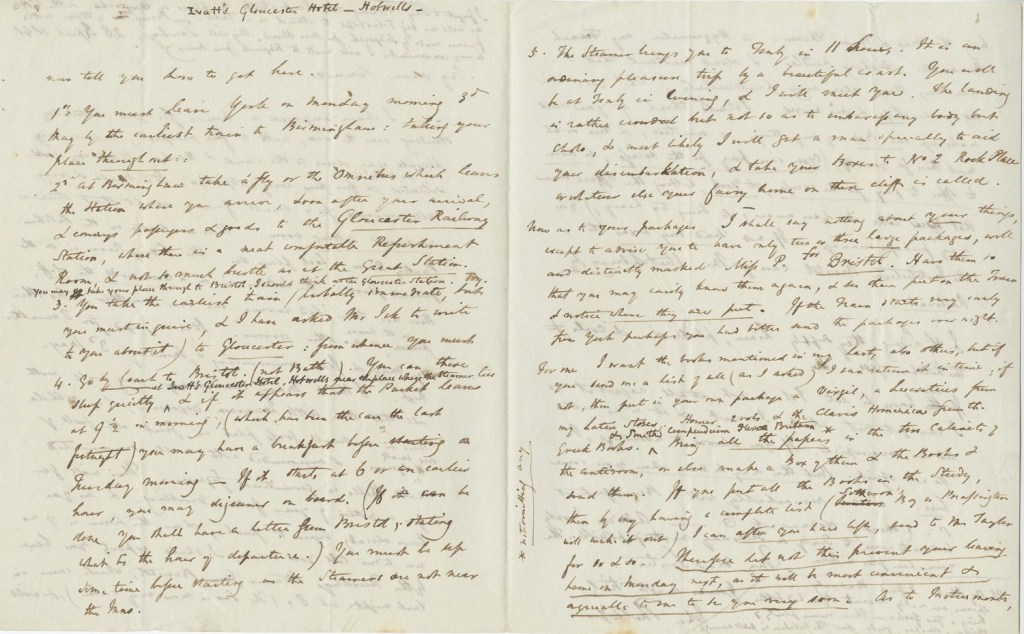
Letter from John Phillips to his sister Anne, 28 April, 1841 (OUMNH Archive)
It was a marathon journey. In a long letter to Anne written on 28 April 1841, he provided her with detailed instructions about how to achieve it. Although it is clear that Phillips had become very familiar with the train timetables, he was not so sure about the rules for travelling with dogs. Two days later he wrote again to Anne to say:
“How you will bring poor Cholo I do not even conjecture. Perhaps they will let him be with you in the carriage…. Pray have a good courage then all will go right.”
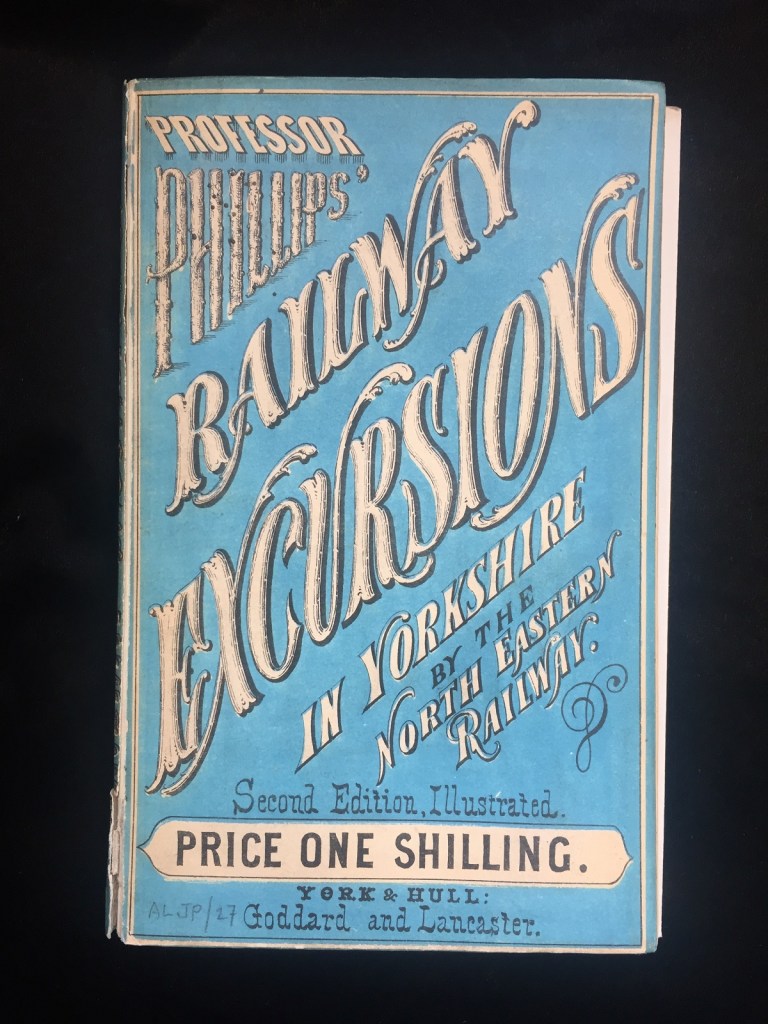
John Phillips’s popular railway guidebook, 2nd edition, 1855 (OUMNH collection)
Phillips’s book, Railway Excursions from York, Leeds and Hull, first published in 1853, was a popular success. It went through several editions and was republished several times under various titles. Along with references to geology, the book included much historical background about the buildings, sights to be seen, and advice on the top ‘tourist destinations’ and how to reach them.
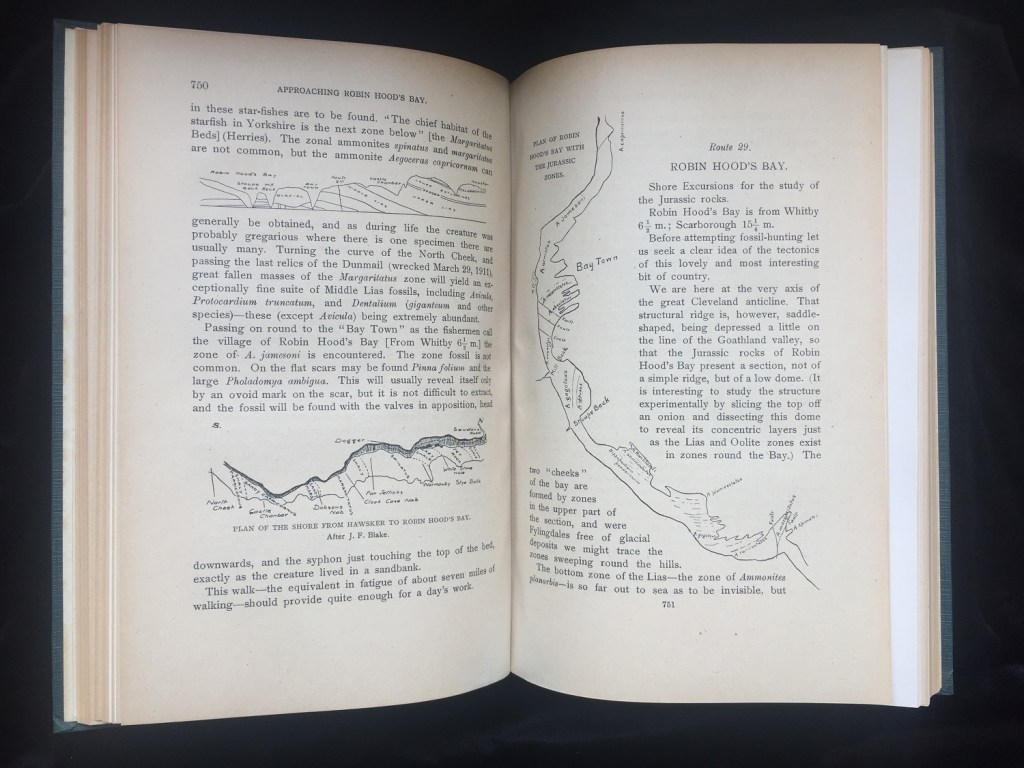
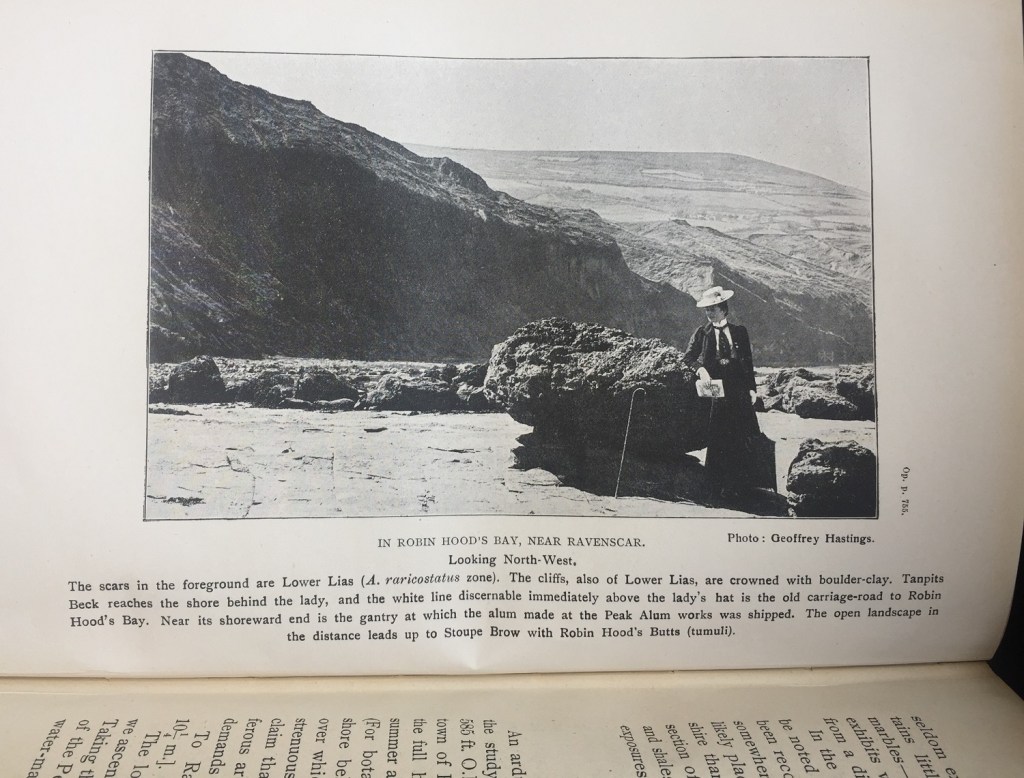
Phillips’s book inspired other geologists to jump onto the platform, and as new lines opened, so new railway geology guidebooks began to appear. Notable examples include the Geology of the Hull and Barnsley Railway by Edward Maule Cole, which appeared in 1886; and Yorkshire from a Railway Carriage Window, included as Part 2 in the massive Geology of Yorkshire by Percy Fry Kendall, Emeritus Professor of Geology at Leeds University, and Herbert Wroot, Honorary secretary of the Yorkshire Geological Society, which was published in 1924.
Illustrations from Geology from a Railway Window, part 2 of The Geology of Yorkshire by Percy Fry Kendall and Herbert B. Wroot, 1924 (OUMNH collection)
Network rail
As the railway network expanded throughout Britain, so did the number of authors keen to describe the geology of their part of the country from the windows of a train. In 1878, the Geologists’ Association organised an excursion to examine the geology exposed in railway cuttings along the Banbury and Cheltenham District Railway from Chipping Norton to Hook Norton. Participants were advised to take the train from Paddington to Chipping Norton, with luggage directed to The White Hart, Chipping Norton.
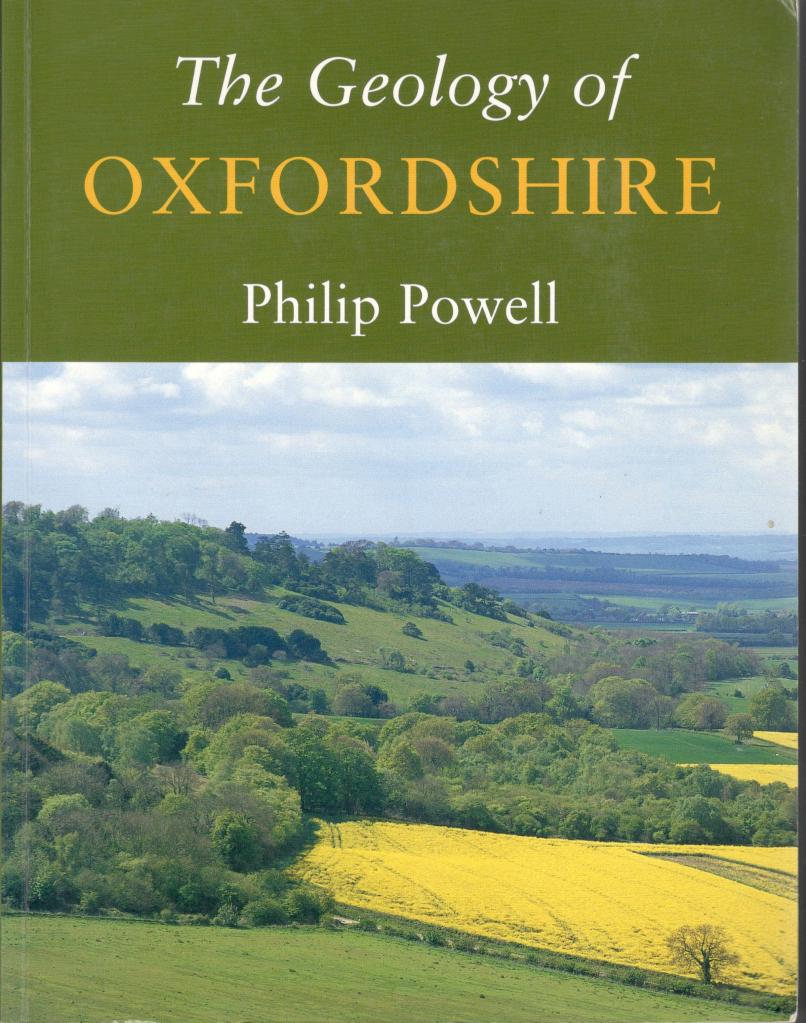
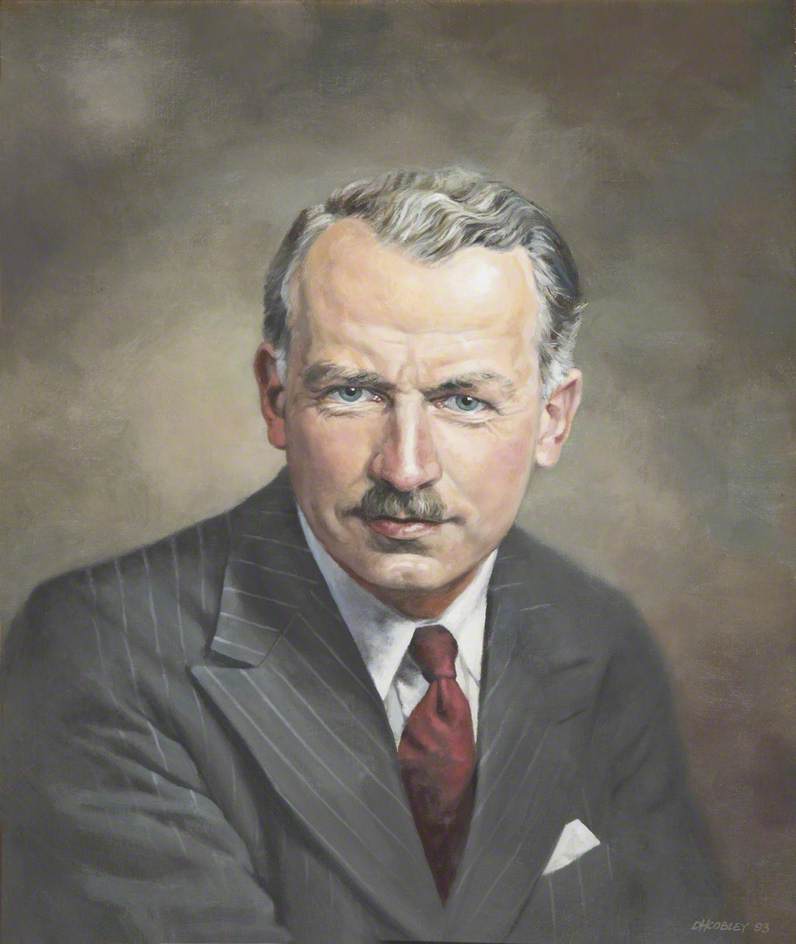
In 1886, Sir Edward Poulton, later Hope Professor of Zoology at the University of Oxford, published an account of The Geology of the Great Western Railway journey from Oxford to Reading. Then in 1945, the Oxford geologist W.J. Arkell published his classic paper, Geology and Prehistory from the train, Oxford to Paddington; and in 2005 Philip Powell, a former curator and now Honorary Associate at the Museum, paid tribute to Arkell’s methods of observation by adding a final chapter outlining the geology that can be seen when travelling on part of the Cotswold Line from Moreton in Marsh to Reading, to his 2005 book, The Geology of Oxfordshire.
Meanwhile, the geologist Eric Robinson, now retired from University College London, prepared numerous handouts for his students and amateur guides describing the geology that can be seen from trains leaving from various London stations.
Left: Edward Bagnall Poulton, Oxford-based entomologist and evolutionary biologist, 1856–1943 (OUMNH Archive) ; Centre: The Geology of Oxfordshire by Philip Powell, 2005 (available from www.gravestonegeology.uk, and the OUMNH shop); Right: W.J. Arkell, Oxford-based geologist and palaeontologist, 1904–1958 (OUMNH Archive)
Times past
Along the way all of the ‘railway geologists’ painted vivid pictures both of the geology and the countryside as they saw it, and their descriptions – especially those from the earlier publications – provide a valuable insight into landscapes and railway lines now lost.
“A railway tour is life in a hurry,” Phillips proclaimed in his pioneering railway book. He clearly enjoyed the rush, and so did the many other geological authors and lovers of the countryside who followed in his tracks. Even today, with a railway geology book in hand, those delays along the line can turn into a real pleasure – depending where you’re held up, of course!
By Nina Morgan – geologist, science writer and Honorary Associate of the Museum Picture research by Danielle Czerkaszyn, Librarian and Archivist
The introduction and growth of the railway network in the first half of the 19th century not only revolutionised travel and transport of goods for many, but it also had a profound effect on the science of geology. Not only did it make it easier for geologists to cover the ground quickly – but the railway cuttings for the new lines revealed rock outcrops that had never before been seen.
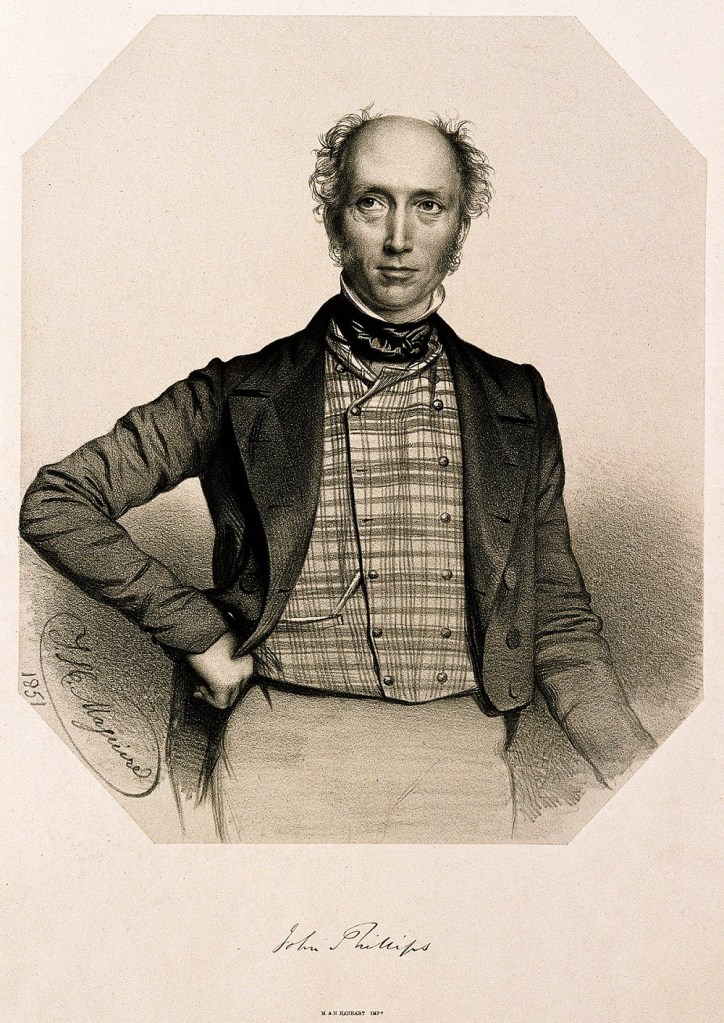
John Phillips as a young man
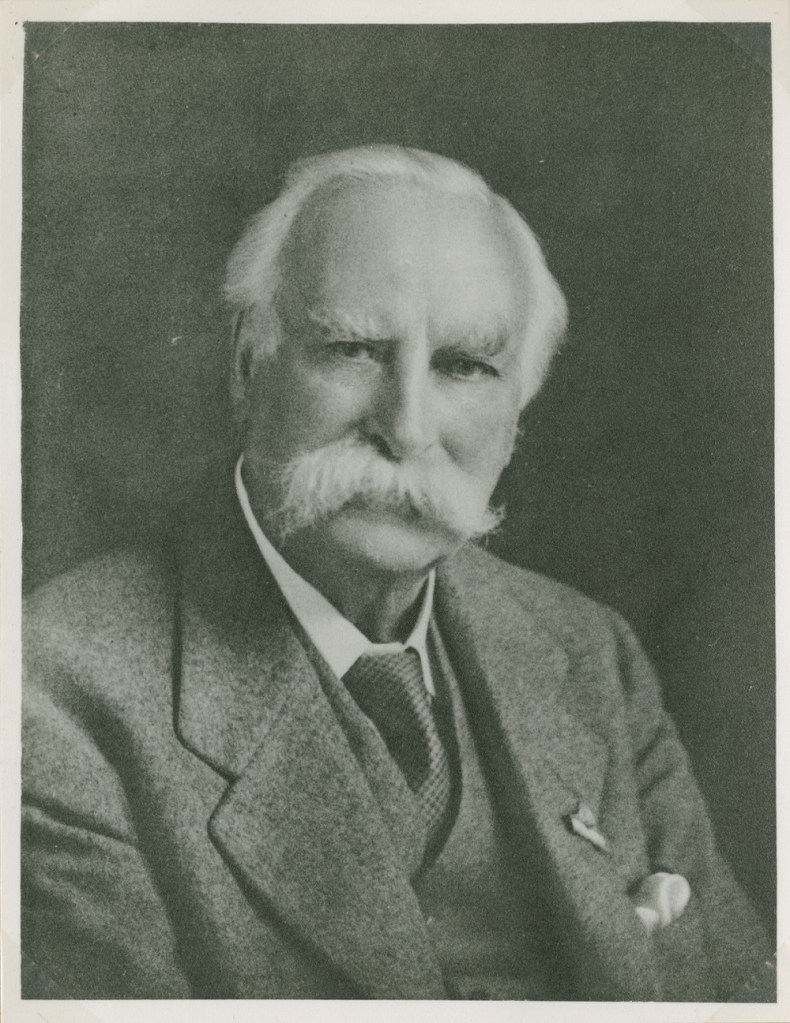
One of the first to take advantage of the new possibilities was John Phillips (1800–1874), the first Keeper of the Museum, and nephew of William Smith, often referred to as the Father of English Geology. Phillips was orphaned at the age of eight, along with his younger sister Anne, and their younger brother, Jenkin.
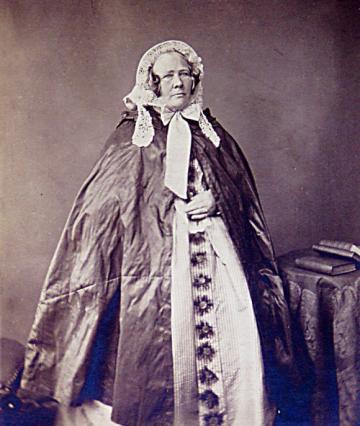
John was educated at Smith’s expense and learned about geology at his uncle’s knee. He was reunited with Anne in 1829. Neither married and they lived together until her death, with Anne serving as John’s housekeeper, moral support, confidant and geological companion. John went on to become a skilled palaeontologist, field geologist and prolific author. He also became a great train enthusiast.
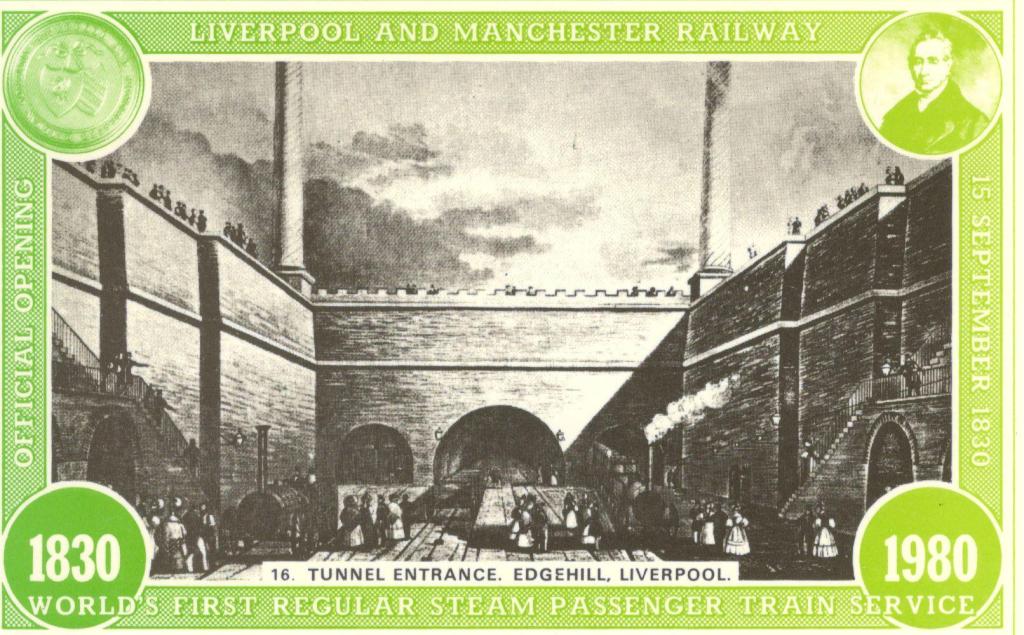
On 23 July 1835, John wrote to Anne with this vivid description of his first train journey – travelling on a ‘flying steed of Iron,’ from Manchester to Liverpool on his way to Dublin.
“…My dear Annie, You must certainly come to feel the strange impression of this flying Steed of Iron. It does so hurry & flurry on, you shake & sleep & start & wonder at the gliding Houses, trees & Churches, — the trains which meet & pass you’ like the swiftest birds with a rushing sound & the Master power (Steam) & a confused picture of colours & forms not at all distinct as Men[,] Women, Carriages &c that it is all like magic & can not be understood by a mere description. Then you are dragged through a tunnel full of gas lamps, then laid hold of by ruffian porters & crammed into an Omnibus whether you will or no & whirled away the man who guides (only) knows whither. “
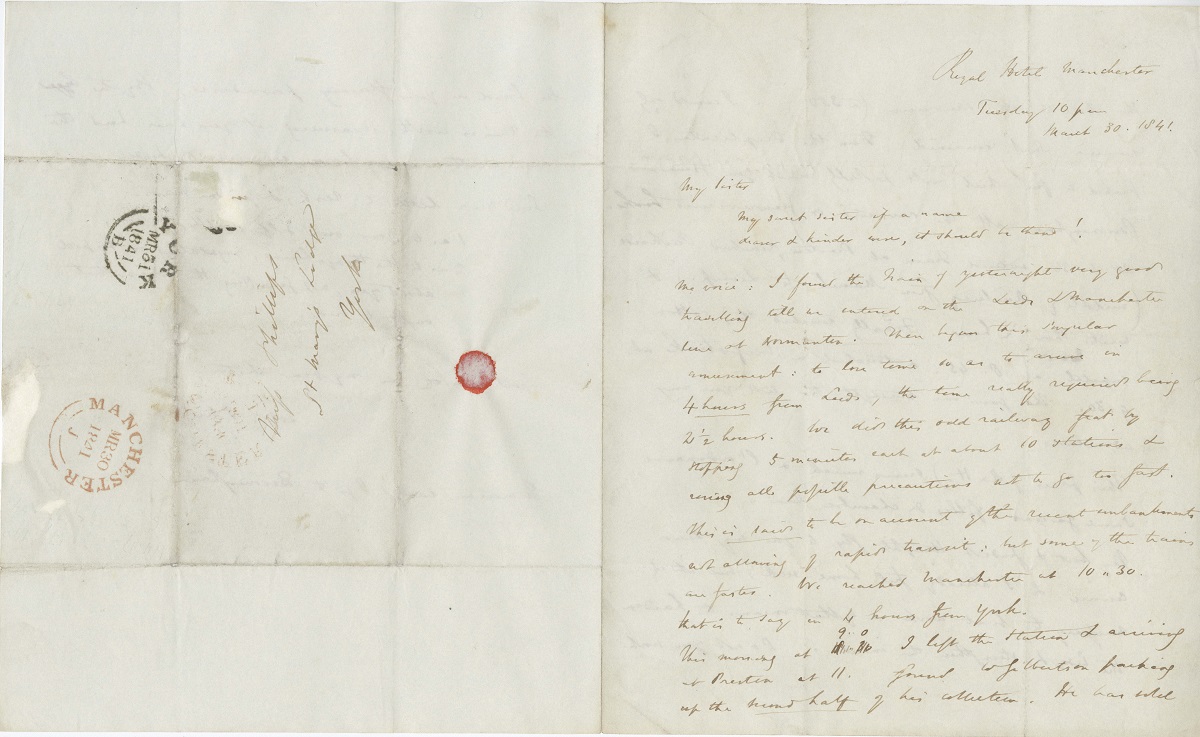
Phillips quickly became a convert to train travel. He was often travelling from his then base in York to earn money by giving lecture courses by subscription to members of the various newly formed Philosophical societies, so enjoyed the relative convenience and faster travel times railways offered – even though, as he wrote to Anne in March 1841, the trains were not always punctual.
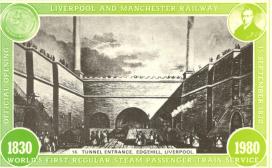
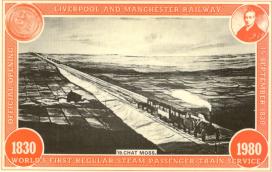
Liverpool and Manchester Railway commemorative postcard (author’s collection)
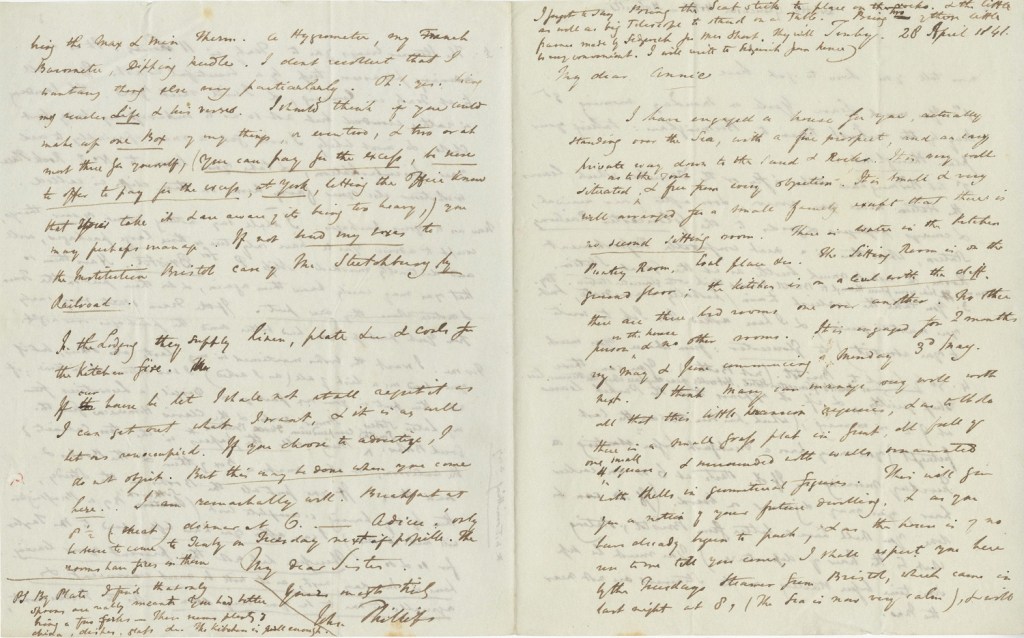
“I found the Train of yesternight very good travelling till we entered on the Leeds & Manchester line at Normanton. Then began this singular amusement: to lose time so as to arrive in 4 hours from Leeds, the time really required being 2 1/2 hours. We did this odd railway feat by stopping 5 minutes each at about 10 stations & using all possible precautions not to go too fast. This is said to be on account of the recent embankments not allowing of rapid transit: but some of the trains are faster. We reached Manchester at 10:30, that is to say in 4 hours from York.”
Sound familiar?!
Letter from John Phillips to his sister Anne, 30 March 1841 (OUMNH Archive)
In the second part of Railway Geology, Nina will take a look at how the expansion of the railway network spawned a new form of popular science and travel writing.


 More Than A Dodo