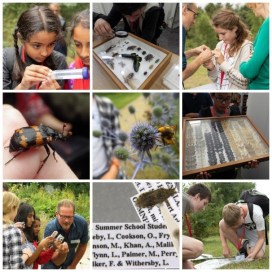
Insect investigators Summer School

This post was first written in June 2021. The summer school is now full and booking has closed. You can find lots of insect activities on the Museum of Natural History webpages for our 2020 virtual Six Legs of Summer summer school.

We are very excited to announce that we will be running an Insect Investigators summer school at the Museum of Natural History during the week 2 – 6 August 2021.

If you are aged between 10 and 14, discover the amazing world of beetles, bees and butterflies at our free Insect Investigators Summer school, 10am to 3pm on 2nd6th August 2021.

The summer school will be for 10-14 year olds and is free of charge, thanks to generous funding from the National Lottery Heritage Fund. Those taking part will gain a behind the scenes insight into the British Insect Collection and the work of museum, photograph insects at the Botanic Gardens with a wildlife photographer, learn how entomologists collect and study insects with practical sessions at Harcourt Arboretum, and carry out their own insect investigation. Perhaps you’ll even have an insect added to the collection!
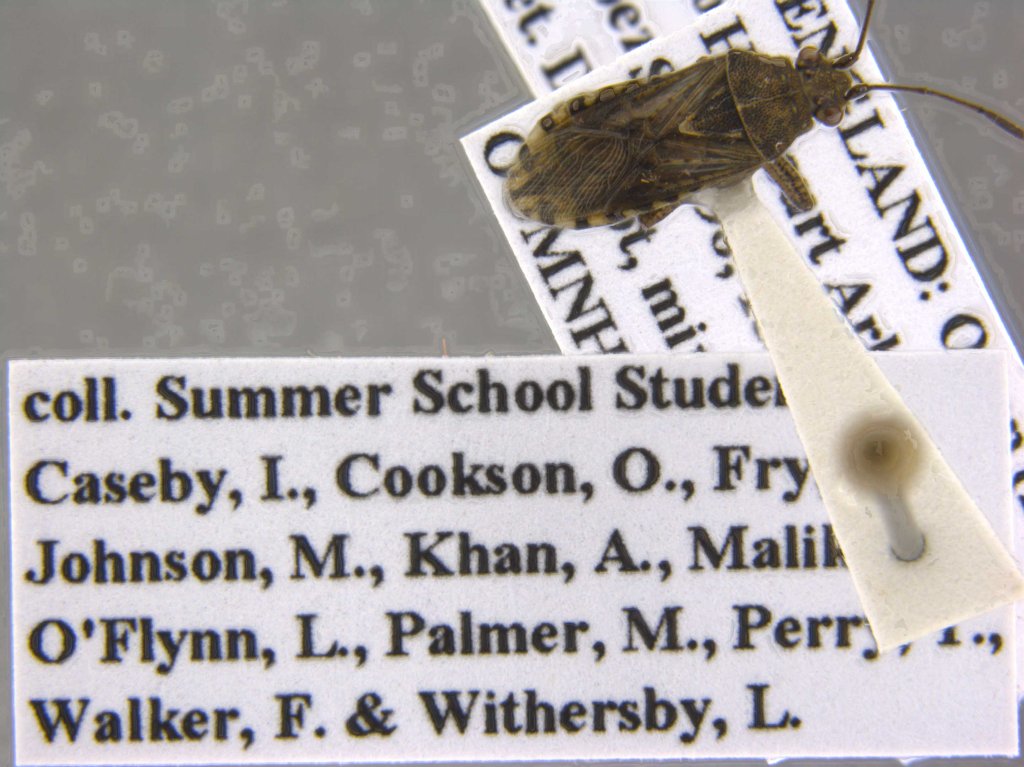
Past summer school participants have added to the British Insect Collection

If you would like to know more, or want to book a place, please get in touch using the Contact Us page, or email Rodger, Susie and Kate at hopelearning@oum.ox.ac.uk. We’re looking forward to hearing from you!
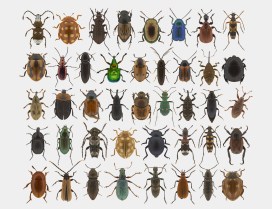
Welcome to Crunchy on the Outside!

Crunchy on the outside is a new blog for and by young entomologists.

Interested in insects? Perhaps you saw something we posted online, came to the museum, or maybe we visited you at school for an Insect Discovery Day. However you heard of us, if you’re interested in insects this is the place for you!

We’ll be sharing news about insects and the natural world, people who work insects and help to protect them, what goes on at the museum, and new things for you to make and do. Look out for:

  • A peek behind the scenes at the museum
  • Insect related things to make and do
  • Info about people who work with insects, both past and present
  • Cool facts and stories about the amazing insects we can find in this country
  • A chance to have your say regarding what is in this blog and the museum
  • First dibs on related events

Crunchy on the outside is your opportunity to tell us what you would like from the museum, share your ideas and to get involved. We’d love to hear your ideas so please get in touch using the CONTACT US page if there is something you’d like to see.

Crunchy on the outside is part of the HOPE for the Future project at Oxford University Museum of Natural History. The project is funded by the National Lottery Heritage Fund.

A photographer’s eagle eye

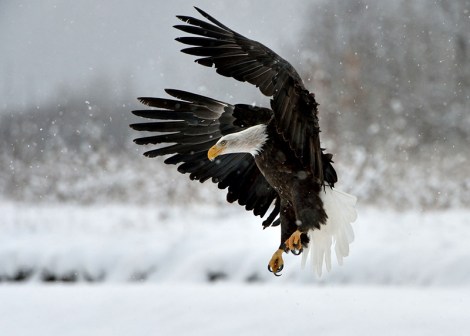
3-landing-on-snow-800px

To coincide with our display of the Oxford Photographic Society‘s annual show, here Society member Ron Perkins recounts how he captured these great shots of the magnificent Bald Eagle.

Bald eagles, the national birds of the USA, are charismatic, powerful creatures. Young eagles are tawny brown but acquire their majestic black plumage, with white heads, after two years.

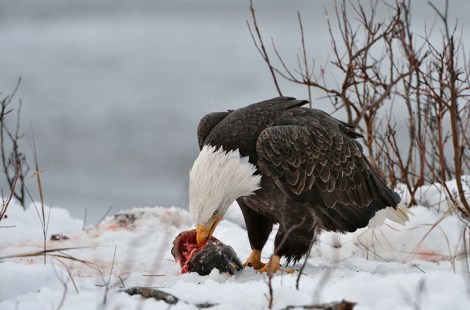
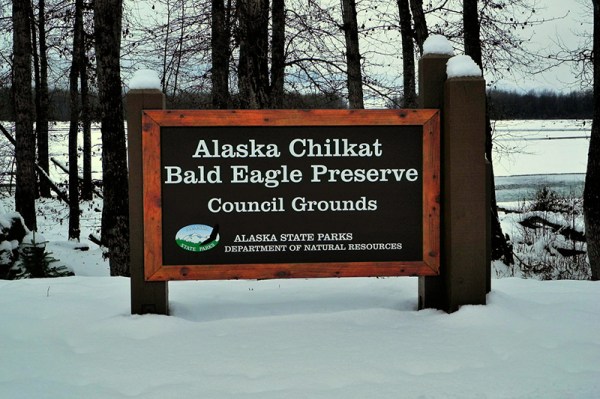
In early winter the Alaska Chilkat Bald Eagle Preserve attracts up to 3,000 eagles which pause on their seasonal migration to the south in order to feed on the salmon that swim up the river to spawn.

2-eating-salmon-800-px
A Bald Eagle eating salmon on the river bank

Having discovered this photo opportunity via the internet I easily recruited three Oxford Photographic Society members to travel to Alaska. The journey took two and a half days via Seattle and Juneau by air and on to the small town of Haines by an 80-mile ferry trip.  Haines is near the Pacific coast so although there was snowfall most days the daytime temperatures were about -5C.  Each day we drove 20 miles along the banks of the river to the best photographic locations to get our shots.

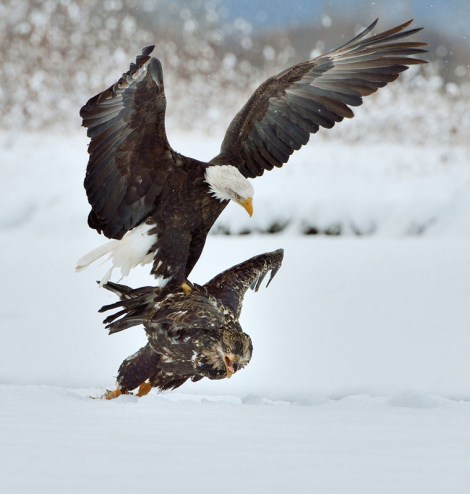
4-adult-attacking-800px
An adult eagle attacking a juvenile

After spawning, the fish die in the shallows at the edges of the river. Then the eagles drag the dead salmon onto the snow-covered banks. The fish weigh up to 15 pounds so moving them is difficult; some adult eagles watch juvenile birds moving the salmon onto the riverbanks and then attack to drive away the juveniles.

1-noticeboard-800px
Arriving at the preserve

Eagles always attack into the wind, so it is easy to plan and position yourself to capture these shots. And the combination of large numbers of eagles with frequent dramatic action is a powerful attraction for wildlife photographers.

Oxford Photographic Society’s Natural World exhibition runs until Sunday 22 January in the Museum’s Café Gallery.