One million and one

Daisy and George_crop

Meet Daisy. She’s a very special visitor. We enjoy welcoming each and every one of the people who come through the doors; from just round the corner or right across the globe. But Daisy stands out because she’s the millionth person to step inside since we re-opened in February 2014. Yes, 1,000,000 visitors in just 18 months! Ready and waiting with certificate and goodie bag, we ambushed the 13 year old and her family as they arrived this afternoon.
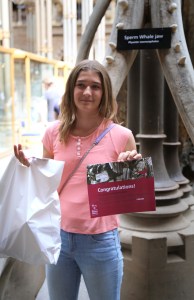
Daisy with goodie bag and certificate

Daisy and her brother George have travelled a long way for their first visit to the Museum. They live on the outskirts of San Francisco, California, and are spending summer with their grandparents in Cassington, just outside Oxford. Daisy says she loves exploring the variety of museums in her home town, so was excited to start looking around what she called the “impressive” museum. George (visitor 1,000,001) likes “museums with exciting things”, so we hope he finds enough to excite him here!

Since February 2014, many of our 1 million visitors have joined in with our plentiful programme of public engagement projects. We aim to entice the widest possible range of ages and interests.
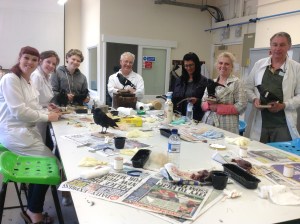
Taxidermy Creations workshop

Hundreds of family friendly events have educated and entertained the little ones, with new programmes for the under 5s and the ever-popular half term extravaganzas.

But the last 18 months has seen much more on offer for our adult audiences. Who says grown-ups don’t like getting messy and making something to take home? The popularity of the taxidermy workshops in June 2014 proved that they love nothing more.

School children have poured in for secondary and primary sessions alike. With evolution now featuring on the primary curriculum, we’ve been working with teachers to support them in this new area and developing a brand new primary workshop called ‘Evolve, Adapt, Survive’.

We know that curiosity doesn’t end when the school bell rings. Natural History Investigators, a new science club for 14-16 year olds, has given young people special access to museum collections and staff expertise on Saturday mornings. Achieving a national Crest Award in recognition of their achievements was the icing on the cake.
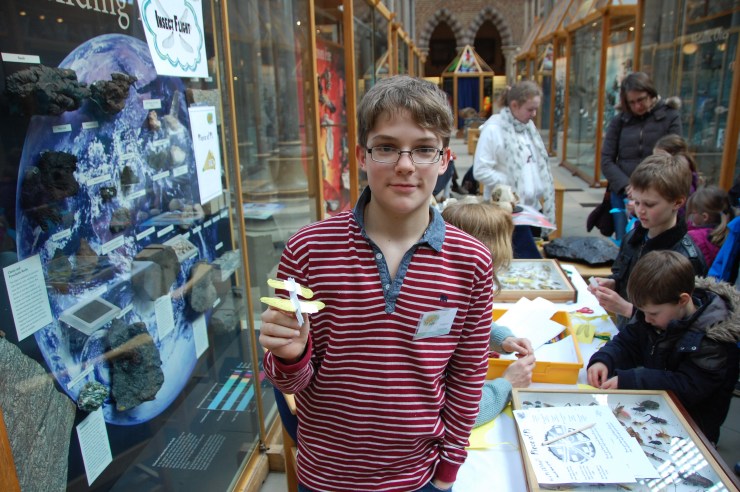
Natural History Investigators doing a spot of their own public engagement

Fashion shows, contemporary science lectures and late night pub quizzes were some of the eclectic public events on offer.

So Daisy is number 1 million and we were delighted to meet her today, but she represents all of our visitors. It’s the quality that really matters to us, not just the quantity!

Rachel Parle, Interpretation and Education Officer
 

The legend of the Layardi Whale

After - seperate proper right

The Museum gains a new buzz over the summer as we’re joined by a host of interns. Many are students who require a placement as part of their university degree. Ruth Murgatroyd, who is in her first year of the MSc Conservation Practice programme at Cardiff University, is spending her summer putting a variety of conservation skills into practice in our Life Collections.

During our 2013 year of closure, five large whale skeletons received extensive conservation treatment, which was described and documented on the Once in a Whale blog. Here, Ruth explains that there is more to be done conserving other whale specimens in our collection, and describes the careful work that it takes to bring them back to their best.

**

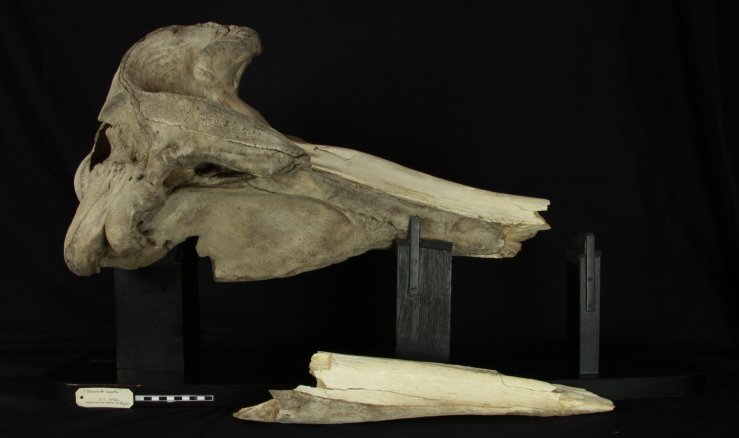
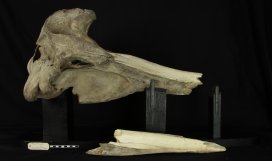
One of the specimens I’ve been working on in the lab is the skull of a Layard’s Beaked Whale (Mesoplodon layardi). As with many historic specimens, past repairs had become damaged or discoloured. The porous bone that allows whales to be buoyant under water had darkened and acquired staining and tide marks. It needed some attention.

Before PL Break
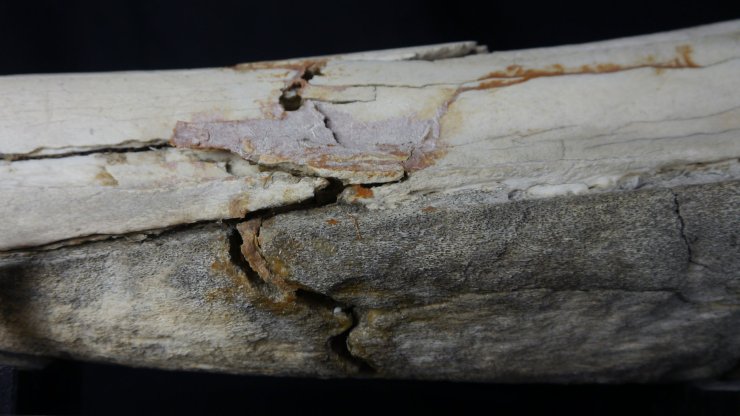
The brown material is animal glue, used in a previous conservation

It’s important to research specimens, to gain a full picture of the animal and its origin. This one turned out to have a particularly interesting story. I knew that the whale’s skull entered the collection in 1874, coming from Cape Point, South Africa, and attributed to J. Mackellar. Over tea time conversations with a colleague in the Museum it came to light that it might be the same whale mentioned by Henry Moseley (1844-1891), a naturalist on board the HMS Challenger voyage. In Moseley’s Notes by a Naturalist he mentions finding a Layardi cranium on a beach “near Mr Mckellar’s” in Cape Point in 1874. He described how it had its beak pushed into the sand and was being used as a target for rifle practice.

Cleaning with the rubber smoke sponge

After assessing the condition and taking pre-treatment photographs, I decided that the main objectives of the conservation were to remove past unsympathetic repairs; consolidate the bone around a break; clean the staining; and provide padding to the wooden support.

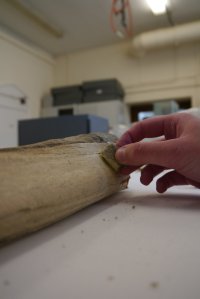
Cleaning needed different techniques depending on the location and the problem. Brush dusting with a vacuum cleaner and dry cleaning with a rubber smoke sponge was the first stage, followed by more specific treatments for ingrained stains. They were treated with poultices, which slowly release water into the pores of the bone and draw out soluble impurities as they evaporate.

I removed the brown adhesive using water on a swab. A pungent smell was given off that tells me the last conservator had used animal glue. I replaced this with an easily reversible acrylic resin.

The beak had been severely damaged (perhaps from the rifle practice!?), but its weight poses a conservation problem. An adhesive strong enough to support the weight of the repair is likely to be stronger than the bone and any stresses on the repair may result in further damage to the bone rather than to the adhesive. As the whale is going back into store for now, we decided that the two fragments will be left separate. The two fragments can be seen here in the wooden support.

After PR
Both fragments together in a wooden support

Although we can’t be sure that this is the Challenger whale specimen, the possibility certainly added an extra level of intrigue to this fascinating project.

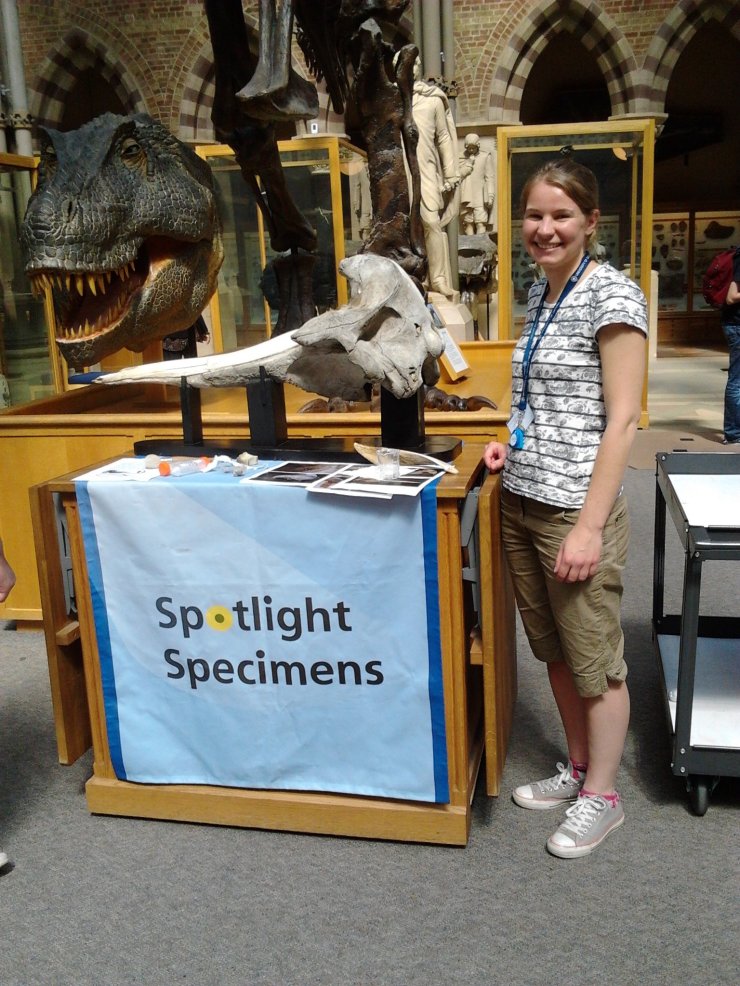
Ruth presenting the whale to visitors as part of our Spotlight Specimens strand
Ruth presents the whale conservation work to visitors as part of our Spotlight Specimens strand

Ruth Murgatroyd, Intern, Life Collections

Mad about minibeasts


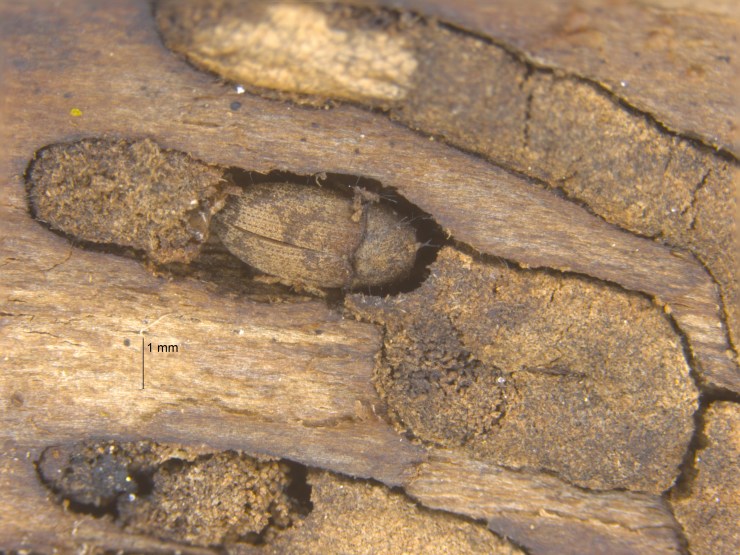
Bark_beetles1

Minibeasts are everywhere, and there are millions of them! These little invertebrates can be found in every environment on the planet.

Woodlands are great places to look for minibeasts as they are home to a large number of specialist species. This is because a wood contains a diverse range of habitats including dead wood, open areas such as grassy glades, the tree canopy and understorey layers where the smaller woodland plants can be found, as well as leaf litter and rich soils.

If you fancy going on a hunt for some minibeasts yourself, here are a few things you could look for in different kinds of habitats.

Dorcus parallelipipedus
Lesser Stag Beetle (Dorcus parallelipipedus)
Lesser Stag Beetles, like their larger relatives the Greater Stag Beetles, are dependent on decaying wood. The larvae can take two or more years to develop in the old wood and the adult lives for about two years. They are mainly active at night but can sometimes be seen by day or tempted out in the early evening by a sweet treat such as maple syrup.

Beautiful butterflies such as the Speckled Wood, Brimstone and Hairstreaks can be found flitting around in woodland glades, visiting flowers and looking for mates.

Speckled Wood
Speckled Wood Butterfly (Pararge aegeria)
Bumblebees are also frequent visitors. There are 24 species of bumblebee in the UK but there are only about eight that are commonly seen. When a bumblebee has visited a flower it leaves a chemical message to tell the other bumblebees that it has been there and not to bother investigating as the nectar has already been plundered.

There’s plenty more to discover too, from pseudoscorpions to the importance of aphids in the food chain of many ecosystems…

If you’d like to learn more then come along to Wytham Woods in Oxford at 10am on 22 July or 26 August and help us see what we can find in a 90-minute guided walk around the woods. The event is free, family friendly (ideal for children 7+) and an expert will be on hand to help with minibeast identification too. For more information and to book email ceri.watkins@oum.ox.ac.uk.

Ceri Watkins – TCV Natural Talent Trainee