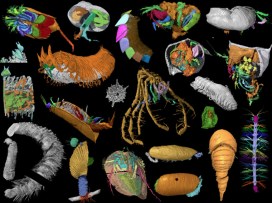
Coloured digital models of animals in strange shapes

Revealing Exceptional fossils, one layer at a time

Around 120 years ago, William Sollas, Professor of Geology at the University of Oxford, developed a special technique for grinding down and imaging certain kinds of fossils. Sollas was based at the Museum at the time, and the process he pioneered is still used here today, as our Palaeobiology Technician Carolyn Lewis explains to mark the anniversary of Sollas’ birthday on 30 May.
Rock face with geologists hammer
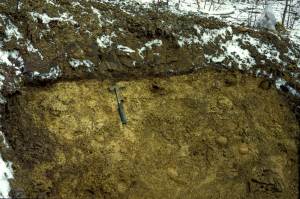
Site of the Herefordshire Lagerstätte, showing the nodules embedded in soft volcanic ash.

Here at the Museum, I work on a collection of exceptionally well-preserved fossils from the Silurian Herefordshire Lagerstätte. They were deposited on the seabed 430 million years ago when the animals were buried by a volcanic ash flow. The fossils range in size from less than a millimetre up to a few centimetres, and represent a diverse collection of marine invertebrates that includes sponges, echinoderms, brachiopods, worms, molluscs and a wide variety of arthropods.

These Herefordshire Lagerstätte fossils are unusual in that many of them have preserved soft tissues in remarkable detail, including eyes, legs, gill filaments, and even spines and antennae only a few microns in diameter. The key to this extraordinary preservation is that as the fossils developed, calcium carbonate nodules formed around them, protecting and preserving the fossils since the Silurian Period.

Usually, only the hard parts of fossil invertebrates are preserved – the carapace of trilobites or the shells of brachiopods, for example – so the Herefordshire material provides us with a great opportunity to work out the detailed anatomy of these early sea creatures.
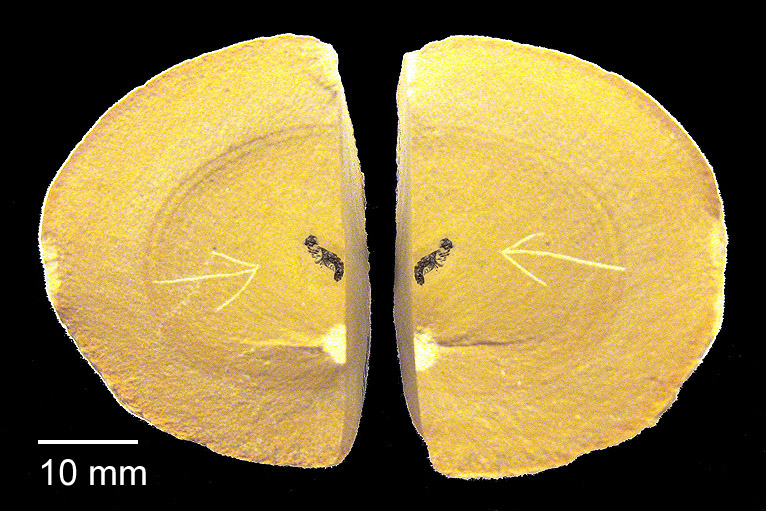
Split rock nodule showing fossil of Offacolus kingi inside.
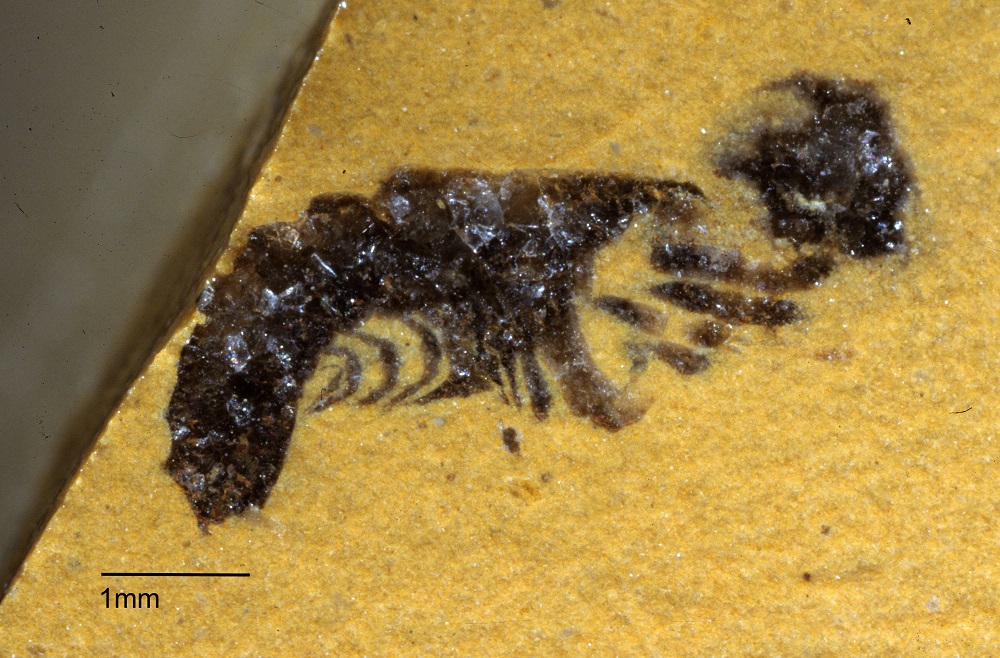
Close-up of the fossil of Offacolus kingi

But the problem we face is how to extract the specimen from the rock nodule without losing the information it contains. The fossils cannot be separated from the surrounding rock by dissolution, because both fossil and nodule are made mainly of calcium carbonate, so would dissolve together. And they are too delicate to be extracted mechanically by cutting and scraping away the surrounding nodule. Even high resolution CT scans cannot, at present, adequately distinguish between the fossils and the surrounding rock material.

To get round this problem we use a method of serial grinding and photography based on the technique developed by William Sollas in the late 19th century. We grind the fossils in increments of 20 microns then photograph each newly ground surface using a camera mounted on top of a light microscope. This generates hundreds of digital images of cross sections through the specimen.

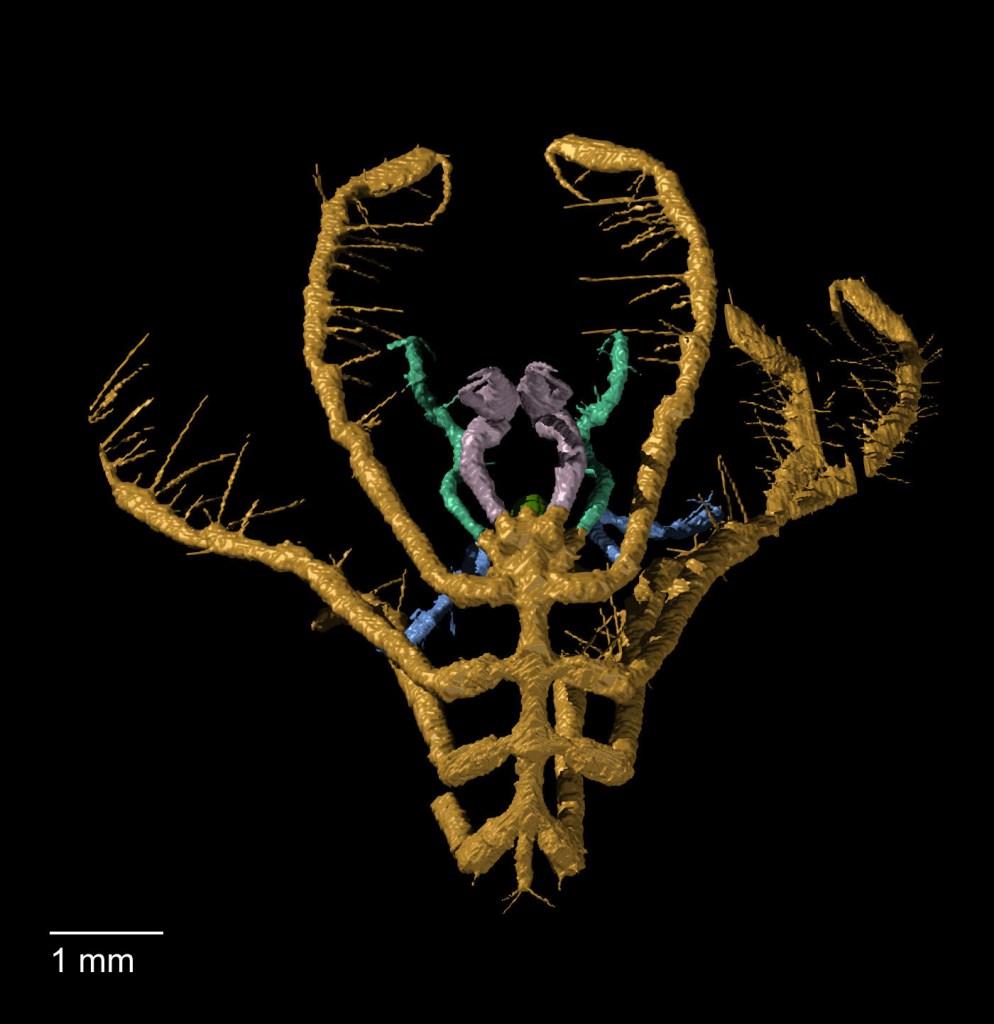
Then, using specially developed software we convert the stack of two-dimensional images into a 3D digital model that can be viewed and manipulated on screen to reveal the detailed form of the animal. These 3D models are artificially coloured to highlight different anatomical structures and can be rotated through 360o, virtually dissected on screen, and viewed stereoscopically or in anaglyph 3D.
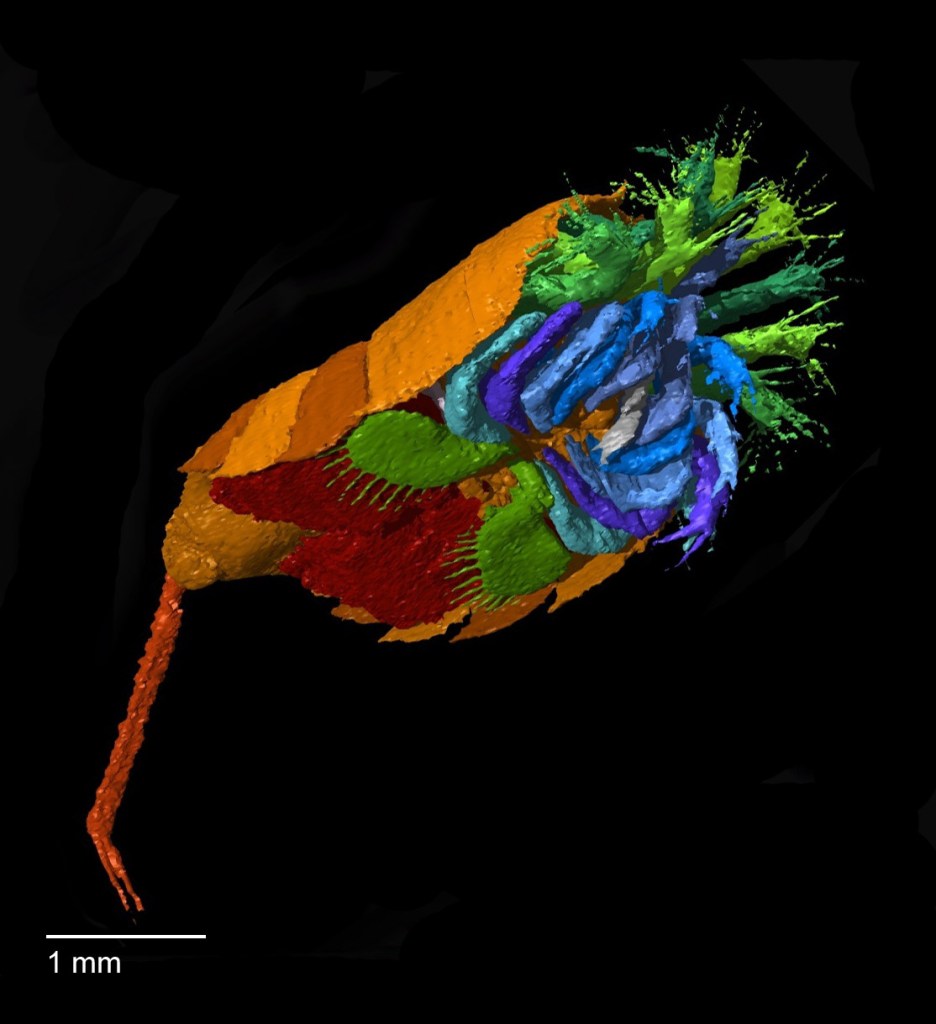
Although our method of serial grinding is still fairly labour intensive, it is far less laborious and time-consuming than the process used by William and his daughter Igerna Sollas. Compared to the photographic methods of the early 20th century, where each photographic plate required long exposure and development times, digital photography is almost instant, enabling us to grind several specimens simultaneously.
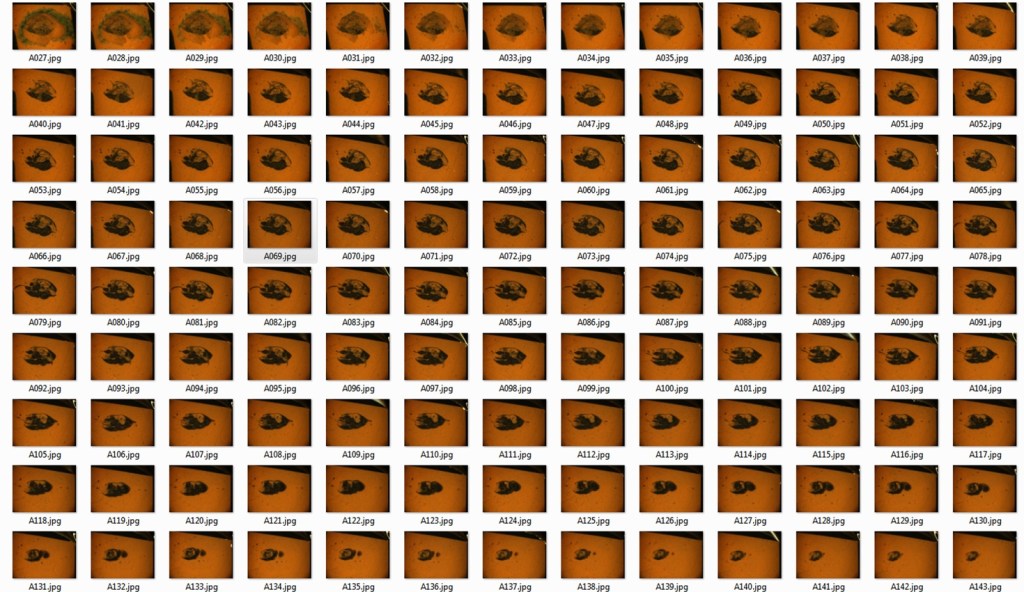
Grid of images show a fossil at different stages of grinding down
Sequential serial grinding images of an ostracod

Computer software also allows us to create 3D virtual models rather than building up physical models from layers of wax. Yet despite our modern adaptations, we are using essentially the same technique that William Sollas developed here at the Museum 120 years ago. And using this technique to study the fossils of the Silurian Herefordshire Lagerstätte has yielded a wealth of new information that opens up a unique window into the evolution and diversification of early life in our oceans.
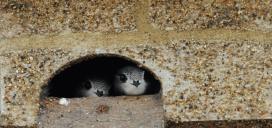
two swifts looking out from their nesting area

A Swift Return to Summer

By Chris Jarvis, Education Officer

Amidst reports during the last week of Swifts being sighted feeding over the nearby Farmoor reservoir, Museum staff have kept their eyes to the skies eagerly waiting to be the first to spot our resident birds returning to their breeding site in the nest boxes of our tower. A wet and windy weekend caused by a deep depression over Britain meant little opportunity to feed on their diet of small flies and other invertebrates that make up the aerial plankton they relish, and which normally drifts unseen above our heads in large numbers on still summer days.  The high winds would certainly also have made any attempt to land, for the first time in a whole year since they left their nest boxes and for the first time ever for those just reaching maturity, extremely precarious, and so it seems our Swifts headed farther afield, possibly back to continental Europe, for a few days to await better conditions.

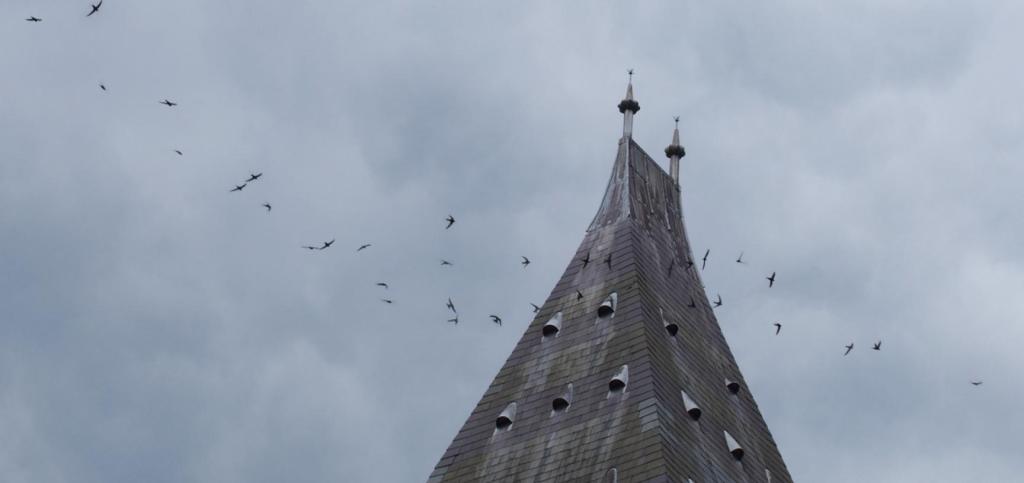
swifts flying around the museum tower against a cloudy sky
Swifts flying around the Museum tower by Mark Garrett

However, this morning, the 5th of May and right on cue, we were treated to the first two Swifts performing a low, high speed fly-by of the tower. Having flown around 14,000 miles in the last year from the Museum’s tower to their winter feeding grounds in southern Africa and back again, the Swifts have arrived on exactly the day of their average time of arrival over the last couple of decades.  We know this because the Swifts in the tower are part of an ongoing study which is the longest running study of any bird colony in the world, started by David Lack in 1947, our Keeper of the Swifts, George Candelin still climbs the spiral stone stairs and ladders each week under red lights to carefully and quietly monitor each nest box throughout the breeding season an count and ring each chick noting down all sorts of other data as he does so from wind speeds to egg rejections, weights and even altercations between birds in boxes over rights to nest sites.  Whilst you can’t be involved in the weighing and ringing of the birds, we do offer the next best way of getting involved; our nest box webcams, which you can find on our ‘Swifts in the Tower’ page, allow you to watch all the action live as it happens from the arrival of the adults to the final fledging as the next generation takes wing for the first time. Hidden microphones will also allow you to hear as screaming parties bang their wings against the nest box covers in order to ascertain if they are occupied and the keening noises of begging chicks!  George’s stats and comments will also be downloaded to the Swift’s Diary each week enabling you to get a full picture of what’s happening across the colony’s 147 nest boxes as the season progresses.

Swifts have markedly declined in numbers over the last few decades, and their breeding season is one of the few times anyone has to measure population changes and you can get involved, too.  Check out if there is a Swift City project near you like Oxford Swift City @oxford_swift or @EdinburghSwifts to get directly involved in monitoring projects or just record your Swift sightings to the RSPB at their Swift Mapper site. All your observations give us a really good idea of how these enigmatic summer visitors are doing!

Update-in the half hour it has taken to write this blog post: the number of Swift’s flying around the tower is up to 5-and they’re screaming!

Summer is here!

Hedgehog Awareness Week

For Hedgehog Awareness Week, Zoology Collections Manager Mark Carnall and Museum Librarian and Archivist Danielle Czerkaszyn discuss these prickly and charming creatures.

The 2-8 May is Hedgehog Awareness Week, which give us an excuse, not that one were needed, to talk about these charismatic mammals. Although the West European hedgehog (or common hedgehog if you’re in Europe, these vernacular names get very confusing when geography and language is taken into account), Erinaceus europaeus, is probably the hedgehog that springs to mind to many of our readers, there are nearly twenty living species of hedgehog and many fossil species are known.

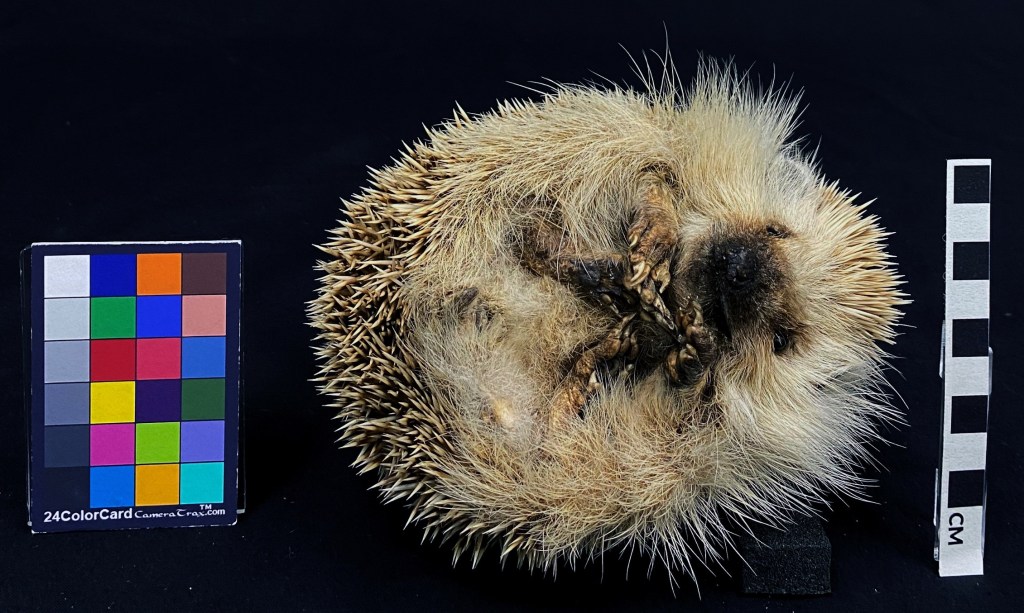
Hedgehog specimen at OUMNH

In terms of evolutionary relationships they share a family with the moonrat and the rather wonderful gynmures, distinctly un-hedgehog-like relatives.

Their characteristic spikes that run across the back of hedgehogs are modified hairs which are periodically replaced and each individual hedgehog has around 7000 spines at any one time, varying slightly with age and size. Behaviourally, they are competent climbers (and have a built in shock-absorbing coat should they fall) and surprisingly perhaps, all species are thought to be competent swimmers.

Although much loved across their native range, Erinaceus europaeus, is considered a pest species in New Zealand where it was deliberately introduced as a form of biological control, by acclimatisation societies and possible as pet animals. They have now spread to all but the highest parts of New Zealand threatening native species of birds, amphibians, reptiles and directly competing with native mammal species.

In 2020, Erinaceus europaeus was added to the Red List for British Mammals as vulnerable across the lists for Great Britain, England, Scotland and Wales informed by analysis of citizen science data although there remains some uncertainty about true population levels.

Unsurprisingly perhaps they are comparatively well represented in the collections at the Museum including specimens donated and prepared for the Museum from the 19th Century through to much more recent specimens acquired from road death animals for display. The specimen pictured above being one such relatively recent acquisition for display in the Museum’s display case on the animals featured in Alice in Wonderland.

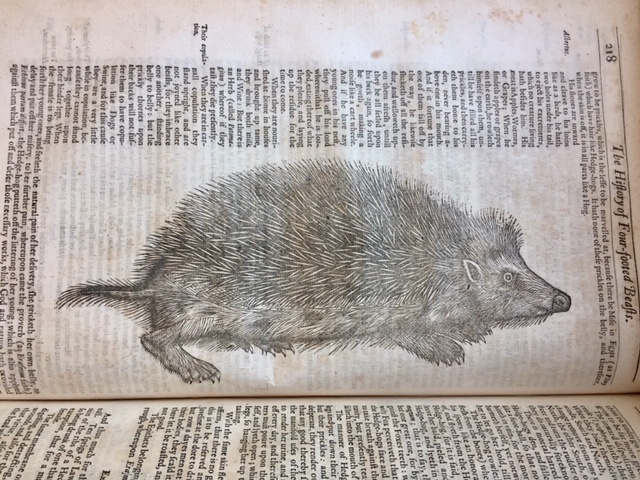
We’ll leave you with one more hedgehog from the Museum’s library and archives. Hedgehogs unusual appearance initially led to some odd beliefs about why their quills existed. For example, in his book ‘The History of Four-Footed Beasts and Serpents’ (1658) Edward Topsell wrote:

“The hedgehog’s meat is apple, worms and grapes: when he findeth them upon the earth, he rolleth on them until he hath fylled up all his prickles, and then carrieth them home to his den.”

– Edward Topsell

One of the most common questions about hedgehogs is how do they mate? The answer is of course, very carefully.