Anna Gurney and the geology of the Norfolk coast

By Jenny McAuley

Here at the Museum, we are exploring the often-hidden role of women in building, curating, and researching its collections, particularly in the 19th and early 20th centuries. Supporting this project we have an invaluable team of volunteers who are helping to spotlight these women and their work. One volunteer, Jenny McAuley, has been investigating the story of geologist and philanthropist Anna Gurney (1795-1857), who donated mammoth bones and teeth from the Cromer Forest Bed in Norfolk.
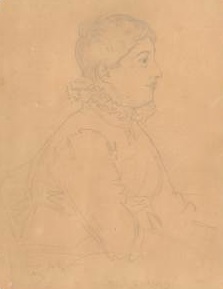
Sketch of Anna Gurney by John Linnell, Public domain, via Wikimedia Commons

Anna Gurney was a dedicated observer of the geology of the east Norfolk coast where she passed her life. Her personal collection of fossil specimens became an important study resource, and she corresponded with many major geologists of her day.

Born in Keswick, Norfolk into a prominent and intellectual Quaker family, Gurney became a literary scholar and philanthropist. She joined the Church of England in 1826, but remained committed to ideals of independent enquiry – stemming from her Nonconformist upbringing – in an era when geological discoveries were unsettling orthodox religious assumptions about the evolution of organic life.

At ten months old, Gurney became infected with poliomyelitis (polio), which paralysed her lower limbs. Although needing a wheelchair for most of her life, she still enjoyed travelling to sites of geological interest around Europe. Educated at home by family members, she demonstrated a prodigious talent in languages, and began her career as a (mostly anonymously) published scholar aged 22.

For her geological researches Gurney focused on local portions of the Cromer Forest Bed Formation, a deposit of gravel, clay, and sand exposed in cliffs along the east Norfolk coast. The formation is rich in fossil mammal remains, and in 1821 she presented to the Geological Society ‘various bones of the fossil elephant, found on the coast of Norfolk between Cromer and Happisburgh’, according to the Bury and Norwich Post, 14 December 1821.

Gurney’s private collection was listed among those worth the attention of visiting scientists in Samuel Woodward’s 1833 Outline of the Geology of Norfolk. Its later highlights included a mammoth’s humerus obtained at Bacton in 1836 and described in eminent palaeontologist Richard Owen’s account of her collection in A History of British Fossil Mammals and Birds (1846).

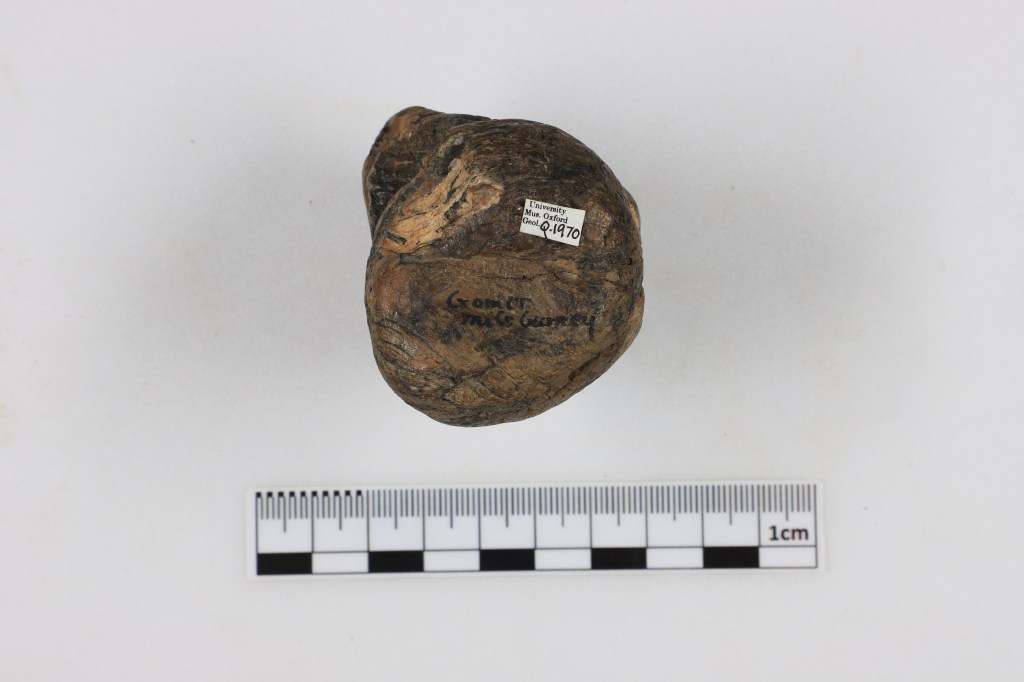
After Gurney’s death, her fossil collection passed to the Norwich Museum, but throughout her life she donated items elsewhere. Here at the Museum ‘Miss Gurney’ is named as the collector of three milk molars and the head of a femur found at Cromer, all possibly of the Pleistocene species Archidiskodon meridionalis, or southern mammoth.
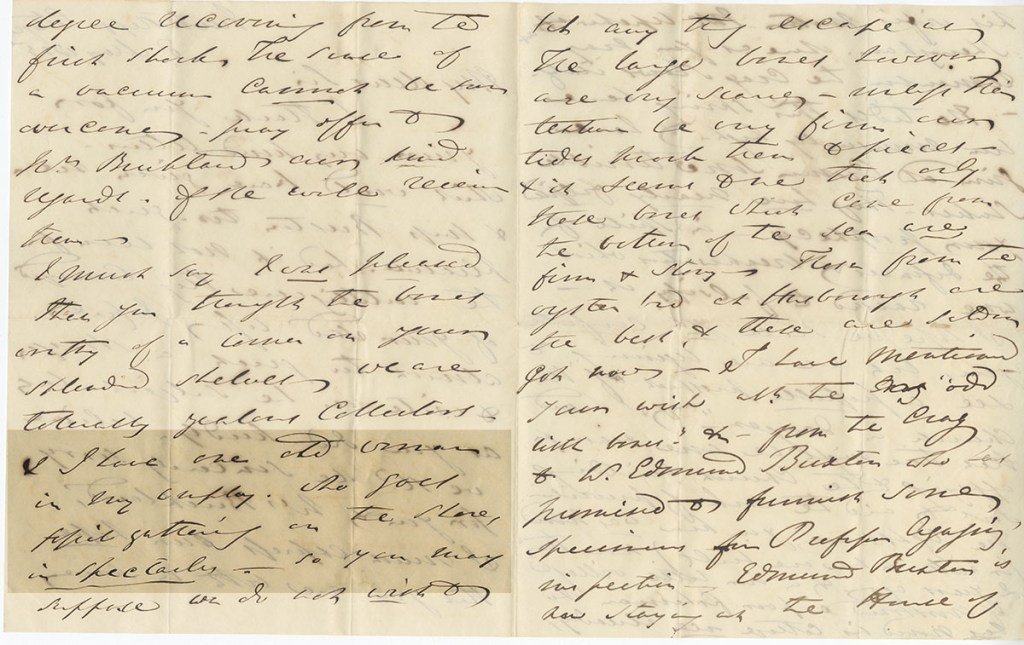
Anna Gurney’s 1835 letter to William Buckland refers to an ‘old woman in my employ’ (highlighted)

In 1835 Gurney wrote to geologist William Buckland at the University of Oxford, who had accepted some ‘bones’ from her, explaining how she obtained specimens with the aid of ‘one old woman in my employ who goes fossil gathering on the shore, in spectacles’. Gurney’s employment of ‘poor inhabitants of the coast’ as paid specimen-collectors was also noted approvingly by Richard Owen.

As a specimen collector, Gurney operated within an international network of scientists. Her 1835 letter to Buckland mentions having visited his ‘fossil room’ in Oxford, and indicates some acquaintance with Louis Agassiz (1807-73), the Swiss-born biologist and geologist (and later promoter of white supremacist theories as a Harvard professor).

Gurney’s personal studies in natural history are documented in her archive in the Norfolk Record Office, and in letters from her in other scientists’ archives. And her legacy as a collector and donor of specimens may be traced through the records of museum collections all around Britain.
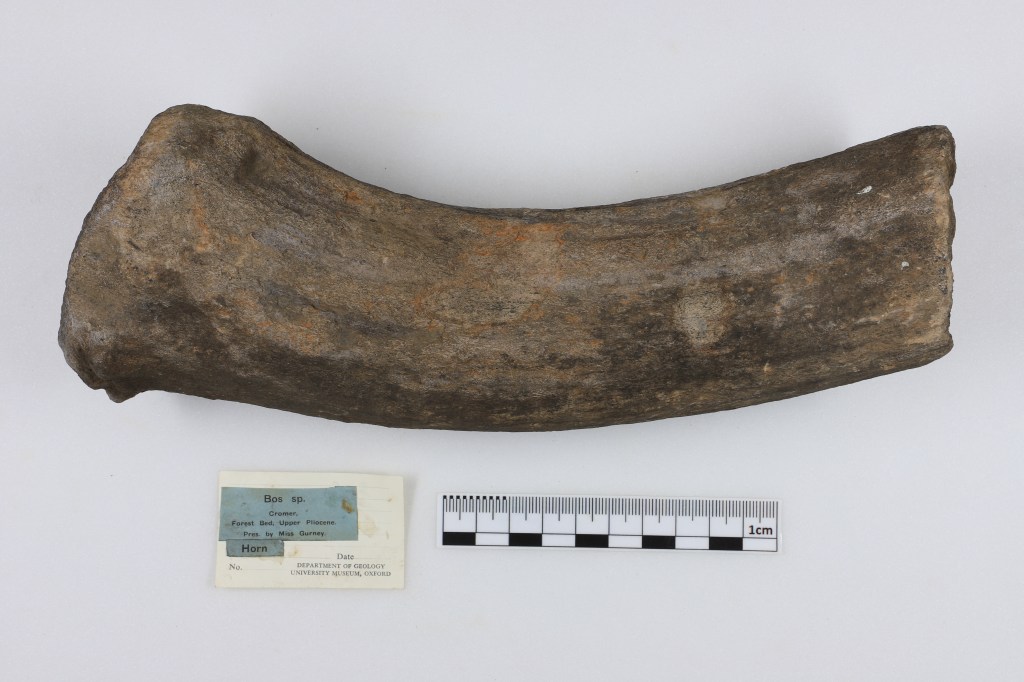
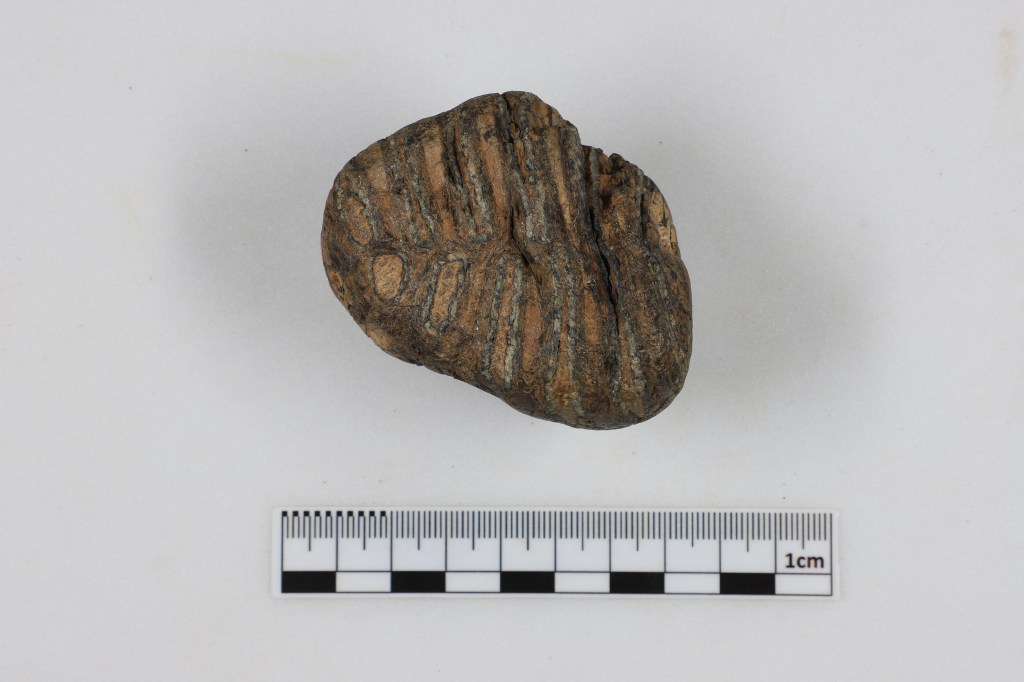
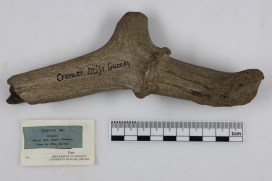
Horn belonging to a Bos (cattle) species from the Pliocene. Collected in Cromer, Norfolk by Miss Gurney. Donated by Miss Gurney.

Milk molar from a mammal from the Pleistocene, possibly Archidiskodon meridionalis (Nesti 1825). Collected in Cromer, Norfolk by Miss Gurney. Donated by Miss Gurney.
Iconotypes: A Compendium of Butterflies and Moths

By Danielle Czerkaszyn and Kate Diston

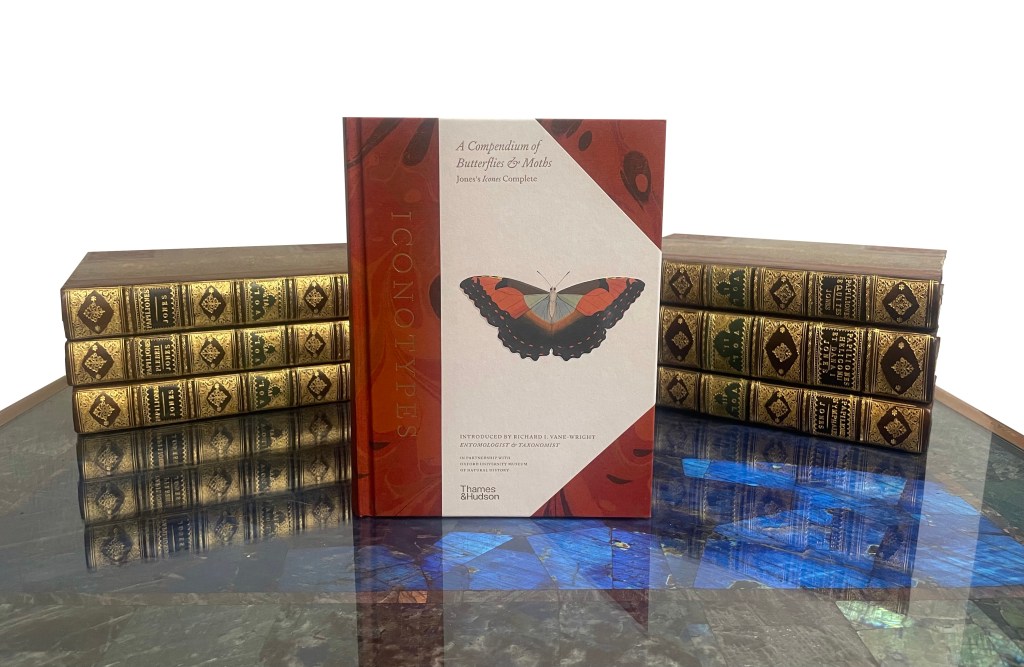
Today, the Museum is celebrating the publication of Iconotypes: A Compendium of Butterflies and Moths based on William Jones’ unpublished, six volume manuscript. Danielle Czerkaszyn, Librarian and Archivist, tells us more about the importance of Jones’ work…

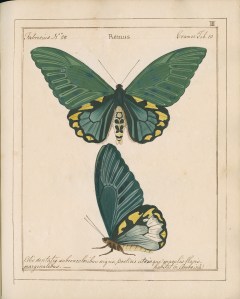
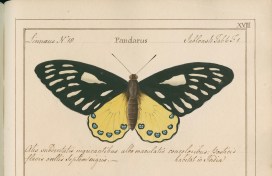
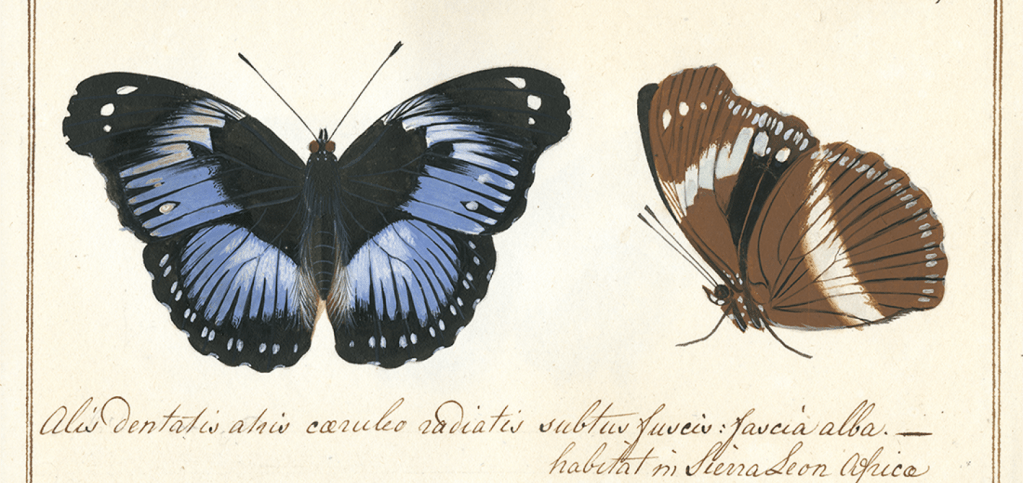
Since the 1920s the Museum has had in its care an original, unpublished manuscript containing 1,292 beautifully detailed and colourful paintings of butterflies and moths. Known as Jones’ Icones, this one-of-a-kind work was created in the late 18th century by retired London wine merchant, natural historian and Lepidopterist, William Jones (1745-1818).

In six volumes Icones depicts over 760 butterflies and moths from the collections of some of the most eminent naturalists in London at that time, including entomologist Dru Drury, explorer Sir Joseph Banks, the founder of the Linnean Society, Sir James E. Smith, and Jones’s own collection. A labour of love, Jones spent 30 years of his life – from 1780-1810 – using the finest materials to ensure Icones was both accurate and beautiful.  

In addition to being a stunning work of art, Jones’ Icones is an extraordinarily important document in the history of entomology and insect collecting in Britain. At the time Jones was making these paintings, the British Empire was rapidly expanding. This was an exciting time to be an entomologist, and species from as far away as Africa, India and Australia were being described for the first time. Over such a long period of time, some of the butterfly specimens illustrated by Jones have been destroyed, lost or divided among private collectors, so Jones’s work represents a singular historical document of these early collections. 

Jones’ Icones was even consulted by a student of Linnaeus, Johann Christian Fabricius – the man credited as the first to describe over 10,000 insects. Fabricius named 231 new species from the images in the Icones, citing Jones’ work in his publication Entomologica Systematica in 1791. The images from which new species are described are known as iconotypes. As the six volumes hold 231 iconotypes, Icones constitutes part of the foundations of butterfly taxonomy and systematics making it one of the most scientifically important items in the Museum’s archive. 

Icones also provides early documentation of global butterfly fauna in a pre-industrial world which carries important messages for today’s conservation biologists. Studies show that global insect abundance has declined by as much as 45% in half a century and several of species illustrated in the manuscript are now in decline or locally extinct.

In spite of Jones Icones huge importance to the history of entomology in Britain, the manuscript was not made available beyond the reading room of the Museum’s archive until recently. Several attempts to publish Icones for a wider audience failed or were abandoned. However, as a part of a 2013-14 National Heritage Lottery Fund project, Flying Icons, all 6 volumes were digitised and keen amateurs and specialist entomologists were invited to identify all the species represented in Jones’s Icones

Expanding on this momentum, Oxford University Museum of Natural History’s newest publication, Iconotypes: A compendium of butterflies and moths, publishes Jones’s seminal work for the very first time. This enhanced facsimile is accompanied by expert commentary, contextual essays and annotated maps with modern taxonomic names and historical references clarified. Moreover, with over 1,600 colour illustrations, Iconotypes is visually stunning. This book represents an exciting step in the long history of trying to make William Jones’s masterpiece more accessible and we could not be more excited to share it with you all.