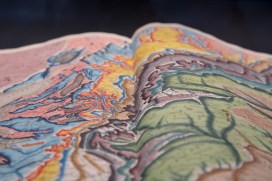
Layer upon layer

IMG_6299

Handwritten in Stone
9 October 2015 – 31 January 2016

Today sees the opening of our new special exhibition – Handwritten in Stone – celebrating the life and work of William Smith on the bicentenary of his publication of the first geological map of England and Wales.

Dubbed ‘The Map that Changed the World’ in Simon Winchester’s book of that title, the beautifully hand-coloured map revealed a three-dimensional arrangement of rock layers, or strata, along with a fourth dimension – time.

This work earned Smith the moniker ‘the father of geology’, an accomplishment all the more impressive given that Smith achieved it single-handedly and with very little formal education.
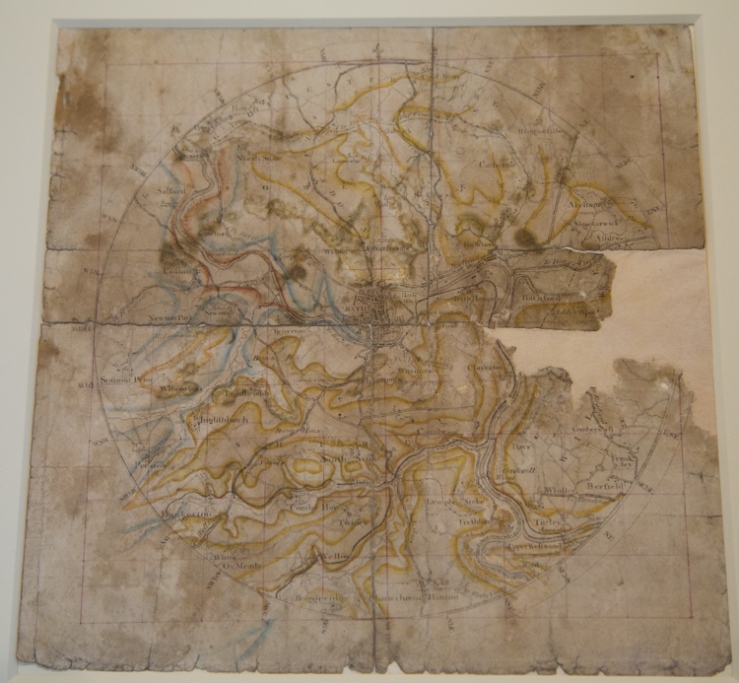
This 1799 map of Bath, on display in the exhibition, is the oldest geological map in the world

The Museum holds the largest archive of Smith material in the world. Alongside the famous 1815 map, shown at the top of the article, are personal papers, drawings, publications, maps and geological sections, most of which are being displayed for the first time. With these we have some fossil material from the collections: Smith realised that particular combinations of fossils were unique to different rock formations and could be used to date the strata.

Design work on the 'drawing board', created by Claire Venables at Giraffe Corner
Design work on the ‘drawing board’, created by Claire Venables at Giraffe Corner. Photo: Claire Venables

Handwritten in Stone, supported by the Heritage Lottery Fund, is the first show in our new special exhibition gallery on the upper east side of the building. Working out how to use the space was a learning process, and the final, elegant design is the work of local consultancy Giraffe Corner.

To bring the final exhibition together we collaborated with writer Rebecca Mileham, an installation team from the Ashmolean Museum, and more than 50 volunteers. Look out for more about the volunteers’ contributions on this blog soon.
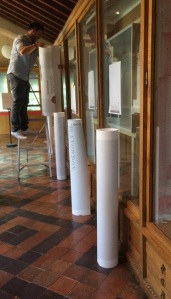
Applying the graphics in the gallery
Applying the graphics in the gallery. Photo: Claire Venables

The 1815 map itself takes centre-stage in the exhibition, flanked on one side by the history of Smith’s work building up to its publication, and on the other by the legacy of his techniques, which are still used today.

To discover the full story of William ‘Strata’ Smith head over to the upper east side of the Museum before 31 January.

And don’t forget to look out for our What’s On programme which includes lots of William Smith and geology-focused events, including a public talk by author Simon Winchester on 13 October.

Scott Billings – Public engagement officer
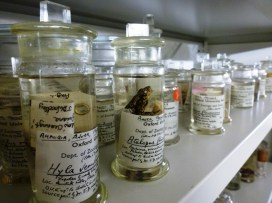
Getting a grip on Life

Frogs

Hello. My name is Mark Carnall and this is my first post for More than a Dodo. It’s my third week as the new collections manager for Life Collections here at the Museum, which means I now have responsibility for all of the life-related material that isn’t entomological (so no insects, spiders, millipedes and other creatures which loosely fall under the term ‘minibeasts’).

Mark CarnallWhile I’m thankful that my job is made a little easier for not including roughly two thirds of animal life, it’s challenging enough: microscopic snail shells up to entire whale skeletons – and everything in between – fall under my purview.
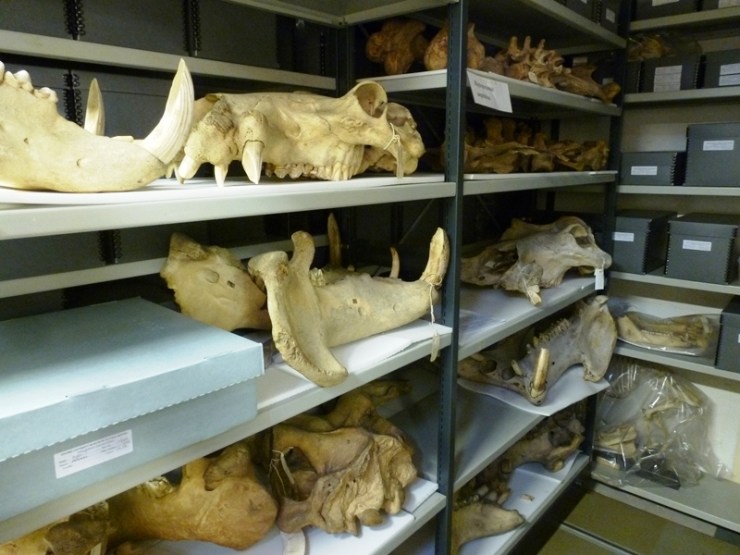
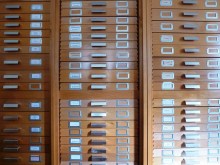
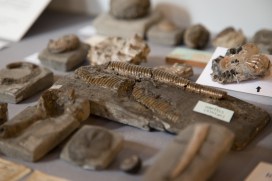
There are approximately half a million specimens in my care: mammals (including humans), birds, fish, reptiles, amphibians, sponges, corals, jellyfish, molluscs, echinoderms (starfish, sea urchins and their allies), and a whole host of more obscure but equally interesting animals.

Hippopotamii, hippopotamuses Skulls of hippos in the mammal osteological store

How does one go about getting to grips which such a large and varied collection? Well, rather than starting at aardvarks and working through to zebras, perhaps the best way to learn about the collection is by facilitating the use of it.

Already, enquiries have been coming in from researchers, other museum professionals and members of the public. So far, I’ve had questions about preserving giant squid; the number of gorilla specimens we hold; the sexy parts of crabs; the history of the whale specimens on display; the identity of a bird-footed cup; and a number of queries about our human remains material.

I’ve also been taking the time to geek out over explore the collections, and there’s barely a drawer or cabinet that doesn’t have a first, largest or oldest. It’s not all treasures though: there’s material that scientists might regard as barely interesting as a data point, but is perfect for engaging and enthusing visitors in displays, events and workshops.

Molluscs- Sun dappled mollusc cabinets. I love the smell of molluscs in the morning.
Sun-dappled mollusc cabinets. I love the smell of molluscs in the morning.

This was highlighted in my first week here when a visitor brought a specimen in for identification. Although it was ‘just a cow tooth’, its owners were so happy to solve their mystery that they wanted to print and frame the identification (hopefully this sparked a lifelong interest in natural history too).

So I’ll be spending the next weeks finding my way around the collections and you’ll be discovering it all at the same time through blog posts here, my Spotlight Specimen slots in the Museum and no doubt through our jam-packed public events programme.

Next time, I’ve got a whale of a tale for you. Or perhaps that should be tales of a whale for you…

Mark Carnall, Collections Manager, Life Collections

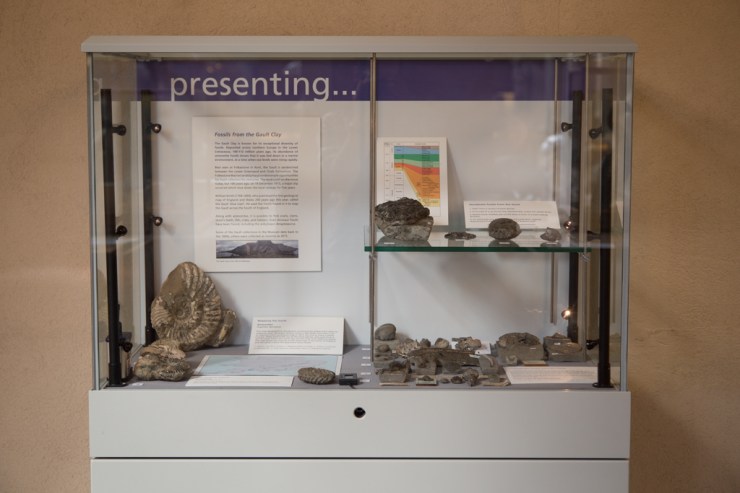
Presenting… the Gault Clay

IMG_5120

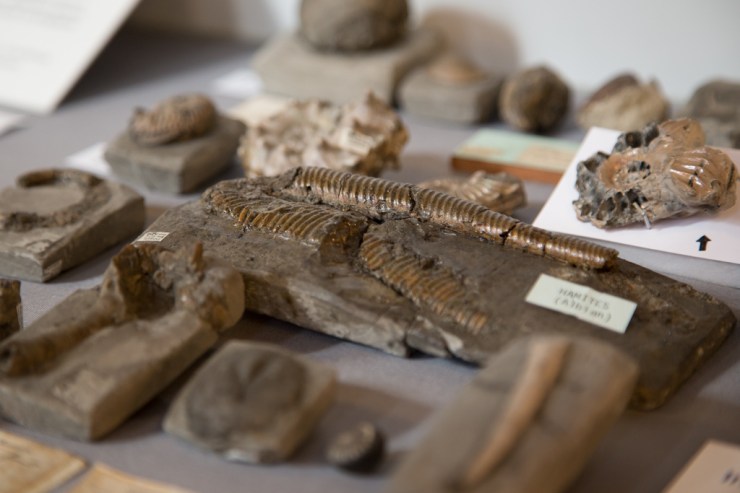
Our changing Presenting… display offers a look at highlights, themes and topical material drawn from the Museum’s collections. The current display presents a rich selection of fossils taken from a formation known as the Gault Clay. This will be on show until 21 September (Madagascar is up next), so it’s almost your last chance to see it.

The Gault Clay is known for its exceptional diversity of fossils. Deposited across northern Europe in the Lower Cretaceous, 100-112 million years ago, its abundance of ammonite fossils shows that it was laid down in a marine environment, at a time when sea levels were rising rapidly.

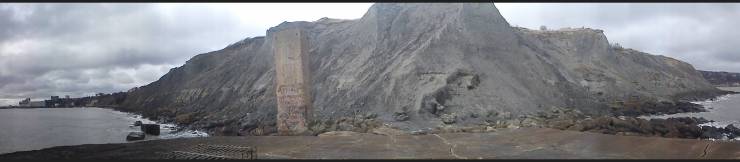
The Gault Clay in the Cliffs at Folkestone

Best seen at Folkestone in Kent, the Gault is sandwiched between the Lower Greensand and Chalk formations. The Folkestone Warren landslip has provided ample opportunities for fossil collectors for centuries. The land is still on the move today, but 100 years ago, on 19 December 1915, a major slip occurred which shut down the local railway for five years.

IMG_5122
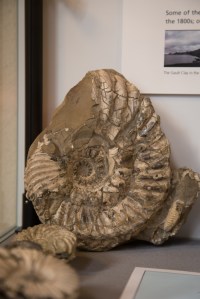
Ammonite (Hoplites dentatus)

William Smith (1769-1839), who published the first geological map of England and Wales 200 years ago this year, called the Gault ‘blue marl’. He used the fossils found in it to map the Gault across the South of England.

Along with ammonites, it is possible to find snails, clams, shark’s teeth, fish, crabs, and lobsters. Even dinosaur fossils have been found, including the ankylosaur Anoplosaurus.

Some of the Gault collections in the Museum date back to the 1800s; others were collected as recently as 2015.

The Presenting... display, near the entrance to the Museum
The Presenting… display, near the entrance to the Museum

Striking gold

Nagyágite SEM

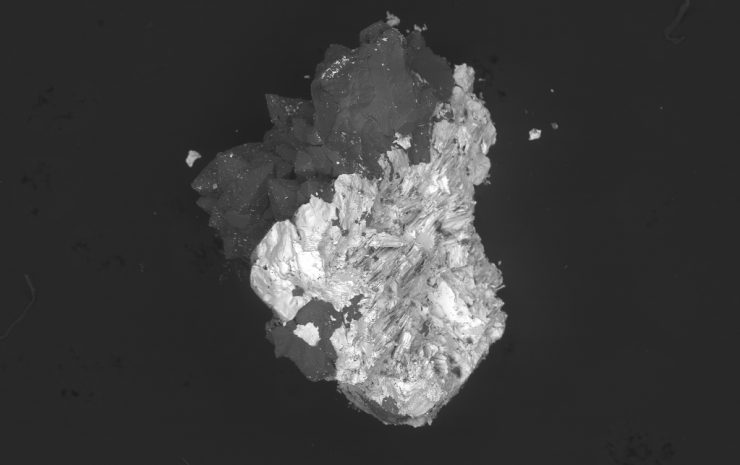
For the last six weeks, Oxford Earth Sciences undergraduate Charis Horn has been identifying mystery minerals in the Museum’s collections, and she’s struck gold! More precisely, she’s found rare gold-bearing crystals of nagyágite and sylvanite on a specimen which for centuries had been mis-labelled as the common lead mineral galena.

Nagyágite is composed of gold, lead, sulphur, antimony and tellurium and forms metallic grey crystals. Sylvanite is made up of gold and tellurium with a little silver, and is pale, silvery yellow. These minerals and their surrounding rock matrix indicate that the specimen is from the gold mines of Săcărâmb, in Romania, formerly known as Nagyág –  the place where nagyágite was first discovered.

Charis on SEM
Charis using the scanning electron microscope

Charis is one of a number of interns funded by the Higher Education Funding Council (HEFCE) through the University’s Internship Programme to learn more about academic research.

Rocks and minerals have always fascinated me, which is the reason I chose to study Earth Sciences at university. I find it amazing that the history of this planet can be read in the geology beneath our feet.

Many of Charis’s samples were put aside for a bit of extra work many years ago because the minerals on the specimen were potentially more interesting than the labels might suggest. Some can be identified by looking at physical characteristics such as colour and crystal shape, or by testing for properties like hardness and magnetism.

Others are much more challenging, and Charis has been using an analytical scanning electron microscope (SEM) to see close-up images of minute crystals to find out what chemical elements they are made of. There’s an SEM image of the nagyágite crystals, seen in white, at the top of the post.

Another of her discoveries has been a rare lead-bearing silicate mineral called hancockite, which was found on a specimen supposed to be from ‘Glen Coe, Argyllshire’. The orange-red crystals are less than a millimetre long, and hancockite is known from only one place in the world: Franklin mine, in New Jersey, USA.

It seems our specimen comes from Franklin mine too, and is the first sample of hancockite in the Museum’s collections. So both specimens must have had their labels muddled up in past centuries.

I have really enjoyed learning more about mineralogy during my time here at the Museum. Realising that something is far more exciting than it first seemed is definitely a great way to end this internship!

Monica Price – Head of Earth Collections

Mad about minibeasts


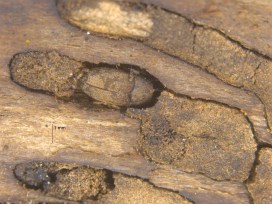
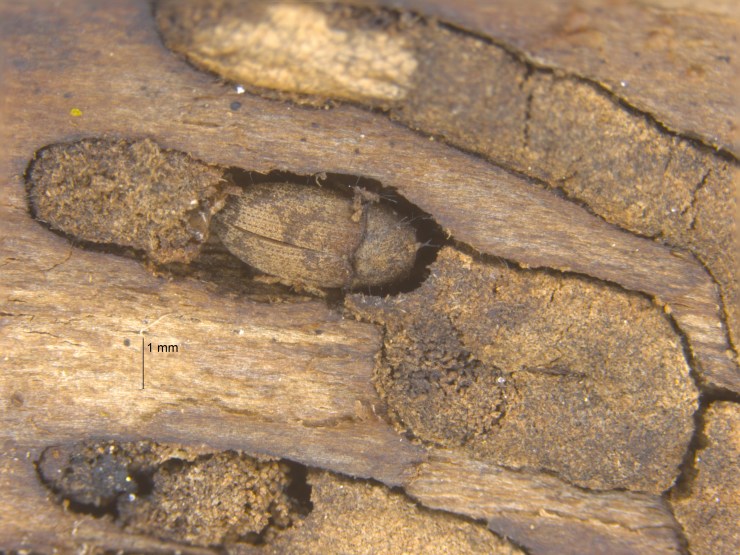
Bark_beetles1

Minibeasts are everywhere, and there are millions of them! These little invertebrates can be found in every environment on the planet.

Woodlands are great places to look for minibeasts as they are home to a large number of specialist species. This is because a wood contains a diverse range of habitats including dead wood, open areas such as grassy glades, the tree canopy and understorey layers where the smaller woodland plants can be found, as well as leaf litter and rich soils.

If you fancy going on a hunt for some minibeasts yourself, here are a few things you could look for in different kinds of habitats.

Dorcus parallelipipedus
Lesser Stag Beetle (Dorcus parallelipipedus)
Lesser Stag Beetles, like their larger relatives the Greater Stag Beetles, are dependent on decaying wood. The larvae can take two or more years to develop in the old wood and the adult lives for about two years. They are mainly active at night but can sometimes be seen by day or tempted out in the early evening by a sweet treat such as maple syrup.

Beautiful butterflies such as the Speckled Wood, Brimstone and Hairstreaks can be found flitting around in woodland glades, visiting flowers and looking for mates.

Speckled Wood
Speckled Wood Butterfly (Pararge aegeria)
Bumblebees are also frequent visitors. There are 24 species of bumblebee in the UK but there are only about eight that are commonly seen. When a bumblebee has visited a flower it leaves a chemical message to tell the other bumblebees that it has been there and not to bother investigating as the nectar has already been plundered.

There’s plenty more to discover too, from pseudoscorpions to the importance of aphids in the food chain of many ecosystems…

If you’d like to learn more then come along to Wytham Woods in Oxford at 10am on 22 July or 26 August and help us see what we can find in a 90-minute guided walk around the woods. The event is free, family friendly (ideal for children 7+) and an expert will be on hand to help with minibeast identification too. For more information and to book email ceri.watkins@oum.ox.ac.uk.

Ceri Watkins – TCV Natural Talent Trainee


Dodo Roadshow – #ILoveMuseums

DodoNeedsYouWriting

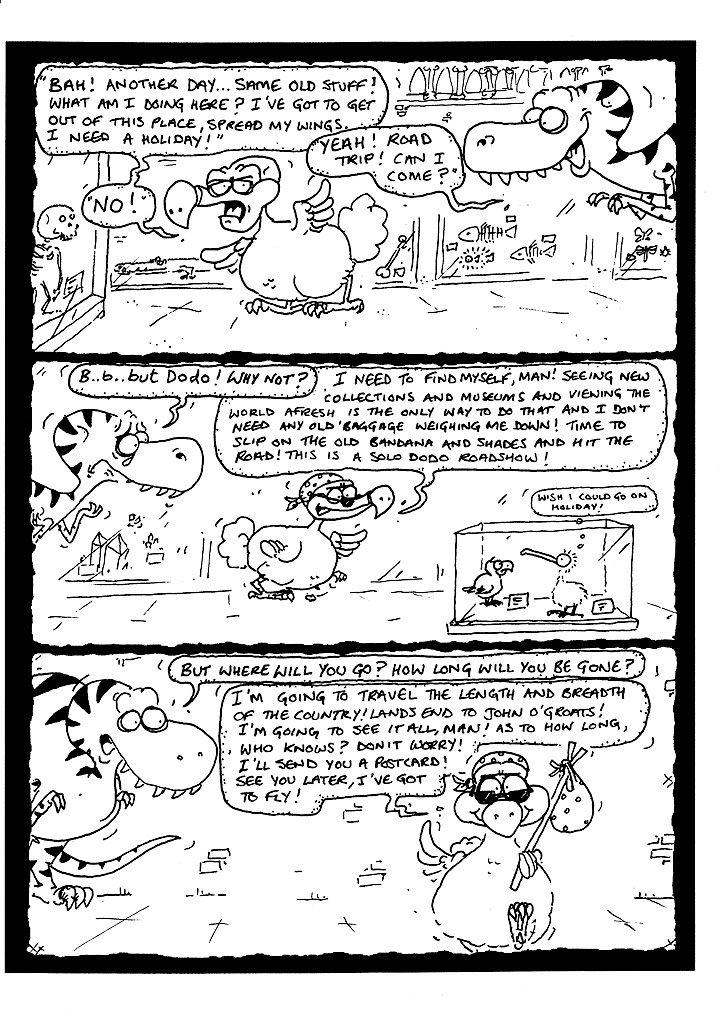
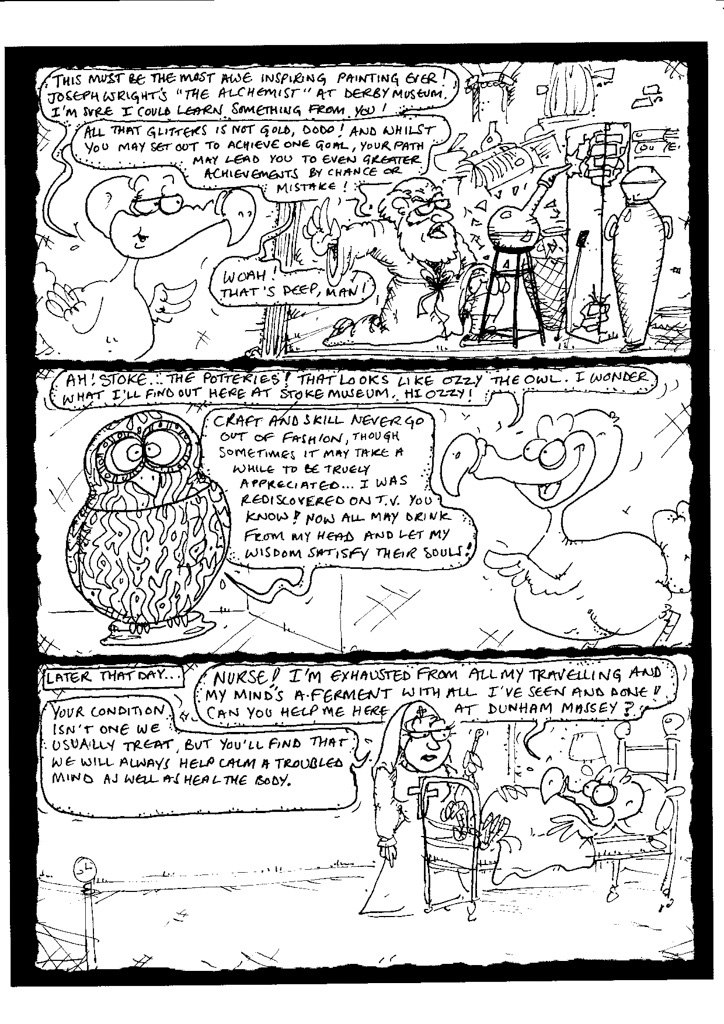
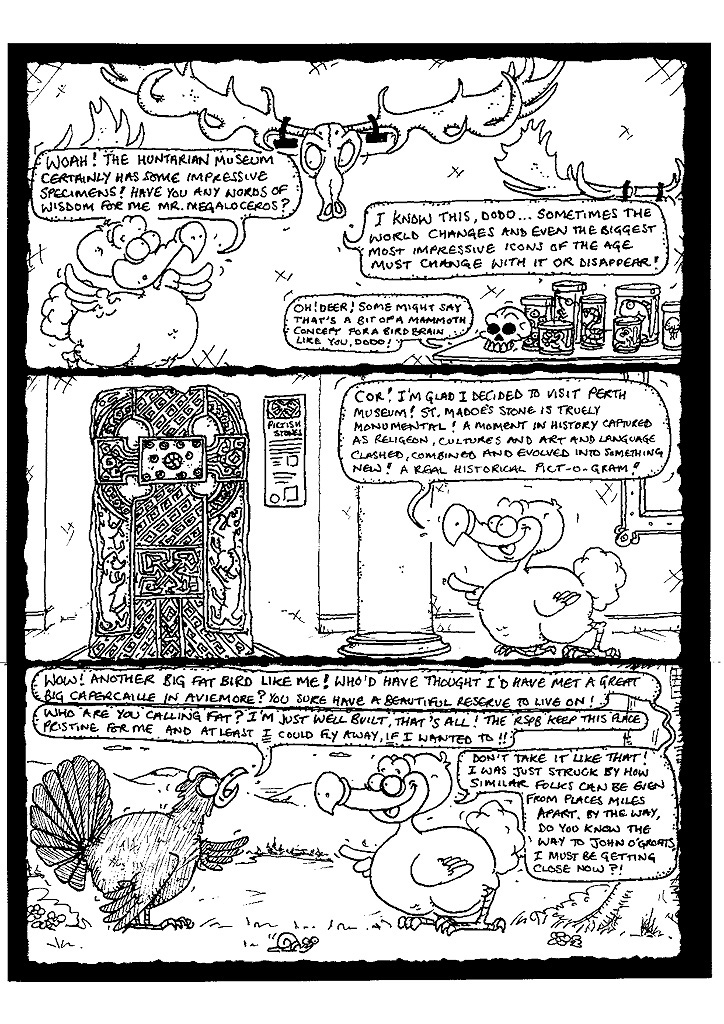
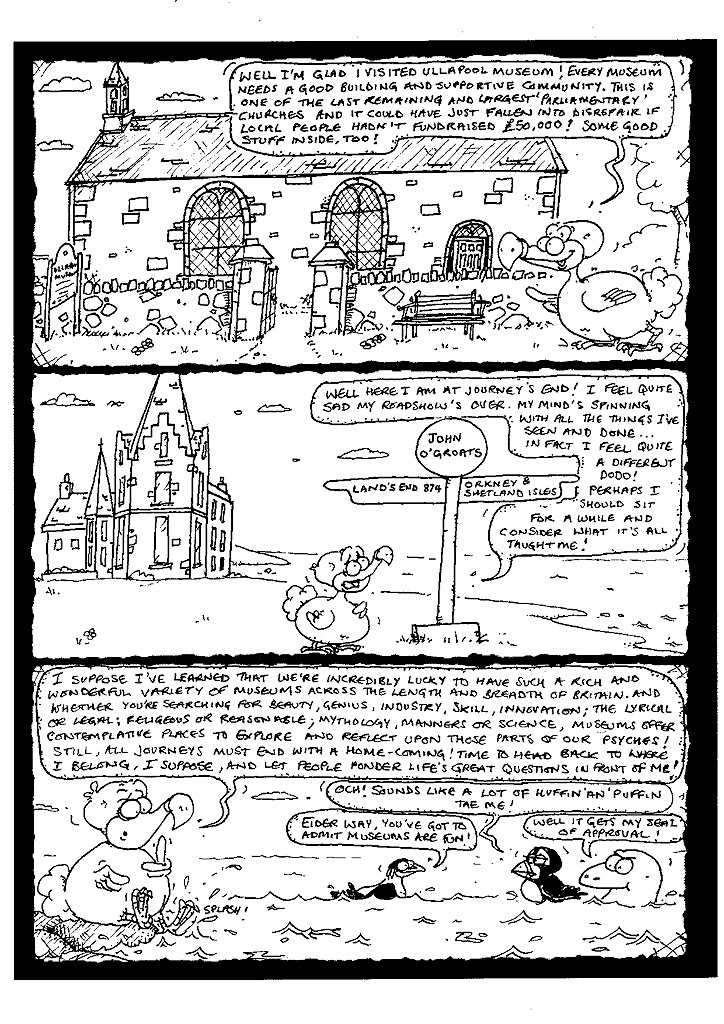
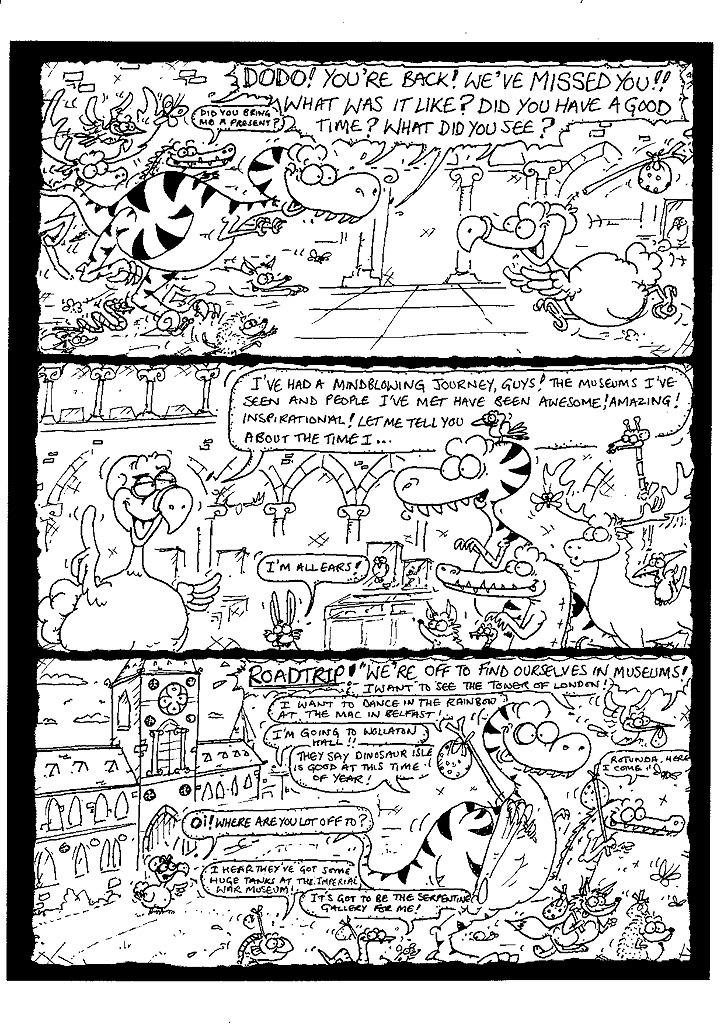
So, it’s been one hell of a trip man. In a bid to shake off the cobwebs and ‘find myself’ I set out on an epic Roadshow from Land’s End to John O’Groats. The Dodo Roadshow, no less: all mine, but also everyone else’s…

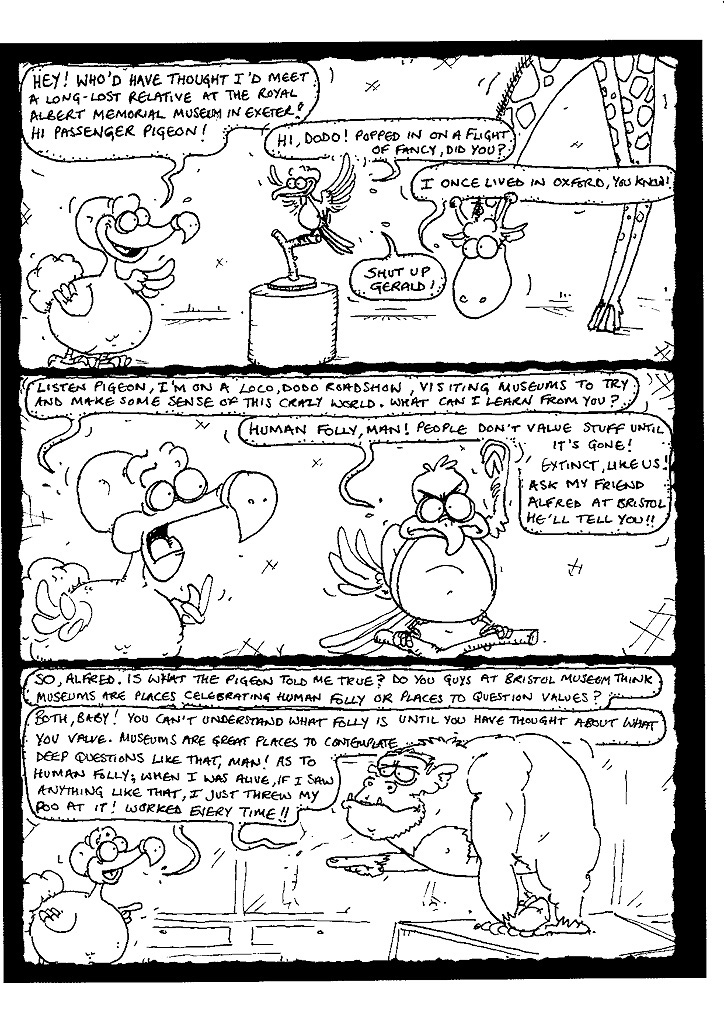
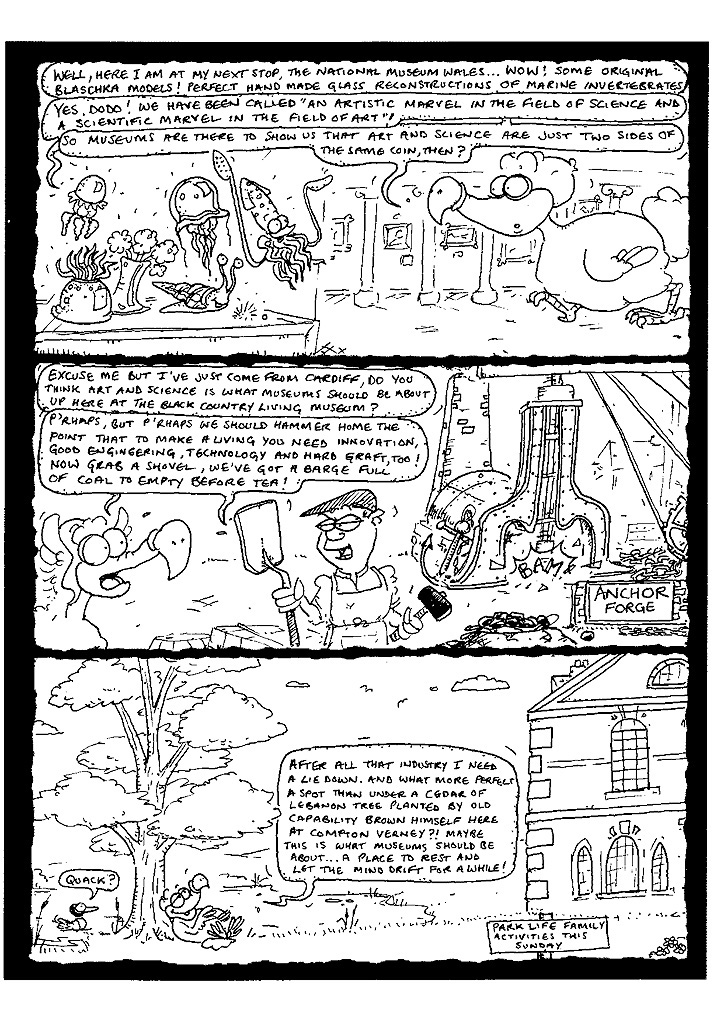
I found so much more than I could have bargained for: monuments to nature, relics of industrial might, extinctions recent and past, and a whole load of philosophical perspective. I am a changed Dodo.

ILoveMuseums_Logo_EPS_CMYK_Blue

And this is what I have learnt – museums are powerful, important and brilliant. They are full of wonder, learning, curiosity, surprising viewpoints and fun discoveries. To find out why, read my full story in the cartoons below (thanks to Chris Jarvis for capturing the essence).

And then I need your help. I need you to head on over to ilovemuseums.com and put your name to the campaign. I may be an old bird-brain, but I know that we should stand up for our museums – I’ve seen ’em man and they’re really something special. Squawk!

The Dodo.