What’s that mess outside?

Museum mess

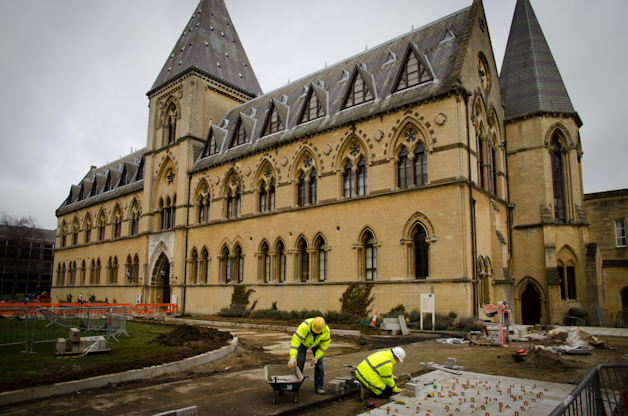
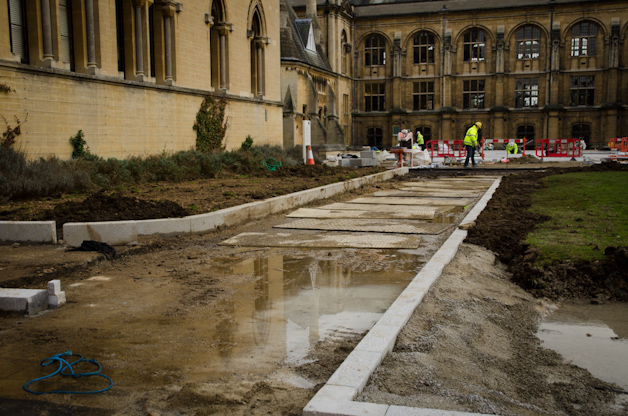
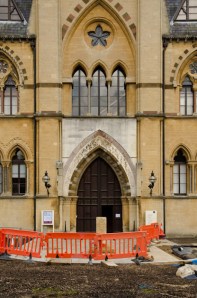
If you’ve been past the Museum of Natural History, or visited the Pitt Rivers Museum lately, you may have noticed the approach to our beautiful building is looking a bit messy.

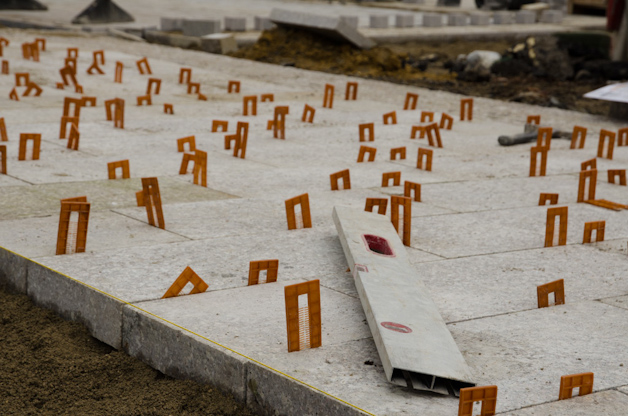
Our lawn and surrounding area is undergoing a large landscaping project over the coming months and should be looking lovely and welcoming in time for our re-opening next year. The driveways alongside the Museum are being freshly tarmacked and the paths are being laid with granite blocks, which will have it looking very smart.
Museum mess

Designs have taken inspiration from the original Victorian layout, with the lawn now cut back into an elegant curved shape, creating a dramatic approach to the building. The Victorian railings that ran along the front wall were removed during World War 2 and

believed to have been melted down to help the war effort, but some smart new replicas have now been installed in their place.Museum mess

A more high tech approach has been taken to address the problem that we face each year with the lawn. Because part of the Radcliffe Science Library sits just inches below the grass, the soil is very thin, which means that drought and sun quickly cause the lawn to go very brown. If you’ve visited in summer, you will have seen a strange pattern; half of the lawn remains green while the half with the library hidden below is a crispy brown. A modern irrigation system is due to be put in place, keeping the grass green and lush ready for picnics all summer long. But you will also be pleased to know that there will be benches installed too, in case the ground is a bit soggy!
Museum mess

Museum messThe outside environment will be much more pleasant and green, with trees planted in the paved area and enlarged flower beds next to the Museum. These additional plants will provide sustenance for our colony of bees and other pollinators. We also hope it will make the space an ideal relaxation spot after a long day exploring the Museum!

So we apologise for our currently scruffy exterior and any mud that you may find on your shoes, but hopefully when we reopen in 2014, it won’t just be the inside that’s looking its best, but the outside will be worthy of admiration, too.

Rachel Parle,  Education Officer

Presenting…

Presenting... William Burchell display in the Museum
Presenting… William Burchell display in the Museum

As readers of this blog will be well aware, most of the Museum’s exhibits are closed up and under wraps. But because visitors on their way to the Pitt Rivers Museum still pass through the Museum of Natural History we have decided to install a new changing display of a few treasures from the collection.

The series is called Presenting… and it kicks off with a selection of objects belonging to William John Burchell, a 19th century explorer and naturalist, who died 150 years ago this month. He left a treasure trove of natural history specimens, many of which are now in the Museum.

You can see the display for real just inside the entrance of the Museum, and you can read more about it on our website.

Scott Billings, Communications coordinator

In Da Club

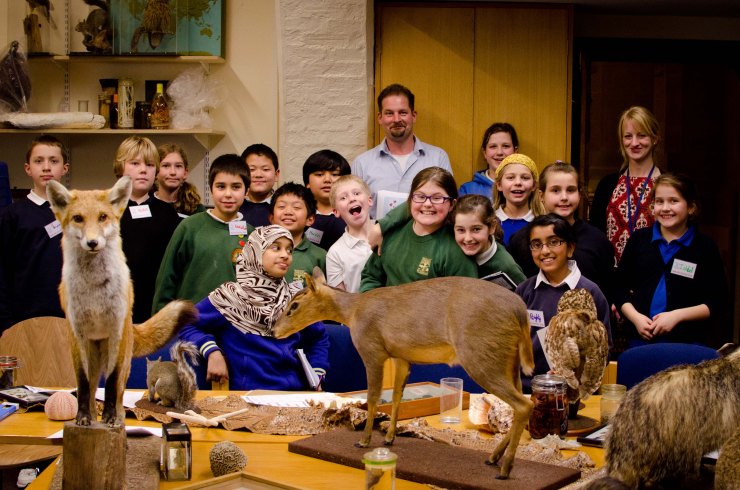
Natural History ClubAs the name of this blog suggests, much of the Museum may lie in darkened storage but there is still plenty of activity going on. One such burst of life occurs each week when our Natural History After School Club meets to spend an hour learning about the natural world through the Museum’s collections.
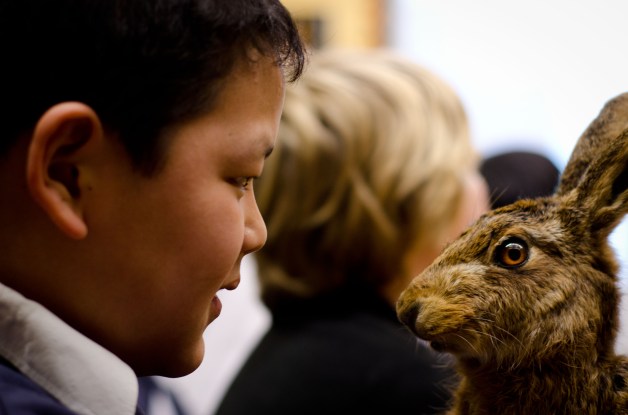
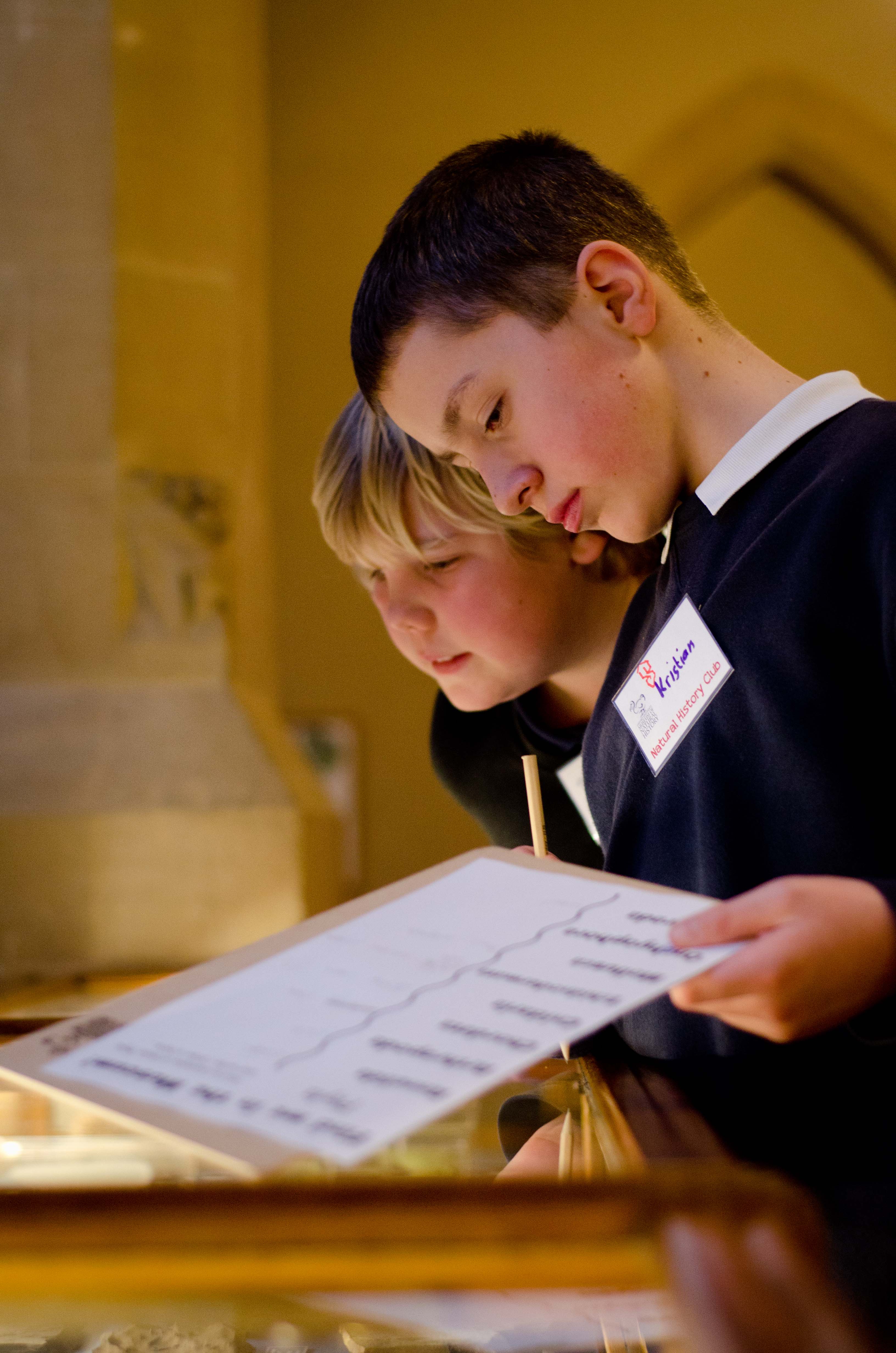
The club was set up a year ago by our Education team and has continued once a week throughout the closure. Its members are all true natural history buffs chosen by their teachers from Year 6 classes in a partnership of primary schools in Oxford. Each has shown a genuine, independent interest or talent in studying the natural world.

Face to face

Over a nine week course the children spend two weeks exploring each of our four main collections – Entomology, Geology, Zoology, and Mineralogy – learning how to collect and pin insects; how to date rocks and dinosaur bones from microfossils; how to classify life from kingdom to species; and how life and technology all rely on the twinkling minerals beneath our feet.

The members of the club are also encouraged to make their own observations and collections, which they share and discuss each week. This has revealed some interesting facts: last week’s observations seemed to show that our local Red Kite population knows the schools’ lunch timetables and visits each school field in turn to snaffle some snacks.

As well as working with specimens to explore various facets of natural history, the children also get a chance to meet our curators and find out what they do and how they do it, while taking a behind the scenes tour to see some of the jewels of the collections.

Research

The whole programme aims to nurture the children’s excitement and motivation to learn and equip them with the knowledge and skills that they need to continue their interests. The final session looks at how to become an independent naturalist, offering sources of information, reserves to visit and societies to join.

The feedback that we have received so far has convinced us of the value of continuing with the club whether the Museum is open or not. We hope that it will help develop and encourage the next generation of naturalists. And with comments like “I felt privileged and excited…like the chosen one!” we may be doing just that.

Chris Jarvis, Education officer

Winnie at the Museum

Image: Korky Paul
Image: Korky Paul

The exterior of our Museum is pretty distinctive so it was very exciting to see it featured in a beautiful double page spread in the latest Winnie the Witch book! In ‘Winnie’s Dinosaur Day‘ by Valerie Thomas and Korky Paul, the famous witch visits our museum to admire the dinosaurs on display and even goes back in time to meet a real, live Triceratops!

We celebrated the new book in October 2012 with a series of family events, including a visit from Korky Paul, Winnie’s illustrator. But now Oxford University Press are promoting the book with a special blog post about Winnie and the Museum of Natural History. It’s great to see the Museum’s architecture and collections inspiring authors and illustrators yet again.

Rachel Parle, Education Officer

The Verrall Supper 2013

Once a year, on the first Wednesday of every March, when the weather is especially chilly (or so it seems), entomologists can be seen flocking towards the bright lights of London. As they wend their way towards South Kensington you may be forgiven for thinking that there is some kind of mass migration going on, and it’s true, entomologists do often seek warmer climes than Britain may have to offer, if only because of the abundance of insects is so much greater in those areas of the world where it is hot and sticky (and if there is one thing that entomologists cannot refuse, it’s an abundance of insects).
But on this occassion you would be wrong. For the first Wednesday of every March is devoted to the Verrall Supper. Arguably the highlight of the social calendar for all entomologists, the evening consists of a lecture, hosted by the Royal Entomological Society and presented by a distinguished entomologist, which is then followed by drinks, dinner and much socialising.

This year the dinner was hosted at The Rembrandt Hotel which is a short stroll from the Natural History Museum. Staff from the HEC left Oxford early in order to spend some time in the collections in the NHM, checking type specimens and doing a little research as a form of pre-dinner exercise just to sharpen our appetites.
The Rembrandt Hotel was a new venue for the Verrall Supper which for the last 10 or more years has been held at Imperial College. It proved to be an excellent setting although it seemed to take everyone a little while to get used to the idea that the tables were round instead of the long bench style table at Imperial that seat about 60 people. This new format made mingling with other guests between courses much easier however and it has to have been one of the chattiest Suppers that any of us have to been to in a while. Of course, the fact that there was 183 collected entomologists (a recent high in attendance) in the room might also have played a part.

Verrall Supper, The Entomology Club, entomologist, entomology
What’s the collective noun for entomologist’s? A colony? Maybe a rabble? Cluster? Army? Clutter? Intrusion? Answers in the comments box below!

Verrall Supper, The Entomology Club, entomologist, entomology
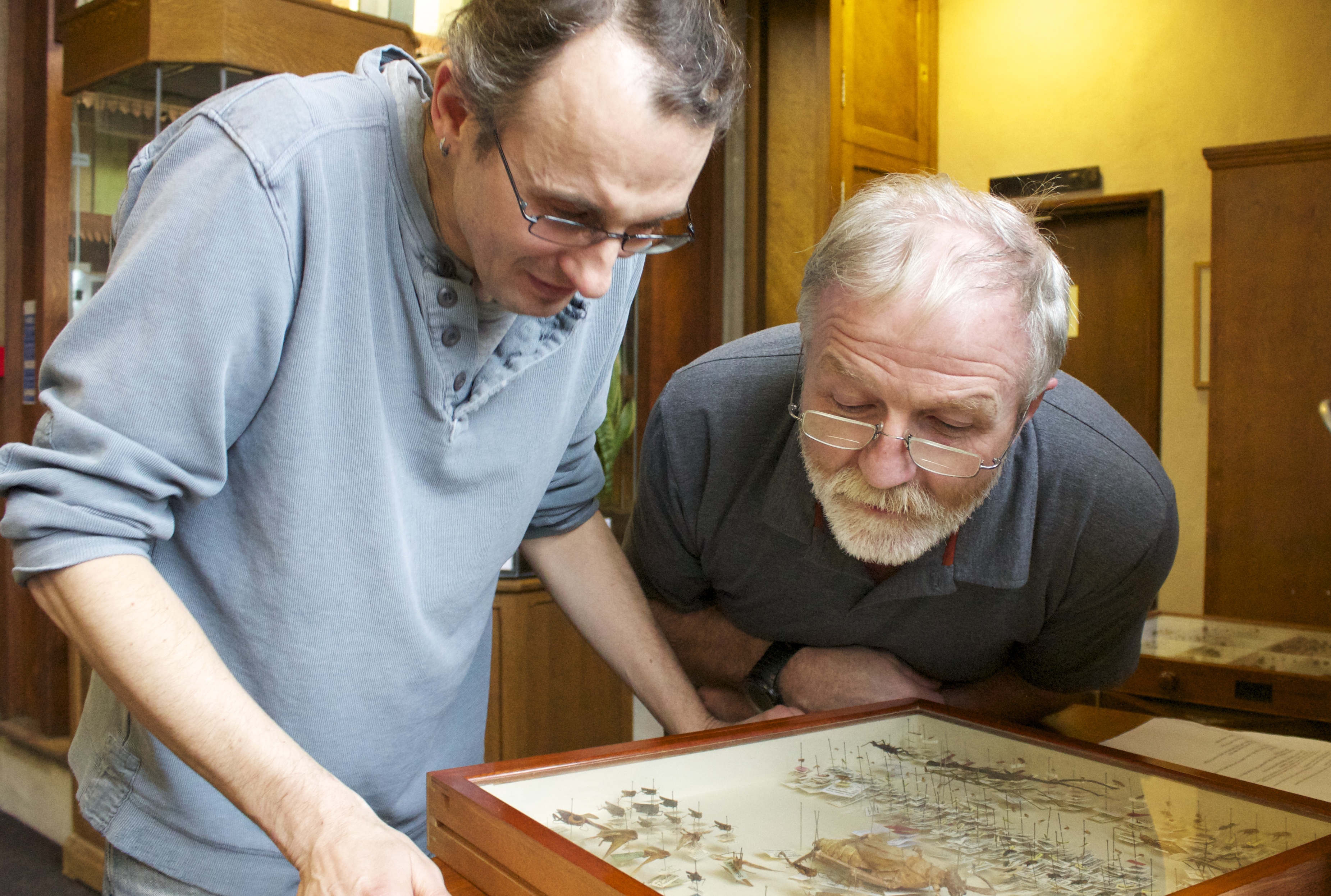
Zoë Simmons and Dr Jose Nunez-Mino, an associate of the HEC
Verrall Supper, The Entomology Club, entomologist, entomology
Amoret Spooner and Mike Wilson, Head of Entomology at National Museum, Wales.

Verrall Supper, The Entomology Club, entomologist, entomology
Darren Mann (right), talking to Charles Godfray (left), Hope Professor, Oxford.

One other notable change was the increase in the number of people documenting the ocassion. Social media is fast becoming a part of peoples daily lives so it wasn’t too much of a surprise to find that the Verrall Supper had acquired it’s own hashtag on Twitter or that photos of the dinner appeared within minutes of the courses being served.

If you would like further information about the history of the Verrall Supper or the Entomological Club through which the supper was established then there is an excellent publication on the subject by Pamela Gilbert.

Gilbert, P. (2005). The Entomological Club and Verrall Supper: A History (1826-2004). The Entomological Club c/o The Royal Entomologists Society. Headley Brothers Ltd, Kent.

Etymology of Entomology

Darren and George
Image: Folded Wing

As a massive BBC Radio 4 fan, I’m always amazed at the variety and quality of documentaries that I come across, and I’m excited to say that tomorrow the Museum will be part of this!

Dr George McGavin, our Honorary Research Associate in Entomology (above right), is presenting a programme called the Etymology of Entomology, which explores the fascinating names given to the planet’s 10 million plus insects. For example, did you know there’s a fly named after Beyonce?!

Featuring on the programme will be Darren Mann, our Assistant Curator of Entomology (above left) who discusses some of his favourite insect names and even some named after himself and George.

I’m proud to say that I will actually be making a fleeting appearance too, to talk about how we use scientific language with children. I was pretty nervous during recording so please excuse me if I say something completely odd!

So, on Saturday 9th March at 10.30am, tune your radios to BBC Radio 4 for The Etymology of Entomology. It’s even been chosen as Radio 4’s Documentary of the Week so it will be available to download for a week from Friday 15th March. In the meantime, you can listen to a quick clip here and find out some of the Entomology department’s favourite insect names on their excellent blog.

Rachel Parle, Education Officer